-
Scam Sensei Home
Inspiration
The inspiration for Scam Sensei came from my personal experience of falling victim to a crypto scam. Further research showed an increasing number of people continue to lose money from sophisticated online scams. I realized technology can both contribute to the rise of scams as well as equip people to combat them. Scam Sensei aims to be an adaptive line of defense.
What it does
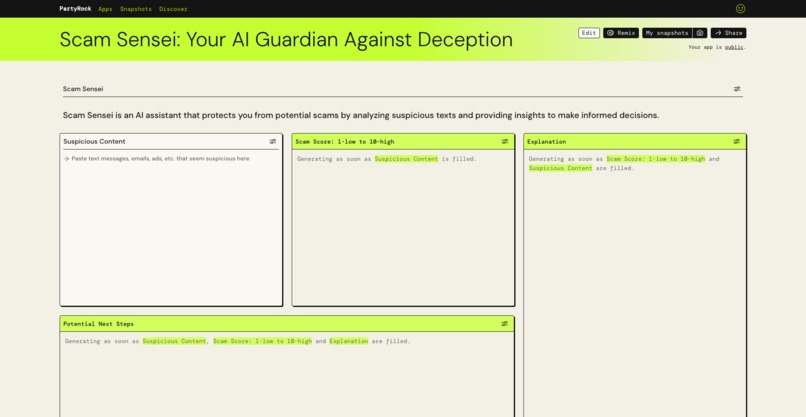
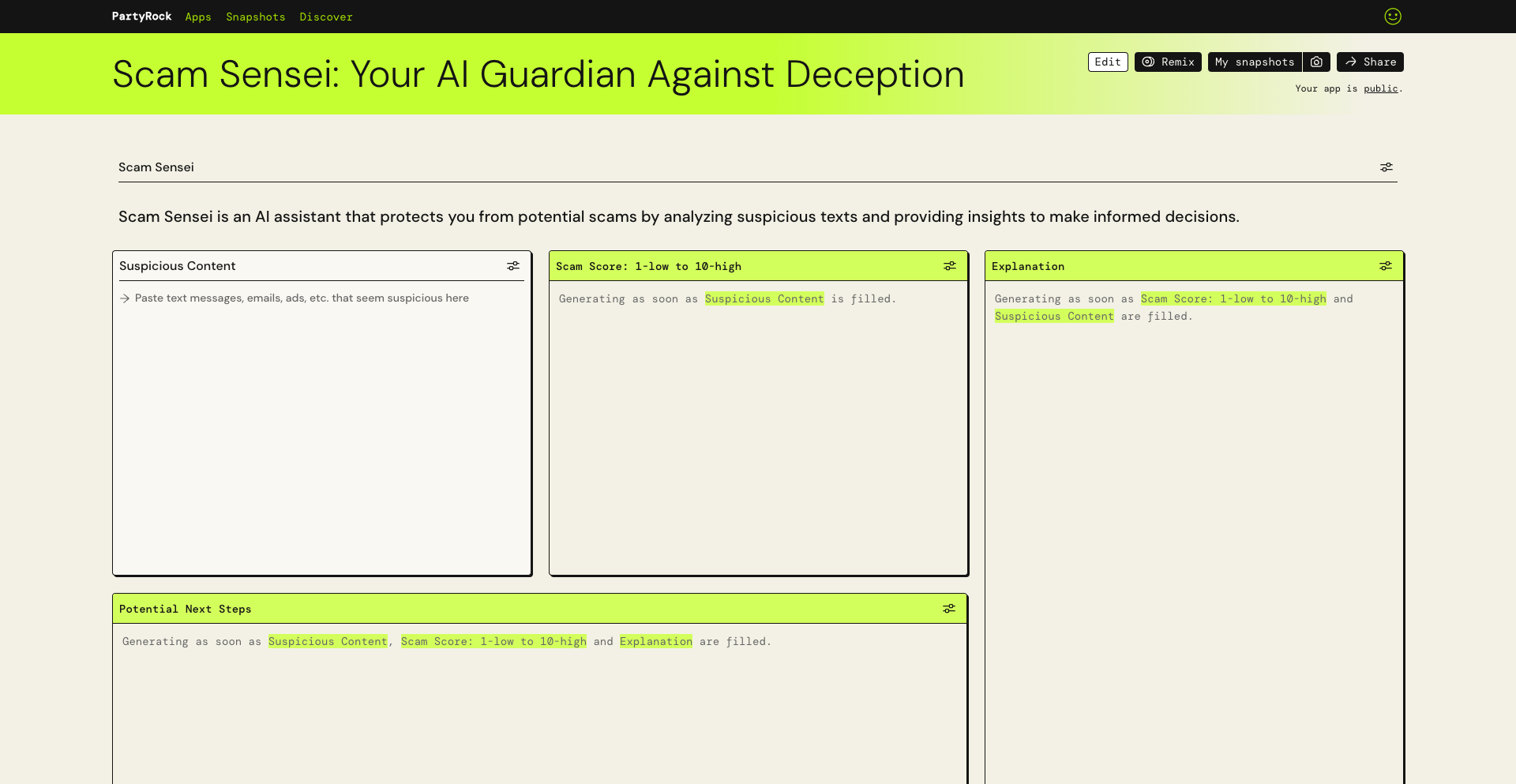
Scam Sensei is an AI-powered app that analyzes text messages, emails, ads - any messages users suspect may be a scam. It provides a Scam Score rating the likelihood of fraudulent intent, explains red flags identified, suggests next protective actions, and summarizes potential personal impacts, emotionally and financially, via haikus and images. The goal is to raise awareness, prevent harm, and empower the community.
How we built it
Scam Sensei Leverages the power of Amazon PartyRock Generative AI, and incorporates several key features:
- Suspicious Content Widget: Users can easily input the text they suspect to be a scam, be it a message, email, or even an advertisement.
- Action Taken Widget: Users have the option to document any actions already taken, such as clicking links or replying to messages.
- Scam Score Widget: Utilizing AI, the app analyzes the text and provides a score, ranging from 1 (low risk) to 10 (high risk) indicating the likelihood of a scam attempt.
- Explanation Widget: This widget delves deeper, highlighting red flags identified in the text, such as urgency, false promises, or grammatical errors.
- Next Steps Widget: Based on the analysis, the app suggests potential actions like reporting the scam, contacting the sender for verification, or simply ignoring the message.
- Haiku of Impact Widget: Adding a personal touch, a unique haiku is generated, summarizing the potential emotional and financial impact the scam could have.
- Visual Representation Widget: This widget displays an image that visually captures the potential effects of the scam on the user's well-being, further reinforcing awareness.
Challenges we ran into
Integrating external resources. Currently, the tool depends on the Amazon PartyRock models for detecting the potential of text being a scam. A nice to have would be building a custom model that is trained to identify different kinds of scams and is also trained to understand how scammers work and their mentality. Additionally, Scam Sensei currently only takes text as input and is not connected to any external sources to automatically generate analyses.
Accomplishments that we're proud of
Leveraging Amazon Party Rock to bring this experience to life.
What we learned
Empowering people and giving them the tools to understand the scam surface remains an important goal in keeping everyone safe online.
What's next for Scam Sensei: Your AI Guardian Against Deception
Our journey doesn't end here. The future of Scam Sensei involves continuous improvement, focusing on:
- Expanding Input Channels: Integrating voice calls and potentially social media analysis to broaden detection capabilities.
- Building a Custom Model: Continuously researching and developing a custom model for improved accuracy, flexibility, and transparency.
- Enhancing User Experience: Introducing features that personalize the experience and provide users with actionable steps to protect themselves.
- Promoting Widespread Adoption: Partnering with educational institutions, community organizations, consumer protection agencies, non-profit organizations, and relevant authorities to raise awareness and encourage widespread use of Scam Sensei.
Built With
- partyrock


Log in or sign up for Devpost to join the conversation.