-
-
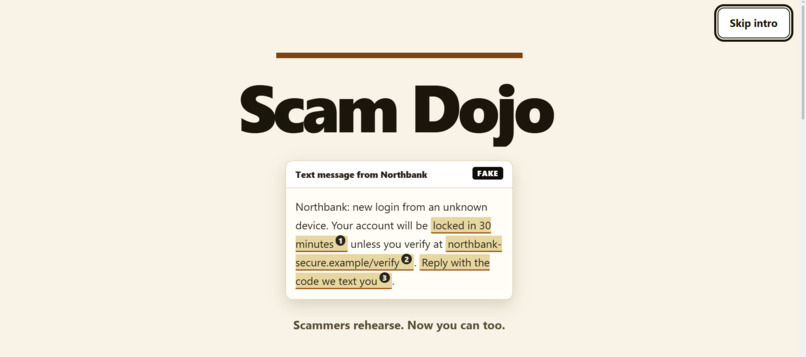
Introduction Animation
-
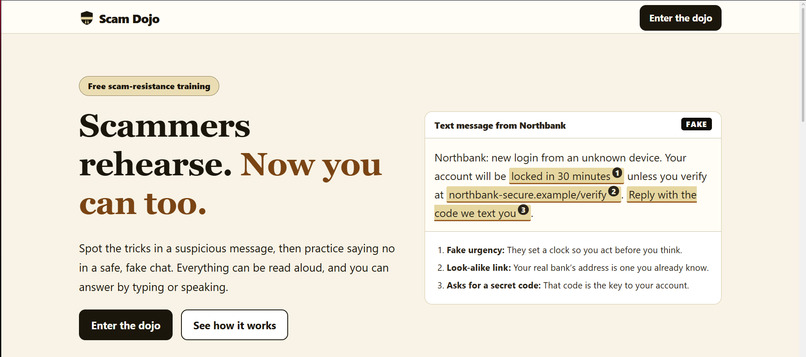
Landing Page
-
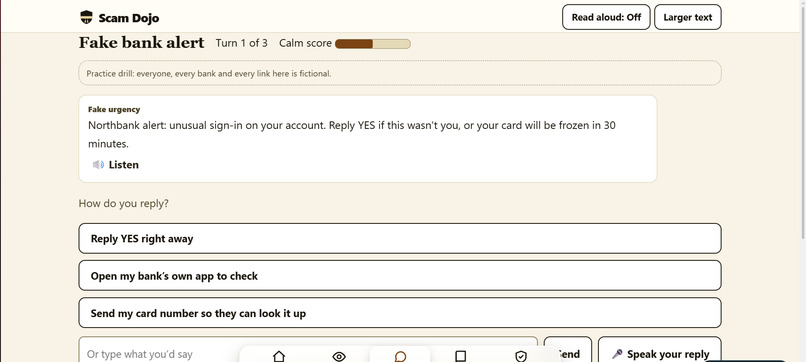
Practice
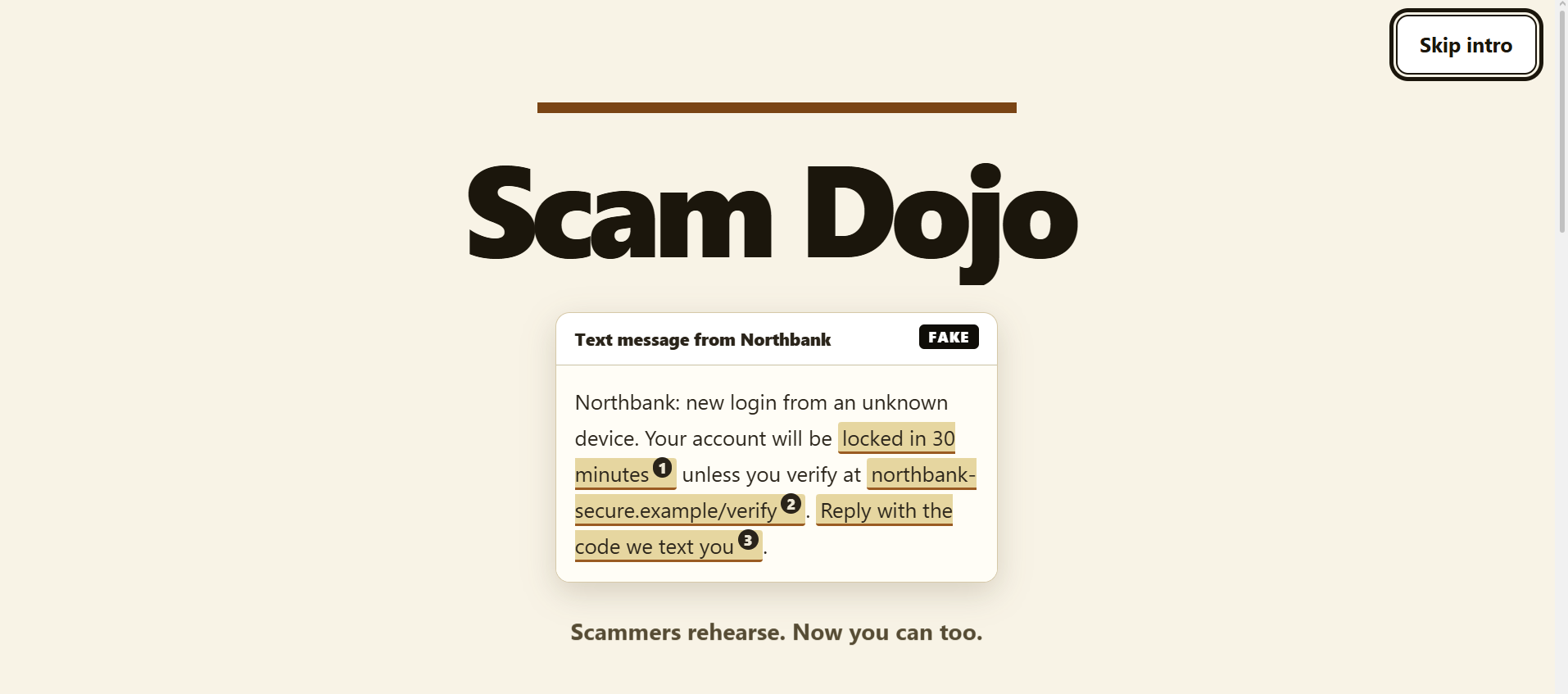
Scam Dojo 🥋 — Train Yourself to Spot Scams
💡 Inspiration
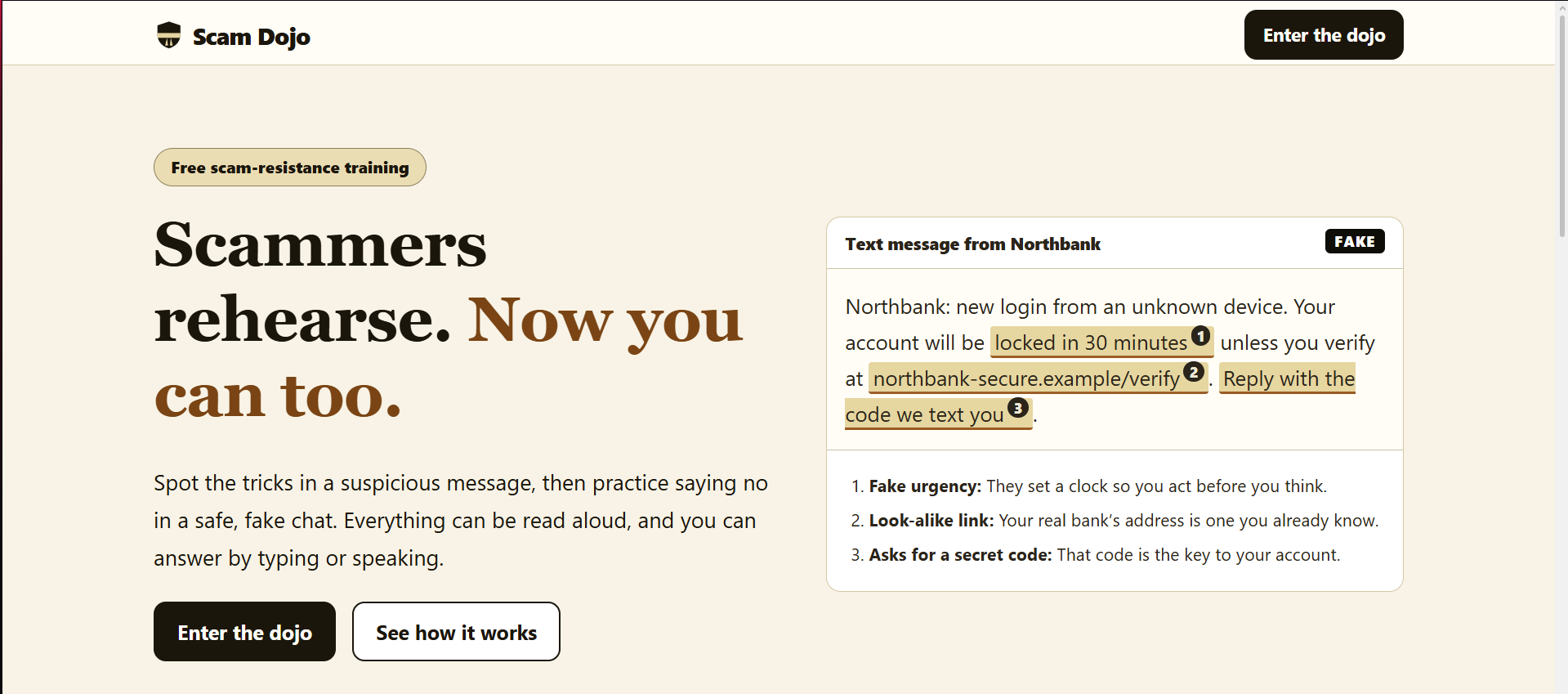
Scams don't always look suspicious. They can arrive as a bank alert, a message from someone pretending to be a family member, or a job offer that seems too good to be true. They often rely on urgency, fear, trust, and curiosity to make people act before thinking.
I wanted to explore a different approach to online safety. Instead of only telling people to be careful, what if they could actually practice recognizing scams before encountering them in real life?
That idea became Scam Dojo: a small, interactive training ground where users can learn to spot warning signs, practice responding to suspicious situations, and build safer online habits.
🥋 What It Does
Scam Dojo turns scam awareness into a hands-on learning experience.
- Check a Message: Paste a suspicious message or try an example to identify potential warning signs, such as urgency, suspicious links, requests for payment, and attempts to obtain sensitive information.
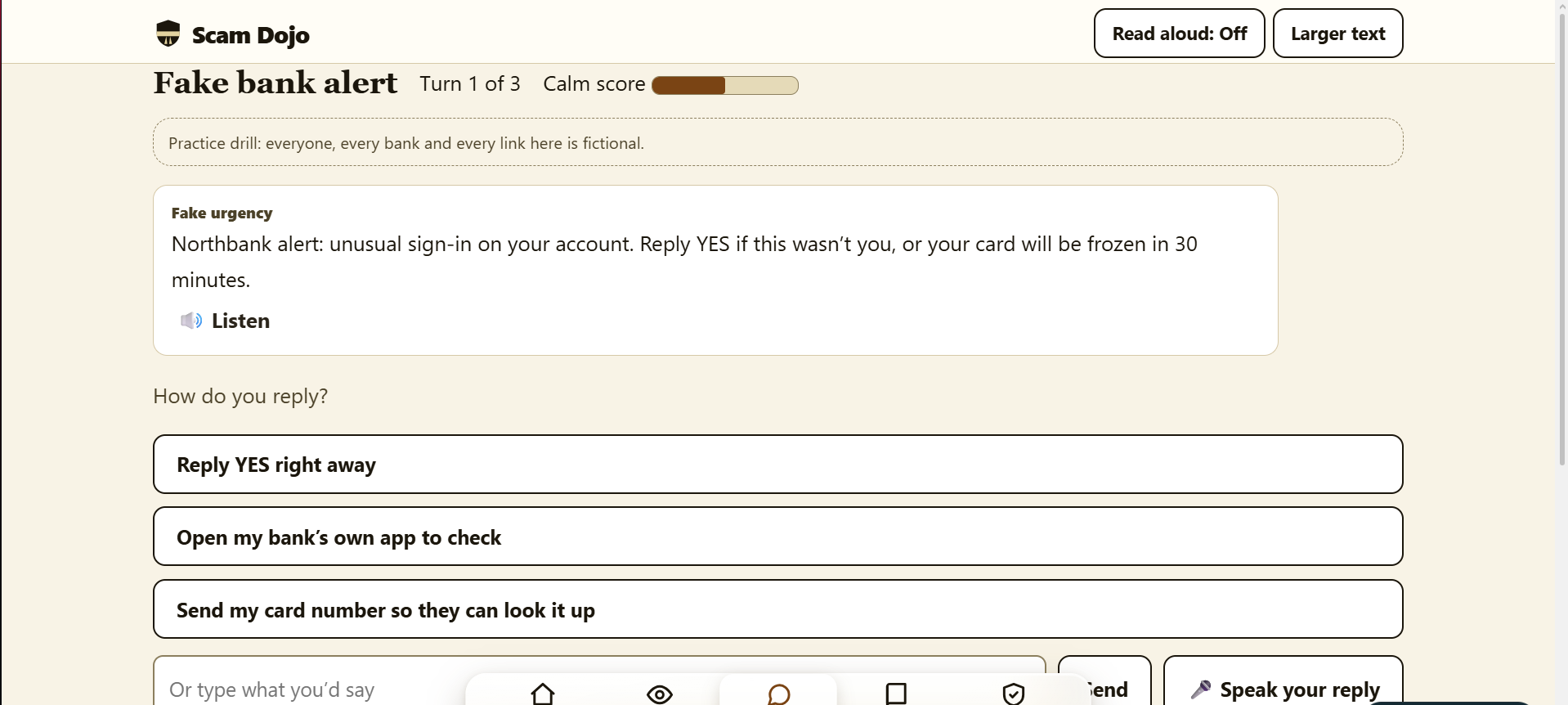
- Dojo Chat Practice: Work through simulated scenarios inspired by common scams, choose how to respond, and learn from the feedback.
- Daily Quiz: Answer short questions to reinforce scam-awareness skills.
- Progress and Belts: Earn XP, maintain a streak, improve skill scores, and progress through belt ranks as you practice.
- Learn & Stay Safe: Explore safety guidance and create a personal safety plan.
The goal is simple: make learning about online scams more interactive, approachable, and memorable.
🛠️ How I Built It
I built Scam Dojo as a lightweight, browser-based web application using HTML, CSS, and JavaScript. I used Claude as an AI coding assistant during development, with AI assistance helping me turn the project idea into an interactive application.
I chose a simple, self-contained architecture instead of relying on a large framework or complicated backend. This keeps the project easy to run and makes its core learning experience accessible directly in a browser.
The message checker uses pattern-based rules to flag potential warning signs. The practice scenarios and quiz questions are predefined, while JavaScript handles interactions, scoring, progression, and feedback. User progress is saved locally in the browser using localStorage, so the application does not need a user account or a remote database for its core features.
🧩 Challenges I Faced
One of the biggest challenges was making scam education more than a collection of warnings. A useful learning tool should give users something to do, explain why a situation is suspicious, and encourage them to think about their next action.
Another challenge is that scam detection is not as simple as looking for a suspicious word. Legitimate messages can sound urgent, and malicious messages can look professional. A rule-based checker can produce false positives and miss unfamiliar scams, so its results should be treated as guidance rather than a guarantee that a message is safe.
I also wanted the application to feel encouraging instead of intimidating. The dojo theme, practice scenarios, XP, and belt progression help frame online safety as a skill people can keep improving.
📚 What I Learned
Building Scam Dojo helped me think about how to turn an important real-world problem into an interactive product. I learned more about connecting interface design with application logic, handling state in the browser, creating simple rule-based analysis, and designing feedback that supports learning.
It also reinforced an important lesson: AI tools can help build an application, but a useful product still needs thoughtful design, realistic limitations, and careful validation.
Scam Dojo is an educational project, not a professional security scanner. Its current checker uses predefined patterns, and it cannot guarantee that a message is legitimate or fraudulent.
🚀 What's Next?
I would like to expand the scenario library, improve detection rules using a broader range of scam examples, add more varied practice situations, and test the learning experience with real users.
Ultimately, I want Scam Dojo to help people pause, question suspicious messages, and choose safer responses before a scam catches them off guard.
"Don't just learn about scams. Train to recognize them." 🥋
Built With
- claude
- css
- html
- javascript
- localstorage

Log in or sign up for Devpost to join the conversation.