-
-
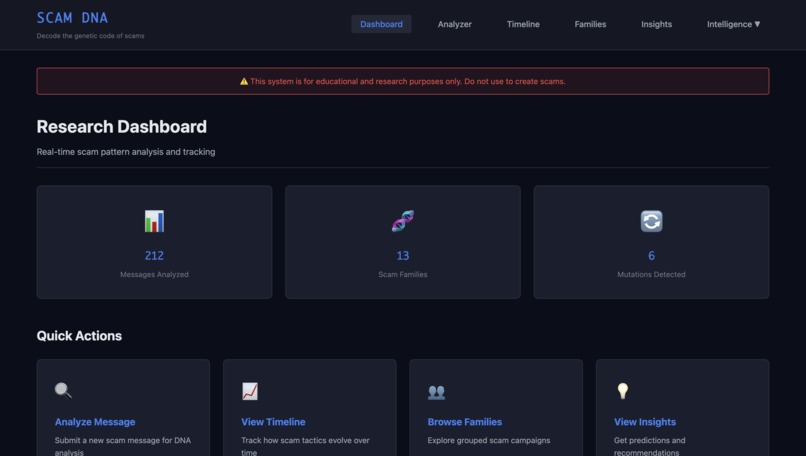
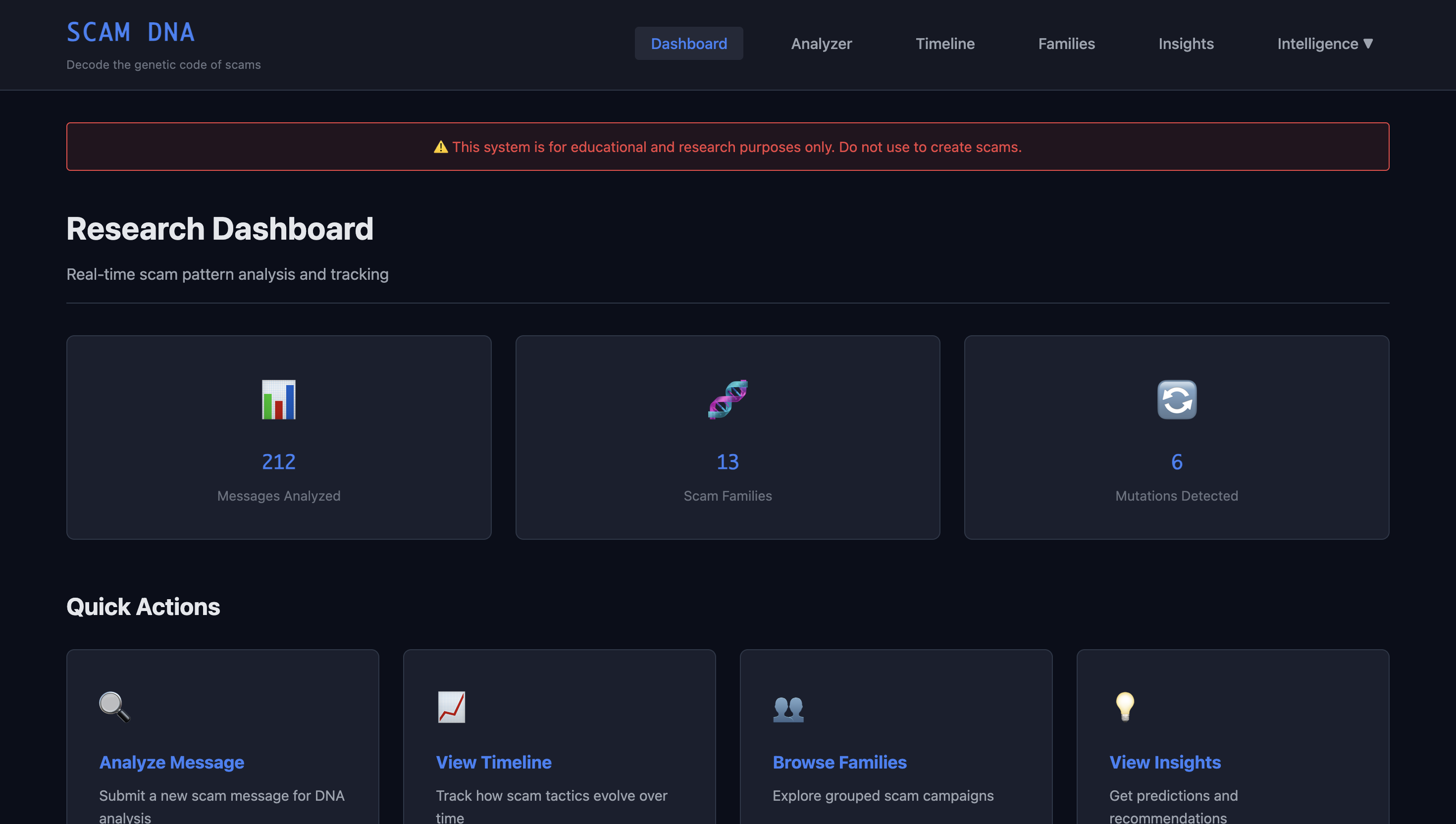
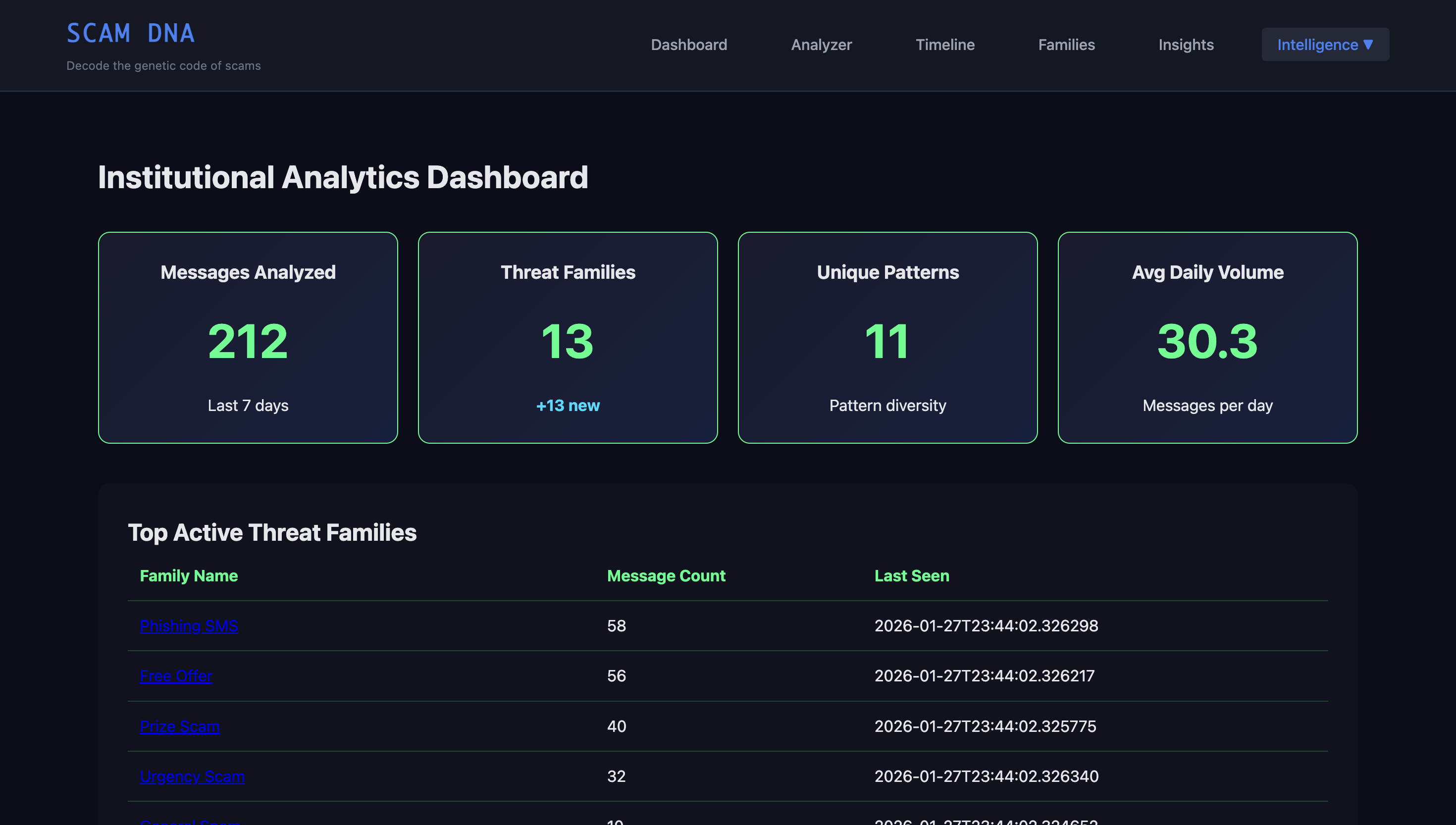
The dashboard that helps any user understand and work with it
-
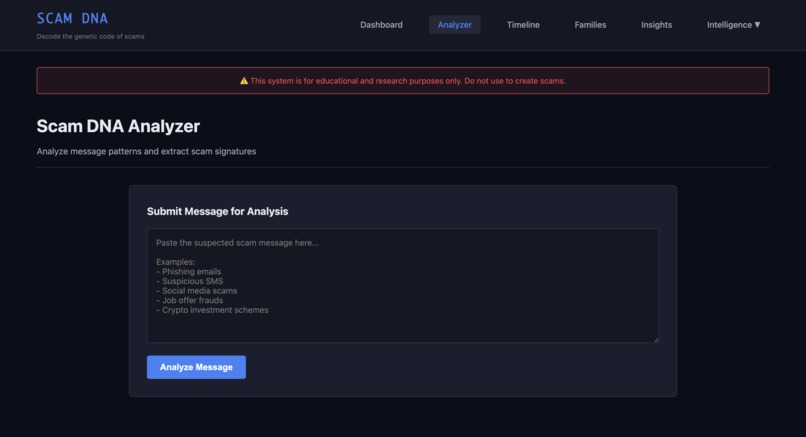
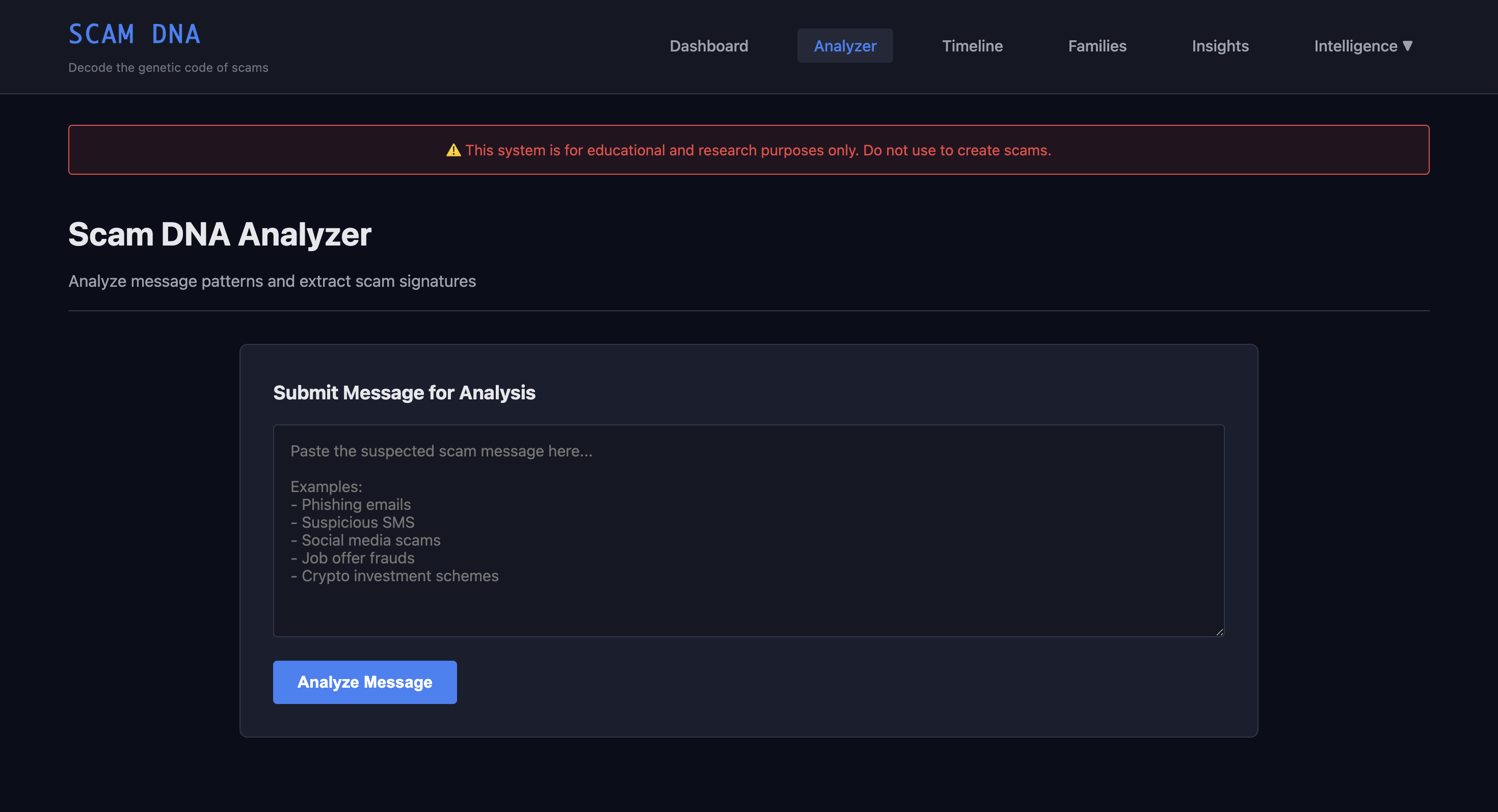
Analyzer that check if a message is scam or not
-
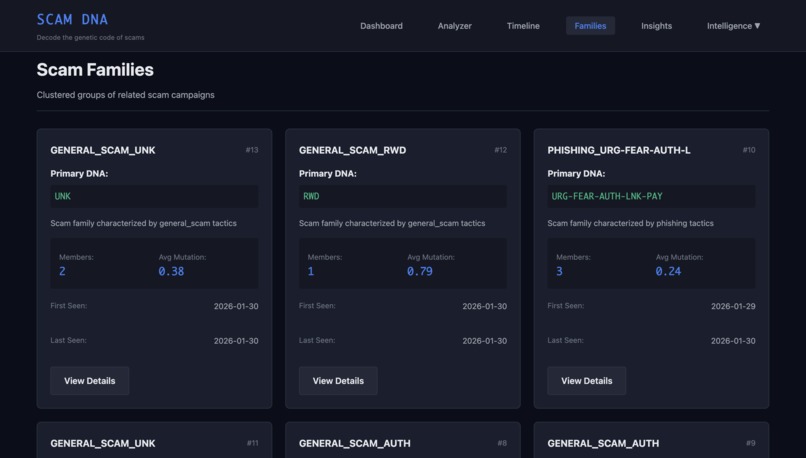
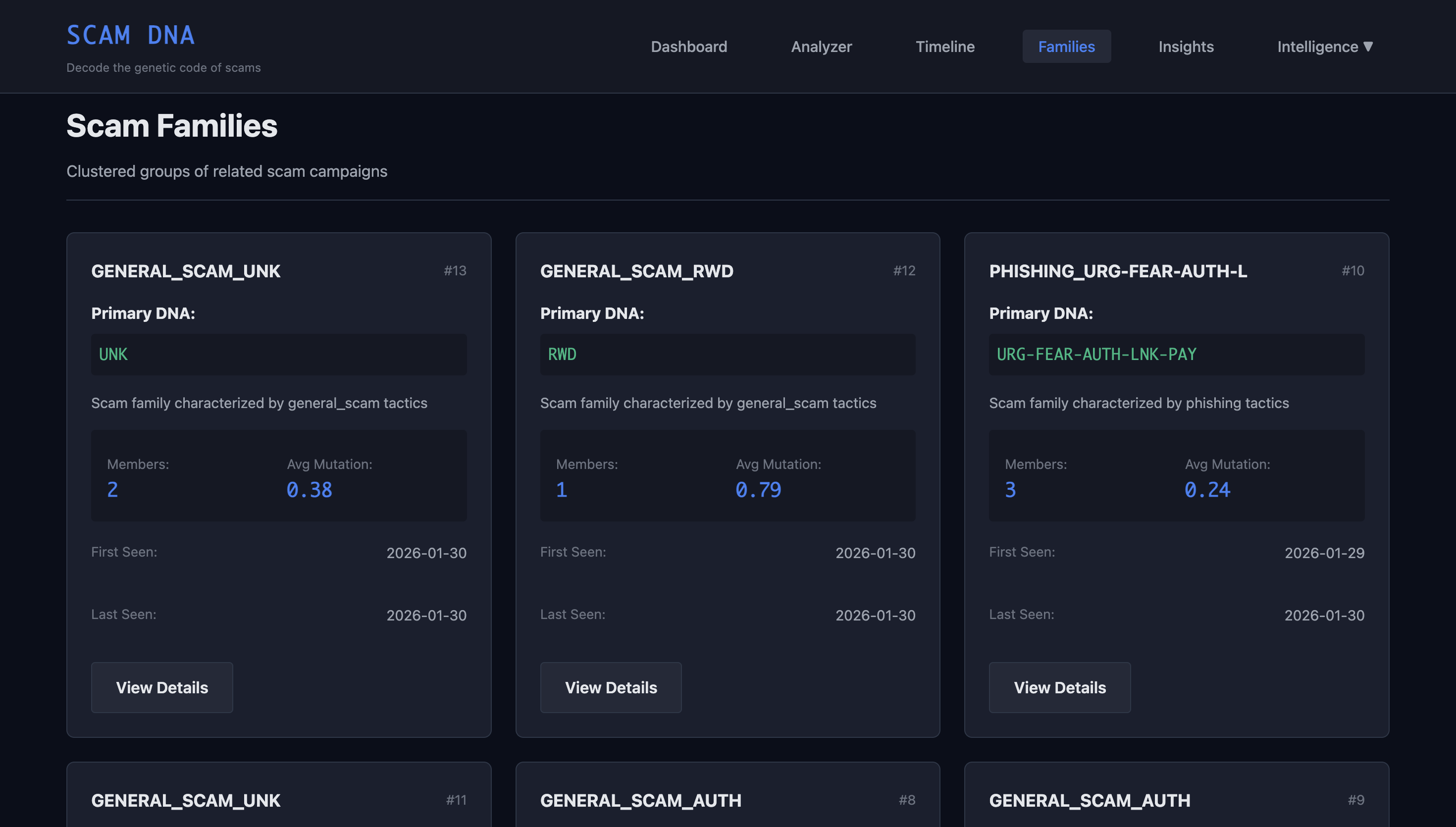
the group of scam families are generated here
-
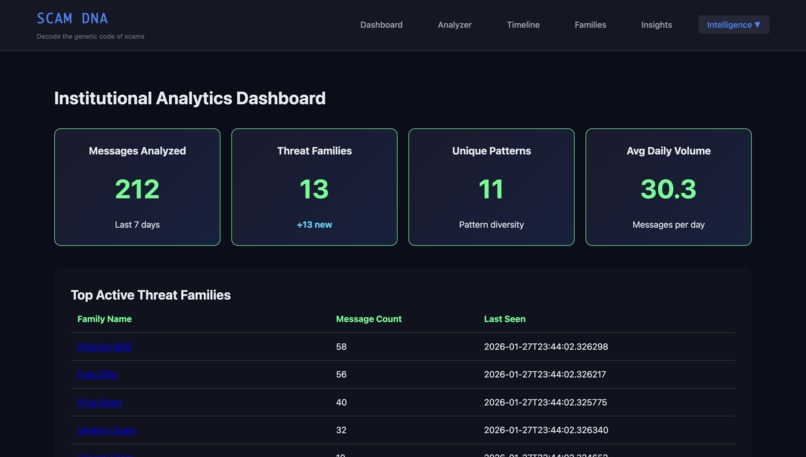
This shows the overall preditcions of my model
-
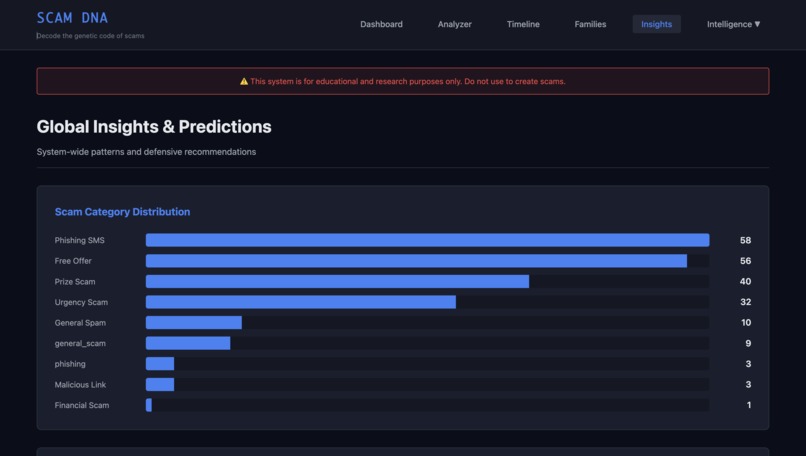
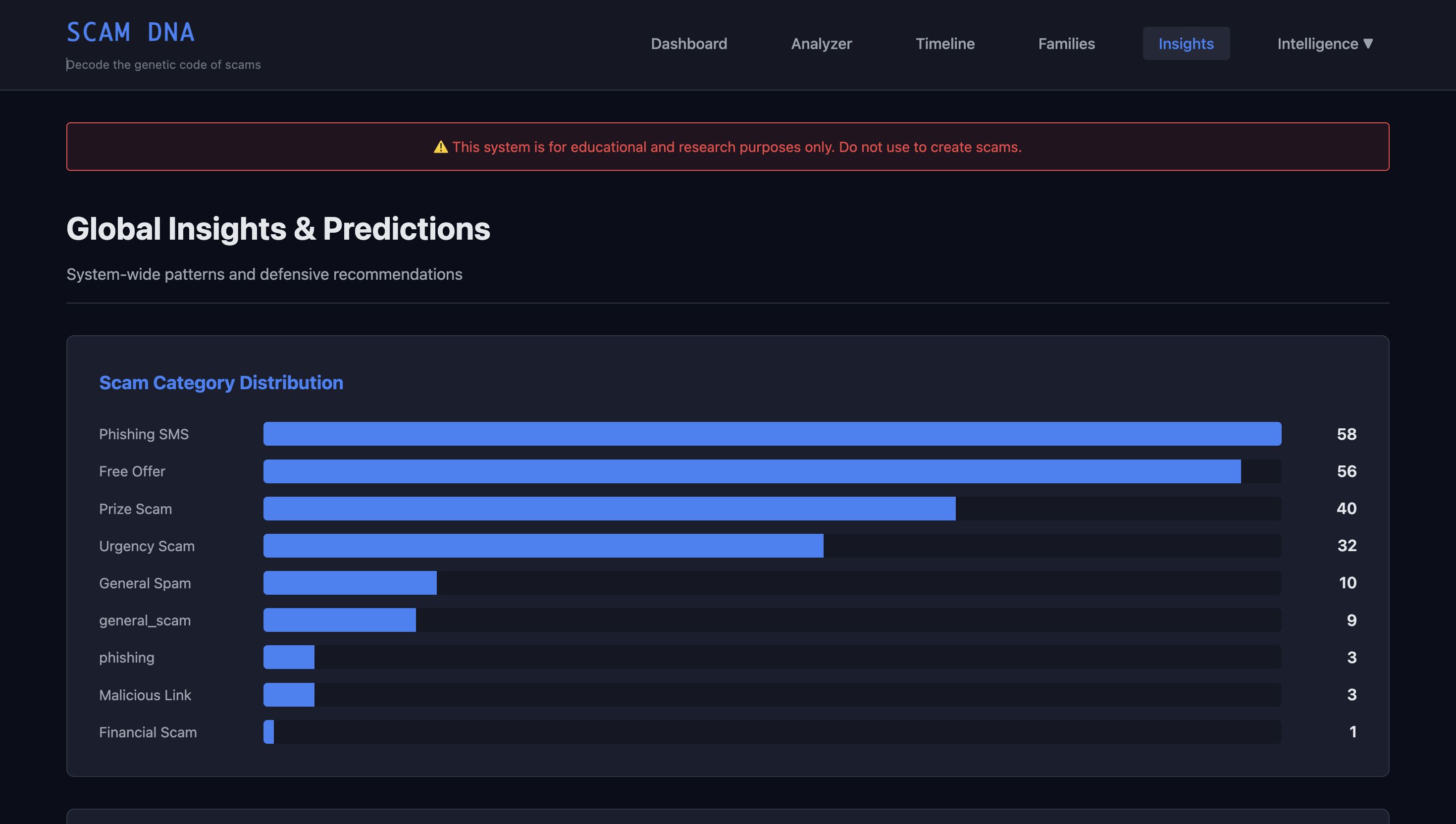
This image depicts global insights of pre predicted data of the scams
Inspiration
This project didn't start as a technical challenge. It started as a moment of silence. One of us watched a close family member almost lose their savings to a fake "bank support" call. The voice on the other end sounded calm, professional, and reassuring. There was no malware, no suspicious link just carefully chosen words that created fear, urgency, and trust in the right order. That moment changed how we thought about scams. We realised that scams are not just a cybersecurity problem. They are a human problem. They work because they understand how people think, feel, and react under pressure. Scam-DNA was born from a simple question" What if we could help people see the patterns behind these messages before they get emotionally pulled into them?"
What it does
Scam-DNA helps people see beyond a single suspicious message and understand the pattern behind it. The system analyses messages for emotional signals, language structure, and behavioural cues, then groups similar messages into "scam families" that show how different scams are connected and how they change over time. Instead of only telling users that something is risky, Scam-DNA explains why it feels convincing, what stage of manipulation it represents, and what usually comes next. By turning invisible tactics into something visible and understandable, the project aims to replace panic and confusion with awareness and confidence.
How we built it
We built Scam-DNA as a modular web prototype using Python and Flask with an MVC-style architecture to separate the interface, analysis logic, and data layer. Flask Blueprints organise routes by feature, while a service layer handles pattern extraction, similarity scoring, and mutation tracking. When a user submits a message, it is processed to identify emotional and structural markers, then converted into a semantic vector using Sentence-Transformers and compared with past samples using cosine similarity from scikit-learn. Related messages are grouped into scam families based on meaning rather than keywords. All results are stored in a SQLite database to track evolution over time. The frontend uses HTML, CSS, and vanilla JavaScript with Jinja2 templates and Plotly to present trends and confidence views in a lightweight, research-style dashboard.
Challenges we ran into
One of our biggest challenges was building something that felt powerful without becoming misleading or unsafe. Explaining how scams work can easily cross into showing how to create them, so we had to constantly rewrite outputs and predictions to stay educational and defensive. Another challenge was data. Real scam data is sensitive and personal, so we worked with controlled and anonymised samples while still trying to preserve realistic patterns. Finally, balancing technical depth with emotional clarity took time we didn't just want the system to be accurate, we wanted it to be understandable.
Accomplishments that we're proud of
We're proud that Scam-DNA doesn't just label messages as "safe" or "dangerous," but tells a story about how manipulation unfolds. Building the evolution timeline and scam family clustering helped transform individual reports into something that feels like a living system rather than a static tool. We're also proud of how much attention we gave to responsible design from explainable confidence scores to clear ethical boundaries and transparency panels. For a student built prototype, creating something that feels both technical and human centered is one of our biggest achievements.
What we learned
We learned that most scams don't succeed because they are clever they succeed because they are familiar. The same emotional patterns repeat across platforms, languages, and contexts, just dressed in different words. This project taught us that cybersecurity isn't only about algorithms and detection rates. It's about communication, psychology, and trust. The more clearly a system can explain its reasoning, the more likely people are to pause, reflect, and protect themselves.
What's next for Scam-DNA
With more time, we want to expand Scam-DNA into a community and institutional platform. This includes adding regional and language-specific analysis, building school and college dashboards for awareness programs, and creating browser and messaging extensions for real-time guidance. Long term, we see this as a foundation for a broader digital literacy tool one that helps people not only recognise scams, but develop stronger instincts for navigating online spaces safely and confidently.

Log in or sign up for Devpost to join the conversation.