-
-
-
-
-

speaks for itself
-

Inspiration
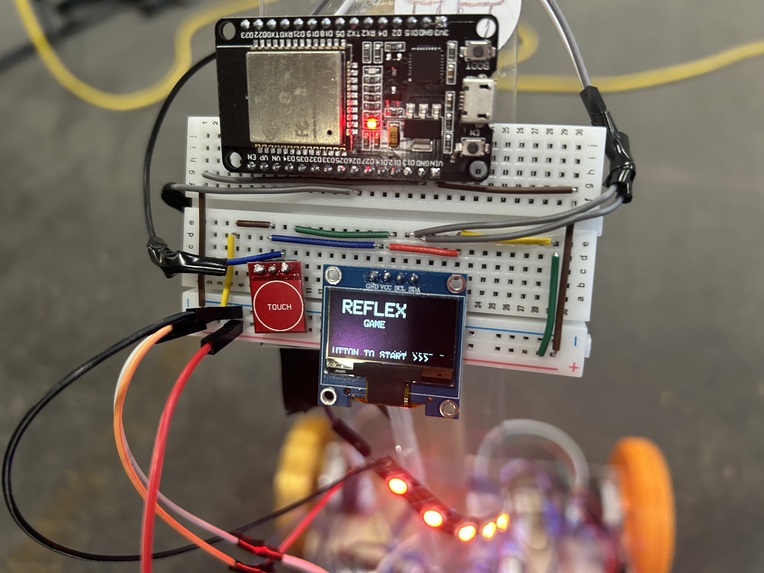
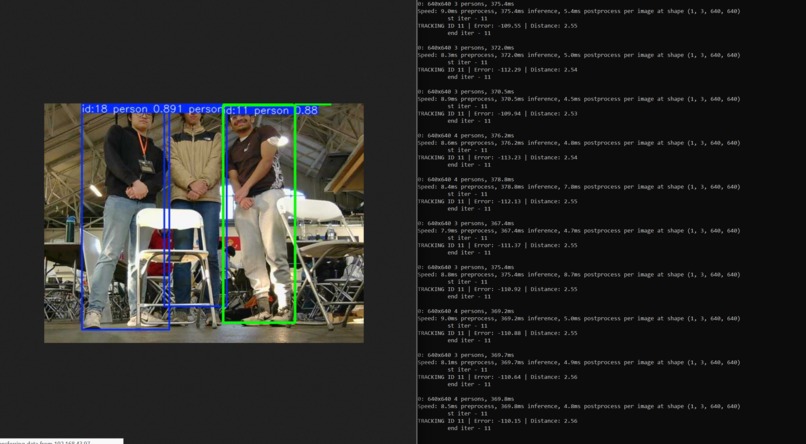
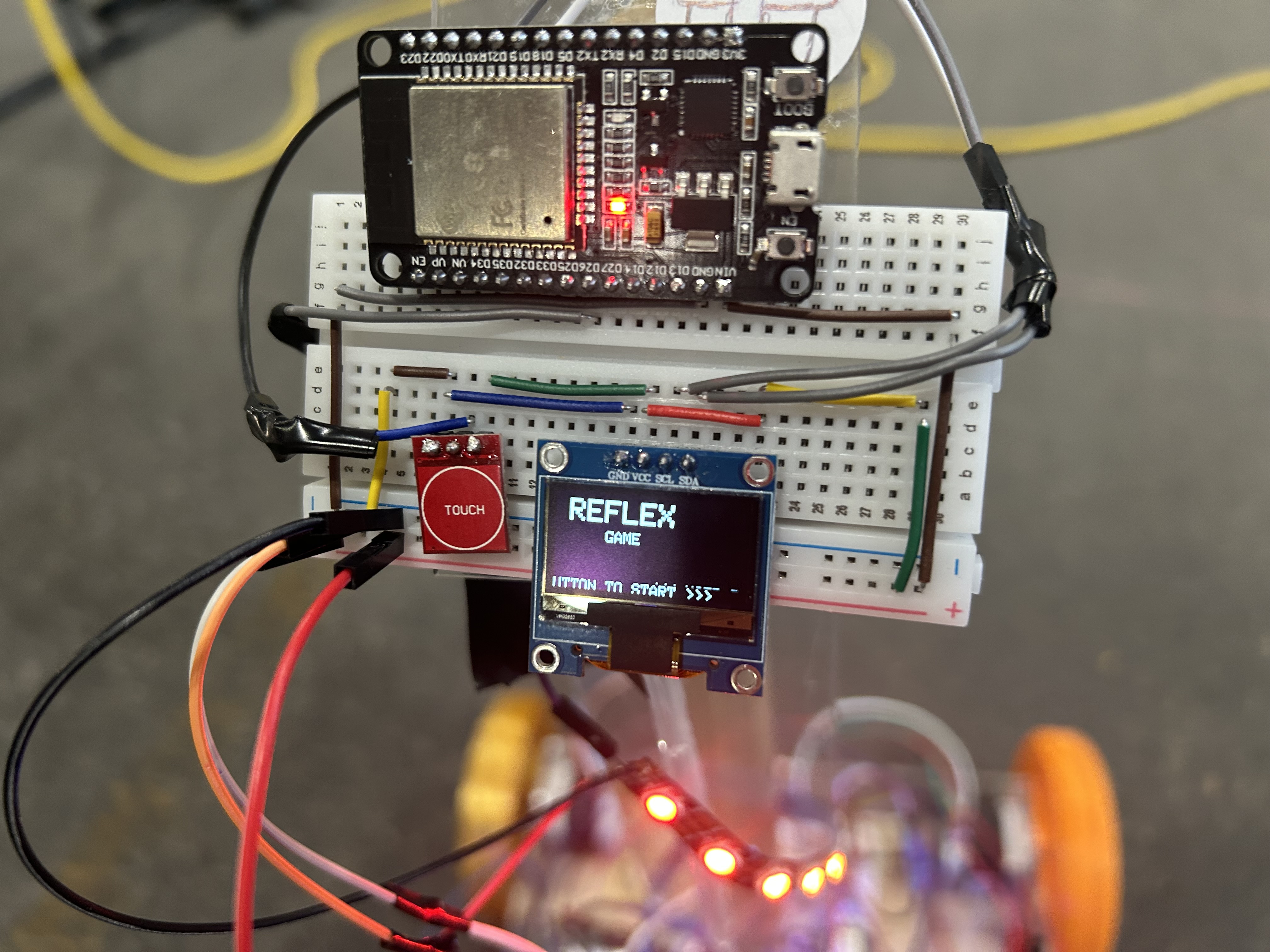
We wanted to make a bot that could handle payment processing using the RFID tags and face tracking. However the payment processing doesn't integrate as well with the RFID system we were using. So we decided to pivot to a robot that can do multiple things including RFID tags, computer vision, person-following, and even a minigame based on a capacitive touch sensor.
What it does
Human Robot Interaction experiment, chance for profit or loss
How we built it
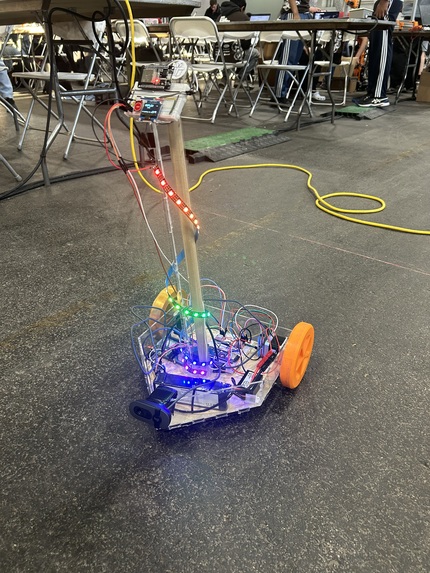
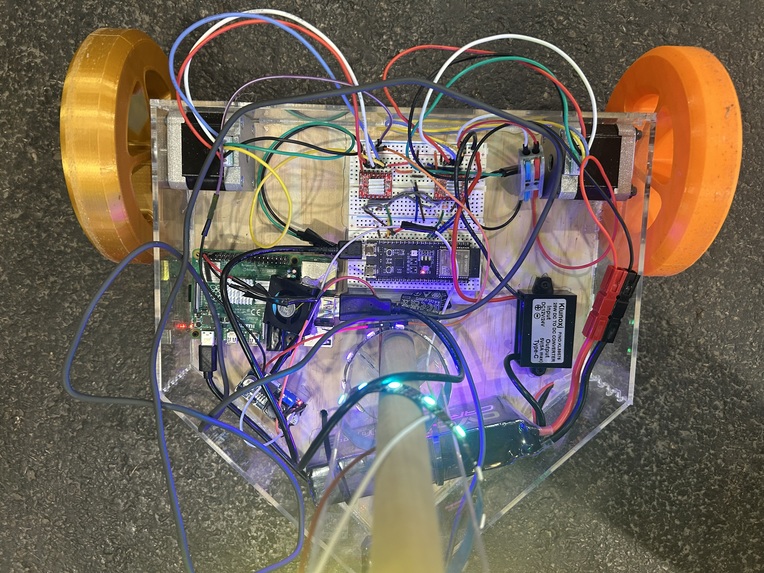
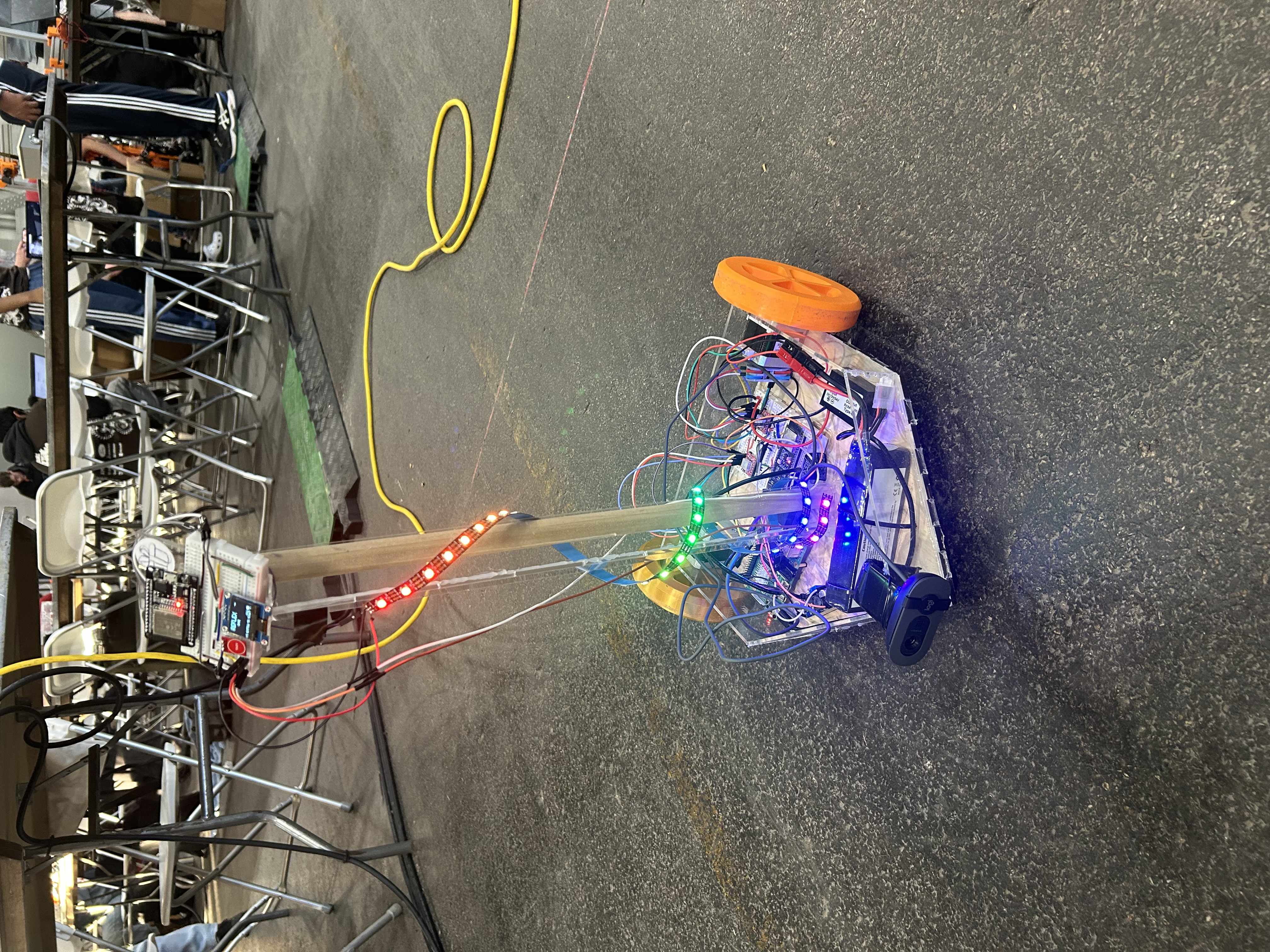
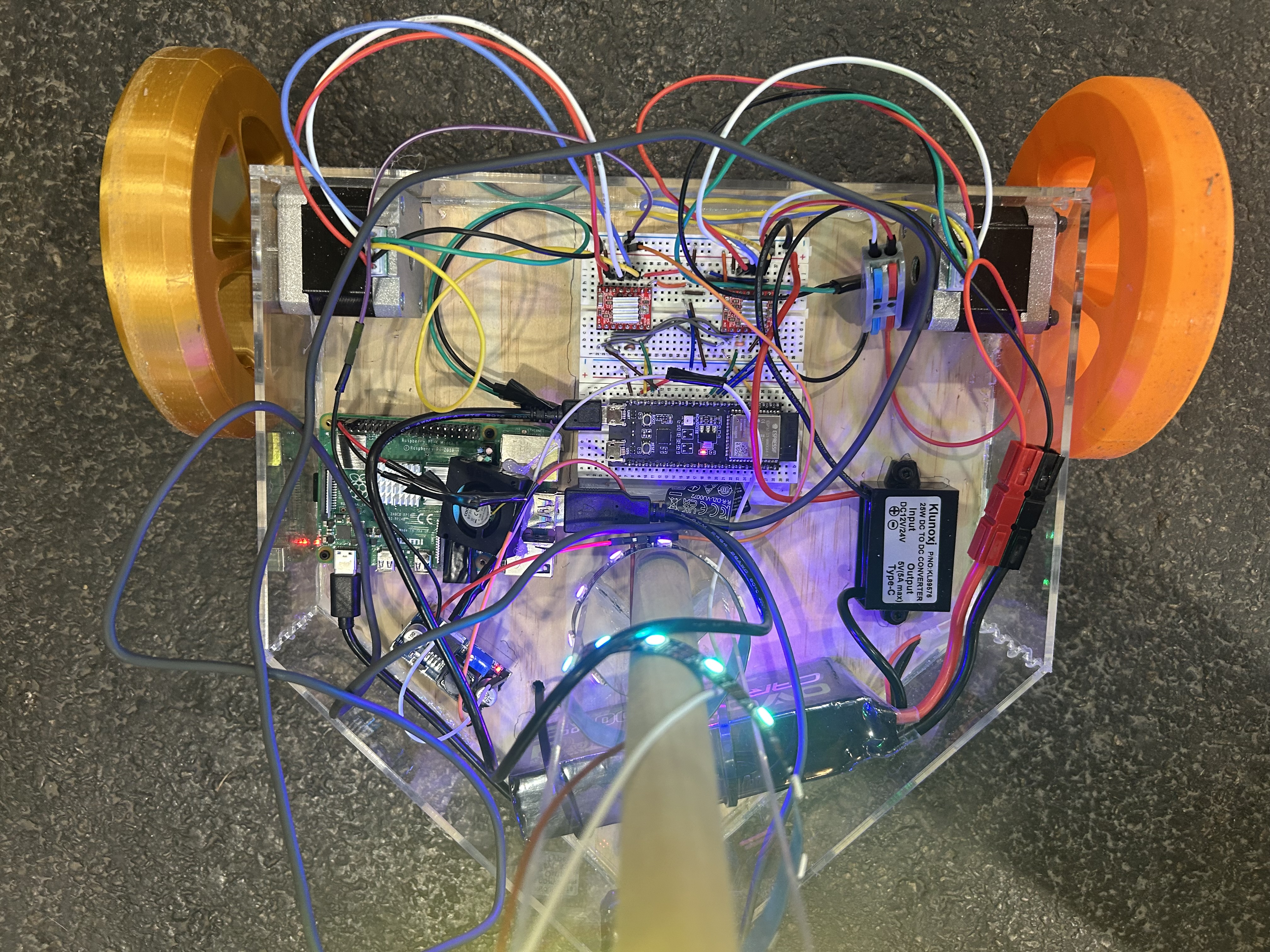
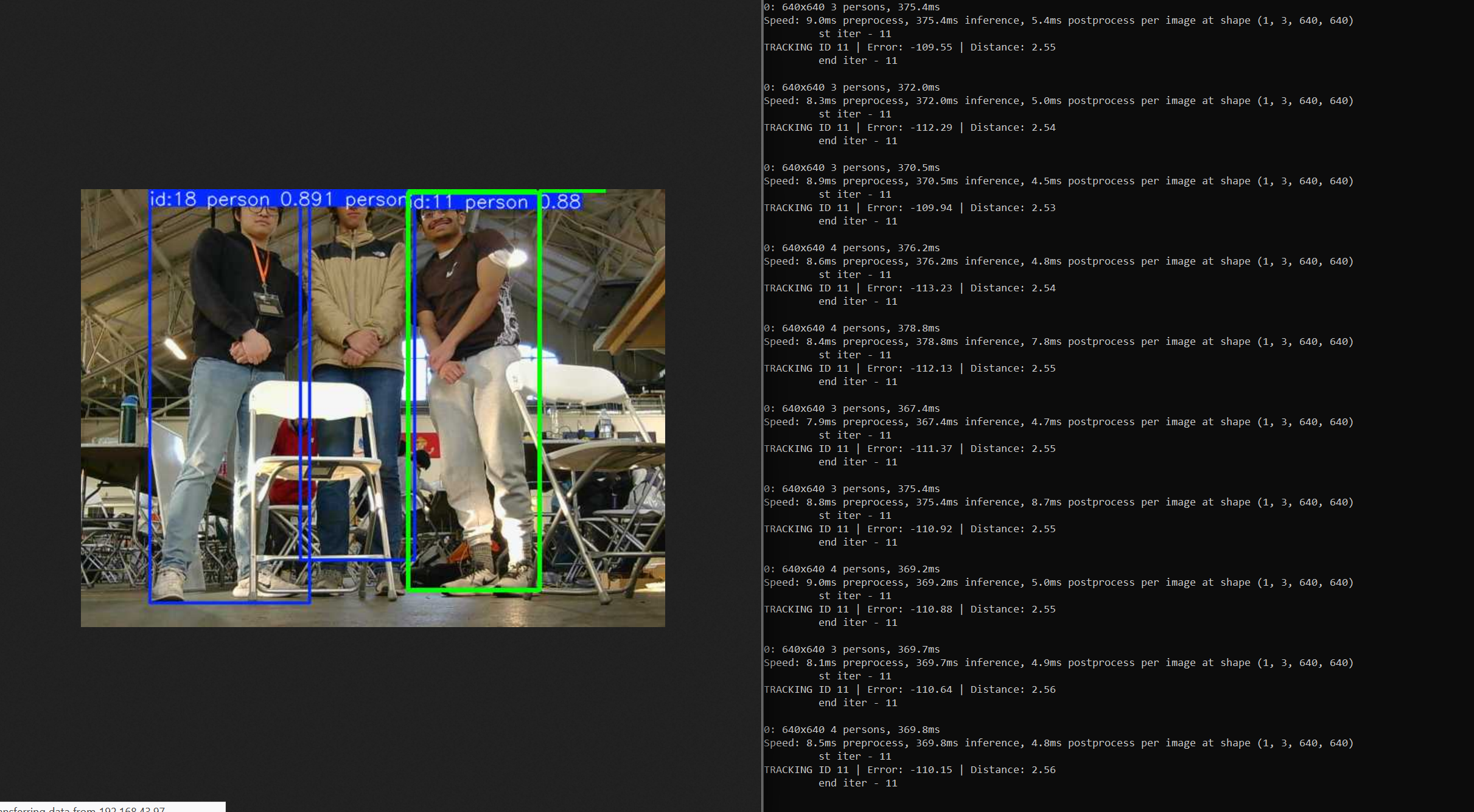
Mechanically, we based it off of a tripod, with 3 points of contact with the ground that support an upward-extending linkage for an OLED display and human interaction devices like a capacitive touch sensor and an RFID tag. To give it mobility, two of these three points were designed with stepper motors and 3D printed wheels, while the third point uses a 360 degree caster wheel to allow movement in all directions. The chassis was laser cut out of plywood as the base and clear acrylic as the frame to ensure structural integrity while enhancing aesthetic appeal. Electrically we used a 3S battery to power our motors and buck converters to power our logic at 5V. On the software side, we used a mix of C++ and Arduino IDE to program our ESP32S3 microcontroller. In addition, we utilized Python, specifically we implemented serial communications using PySerial and computer vision using OpenCV and YOLOv8 Nano.
Challenges we ran into
We burnt out our stepper motors multiple times, though we were able to debug our circuit and fix our mistakes. We also had some issues with uploading code to our ESP32, we were able to fix this by restarting our computers and ensuring that there are not multiple instances of the serial monitor. In addition, we had some trouble debugging the networking of our Raspberry Pi but we were able to work through it.
Accomplishments that we're proud of
We were able to finish our projects. One of our main goals was to try out new tools, such as using stepper motors and stepper motor drivers. In addition, the variety of our project allowed us to implement different ideas and components that we have been wanting to use. For example, we were able to use OLED displays, touch sensors, led strips, cameras, etc. in order to create smaller fun pieces of the project.
What we learned
As previously mentioned we learned how to use stepper motors and stepper drivers, as well as some of the basic mechanics of how they work. In addition, we learned to turn off NFC as it is very easy for someone to set up malicious RFID links, using basic Amazon components. We also learned about some possible edge cases in Arduino IDE where multiple instances of the serial monitor can cause issues when uploading code
What's next for SCAM-bot
Start the hustle. This project has the potential to become a foundational platform for the next generation of intelligent environments by combining RFID technology with computer vision to both identify objects and understand how they are used in real time. In homes, it could track everyday items like keys and medications while recognizing routines and detecting risks, creating spaces that adapt automatically. In healthcare, RFID would ensure accurate tracking of equipment and medication while computer vision could enable continuous, non-invasive patient monitoring and early detection of issues. In industry, it could deliver real-time asset tracking, workflow validation, and improved safety through precise oversight of tools and processes. By uniting RFID and computer vision into a single system, this project moves beyond isolated solutions to create scalable, responsive environments that can transform how we live, care, and work.
Quote of the Hackathon
"The journey of a thousand miles teaches more than the journey of a thousand prompts"
Built With
- 3d-printer
- 3s-battery
- ac-outlet
- ace-hardware
- acrylic
- adjustable-wrench
- alarm-clock
- allen-key
- amazon
- and-gate
- anderson
- arduino
- backpacks
- bagels
- band-aid
- bathroom
- blanket
- bluetooth
- boxes
- brain
- breadboard
- caffeine
- camera
- capacitive-touch-sensor
- car
- ceiling-fan
- celsius
- chair
- clock-app
- clothes
- cream-cheese
- crimper
- data
- devpost
- diet-coke
- doors
- dorito-cool-ranch-mini
- drill
- dupont
- electrical-tape
- electricity
- esp32
- esp32s3
- facts
- fanta-mini
- female-to-female-jumper
- female-to-male-jumper
- flush-cutter
- fork
- fun-yuns
- gasoline
- git
- github
- glasses
- google-maps
- google-slides
- gpu
- hacksaw
- hand-sanitizer
- hands
- heatsink-large
- heatsink-small
- hot-glue
- hot-glue-gun
- hot-glue-stick
- inkscape
- knife
- laptop
- laser-cutter
- lavatory
- led-strip
- lm2596
- logic
- loo
- m2
- m2-standoff
- m2-washer
- m3
- m3-nut
- m3-standoff
- m3-washer
- male-to-female-jumper
- male-to-male-jumper
- micro-usb
- ms-paint
- nand-gate
- nano
- napkins
- nor-gate
- oled-panel
- onshape
- or-gate
- oxygen
- phones
- pillow
- pip
- pizza
- plates
- plier
- plywood
- pn532
- pull-up-bar
- ram
- random-fan
- raspberry-pi
- raspberrypios
- restroom
- rfid-tag
- rom
- sandwich
- scissor
- screwdriver
- sd-card
- sd-card-adapter
- serial
- snacks
- soap
- soda
- solder
- spoon
- stepper-motor-drivers
- sun-chips
- super-glue
- table
- toilet
- toothbrush
- toothpaste
- transistor
- triscuit
- unknown-filament
- unknown-stepper-motors
- usb-c
- usb-c-buck-converter
- veggie-straws
- vs-code
- weather-app
- white-monster
- wifi
- windows
- wire
- wire-stripper
- wires
- wooden-rod
- xbox-controller
- xor-gate
- zip-tie


Log in or sign up for Devpost to join the conversation.