-
-

landing page
-

-

-
-



Inspiration
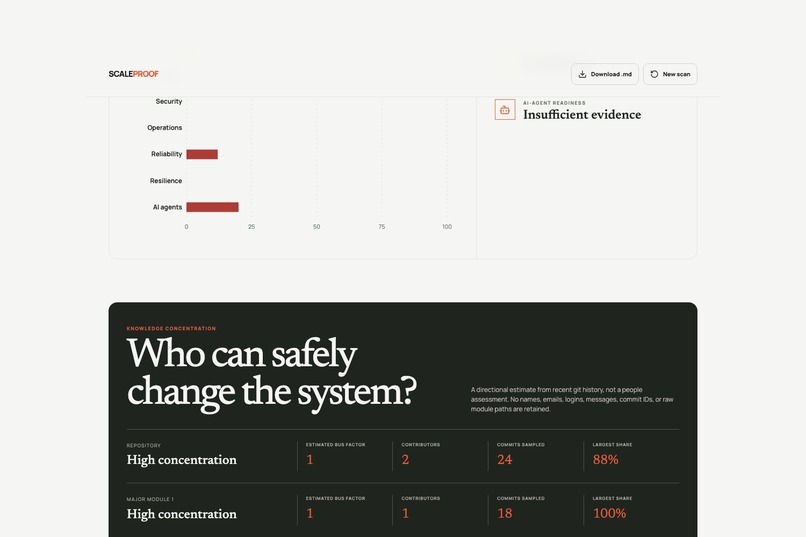
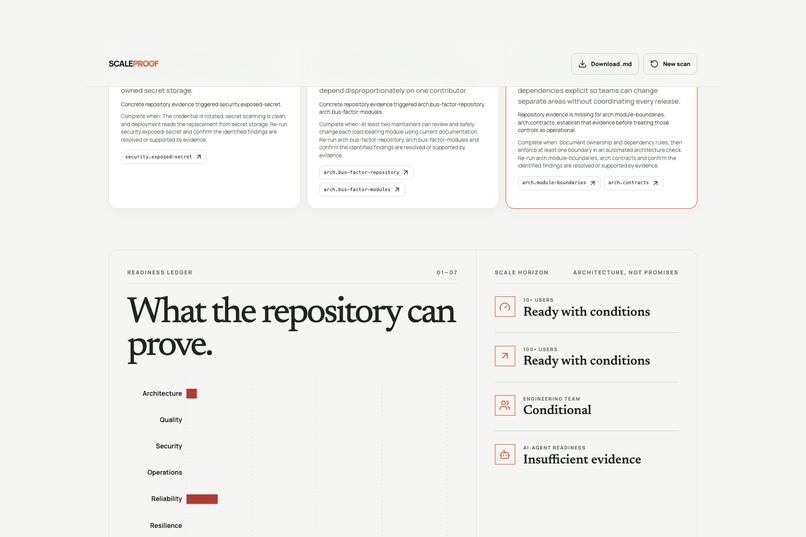
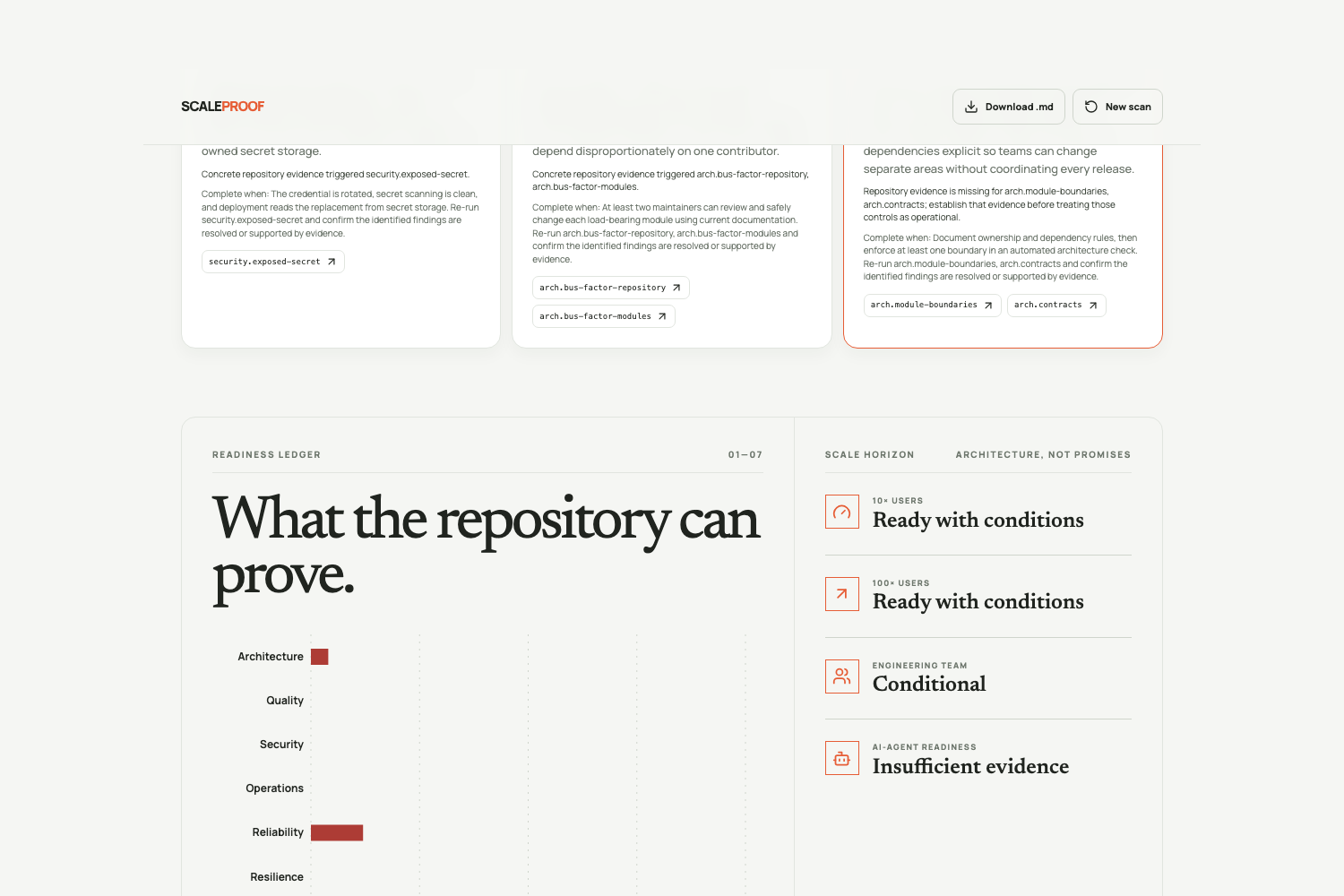
Founders need quick technical insights on codebases to determine its readiness for growth. Scaleproof provides an instant evaluation of a public GitHub repository, giving a clear guidance, if the codebase is 'Fundable', 'Fixable', or needs a 'Rewrite'. Scaleproof recommends three actionable steps.
What it does
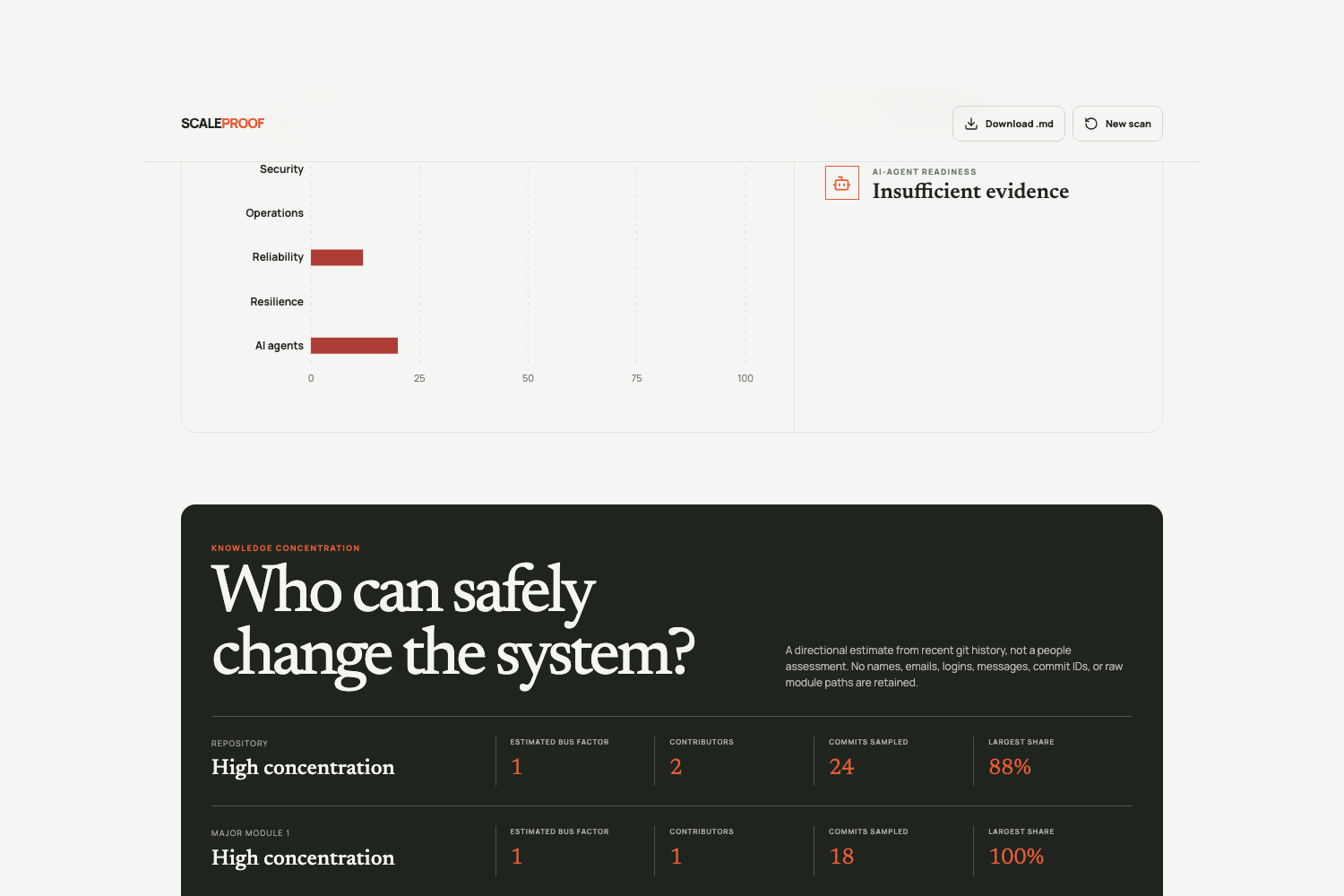
Scaleproof evaluates a GitHub repository in seven areas: architecture, quality, security, observability, reliability, data resilience, and AI readiness. It checks contributor activity and provides signals for scaling, along with a downloadable report. This tool offers a rapid analysis rather than a full audit, keeping missing evidence distinct from failures.
How I built it
Scaleproof is developed in Next.js and TypeScript, ensuring a clear separation of functions. It scans public repository URLs, performs static checks, gathers contributor data, and creates a validated report. GPT plays a supportive role, recommending remediation steps without dictating outcomes.
I used Codex in at least two distinct sessions. The primary implementation session runs the research, architecture, implementation, tests, browser QA, and documentation. A separate Codex 'reviewer' session independently reviewed the results. The reviewer repeatedly found additional issues, which implementer fixed. That implementation-and-review loop made the final product more robust than a single-agent pass.
Challenges I faced
Establishing trust was crucial, so I ensured a clear distinction between missing evidence and verified issues. This was done with Codex/GPT help. The app scoring needs to be ballanced and refined further.
Creating an appealing UI was another hurdle, which I overcame by guiding Codex to mimic a successful design and refining it through testing.
What I learned
GPT implementer/reviewer combo worked well, as they both used the same task list. GPT also helped with admin tasks like generating Readme, License files etc. Clear separation between the repo scan, which is done without AI and the eval, which is GPT's job, is a useful pattern.
Built With
- codex
- eslint
- github-actions
- github-api
- gpt-5.6
- next.js
- node.js
- npm
- openai-api
- playwright
- react
- recharts
- tailwind-css
- typescript
- vitest
- zod

Log in or sign up for Devpost to join the conversation.