Inspiration
The rush toward fully automated AI generation has introduced a costly crisis to the enterprise: "work slop." Roughly 40% of US employees report receiving AI-generated work riddled with critical errors, and 15% of all corporate output now falls into this category. In high-stakes fields like law, finance, and marketing, these unchecked hallucinations create massive legal and financial liabilities. Scaffold solves this by shifting the paradigm from autonomous AI generation to augmented human competence.
What it does
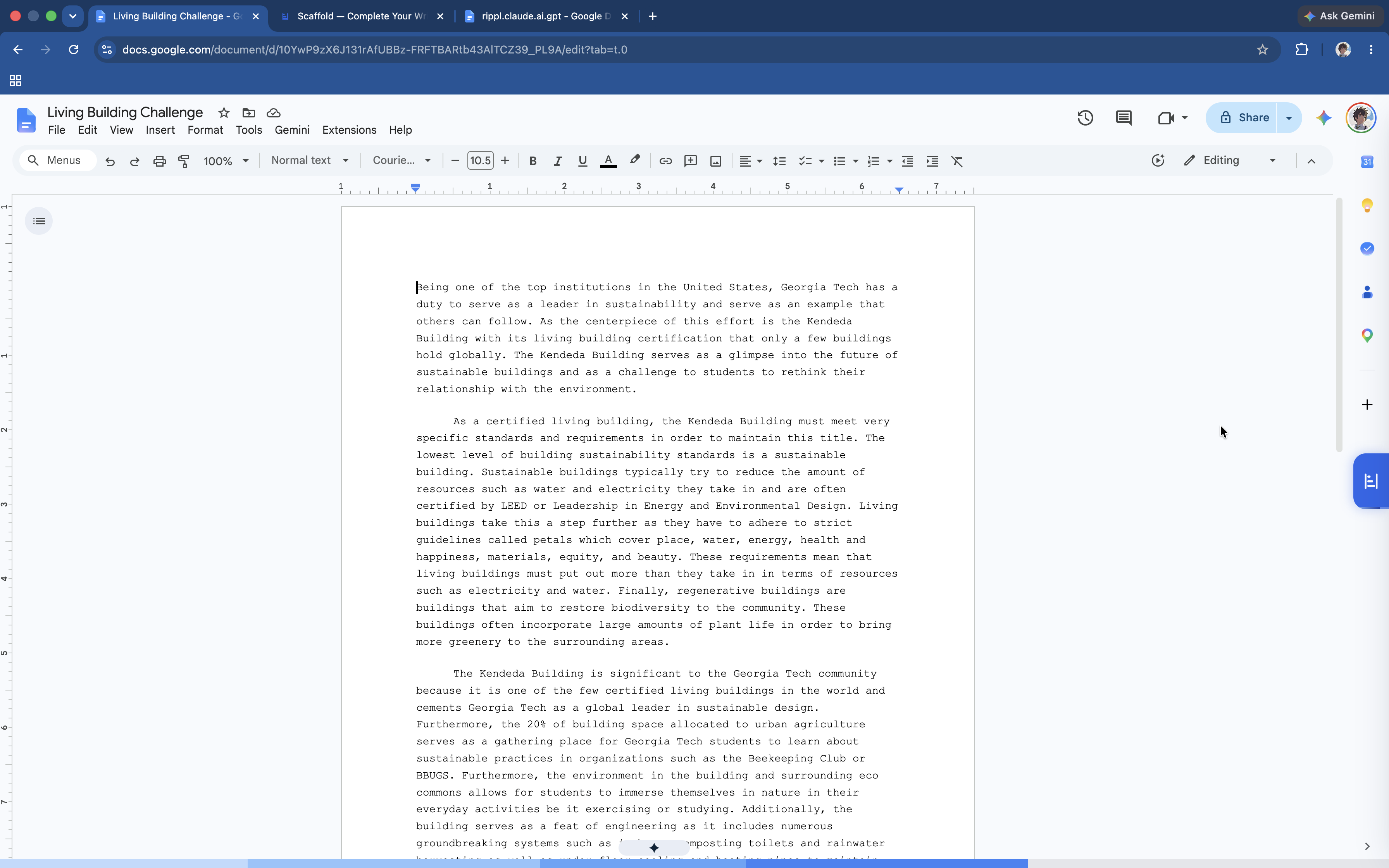
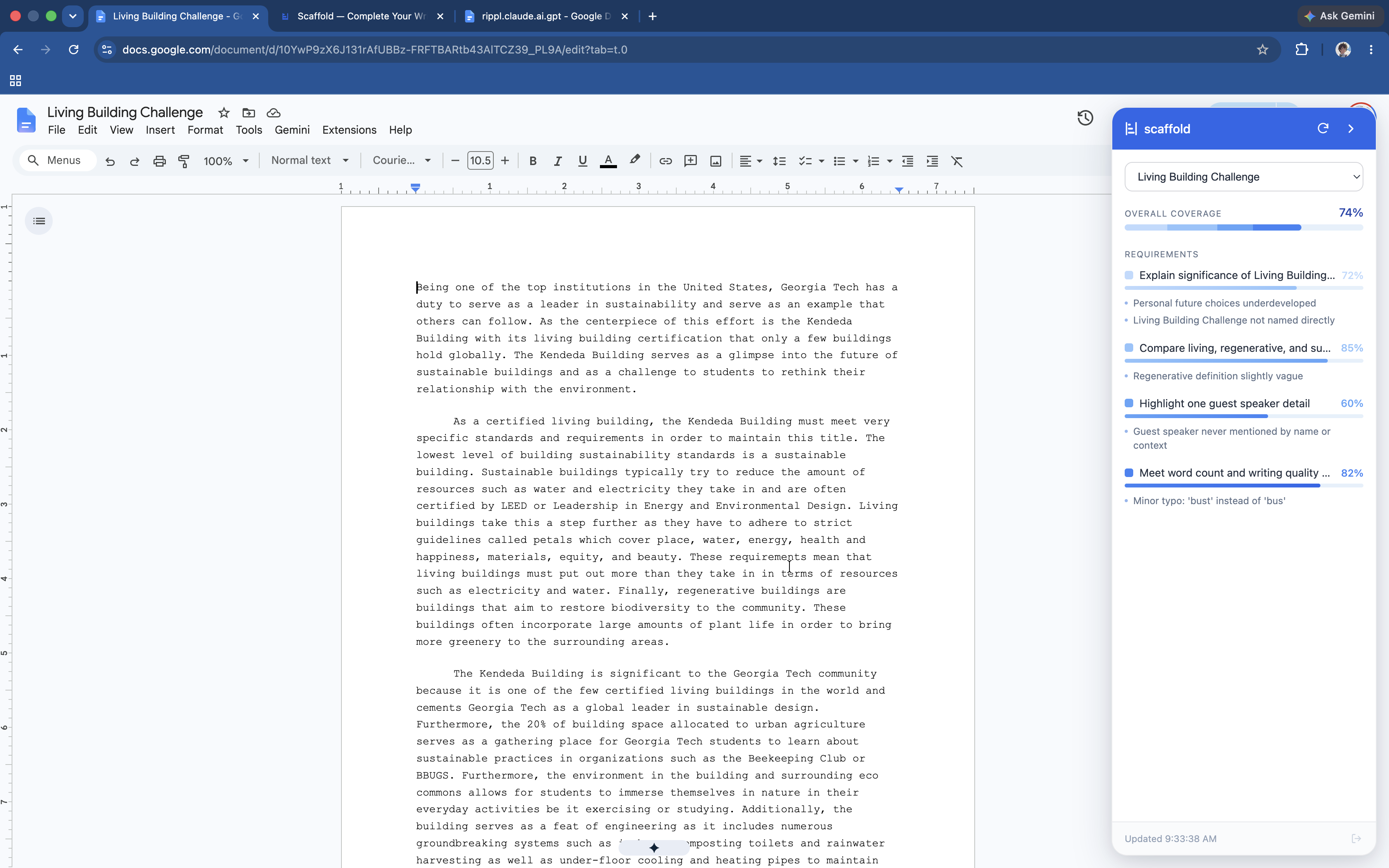
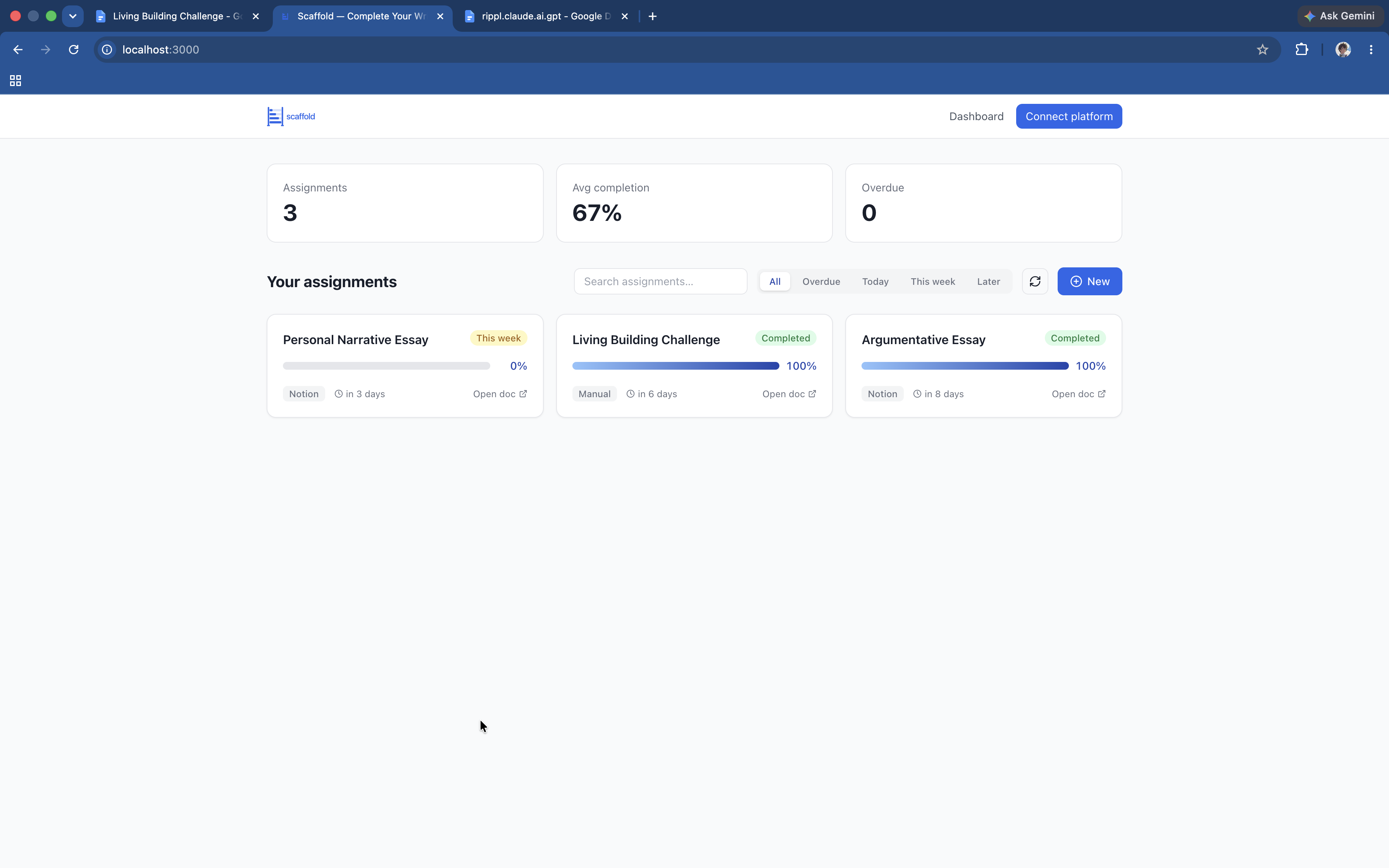
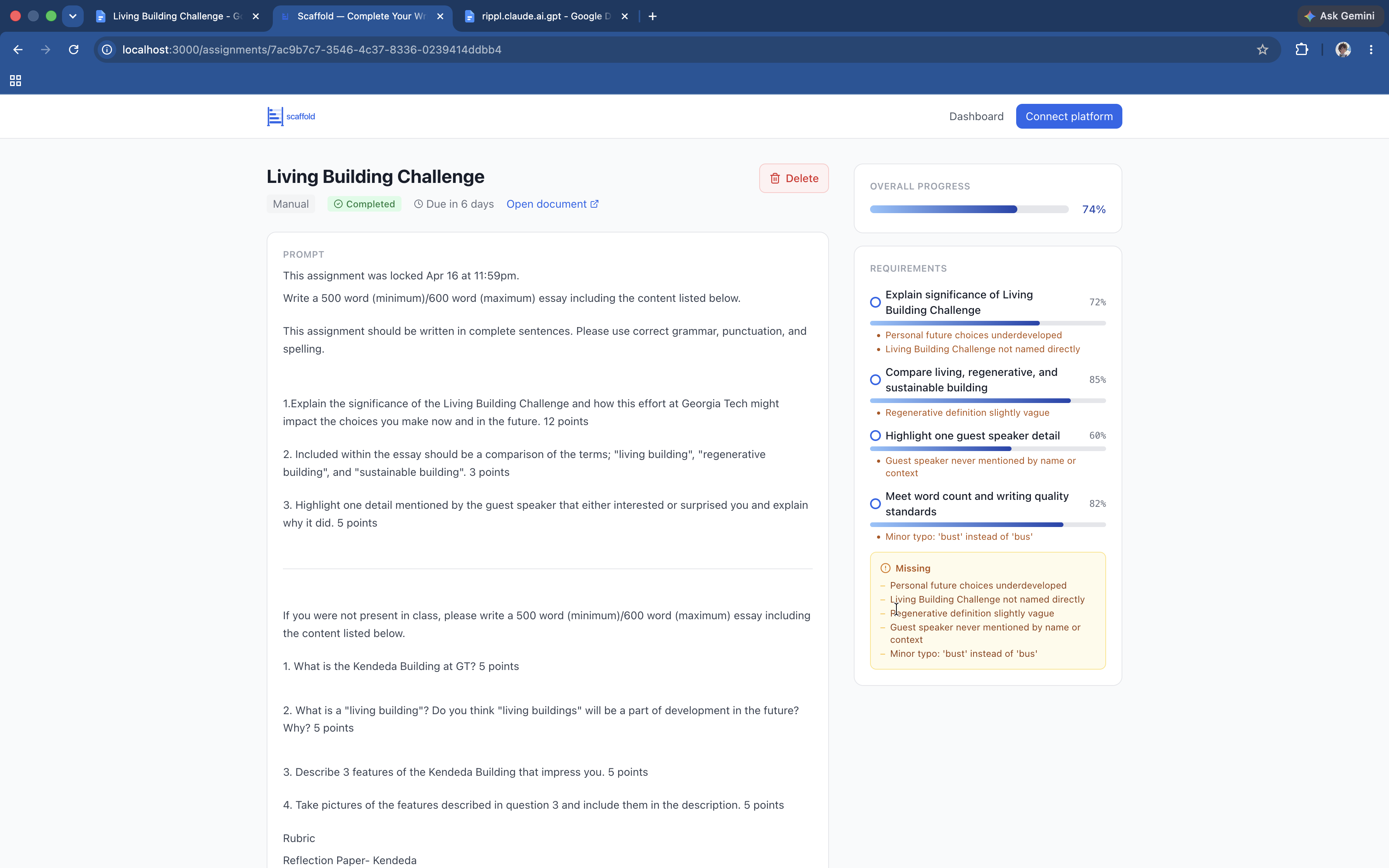
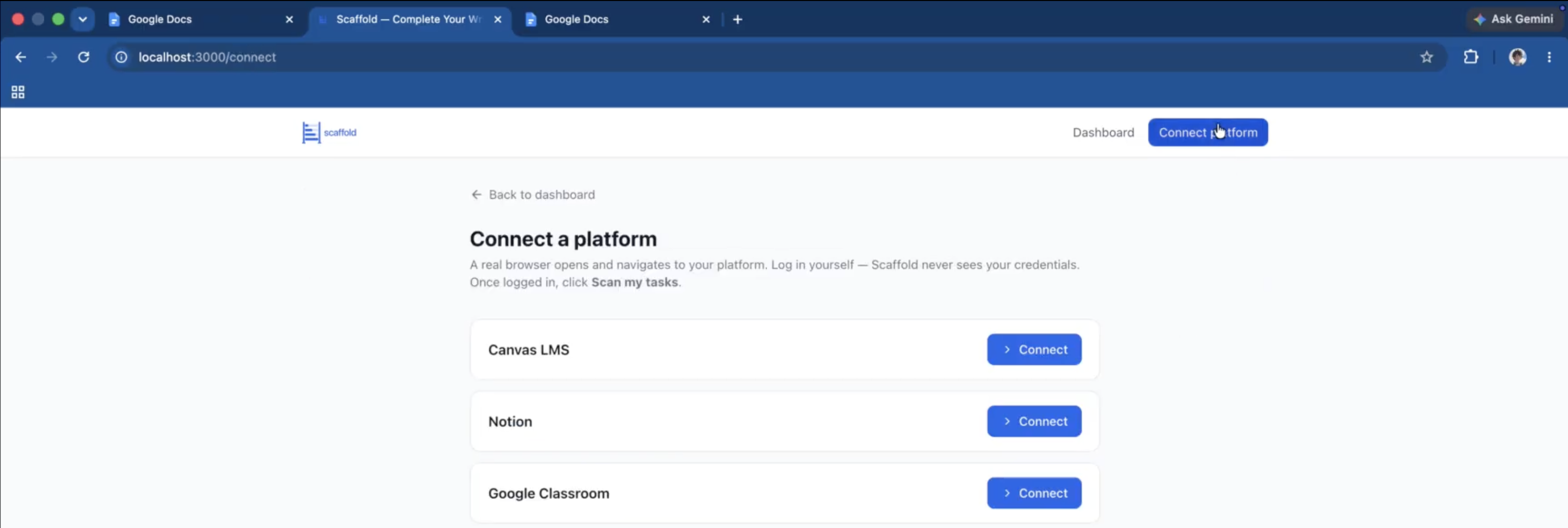
Scaffold is an AI-powered writing assistant that automatically pulls assignment requirements from applications like Notion, Canvas, etc. with an option to manually input rubrics. By dynamically generating rubric subtasks, verifying context, and updating project milestones, Scaffold gives feedback without AI generating the work. This ensures the human writer remains firmly in control of the core ideas, delivering the accuracy that low-tolerance industries need while providing support in making sure the writing content stays on track.
How we built it
Backend: FastAPI, Python, BrowserBase Frontend: Next.js, React Hosted on: Plasmo
Challenges we ran into
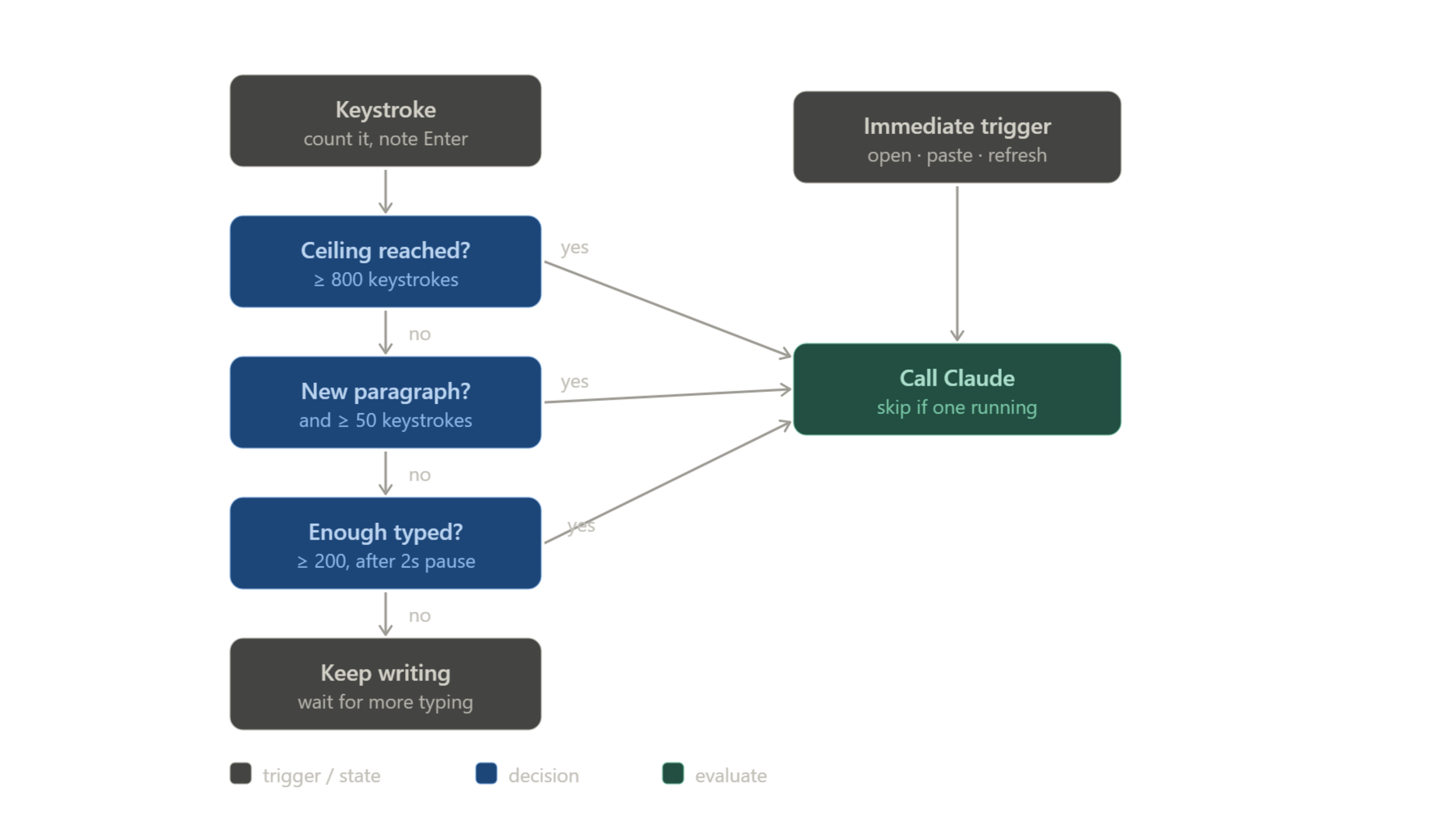
We had to think about how to optimize token costs, since updating the rubric progress bars requires re-examining the text written. We decided to make a few triggers for whether the extension decides to evaluate the writing again, based upon whether or not it detects a new paragraph is added or enough of a word difference from the last time it was checked.
Accomplishments we’re proud of
We’re proud of the UI. We created a logo and animations for the extension, as well as a website that hosts a dashboard for managing lots of tasks and connecting work management apps. We’re also proud that we were able to connect our application across numerous different workspaces.
What we learned
We learned how difficult it can be to turn an idea into something executable. While we had this idea for a while, it was complicated to break down the end goal into actual technical tasks. Additionally, we learned how to communicate as a team so we could streamline the efficiency of tasks.
What’s next for scaffold
We would want to continue testing the extension, since we didn't have time to write an entire assignment from scratch during the hackathon. We would like to see how the extension changes the rubric progress bars when we type word by word rather than testing on previously finished assignments.
Built With
- anguages:-python
- anthropic-api-observability:-sentry
- arize-phoenix
- browserbase
- browserbase-api
- date-fns
- docker-compose-testing:-pytest
- fastembed-(baai/bge-small-en-v1.5)-databases-&-data:-supabase-(postgresql)
- google-docs-api
- google-drive-api
- html/css-frontend:-react
- httpx-ai-/-ml:-anthropic-claude-(sonnet-4.6)
- javascript
- next.js-15
- openinference-infrastructure:-docker
- opentelemetry
- plasmo-(chrome-extension-mv3)-backend:-fastapi
- pydantic
- python-docx
- redis-stack-(redisearch-vector-search)-apis-&-integrations:-google-oauth-2.0
- sql
- stagehand
- stagehand-api
- tailwind-css
- typescript
- uvicorn
- vitest-other:-playwright


Log in or sign up for Devpost to join the conversation.