-
-
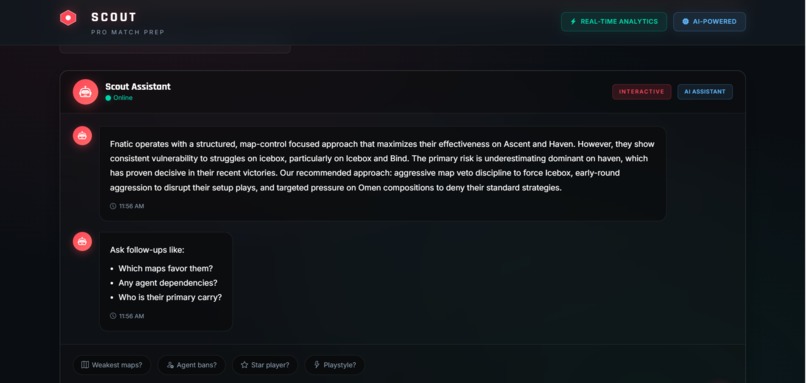
AI Analysis
-
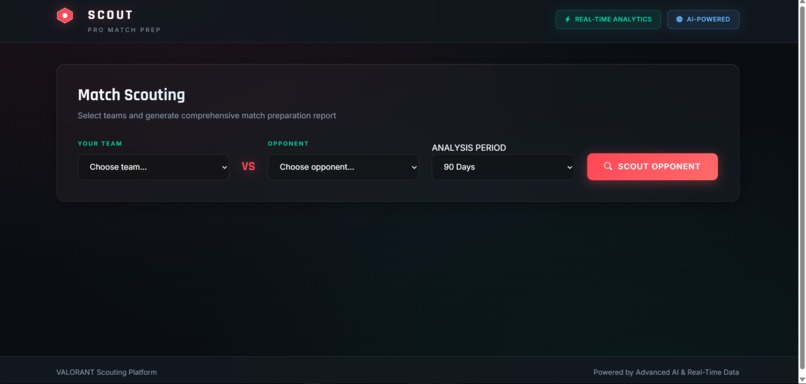
Front Page
-
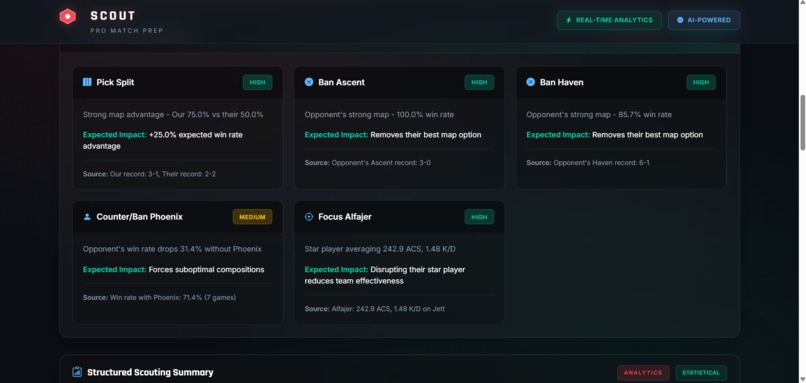
Full Strategy
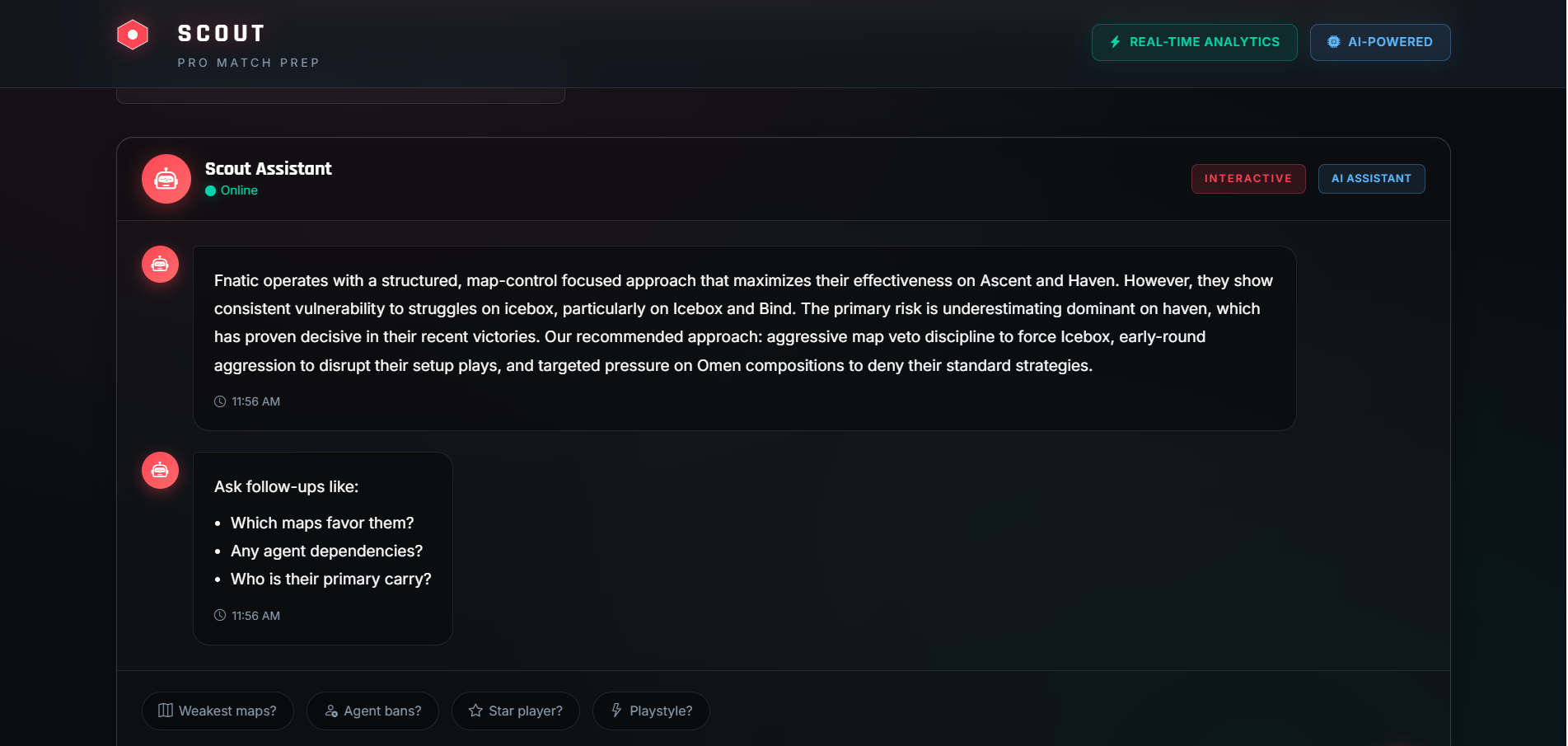
Inspiration
Competitive VALORANT teams have access to massive amounts of match data through platforms like the GRID Esports API, yet turning that data into match-ready decisions is still slow and manual. Coaches often dig through statistics just to answer simple but critical questions such as which map to ban, which agent to deny, or where an opponent is weakest.
We were inspired to build sc0ut-V to close this gap by transforming raw esports data into clear, actionable scouting decisions that can be understood in seconds, not hours.
What it does
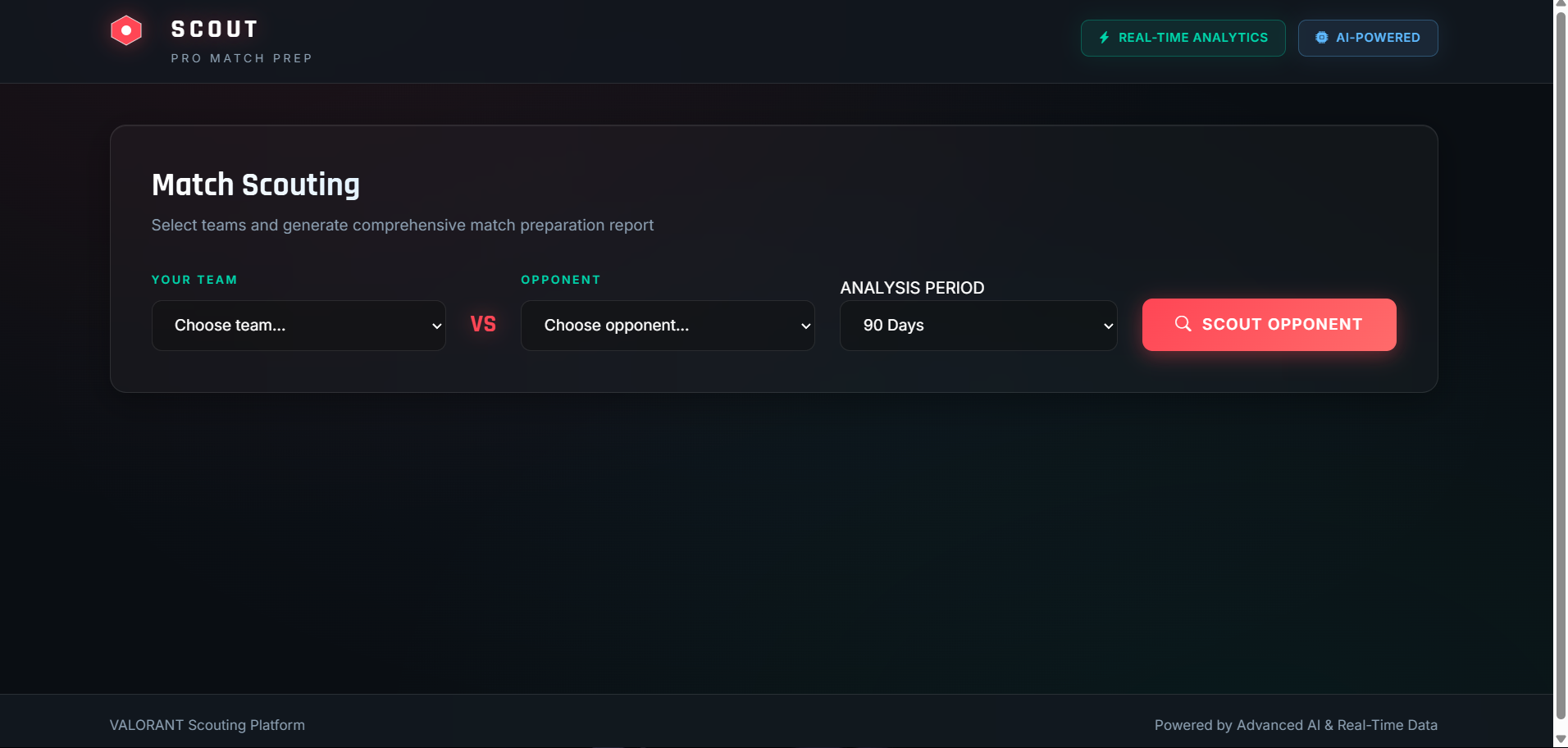
sc0ut-V is an AI-powered VALORANT matchup scouting assistant that automatically generates opponent scouting reports using real competitive data.
Given an upcoming opponent, the system analyzes recent professional matches and produces:
- A structured scouting report backed by GRID data
- A high-level executive insight generated by AI
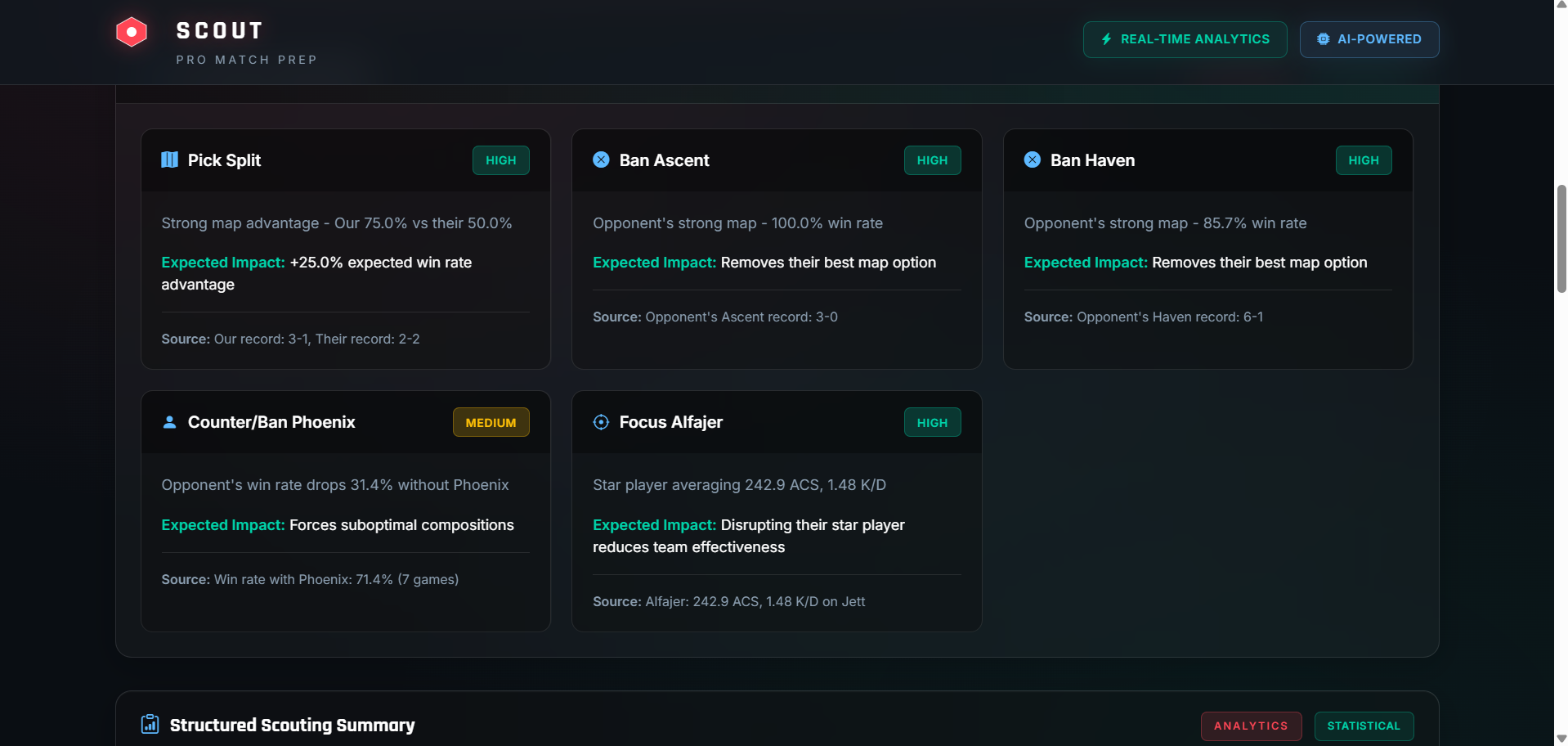
- Clear, coach-ready recommendations for maps, bans, and strategy
All outputs are explainable and grounded in real match data.
How we built it
We built sc0ut-V as an end-to-end system using real esports data and AI:
- The GRID Esports API is used as the single source of truth for teams, matches, maps, agents, and player statistics.
- A Python-based analysis layer computes win rates, tendencies, strengths, and exploitable weaknesses.
- Google Gemini AI interprets these computed metrics and generates a concise executive scouting insight in coach-oriented language.
- The final output is presented in a layered format that prioritizes decisions while keeping all data accessible.
Development was done using JetBrains IDEs, with Junie assisting in rapid iteration and refactoring.
Challenges we ran into
One major challenge was preventing AI hallucination while still delivering meaningful insights. We addressed this by strictly separating responsibilities: GRID provides the facts, our analysis computes patterns, and Gemini explains the meaning.
Another challenge was displaying all available data without overwhelming the user. We solved this through a layered presentation that shows decisions first while keeping full data available for deeper inspection.
Integrating live API data, AI interpretation, and real-time output within a hackathon timeframe was also a significant challenge.
Accomplishments that we're proud of
- Building a fully working scouting assistant using real professional esports data
- Clear separation of data, analysis, and AI interpretation
- Fully explainable, coach-ready recommendations
- Strong alignment with Category 2: Automated Scouting Report Generator
- A clean, professional output suitable for real competitive use
What we learned
- Data alone is not insight — interpretation matters
- Coaches value clarity and speed over complex dashboards
- Responsible AI design is essential in competitive analytics
- Using real data sources like GRID significantly increases trust
- Layered information design makes complex analysis usable
What's next for sc0ut-V
Next, we plan to expand sc0ut-V by:
- Adding live draft-phase support
- Improving head-to-head matchup analysis
- Introducing visual trend charts and heatmaps
- Supporting additional esports titles
- Enhancing real-time strategic updates
Our long-term goal is to evolve sc0ut-V into a comprehensive AI assistant that helps esports teams prepare smarter, faster, and with greater confidence.

Log in or sign up for Devpost to join the conversation.