-
-
-
This image is currently processing. Please be patient...

Inspiration
Current AI systems are mostly designed around answers, conversations, and productivity. We started with a different question:
What happens if AI is not only a tool that responds, but a space where human thinking can evolve?
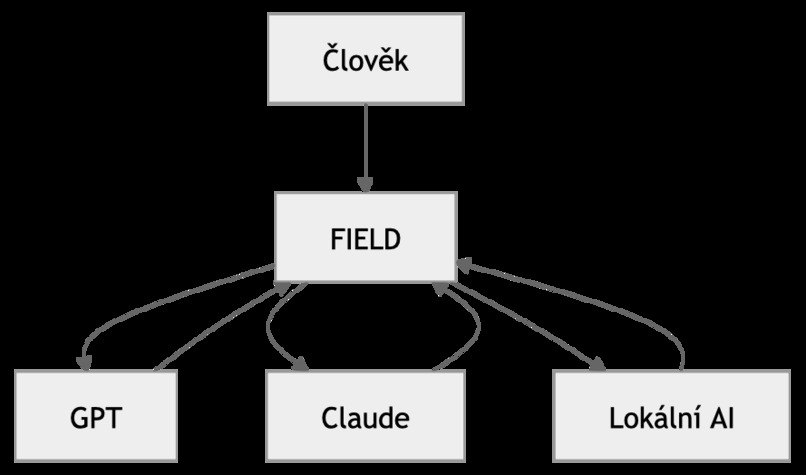
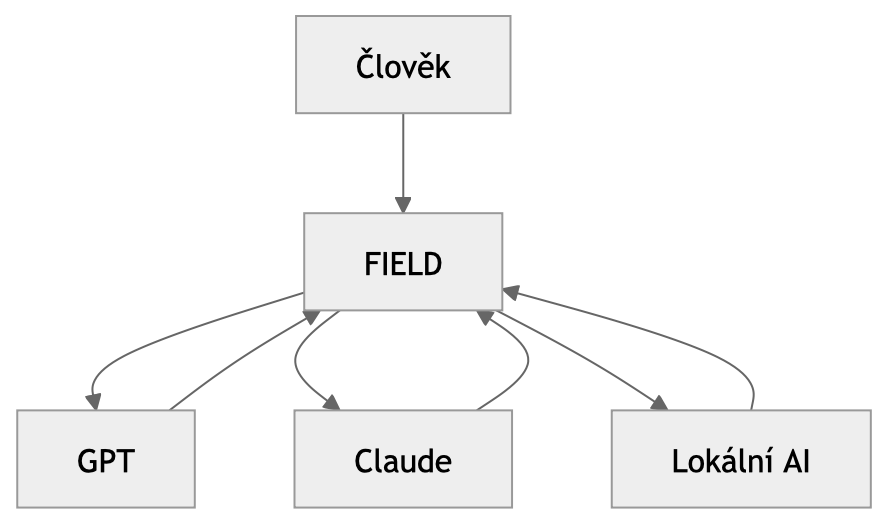
SBZSPACE was inspired by the idea that between a human and AI a third layer can emerge — a measurable space of interaction, meaning, memory, and change.
We wanted to build something that does not replace human thinking, but creates conditions where new ideas, insights, and connections can appear.
⸻
What it does
SBZSPACE creates an intelligent environment where human input becomes a measurable evolving field.
Instead of treating interaction as a simple chat history, SBZSPACE observes:
signals created by humans changes in meaning and context recurring patterns important memories and anchors evolution of the shared space over time
The system transforms conversations into a living structure where meaning can accumulate.
The goal is not to generate more text — it is to detect when something meaningful emerges.
⸻
How we built it
SBZSPACE was built as a modular AI platform focused on the concept of a field.
Architecture:
Frontend: TypeScript-based interactive space interface Backend: API services managing spaces, signals, memory, and metrics Database: Persistent storage for field evolution and user-created structures Semantic layer: Embeddings and AI models for measuring similarity and meaning Memory system: Extracts important anchors, decisions, and recurring concepts Metrics engine: Measures changes in presence, continuity, emergence, and memory
We intentionally moved away from the traditional chatbot architecture.
The primary object is not a message.
The primary object is the Space.
⸻
Challenges we ran into
The biggest challenge was defining something that does not have an existing technical category.
Most AI systems measure:
tokens accuracy completion quality user engagement
SBZSPACE explores something less obvious:
Can interaction itself become a measurable phenomenon?
Other challenges:
separating observed data from interpretation creating meaningful metrics without pretending to understand everything designing AI interaction that supports reflection instead of dependency building a system where uncertainty is preserved
⸻
Accomplishments that we’re proud of
We created a working prototype of a new interaction model between humans and AI.
Key achievements:
Built a functional field-based AI architecture Created a system that tracks semantic evolution instead of only conversation history Designed memory anchors that preserve important moments Developed metrics for measuring changes inside a space Established a new product philosophy: Human speaks. Space changes. Meaning emerges.
SBZSPACE is not just another AI assistant.
It is an experiment in creating a new layer of human–AI interaction.
⸻
What we learned
We learned that the hardest part of AI is not generating information.
The harder problem is understanding:
what matters what should persist what changed why a moment became meaningful
We learned that future AI systems may not only be judged by how well they answer questions, but by how well they create environments where humans can think better.
⸻
What’s next for SBZSPACE
The next step is expanding SBZSPACE from a prototype into a complete intelligence environment.
Future directions:
stronger semantic measurement personal and team spaces long-term memory evolution AI agents operating inside the field tools for companies, education, and creative teams research into measurable human–AI emergence
The long-term vision:
Build a new category between human intelligence and artificial intelligence — a shared space where new meaning can emerge.

Log in or sign up for Devpost to join the conversation.