-
-
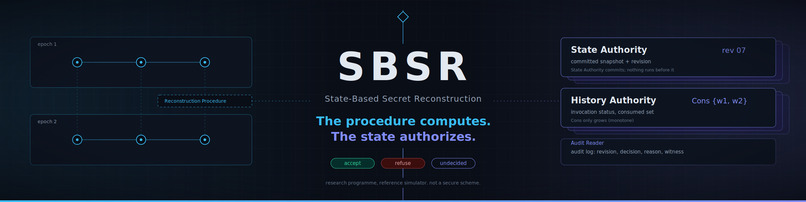
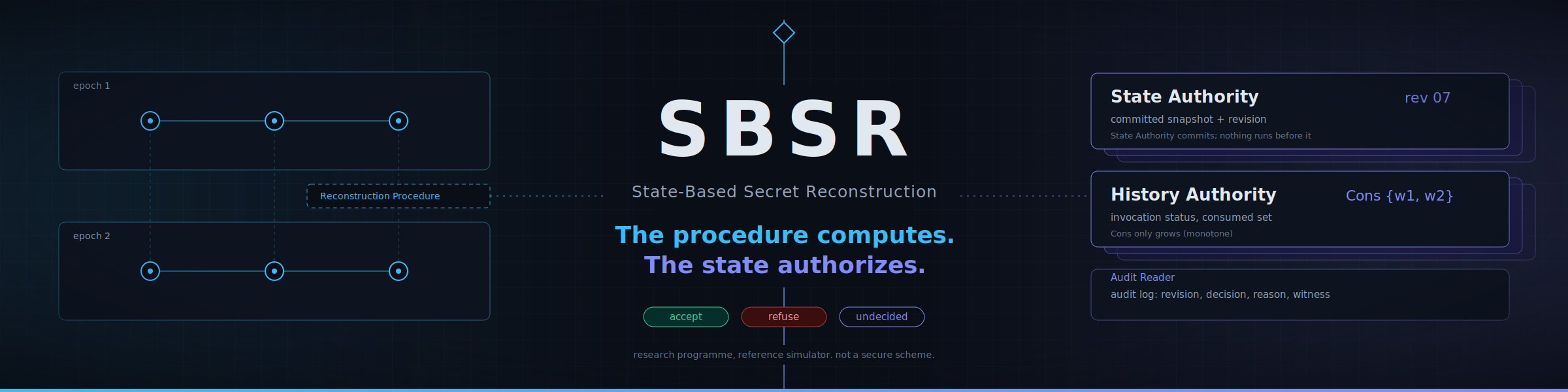
SBSR — State-Based Secret Reconstruction. The procedure computes. The state authorizes.
-
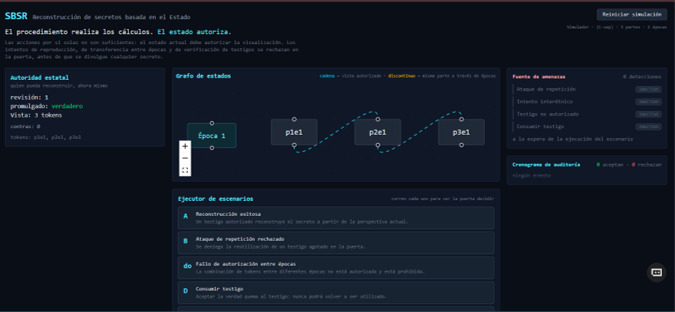
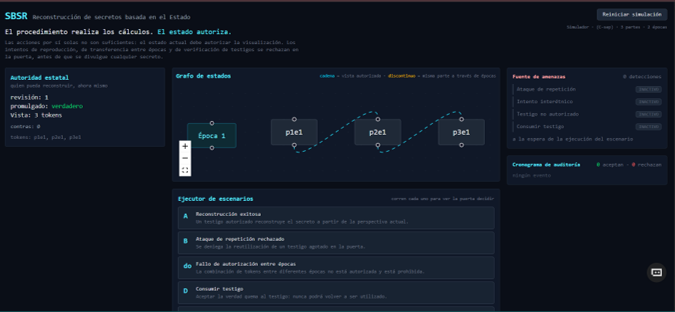
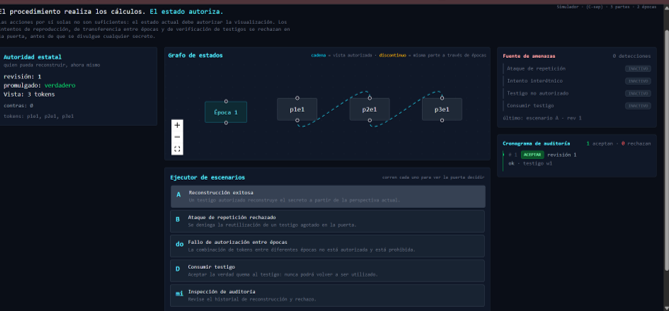
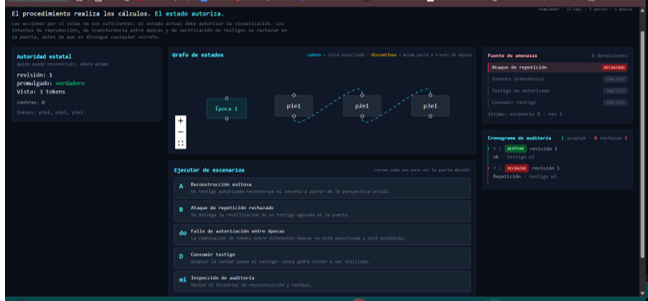
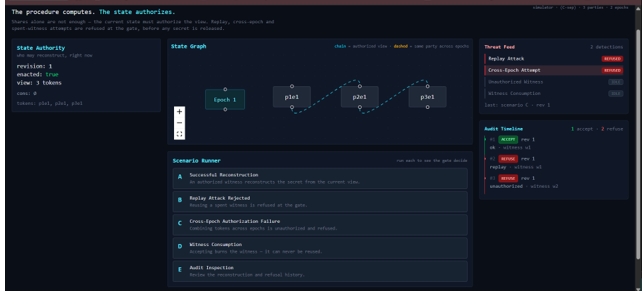
SBSR Command Center — Interactive visualization of state-based authorization, replay protection, cross-epoch validation, and auditability.
-
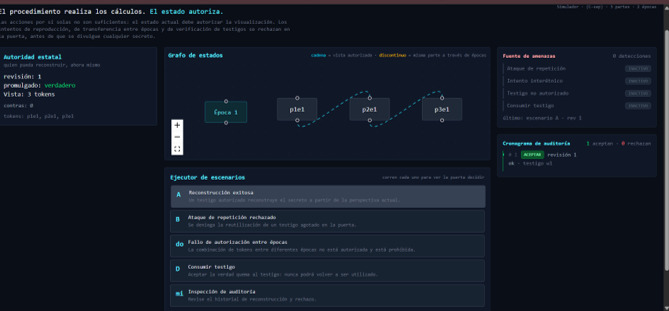
Successful Reconstruction — reconstruction is mathematically possible and authorized by the current system state.
-
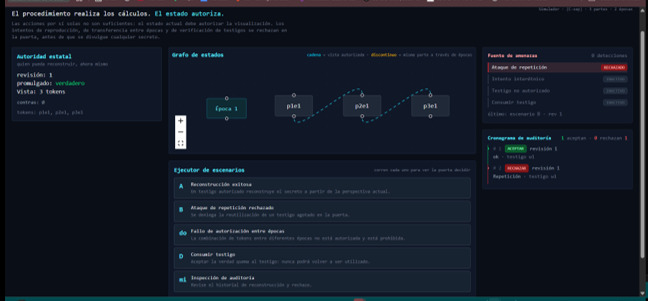
Replay Attack Rejected — SBSR prevents the reuse of previously consumed witnesses.
-
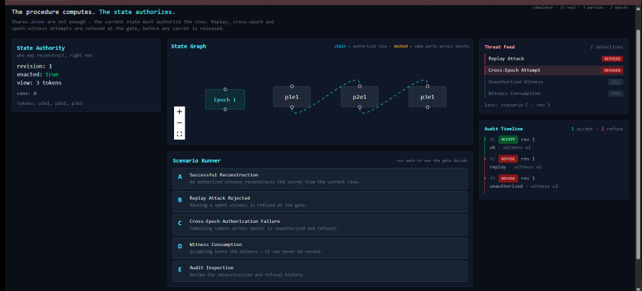
Cross-Epoch Authorization Failure — SBSR rejects token combinations that violate state-based authorization rules.
-
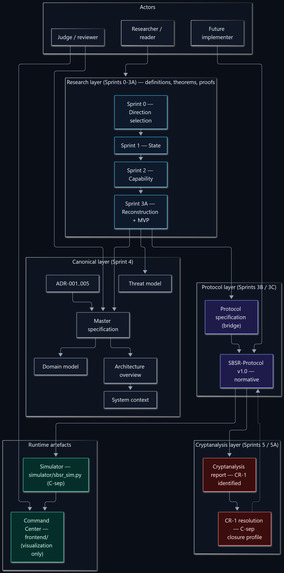
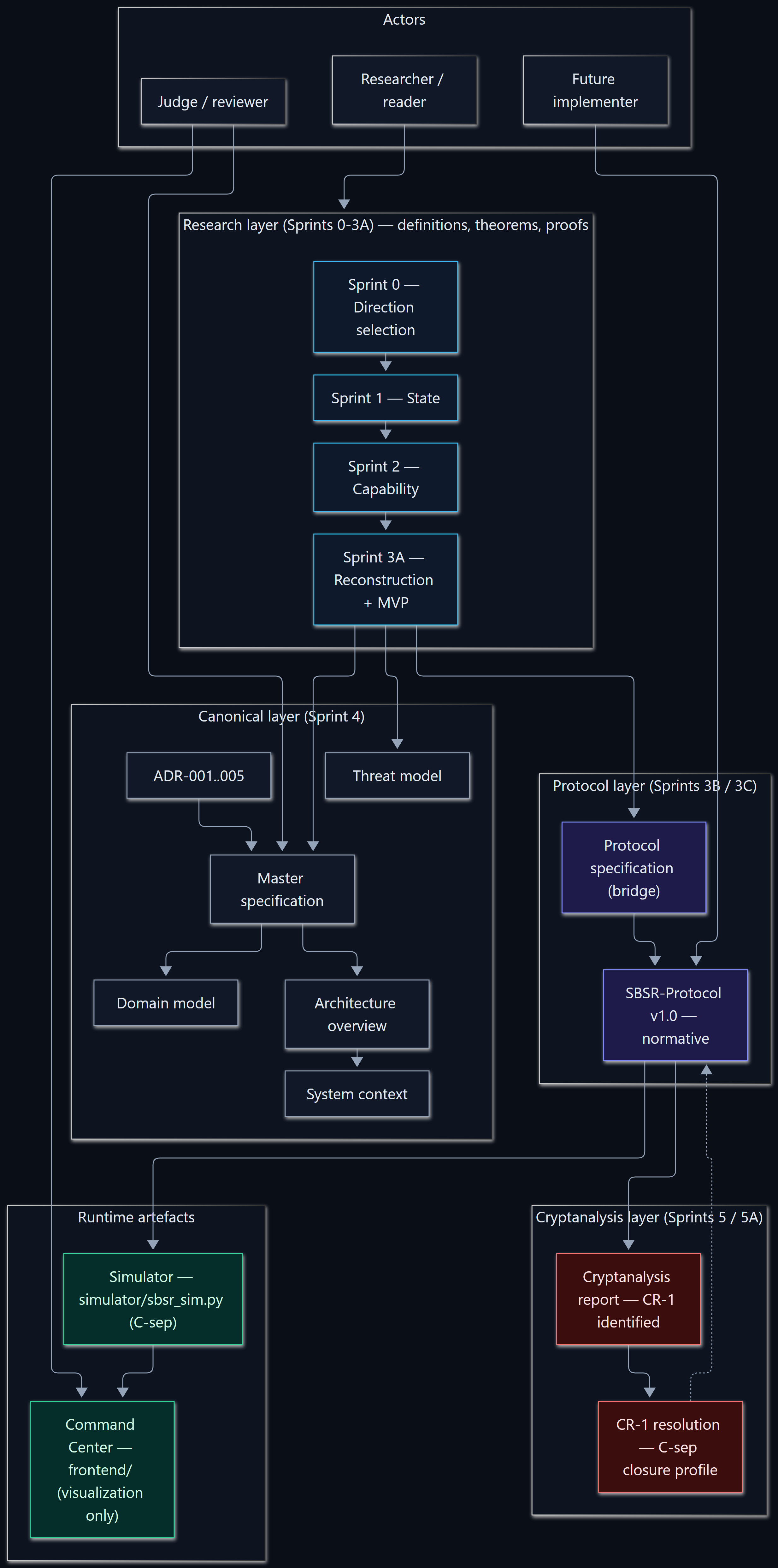
System Architecture — State Authority, Capability Evaluation, Reconstruction Engine, History Authority, and Audit Component.
-
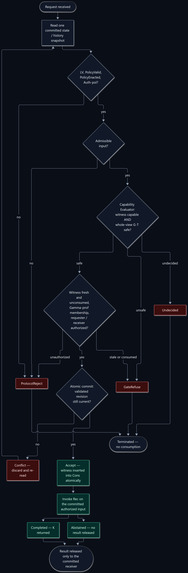
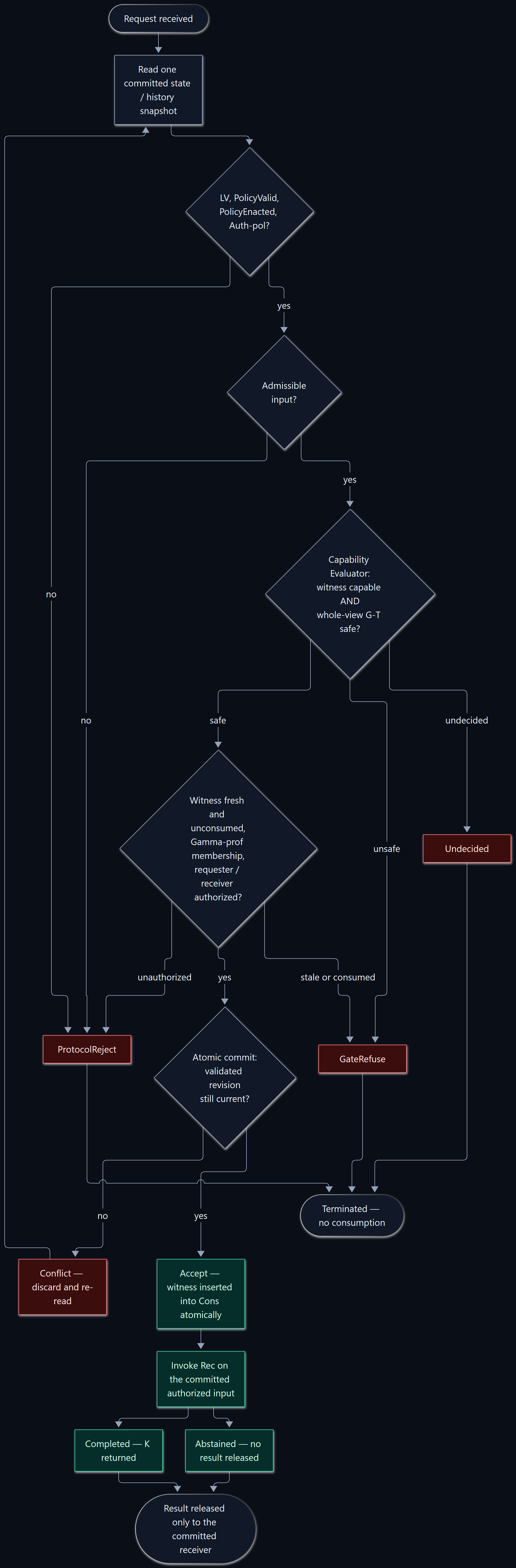
Protocol Flow — end-to-end authorization and reconstruction lifecycle.
-
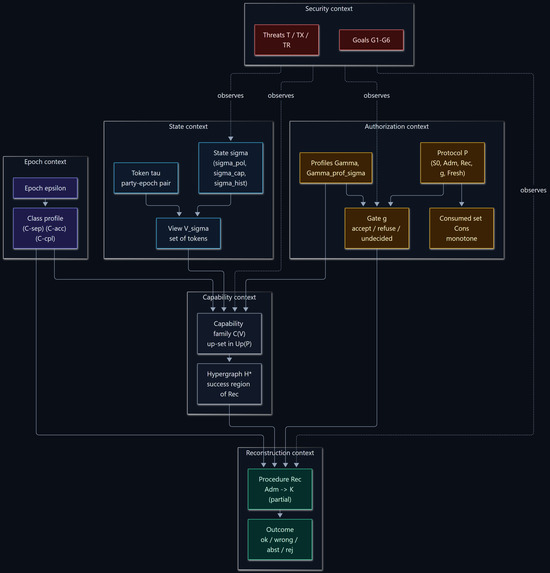
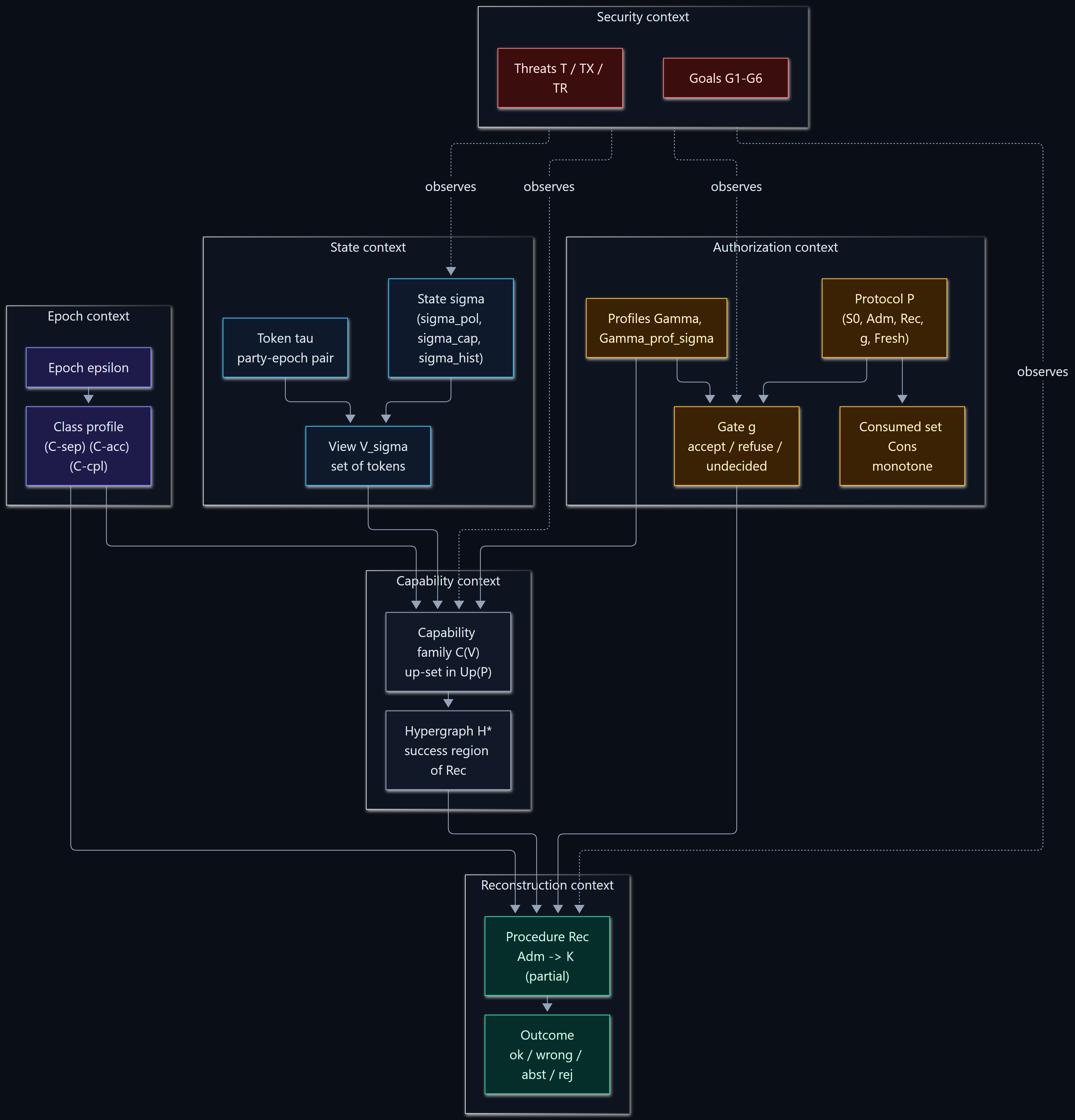
Domain Model — relationships between states, capabilities, witnesses, and authorization constraints.
Inspiration
Traditional secret-sharing systems focus on a single question:
Can a set of shares reconstruct the secret?
While researching reconstruction security, I realized that another question is equally important:
Even if reconstruction is possible, should it be authorized?
SBSR was created to investigate reconstruction authorization as a mathematical property of system state rather than as a property of reconstruction procedures alone.
What it does
SBSR (State-Based Secret Reconstruction) is a research framework that separates reconstruction capability from reconstruction authorization.
The system evaluates not only whether reconstruction is mathematically possible, but also whether reconstruction is authorized under the current system state.
The framework demonstrates:
- State-based authorization
- Replay rejection
- Cross-epoch validation
- Witness consumption
- Auditability
How we built it
The project was developed through multiple research and engineering stages:
- State Modeling
- Capability Modeling
- Reconstruction Modeling
- Protocol Design
- Protocol Hardening
- Cryptanalysis
- Simulator Development
- Command Center Frontend Development
The final result combines mathematical foundations, protocol engineering, cryptanalysis, simulation and an interactive visualization layer.
Challenges we ran into
The biggest challenge was not implementation.
The biggest challenge was formalization.
Throughout development we repeatedly encountered situations where reconstruction was possible but not necessarily authorized. We also had to model replay resistance, cross-epoch interactions, witness consumption and authorization policies while keeping the framework mathematically coherent.
Accomplishments that we're proud of
We successfully produced:
- A complete protocol specification
- A formal research corpus
- A documented cryptanalysis process
- A runnable reference simulator
- A React-based SBSR Command Center
- Architecture and protocol diagrams
- A public GitHub repository
The simulator demonstrates five validated scenarios including successful reconstruction, replay rejection, cross-epoch authorization rejection, witness consumption and audit verification.
What we learned
Security is not only about what can be computed.
Security is also about what should be allowed.
One of the main lessons of this project is that reconstruction capability and reconstruction authorization are fundamentally different concepts and should be treated independently.
What's next for SBSR
Future work includes additional protocol validation, cryptanalysis, benchmarking and further development of the theoretical framework.
The current submission focuses on demonstrating the SBSR model, its protocol concepts, its simulator and its Command Center frontend.
Built With
- cryptography
- css
- cybersecurity
- github
- mathematics
- mermaid
- plantuml
- protocoldesing
- python
- react
- tailwind
- typescript
- vite
