Inspiration
SBS (Smart Blind Stick) was inspired by the need to make mobility safer and more independent for people who are blind or visually impaired. Traditional walking sticks help users detect obstacles through physical contact, but obstacles ahead can sometimes be difficult to identify early. We wanted to create an affordable smart solution that could provide an early warning using sound.
What it does
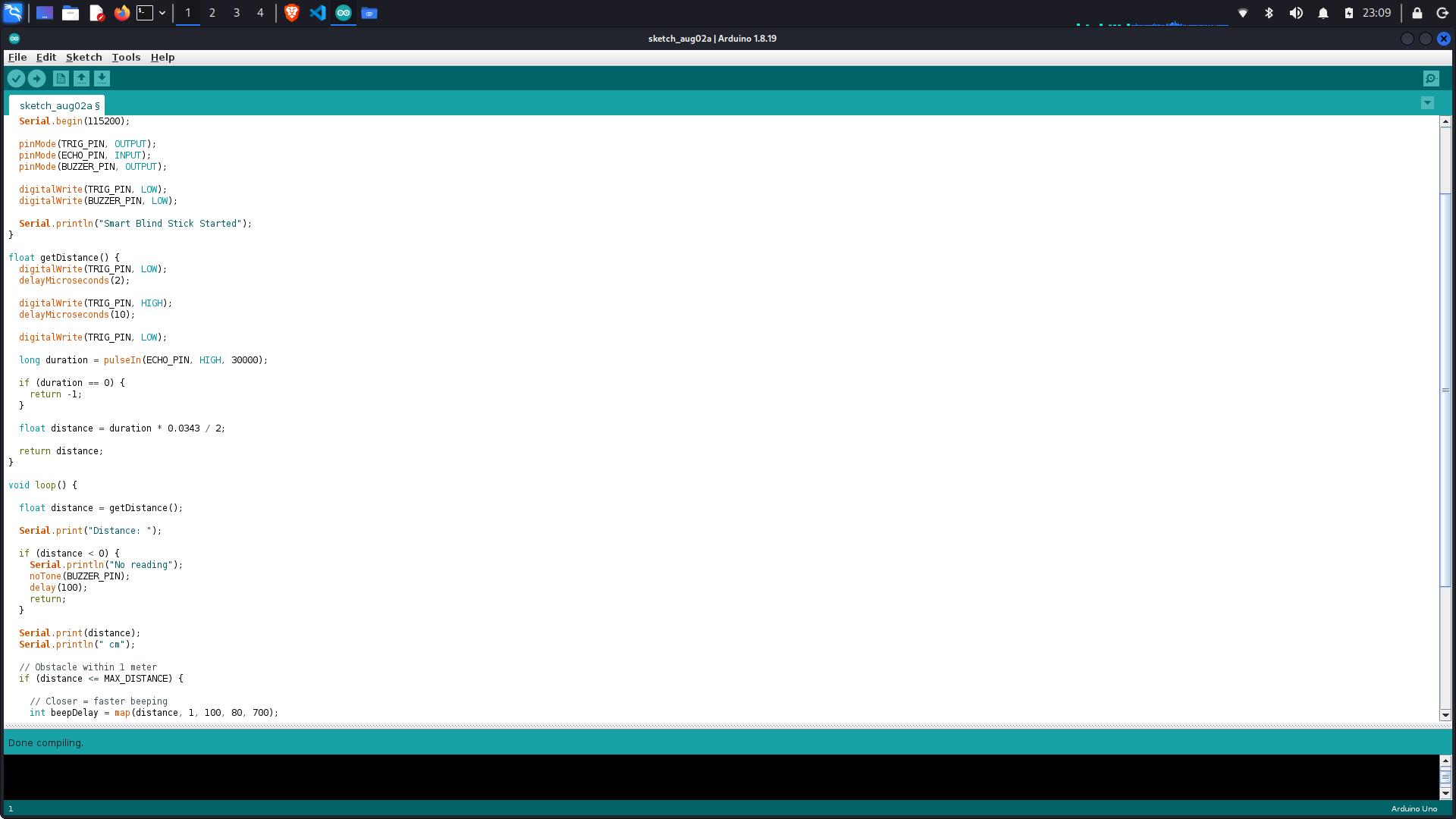
SBS uses an ultrasonic sensor to detect obstacles up to 1 meter ahead. When an obstacle enters this range, the system activates a buzzer. The closer the obstacle gets, the faster the buzzer alerts the user. When there is no obstacle within 1 meter, the buzzer remains silent.
How we built it
We built SBS around a NodeMCU ESP8266, an HC-SR04 ultrasonic sensor, and a buzzer. The ultrasonic sensor measures the distance between the stick and an object by sending and receiving sound waves. The NodeMCU processes the distance measurement and controls the buzzer based on how close the obstacle is. The system was programmed using the Arduino IDE.
Challenges we ran into
One of our main challenges was getting accurate distance readings from the ultrasonic sensor and making the buzzer respond appropriately. We also had to consider the difference between the 5V output of the HC-SR04 Echo pin and the 3.3V GPIO levels of the NodeMCU, requiring careful wiring and voltage protection. Finding the right alert timing was another challenge so that the warnings were noticeable without becoming confusing.
Accomplishments that we're proud of
We successfully created a working prototype that can detect obstacles within 1 meter and provide an audio warning. We are particularly proud that SBS uses relatively simple and affordable components while demonstrating how embedded technology can be applied to improve accessibility and independence.
What we learned
Through SBS, we learned how to work with ultrasonic distance sensors, NodeMCU/ESP8266, Arduino programming, GPIO pins, and buzzer control. We also learned that designing assistive technology requires more than making something technically functional—it needs to provide clear, reliable, and practical feedback to the person using it.
What's next for SBS
Our next goal is to make SBS more advanced, reliable, and comfortable to use. Future improvements could include multiple ultrasonic sensors for wider obstacle detection, detection of steps or drop-offs, a rechargeable battery system, vibration feedback alongside sound, a more compact design, and eventually connectivity features that could make SBS even more useful as an assistive technology device.


Log in or sign up for Devpost to join the conversation.