-
-
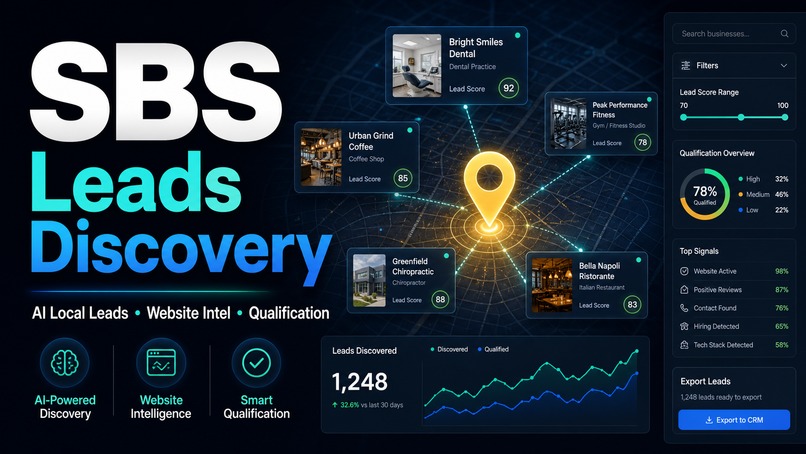
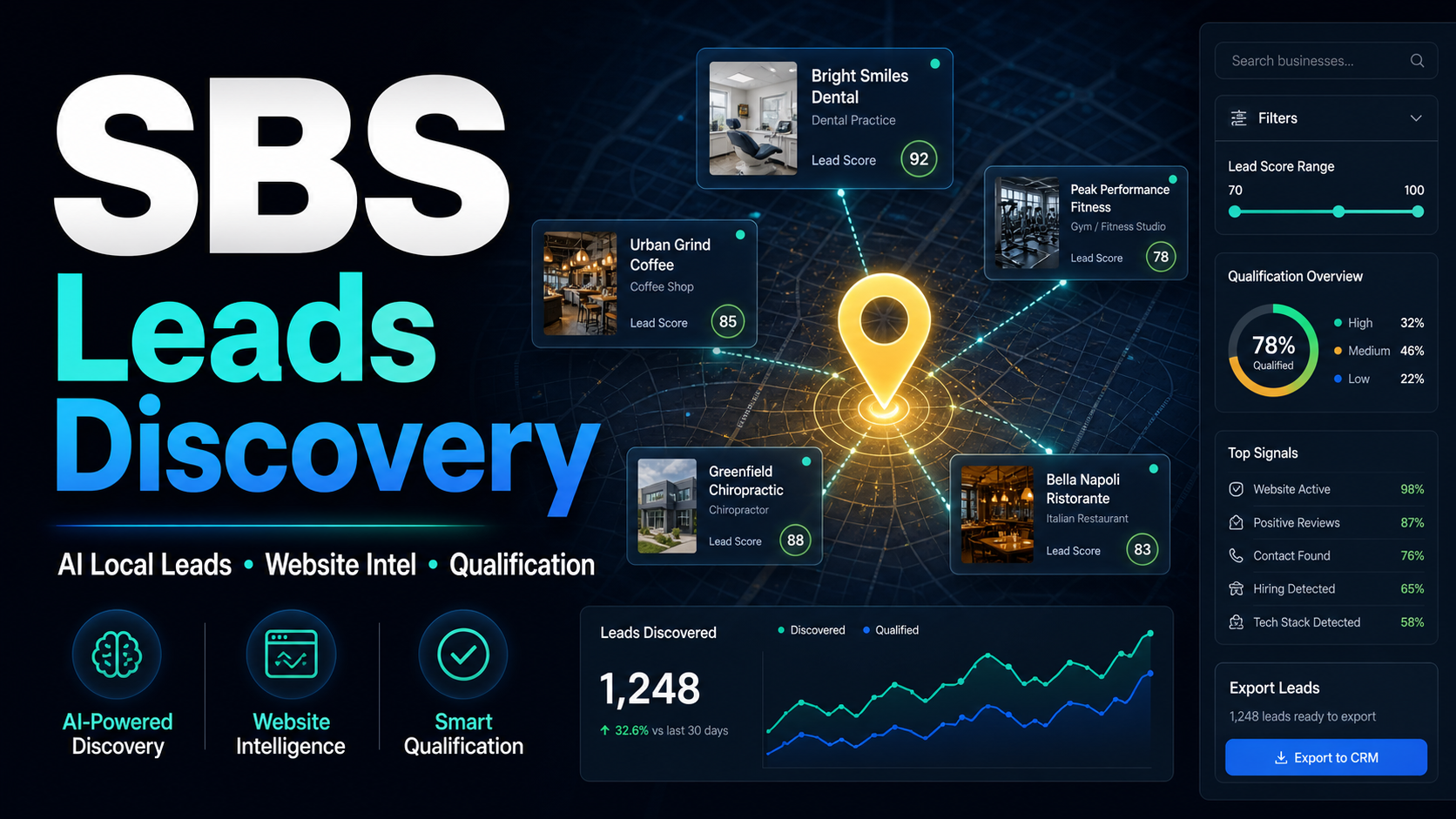
SBS Leads Discovery overview showing AI-powered local business discovery, lead scoring, and outreach workflow.
-
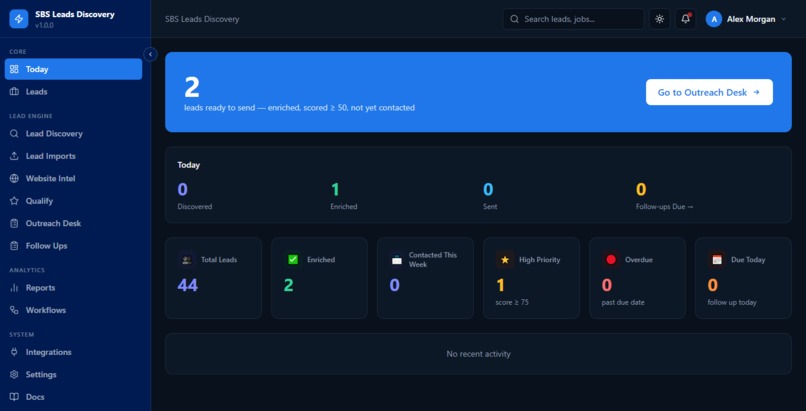
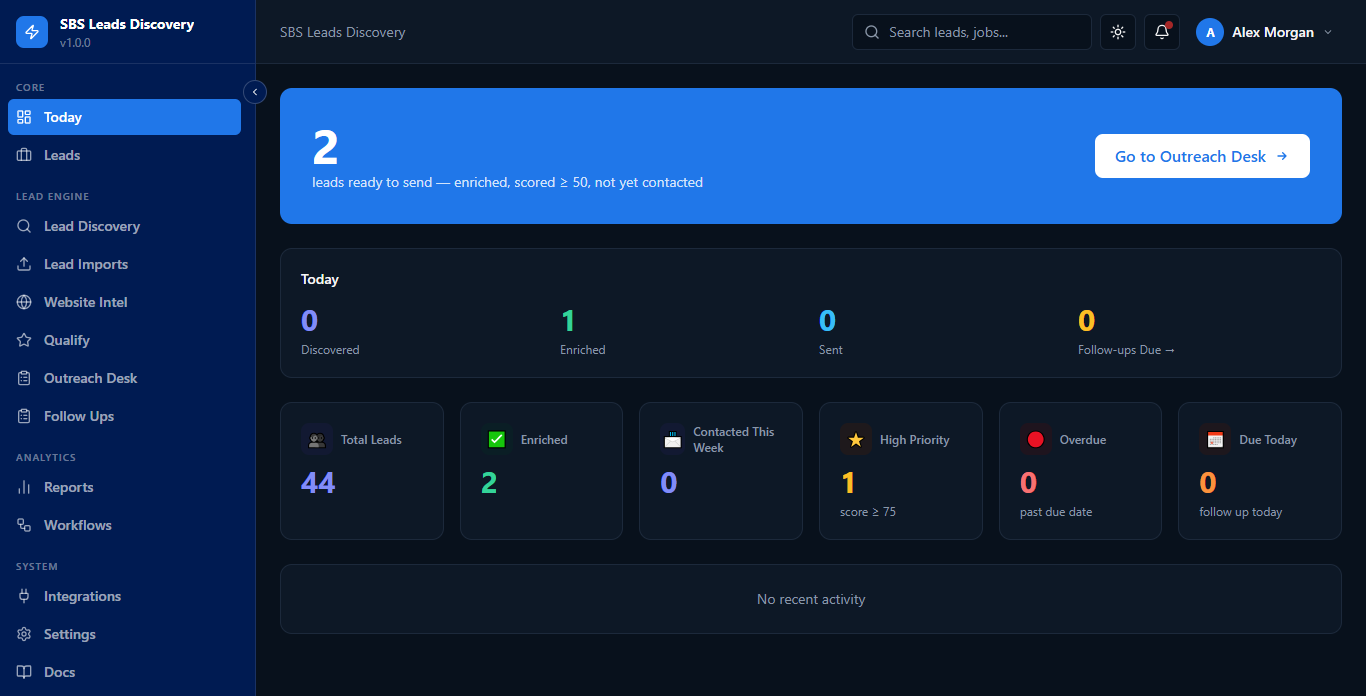
Today dashboard showing lead activity, key metrics, tasks, and follow-up priorities in one clear workspace.
-
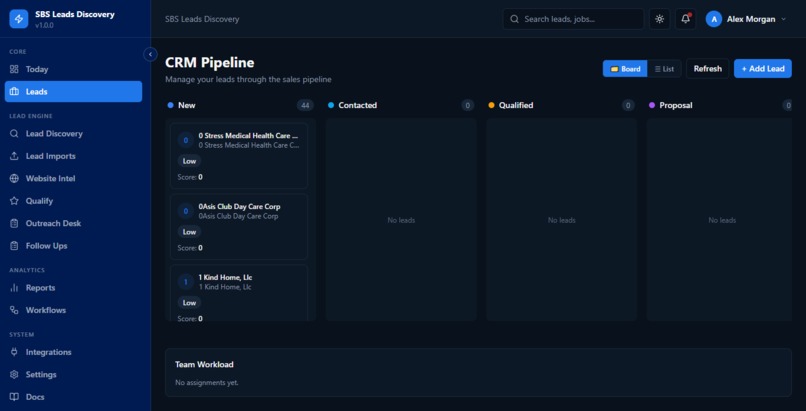
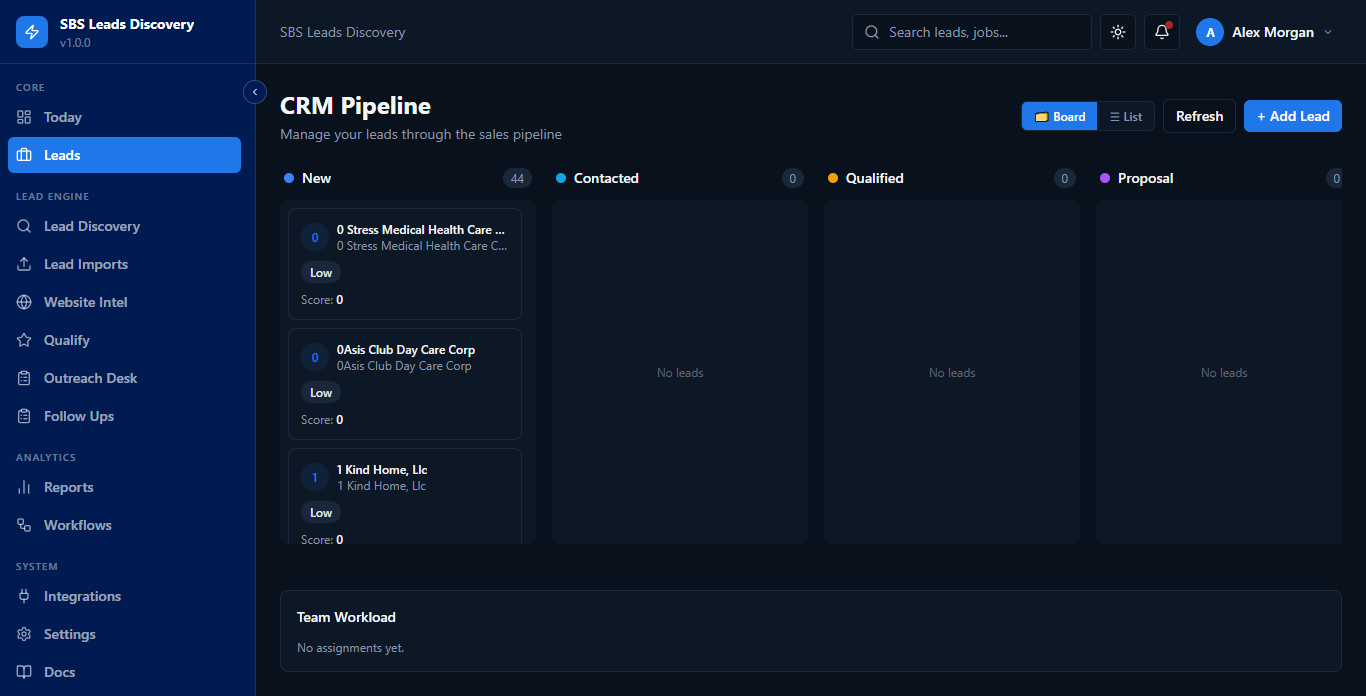
leads.png: Leads view for managing prospects, tracking business details, statuses, qualification, and next outreach actions.
-
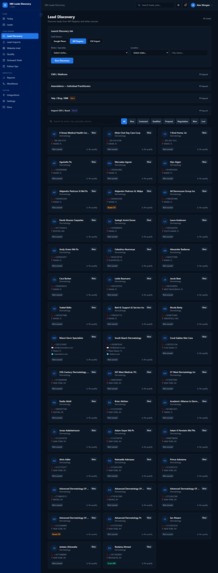
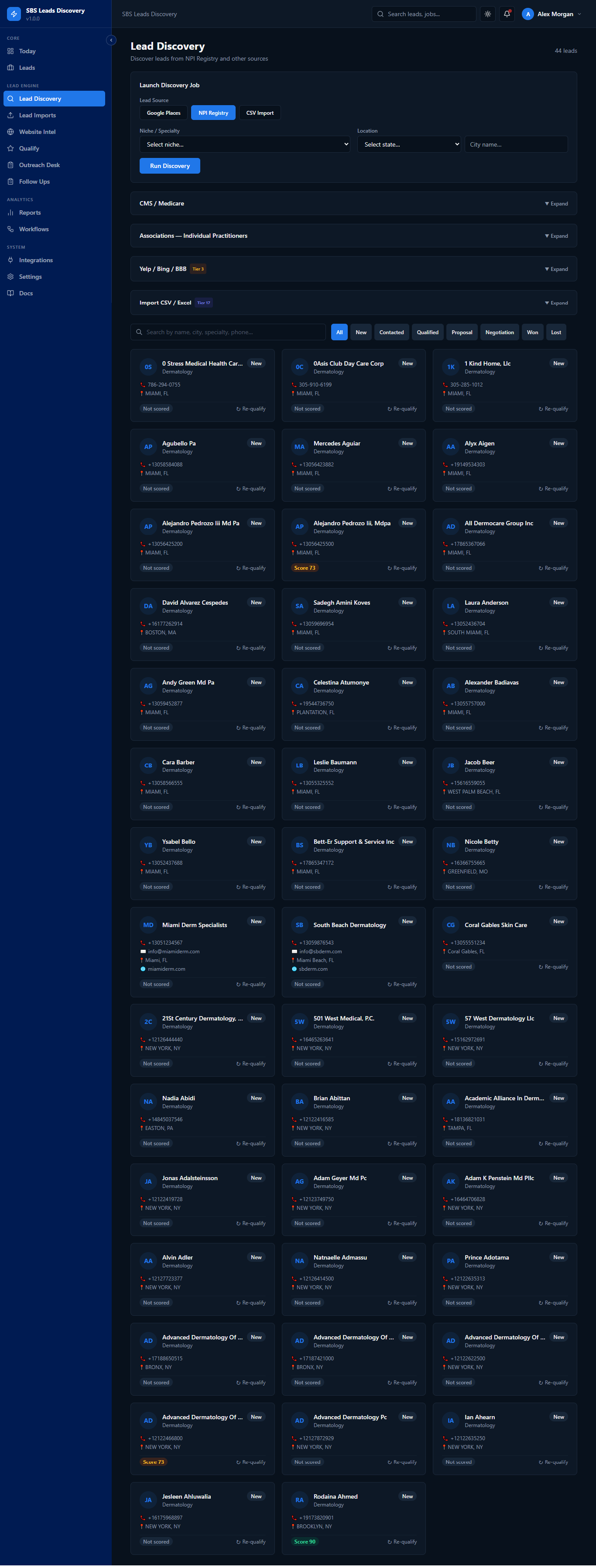
Lead Discovery helps find local businesses by market, category, location, and opportunity signals.
-
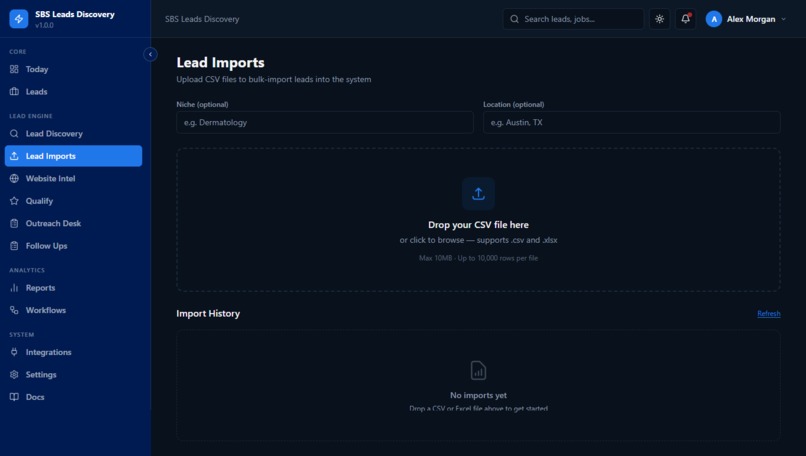
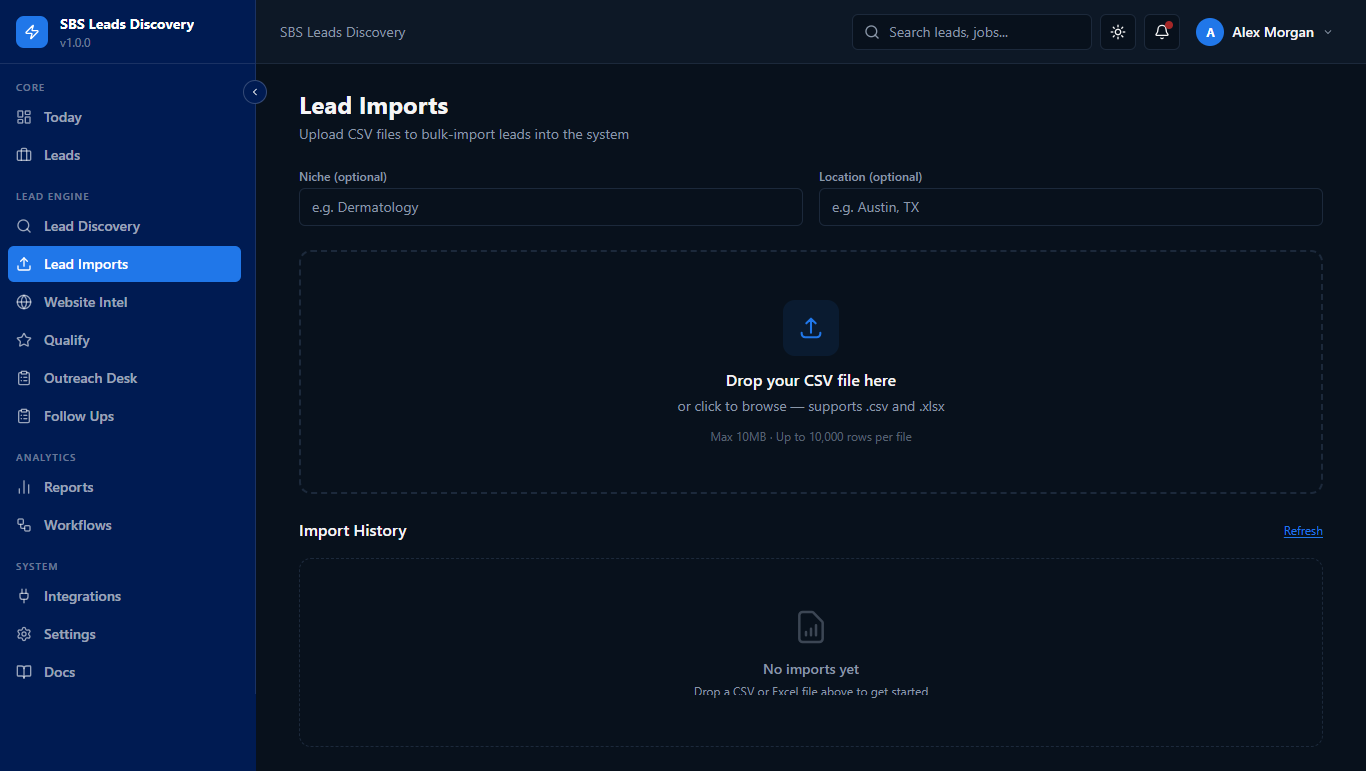
Lead Imports lets users bring in prospect lists, review data, and prepare leads for qualification.
-
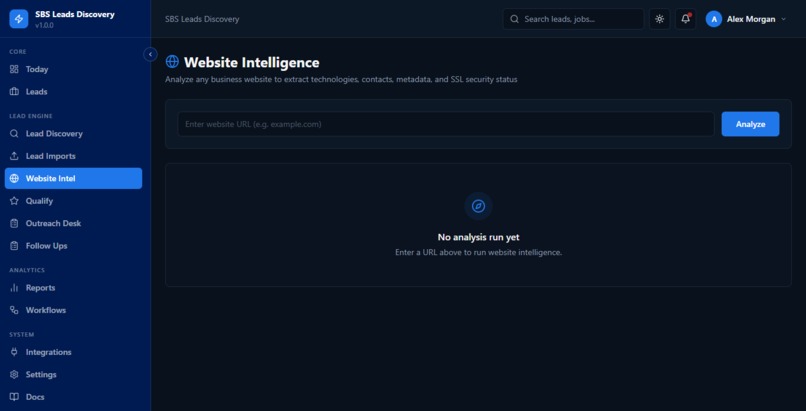
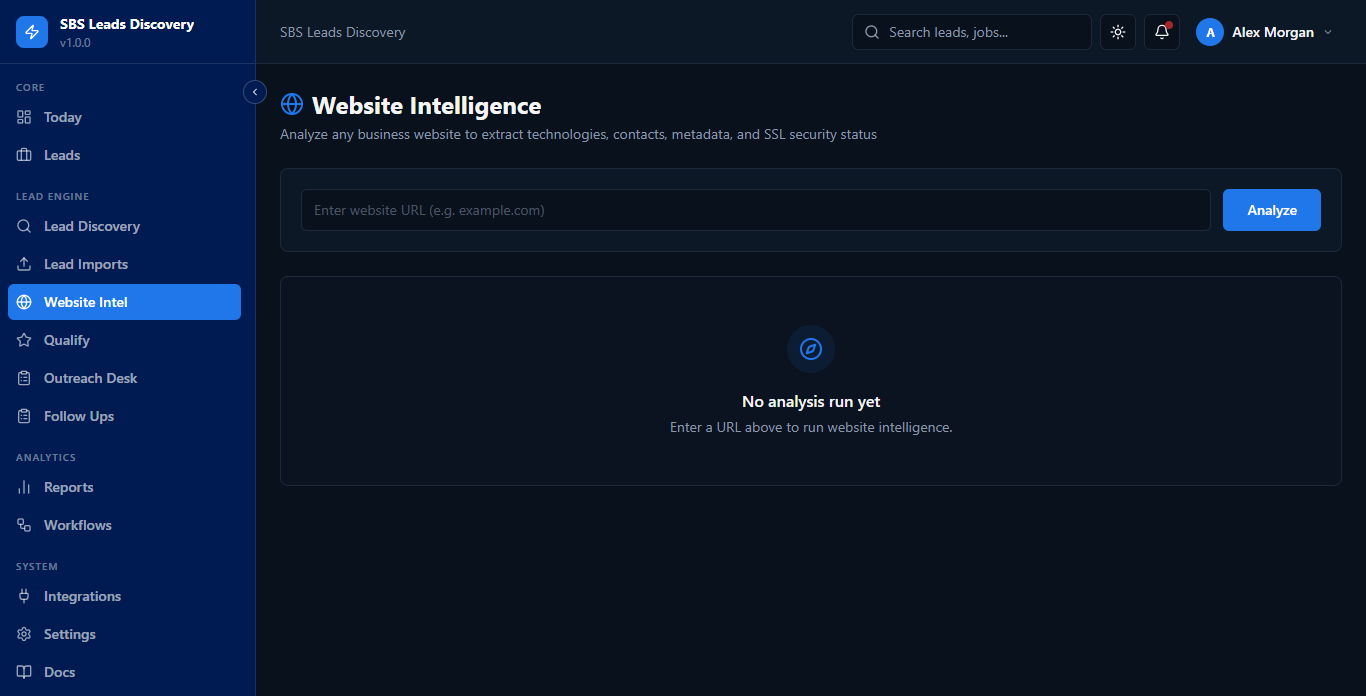
Website Intel analyzes business websites, online signals, SEO clues, and contact readiness.
-
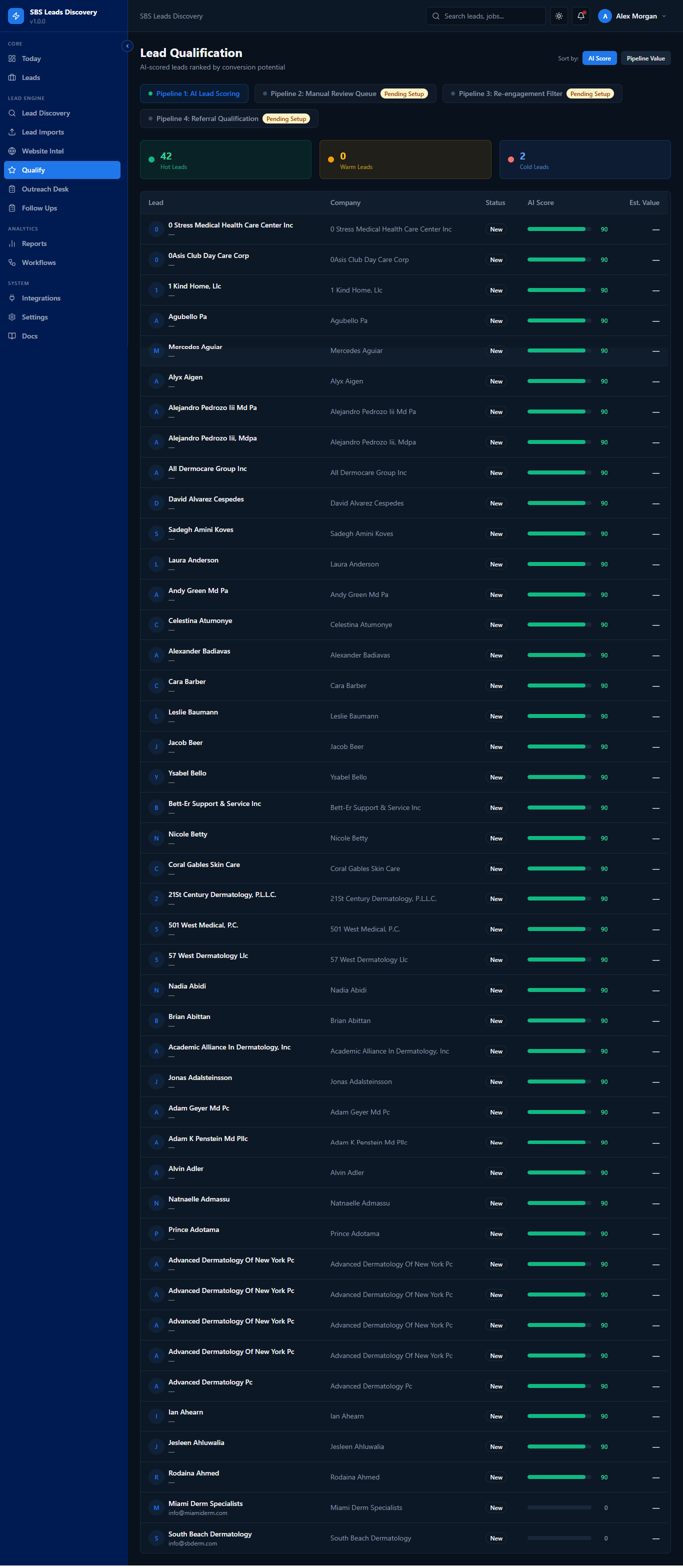
Qualify scores leads using business signals so teams can prioritize the strongest opportunities first.
-
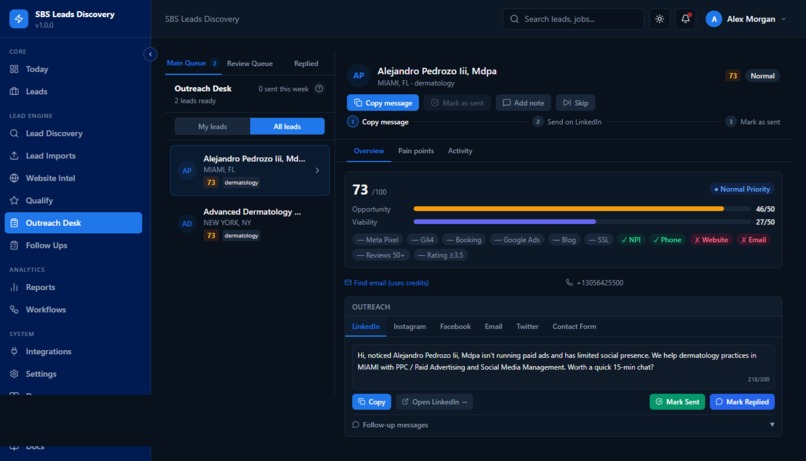
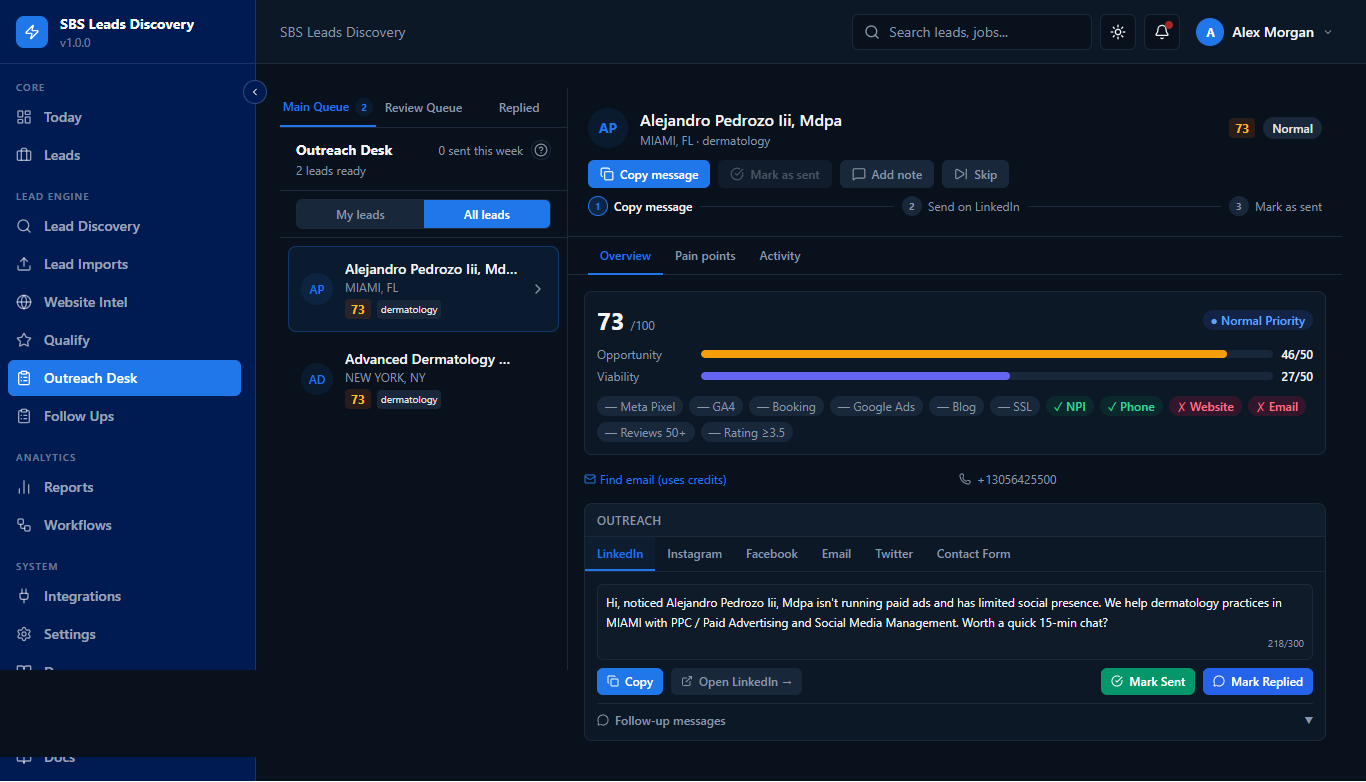
Outreach Desk helps prepare messages, organize campaigns, and move qualified leads into action.
-
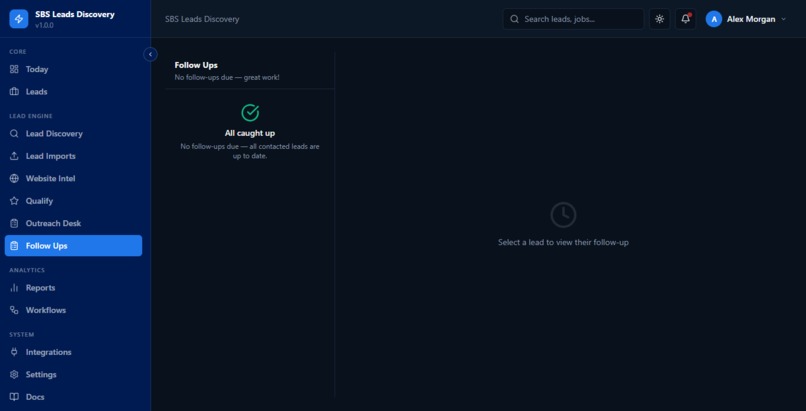
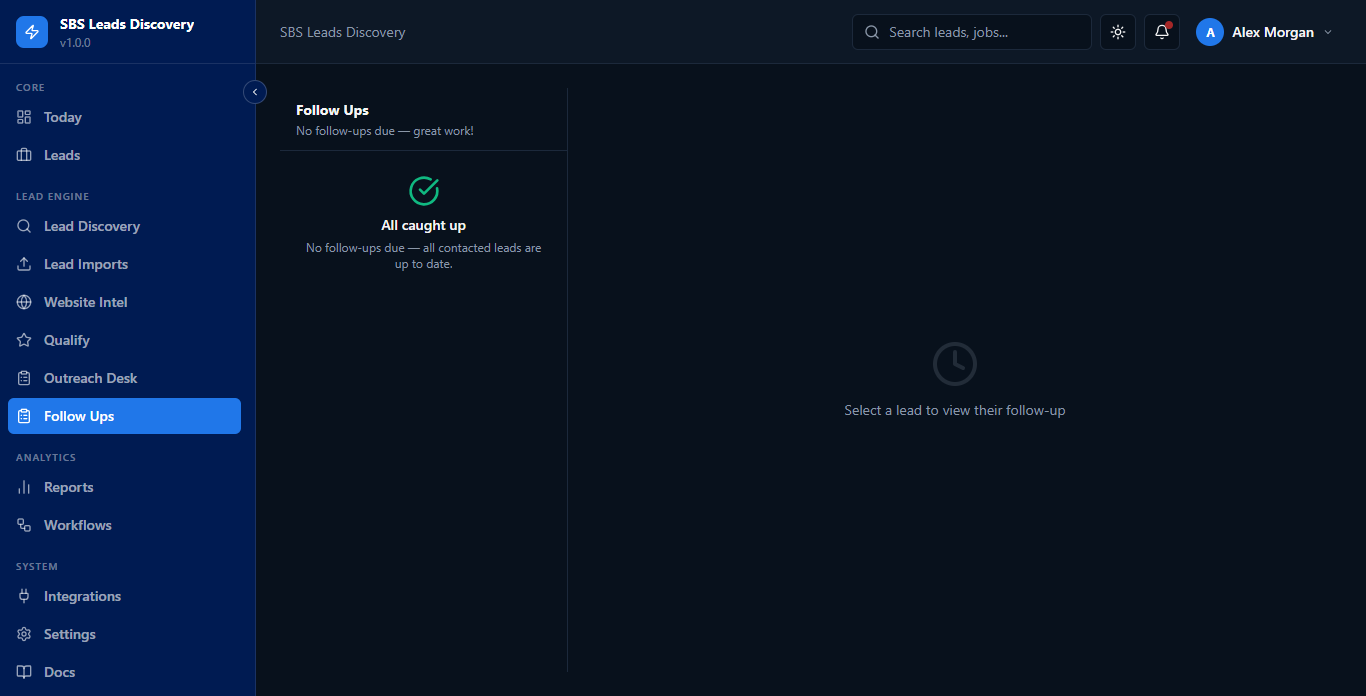
Follow Ups tracks pending outreach, reminders, responses, and next steps for each prospect.
-
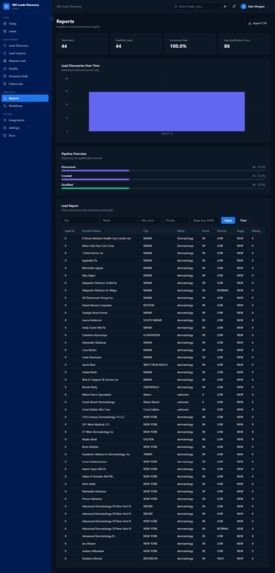
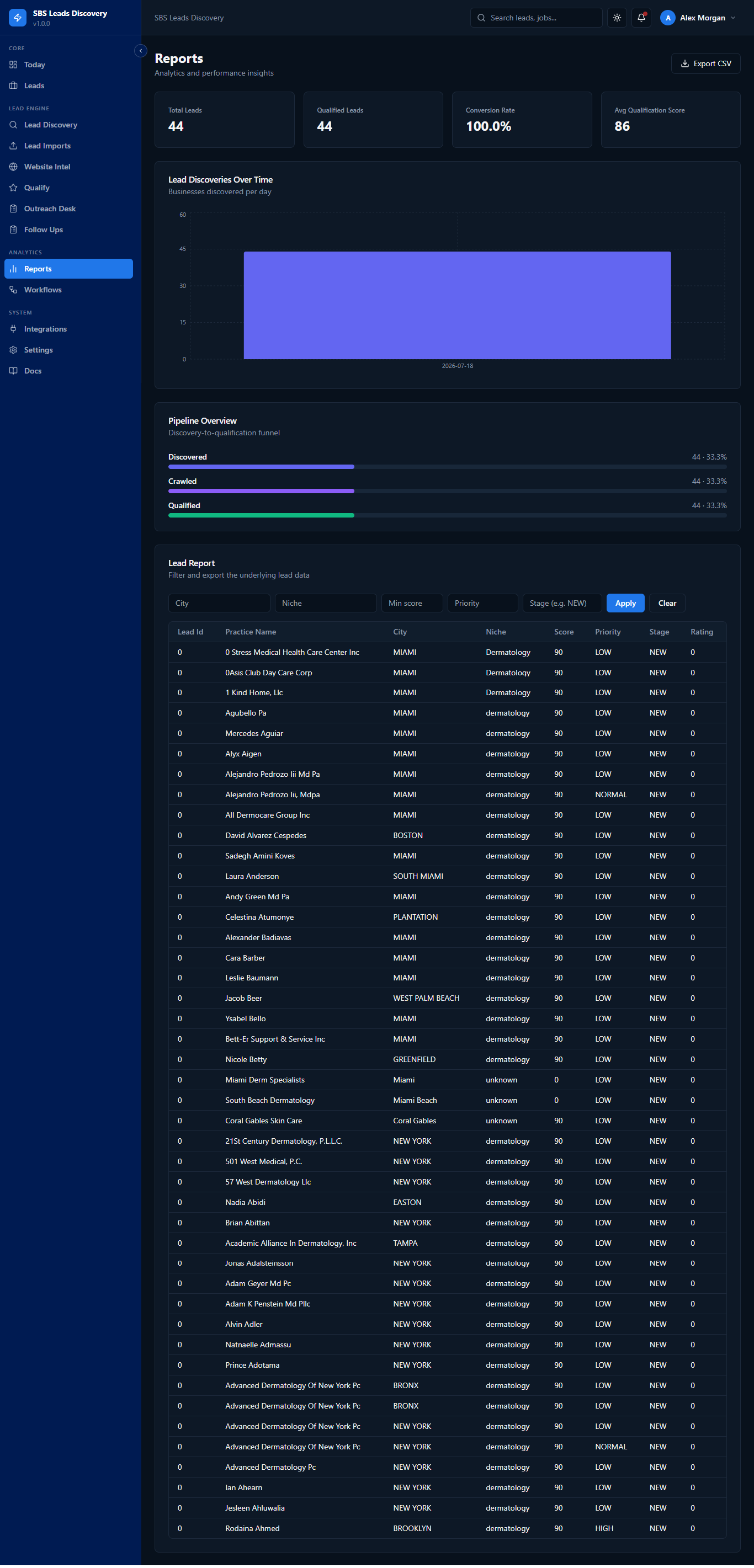
Reports and Workflows show performance insights, lead progress, and automation paths for the sales process.
-
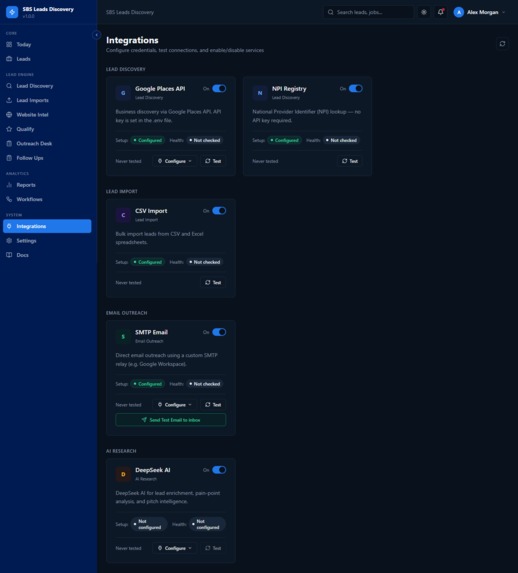
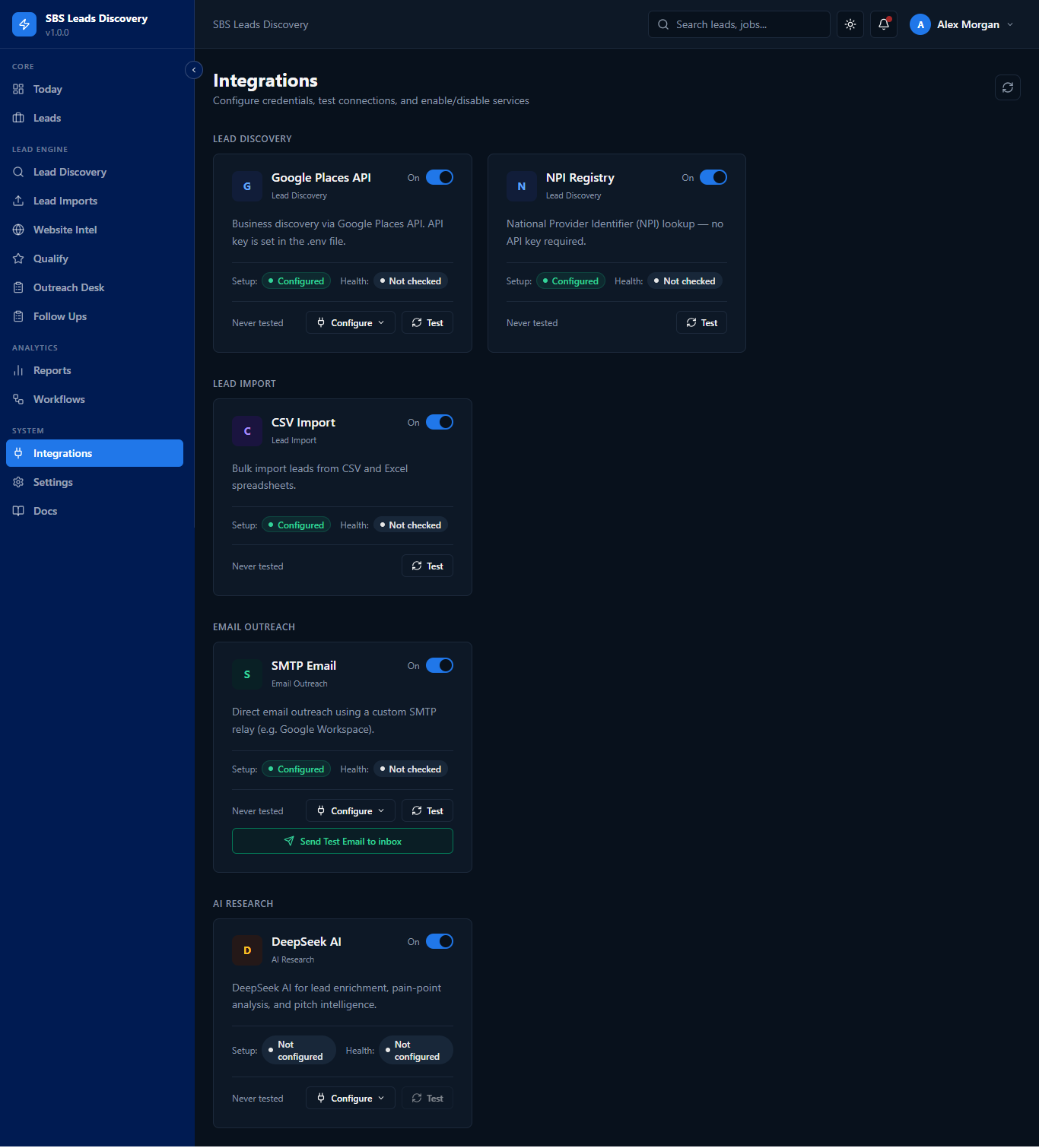
Integrations connect the app with business data, CRM, outreach, and workflow tools.
-
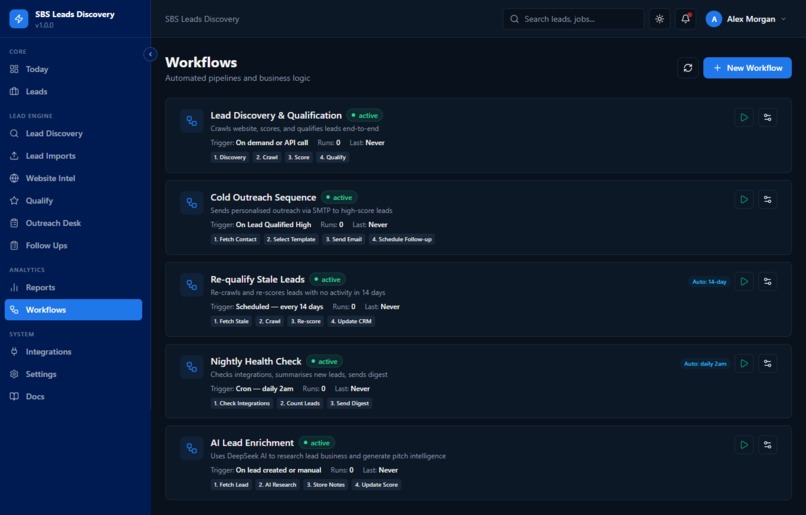
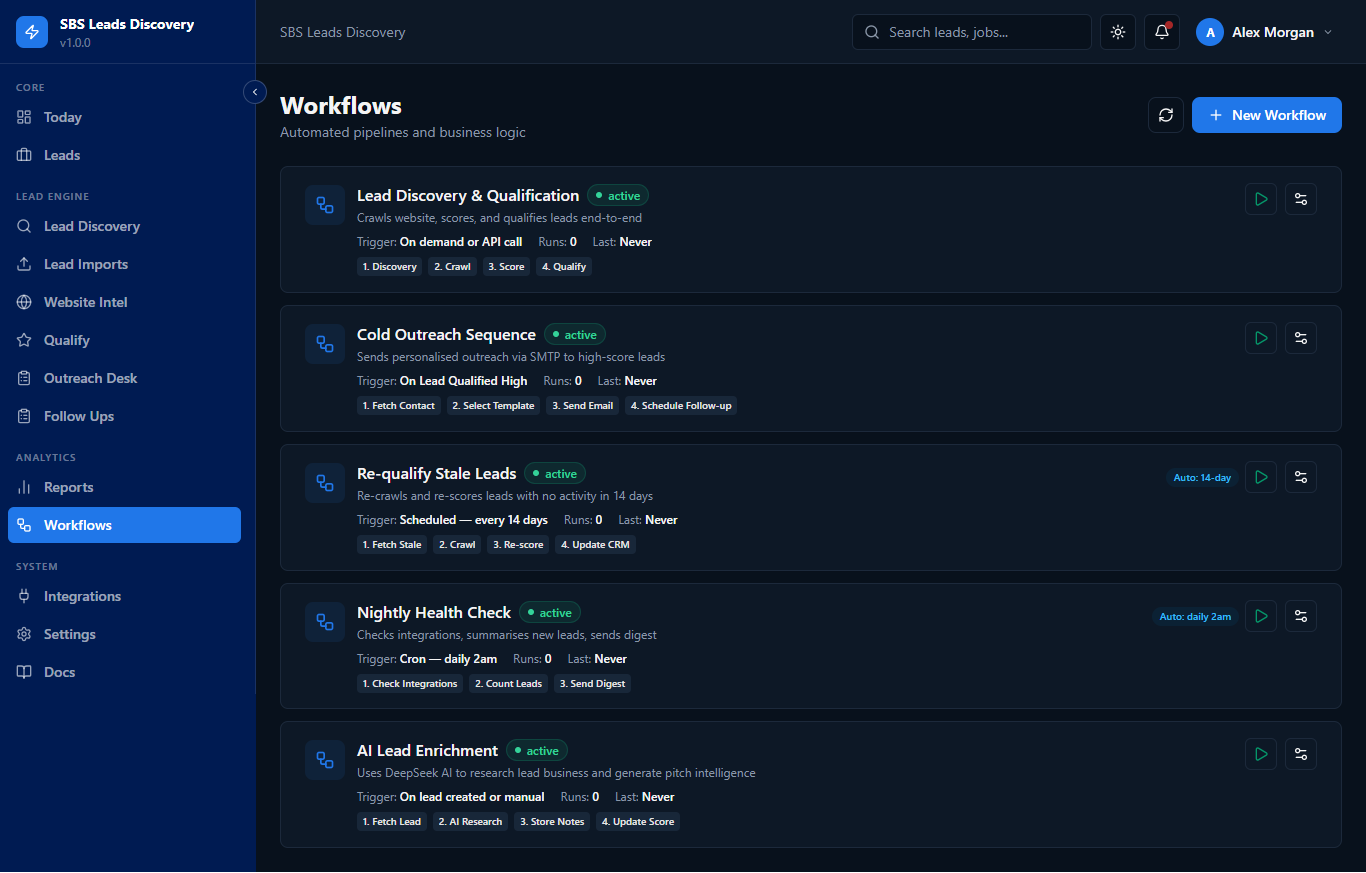
Workflows view showing automated lead routing, qualification steps, outreach triggers, and follow-up task sequences.
Inspiration
Small sales teams lose too much time searching for prospects, checking whether a business is a genuine fit, and moving scattered information into a CRM. SBS Leads Discovery turns that fragmented process into one focused workflow.
What it does
SBS Leads Discovery finds local businesses, enriches each lead with website, SEO, technology, and contact signals, then ranks opportunities using configurable qualification criteria. Teams can review qualified leads, manage them in a CRM, create outreach campaigns, and track follow-ups from one place.
The result is a practical lead-discovery workspace that helps sales and operations teams spend less time on manual research and more time reaching the right businesses with relevant outreach.
How we built it
The application is built with Python and FastAPI, with SQLAlchemy and SQLite for data management. Its intelligence pipeline connects business discovery, website and SEO analysis, technology detection, configurable lead scoring, CRM workflows, outreach, and reporting.
I used Codex with GPT-5.6 throughout the build to accelerate feature implementation, refine the architecture, generate and improve tests, and work through integrations and product flows. Codex was especially useful for turning a broad lead-generation workflow into modular, testable components.
Challenges we ran into
The main challenge was keeping the platform useful without making it a collection of disconnected tools. We addressed this by treating every stage—from discovery to qualification and outreach—as part of a single lead lifecycle, while keeping external integrations and business rules modular.
Accomplishments that we're proud of
We created a working, end-to-end lead workflow that combines discovery, business intelligence, qualification, CRM management, and outreach preparation in one product. The platform is designed to support dermatology clinics today and can be configured for additional local-business verticals in the future.
What we learned
We learned that high-quality lead generation depends on explainable signals and clear handoffs, not only on finding more business records. Building with Codex made it faster to iterate on those workflows while maintaining a structured, production-minded codebase.
What's next
Next, we plan to expand vertical-specific qualification presets, strengthen integrations, and add more automated outreach and reporting capabilities.
Built With
- css
- fastapi
- google-places
- gpt-5.6
- html
- openai-codex
- pydantic
- python
- sqlalchemy
- sqlite


Log in or sign up for Devpost to join the conversation.