-
-
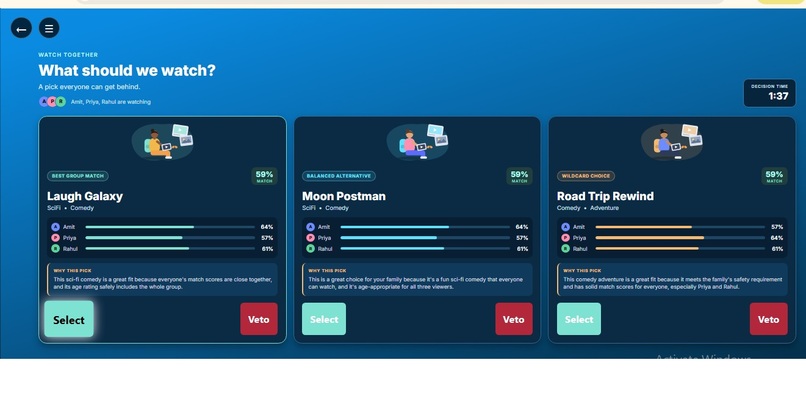
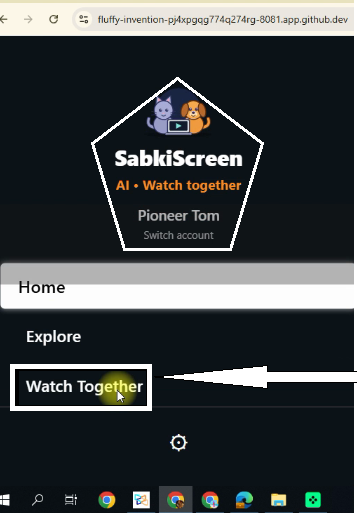
here vivwer fibd thier best match to watch together with other people
-
-
-
Inspiration
Friday night. Amit wants sci-fi, his wife Priya wants comedy, his brother Rahul wants action. Forty minutes later all three are still scrolling the same Fire TV home screen and someone says the sentence every household knows: “Fine, you pick.”
Streaming is built around one profile and one taste. Group Watch features sync people across screens, but the title is already chosen. Nobody designs for the moment before play, when a real group on one couch has to agree. That is where the evening is lost. Sbki Screen (“everyone’s screen”) fixes only that moment, for every home with one TV and many tastes.
What it does
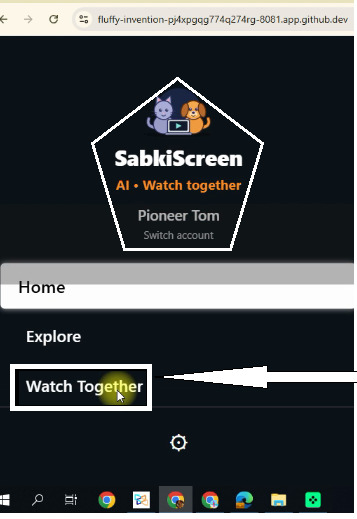
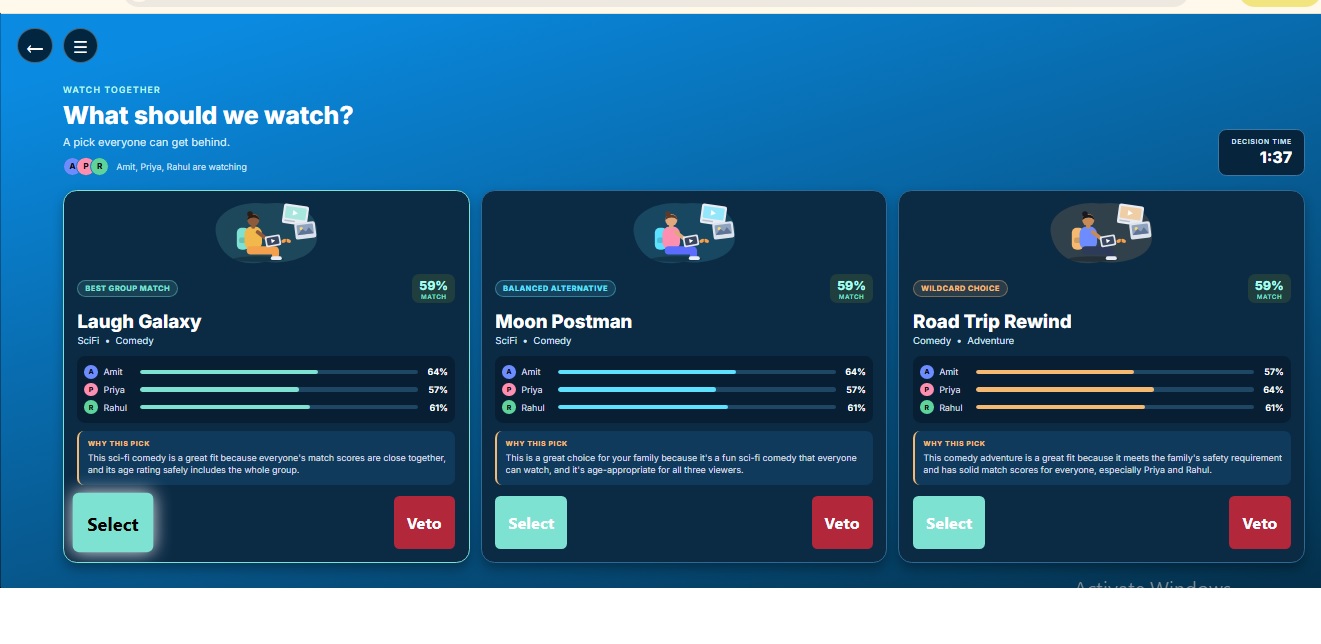
Sbki Screen turns “what should we watch?” into a two-minute decision on the TV.
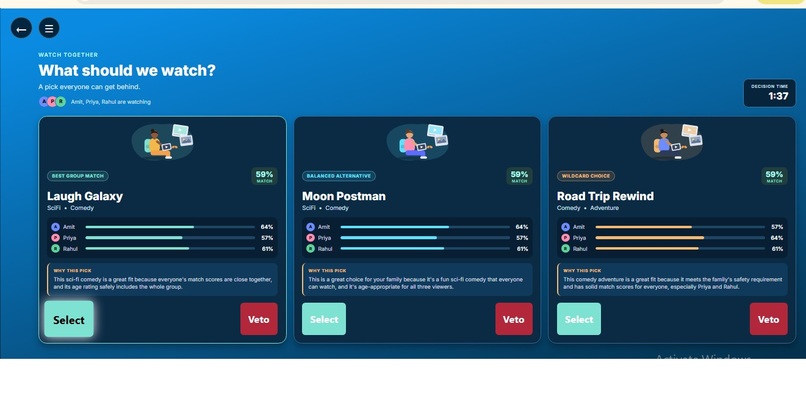
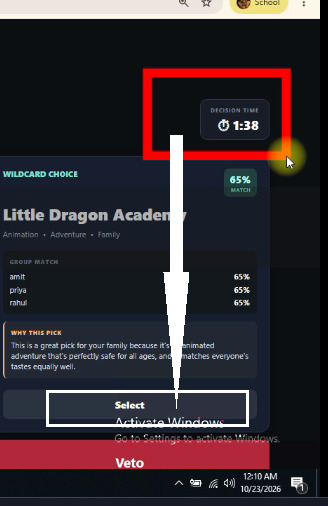
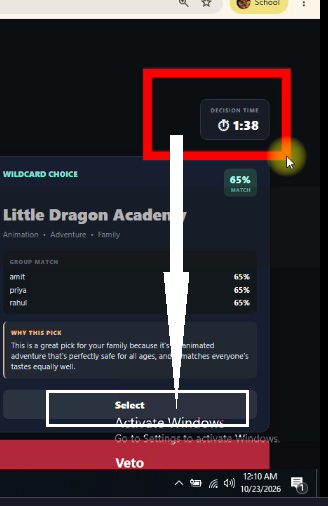
Three picks: Best Group Match, Balanced Alternative (a different genre mix from the best pick) and Wildcard Choice (adds a genre the others lack). Every card shows each viewer’s match score and a one-line reason for the pick. Anyone can veto. The slate rebuilds instantly. OK plays the title. If the 2-minute timer hits 0:00, the best match plays automatically. A fairness ledger gives extra weight next time to whoever got the least out of tonight’s choice.
No sign-in, no phone, no second screen. The demo uses a 70-title sample catalogue with real playback for 4 titles.
How we built it
Math decides, AI explains.
Rule engine (deterministic, no LLM): per-viewer satisfaction is 0.7 × average genre score + 0.3 × worst genre score, so one hated genre drags a title down. The group score is the mean of the fairness-weighted average and the least-misery score (the unhappiest viewer), so a pick one person hates cannot win. Fairness credit (max 0.3, decays 0.7 per round) raises the weight of whoever compromised. Same group, same answer: testable and explainable.
Amazon Bedrock: Bedrock never ranks anything. For each card the app calls API Gateway → AWS Lambda → Bedrock Converse API, which writes the “why this pick” sentence from the final scores. Requests run in parallel with an 8-second timeout, and if one fails the card shows a built-in fallback line, so the picks appear instantly and reasons fill in.
Privacy by design: only first names, per-person match scores and movie details are sent through a Lambda, and no AWS credentials live in the app.
Built with React Native for Fire OS and react-tv-space-navigation, so everything works with a D-pad.
Challenges we ran into
Making “fair” real. A plain average lets the loudest taste win or picks a bland middle nobody loves. Least-misery, vetoes and the ledger took most of the time. Flat numbers. Early on, genres a viewer hadn’t rated all defaulted to 65%, so different movies showed identical scores. Filling full taste profiles and forcing the Balanced card to differ from the Best card made the blending visible. TV focus. Buttons inside cards fought the D-pad, so the whole card became one focus target with a clear glow readable from the couch. Latency. Nobody waits for a spinner on TV, so AI text loads in the background with a safe fallback.
Accomplishments
A full flow from “what should we watch?” to playback in a few button presses. Fairness as a rule, not an average. A timer that guarantees a decision. A reason on every pick that a family member can read in five seconds.
What we learned
Group fairness is a design problem as much as a ranking problem. AI works best explaining a decision, not silently making one. People accept a pick when they know why. TV design is its own discipline: focus, distance and D-pad flow come first.
What’s next for Sbki Screen
Pull real tastes from Fire TV profiles instead of demo profiles. Alexa+ voice: “Alexa, what should we watch?” Use Bedrock to learn from outcomes (did the group finish the movie?) and tune the engine. Connect a real catalogue and more streaming services.
Built With
- amazon
- amazon-web-services
- bedrock
- fire
- native
- navigation
- os
- react
- tv
- typescript

Log in or sign up for Devpost to join the conversation.