-
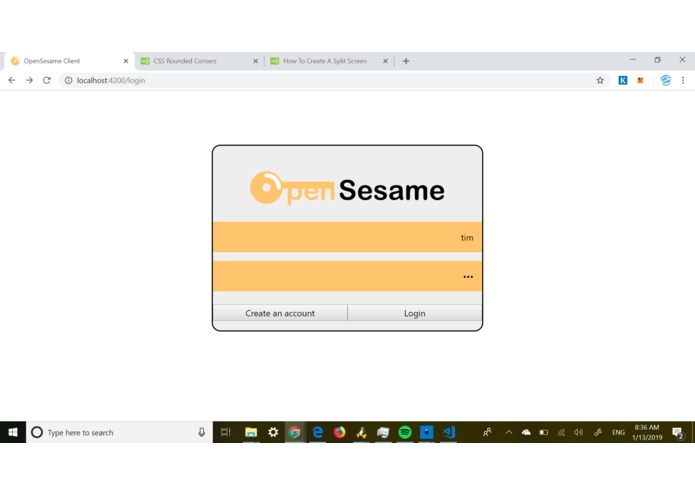
The login page to the website
-
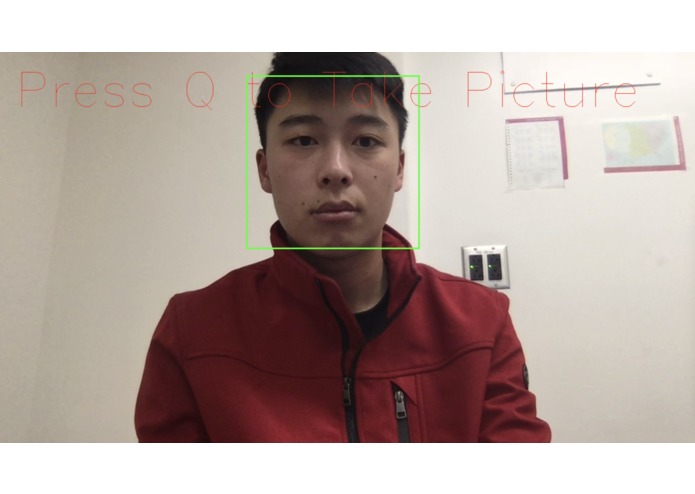
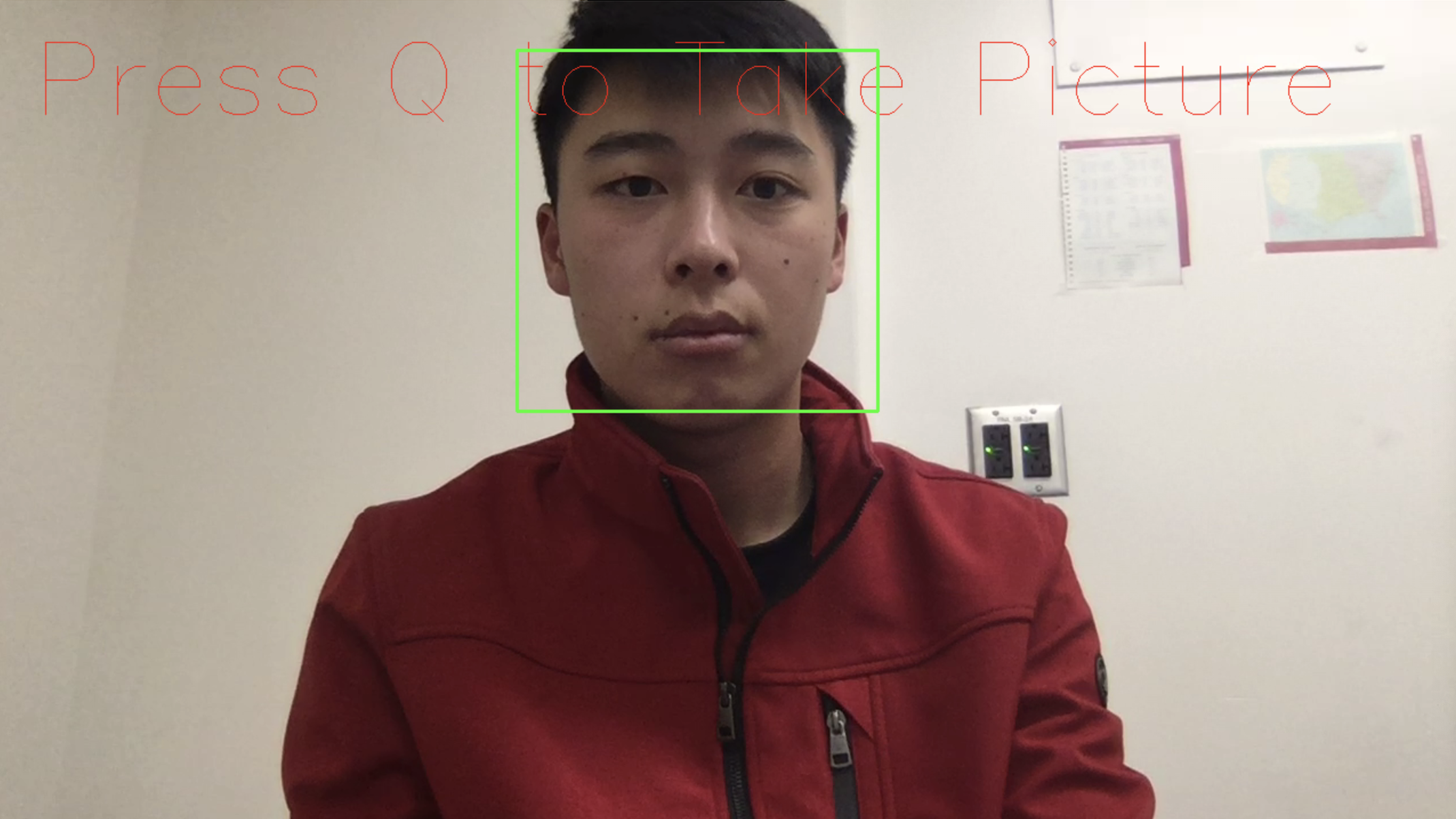
Taking a picture to compare to database
-
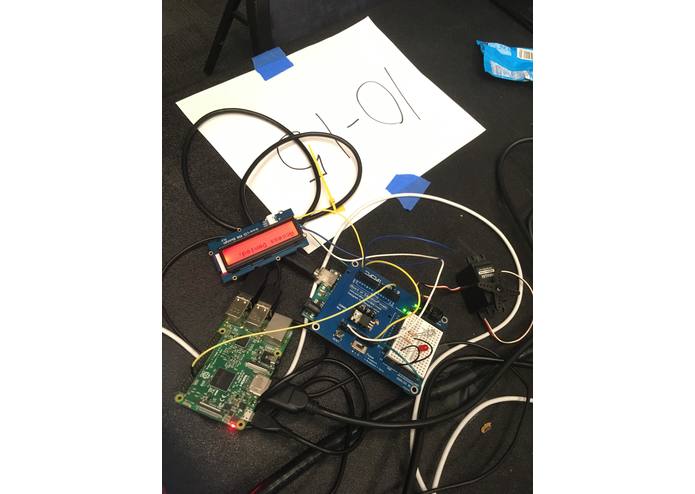
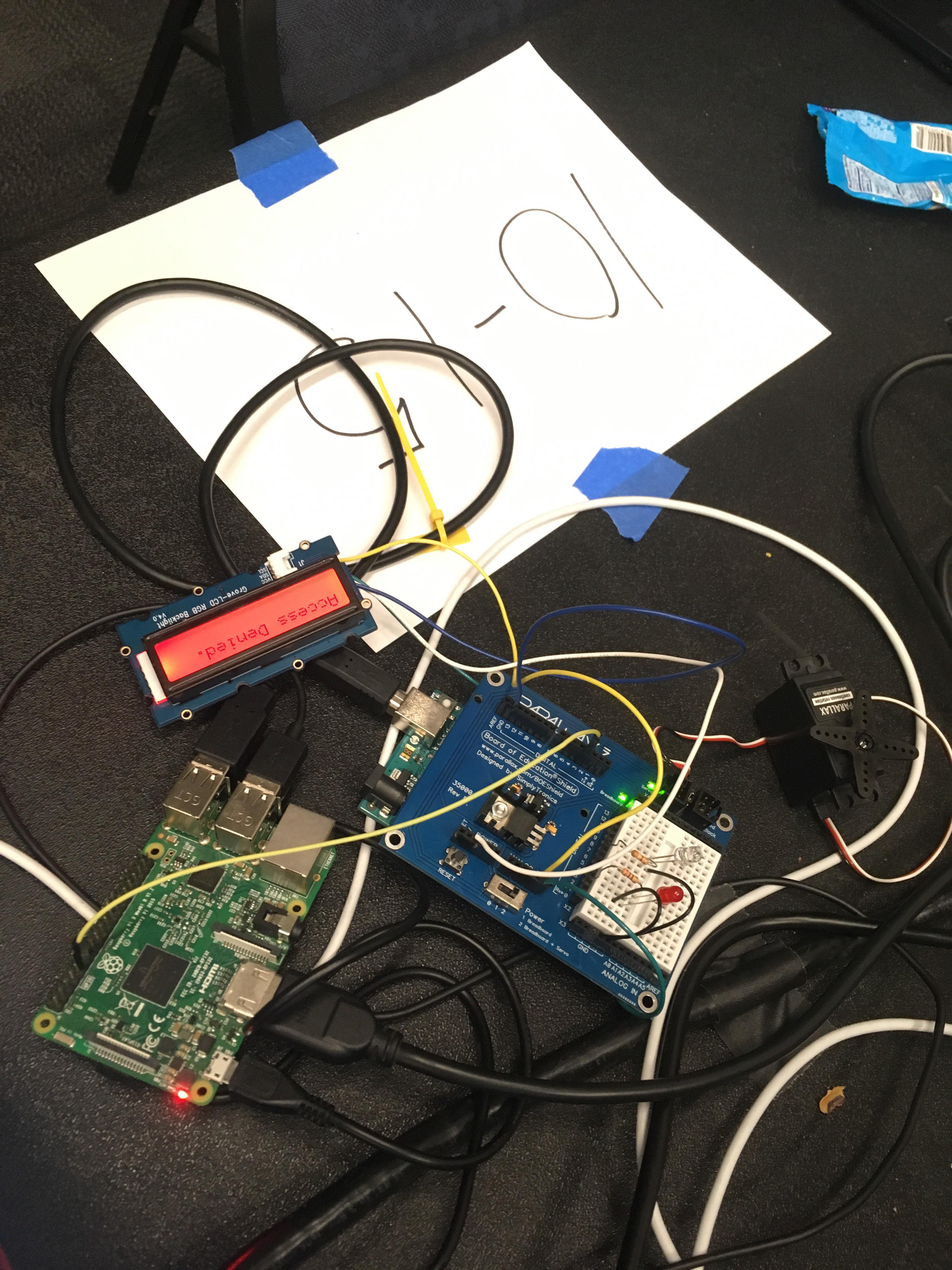
Raspberry Pi and Arduino which controlled the servo (to open/close the lock) and display
OpenSesame is a facial-recognition smart lock created by Timothy Yuan, Lucas Xia, Navid Mir, Toby Fischer, and Jacob Zhang for SB Hacks V (January 11, 2019 - January 13, 2019).
Inspiration
This idea was thought of to find a solution to students getting locked out of their residences or apartments, or allowing other people to retrieve items without the owner of the property having to be there.
What it does
OpenSesame is a security device that allows users to permit home access to other people efficiently. Using our website, users simply upload a single image of each person who can be admitted entry. Then getting access is as simple as letting the door lock mechanism take a picture of one's face.
How we built it
With Python Libraries OpenCV and dlib, we used machine learning to recognize faces and process them to simple data files. We built the server with Javascript, the database with mySQL, and hosted the server on Google Cloud Platform. The front end of the website was built with angular, while the door lock hardware used Arduino.
Challenges we ran into
Connecting all our separate projects together into one fully functioning system was the hardest step in our project. It required a lot of trial-and-error and quick problem solving. For example, we had to deal with faulty cameras, so we used a computer webcam instead.
Accomplishments that we're proud of
We used our diverse skill sets efficiently, splitting up and working on different parts of the project. This allowed us each to contribute to the project, which could not have been done without amazing teamwork.
What we learned
We learned how to use and integrate many of the most powerful and popular technologies of today, including Google Cloud Platform, angular, node.js, Opencv and other python machine learning/image processing libraries, and Arduino. While each of us came in knowing something, none of us knew everything and we learned a lot from each other's specialties.
What's next for Open Sesame
The facial recognition could be improved, in its accuracy and its inability to take in more than one face at once.


Log in or sign up for Devpost to join the conversation.