Savro: Your Financial Intelligence Agent
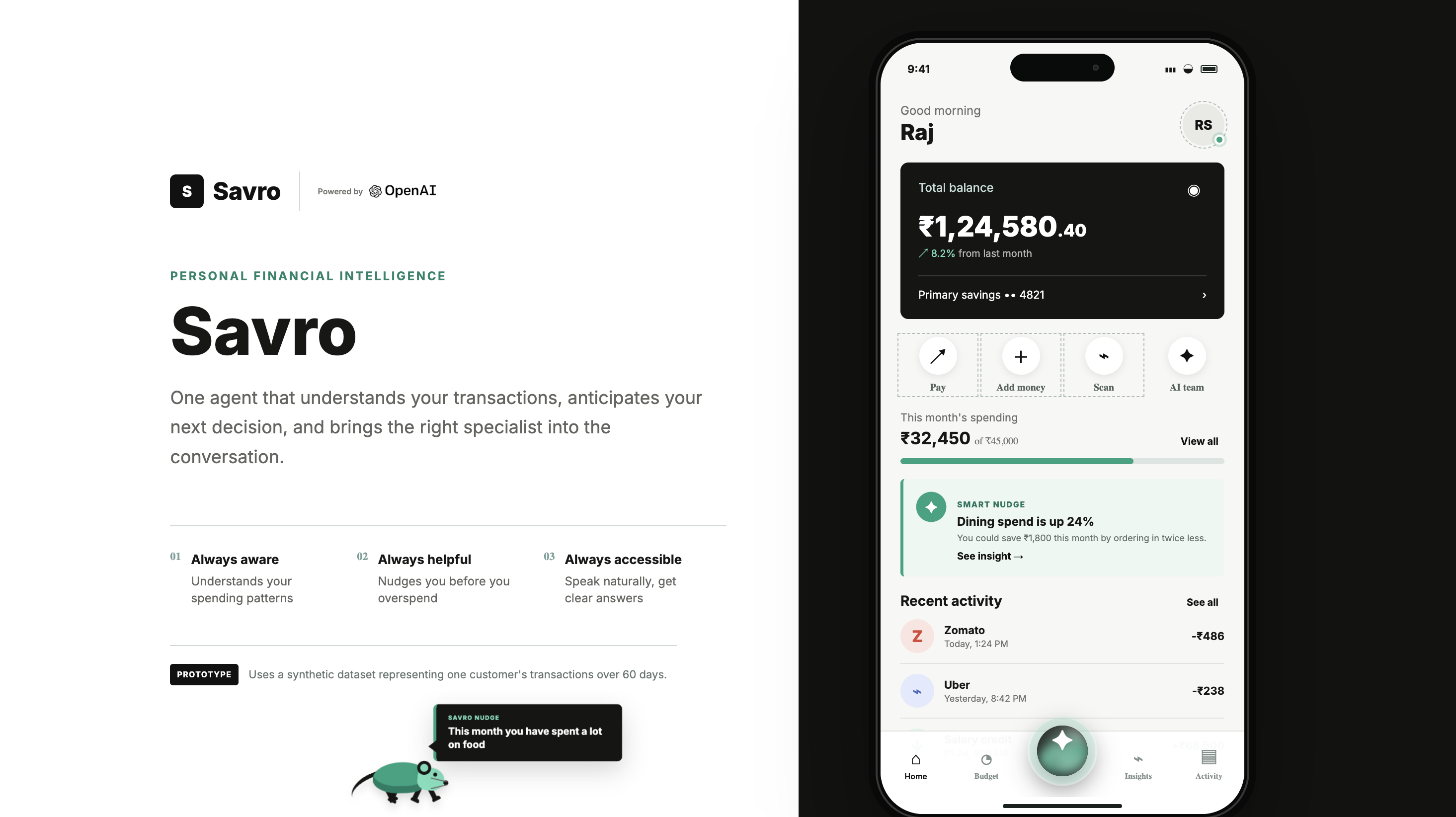
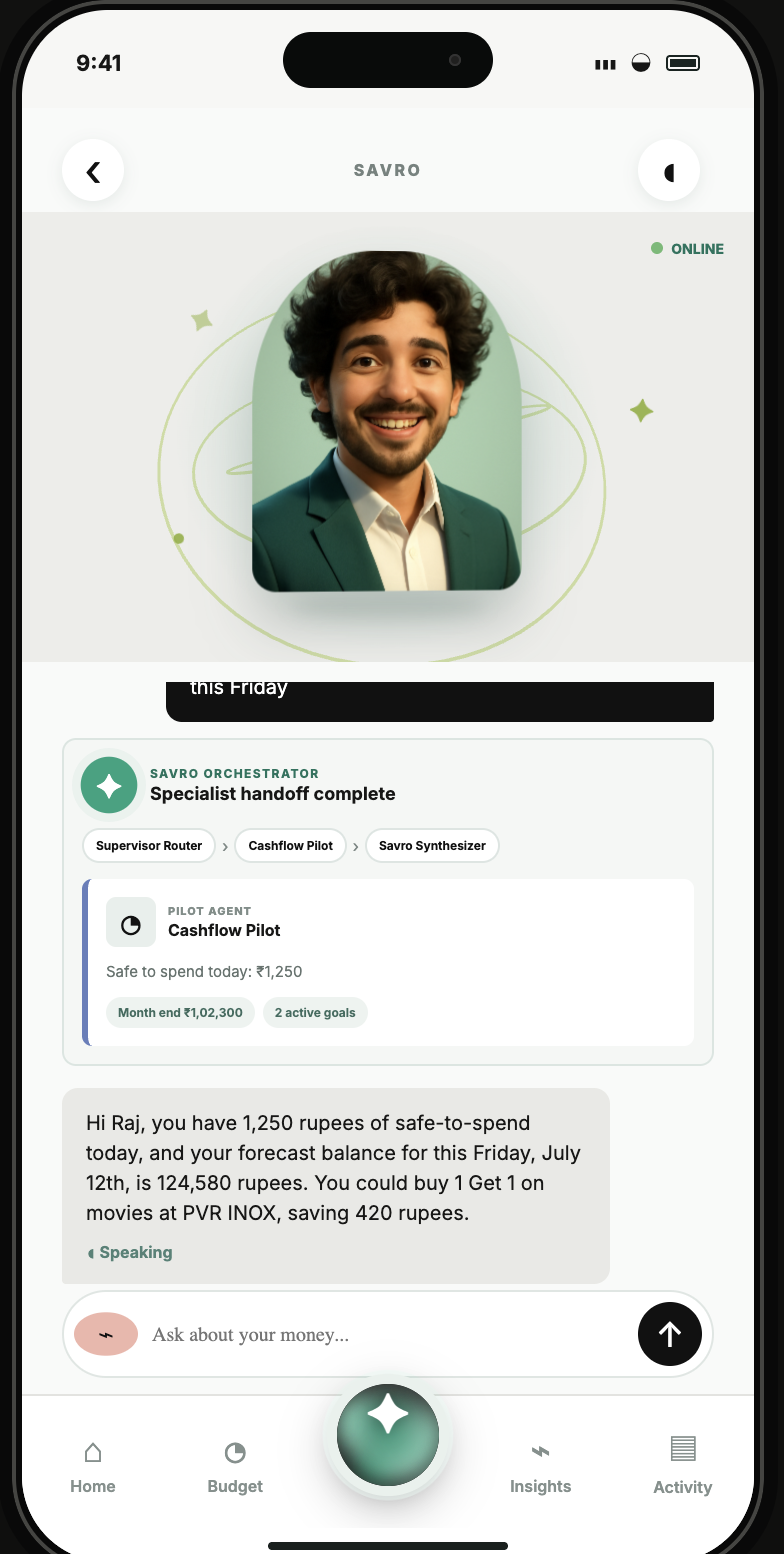
Savro predicts your financial needs, discovers personalized savings, and coordinates specialist AI agents to guide every money decision through one natural voice conversation.
- Live prototype: https://savro-financial-agent.onrender.com
- Code repository: https://github.com/singhrj002/openai-build
- Demo username:
test123 - Demo password:
123 - Codex session ID:
019f56a7-b5c5-7f72-bfcb-189a9424ad3b
Inspiration
Most banking apps are very good at telling us what already happened. They show transactions, balances, and monthly statements, but they rarely help us decide what to do next.
People often realize they have overspent only after the money is gone. They miss card offers that match their lifestyle, continue paying for unused subscriptions, and make financial decisions without understanding how those decisions could affect the rest of the month.
That inspired us to build Savro, a personal financial intelligence agent that does more than display financial data. Savro learns from spending behavior, anticipates upcoming financial pressure, and brings the right AI specialist into the conversation.
Our goal was simple: make financial guidance personal, proactive, explainable, and easy to understand.
What Savro Does
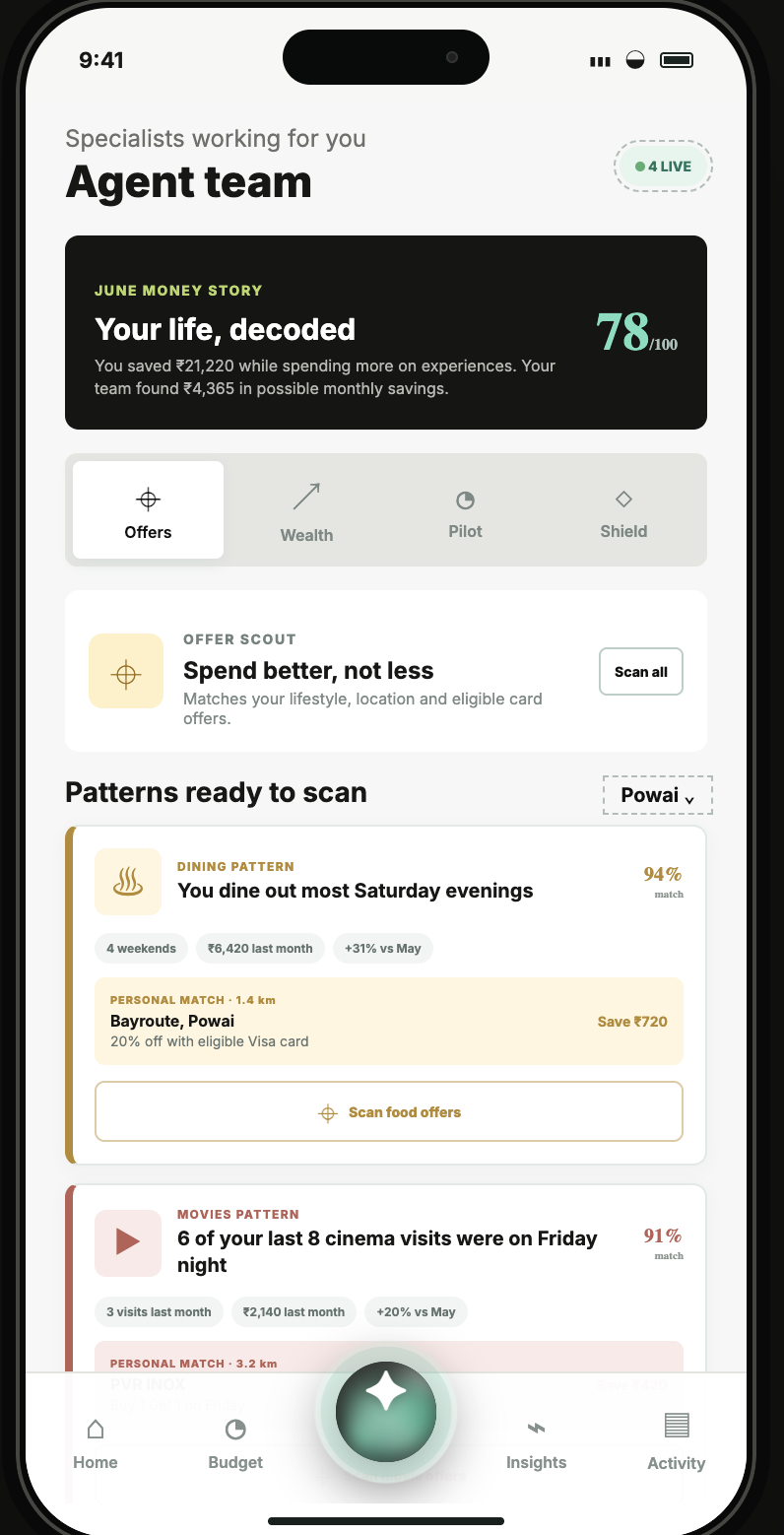
Savro converts transaction history into practical, conversational guidance.
It can:
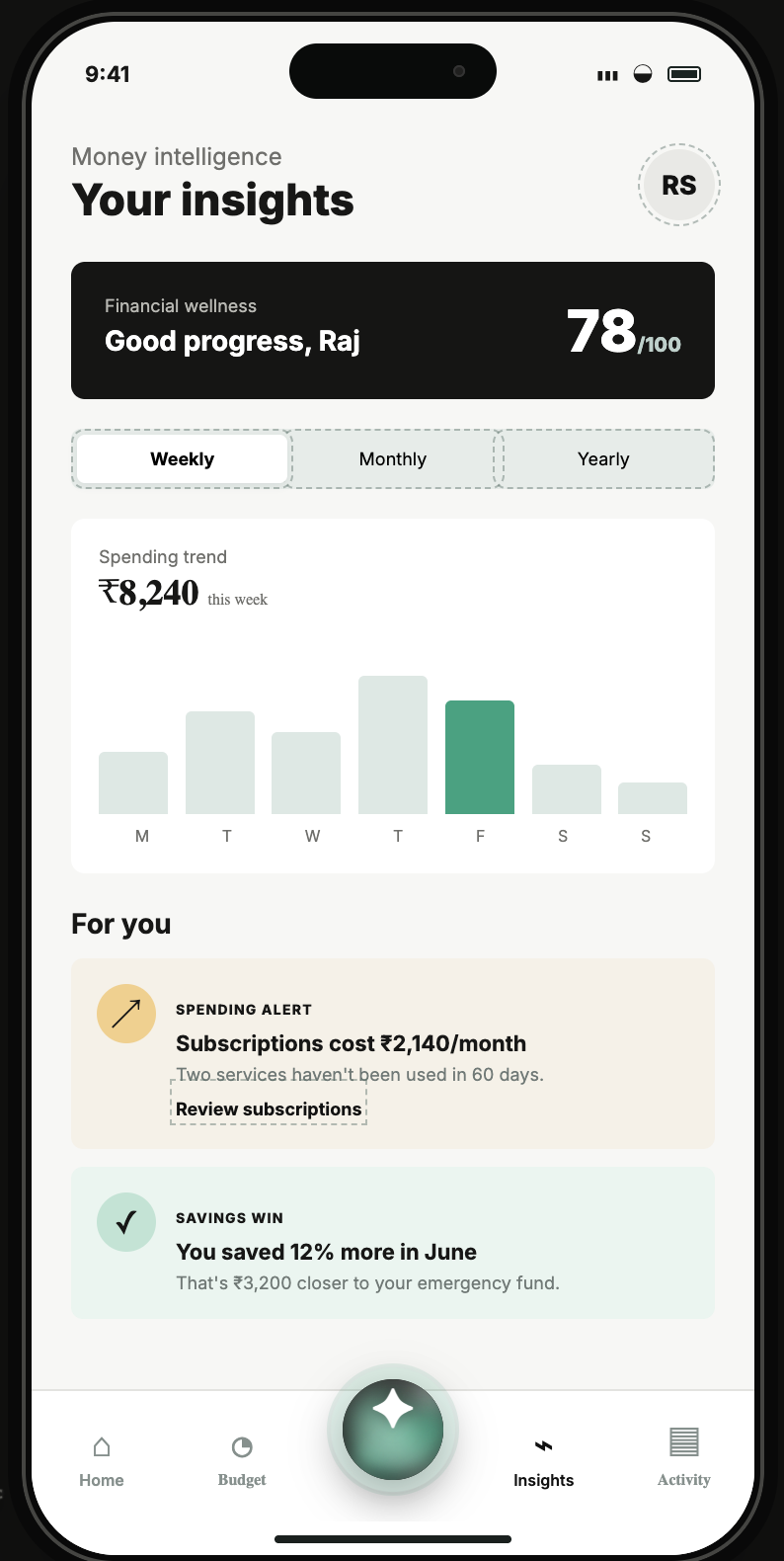
- Identify overspending and changing lifestyle patterns
- Predict upcoming cash-flow pressure
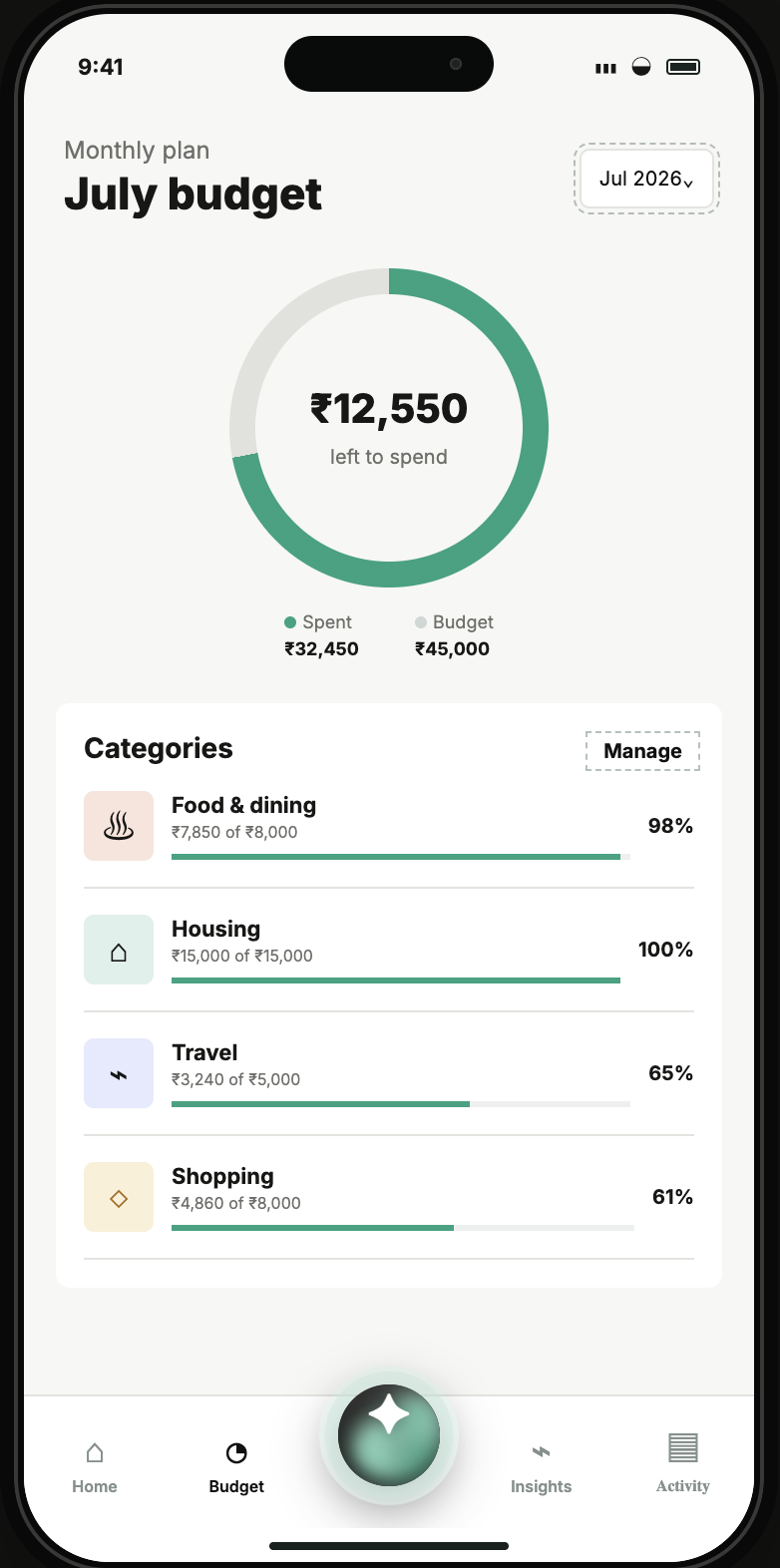
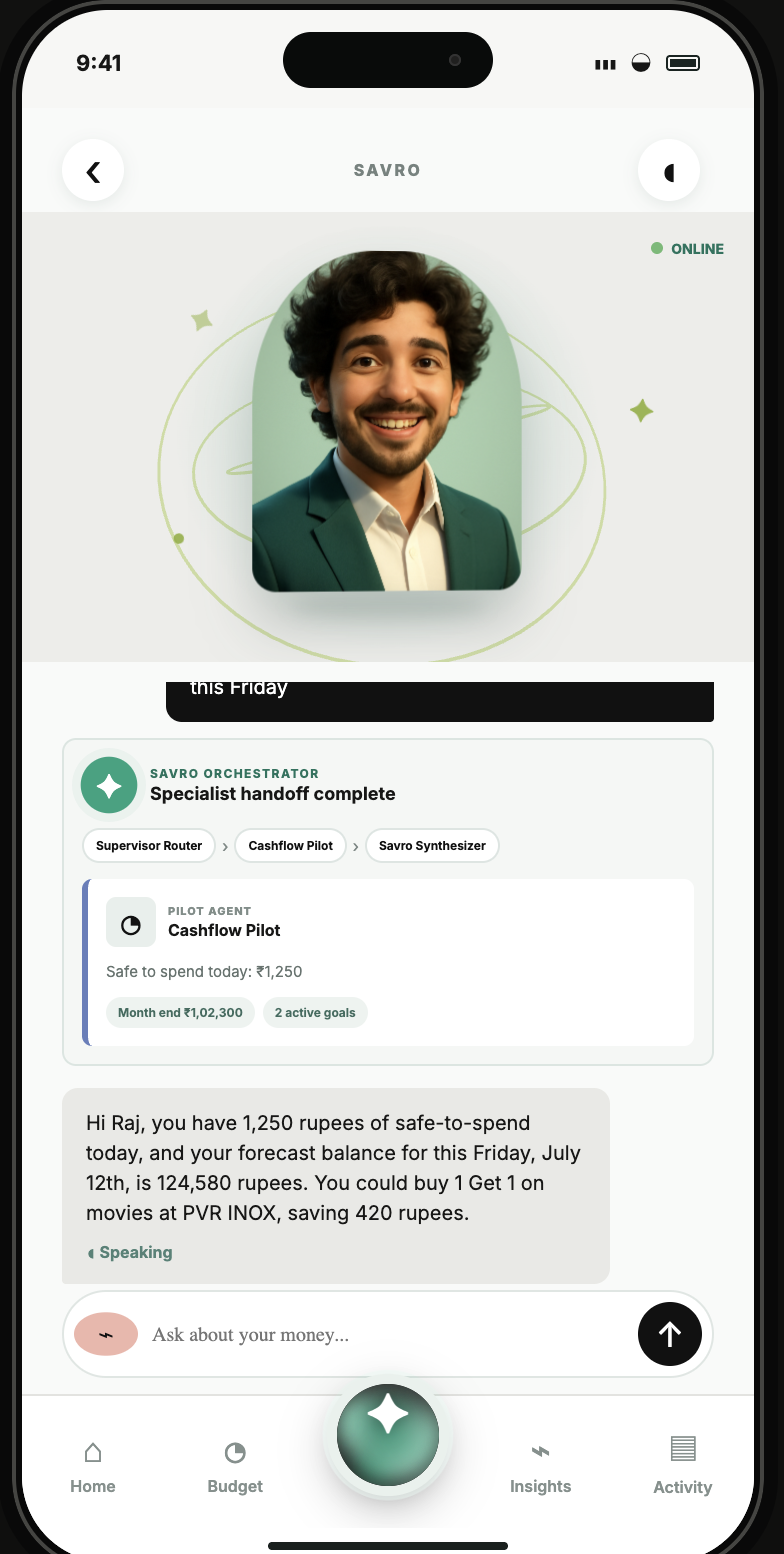
- Calculate how much is safe to spend
- Build an achievable savings plan
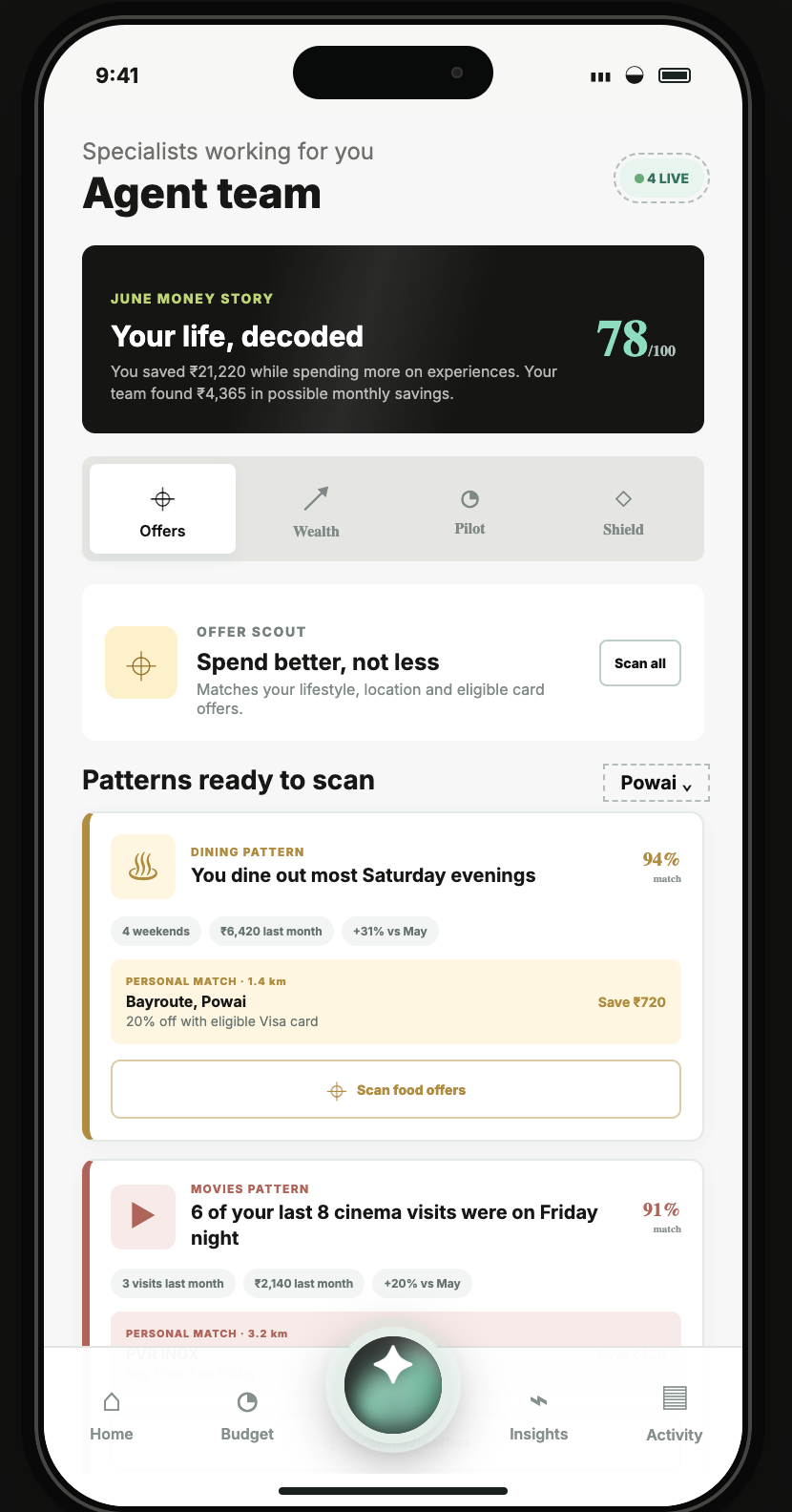
- Find relevant dining, movie, shopping, and book offers
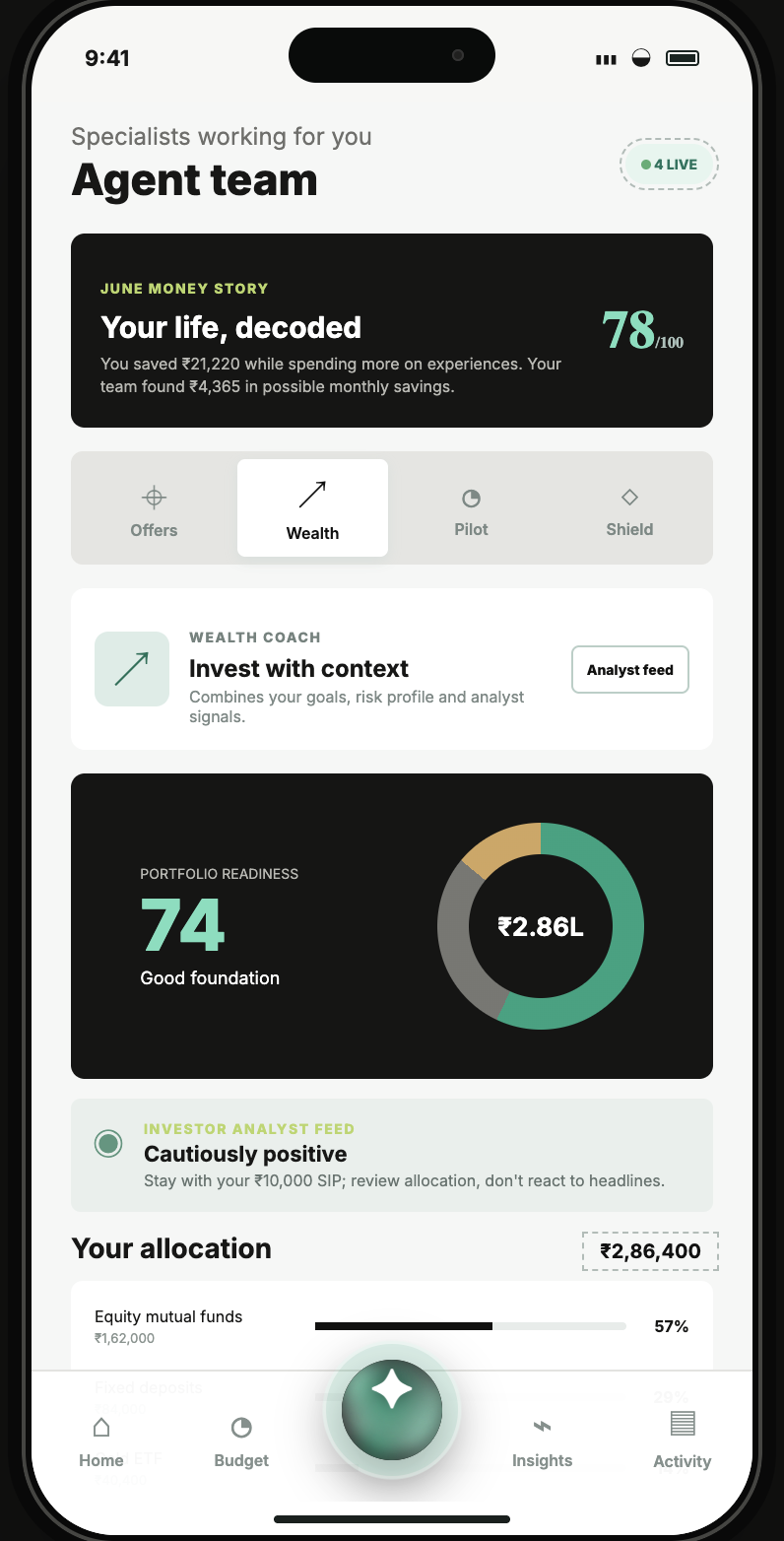
- Connect current market news with the user's financial profile
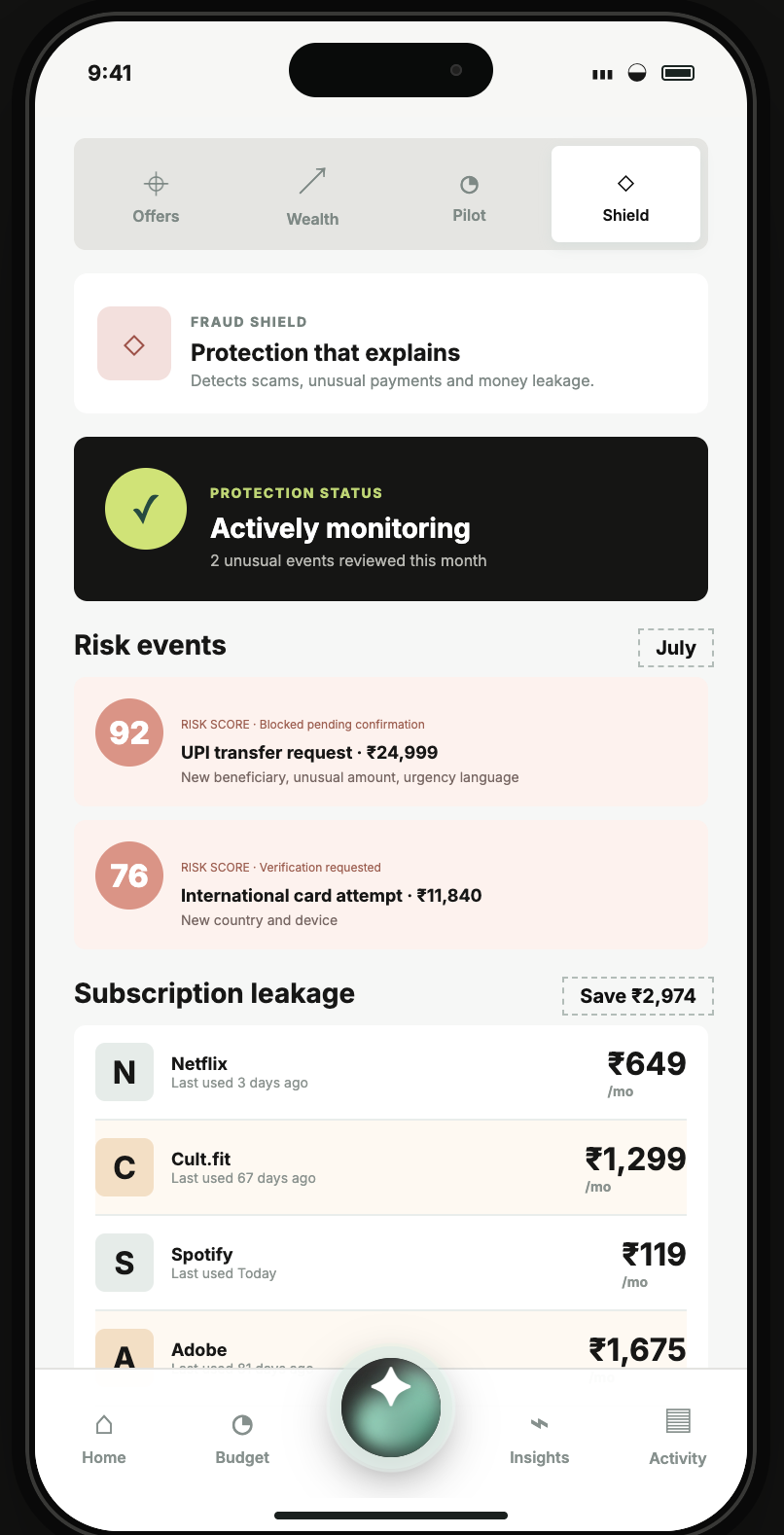
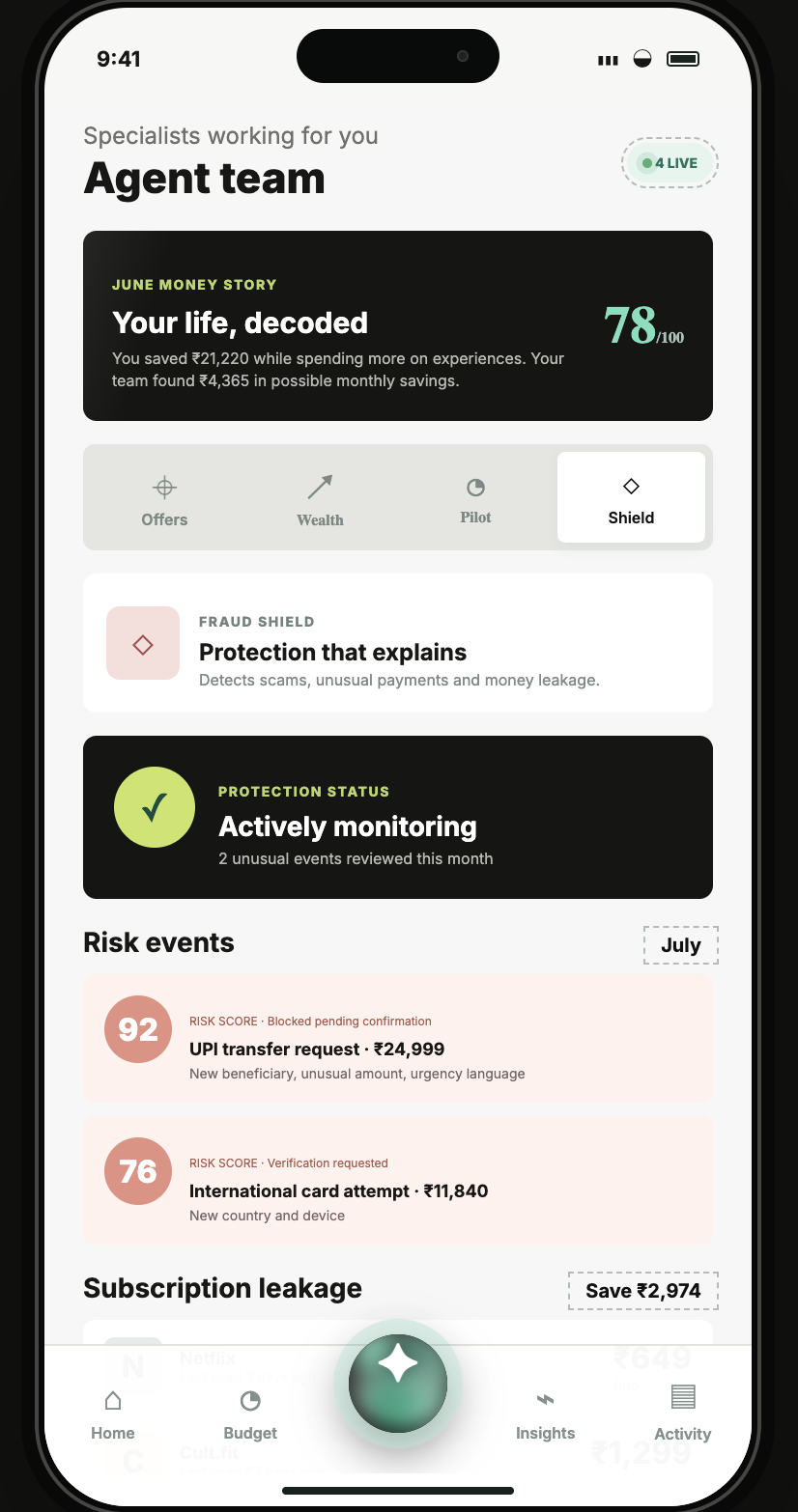
- Detect unusual transactions and unused subscriptions
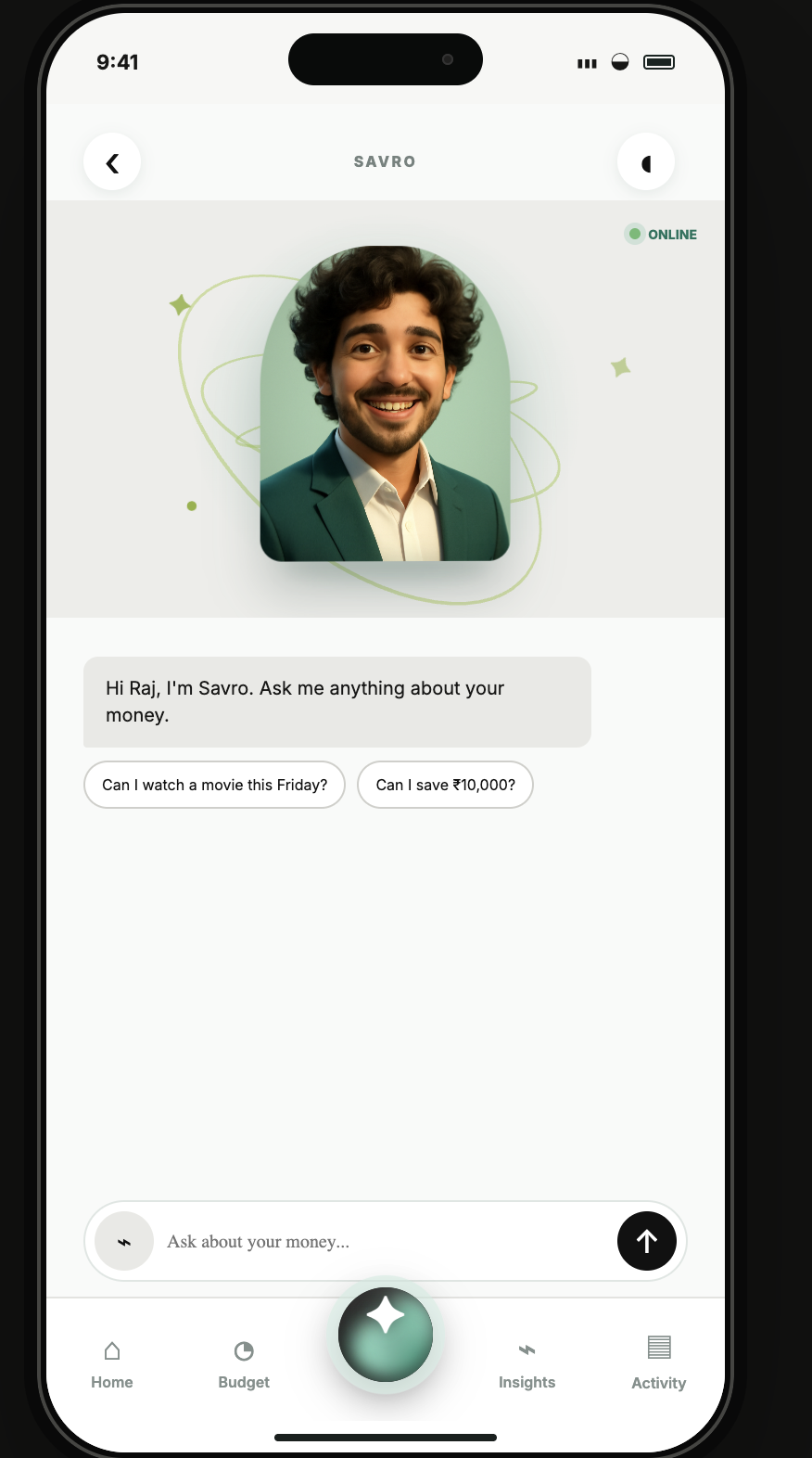
- Answer questions through natural text and voice conversations
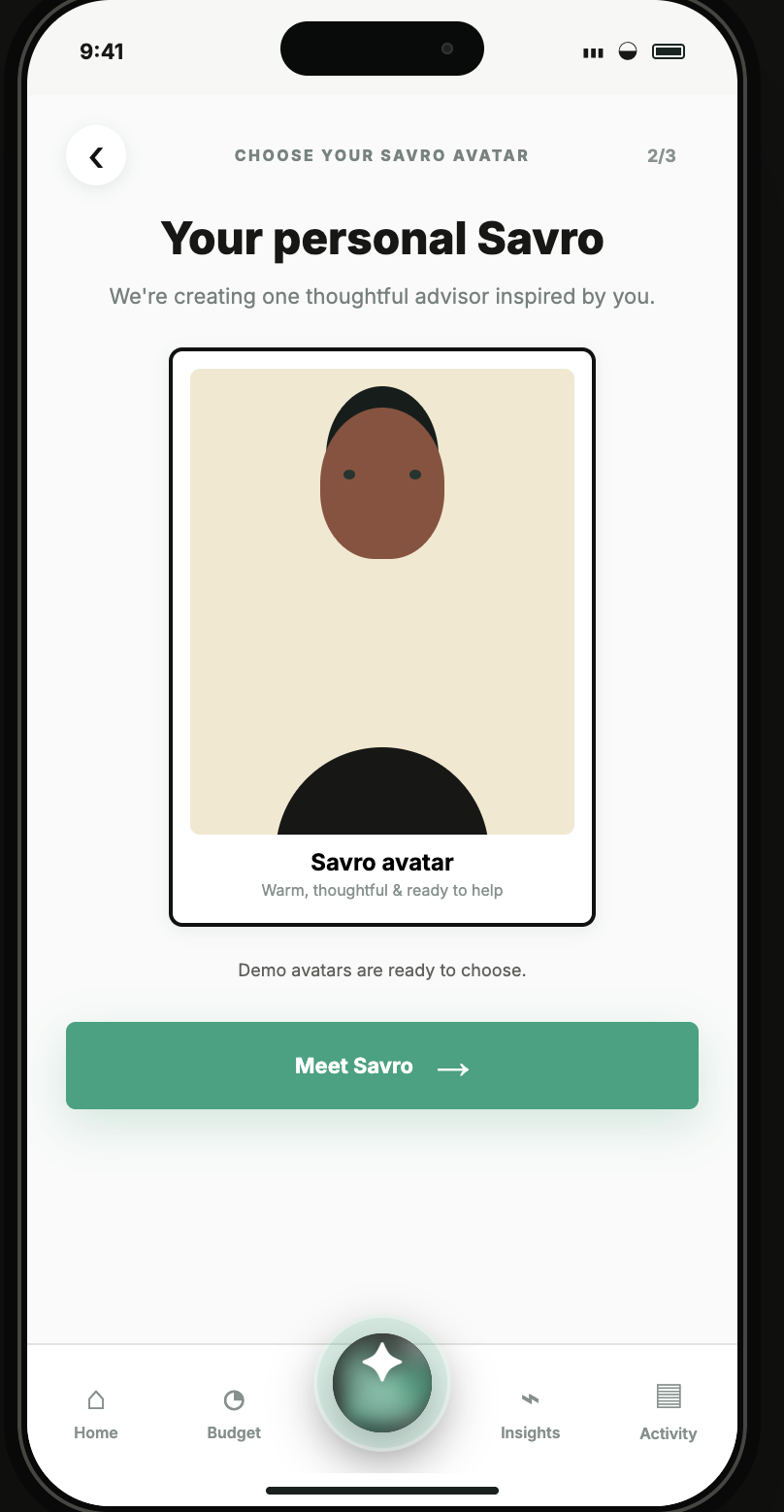
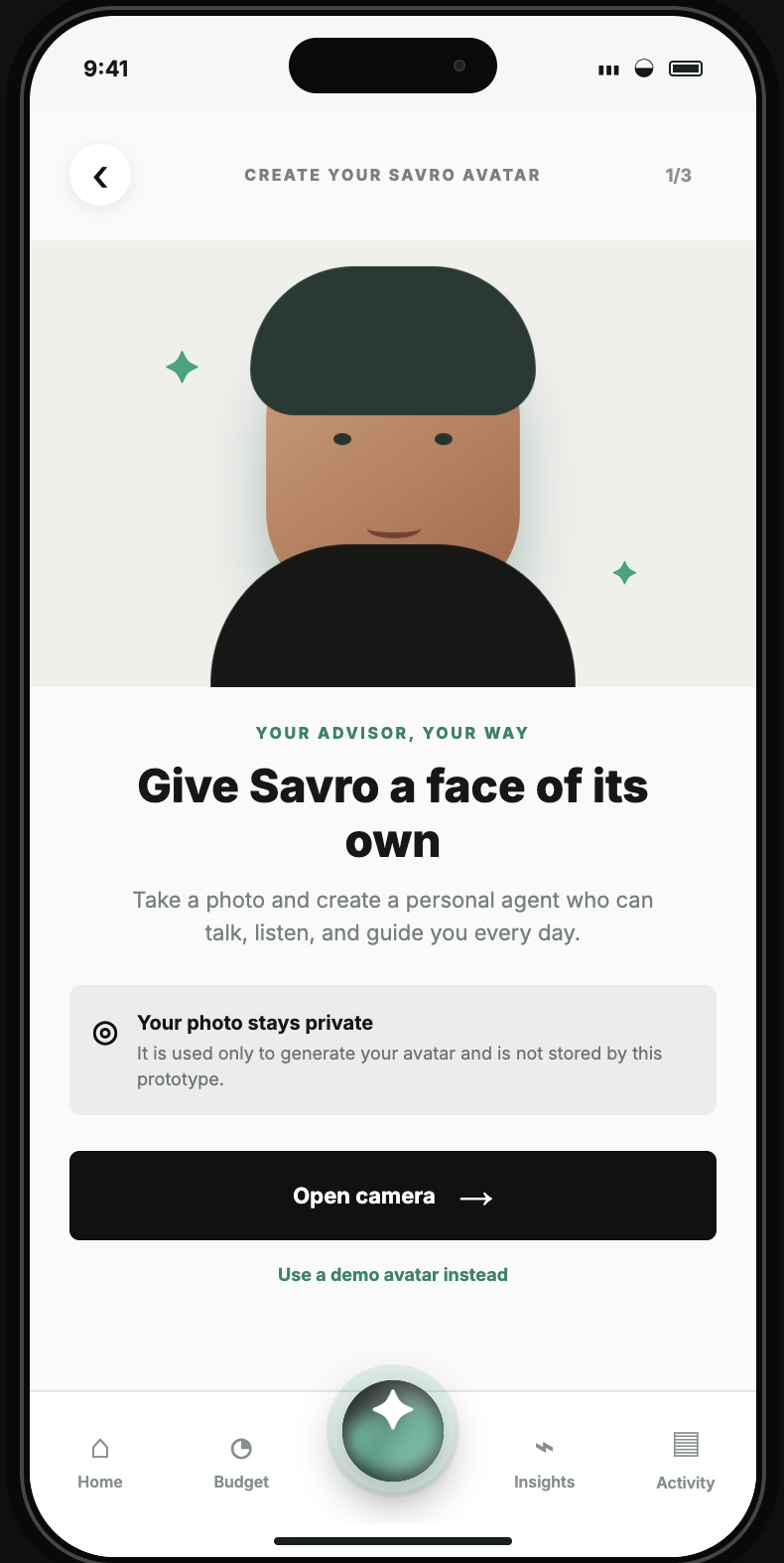
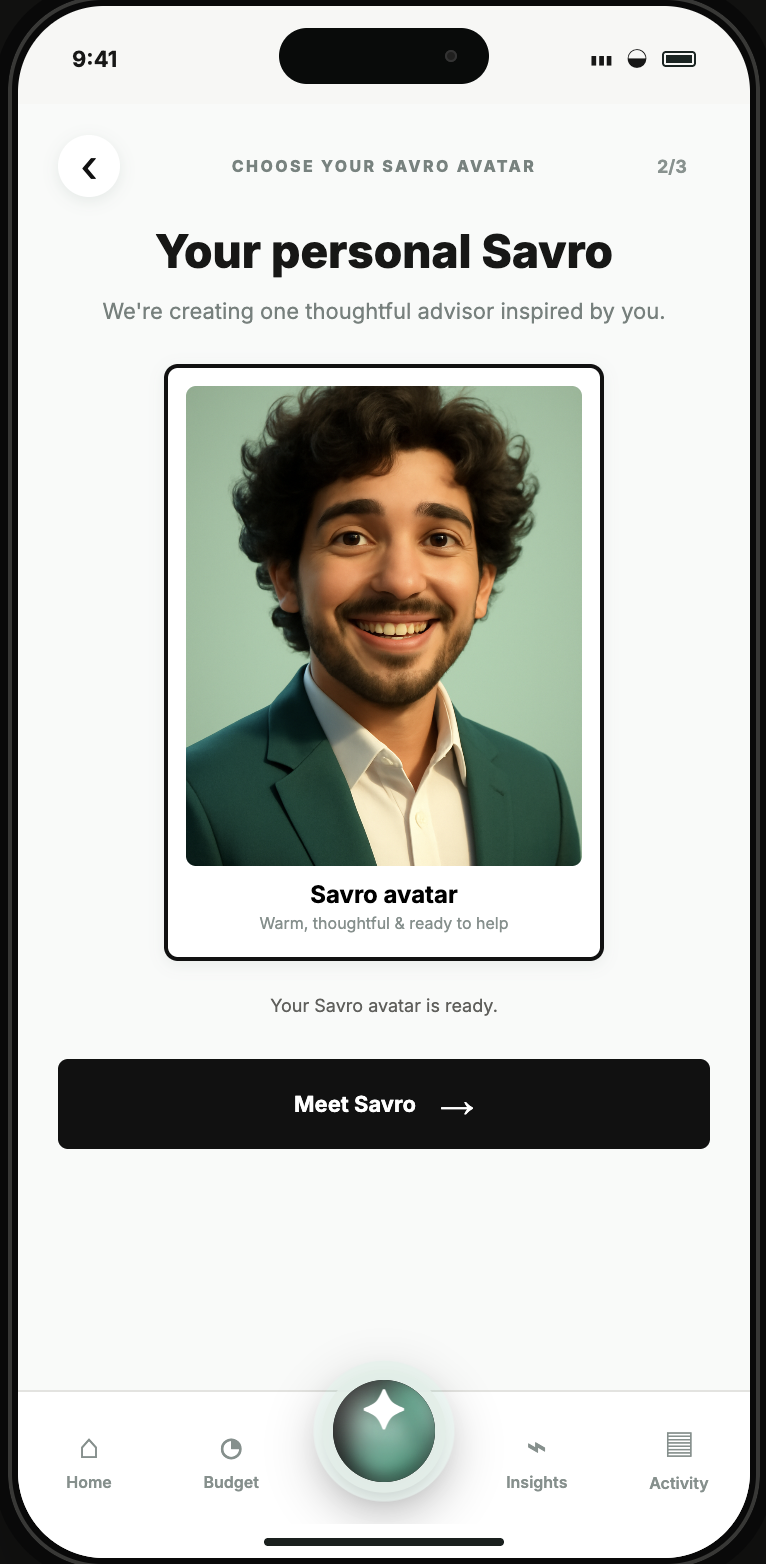
- Create a personalized animated advisor avatar from a webcam photo
Instead of using one general-purpose assistant for everything, Savro coordinates multiple specialist agents:
- Offer Scout finds relevant and verifiable savings opportunities.
- Investor Analyst Feed connects market developments with goals and risk preference.
- Cashflow Pilot forecasts balances and evaluates affordability.
- Fraud Shield explains suspicious activity and financial leakage.
- Savro Orchestrator selects and coordinates the appropriate specialists.
How We Built It
Savro uses a graph-based multi-agent architecture powered by LangGraph.
Every request moves through an explicit workflow:
Customer question
      |
      v
Savro Orchestrator
      |
      v
Intent classification
      |
      v
Relevant financial evidence
      |
      v
Specialist agent
      |
      v
Grounded research when required
      |
      v
Savro response + sources + voice
The graph maintains a shared financial state containing the customer question, selected route, transaction evidence, specialist findings, citations, and execution trace.
This makes the system more transparent than a single large prompt. We can see which agent handled the request, what evidence it used, and how the final answer was produced.
Predictive Intelligence
Savro currently uses a hybrid predictive-analysis layer built from synthetic transaction data, behavioral features, deterministic calculations, anomaly indicators, and AI reasoning.
The system analyzes signals such as:
- Category spending changes
- Merchant and location preferences
- Day-of-week behavior
- Recurring bills and subscriptions
- Income cadence
- Savings commitments
- Safe-to-spend liquidity
- Unusual payment characteristics
For example, Savro calculates safe-to-spend money using this explainable formula:
Safe to spend = Current balance - Upcoming bills - Essential spending - Goal commitments - Safety buffer
In this calculation:
- Current balance is the money presently available.
- Upcoming bills covers expected recurring payments.
- Essential spending is the forecast cost of daily necessities.
- Goal commitments is the amount reserved for savings goals.
- Safety buffer protects the customer from unexpected expenses.
In production, this architecture could connect to trained forecasting, anomaly-detection, and recommendation models, while LangGraph remains the orchestration and policy layer.
How Codex Was Used
Codex was used throughout Savro's development as an agentic engineering collaborator. It helped transform the original product idea into a working full-stack prototype by:
- Exploring the repository and translating product requirements into implementation tasks
- Building and refining the responsive iPhone-style interface
- Implementing the LangGraph state, routing logic, specialist nodes, and API contracts
- Debugging avatar generation, automatic speech playback, citation rendering, and deployed API failures
- Testing UI states across desktop and mobile layouts
- Improving accessibility, prototype disclosures, error handling, and technical documentation
- Managing focused Git commits and validating the Render deployment
Codex did not replace product judgment. It accelerated the build-test-debug loop while architectural choices, financial boundaries, interaction design, and final behavior remained explicit and reviewable.
How GPT-5.6 Was Used
Savro uses GPT-5.6 Luna through OpenRouter for customer-facing reasoning inside the specialist graph. GPT-5.6 Luna was selected for responsive conversational work while retaining the reasoning and tool-use capabilities required by a multi-agent financial experience.
GPT-5.6 is used to:
- Interpret financial questions after deterministic intent routing
- Connect retrieved transaction evidence with customer goals and constraints
- Produce concise Offer Scout, Investor Analyst, Cashflow Pilot, and Fraud Shield responses
- Synthesize grounded web findings without placing raw URLs in speech
- Translate structured financial context into natural, voice-friendly explanations
LangGraph remains the control plane. It decides which evidence and specialist GPT-5.6 receives, maintains the execution trace, and prevents one unconstrained model prompt from controlling the entire workflow.
Technology
- Frontend: HTML, CSS, JavaScript, Three.js, MediaDevices API, and Web Speech API
- Backend: Node.js
- Agent orchestration: LangGraph
StateGraph - Reasoning model: GPT-5.6 Luna through OpenRouter
- Live research: OpenRouter web-search tools
- Avatar generation: Reference-image generation through OpenRouter
- Voice: ElevenLabs text-to-speech and browser speech recognition
- Deployment: Render
Challenges We Faced
Making financial advice personal
A generic language model did not know the customer's spending behavior. We solved this by creating a structured customer state containing transactions, goals, forecasts, offers, subscriptions, investments, and risk events. The relevant evidence is retrieved and supplied to each specialist.
Keeping different searches separate
Early versions sometimes returned movie offers for dining questions or mixed unrelated categories. We introduced category-aware retrieval so dining, movies, shopping, and books follow separate evidence and research paths.
Reducing inaccurate live findings
Offers and market information change frequently. Savro requires live findings to be supported by returned web sources. When no verified result is available, the agent reports that clearly instead of inventing an offer.
Synchronizing text and voice
Initially, the answer appeared before the audio was ready, and the voice attempted to read URLs and currency symbols. We created a speech-safe processing layer that removes links, strips Markdown, converts monetary values into natural "rupees" wording, and synchronizes the final text with audio playback.
Creating avatars efficiently
Generating multiple avatars created unnecessary latency. We reduced the workflow to one high-quality, cheerful advisor avatar while keeping the captured photograph visible beneath a transformation progress state.
Designing honest prototype interactions
Some controls looked functional even though they could not execute real banking operations. We added clear prototype indicators and explanatory bubbles so the interface never suggests that a payment, transfer, or investment was completed.
What We Learned
We learned that building a useful financial agent is not only about producing intelligent answers. The system must also decide:
- Which specialist should handle the request
- Which customer evidence is relevant
- When current web research is necessary
- How to communicate uncertainty
- How to keep responses concise enough for voice
- How to explain recommendations without overwhelming the customer
- How to avoid presenting predictions as guaranteed outcomes
The biggest learning was that orchestration, grounding, and explainability are just as important as the underlying model.
What We Are Proud Of
We are proud that Savro feels like one personal agent while operating as a coordinated AI team behind the scenes.
The prototype combines:
- Financial-pattern analysis
- Predictive cash-flow guidance
- Multi-agent orchestration
- Grounded live research
- Personalized avatars
- Automatic voice conversation
- Explainable evidence and citations
- A complete mobile banking experience
What Is Next
The next stage would connect Savro to consented financial-data services and introduce trained predictive models for:
- Personalized cash-flow forecasting
- Next-best financial action ranking
- Offer recommendation
- Subscription leakage prediction
- Behavioral anomaly detection
- Goal-success probability
A production version would also require bank-grade authentication, encryption, consent management, audit trails, model monitoring, regulatory review, and human escalation.
Prototype notice: Savro currently uses a synthetic dataset representing one fictional customer's financial activity over 60 days. It does not access real bank accounts or execute financial transactions.
Built With
- agent
- docker
- fastapi
- graph
- langraph
- llm
- machine-learning
- nextjs
- openai
- postgresql
- python


Log in or sign up for Devpost to join the conversation.