-
-
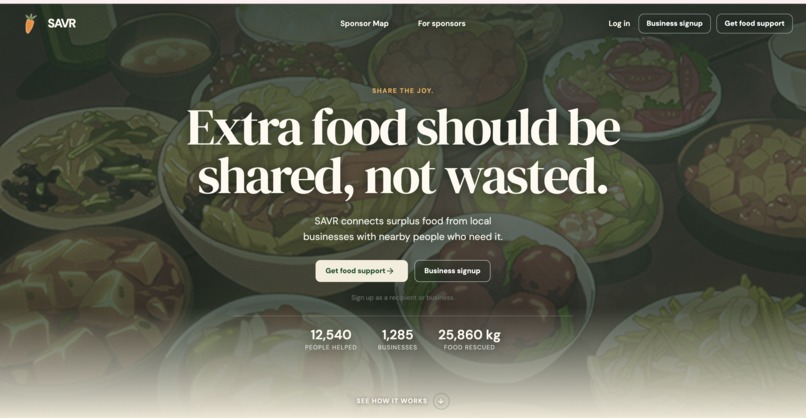
Home page
-
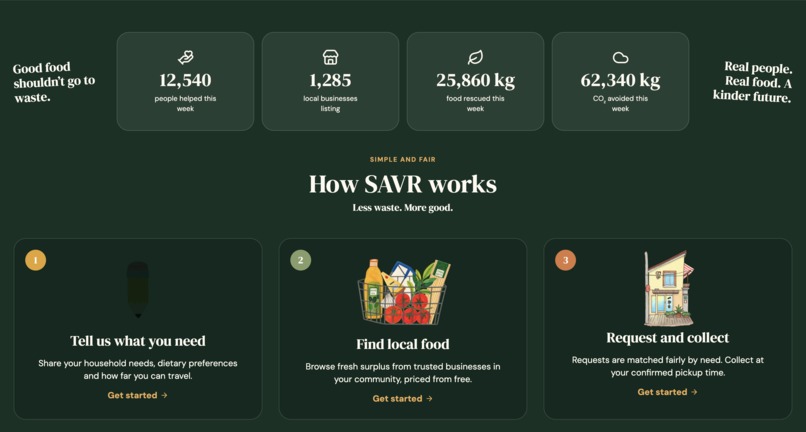
How it works
-
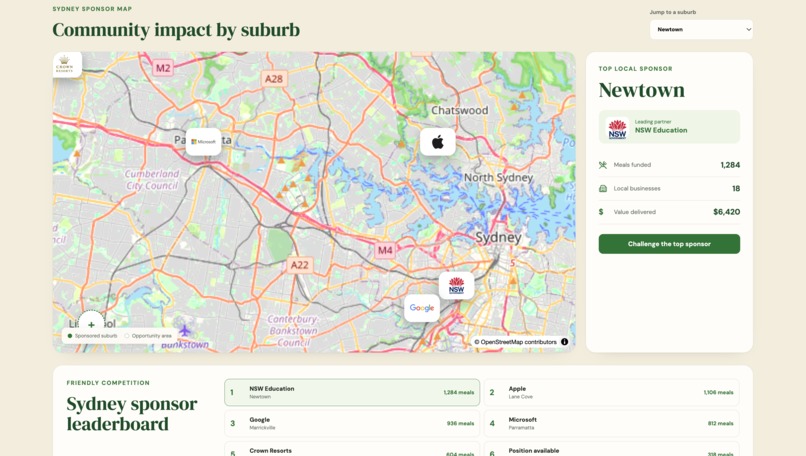
Sponsor Map
-
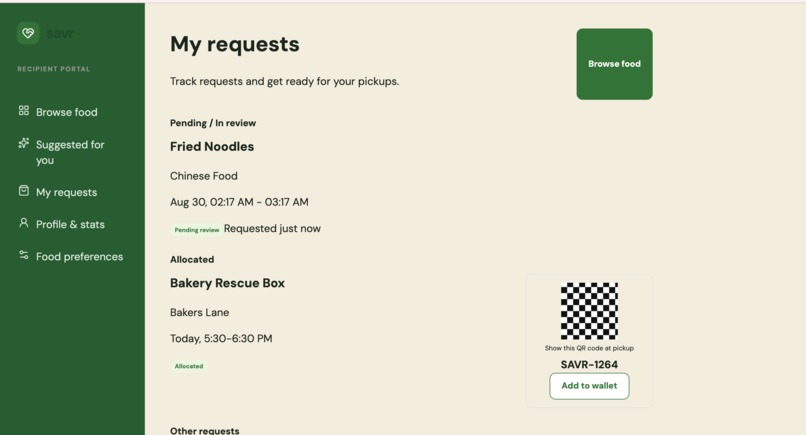
Requests
-
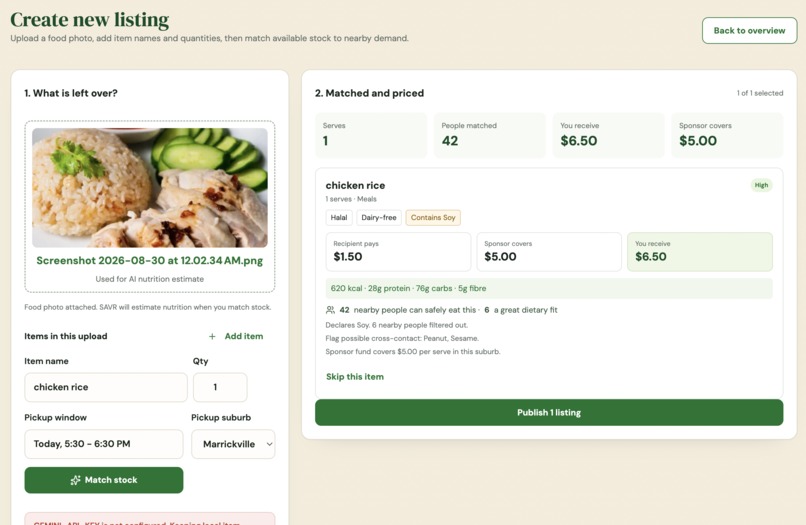
AI automated nutritional analysis
-
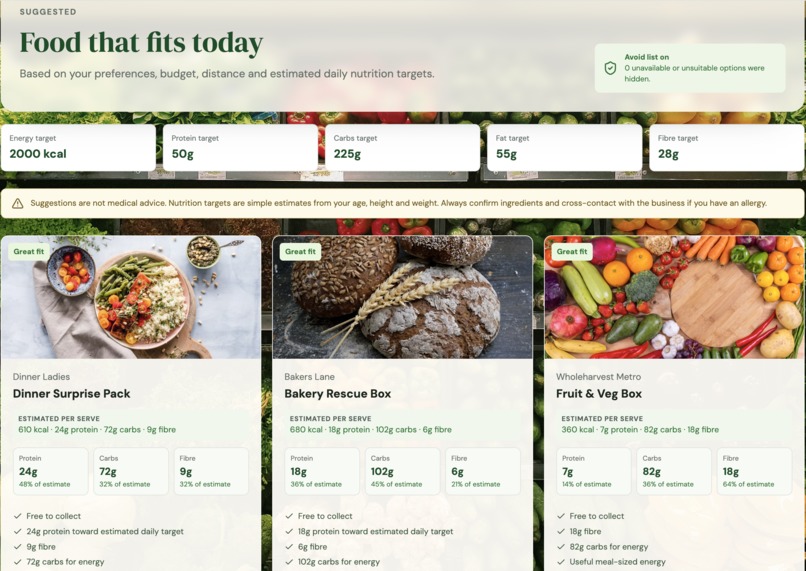
Nutritional Recommendation system
Inspiration
Australia faces a contradiction: millions of households struggle with food insecurity while large amounts of perfectly good food are still thrown away every year.
We realised the problem is not always a lack of resources, but a lack of connection between the people who have them and the people who need them.
That inspired SAVR.
We wanted to connect three groups that usually operate separately: food vendors with surplus stock, people experiencing financial hardship, and businesses looking to create measurable community impact.
Our goal was to build a system where surplus food could be redirected fairly, affordably, and locally instead of going to waste.
What it does
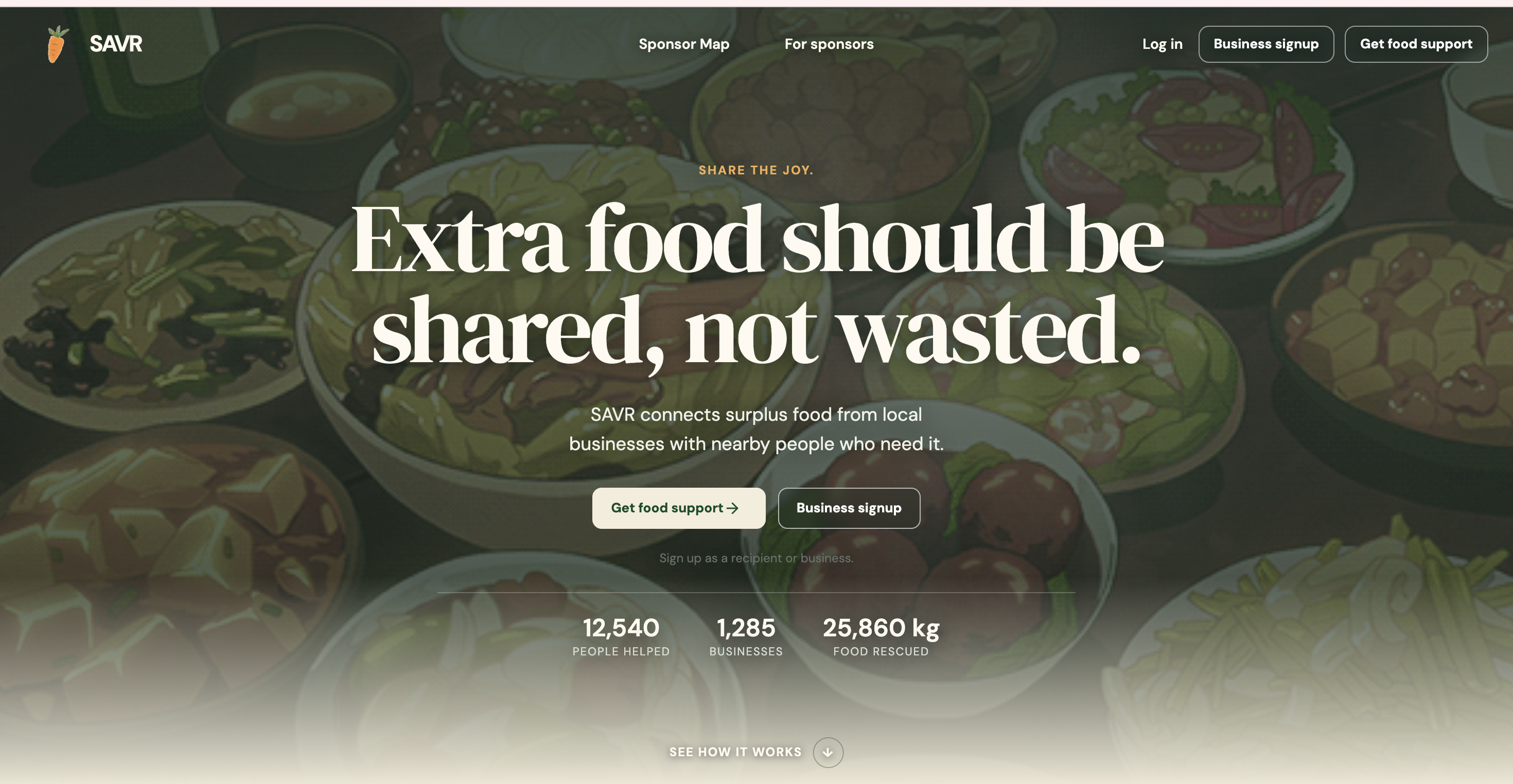
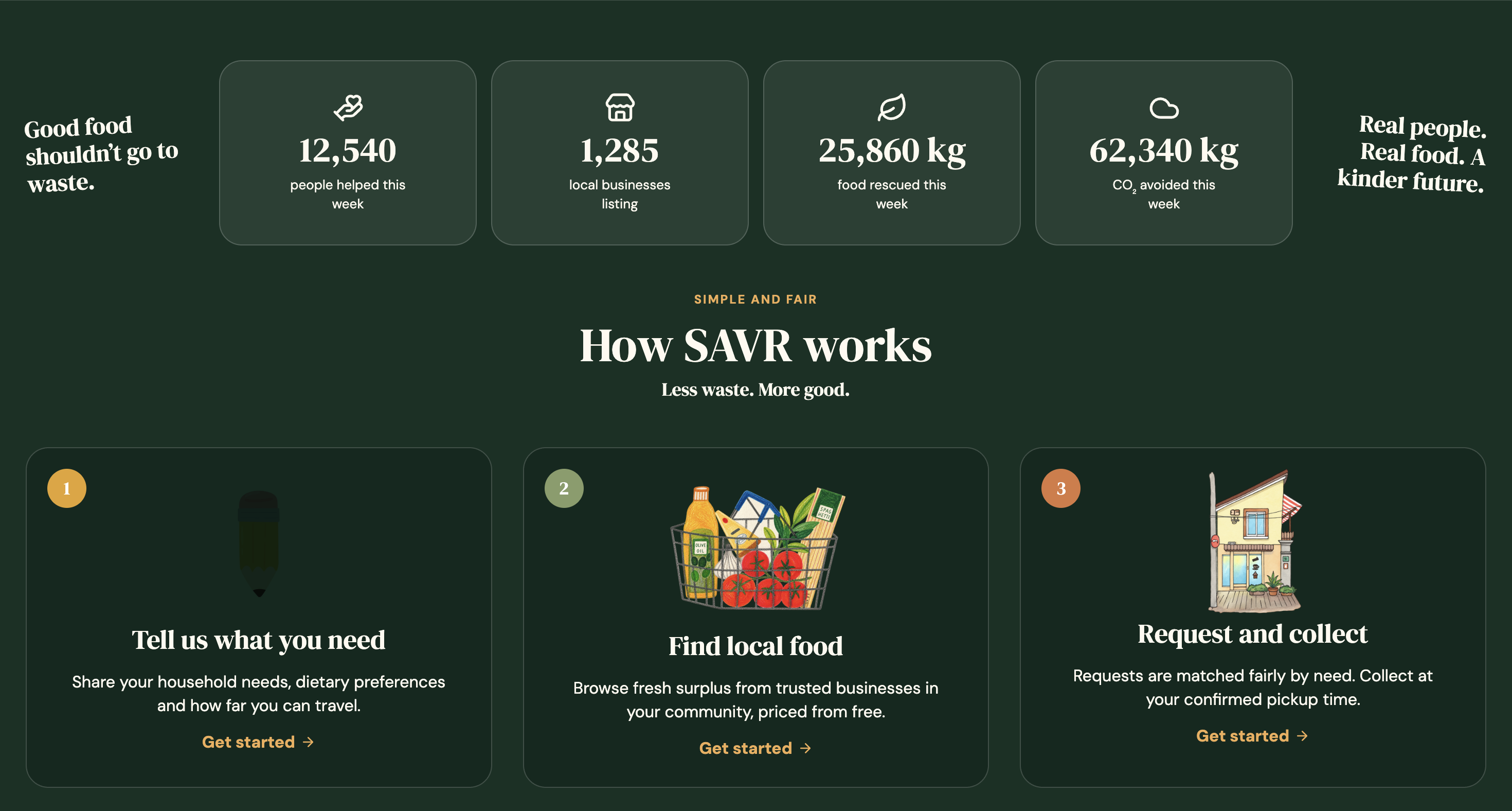
SAVR is a surplus-food marketplace that connects vendors, recipients, and sponsors.
Restaurants, supermarkets, bakeries, and grocers can list safe surplus food that they are unlikely to sell.
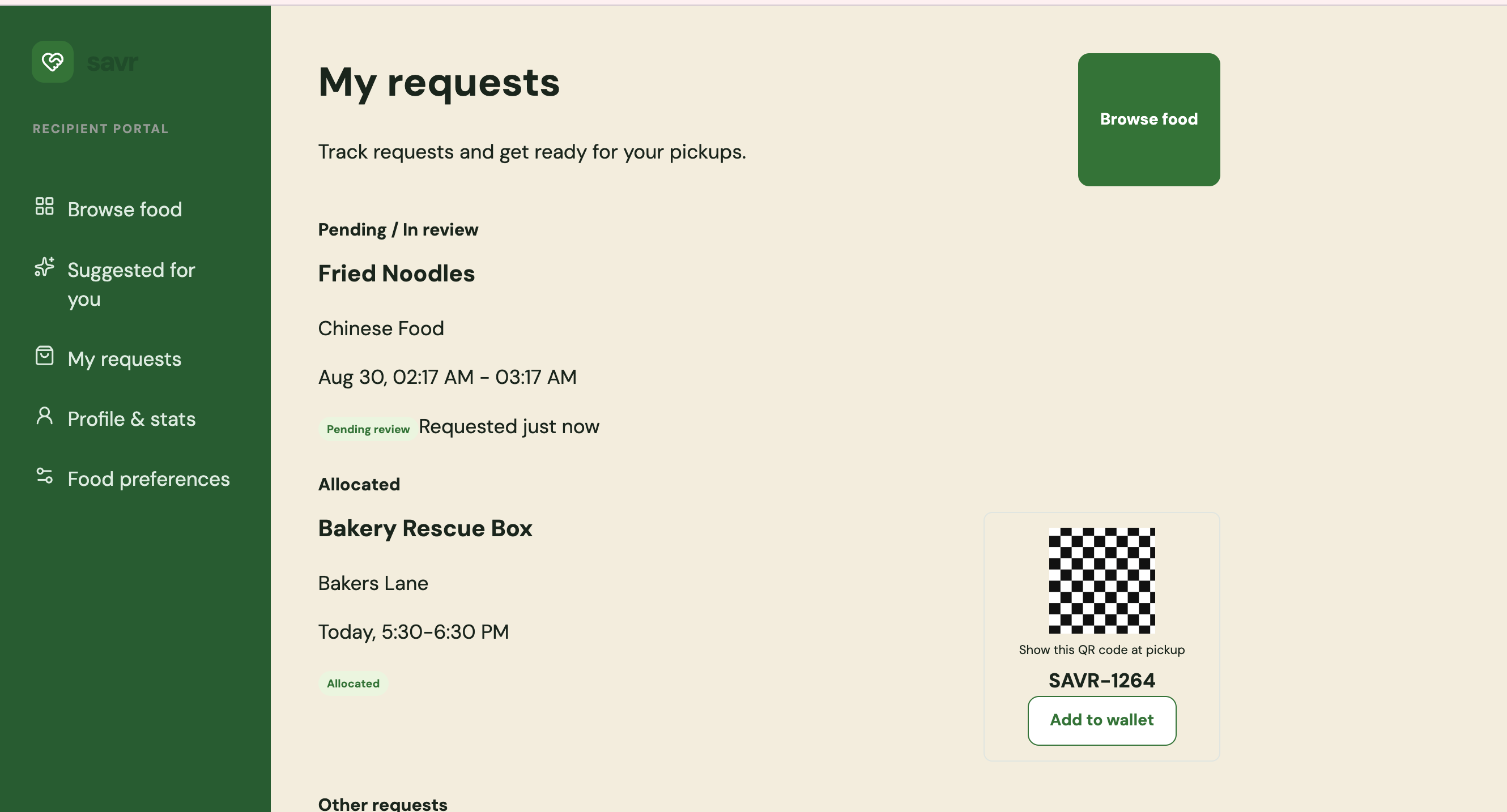
Recipients can browse nearby food, submit requests, and receive allocations based on need rather than simply being first to click.
During registration, recipients provide information such as household income, dependants, food access, employment status, and financial pressure. SAVR combines these factors into a transparent need score.
When a listing is oversubscribed, SAVR waits until the request deadline and runs a matching algorithm that prioritises users with higher need scores. Previous allocations can also be considered to help distribute limited food more fairly over time.
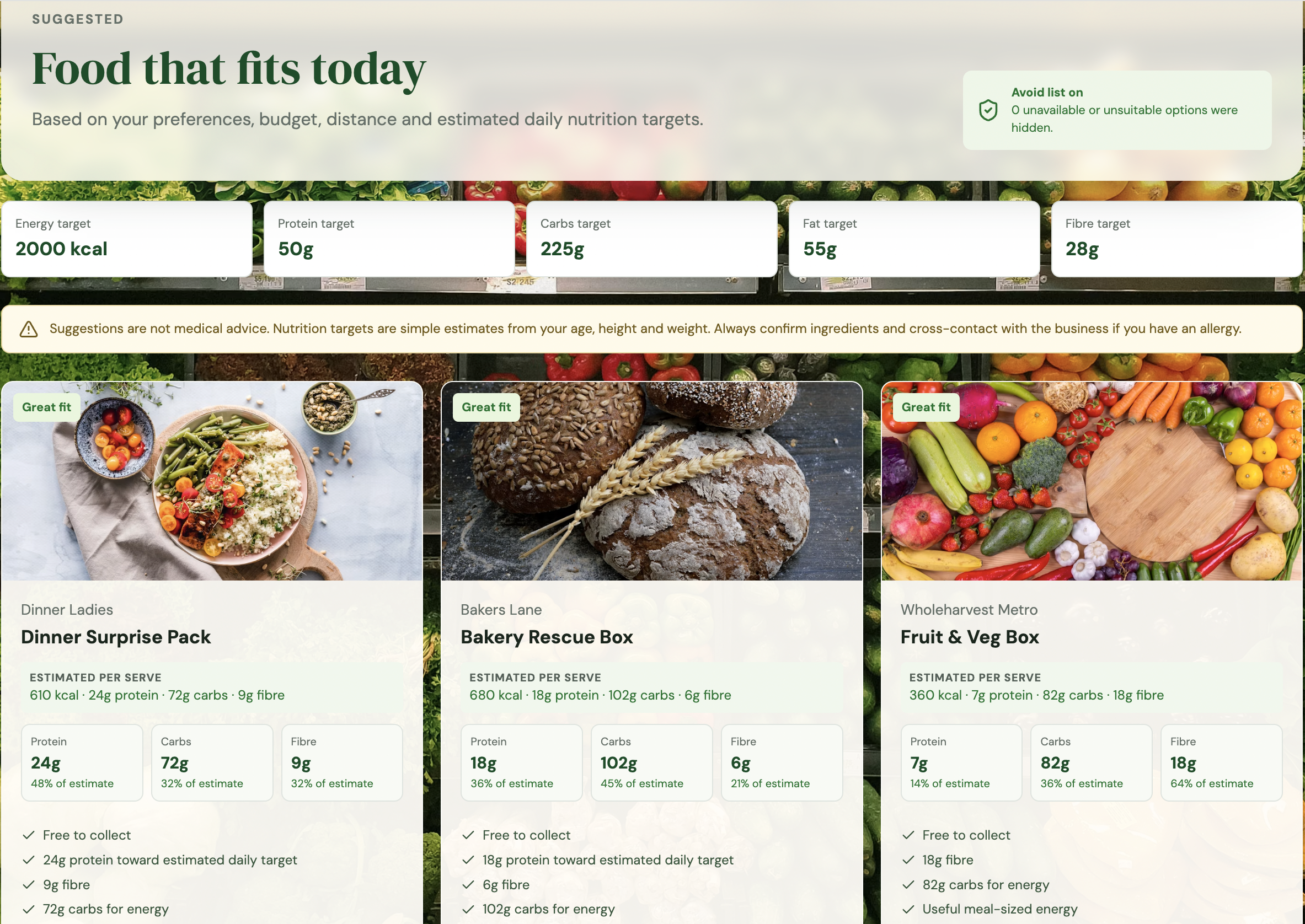
Users can additionally provide dietary requirements, preferences, and basic health information so SAVR can recommend food that better matches their nutritional needs.
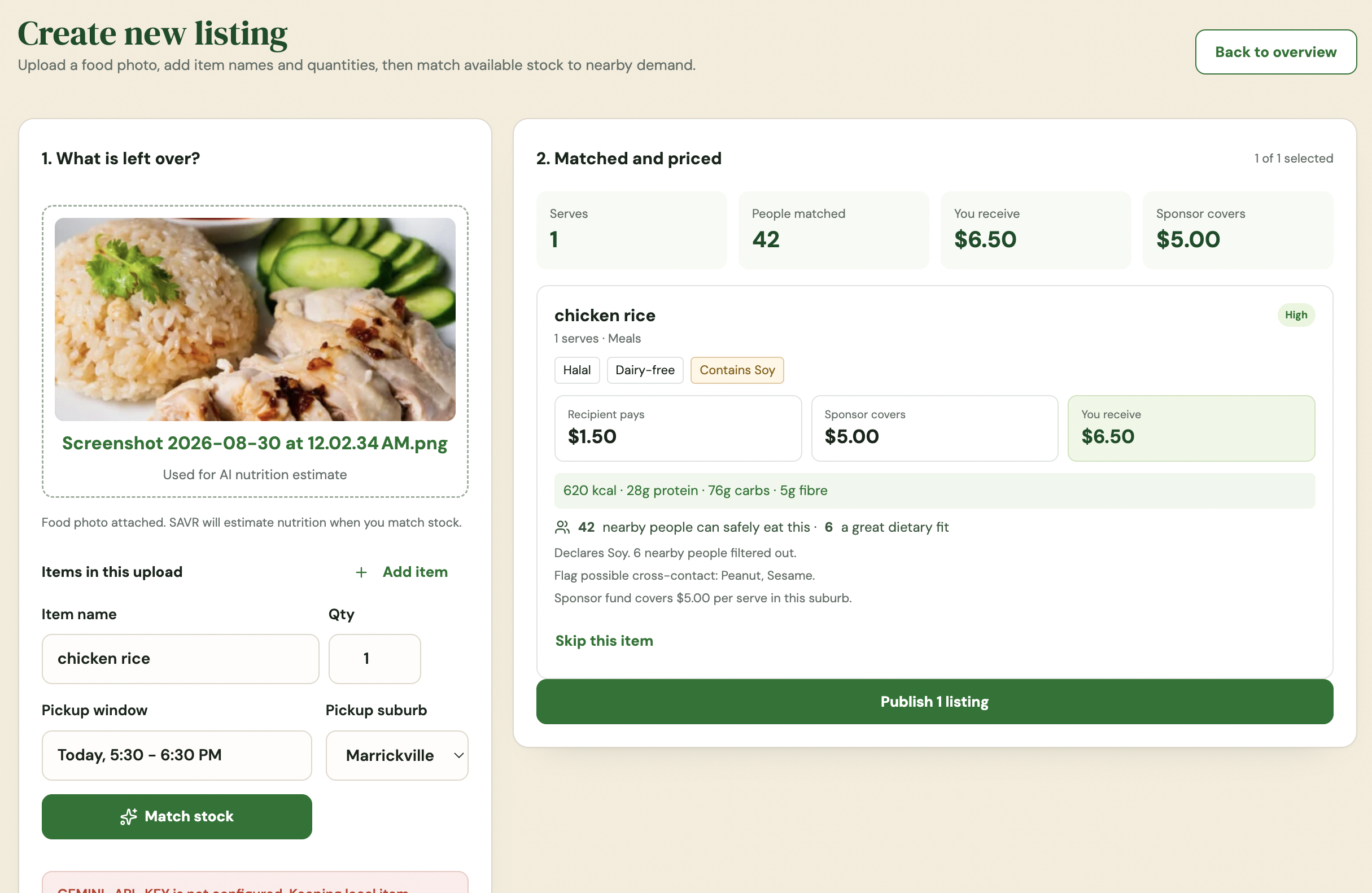
Vendors can upload an image of their food, which is analysed using Gemini AI to estimate nutritional information such as calories, protein, carbohydrates, and fat.
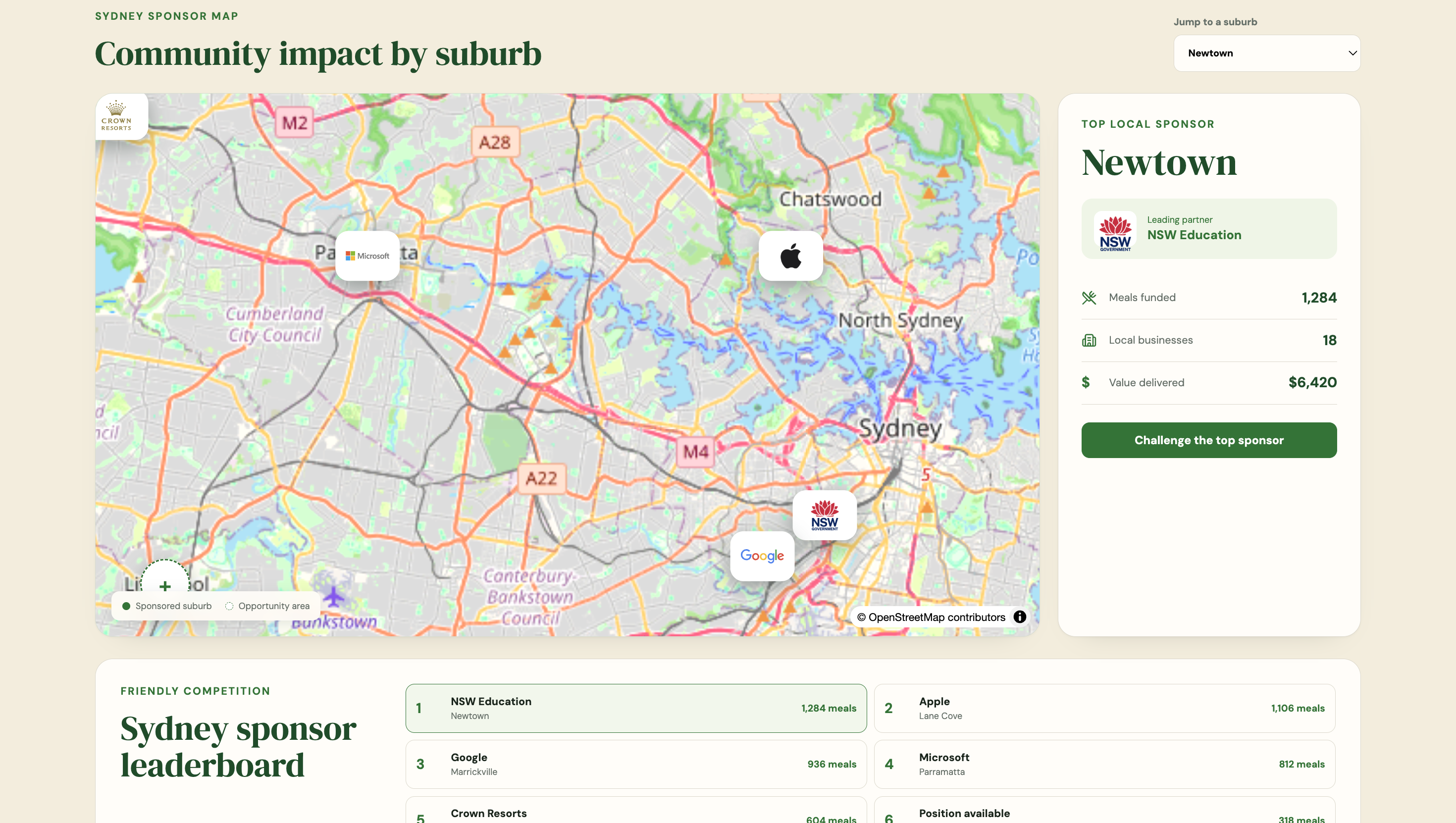
Sponsors can contribute funding to particular suburbs and communities, helping reduce the price paid by recipients while still allowing vendors to receive value for food that may otherwise have been discarded.
How we built it
SAVR was built as a full-stack web application.
We used a react frontend to create the marketplace, vendor dashboard, recipient onboarding, sponsor map, and allocation flows.
Our backend was built with Django, which handles user accounts, vendor listings, recipient profiles, need-score calculations, requests, allocations, and matching logic.
We integrated Gemini AI into the backend to analyse food images uploaded by vendors and generate estimated nutritional information.
We also implemented a need-based allocation system rather than a traditional first-come, first-served model.
Each listing stores information such as the vendor, item, available quantity, pickup window, and allocation deadline. At the deadline, SAVR ranks eligible requests and allocates the available quantity according to need.
The sponsor system was designed to connect funding with specific local communities, allowing businesses to see where their contributions are having an impact.
Challenges we ran into
One of the biggest challenges was designing a matching system that was both simple enough for a hackathon MVP and still represented fairness in a meaningful way.
A single income threshold was easy to implement, but we quickly realised that income alone does not accurately represent financial need. Household size, dependants, food access, employment, housing pressure, and previous allocations all matter.
We therefore created a combined need metric that brings multiple factors together while remaining understandable and explainable.
Another challenge was designing the system so that food was not allocated on a first-come, first-served basis. This required us to rethink the usual marketplace flow and introduce request deadlines followed by batch allocation.
Integrating AI-based nutritional estimation was also challenging because food images can be ambiguous and nutritional values cannot be guaranteed to be exact. For the MVP, we treat these results as estimates and allow the system to fall back to item-based nutritional information when needed.
We also had to think carefully about how the vendor, recipient, and sponsor experiences connected together without making the product feel like three separate applications.
Accomplishments that we're proud of
We are proud that SAVR goes beyond simply creating another discounted-food marketplace.
The core of the project is the allocation system. Instead of rewarding whoever opens the app first, SAVR attempts to direct scarce food toward the people who need it most.
We are also proud of how we connected three different stakeholders into a single loop.
Vendors can recover value from surplus food.
Recipients gain access to more affordable food.
Sponsors can fund specific communities and see tangible local impact.
We also successfully integrated AI-powered food analysis into the vendor listing process, making it possible to generate useful nutritional information from a simple food image.
Most importantly, we built a working concept that directly reflects our theme: the individual blocks already exist, but SAVR creates value by connecting them.
What we learned
We learned that building a socially focused product involves more than solving the technical problem.
Decisions around ranking, eligibility, and allocation can directly affect real people, so fairness and transparency need to be considered from the beginning.
We also learned that a matching algorithm does not need to be extremely complex to provide value. Even a simple, explainable scoring system can be more equitable than a purely first-come, first-served approach.
From a technical perspective, we gained experience integrating AI services into a full-stack application, designing relational data models, building allocation logic, and connecting multiple user roles within the same platform.
We also learned how important it is to design the product around a clear end-to-end story rather than treating each feature independently.
What's next for SAVR
The current version of SAVR is an MVP, but there are several ways we would like to expand it.
We would improve eligibility verification by integrating more reliable income or government-support verification methods rather than relying solely on self-reported information.
We would also work with food-relief organisations and community groups to refine the need-score model and test it for fairness.
The matching algorithm could be extended to consider more factors such as nutritional deficiencies, distance, pickup availability, family size, and how frequently a user has received previous allocations.
On the vendor side, we would improve nutritional analysis and allow businesses to integrate directly with their existing inventory systems so surplus items could be listed automatically.
For sponsors, we would build richer impact dashboards showing metrics such as meals funded, kilograms of food rescued, recipient savings, and impact by suburb.
Long term, we see SAVR becoming an infrastructure layer connecting local businesses, community organisations, sponsors, and people in need.
The food already exists.
The funding already exists.
And the need already exists.
SAVR's goal is to connect those blocks.


Log in or sign up for Devpost to join the conversation.