-
-
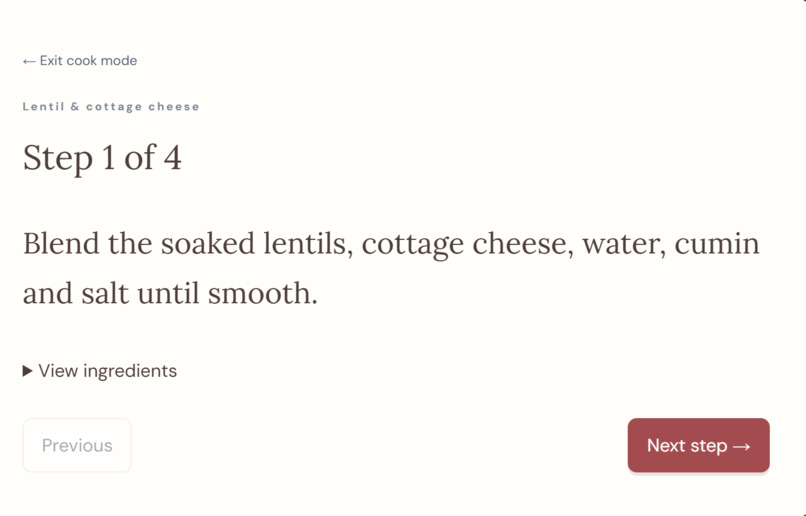
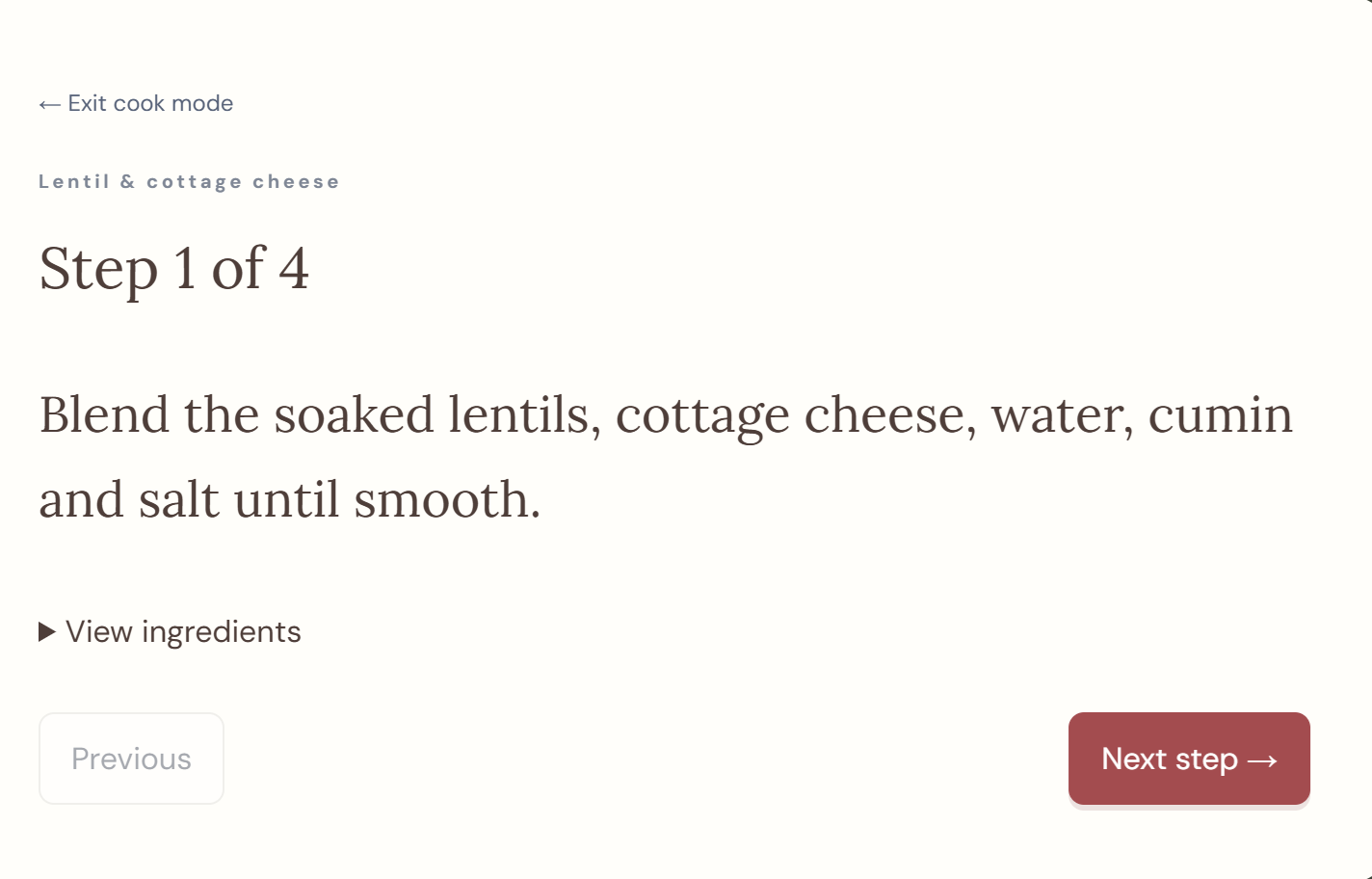
cook mode
-
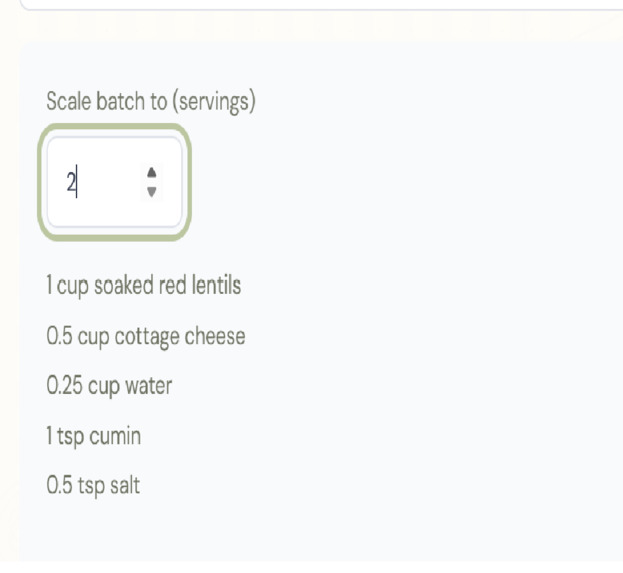
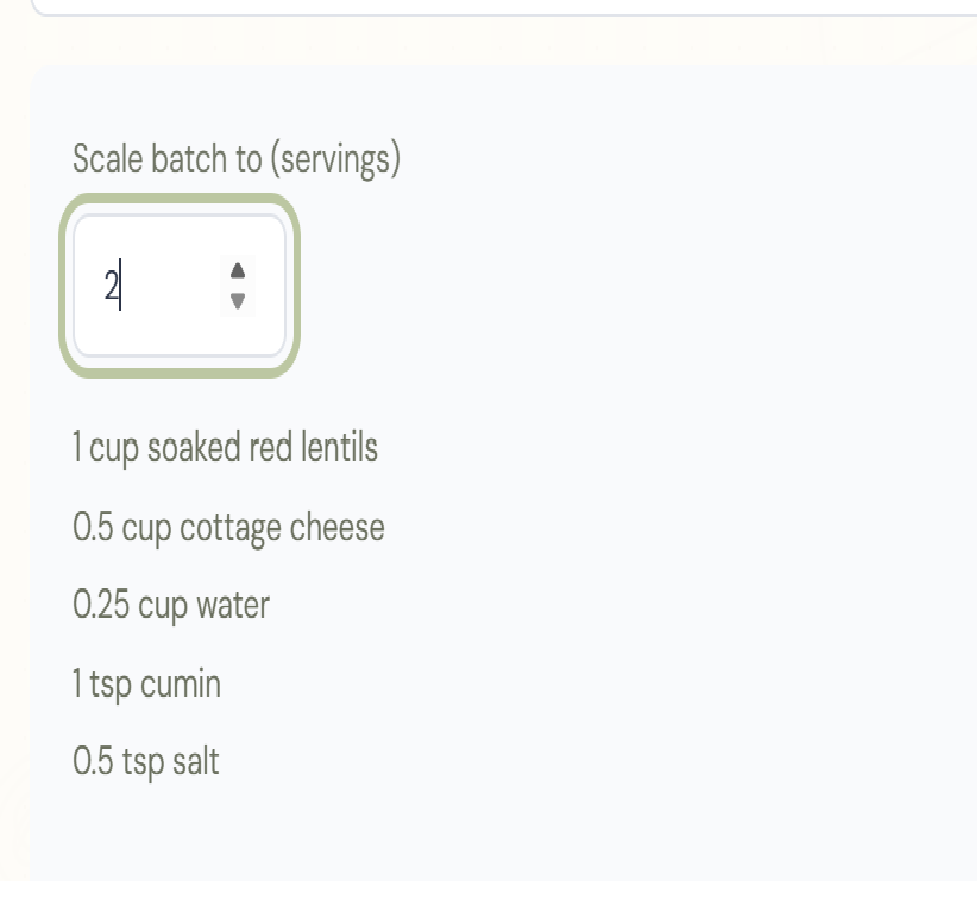
Scale up measurement feature
-
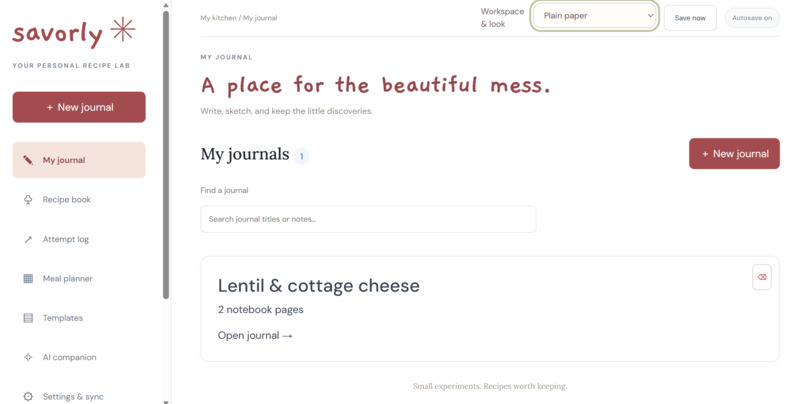
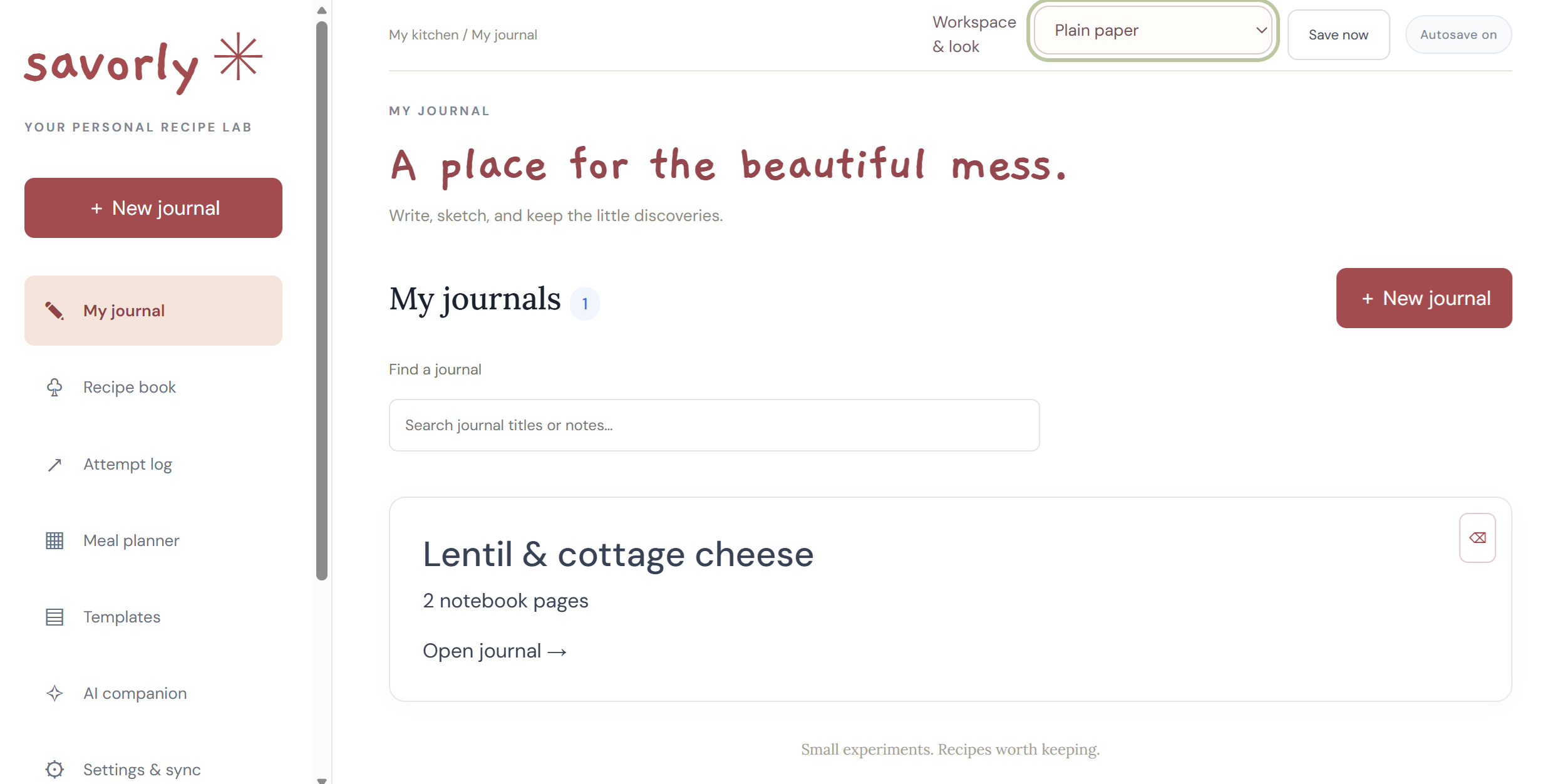
plain theme
-
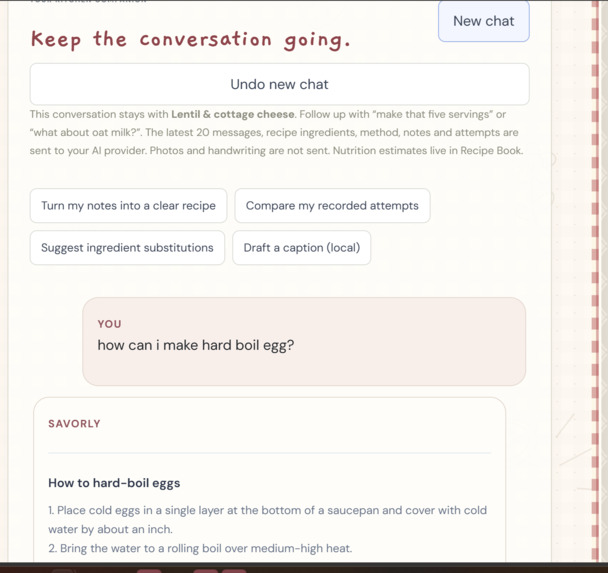
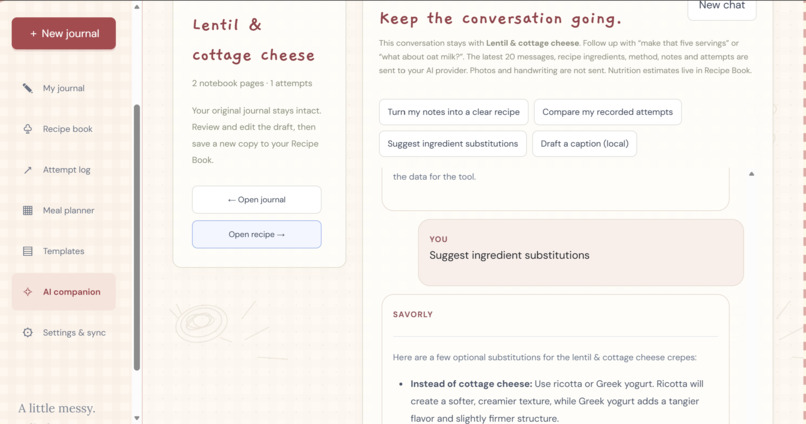
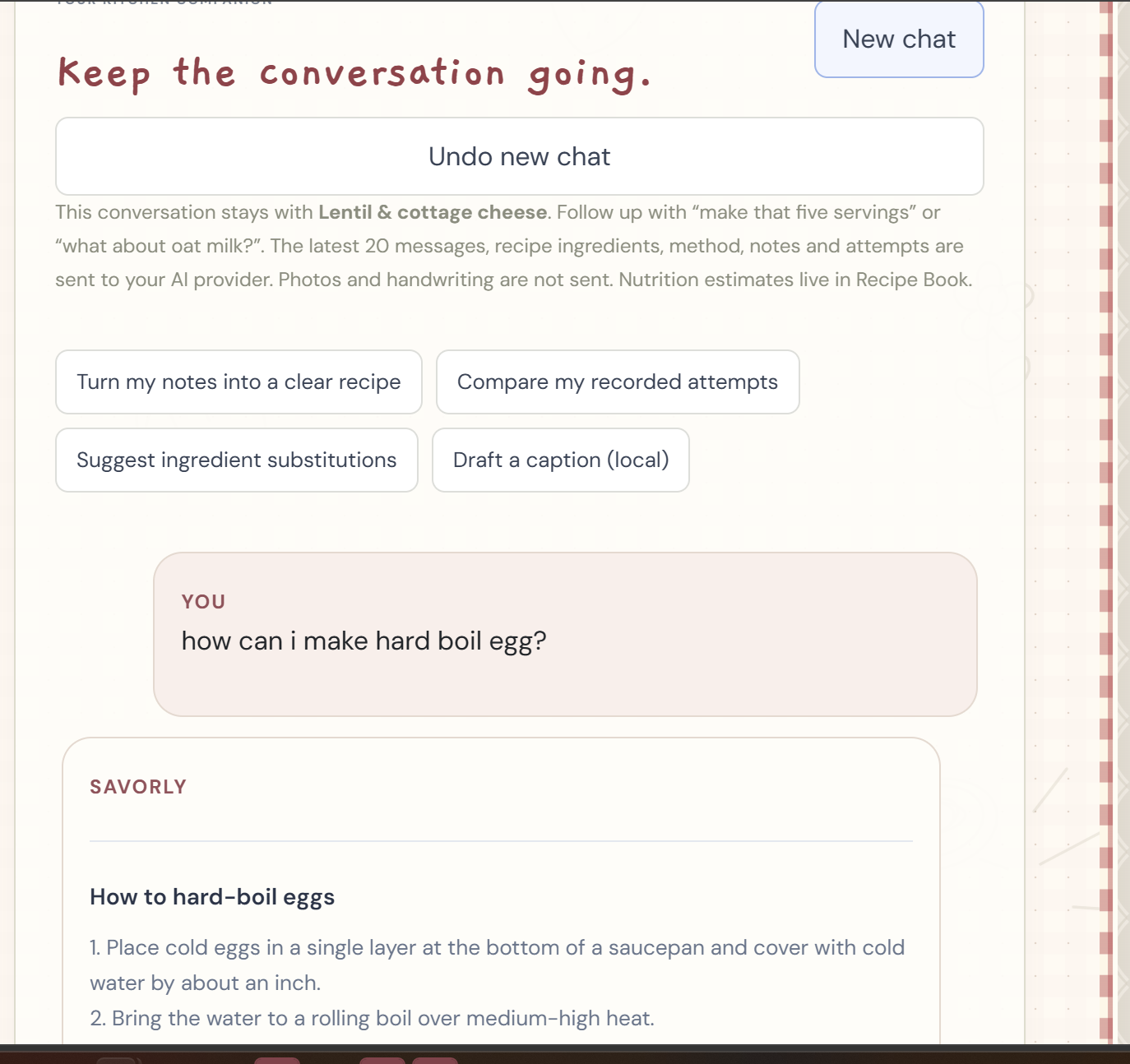
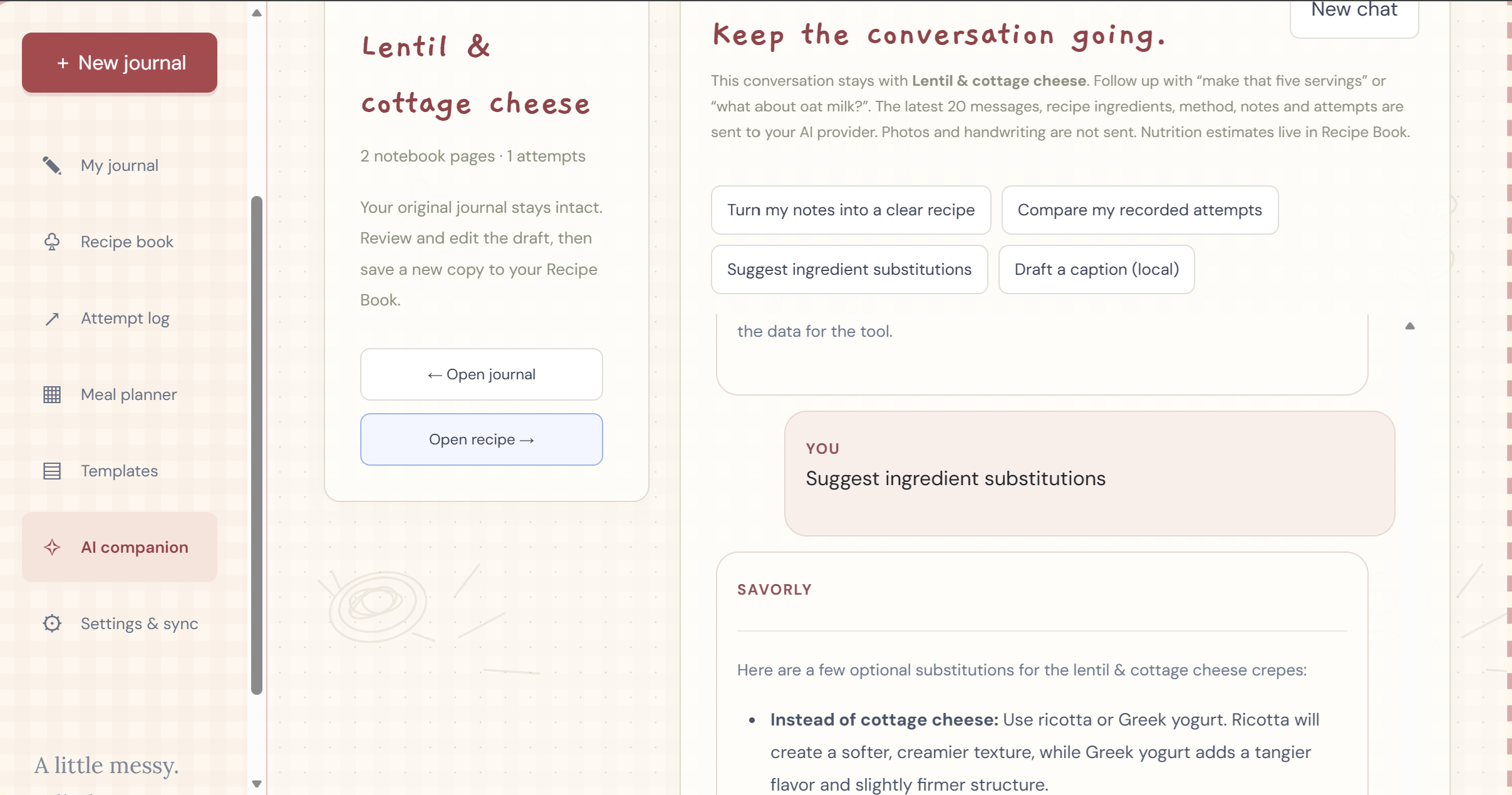
AI assisted new chat feature
-
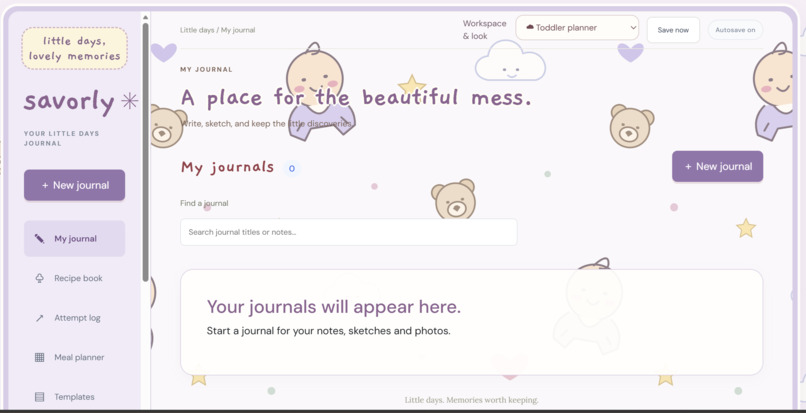
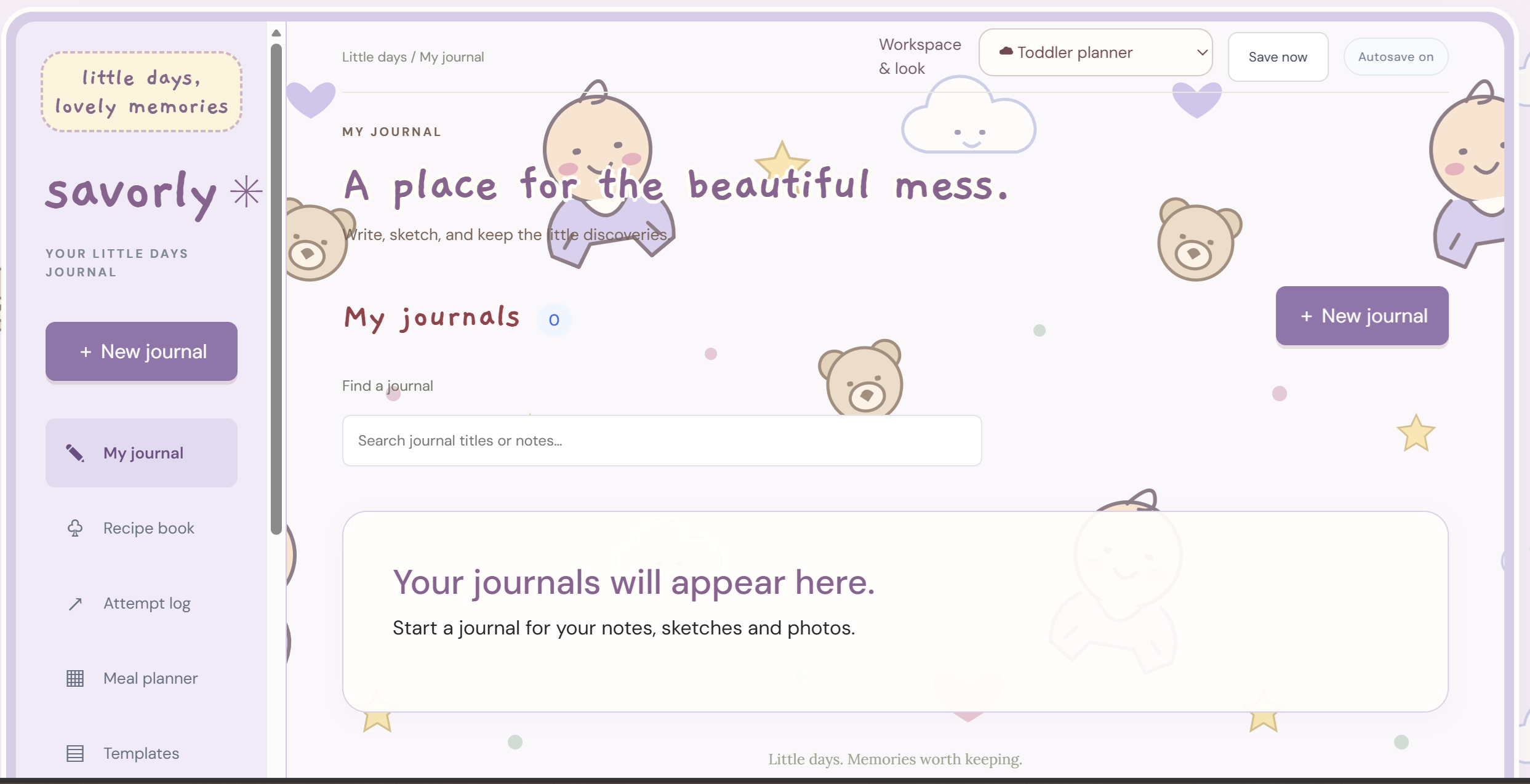
Toddle Theme
-
-
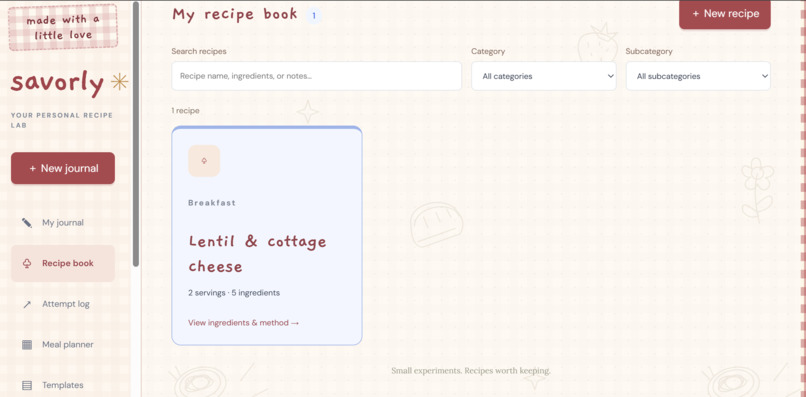
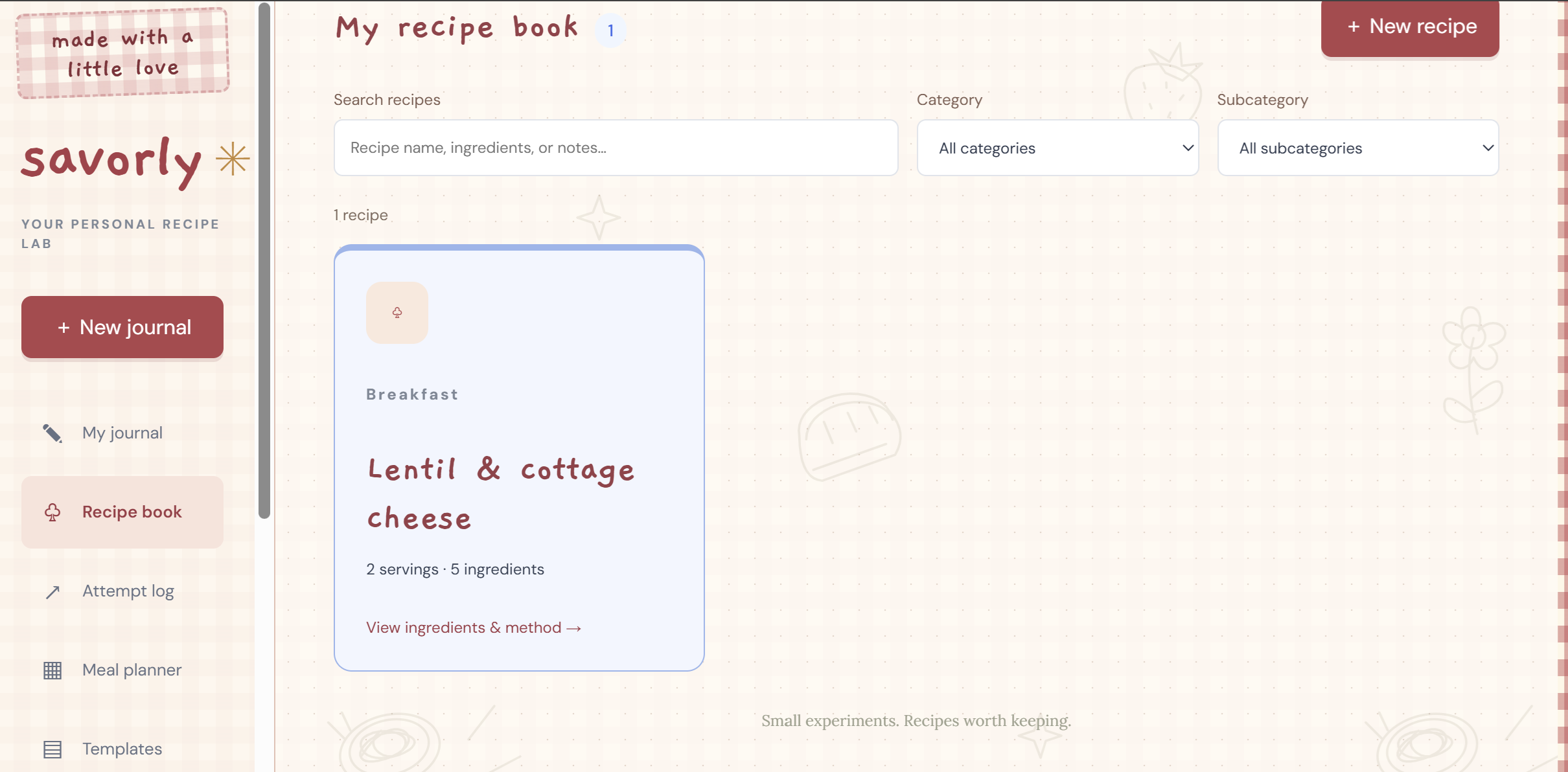
Recipe Book
-
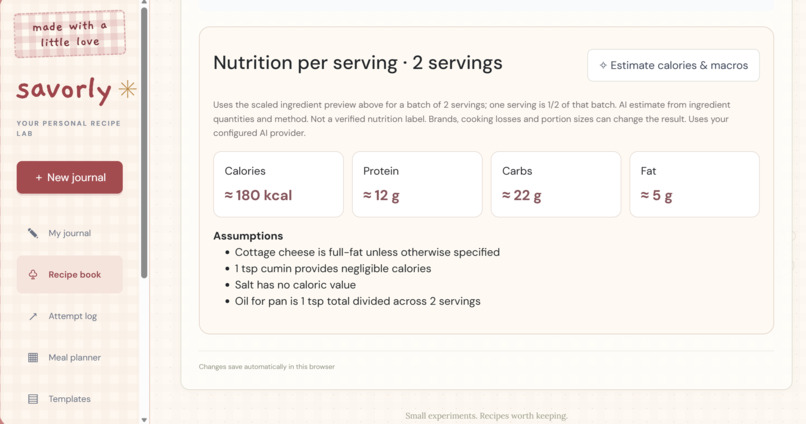
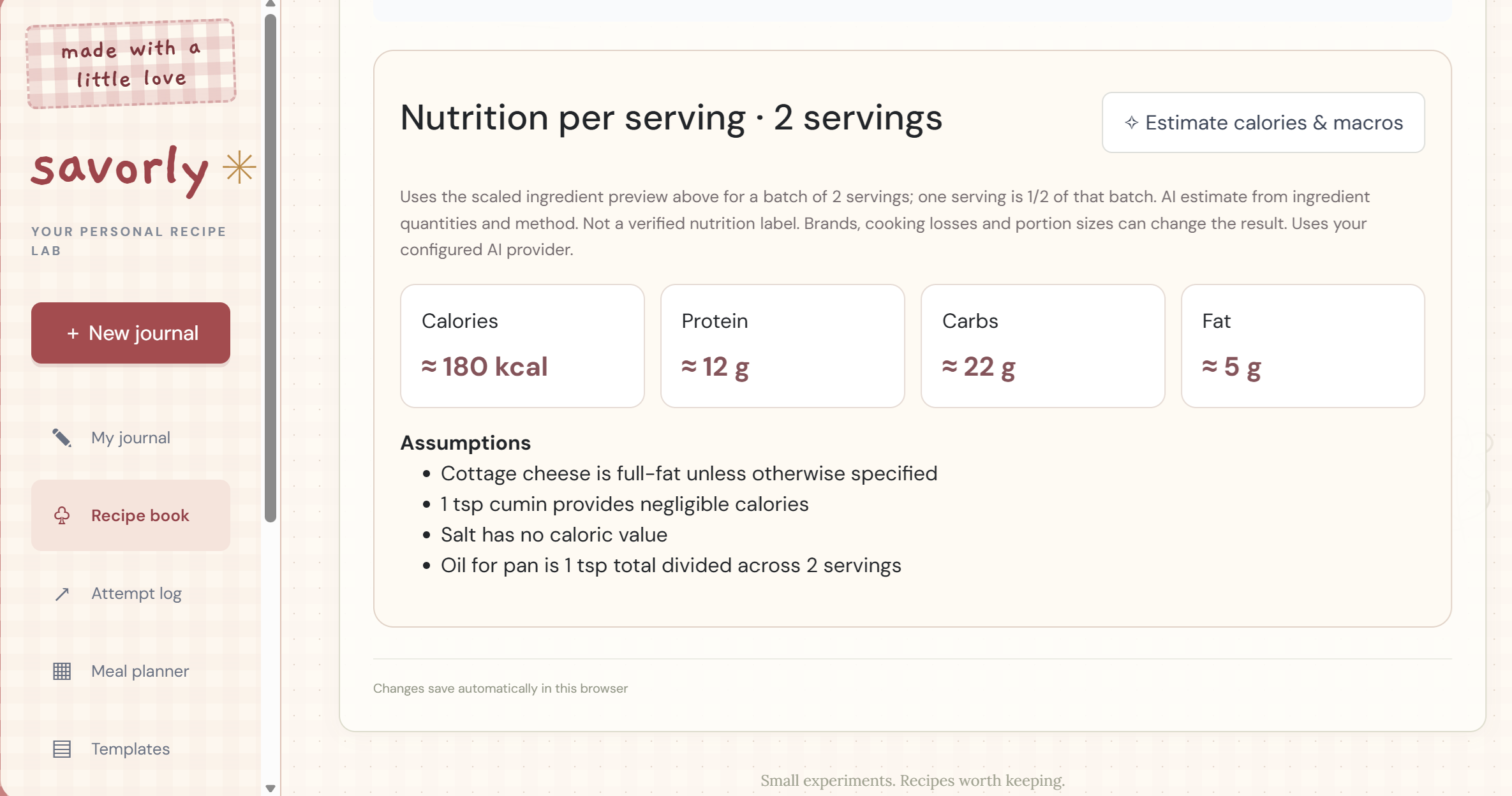
Nutritional Tool
-
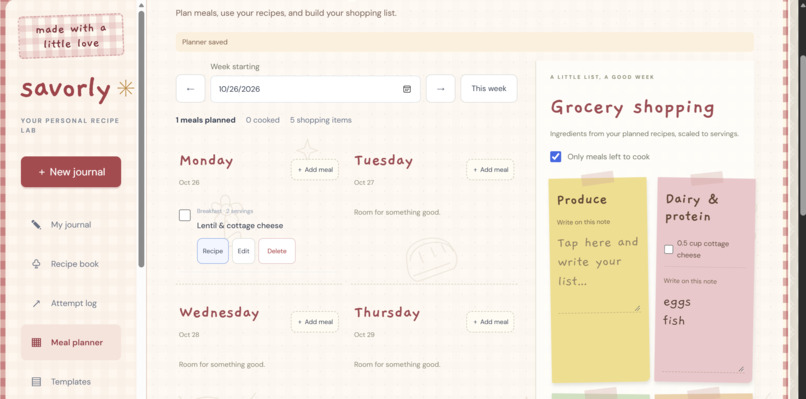
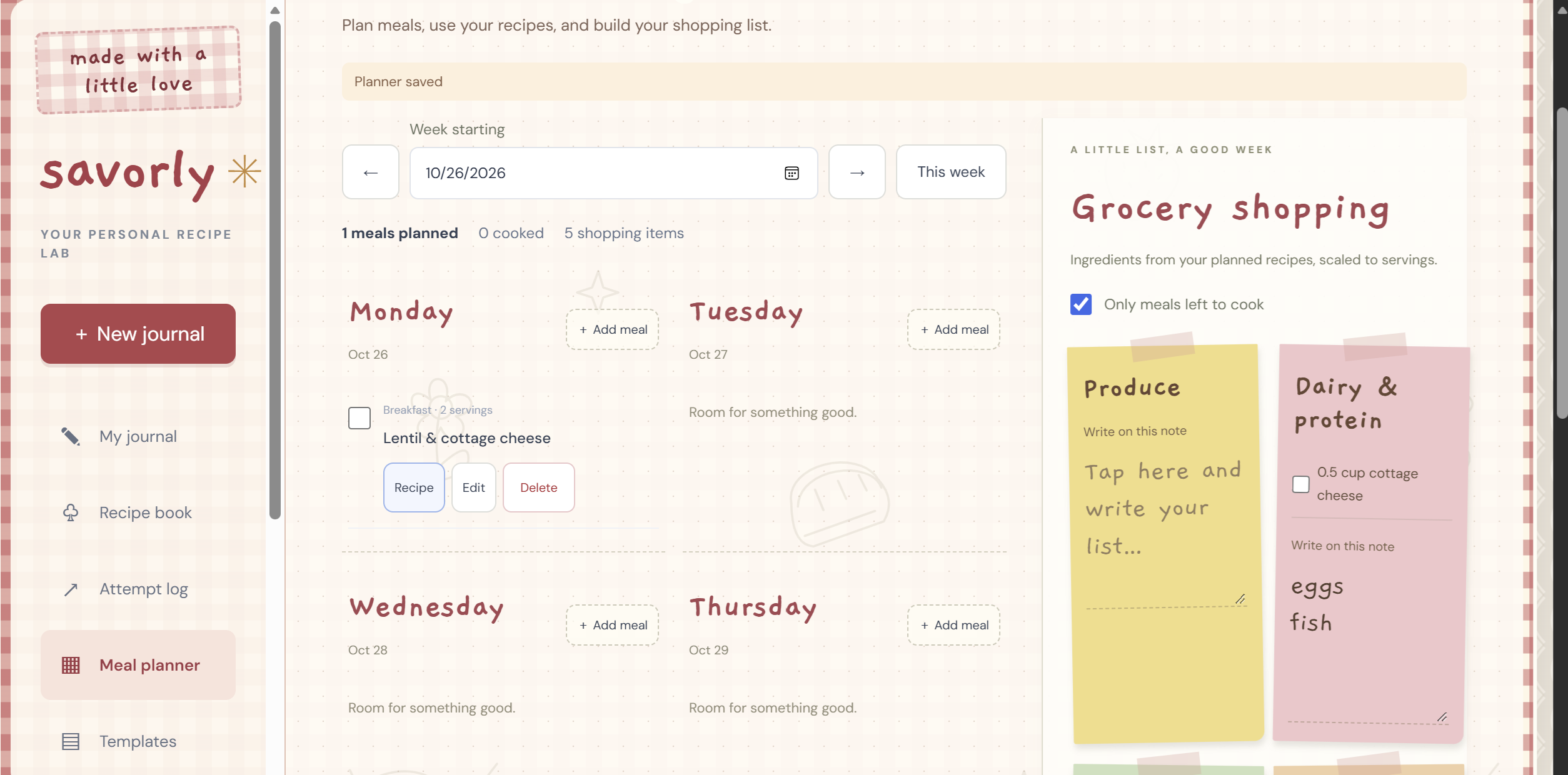
editing meal planner and grocery list
-
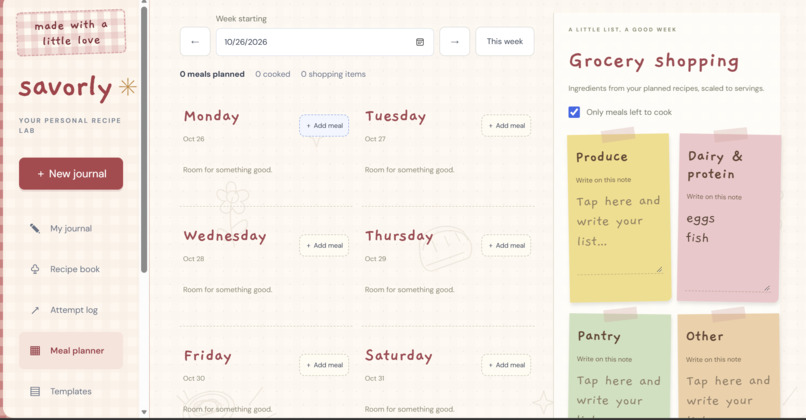
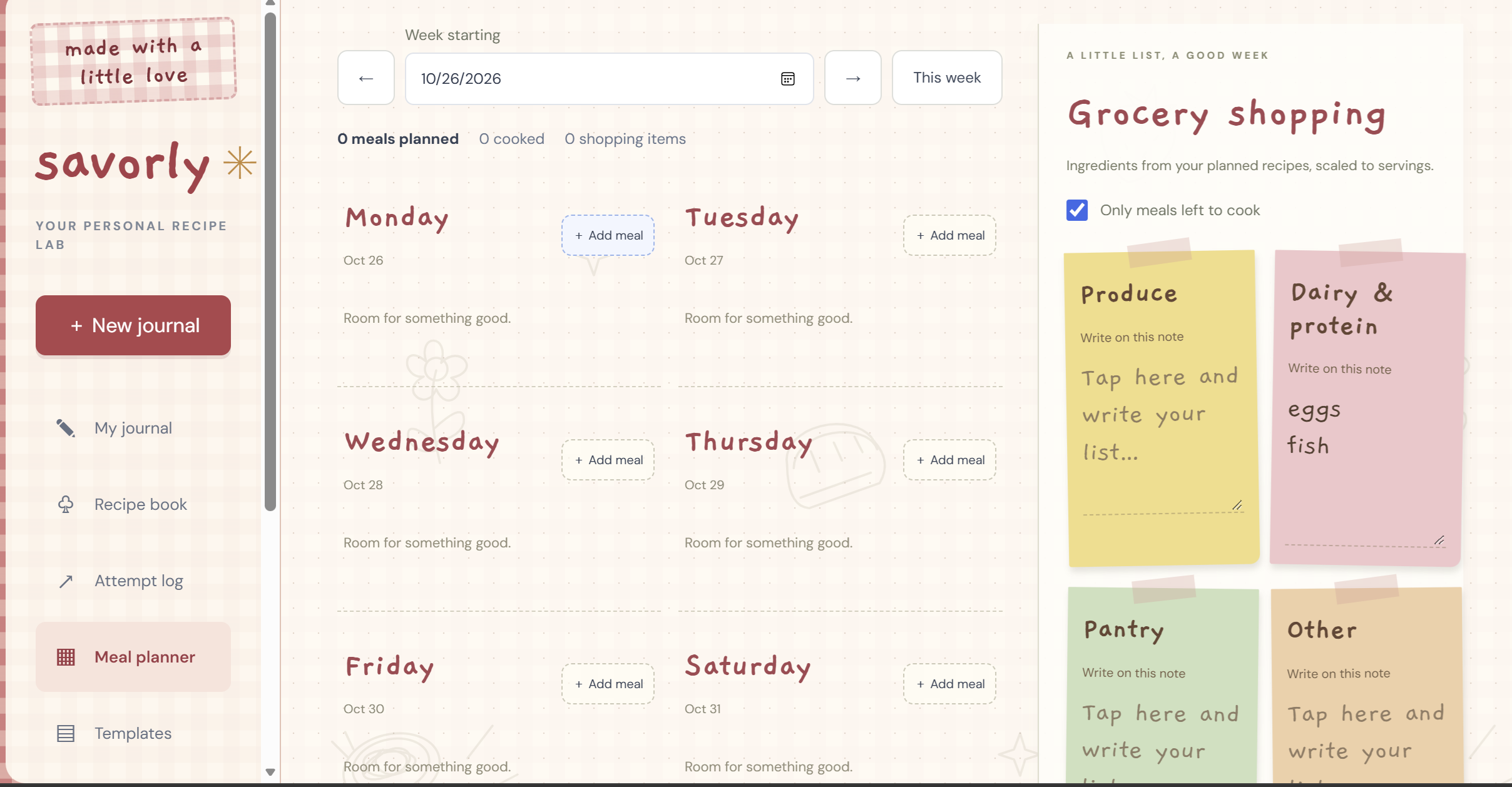
meal planner and grocery list
-
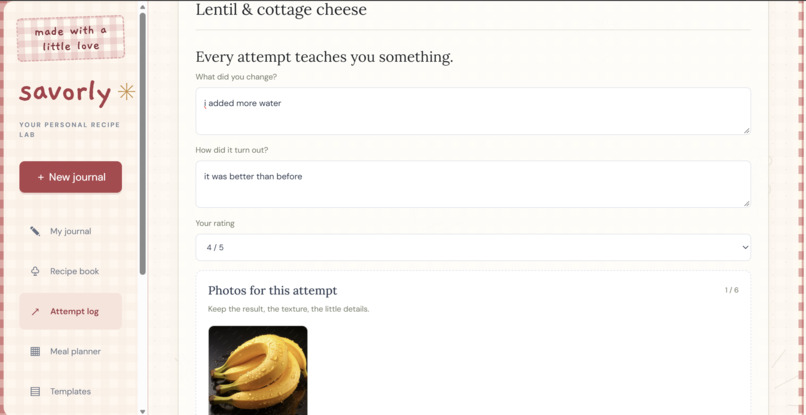
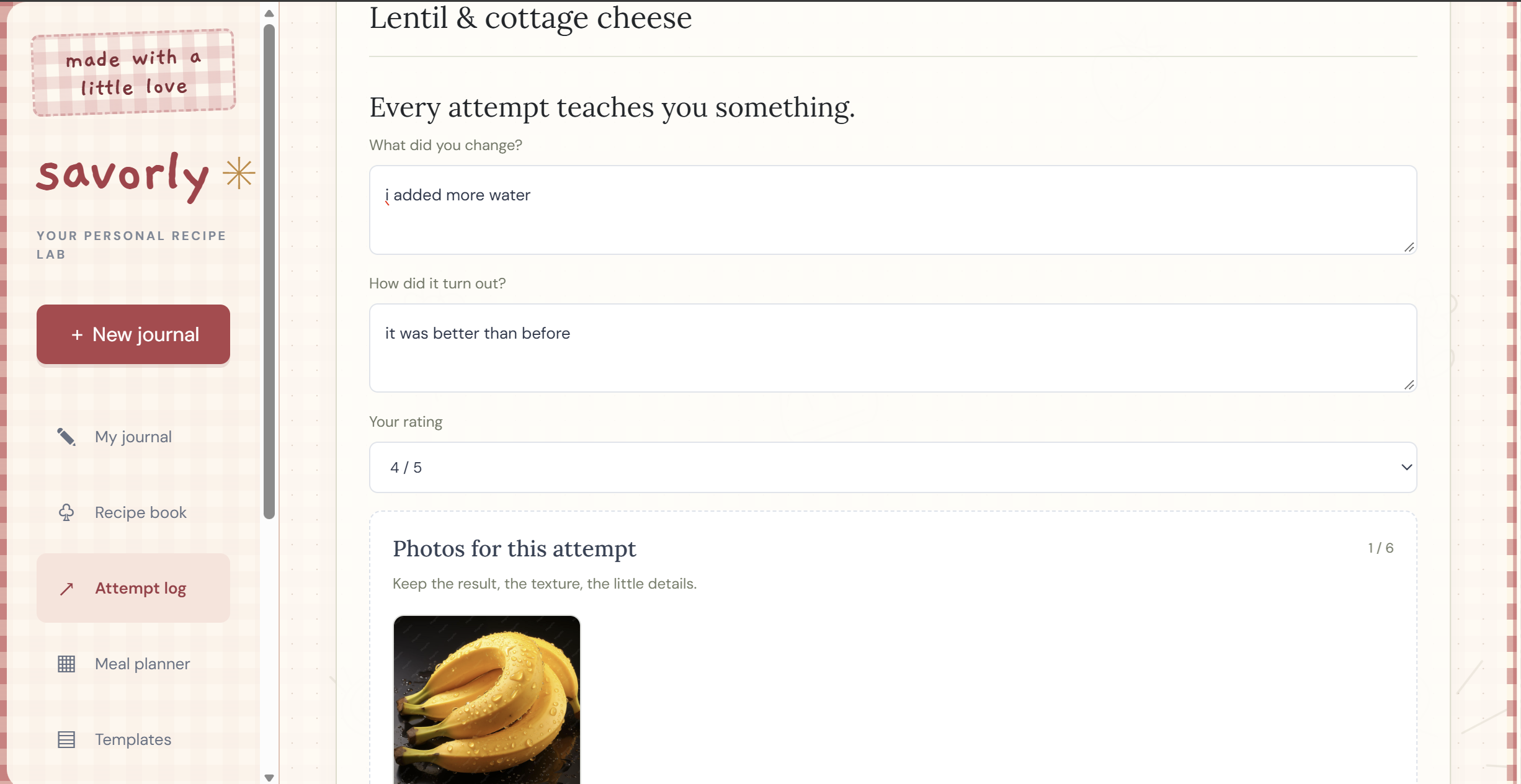
Attempt log
-
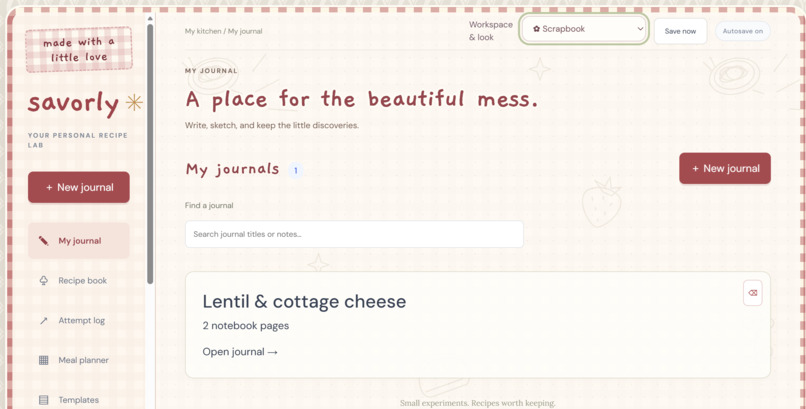
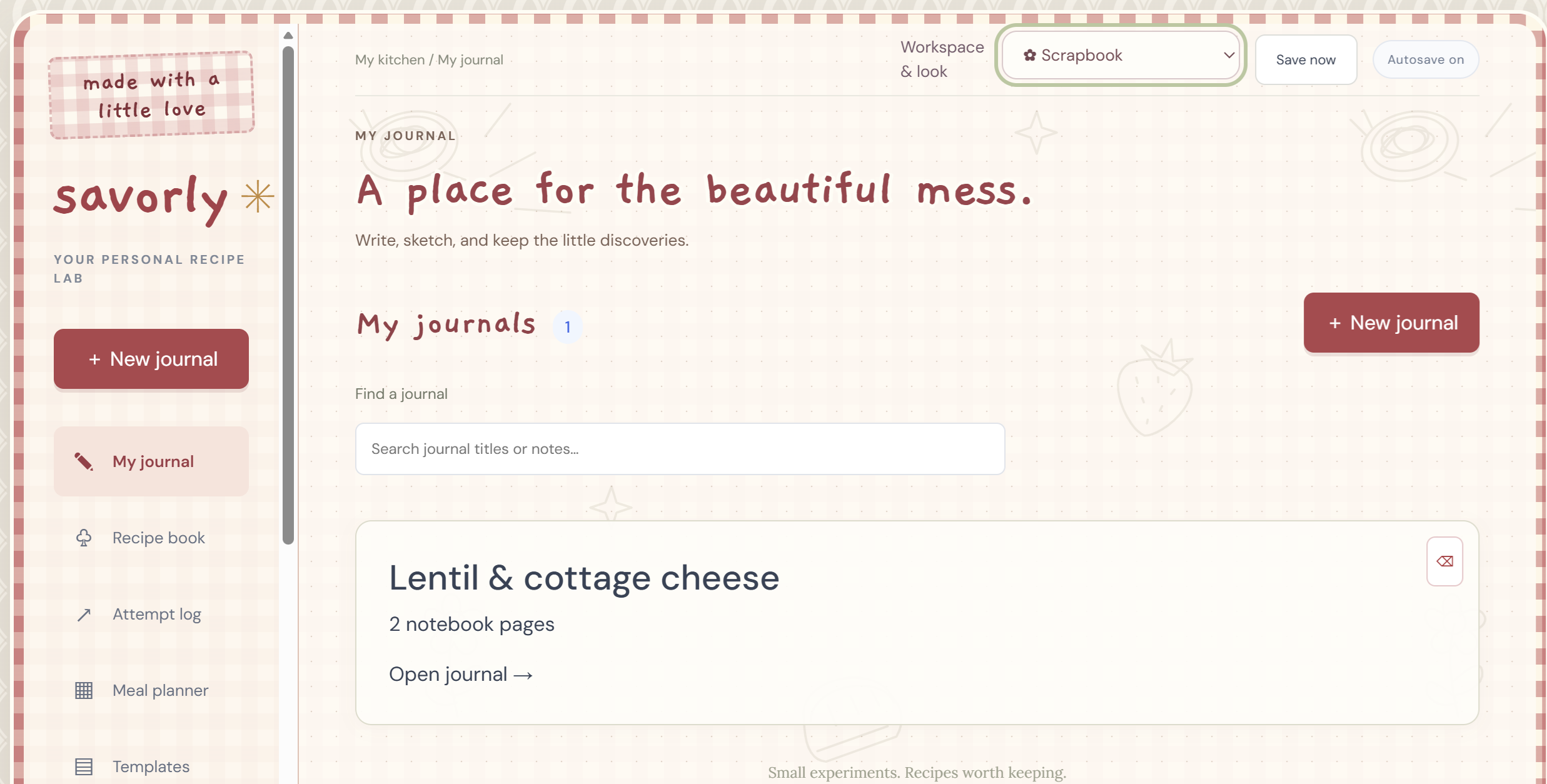
Scrap Book theme
Inspiration
I am a computer science PhD student with a business background, a new content creator, and someone who finds peace in the kitchen. I recently started an Instagram page to share my cooking and baking, but my love for experimenting with food goes back to childhood.
I get bored eating the same things, so I am always trying new combinations and creating my own recipes. Whenever I am not studying, you will often find me in the kitchen. Some experiments turn out well, while others need a little more water, a different ingredient, or another attempt.
I wanted somewhere to keep that whole process, including the messy notes, photos, adjustments, and discoveries. I also wanted help organizing those ideas into recipes, planning meals, and preparing grocery lists.
That is where Savorly began. There are recipe journals and AI tools available, but I wanted a personal workspace that brings these activities together. Building it also gave me a chance to combine my business background, my growing technical skills, and something I enjoy outside my research.
What it does
Savorly is an AI-assisted cooking journal that turns messy notes and kitchen experiments into organized recipes while keeping the story behind them.
Users can create notebook pages, type notes, write or sketch with pen tools, upload photos, and add stickers. Different templates, paper styles, and colors make the journal feel personal. An attempt log helps users record what they changed and how each batch turned out.
The AI companion, powered by NVIDIA Nemotron through Nebius Token Factory, helps users structure notes into editable recipe drafts, discuss ingredient substitutions, compare attempts, and ask cooking questions. It supports follow-up conversations, so users can ask for five servings and then say, “Now make that three instead.”
The Recipe Book includes searchable recipes, categories and subcategories, serving adjustments, and step-by-step cook mode. A nutrition tool estimates calories, protein, carbohydrates, and fat per serving when ingredient quantities are available. These results are clearly labeled as approximate.
A weekly meal planner connects with grocery lists and writable sticky notes. Users can also download recipes and notebook pages as PDFs, export backups, and recover deleted journals.
Savorly includes a separate Toddler planner for new mommies, with templates for meals, naps, daily activities, and sweet little memories. Toddler content stays separate from the cooking workspace.
How we built it
I built the interface using React, TypeScript, and CSS, with Vite for local development and production builds.
A Node.js backend sends AI requests to Nebius Token Factory, using the NVIDIA model configured as nvidia/Nemotron-3_5-Lightning. The backend supplies the relevant recipe context and recent conversation history so users can continue asking questions.
The frontend and backend are deployed together on Render. The AI API key stays on the server, and the deployed demo includes password access and request limits.
Journal records are saved in the browser using localStorage, while photos are stored in IndexedDB. PDF exports use jsPDF, and the source code is managed with Git and GitHub.
I also prepared an optional Supabase integration for manual cloud snapshots. Live cross-device syncing remains an area for further testing. The product idea, cooking use cases, visual preferences, and feature decisions came from my own experience and the feedback I gathered while building.
Challenges we ran into
One challenge was making a creative notebook work reliably. Pen strokes needed to stay aligned with the drawing area, while photos and stickers needed to support movement, resizing, rotation, deletion, and undo.
PDF exports introduced another challenge. The downloaded file needed to reflect the latest text and preserve drawings, photos, stickers, and page formatting. Testing actual downloads helped uncover issues that were not obvious from the editor alone.
The AI experience also needed refinement. A single response was not enough for someone working through a cooking problem. I added conversation history, follow-up questions, retry controls, and editable recipe drafts. I also worked on keeping internal model reasoning out of displayed answers and distinguishing recorded information from untested suggestions.
Consistency mattered across the application. Serving quantities needed to agree with recipe previews, nutrition needed to request missing details, and toddler journals needed to remain separate from cooking content.
During deployment, the build initially skipped packages required to compile the frontend. Resolving that taught me more about production environments and dependency installation.
Accomplishments that we're proud of
My research background is mainly in LLMs, digital forensics, and cybersecurity, so building a web application took me beyond my usual work. I had to do a lot of self-learning to understand frontend development, browser storage, backend integration, and deployment. I am grateful for that experience and proud that I kept learning until my idea became a working application.
With Savorly, I brought together two personal interests: technology and experimenting in the kitchen. I created a space where messy notes, handwriting, photos, and cooking attempts connect with recipes, meal planning, and grocery lists.
I am especially proud of integrating NVIDIA Nemotron through Nebius Token Factory into an assistant that supports follow-up conversations. Users can discuss a cooking problem, adjust servings, and turn their notes into an editable recipe without losing the original experiment.
I also worked on reliability, with 61 automated tests, a successful production build, and browser checks for important workflows such as recipe saving, workspace separation, and PDF exports.
Most of all, I am glad I took the opportunity to build something of my own. Savorly is still growing, but creating it has already helped me grow beyond my research background and gain confidence in a new area.
What we learned
Savorly helped me understand how the parts of a complete web application fit together, from interface design and browser storage to backend requests, AI integration, testing, and hosting.
I learned that adding AI is only one part of creating a useful product. The surrounding experience matters just as much: preserving the user’s notes, keeping context, explaining missing information, and letting people review suggestions before saving them.
The release passed 61 automated tests, lint, and a production build, including verification from a fresh clone. Browser checks covered conversational serving adjustments, saving recipes, workspace separation, drawing undo and redo, photo controls, and a visually inspected PDF export.
I also learned to distinguish between implemented features and verified behavior. Physical iPad and Apple Pencil testing, broader AI-answer evaluation, and live Supabase syncing still need more work.
What's next for Savorly
Savorly is an early MVP, and I want to keep improving it through real use and feedback.
My next priorities are more reliable ingredient measurements, broader cooking and baking tests, verified cross-device backups, and a smoother experience on phones and iPads. Longer term, I would love to explore meal-prep and party-planning features.
I want Savorly to help people who enjoy experimenting in the kitchen but also want a little structure around their ideas. It should feel like a personal journal that supports creativity, remembers the process, and helps users approach their next attempt with more confidence.
Built With
- css
- indexeddb
- javascript
- nebius-token-factory
- node.js
- nvidia-nemotron
- react
- render
- typescript
- vite

Log in or sign up for Devpost to join the conversation.