-
-
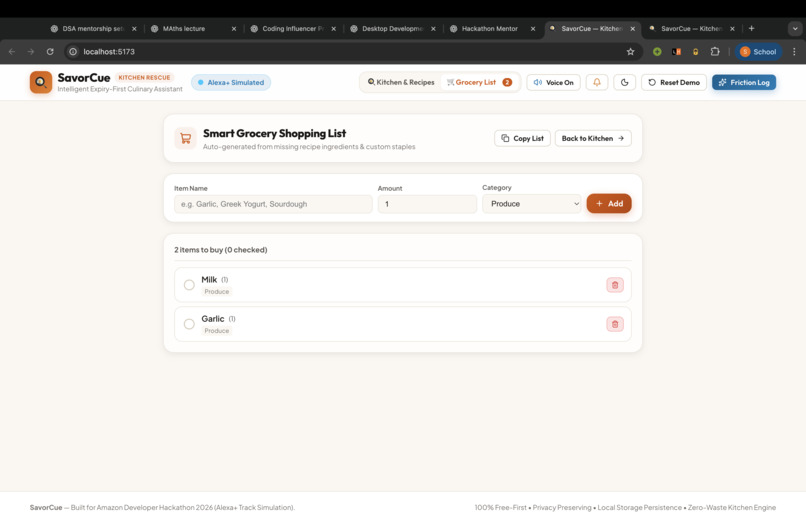
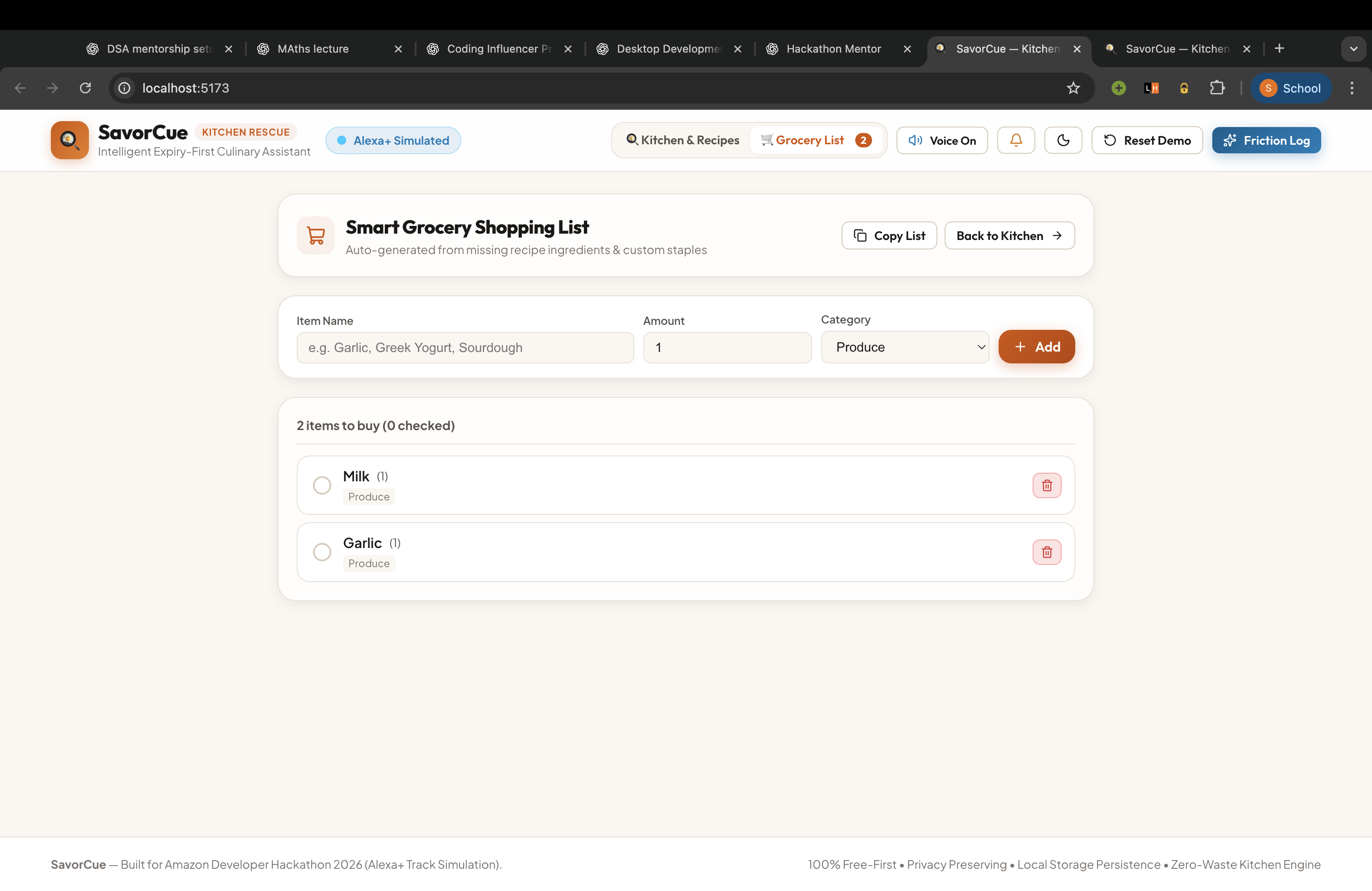
Track missing ingredients and manage shopping.
-
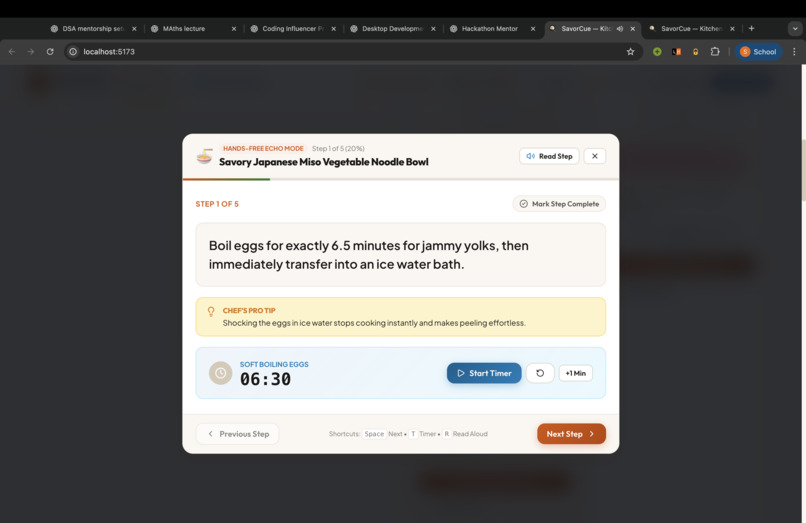
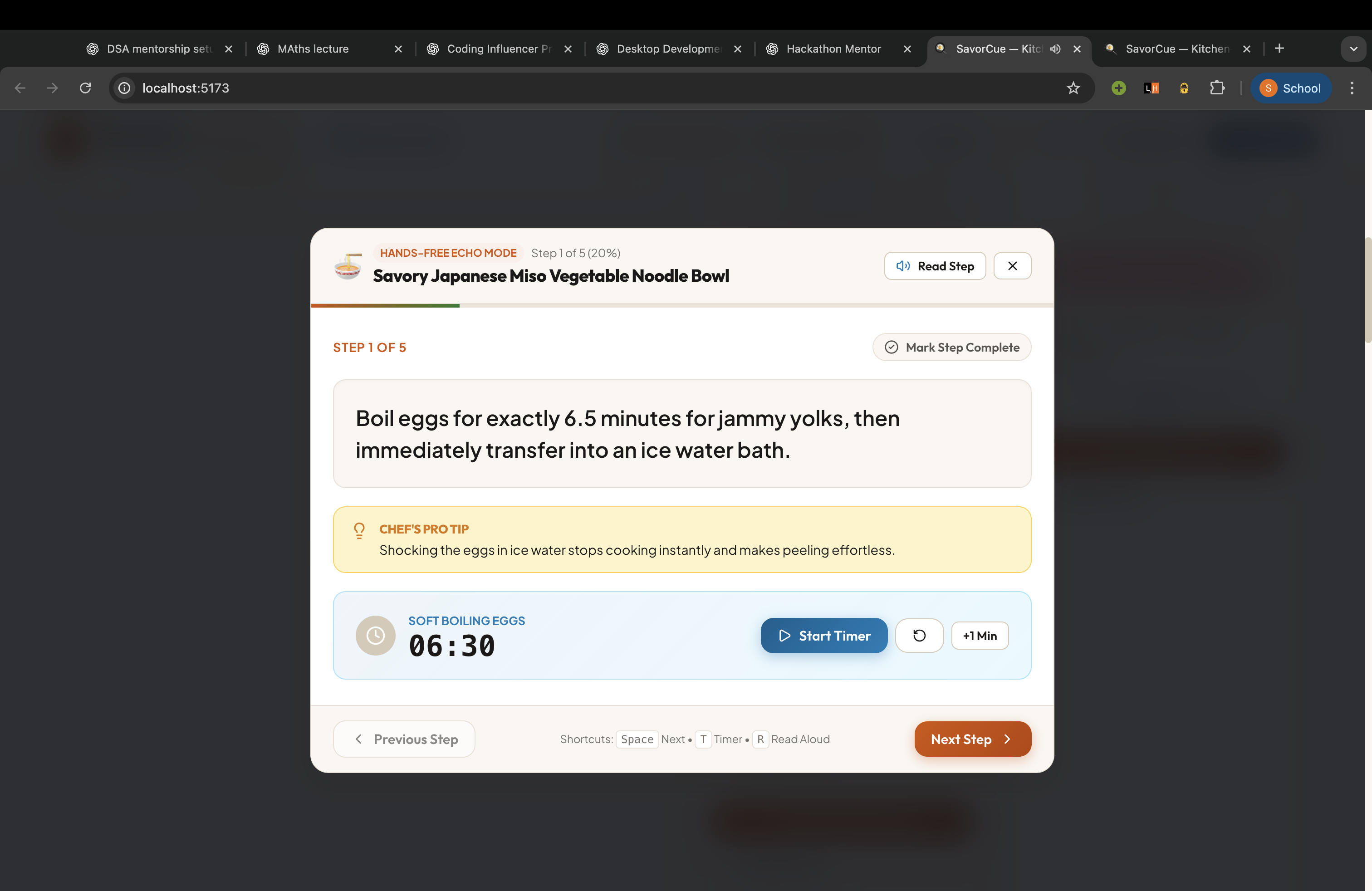
Follow step-by-step recipes with built-in timers.
-
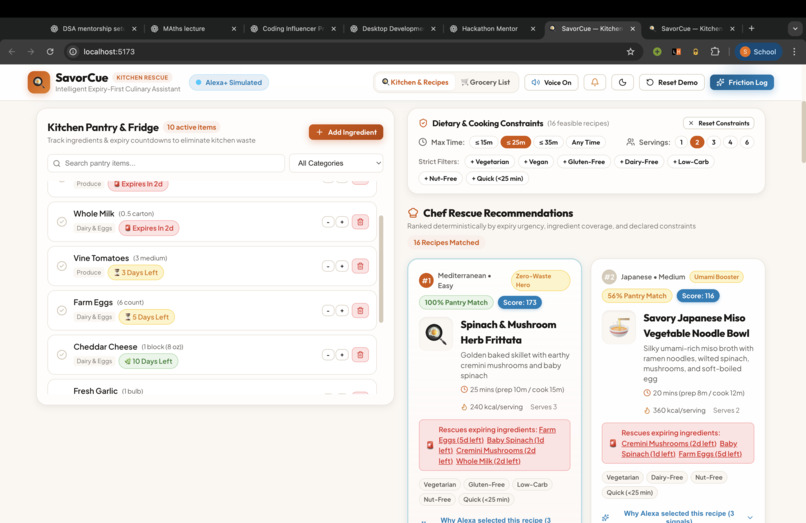
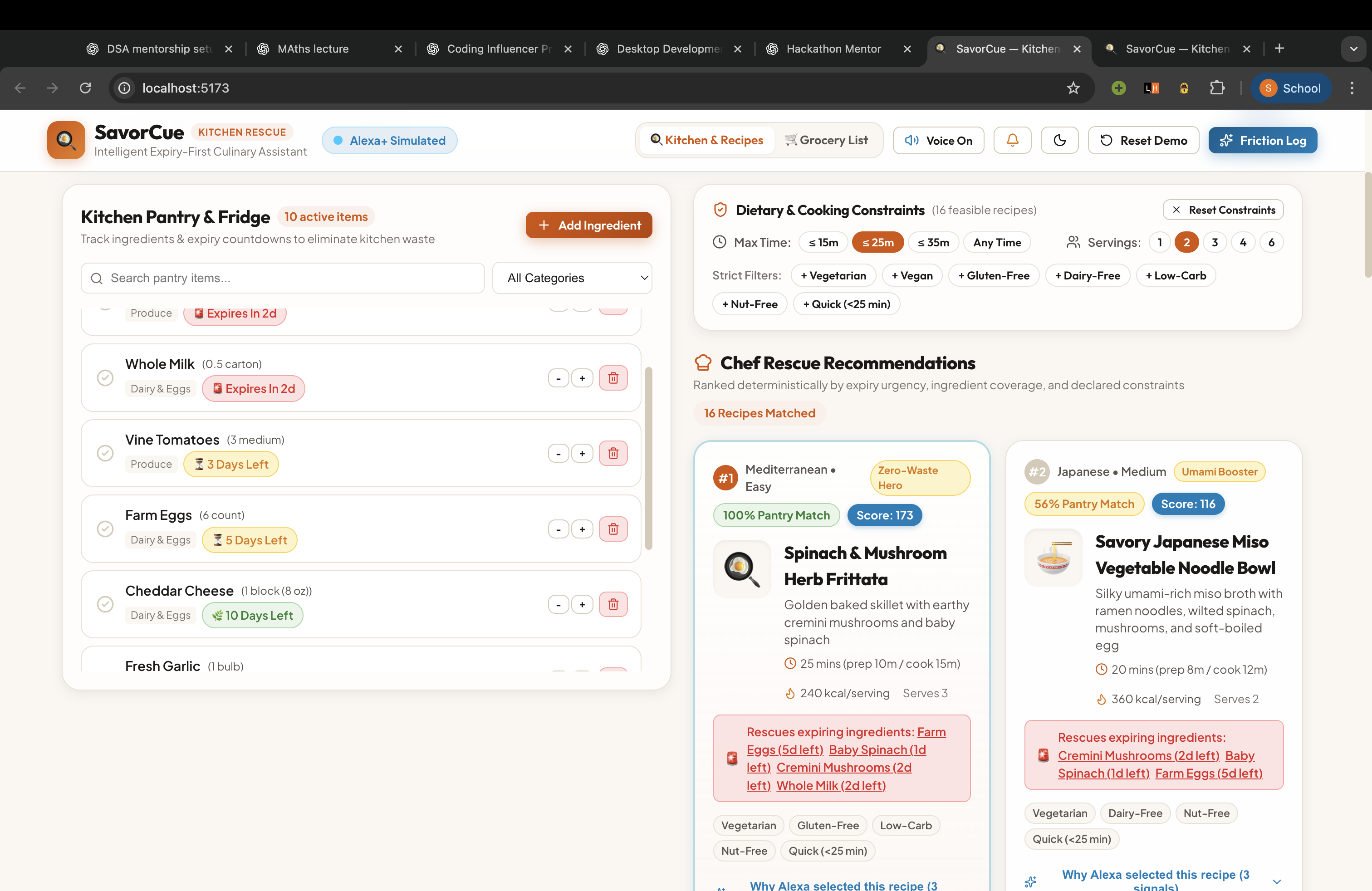
Discover recipes that prioritize expiring ingredients.
-
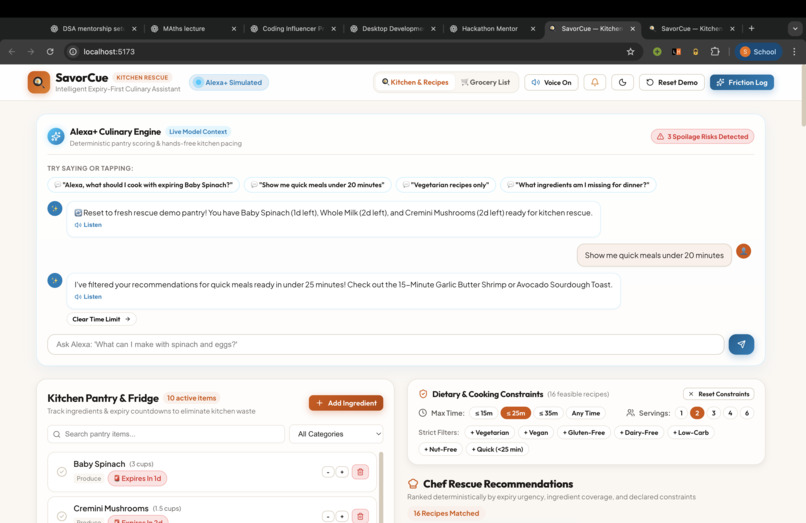
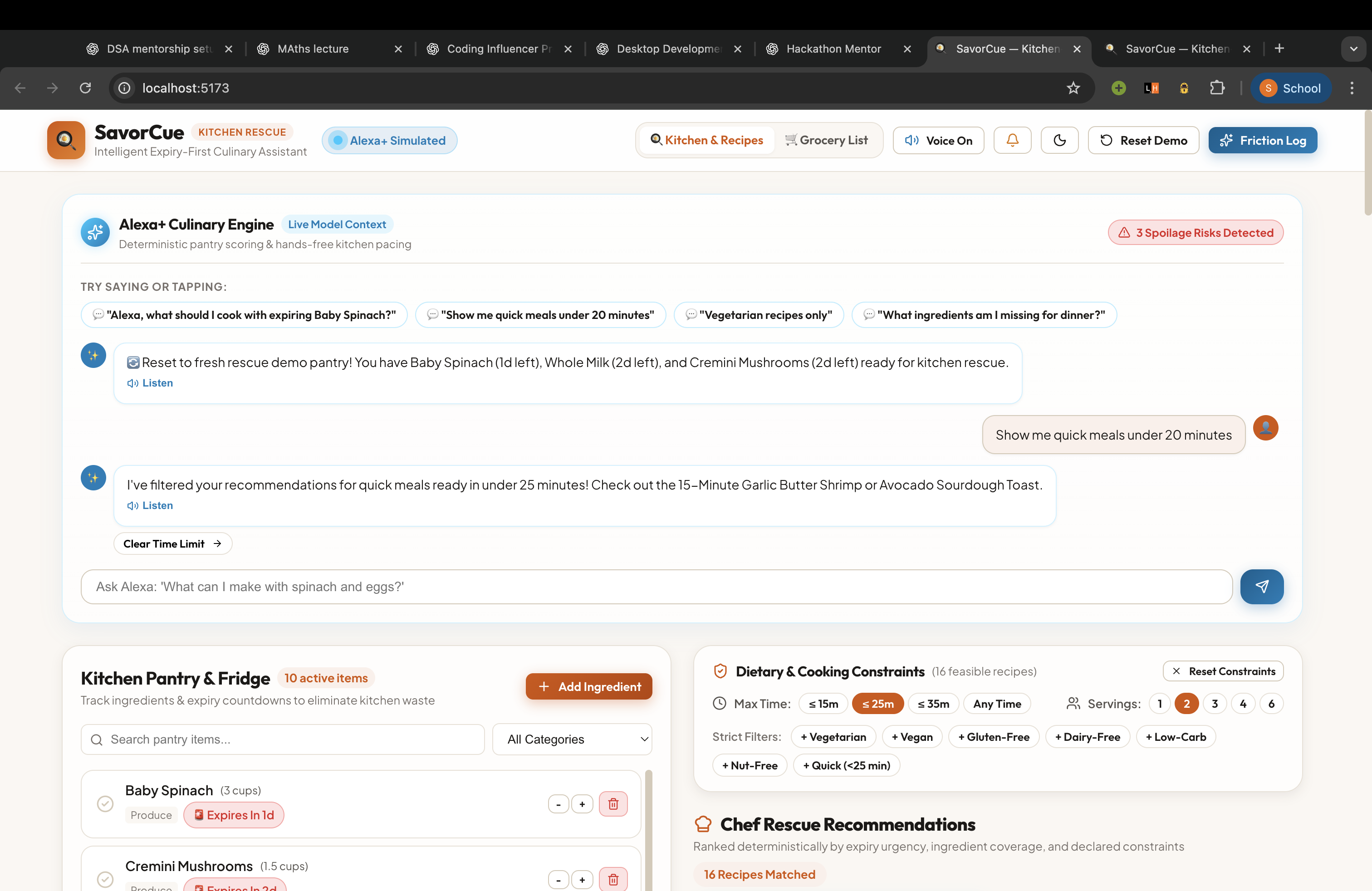
Your personal kitchen assistant for smarter cooking.
Inspiration
What it does
How we built it
Challenges we ran into
Accomplishments that we're proud of
What we learned
What's next for SavorCue — Intelligent Kitchen ## Inspiration
Food is often wasted not because people don't care, but because they forget which ingredients they have, overlook expiry dates, or struggle to decide what to cook. We wanted to make everyday cooking easier by creating an intelligent kitchen assistant that helps people use ingredients they already own.
That idea led to SavorCue — The Intelligent Kitchen-Rescue Assistant, an Alexa+-inspired experience that connects pantry management, recipe discovery, and guided cooking.
What it does
SavorCue helps users turn available ingredients into practical meal ideas while prioritizing ingredients that need attention.
Key features include:
- Smart pantry tracking: Maintain an inventory of ingredients and their expiry dates.
- Expiry-aware recommendations: Rank recipes using available ingredients and expiry urgency.
- Personalized recipe discovery: Explore recipes using dietary preferences, preparation time, and serving requirements.
- Explainable recommendations: Show why a recipe is recommended.
- Guided cooking: Follow cooking instructions step by step, with timers, speech readout, and audio cues.
- Shopping and restocking: Manage missing ingredients and update the pantry after shopping.
- Persistent experience: Save application data locally so it remains available after refreshing the page.
How we built it
We built SavorCue as a simulated, Alexa+-inspired web experience using React, TypeScript, and Vite. Pantry information, preferences, and other application state are stored locally in the browser.
The recommendation engine uses a deterministic, rule-based scoring approach that considers ingredient availability and expiry urgency. This makes recommendations explainable and predictable without depending on a paid AI API.
We also implemented guided cooking interactions, timers, browser-based speech and audio features, and a shopping-list workflow to connect meal planning with the actual cooking process.
Challenges we faced
One challenge was connecting multiple workflows into a coherent experience. Pantry management, recipe recommendations, guided cooking, and shopping lists needed to work together rather than feel like separate features.
Another challenge was making recommendations useful and understandable. We addressed this by using transparent scoring rules and displaying why a recipe was suggested.
We also focused on reliable local persistence and testing the main user flows so that changes remain consistent during normal use.
What we learned
Building SavorCue helped us understand how to design a complete interactive web application, manage state across features, implement explainable recommendation logic, and test important user journeys.
It also reinforced an important product lesson: a useful assistant should do more than provide information. It should help users take action with less friction.
What's next
Future improvements could include optional voice-driven pantry updates, more extensive recipe data, smarter ingredient substitutions, and integrations with real kitchen or assistant platforms where supported.
SavorCue's goal is simple: Waste less. Cook smarter. Make every ingredient count.Rescue Assistant
Built With
- amazon
- api
- app
- artificial
- css
- design
- development
- frontend
- html
- intelligence
- javascript
- local
- react
- recommendation
- responsive
- speech
- storage
- system
- typescript
- vite
- vitest
- web


Log in or sign up for Devpost to join the conversation.