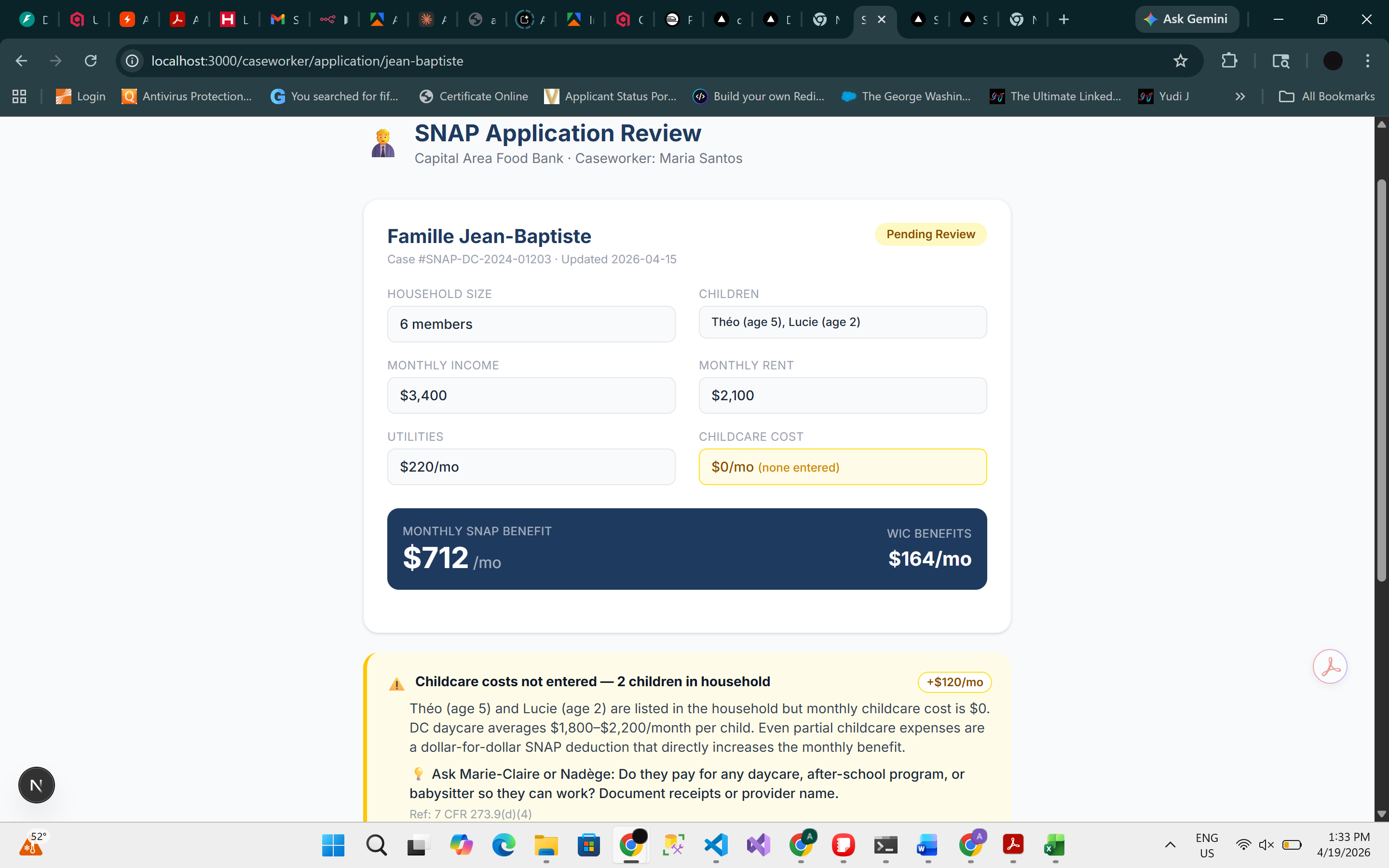
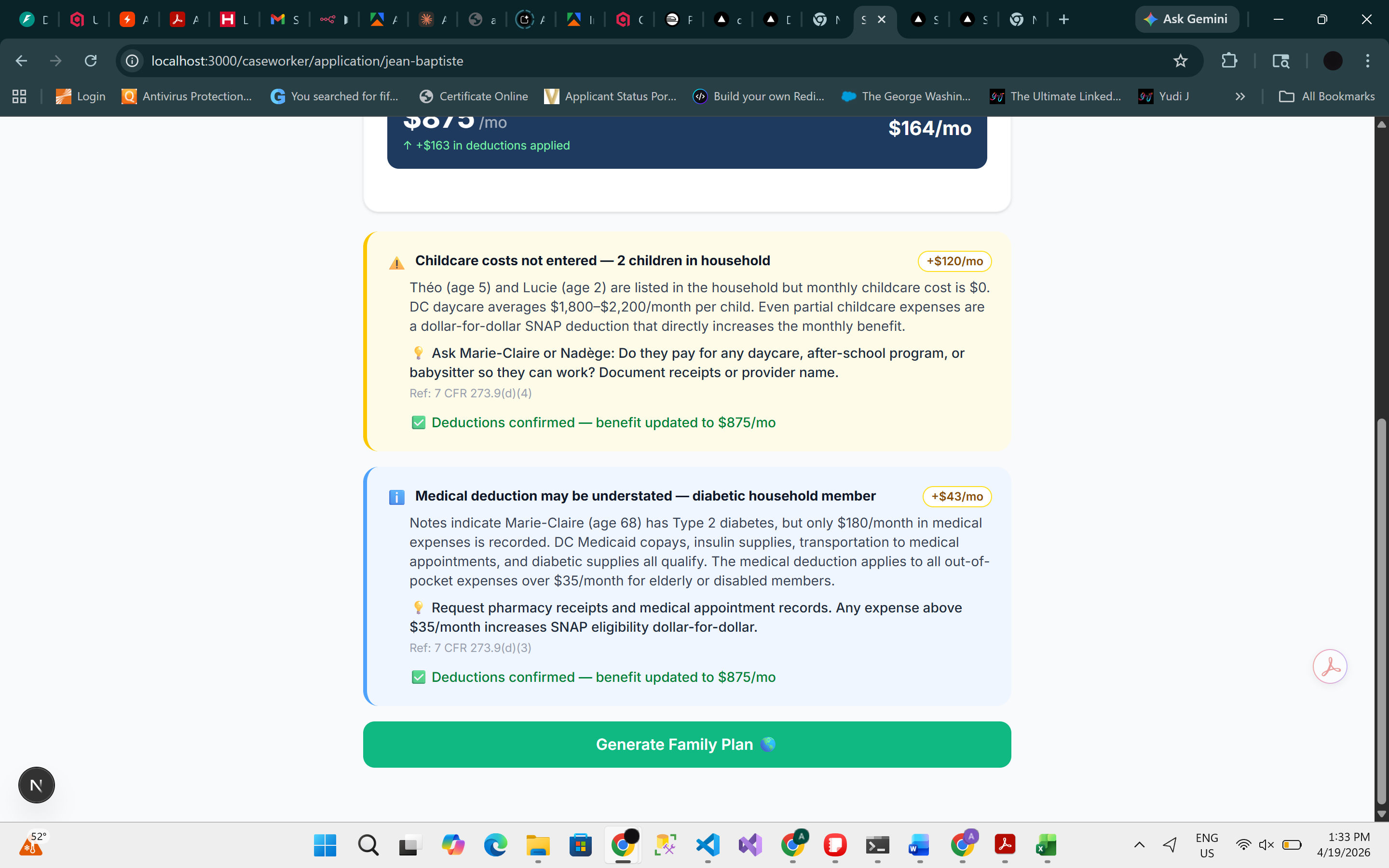
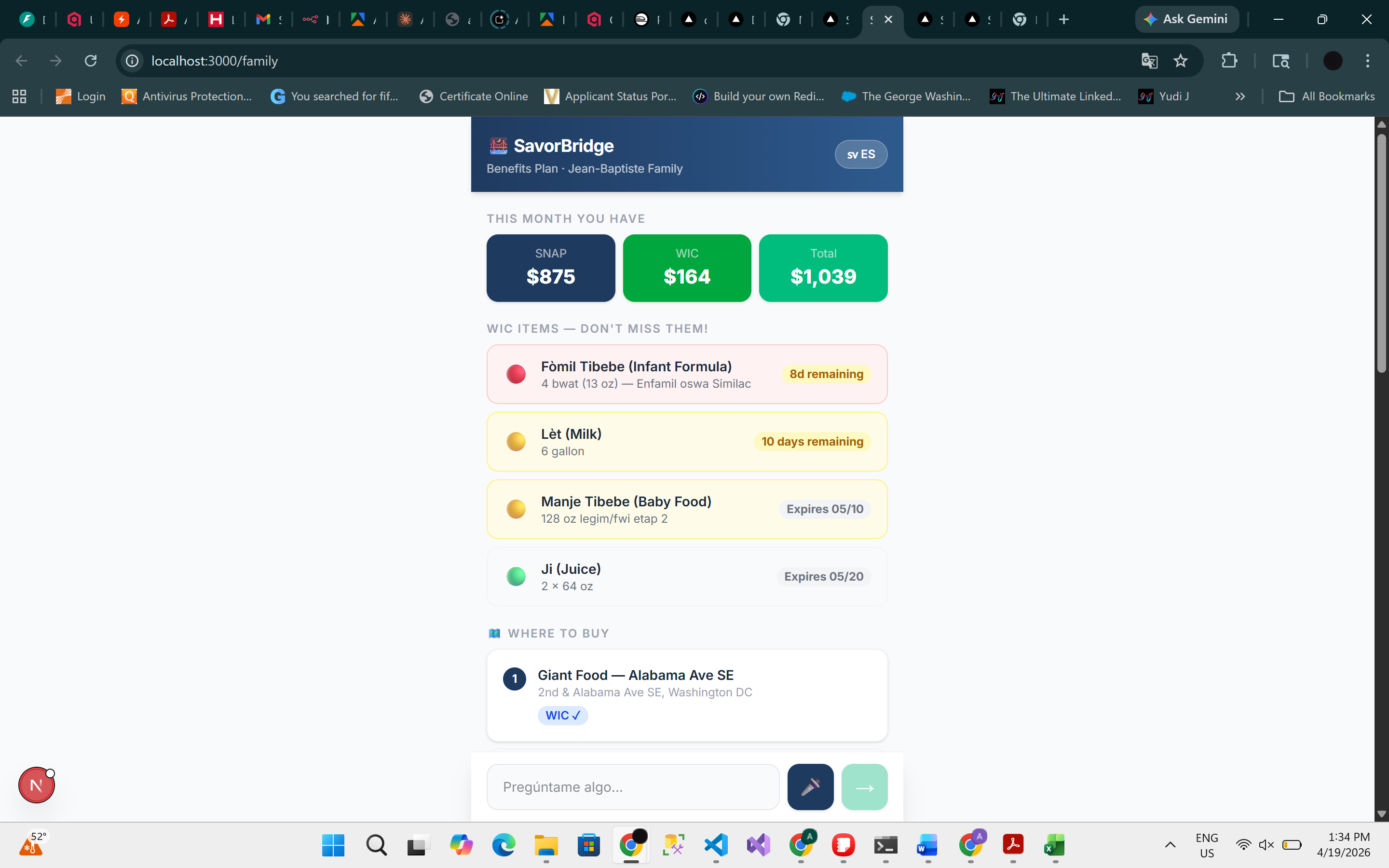
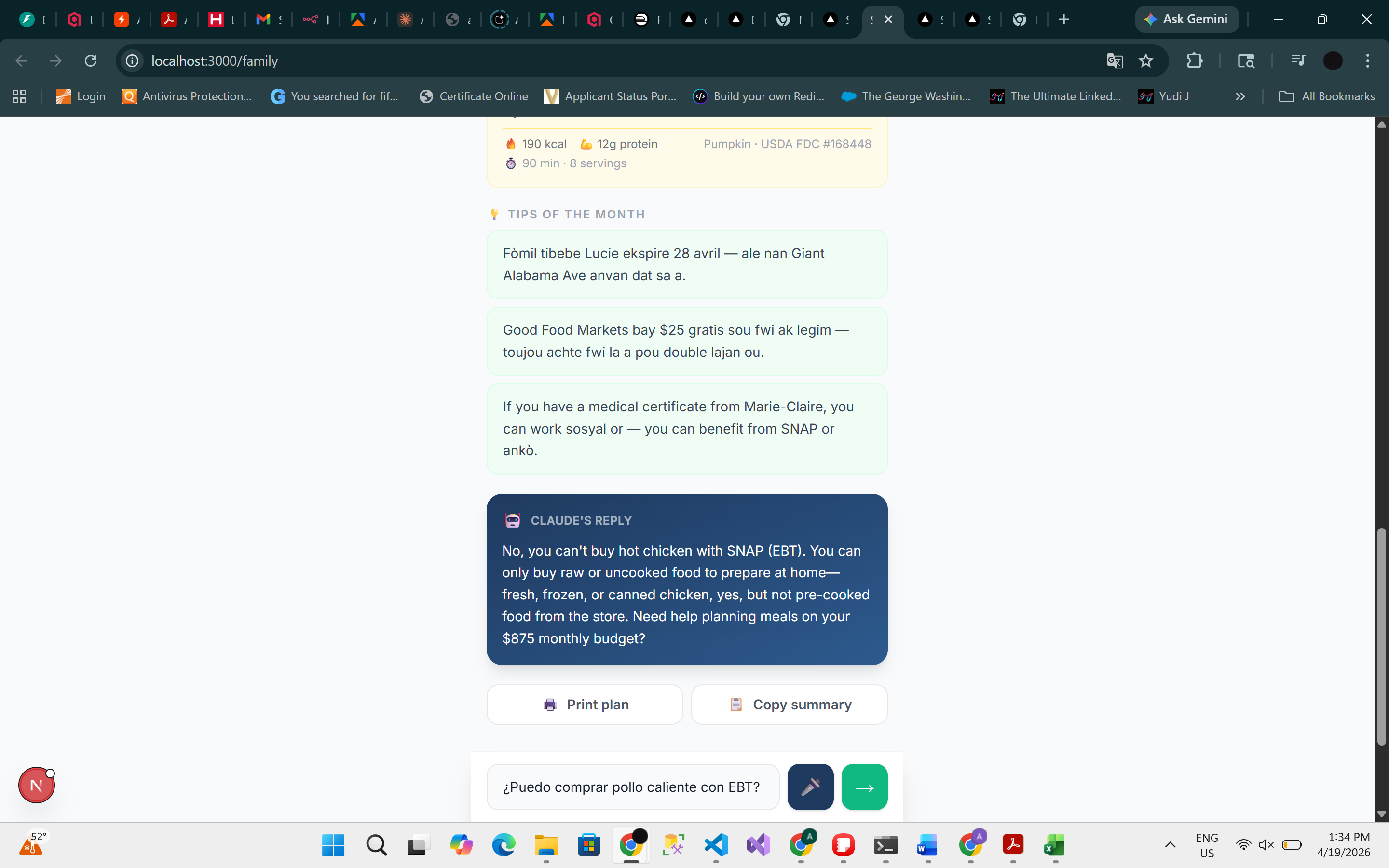
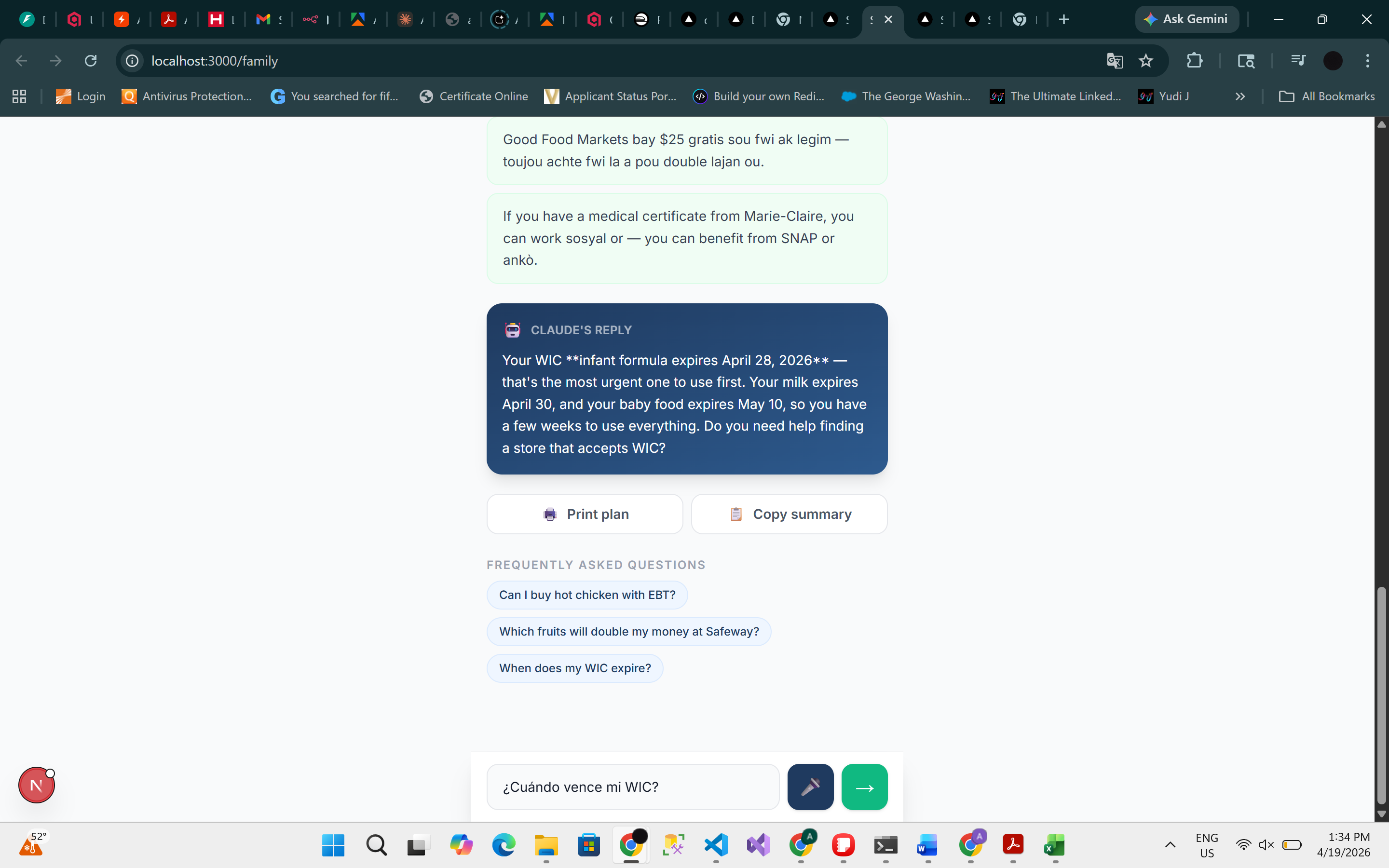
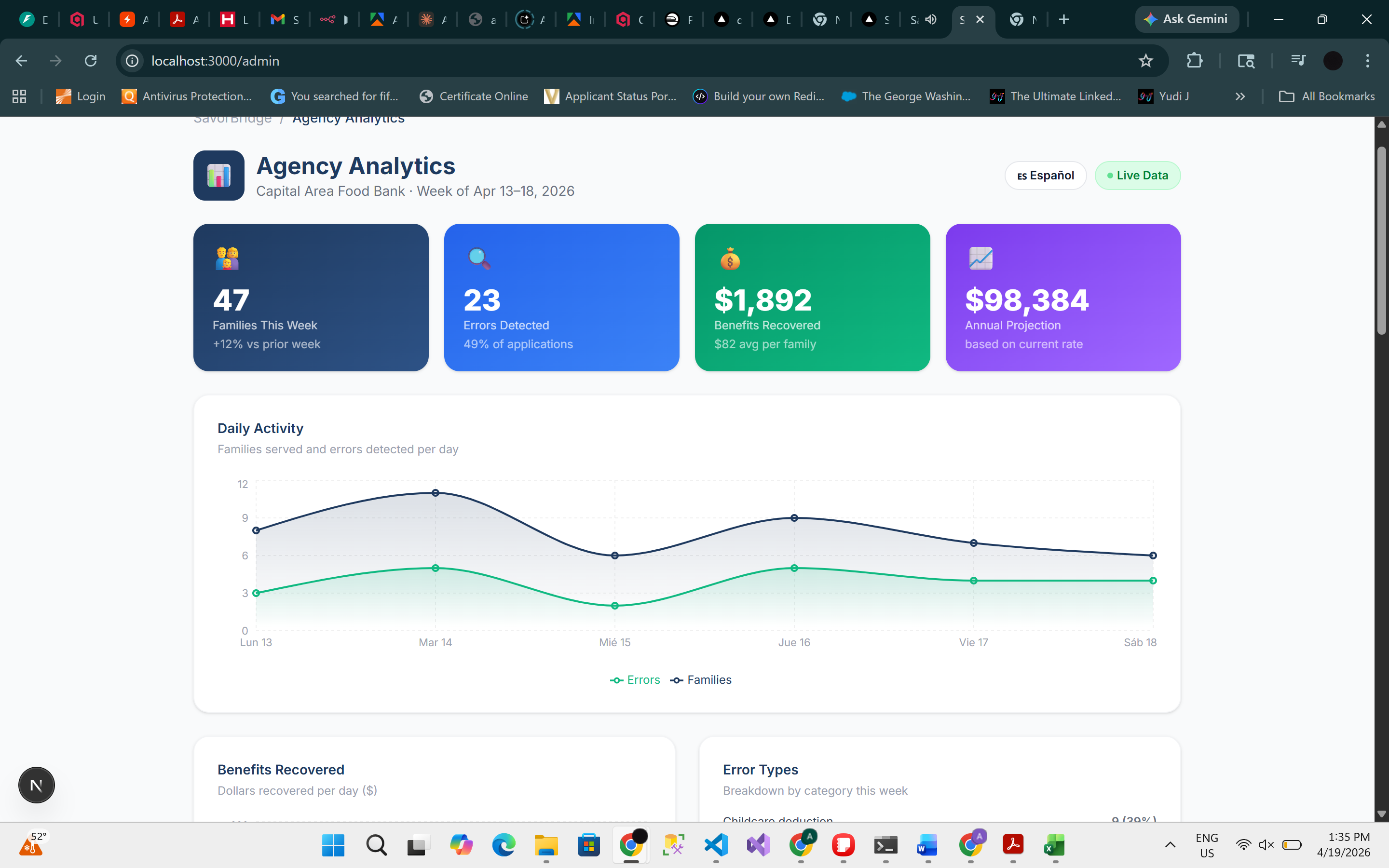
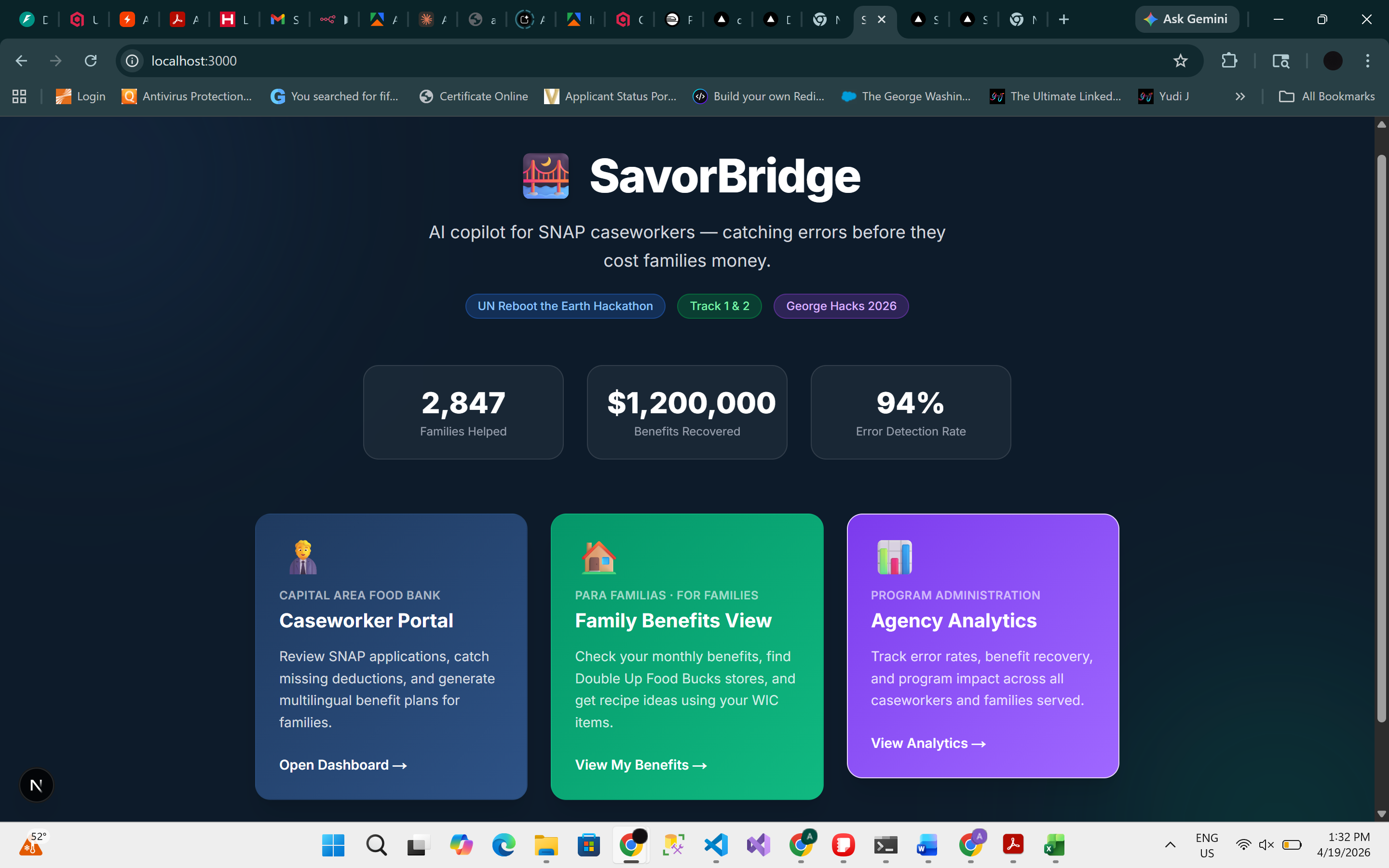
We were inspired by a simple question: why do 42 million Americans qualify for food assistance but still go hungry? The answer was not a lack of funding, since Congress already allocated the money. It was a broken caseworker workflow, and when we learned that a 2025 law would shift $15 billion per year in SNAP error penalties onto states starting in 2028, we knew the urgency was real. We built SavorBridge on Next.js 14 with TypeScript and Tailwind, using the Anthropic Claude API with Sonnet handling error detection and benefit plan generation and Haiku powering the voice Q&A loop. Claude's tool use feature enforces structured JSON outputs that map directly to our TypeScript types, and the browser-native Web Speech API handles voice input and output with no external dependencies. The biggest thing we learned was that the real leverage point is not the family but the caseworker, since one caseworker touches 300+ families per year, and at roughly $0.20 per interaction with a gross margin of 85% or more, the unit economics work at every market tier. The hardest challenges were reliability and coordination: getting Claude to consistently catch the right errors required grounding the system prompt with real USDA SNAP policy documents, generating culturally warm multilingual output took several prompt iterations to feel genuinely human rather than just translated, and shipping a four-person project across two experience levels in 24 hours demanded strict file ownership rules and merging early and often to avoid conflicts.
Built With
- anthropic
- next.js
- typescript

Log in or sign up for Devpost to join the conversation.