-
-
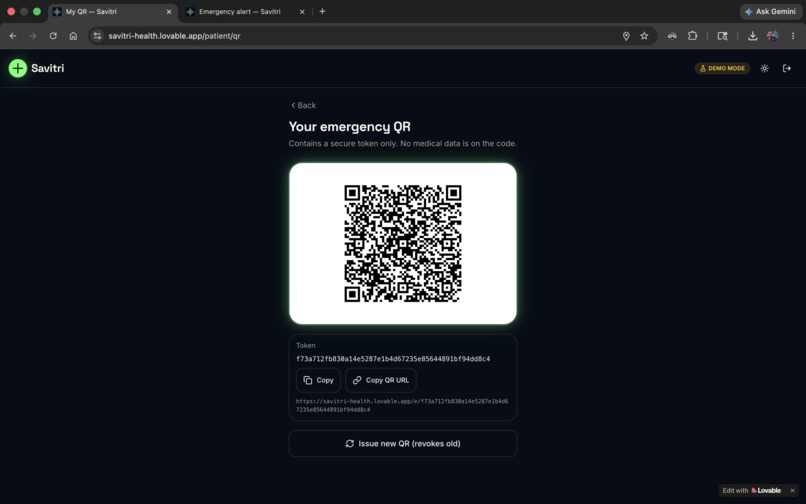
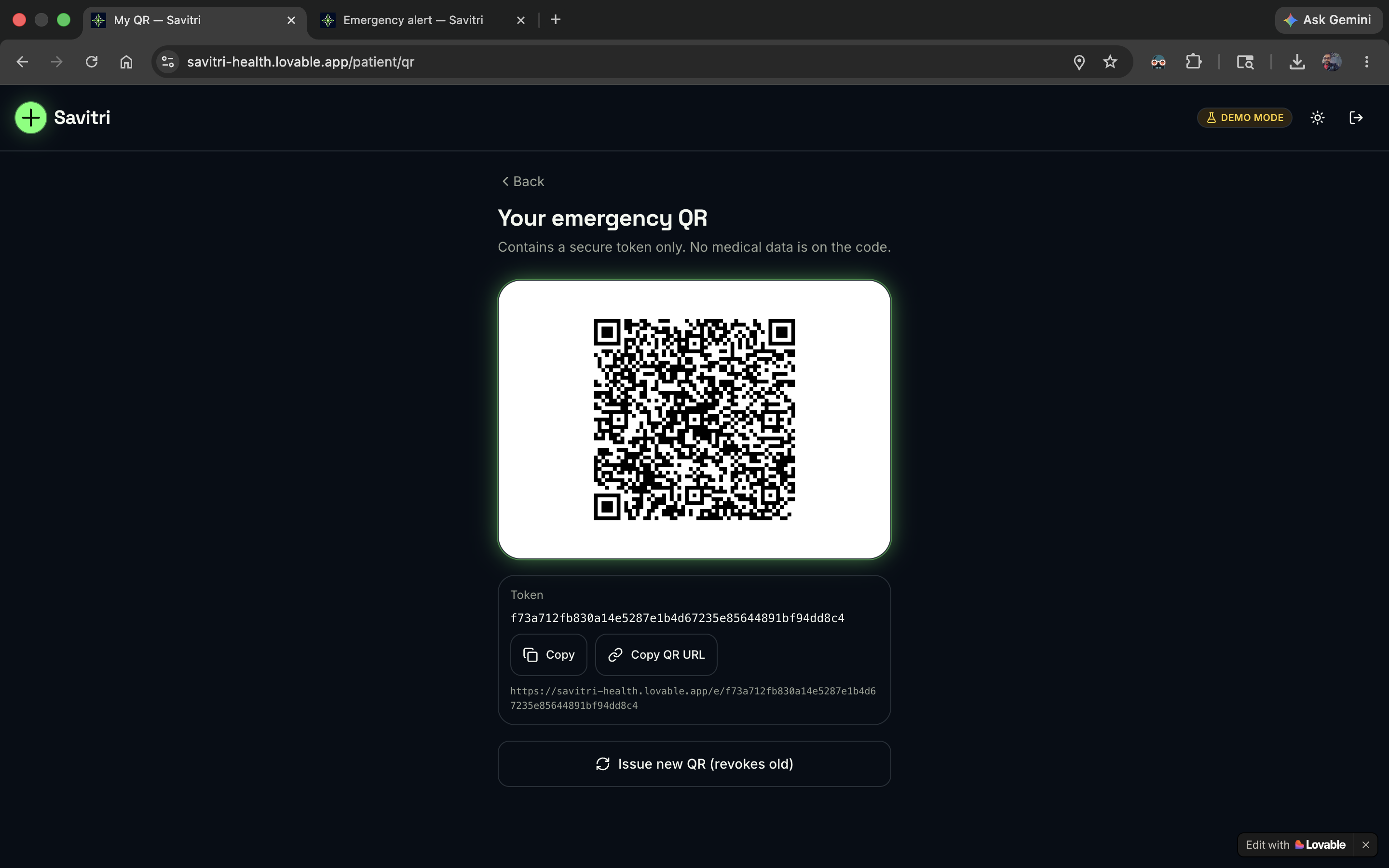
Patient_Encrypted QR
-
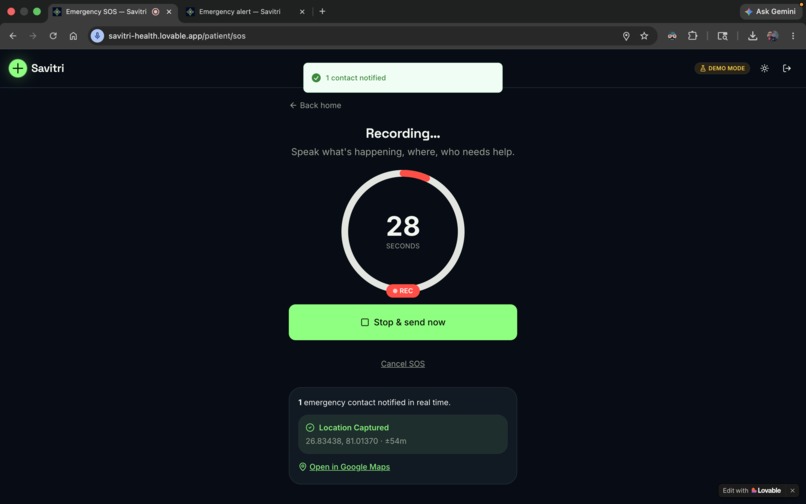
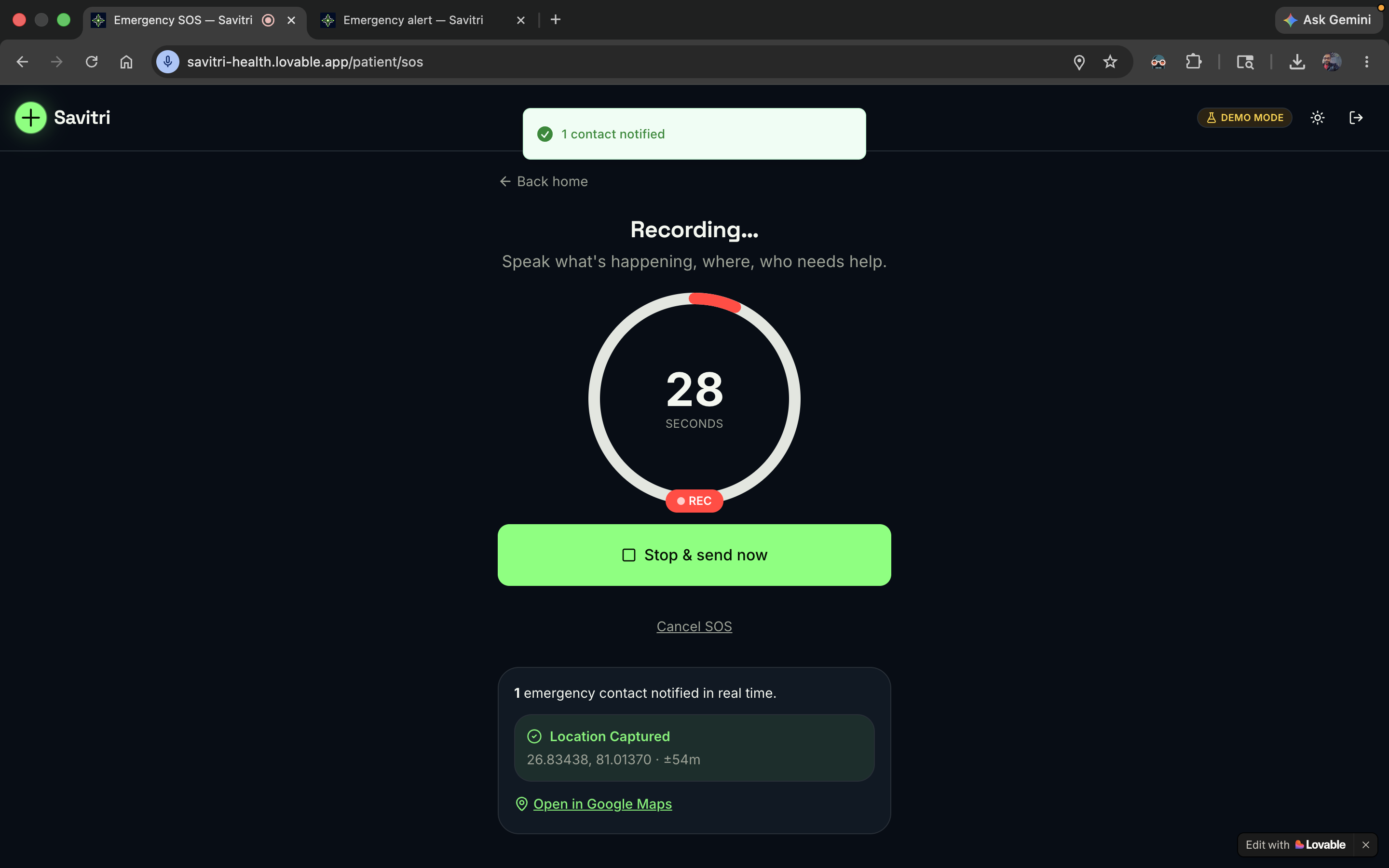
Patent_SOS
-
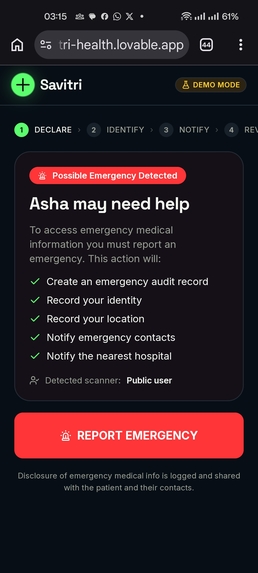
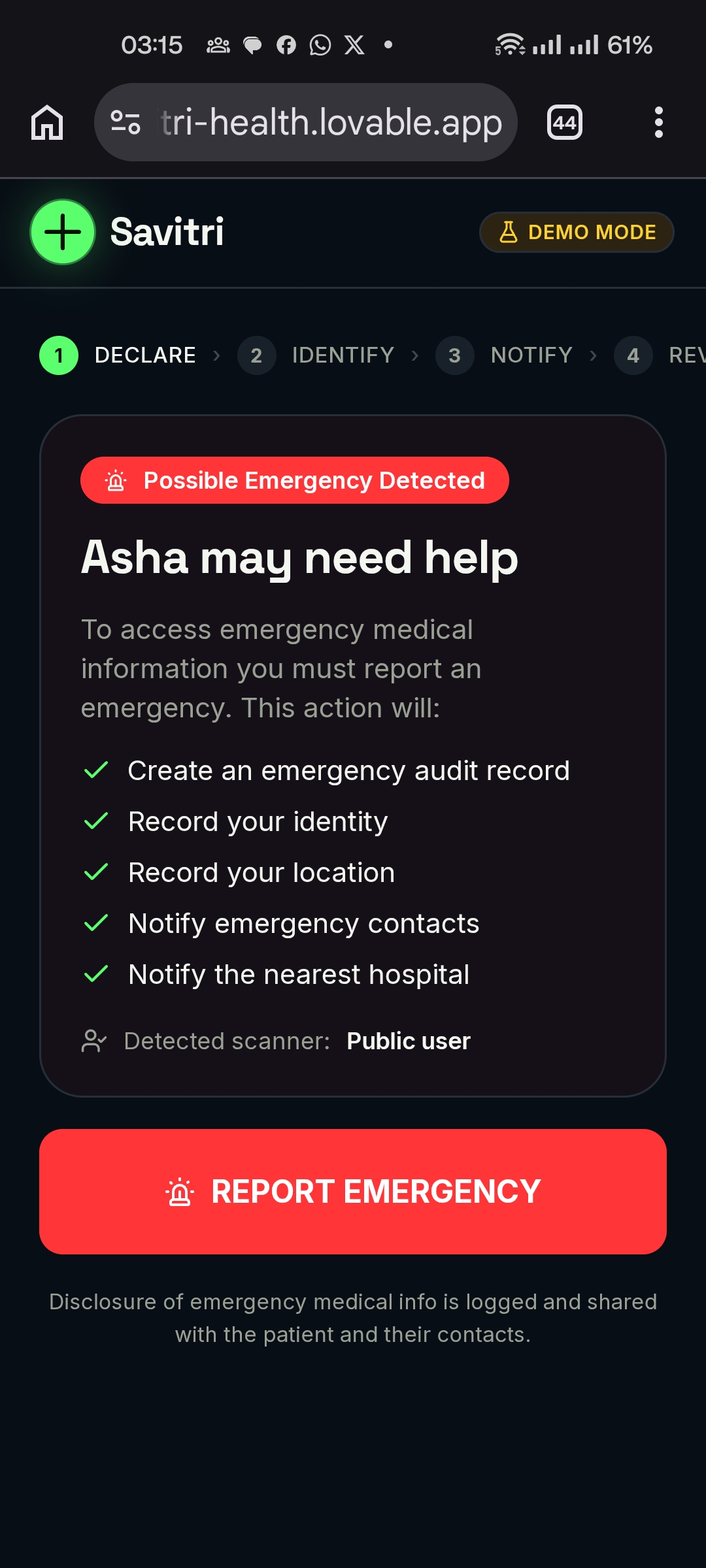
Reporter_Consent
-
-
-
-
-
-
-
-
-
Inspiration
In a medical emergency, the hardest question is often not just "Who will help?" but "Who is this person, who should be contacted, what critical information is safe to share, and how does everyone coordinate fast?"
Savitri was built around a simple human problem: when someone cannot speak for themselves, their family, responders, and hospital should not be trapped in disconnected silos.
What it does
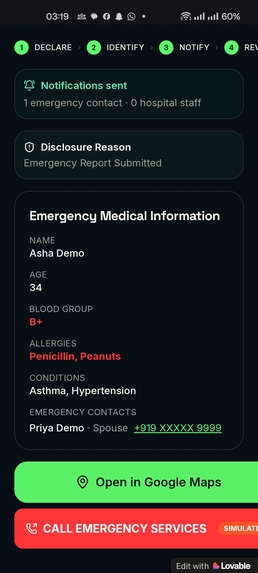
Savitri is a pilot-ready Medical Golden Hour Coordination Platform. It helps coordinate the emergency journey across the person in distress, family contacts, public helpers, responders, and providers.
The current build supports role-based emergency workflows across:
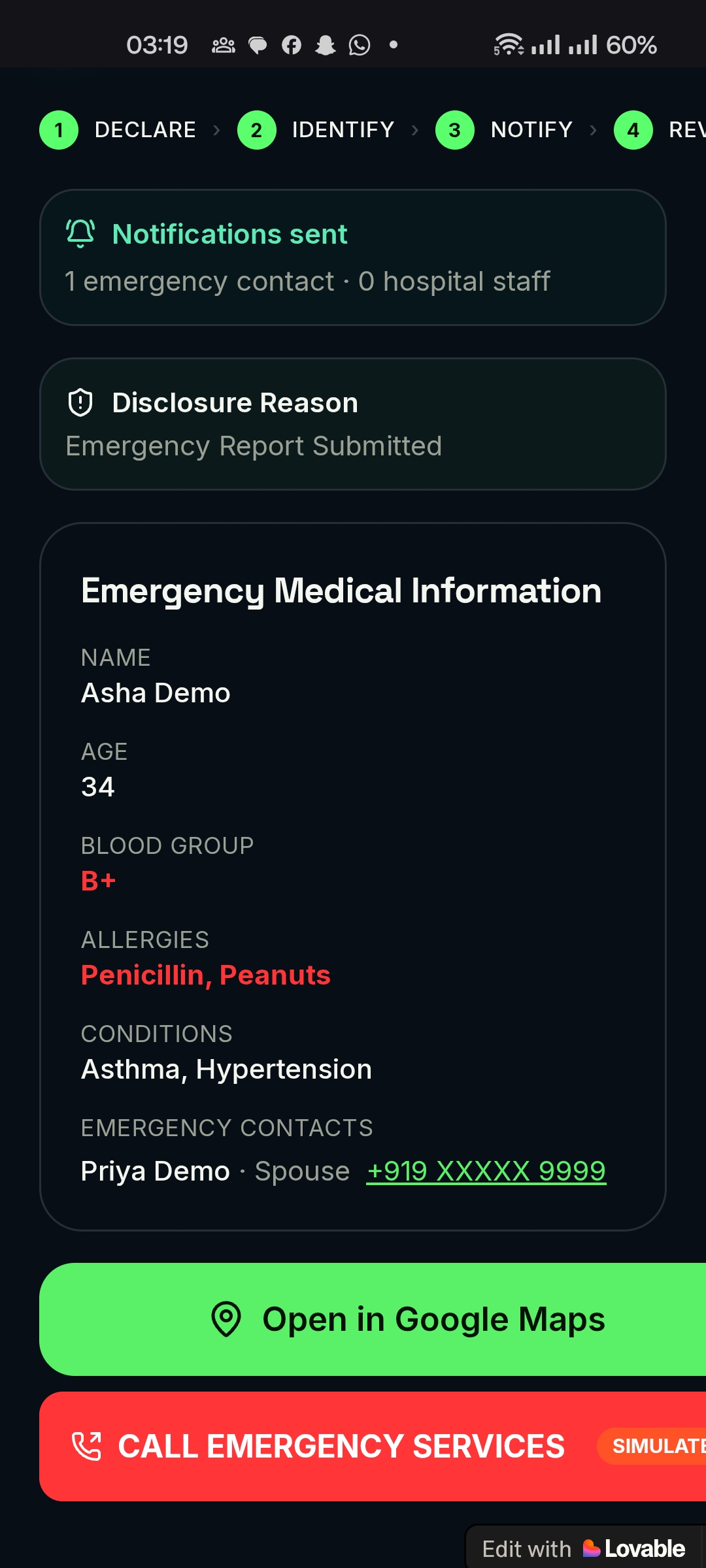
- Person / Patient: emergency profile, SOS flow, QR-based emergency identity, and critical context.
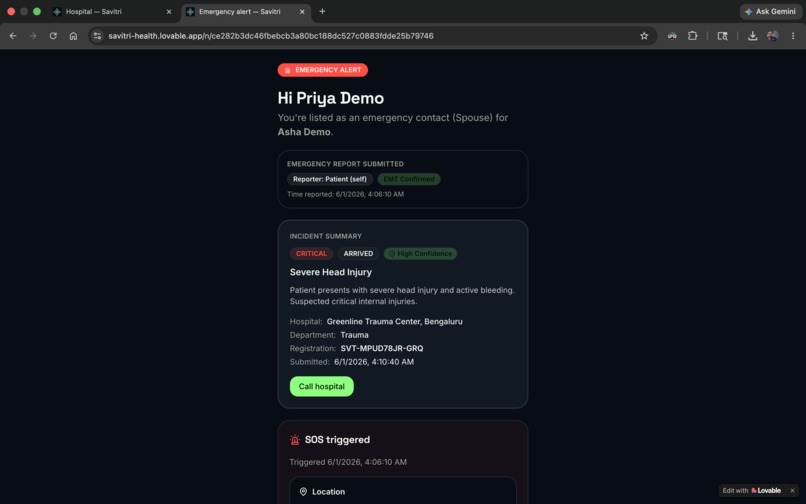
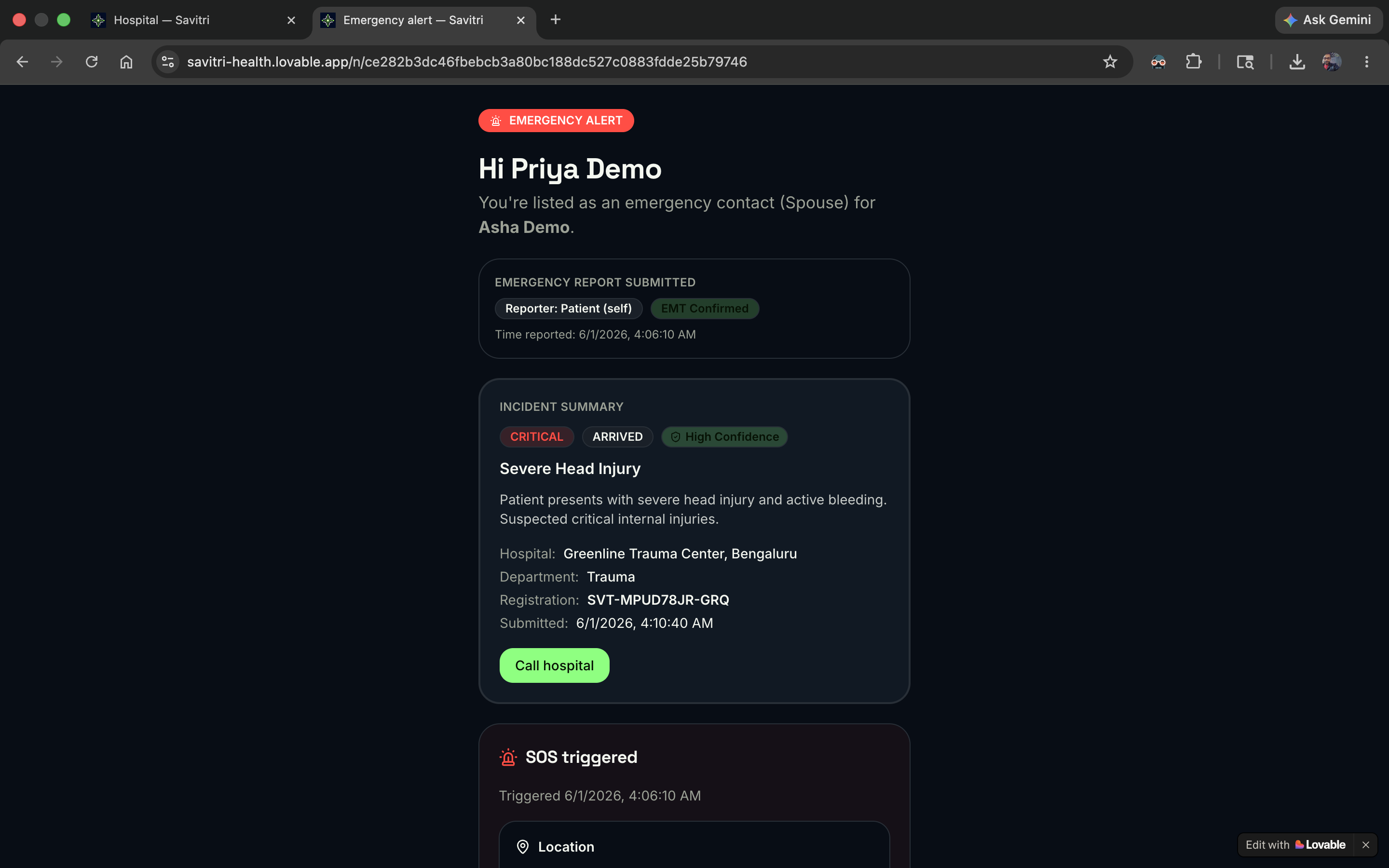
- Family: people they support, emergency updates, and coordination visibility.
- Public helper: no-install emergency scan/report flow designed for bystanders.
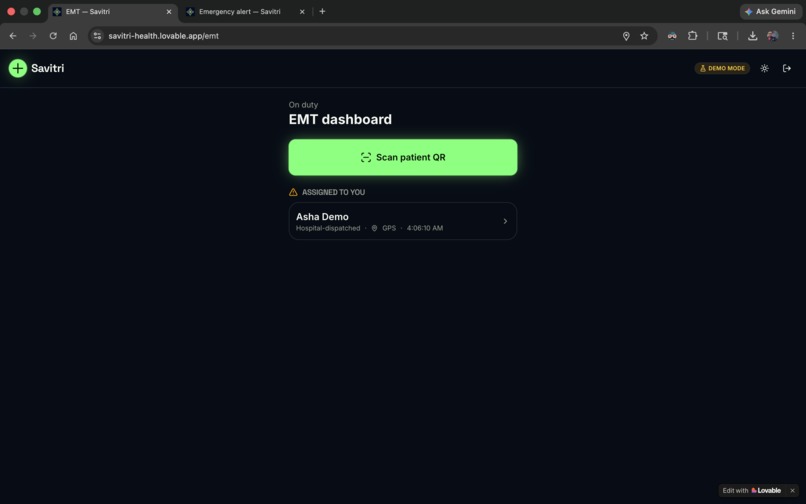
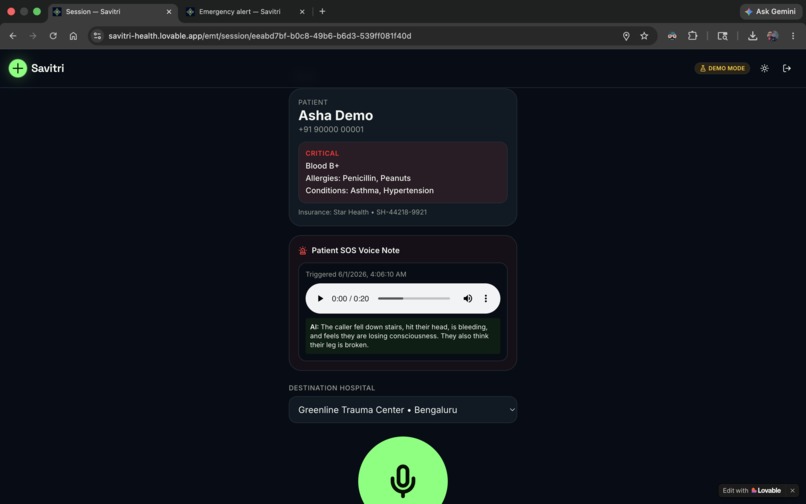
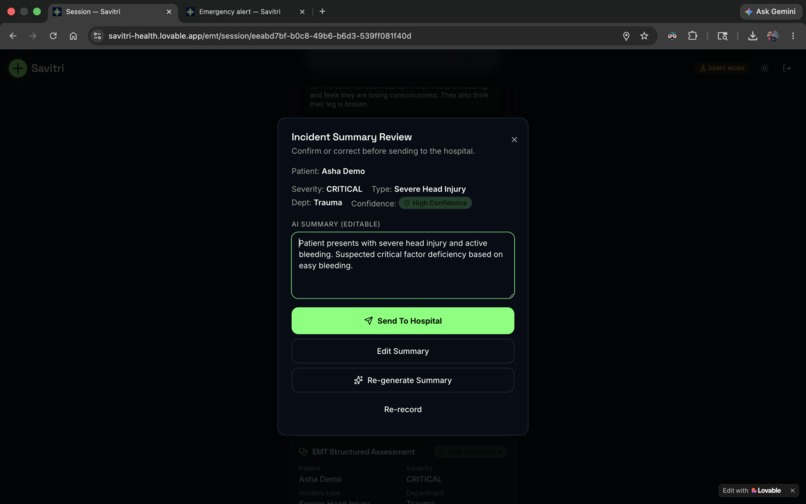
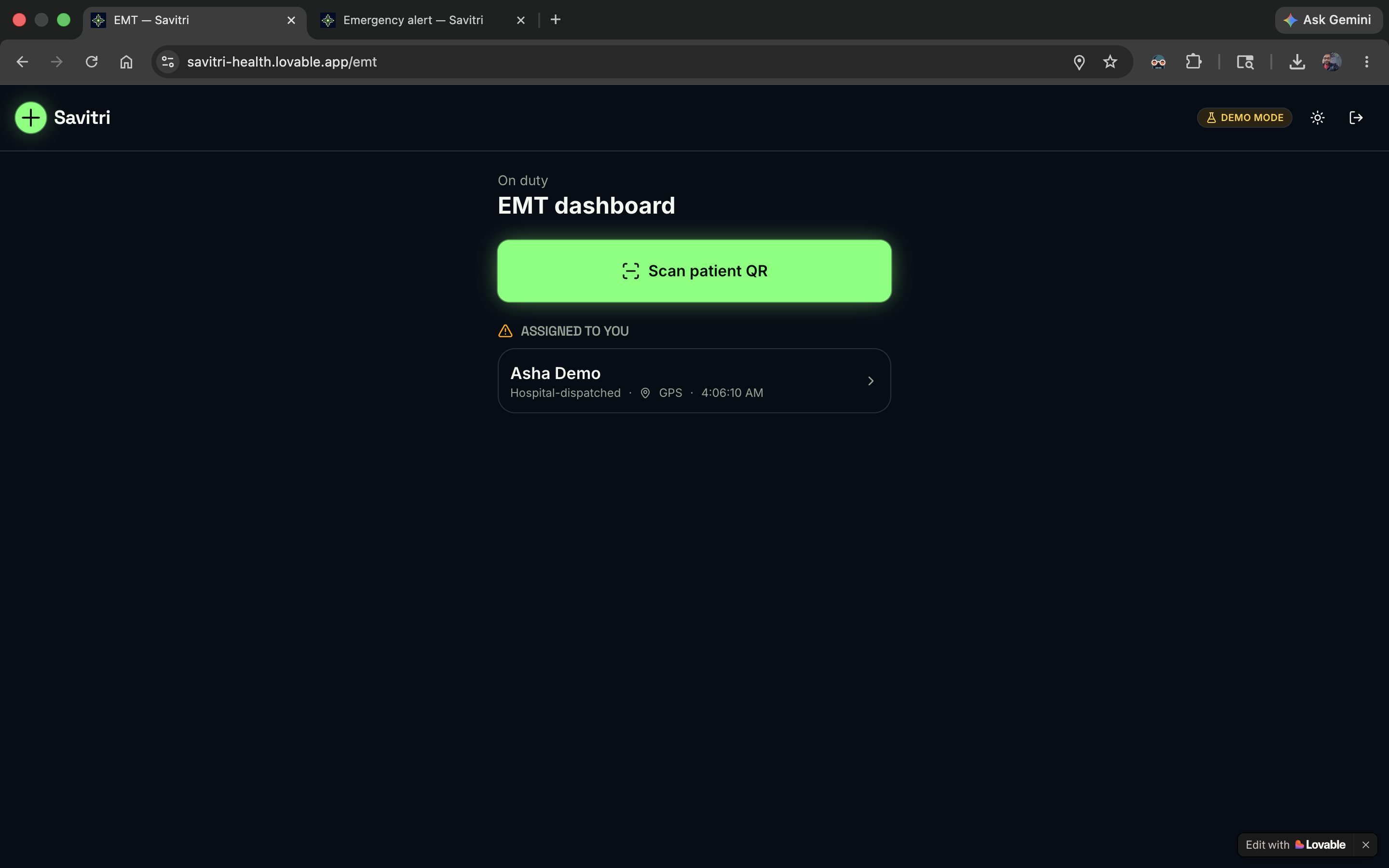
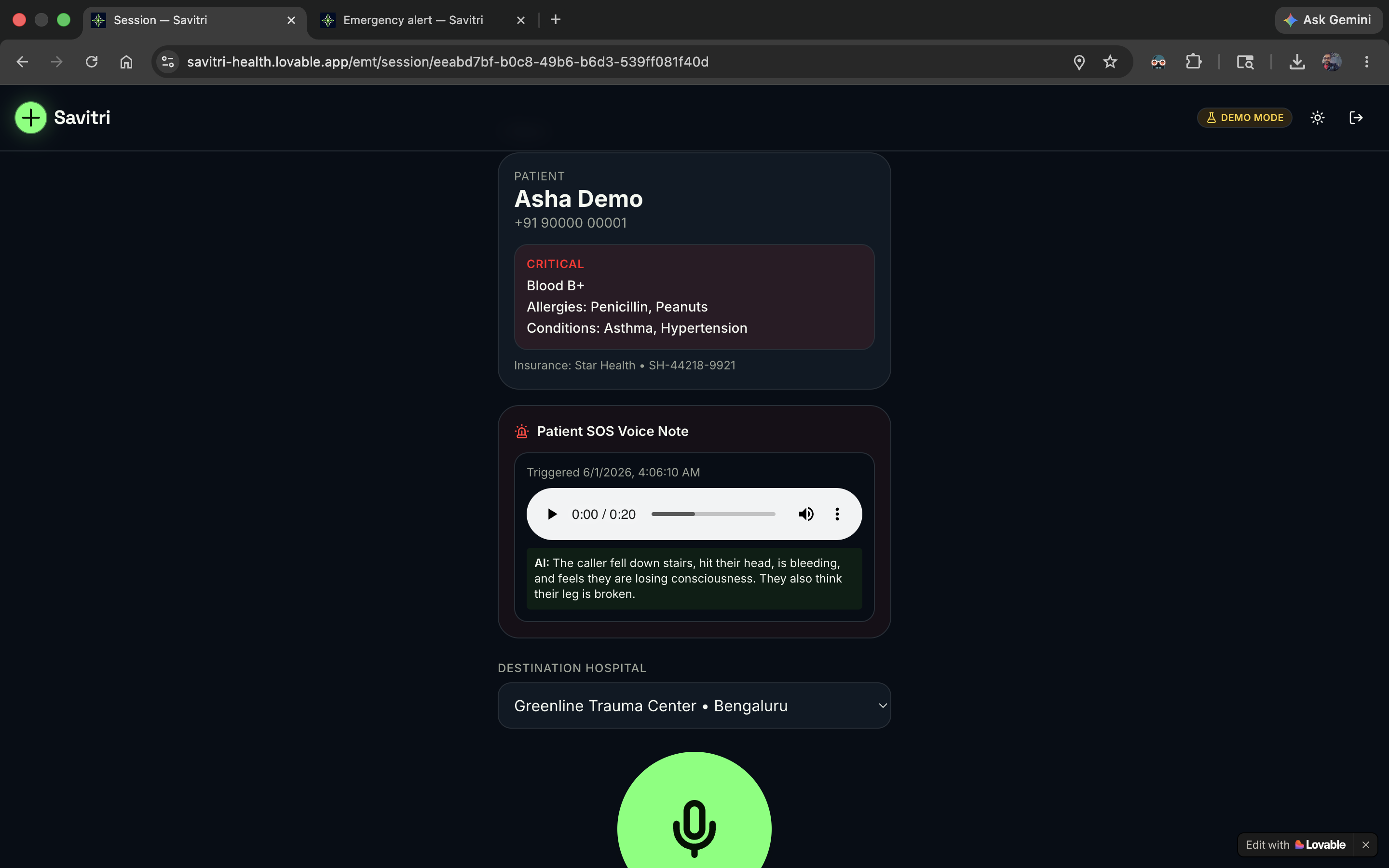
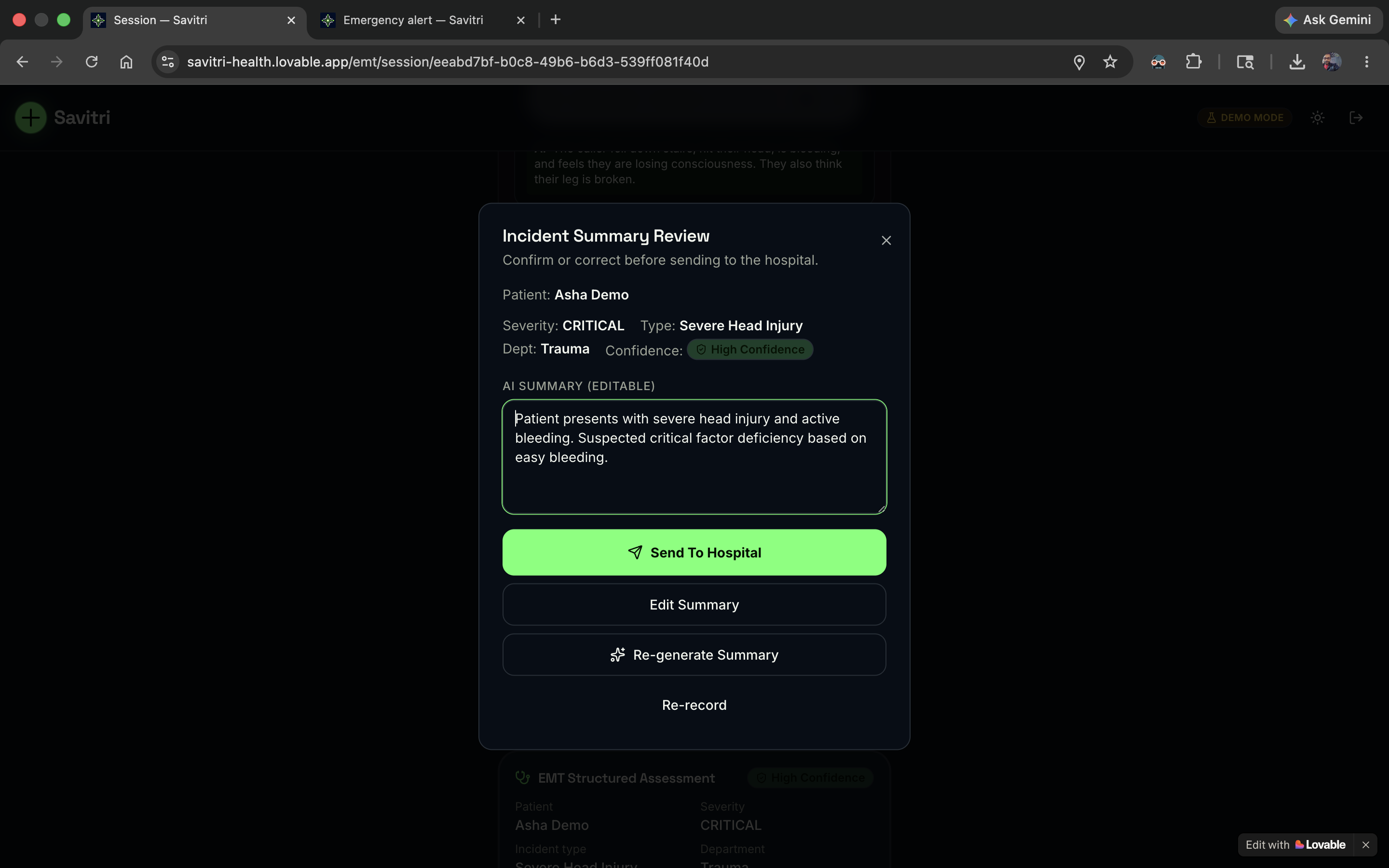
- Responder / EMT: incident view, timeline, voice notes, AI-assisted summaries, and emergency context.
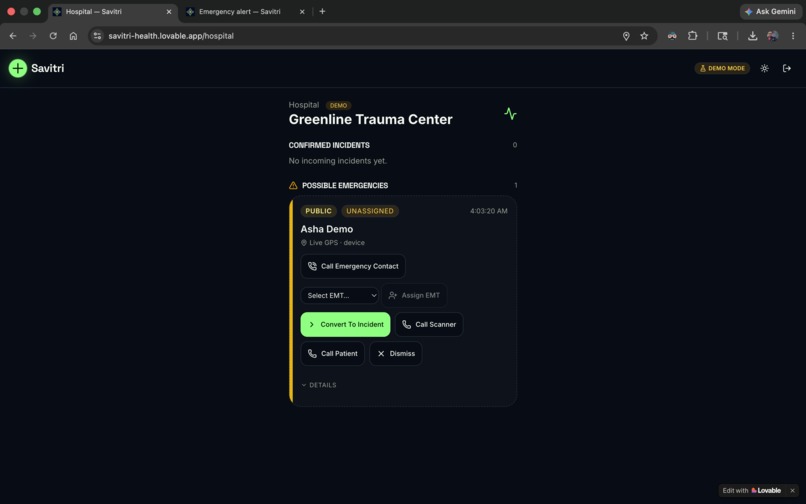
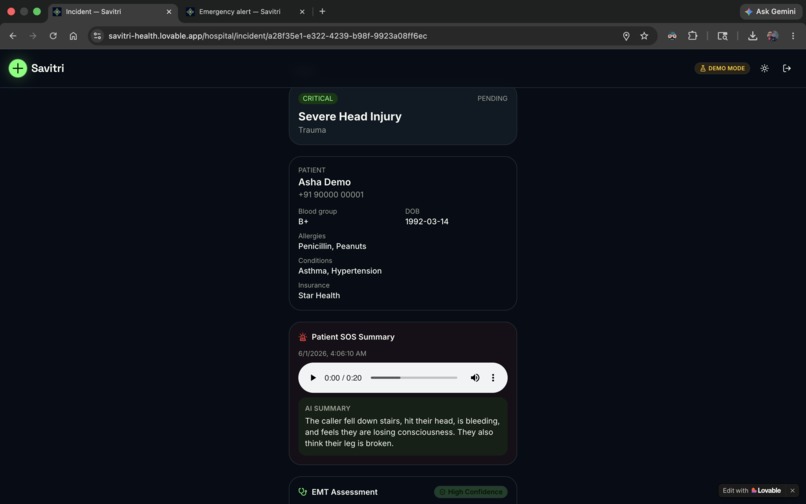
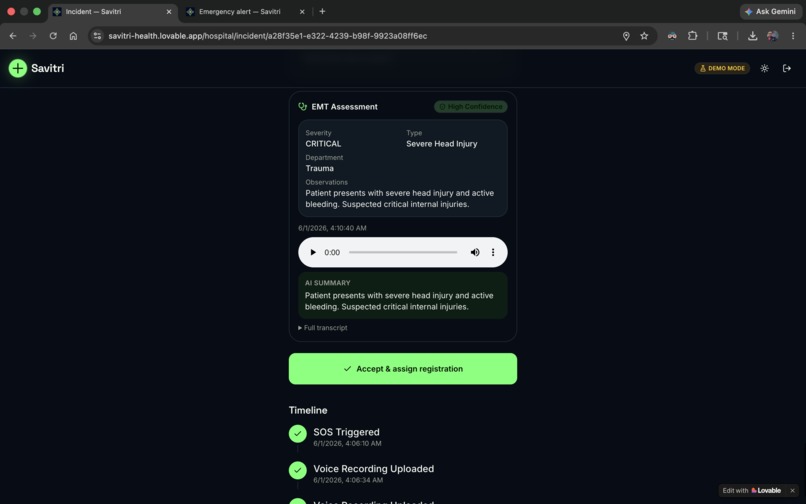
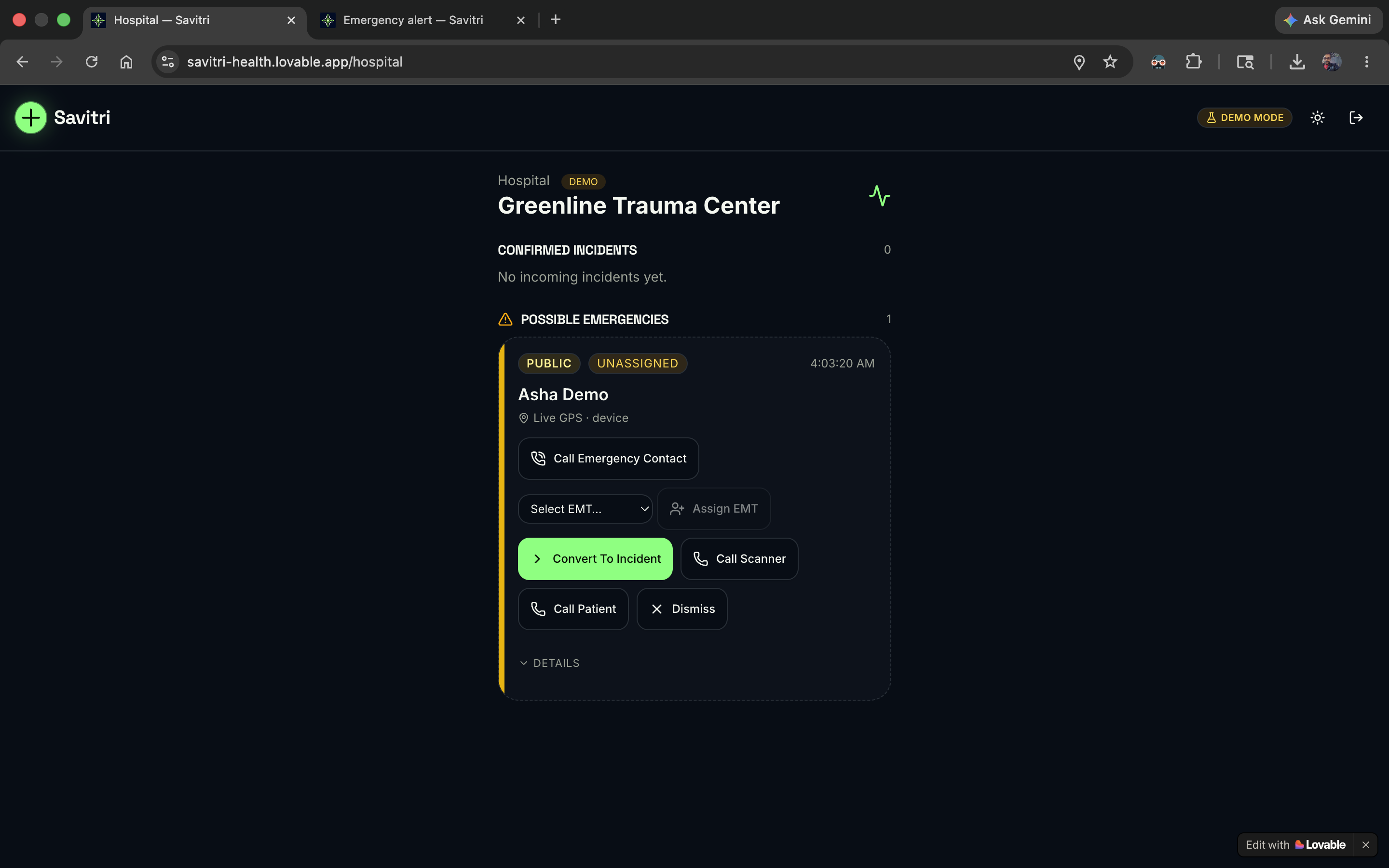
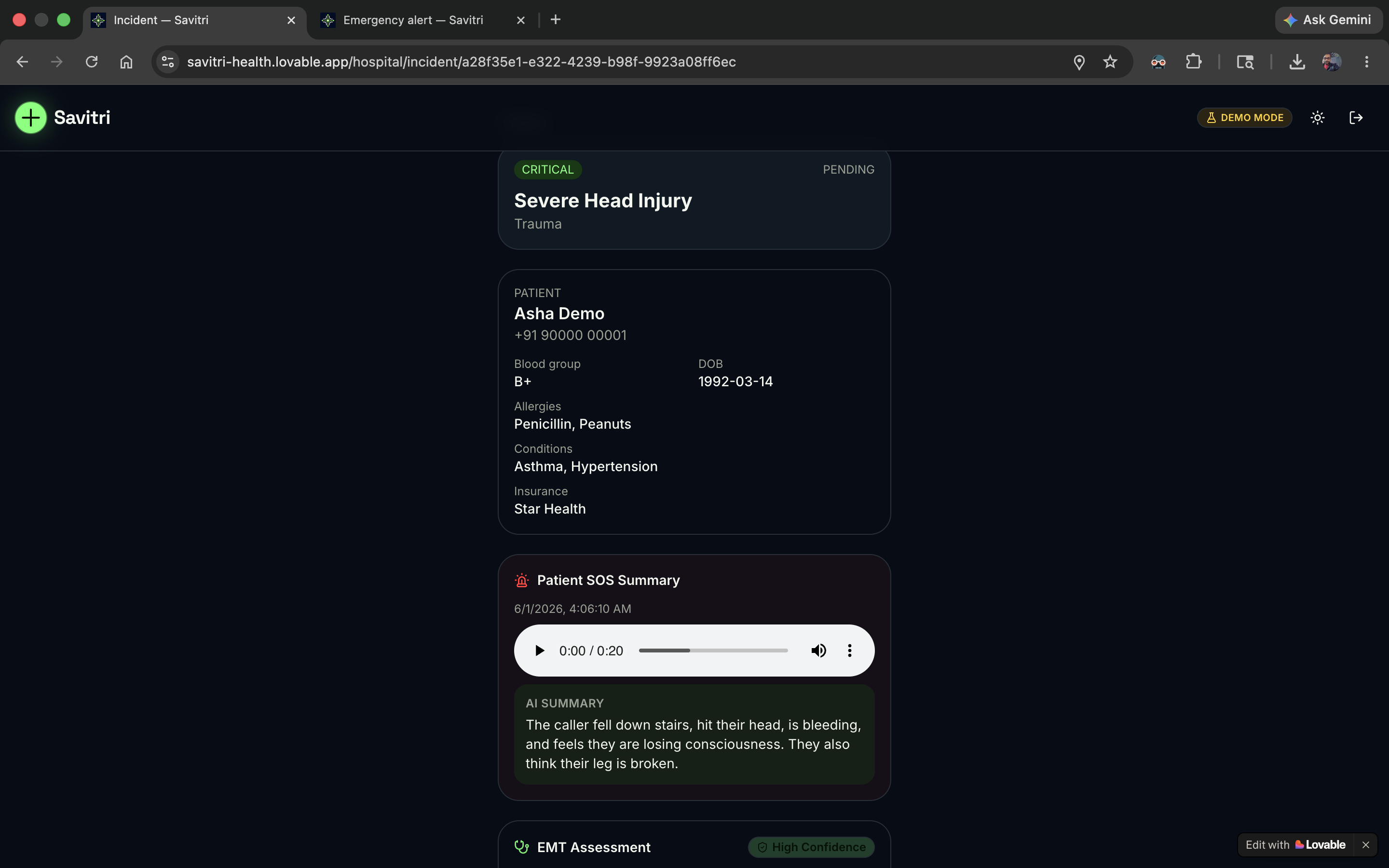
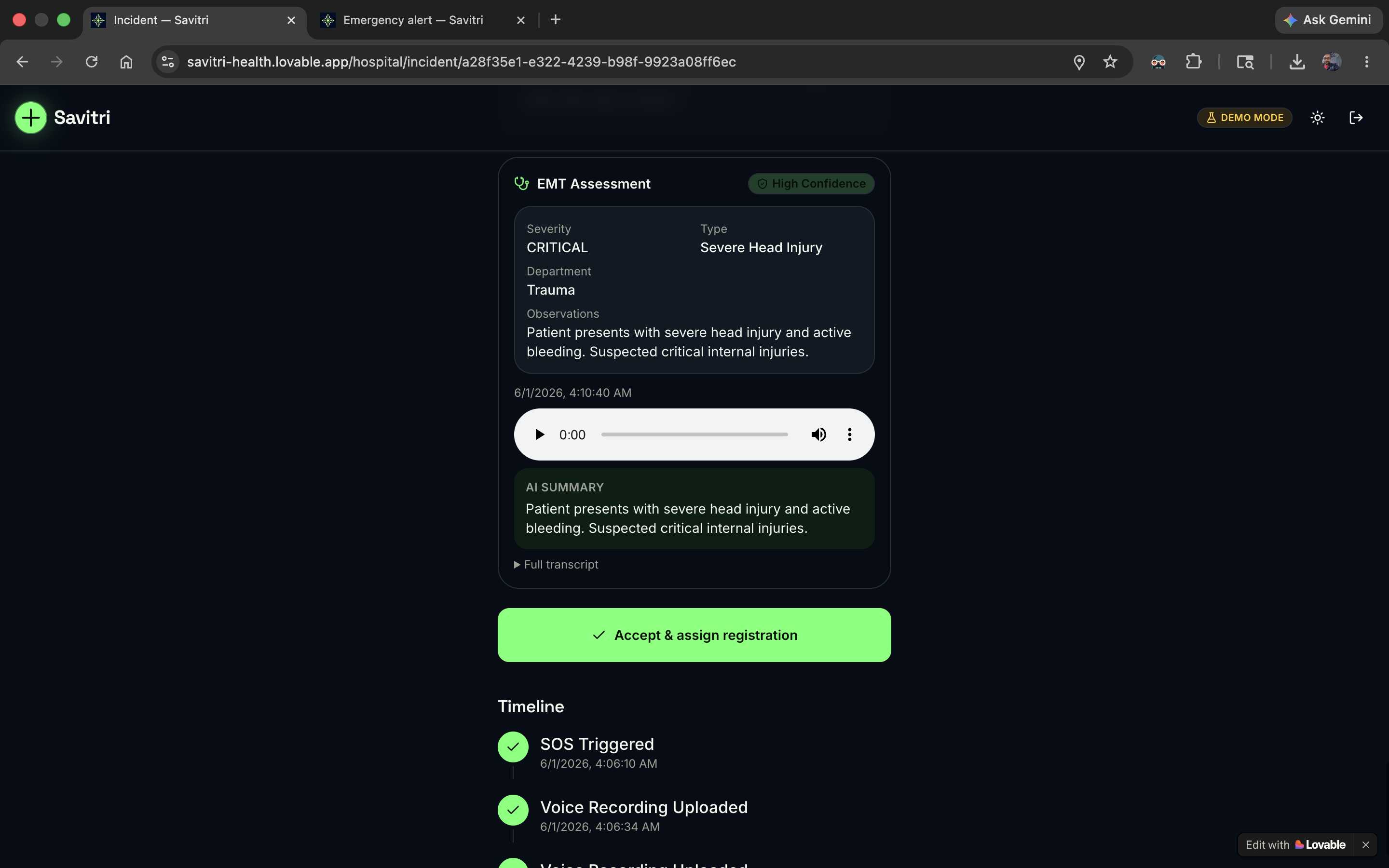
- Hospital / Provider: handover-oriented view for receiving the patient with relevant context.
The goal is not to replace ambulances, hospitals, emergency numbers, or national digital health systems. Savitri acts as the coordination layer between them.
Why it matters
Most emergency systems still treat people, providers, organizations, and data systems as separate silos. Savitri focuses on the missing journey layer:
- identifying the person,
- notifying trusted family,
- sharing only the minimum emergency context,
- helping responders understand what happened,
- preparing hospitals for handover,
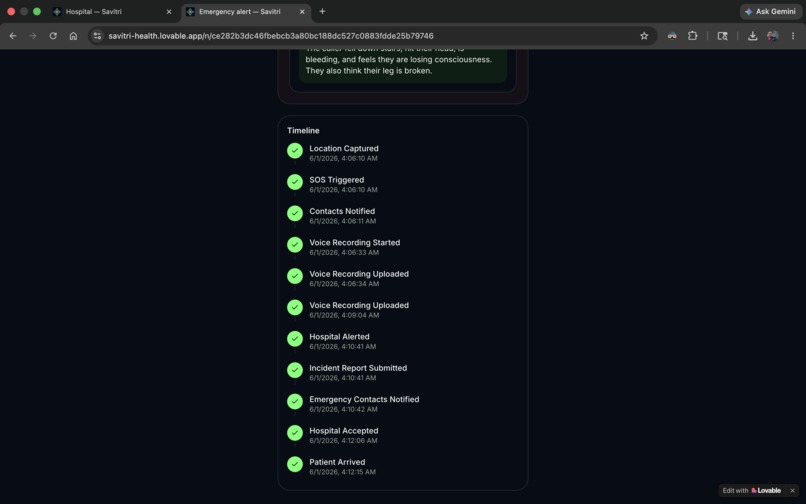
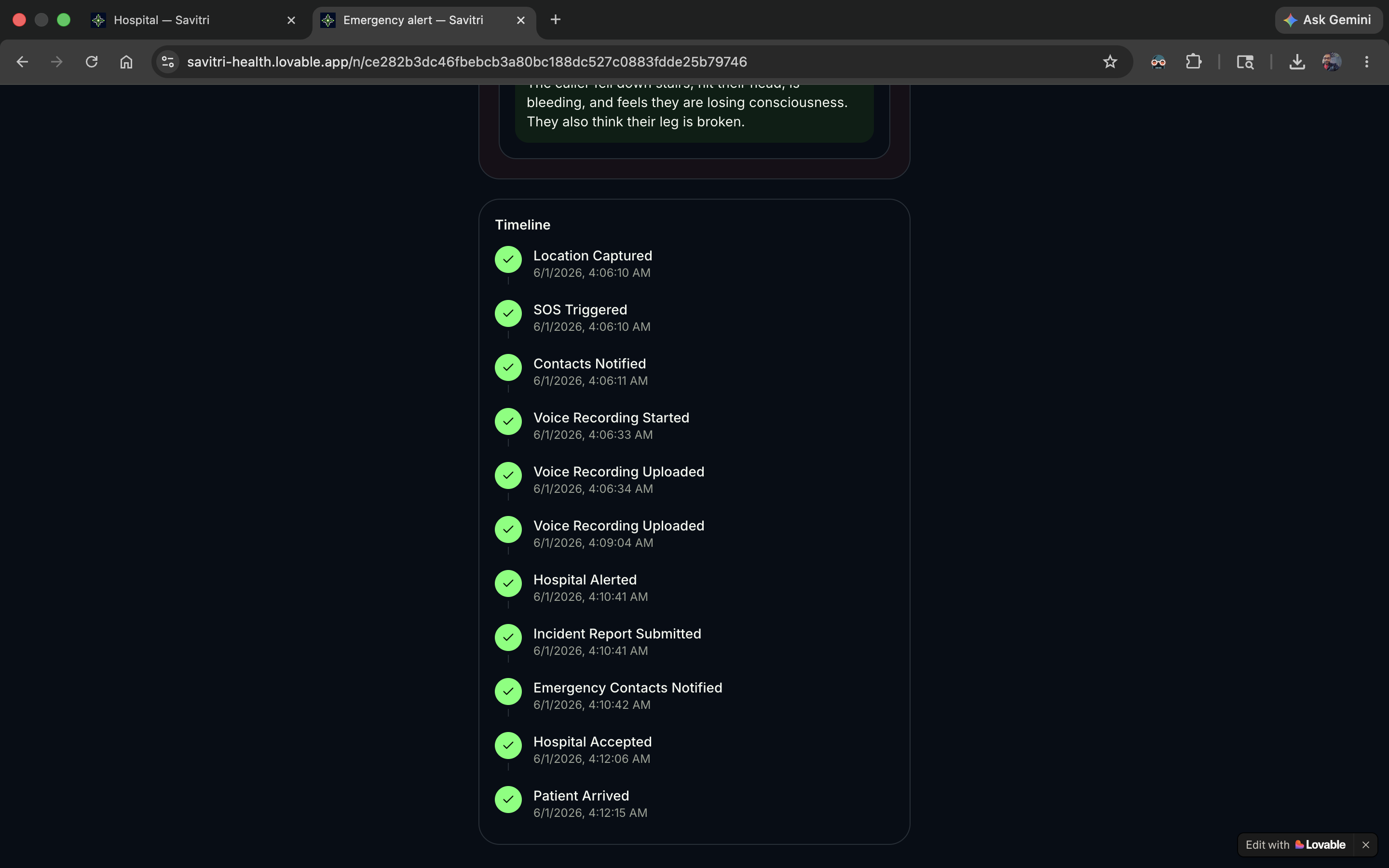
- and preserving an auditable timeline.
The core job-to-be-done is:
Help my family find me when I cannot reach them myself.
What makes it different
Savitri is not just another SOS button. It is designed around trust, identity, and contextual disclosure.
In an emergency, full medical history should not be exposed by default. The system should disclose only what is useful, authorized, and appropriate for the actor and moment.
Key principles built into the product direction:
- public assistance stays free,
- private/family coordination can become paid,
- no app download should be required for public helpers,
- emergency UX must work under panic,
- role-based access matters,
- and emergency data should be minimal, time-bound, and auditable.
What we built for the hackathon
For this hackathon, I built a working multi-role Savitri demo that shows the core emergency coordination journey end to end.
The build includes:
- demo login flows for Patient, Family, Responder, and Provider,
- emergency activation and QR-based emergency identity,
- public emergency reporting flow,
- family support view for people you care about,
- responder timeline and incident context,
- voice-note based responder updates,
- AI-assisted incident summaries,
- provider/hospital handover flow,
- seeded demo data,
- and role-specific views that show how the same emergency looks different to different actors.
This is not being claimed as a live production medical service. It is ready for small controlled pilots, usability testing, and workflow validation.
What I learned
The biggest learning was that emergency coordination is not one product screen. It is a trust problem across multiple actors.
A helper needs almost no friction.
A family member needs reassurance and location/context.
A responder needs structured, relevant information.
A provider needs handover clarity.
The person in distress needs all of this to happen without exposing unnecessary private data.
The hard part was balancing speed, safety, privacy, and usability in a moment where people are stressed and time matters.
Challenges
The main challenge was scope control. Savitri can naturally expand into emergency services, hospitals, ABDM/ABHA, FHIR, telecom, maps, organizations, and government workflows. For the hackathon, I narrowed the build to the smallest meaningful journey: emergency identity plus family/responder/provider coordination.
Another challenge was making the demo feel real across roles instead of creating a static pitch. The product needed to show working flows, not just explain an idea.
What is next
The next step is a small pilot focused on:
- family notification success,
- time to first family reach,
- QR/NFC scan completion,
- responder handover usefulness,
- and whether families are willing to maintain emergency profiles for people they care about.
If those metrics work, Savitri can expand into assisted living, employers, travel groups, schools, providers, and public-sector emergency coordination.
Built With
- edge-functions
- emergency
- github
- lovable
- novus.ai
- openai
- postgresql
- qr-based
- react
- supabase
- supabase-auth
- tailwind-css
- typescript
- vite

Log in or sign up for Devpost to join the conversation.