-
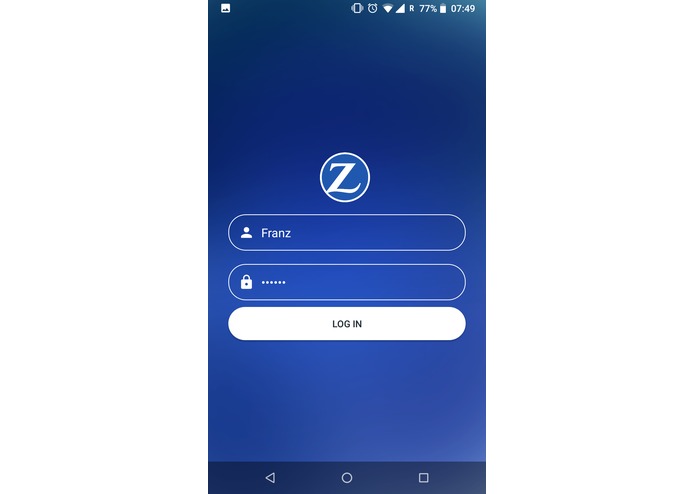
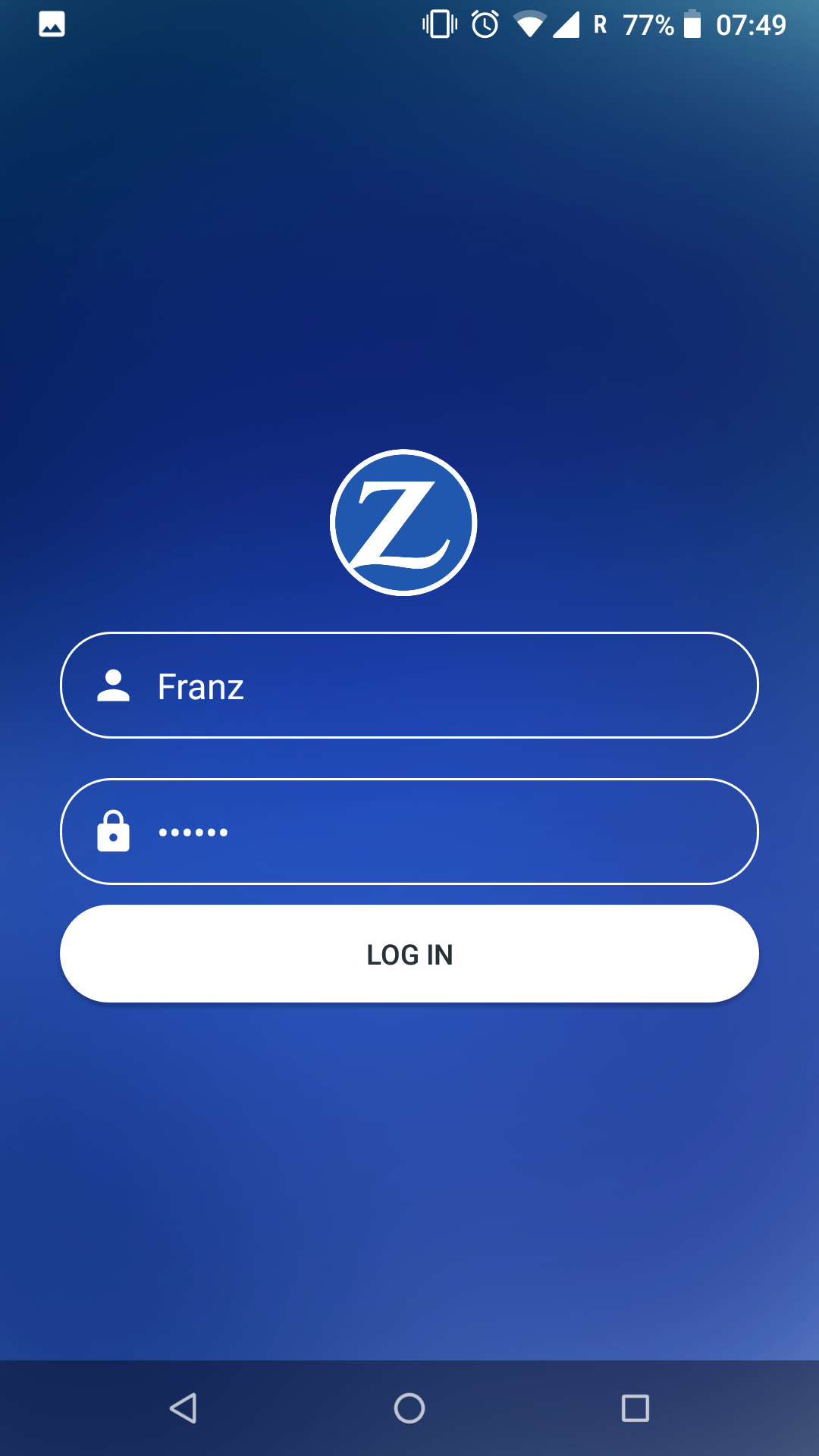
The Login Screen of Savfe
-
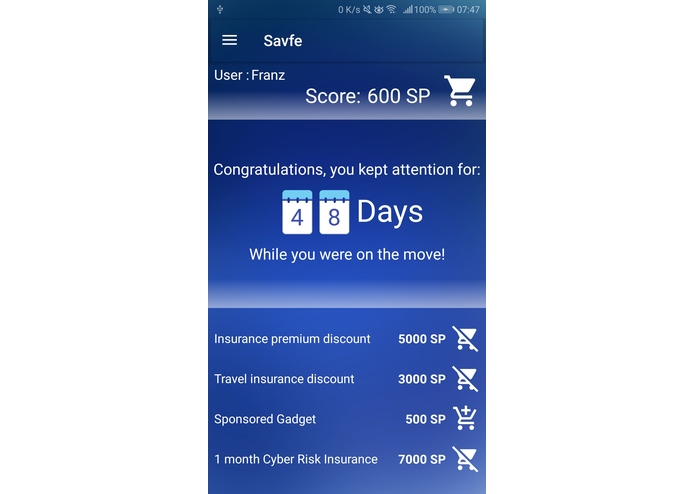
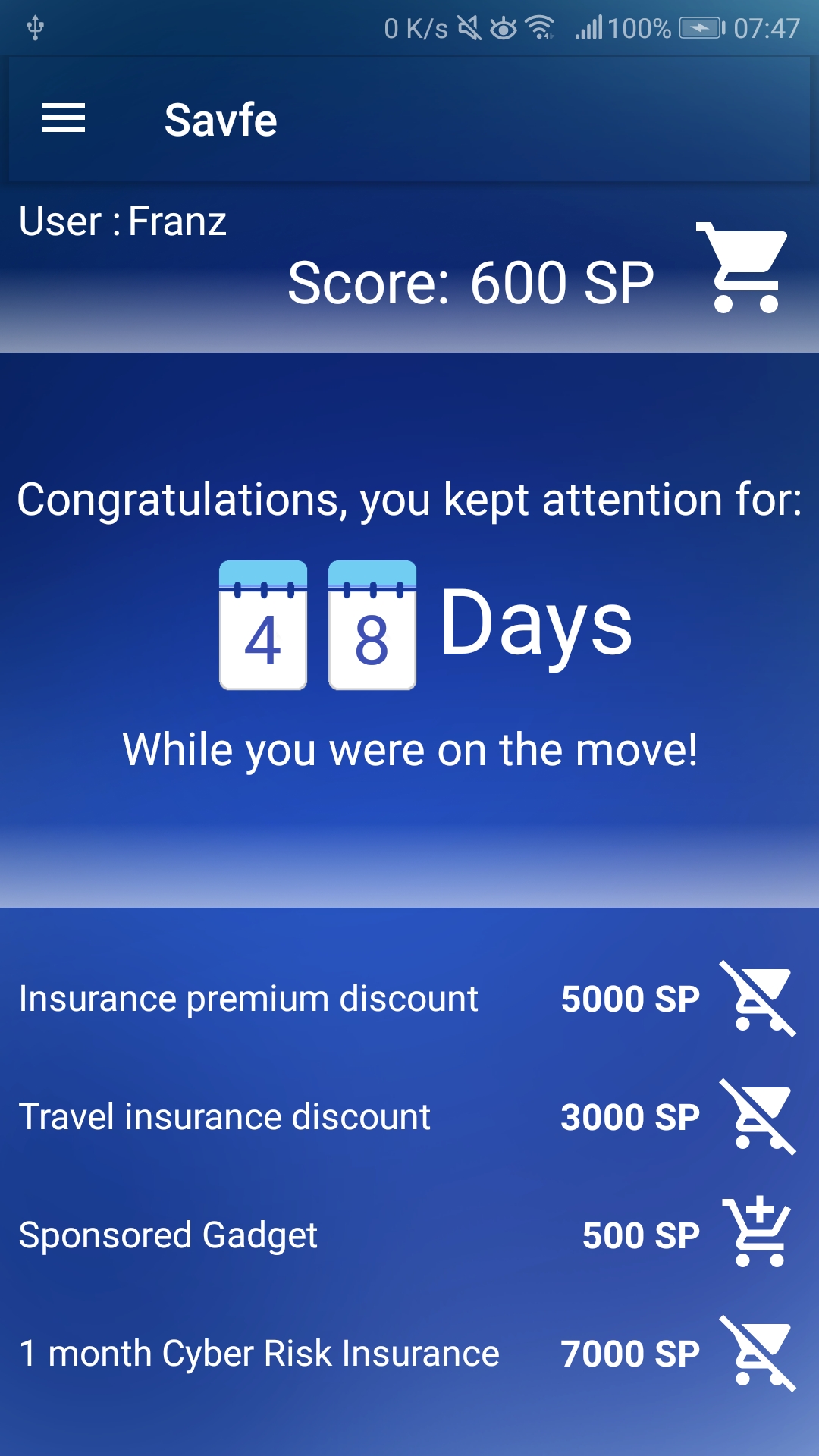
The main screen
-
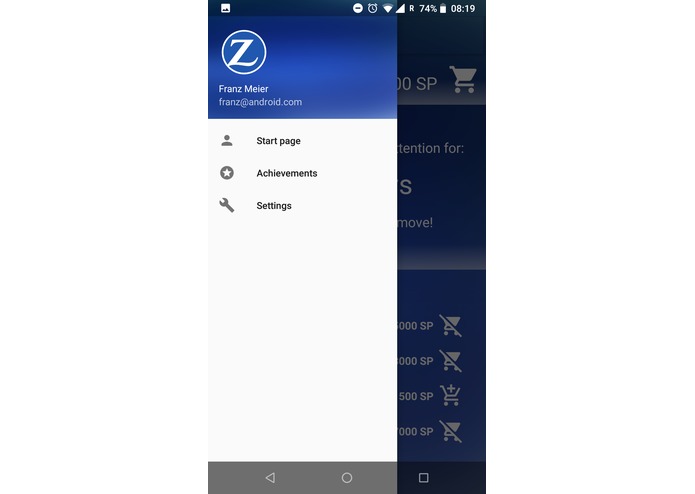
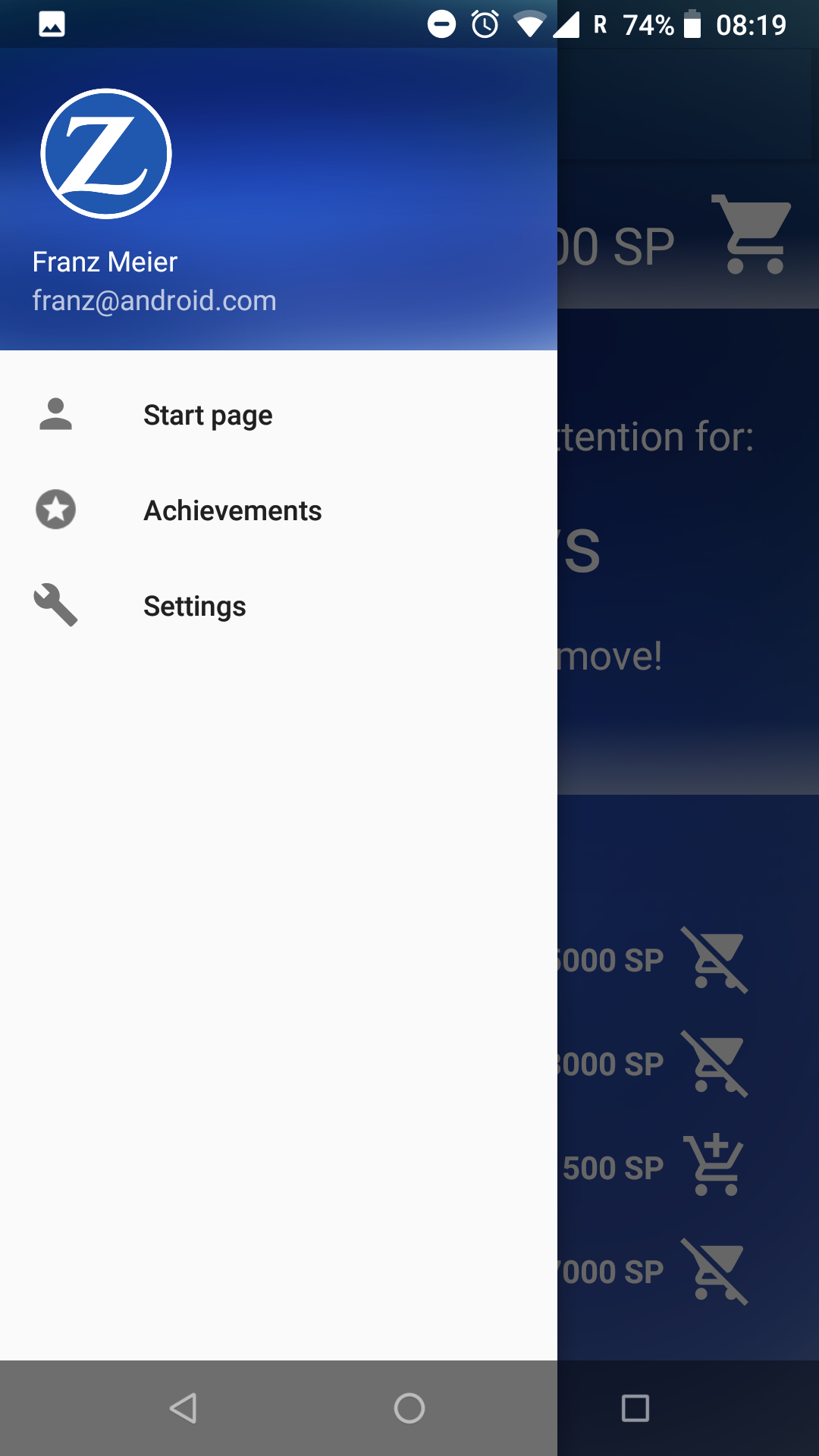
The navigation menu
-
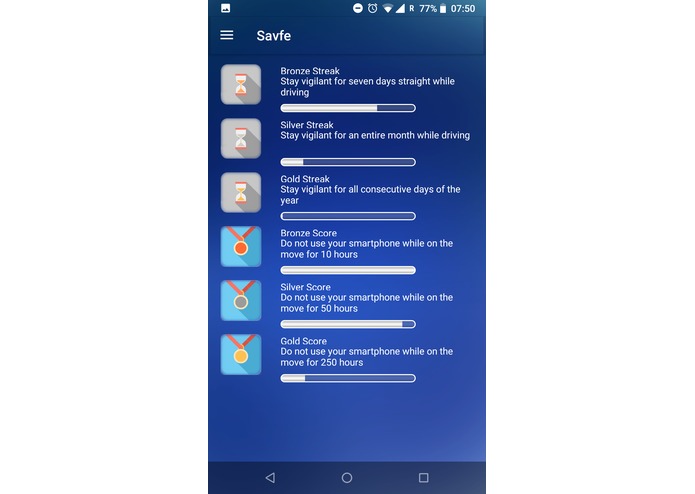
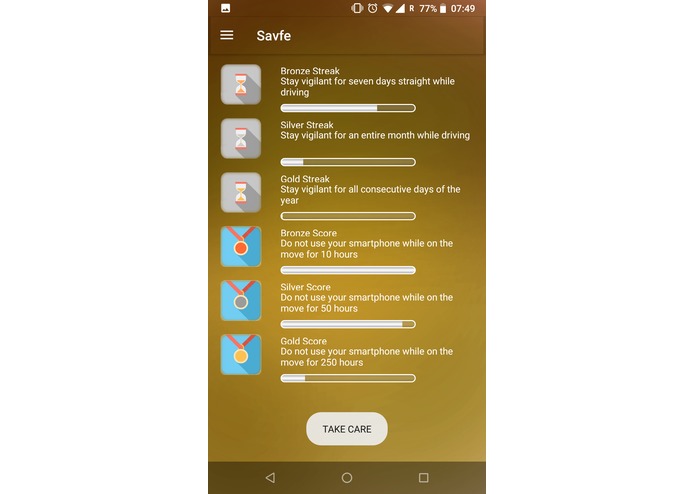
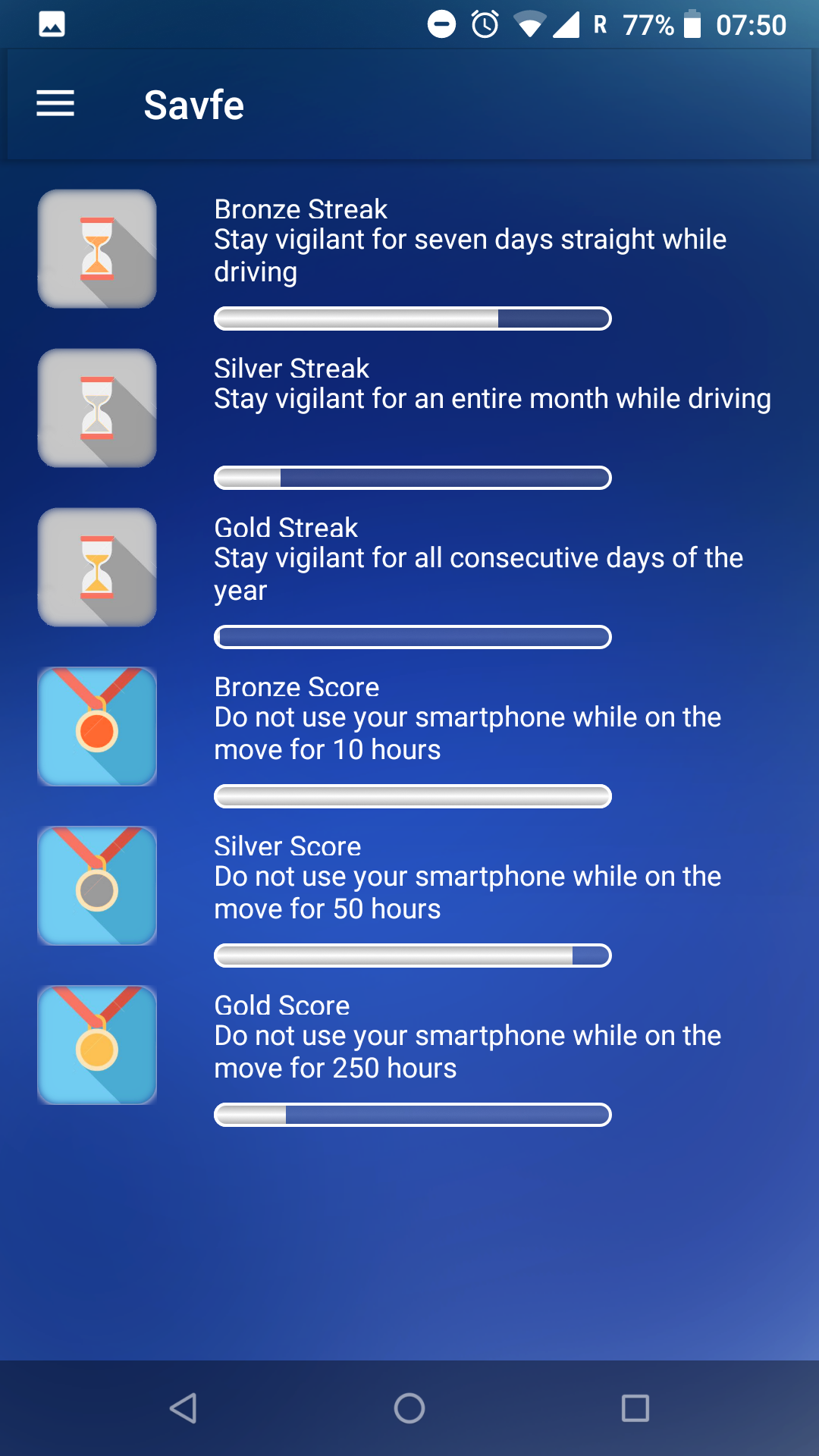
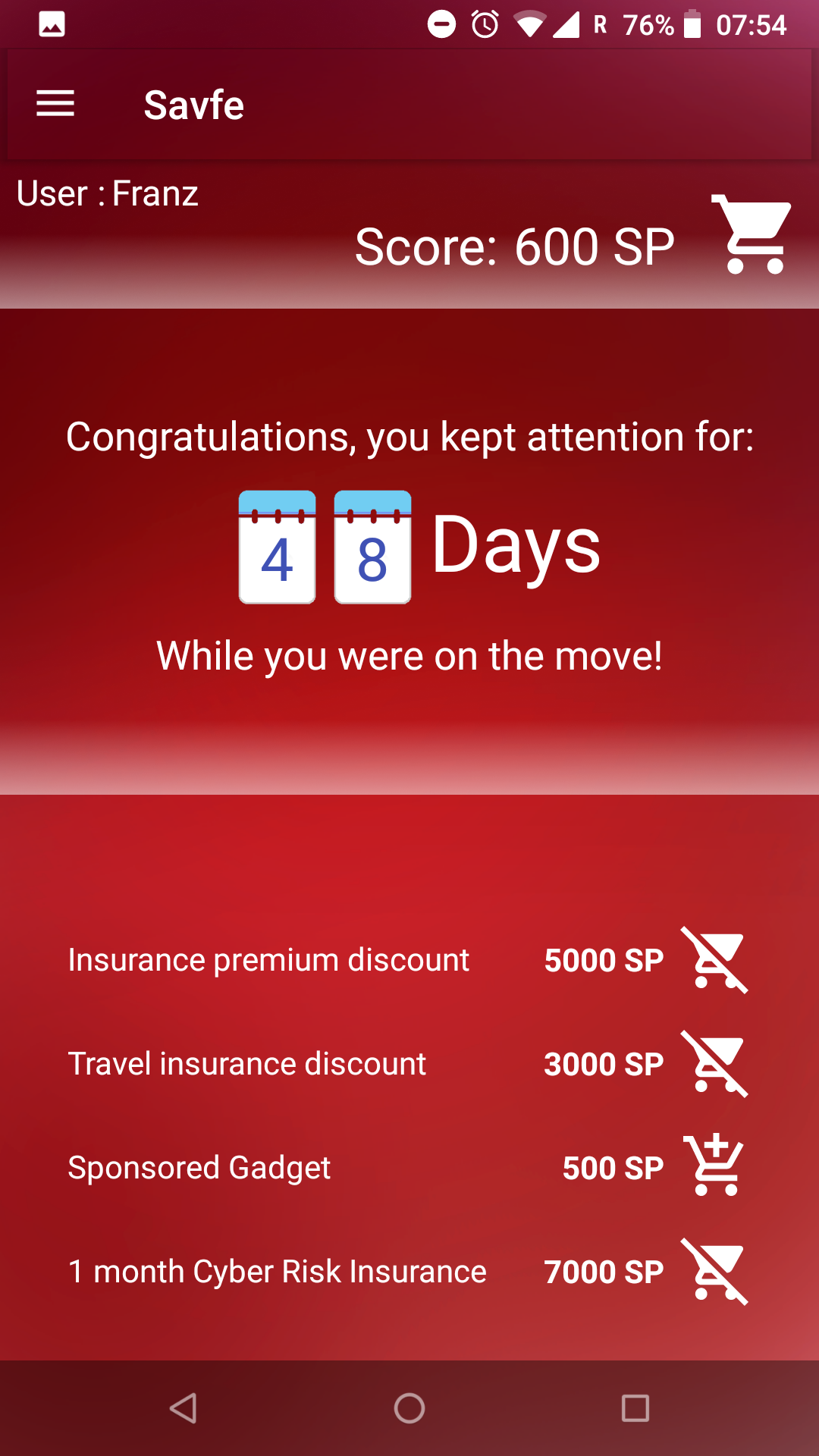
The achievemnt list
-
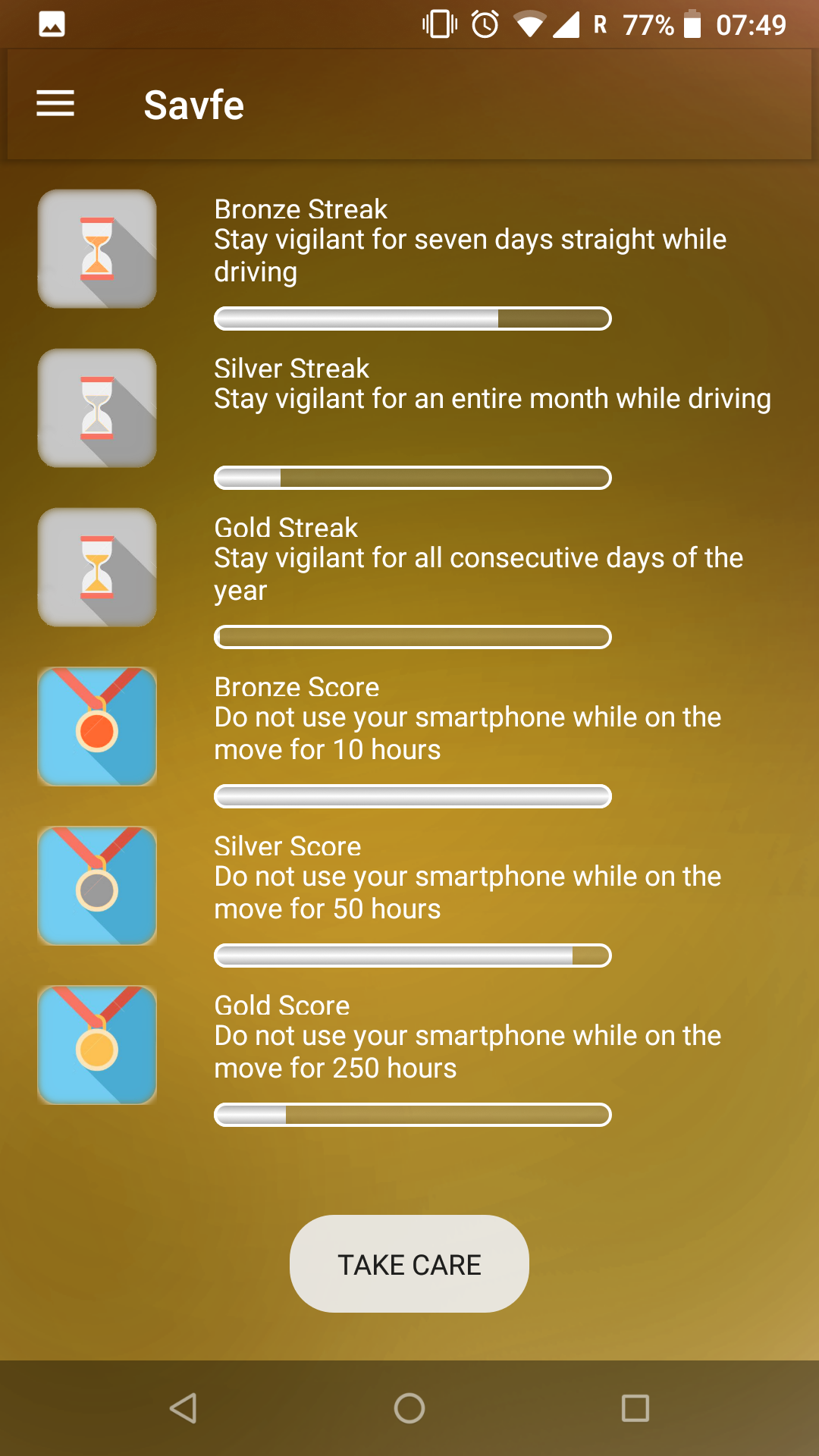
A situation occured that requires your attention
-
You might be in a dangerous sitaution, please stop what you are doing and pay attention
-
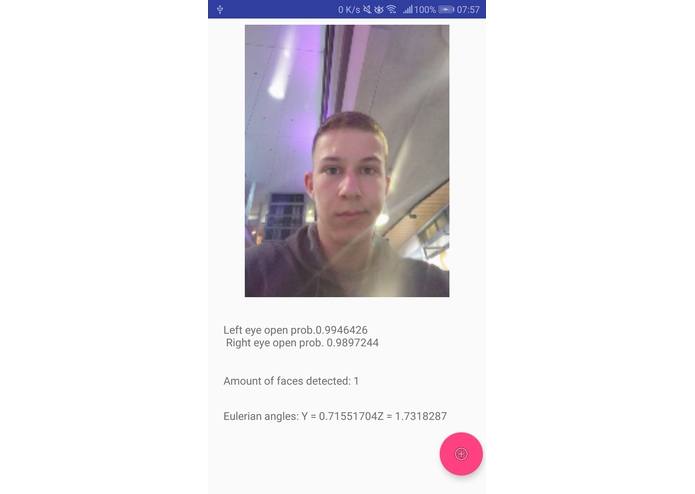
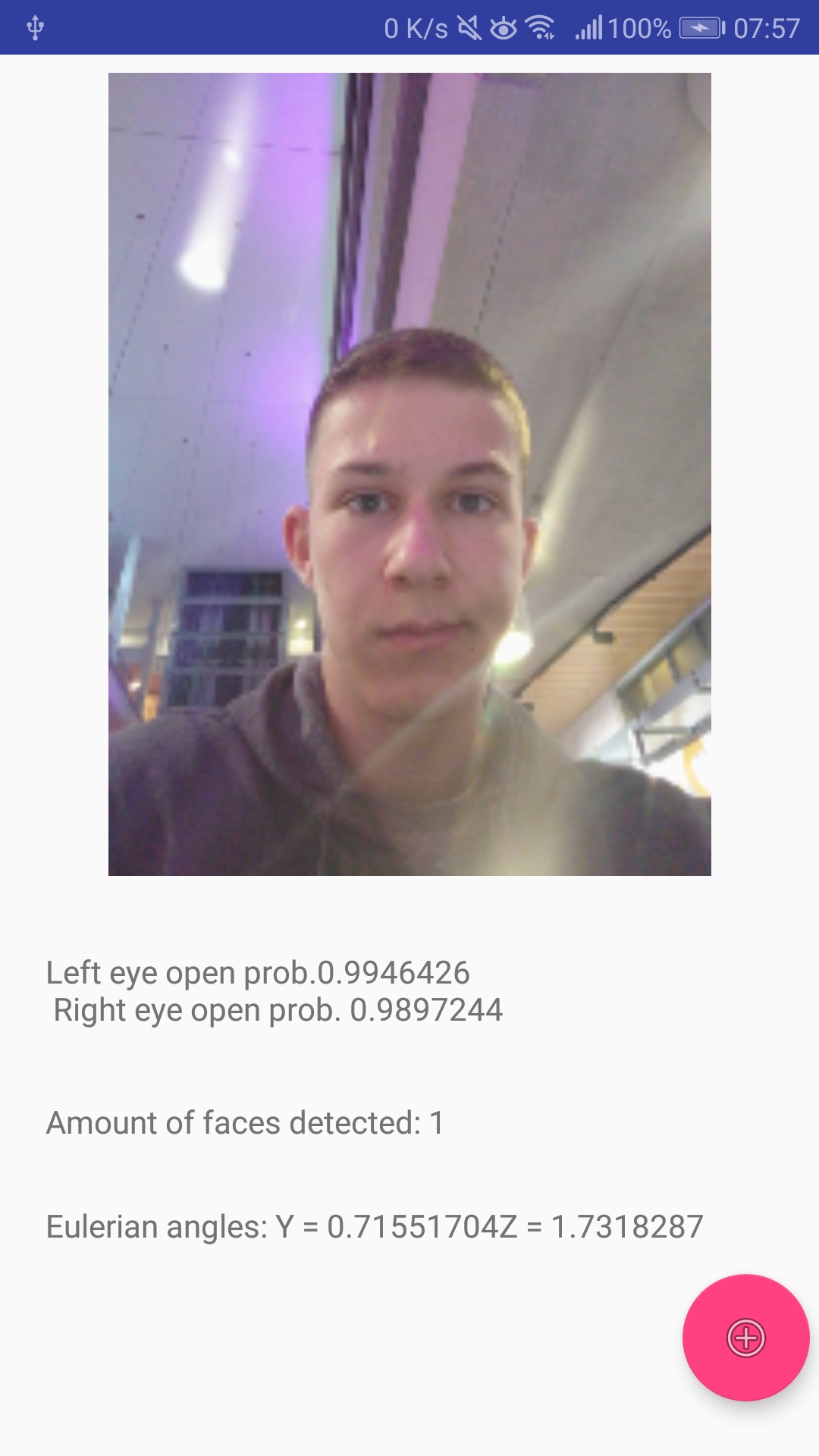
The view from the face recognition app using Firebase
Inspiration
Literature often describes millennials as digitally well-versed, but also lazy and easily demotivated. While these accusations are often vague or anecdotal, insurance data seems to support a very similar hypothesis. Being digital natives and quickly bored, they oftentimes turn to their smartphone or tablet for entertainment. And with the entertainment, distraction comes into the mix. A dangerous mix considering they were just crossing a street, walking close to train tracks or even driving while being distracted by their digital companion. For us, the problem to solve was clear: How can we encourage millennials to become more attentive while part-taking in potentially dangerous traffic situations. Also, we did not want to judge over millennials per se, so punishing them for bad behaviour would, if implemented, have to be very subtle and not demotivating. After all, we want them to help themselves and their surroundings become safer again. So we built an application for smartphones with this criteria in mind.
What it does
The app has a simple mechanism: we detect whether you are driving and if you are looking at your smartphone. If you do so that is bad for now, but maybe we can provide some help for you to avoid this in the future. If you are in the app your screen will start flashing warning colors depending on how dangerous the situation currently is to the best of our knowledge. If you are distracted by another app, we show a message so you know that you should take care.
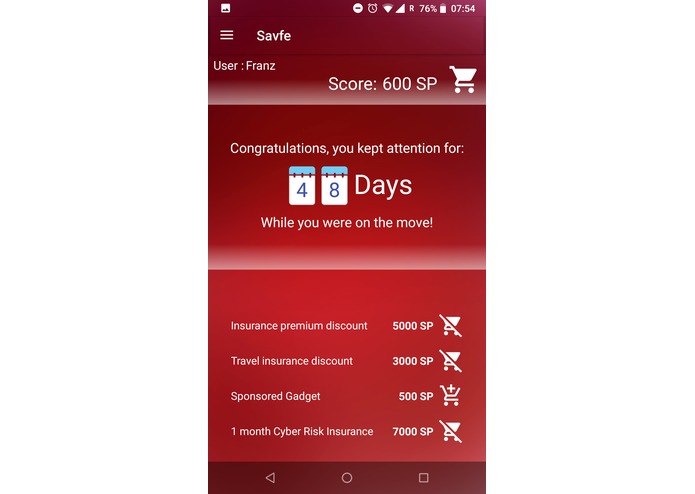
If you don't use your device while driving, that's great! And we want to reward you for it. For each journey you complete without being distracted by your phone, we reward you with a special currency. You get even more of it, if you manage to 'uphold your streak' and don't use your smartphone for consecutive trips. In order to join, you don't even have to have be insured with Zurich yet to use the application. Remember that our main goal is to keep you and others safe. So what can you do with the points that you are collecting? You can spend your points to get awesome gadgets or just get back a part of your monthly insurance cost. Mind you, if you want to spend your points, you have to be or get insured with Zurich. And there's more! If you should go without using for smartphone while in traffic for a long time, we can offer you a lesser premium on your insurance from the get-go! It's a win-win situation, you are safer and get rewarded for being attentive. For millennials, this app can also help them gaining the trust of their parents required to allow them to be granted the usage of the car, by supplying them with the evidence of careful moving and driving patterns.
How we built it
The application generally consists of two components: a system to recognize whether the user is part-taking in traffic and currently using her/his smartphone and a reward-system to encourage them to not use their phone while driving. Currently, the recognition system detects when your screen is turned on or off and if you unlock your phone. Also there's a second working prototype where we detect your face using MLKit and Firebase, as well as the front camera of your smartphones. With this, we can also determine, where you are looking to really know whether you are distracted or not.
So, how do we know that you are actually in traffic? This is a bit more tricky. Currently, it is implemented with so-called Play service activities that are provided by the google Play Services. These can be you walking, driving, being on a bike, running, being still or just being on foot. The achievement system uses MySQLite and Room to store all the information.
Challenges we ran into
When we first attended the workshop we were unable to find a way to link together all the information provided. There was so much data to work on. So we decided to try and think differently, by collecting additional new data and determine a scope for that information. There were a lot of technical issues with the Play Service activity recognition system at first, that required much more time than we anticipated. Also, we had to deal with conflicts between the APIs from different parts of the app.
Also, building the application was quite difficult for us since we have combined less than 10 years of programming experience. For 3 of us, it was the first time we worked with Android applications.
Accomplishments that we're proud of
We are quite proud that despite this huge last challenge of us being inexperienced, we still managed to build a working prototype and even expand on that with the Firebase facial recognition system, which got added later on.
What we learned
Setting up a correct .gitignore is a good start. Also, taking in all the feedback you can get and really think about its implications is very important. We were flexible in picking our challenge and found it beneficial to our motivation. If you can't make it on time, it is okay to cut corners, but know where to. Additionally, even in a small group coordinating redundancies can occur. Communication is key to avoid that. Using a Kanban board or something similar would have really helped our productivity we think.
What's next for Savfe
We want to go even further and recognize other passengers that are around you. They may be in danger themselves or bring you in danger by making irresponsible decisions. This issue can be solved with various technologies: We can collect and analyze your surroundings and create a context-aware recognition system that even knows how close you are standing to street. Also, we can include other known sources, like public BLE beacons to make the data analysis even thorougher. Like that, we can even help with more complex situations. For example, the driver of a car can be altered because he is being distracted by the other passengers in the car. The BLE beacons can be deployed on trams and trains. By having them transmitting a signal that allows the app to recognize these places, we can determine safer zones, that probably do not require your undivided attention.


Log in or sign up for Devpost to join the conversation.