-
-
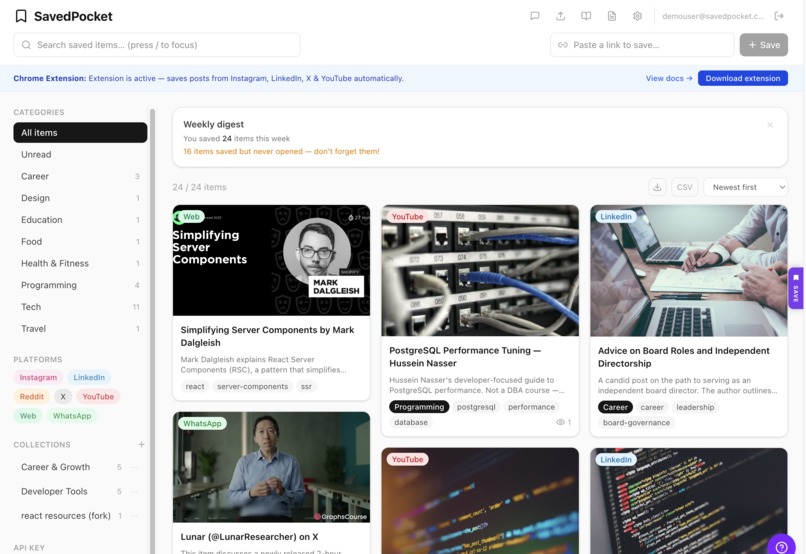
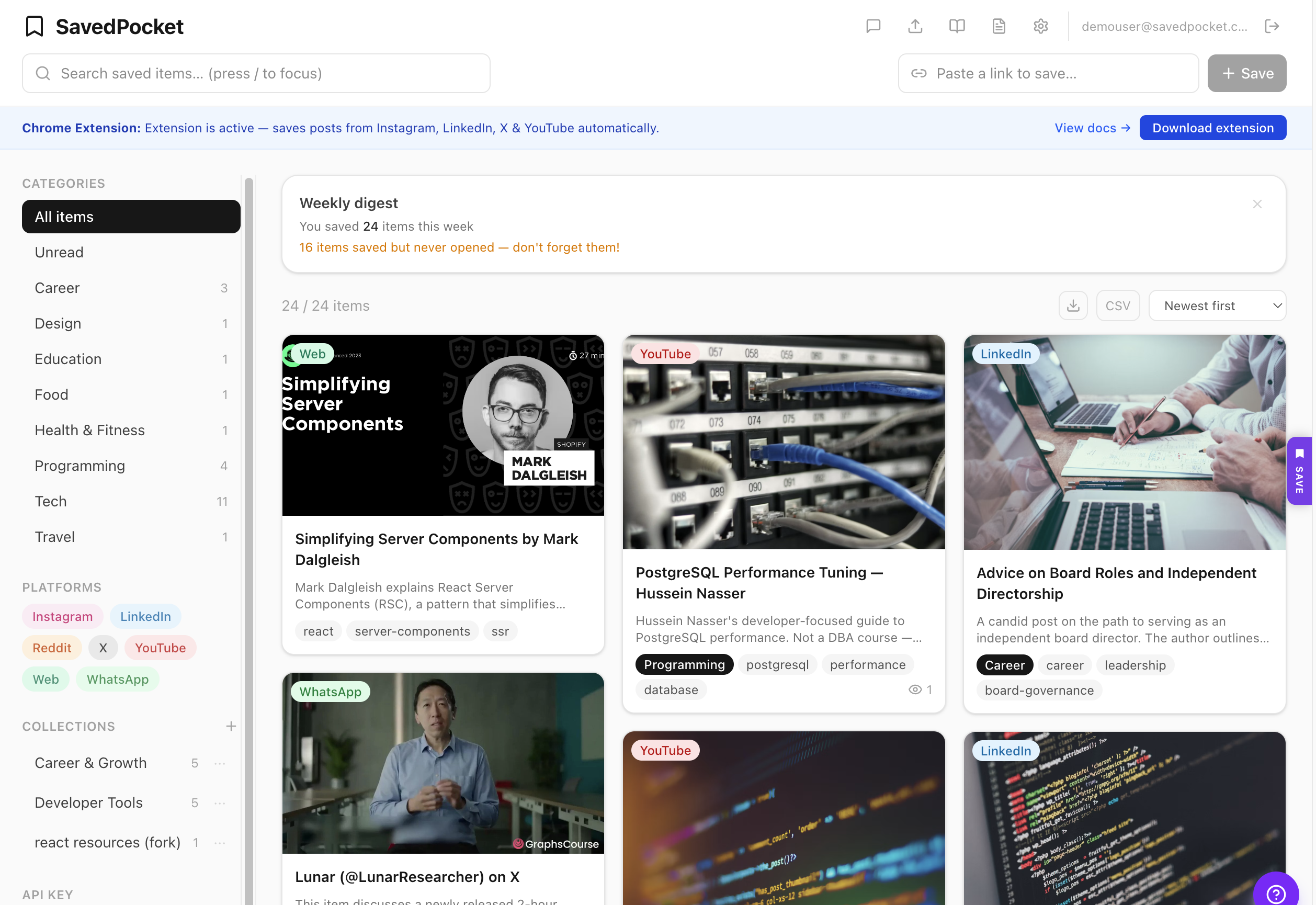
Dashboard
-
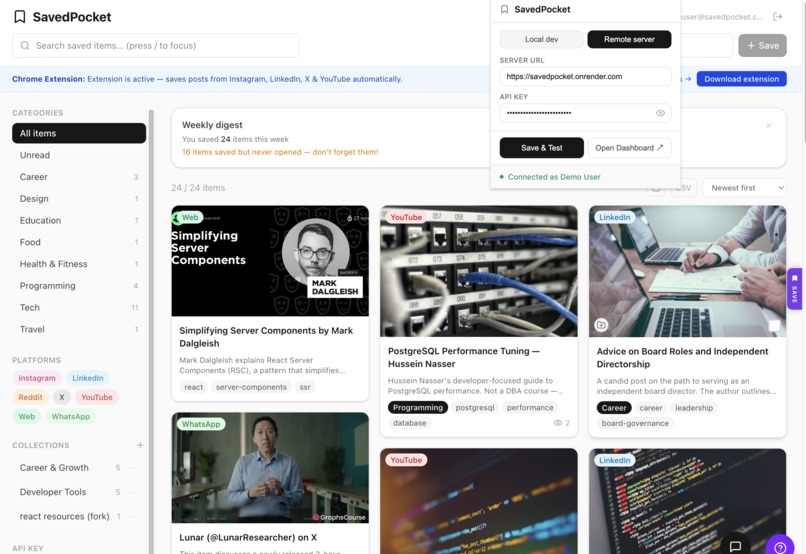
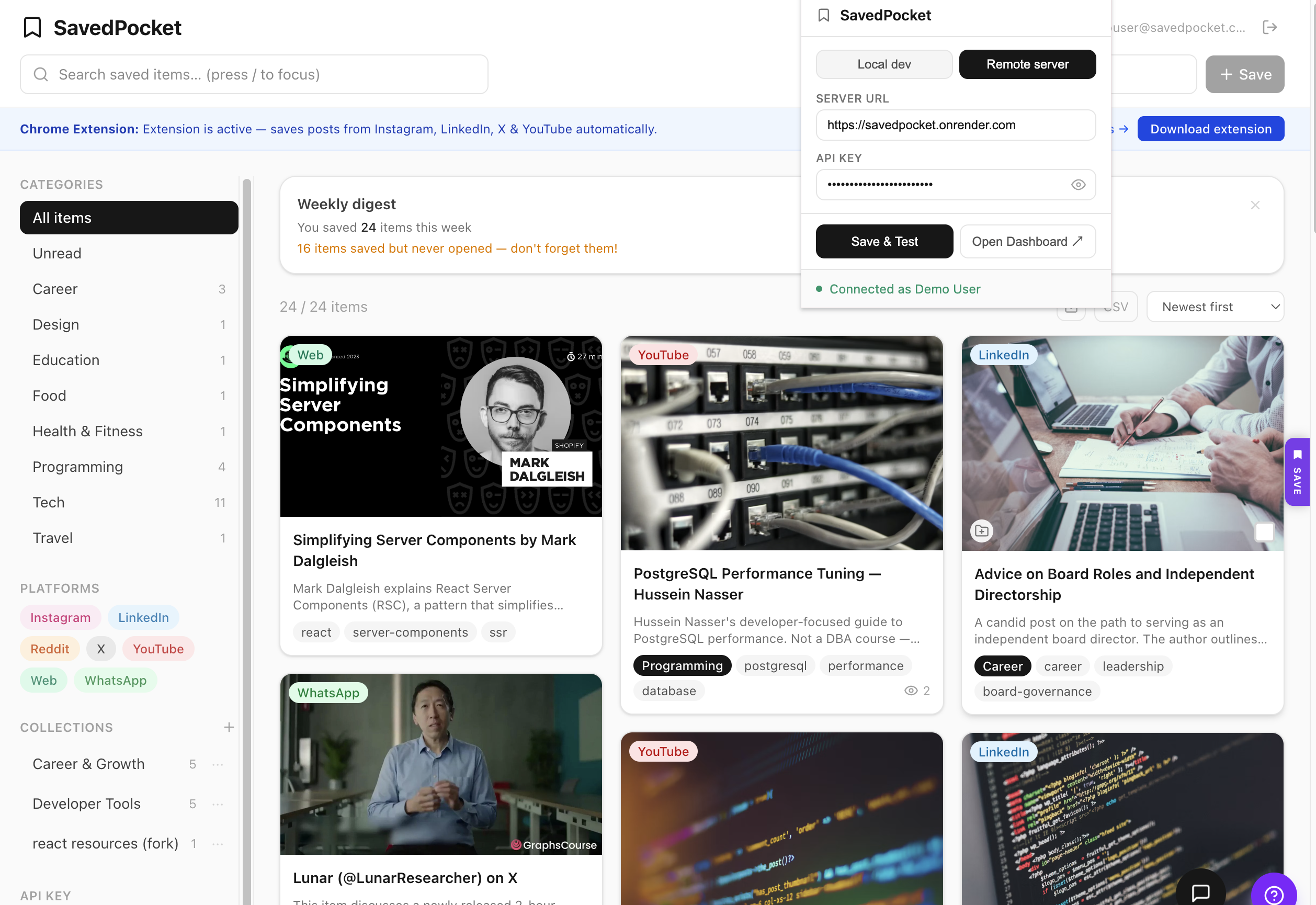
Extension settings
-
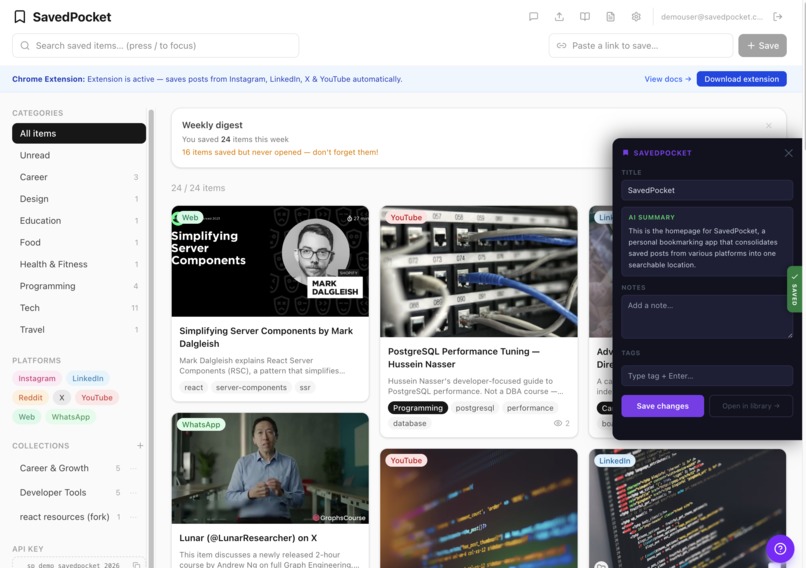
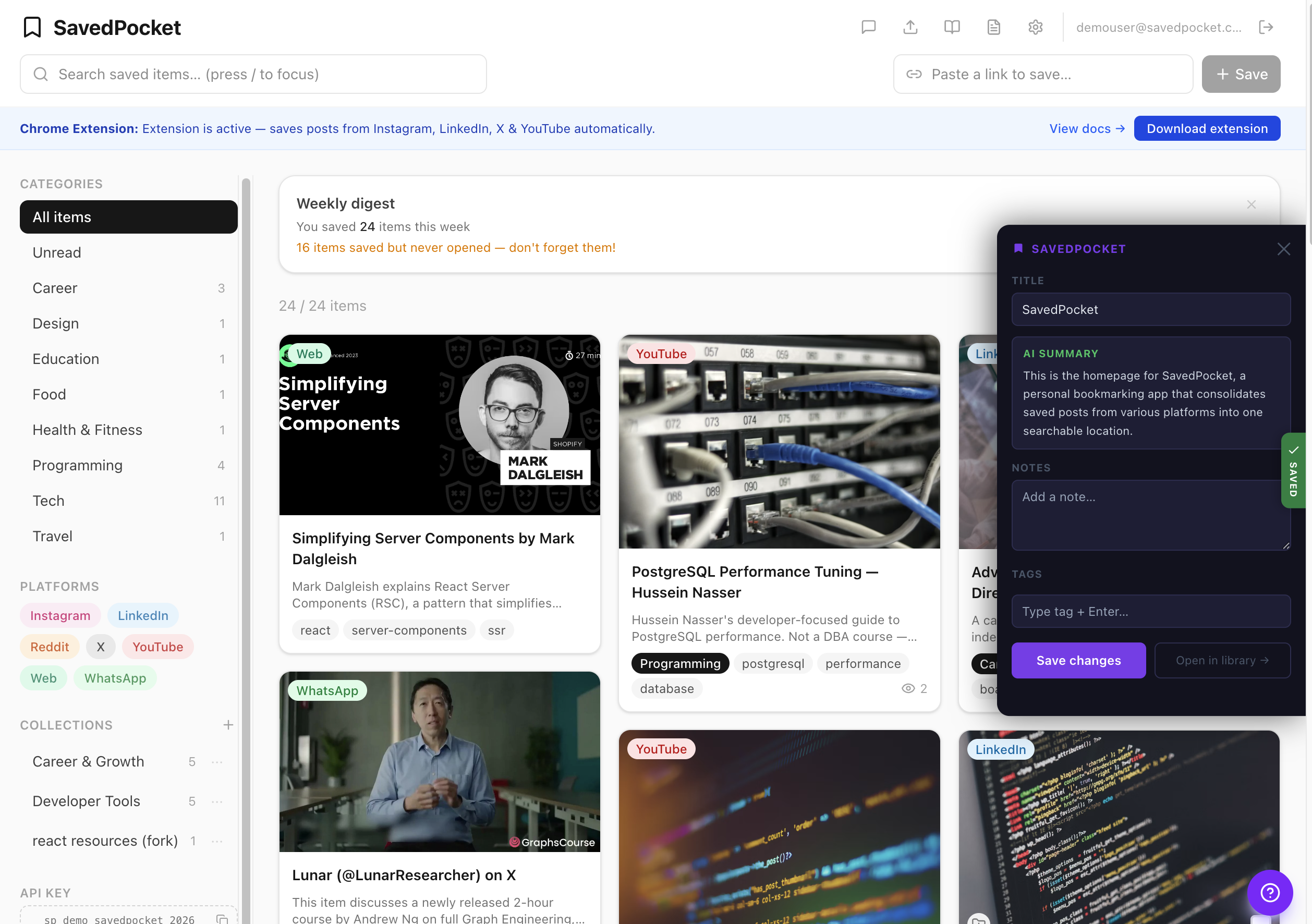
Save/Edit webpage from everywhere
-
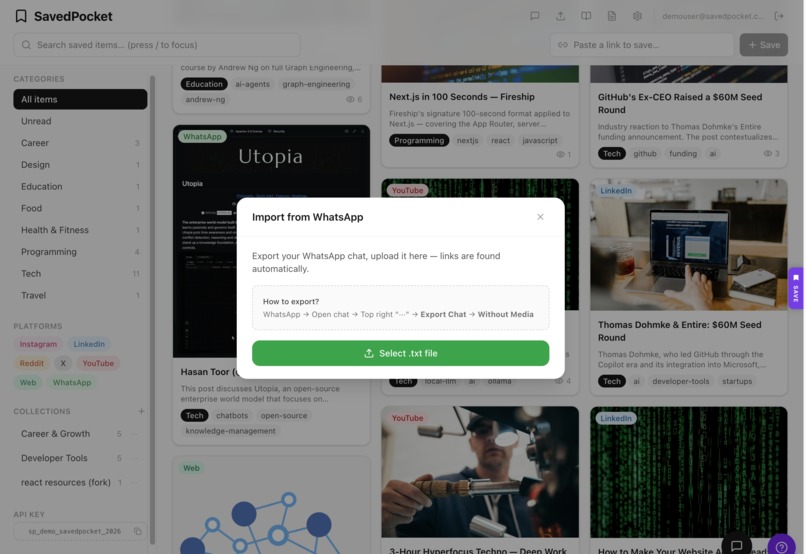
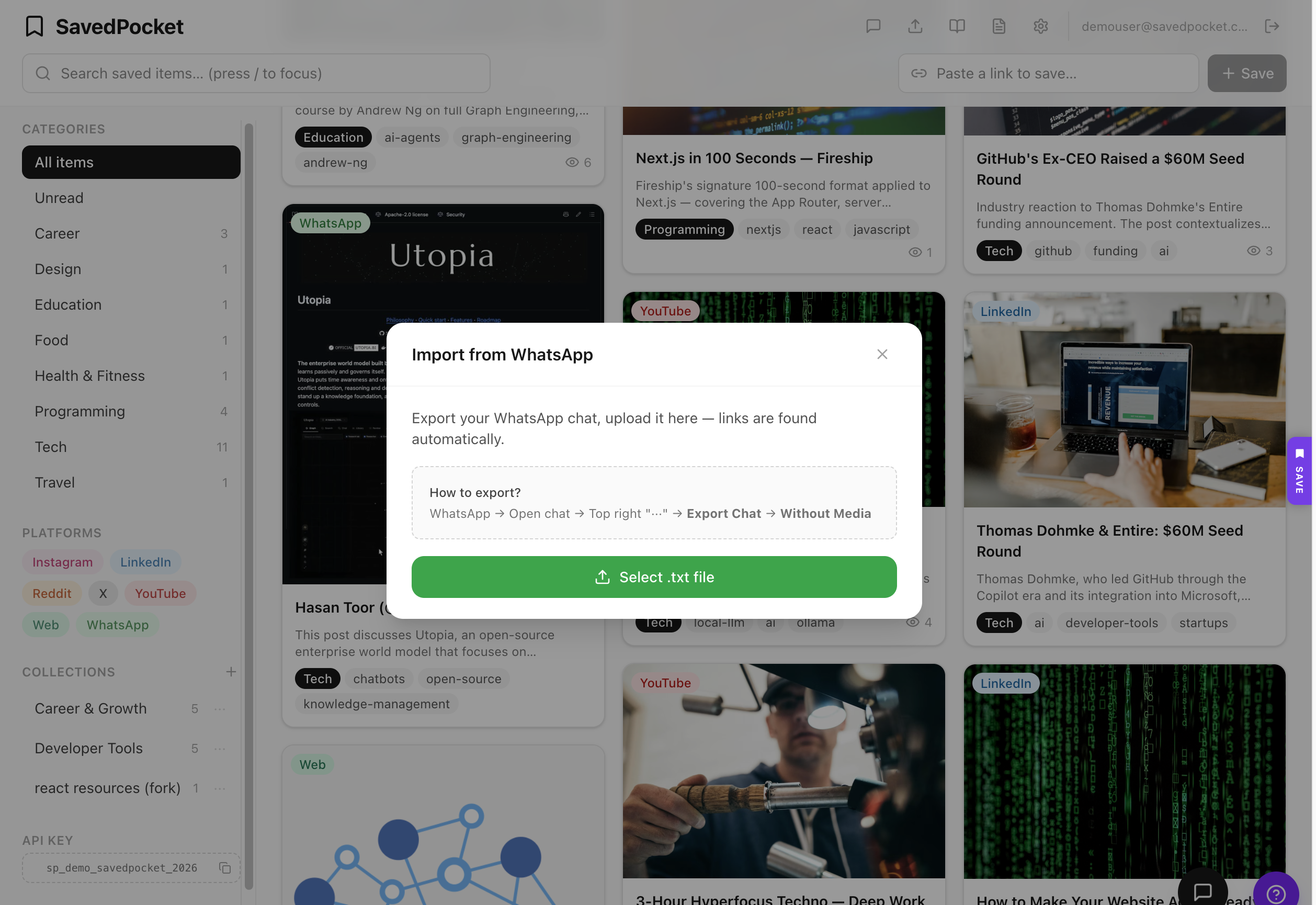
Whatsapp chat import for saved URL inside the chat
-
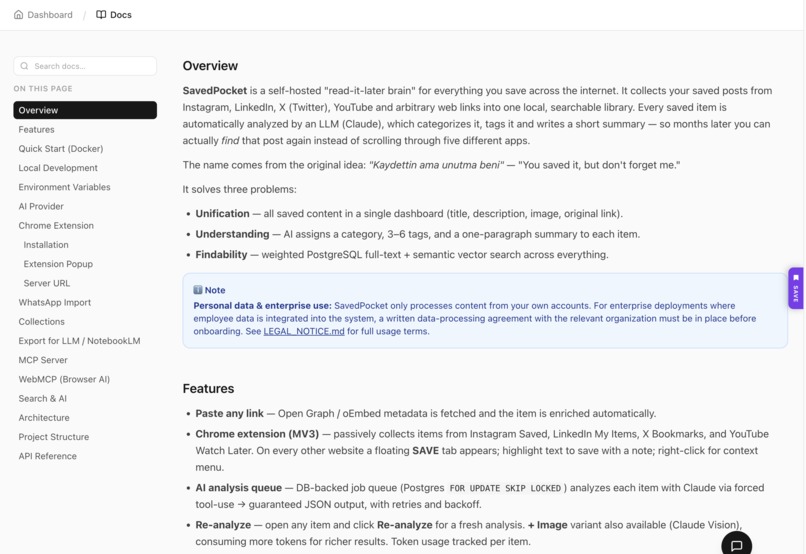
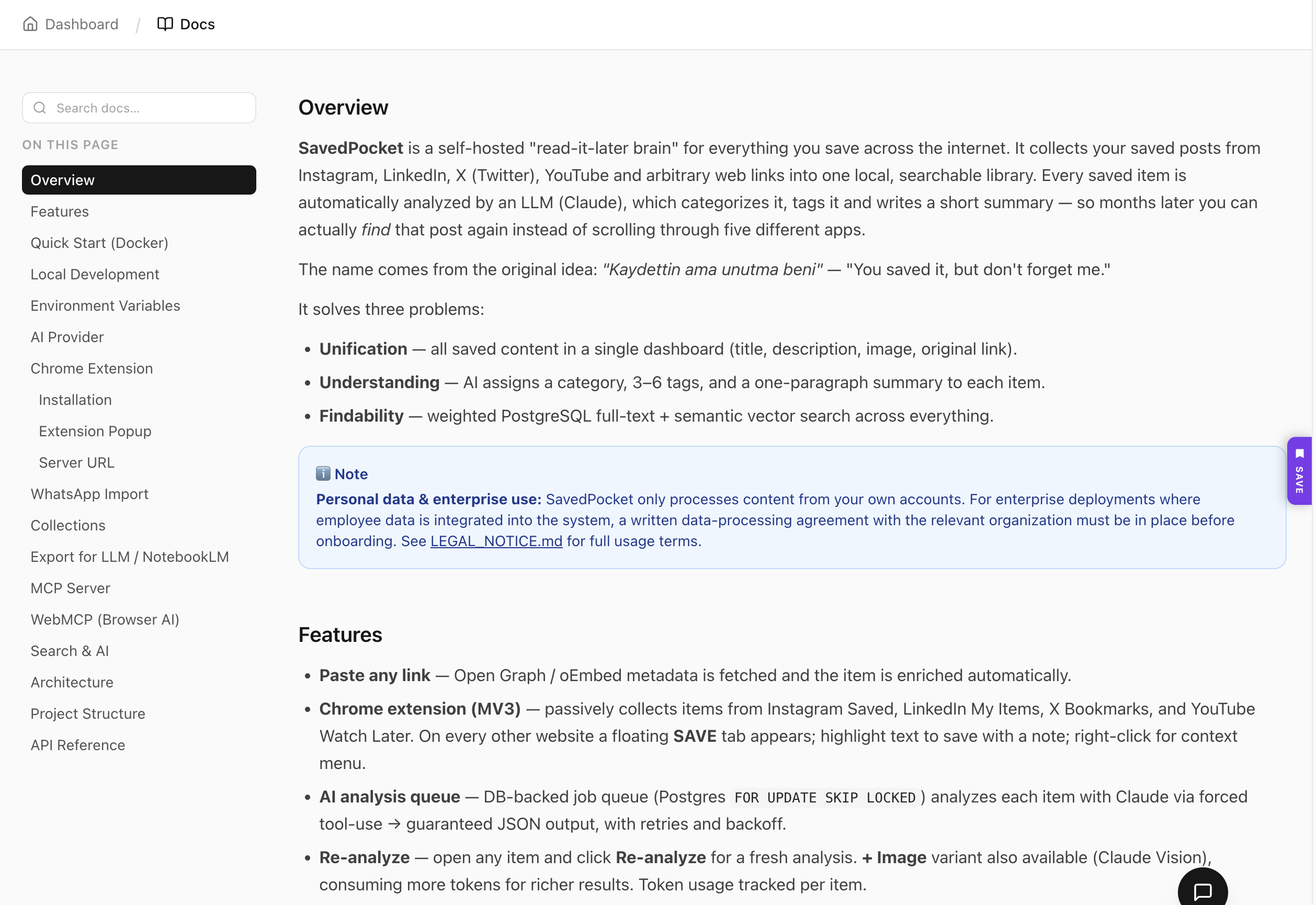
Docs of savedPocket product
-
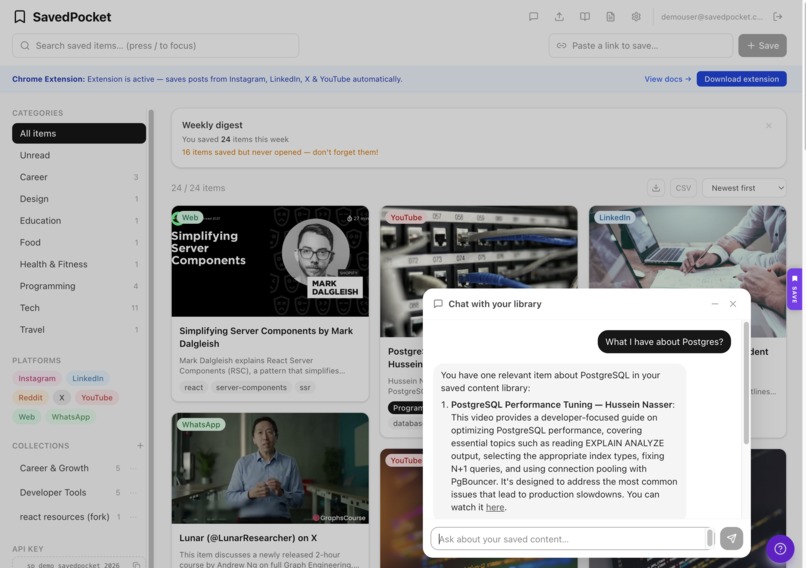
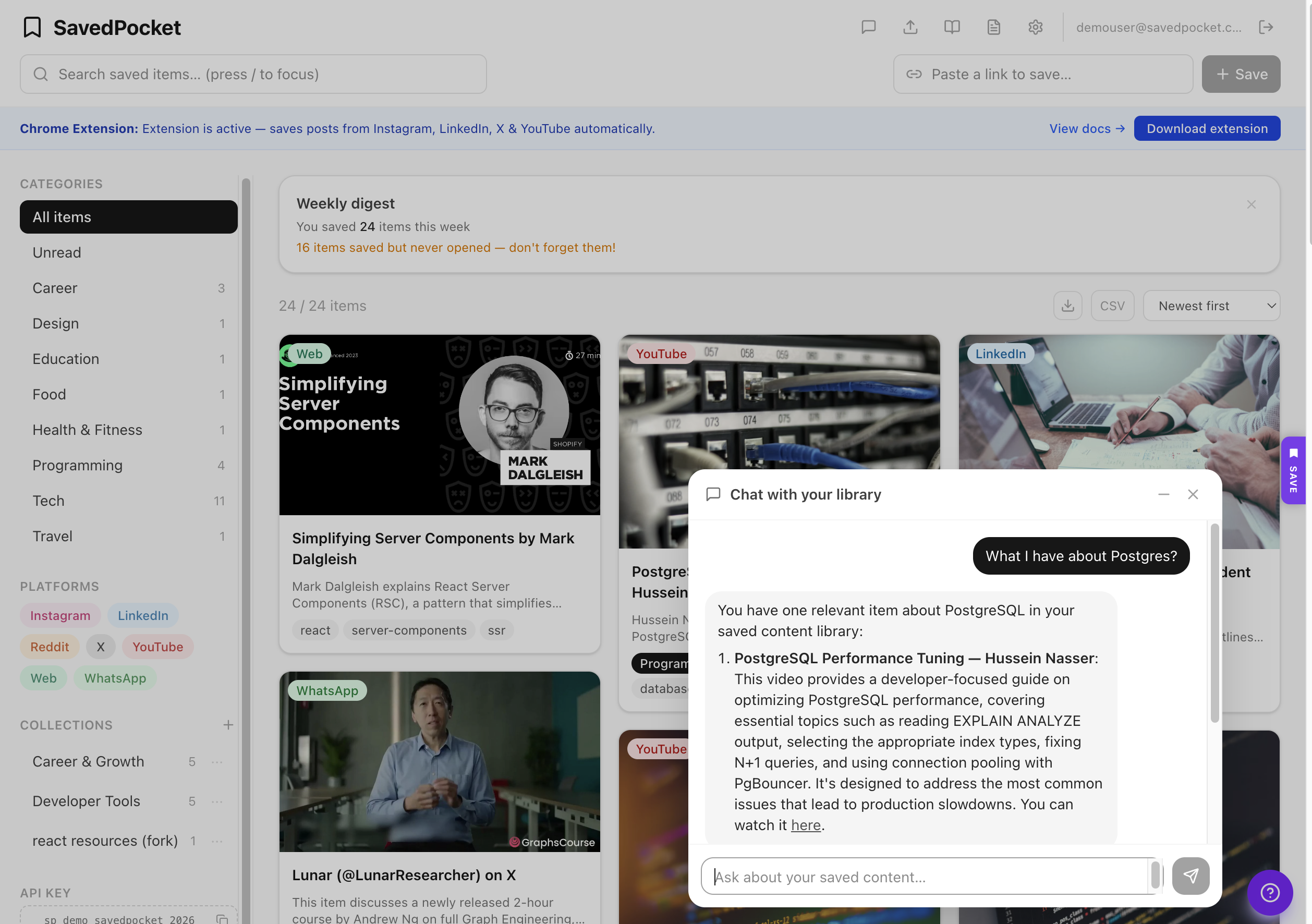
RAG Chat
-
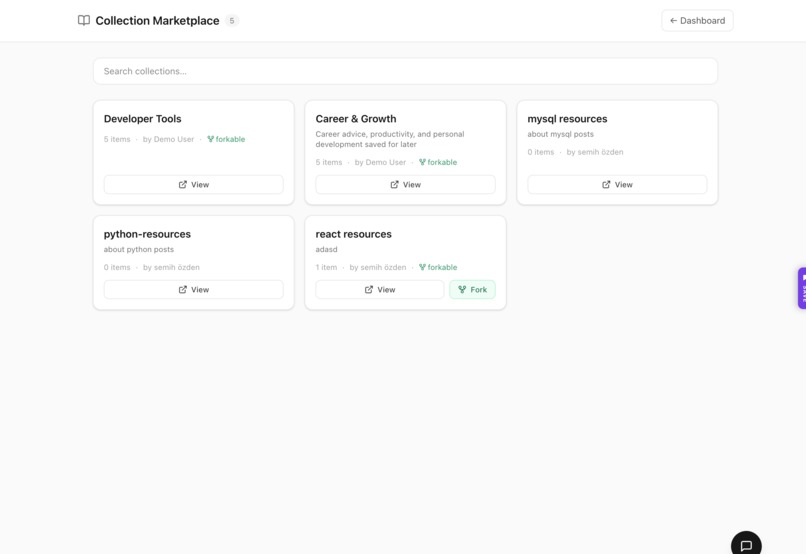
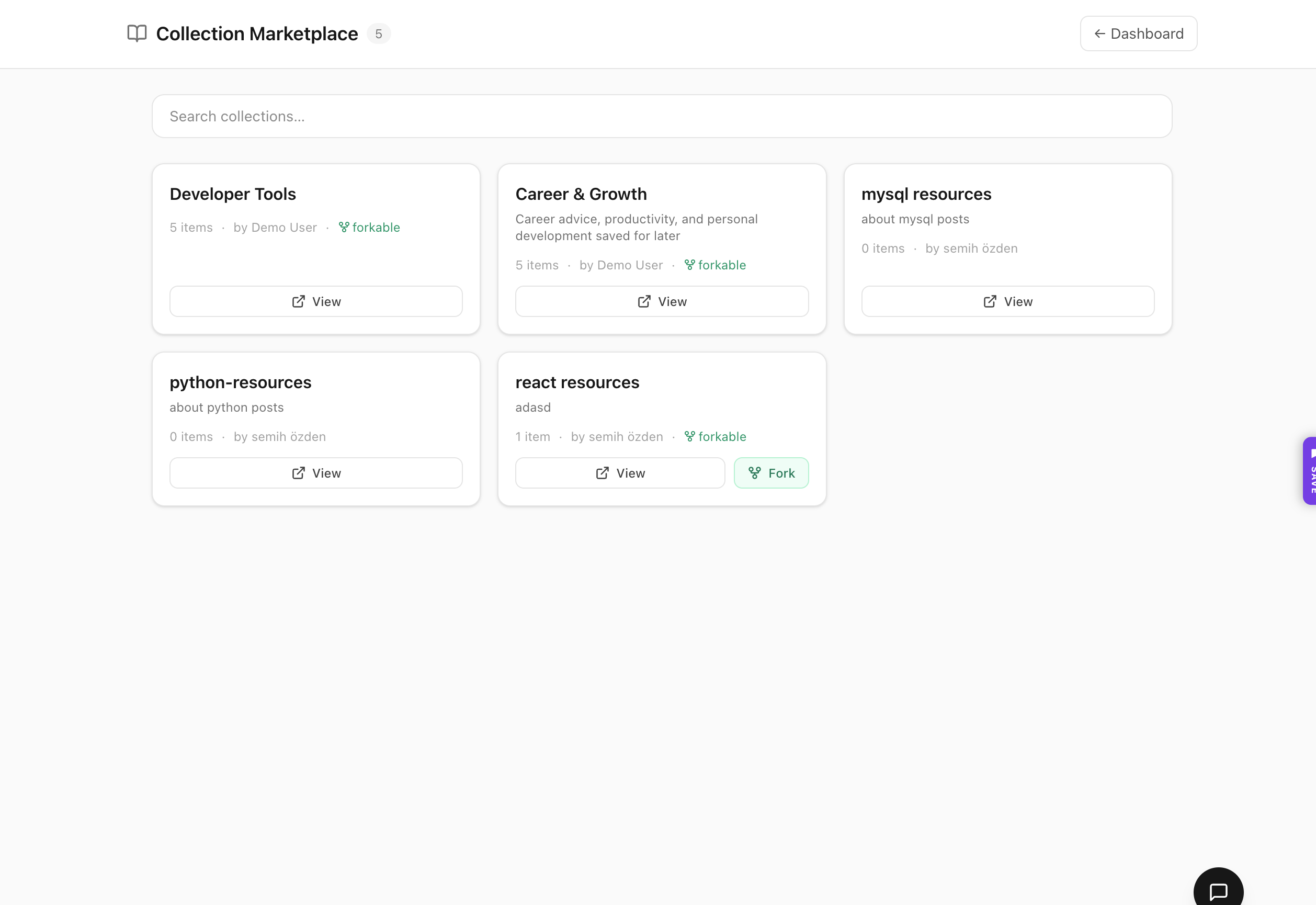
Collection Marketplace
-
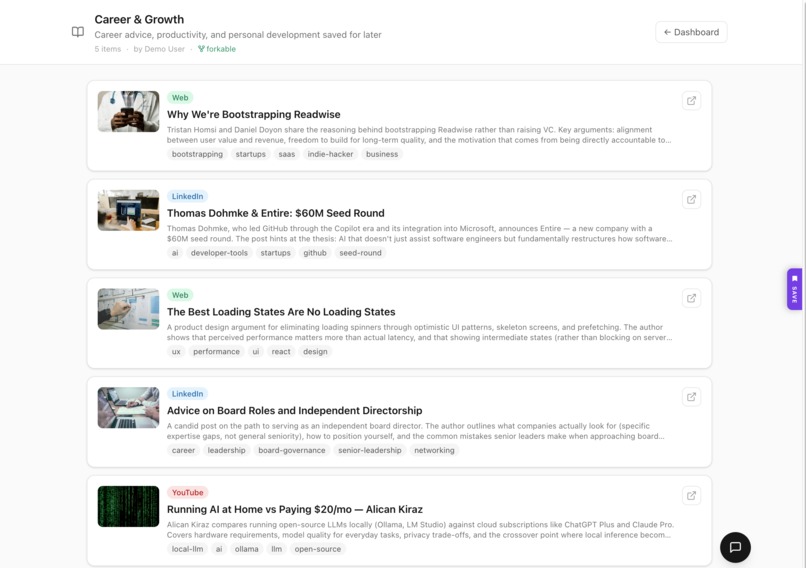
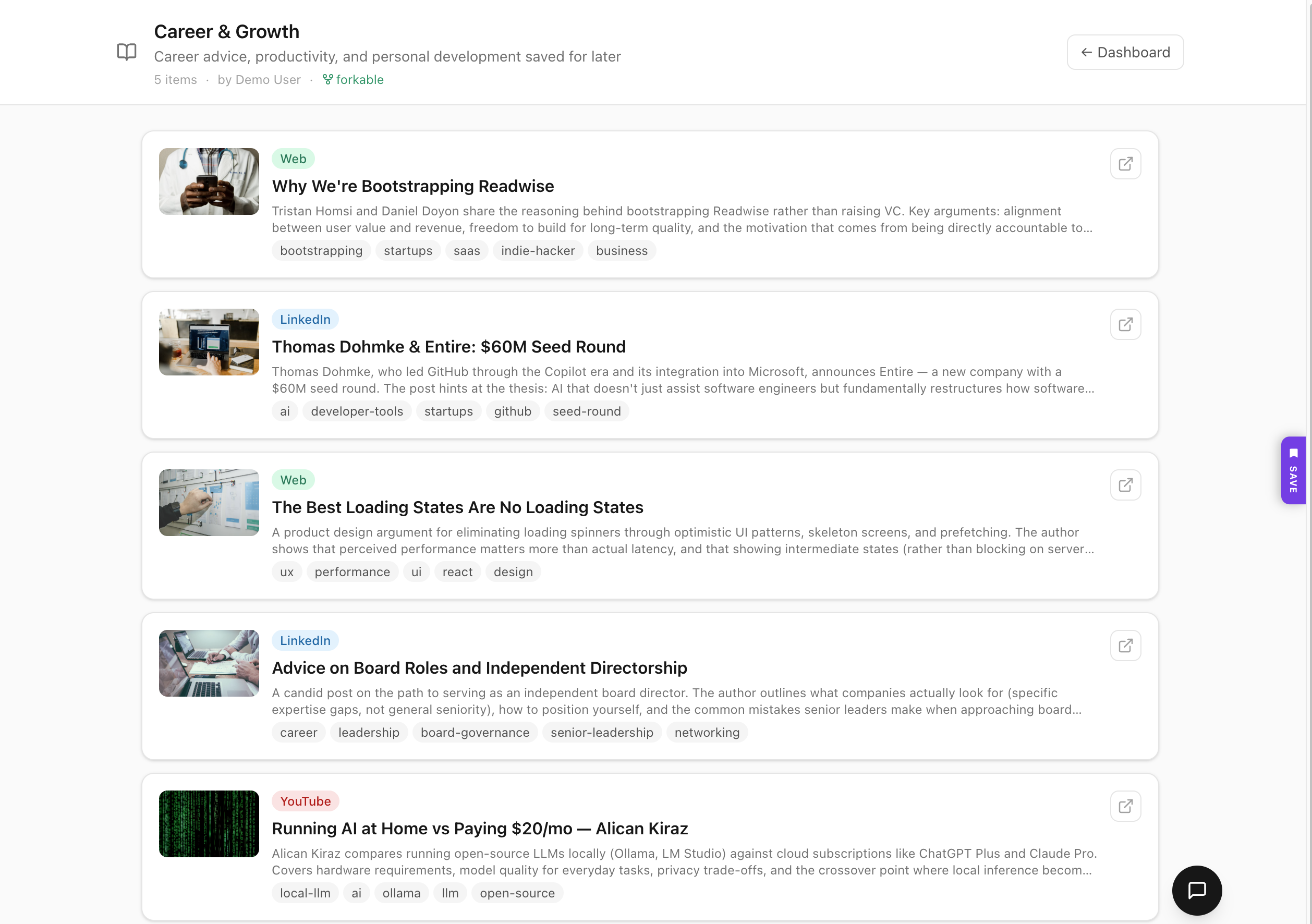
Collection Details Page
Inspiration
It started with a familiar frustration. I save dozens of links every week — articles, posts, videos, threads — and revisit almost none of them. The bookmarks pile up, the tabs multiply, and most of what I carefully saved disappears into a graveyard of good intentions.
But the problem isn't saving. It's retrieval. And retrieval is exactly what AI is built for.
When I discovered WebMCP — an open standard that lets websites expose structured tools directly to AI agents — I realized I could bridge both sides of that gap. Not just build a smarter bookmark manager, but make my personal library natively accessible to any AI agent, without plugins, without API key sharing, without configuration. Just open the page, and your AI can search your library.
What I Built
SavedPocket is a personal AI library for saving and rediscovering content from across the web. It supports one-click saving via a Chrome extension, bulk import from WhatsApp chat history, and automatic AI analysis that generates a summary, tags, and category for every saved item.
The WebMCP layer exposes six tools at /webmcp:
search_library— semantic vector search across your entire saved library using natural language (finds results by meaning, not just keywords)get_item— retrieve full details of a saved item including AI-generated summary, tags, extracted content, and notesget_recent— list the most recently saved items in reverse chronological ordersave_url— save a new URL directly to your library via AI agent; AI analysis and summarization run automatically after savinglist_collections— browse all curated collections in your libraryget_collection_items— retrieve all items inside a specific collection
This means an AI agent can not only read your library but also write to it — asking ChatGPT "save this page for me" actually saves it to SavedPocket.
With SavedPocket open in a browser tab, ChatGPT can call these tools directly using WebMCP — no setup required on the AI side.
How I Built It
Stack: Next.js 15 (App Router), PostgreSQL with pgvector, Drizzle ORM,
deployed on Render.
Semantic search runs entirely on-device using Xenova/multilingual-e5-small
— a quantized ONNX model loaded via @huggingface/transformers. Embeddings are
stored as 384-dimensional vectors in PostgreSQL and indexed with HNSW for
sub-linear approximate nearest-neighbor search:
$$\text{similarity}(q, d) = 1 - \frac{q \cdot d}{|q| \cdot |d|}$$
Every saved item is embedded once and cached in the database. At query time, only
a single embedding is computed (the user's message), then matched against stored
vectors using the cosine distance operator <=>. This means search performance
is independent of library size.
The WebMCP endpoint follows the MCP protocol over HTTP, handling initialize,
tools/list, and tools/call methods. The Chrome extension additionally
discovers WebMCP endpoints across the web using /.well-known/mcp.json, enriching
saved items with structured content where available.
Challenges
Memory constraints on a shared server. The ONNX model takes ~50–60 MB of RAM,
and the first embedding inference on a cold server adds a transient spike. Running
on a 512 MB instance caused OOM crashes early on. The fix was baking the model
into the Docker image at build time and tuning Node.js GC with --max-old-space-size.
Idempotent startup seeding. The demo user and seed data are created
automatically on every deploy via a startup hook. Getting this to be truly
idempotent — handling existing users, collections, and items without constraint
violations across deploys — required careful use of onConflictDoNothing and
matching upserts to the actual database unique constraints.
WebMCP discovery in the Chrome extension. Fetching /.well-known/mcp.json
from arbitrary origins introduces CORS and timing complexity inside a service
worker. A 3-second timeout with graceful fallback to HTML scraping kept the
extension reliable across sites that don't yet speak WebMCP.
What I Learned
WebMCP flips the model. Instead of AI agents scraping the open web or requiring
users to paste content into a chat window, websites can declare what they offer
and let agents consume it cleanly. SavedPocket is a small demonstration of what
that future looks like applied to personal knowledge — a library that any AI can
search, the moment you're logged in.
The standard is early. Most sites don't expose WebMCP endpoints yet. But the infrastructure is there, and the pattern is simple enough that adoption can move quickly. I came away convinced this is how the agent web will actually work.
Built With
- api
- better-auth
- chrome
- css
- docker
- drizzle
- extension
- face
- hugging
- next.js
- node.js
- onnx
- openai
- orm
- pgvector
- postgresql
- react
- render
- rest
- tailwind
- transformers
- typescript
- vector
- webmcp


Log in or sign up for Devpost to join the conversation.