-
-
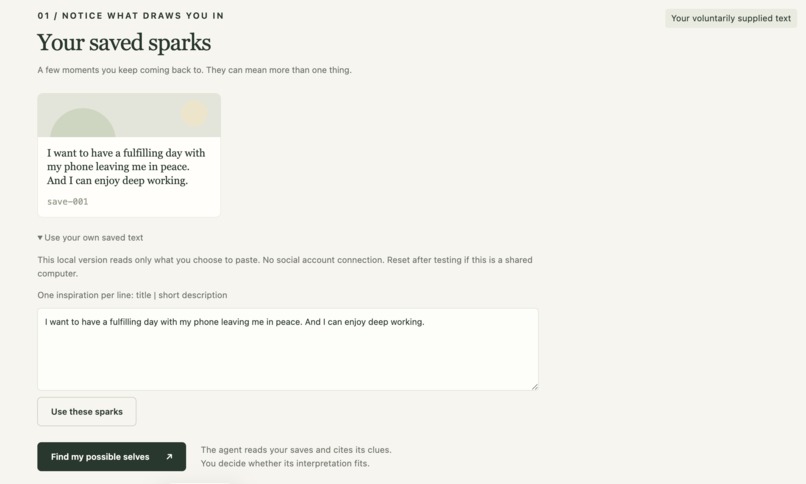
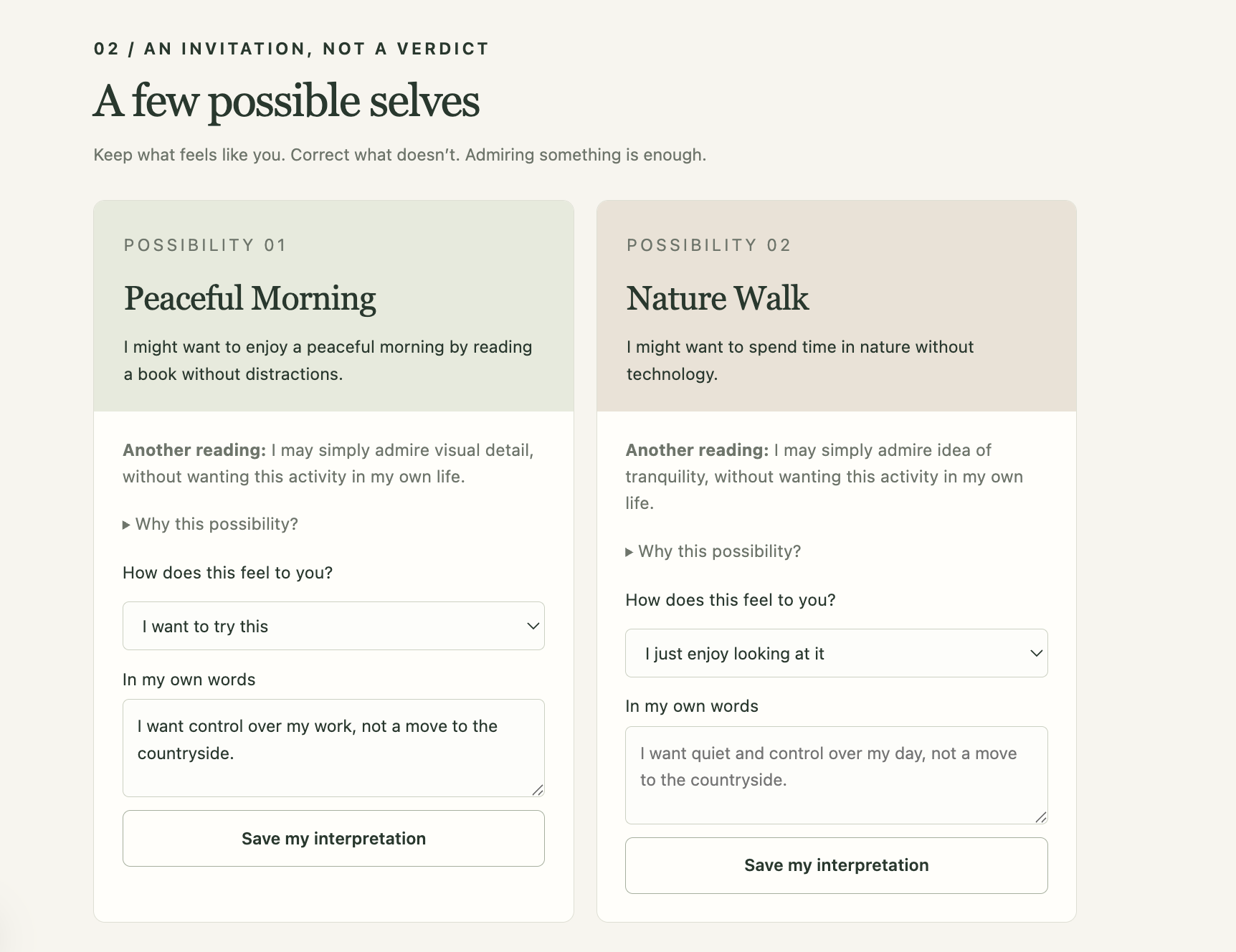
02-possibility
-
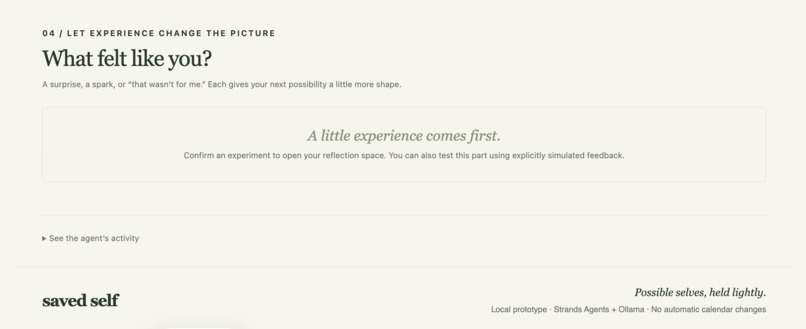
05-reflection
-
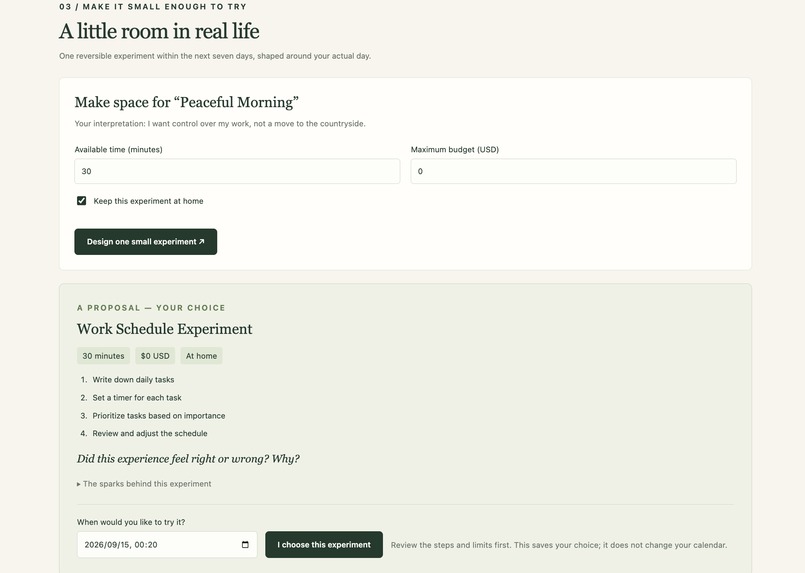
04-experiment&calendar
-
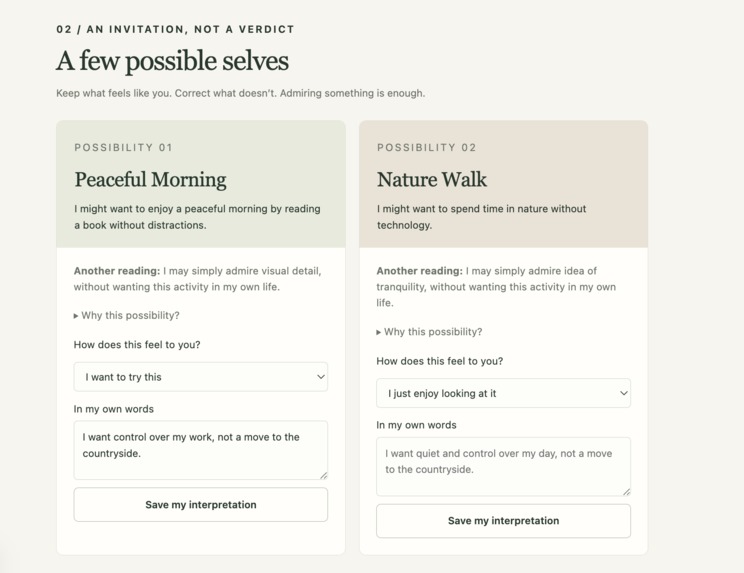
03-correction
-
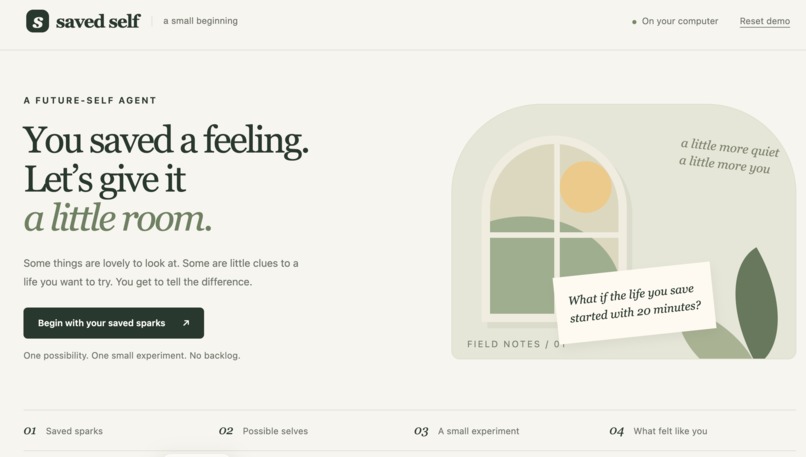
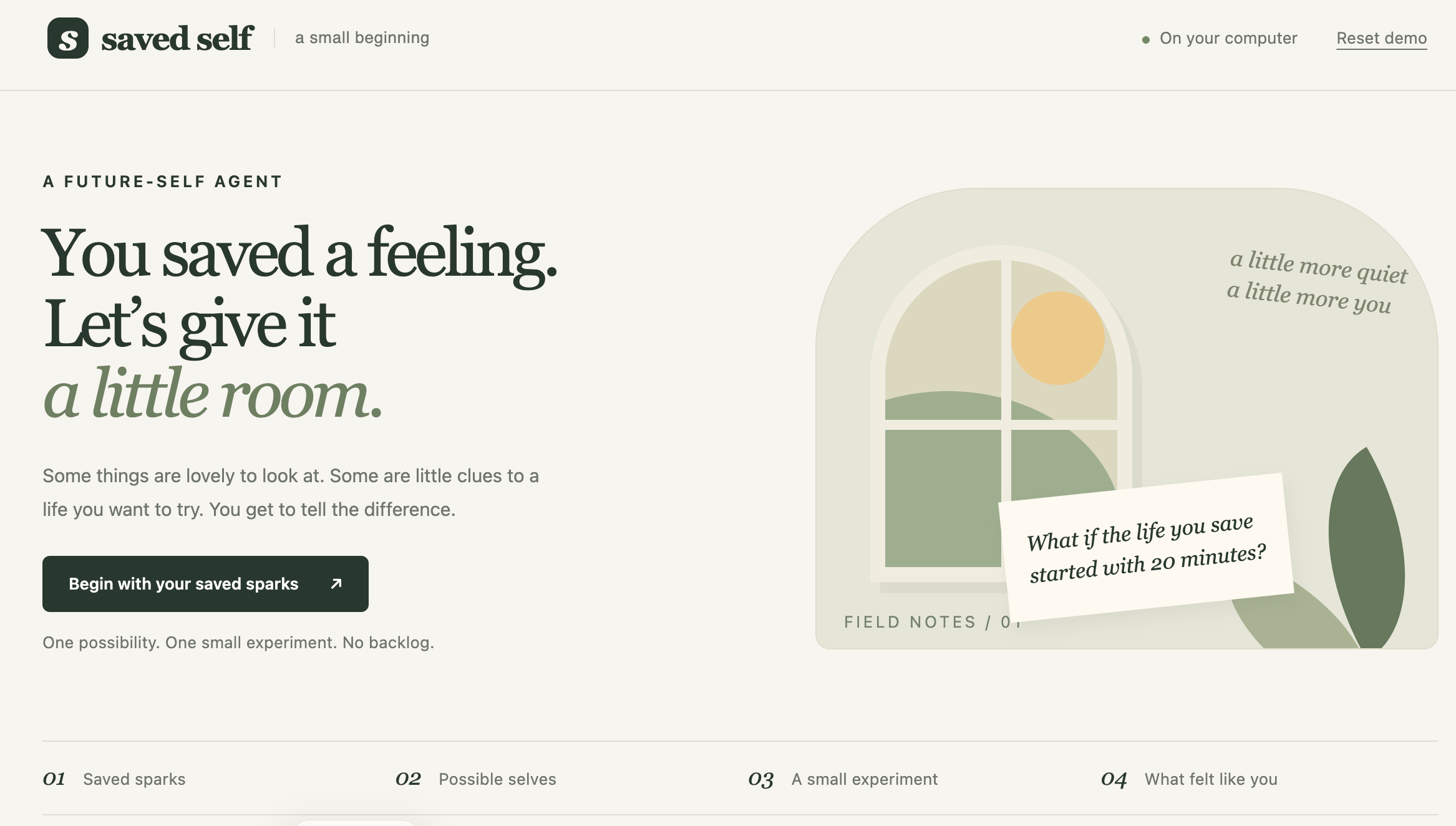
01-homeflow
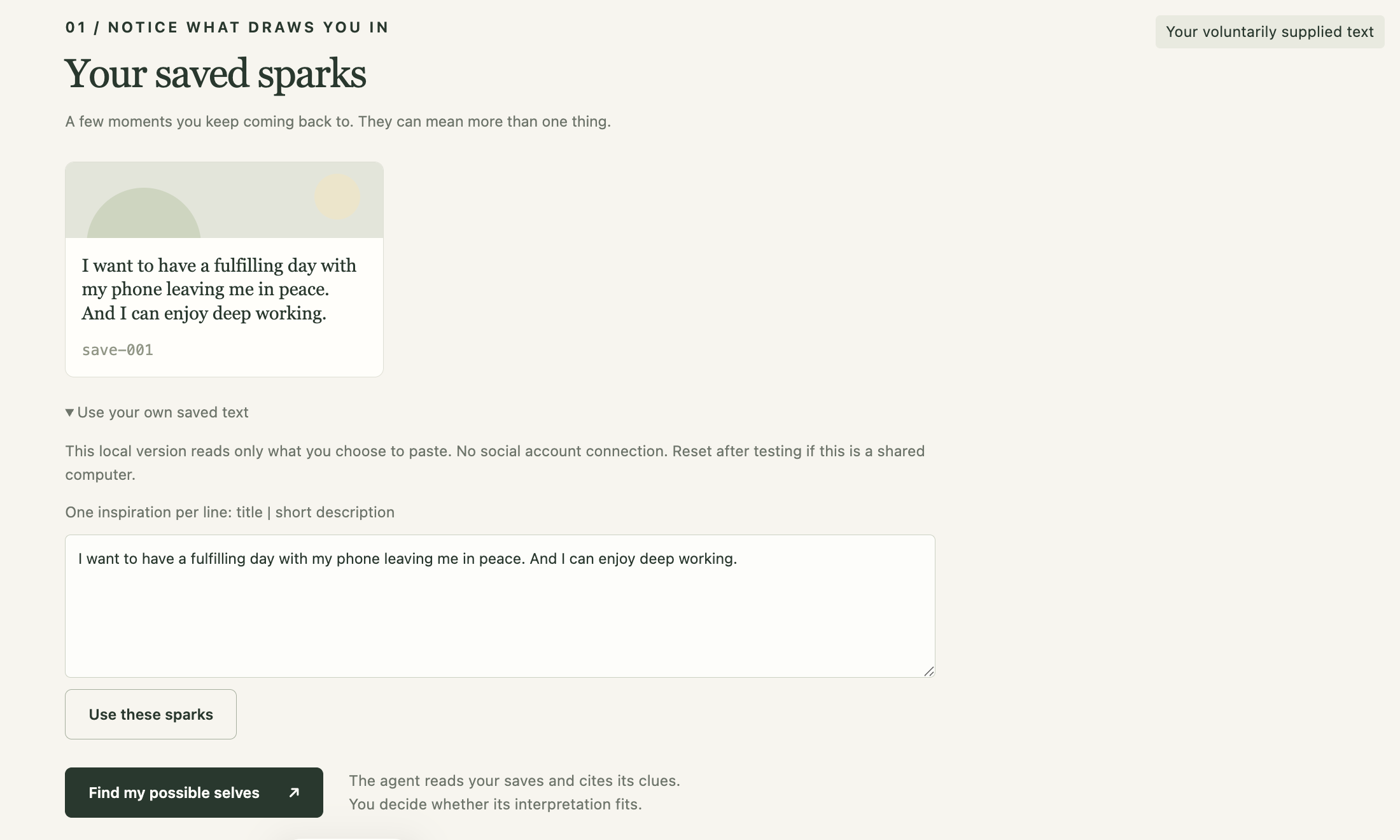
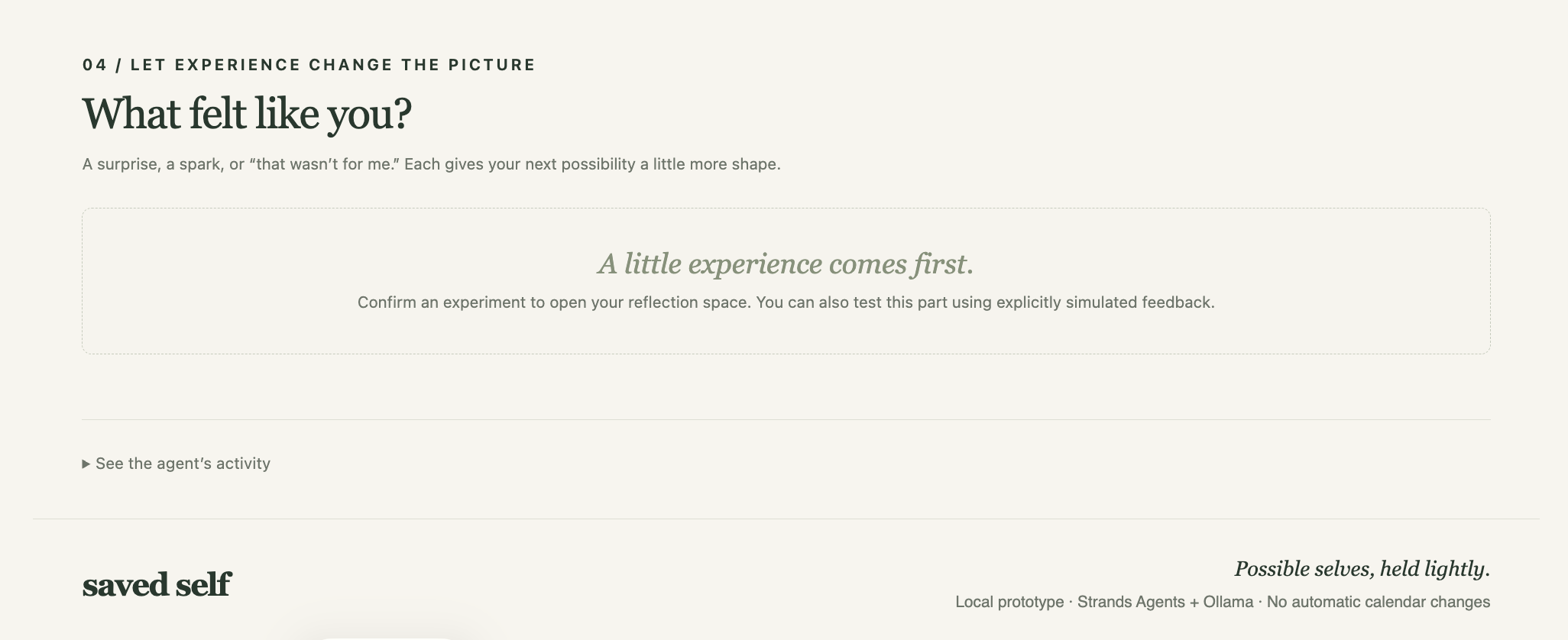
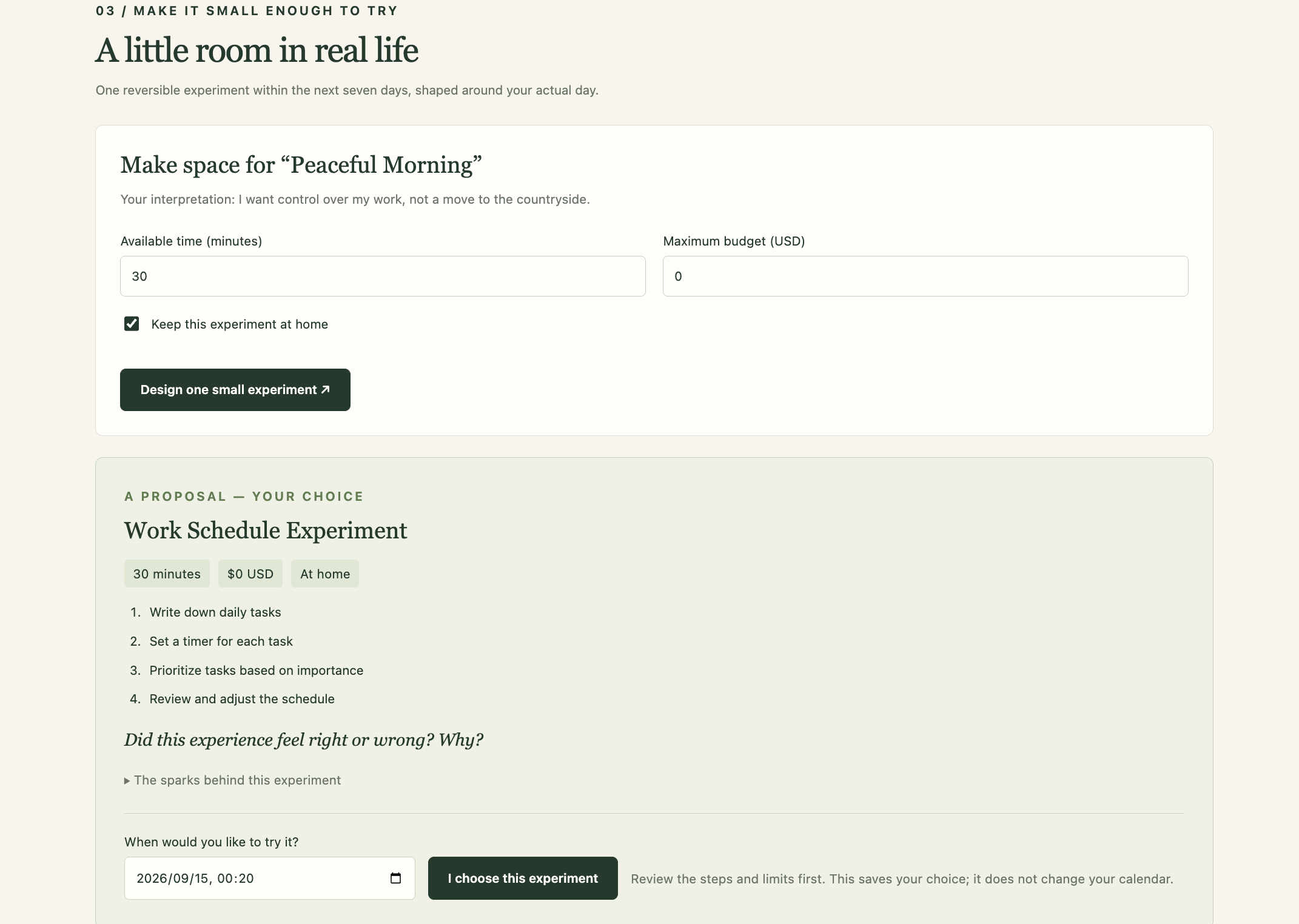
Inspiration
Many people save inspiring images, quotes, and ideas, but most of that inspiration never turns into real action.
Saved Self was inspired by that gap: a user may be moved by saved content, yet still not know what to do next.
What it does
Saved Self is a local AI workflow that turns saved inspiration into one small, realistic life experiment.
It first proposes several tentative possible selves, lets the user correct them, then designs a constrained, low-effort experiment, captures confirmation, and supports reflection.
The app updates the statement based on feedback while preserving the confirmed experiment and keeping all actions user-driven.
How we built it
We built a local web prototype with:
- Python backend with HTTP routes and persistence
- Strands Agents for the multi-stage workflow
- Ollama local inference (
saved-self-qwen3:1.7b) - SQLite state storage and deterministic validation
We used strict stage-level tool separation (read then write), state revision checks, and limit checks for time, budget, and location.
The frontend is a single-page interface showing each stage clearly, with explicit user confirmation before calendar export and visible simulated-feedback labeling.
Challenges we ran into
- AWS Bedrock access was blocked by account-level allowlisting during setup, so we had to keep the local-model path as the reliable route.
- Ollama tool schema rendering had compatibility issues and needed explicit JSON tool-template handling.
- The model once issued write operations too early, so we added guards to block write actions unless the read result was actually available.
- End-to-end quality still needs human semantic review: passing structural checks does not guarantee ideal phrasing or relevance in every run.
Accomplishments that we're proud of
- A resilient stage pipeline with read/write boundaries and source-validation safety checks.
- Constraint-aware experiment generation that respects user limits (
minutes,budget, andat_home). - Reproducible acceptance flow with real local inference and persistence checks across refresh.
- Full local test build, structured validation logs, and a public repository prepared for submission.
What we learned
A practical agent is less about prompt cleverness and more about contract safety: who is allowed to act, when, and with what evidence.
In practice, workflow reliability came from guardrails (state checks, schema validation, explicit user confirmation) combined with minimal, clear prompts.
Local-first architecture helped with privacy, speed of iteration, and predictable debugging.
What's next for Saved Self
- Improve onboarding and inline guidance for first-time judges/users.
- Expand behavioral edge-case coverage for failed/invalid model outputs.
- Add usability improvements in the demo flow and clearer interpretation previews.
- Add optional user account mode with stronger long-term consistency, while keeping local-first mode as the default privacy-first option.

Log in or sign up for Devpost to join the conversation.