Inspiration In the modern world, rapid technological progress is often accompanied by the loss of historical and cultural values. Many monuments and archaeological sites are at risk of irreversible destruction due to time, urbanization, and human negligence.
We were inspired by the idea of creating a digital tool that would help prevent cultural degradation and historical oblivion. Our goal was to contribute not only at the regional level, but also nationally and internationally, by building a platform that allows society to collectively protect its cultural identity.
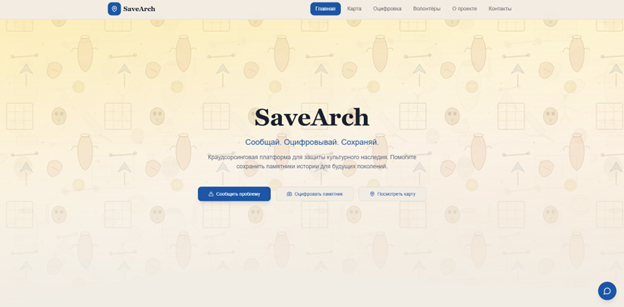
Savearch is a public web platform designed to systematically monitor the condition of historical and cultural heritage sites The platform allows: Volunteers, architects, researchers, tourists, and local residents to document the current condition of monuments. Identification and recording of damages, risks, and problem areas. Visualization of detected issues on an interactive map. Open and transparent public monitoring of heritage objects. The project development included several stages: Conducting a comprehensive analysis of the current condition of monuments and archaeological sites. Organizing surveys and expert interviews with domestic and international specialists in archaeology. Designing and developing the web platform. Modeling the functional structure and visual interface to ensure accessibility and ease of use. One of the main challenges we faced was designing the platform’s layout and user interface. Creating wireframes and mockups that were both visually appealing and functionally effective required multiple revisions and careful planning. It was difficult to balance simplicity with professional functionality. We wanted the platform to be intuitive for ordinary users while still meeting the needs of experts such as architects and researchers. We are proud that we developed a unique web platform with an original structure and author-designed interface. The project introduces a new model of digital interaction between specialists and the wider public for monitoring heritage sites. According to a survey conducted among residents of the Republic of Kazakhstan, more than 90% of respondents positively evaluated the platform’s functionality and expressed readiness to use it in the future. Through this project, we learned: The importance of interdisciplinary collaboration between technology and cultural preservation. How digital tools can significantly improve public engagement. The value of user-centered design. The impact that accessible technology can have on tourism, archaeology, and social awareness. In the future, we plan to: Expand the geographic coverage of the platform. Integrate additional analytical tools. Collaborate with cultural institutions and governmental organizations. Develop multilingual support to increase international accessibility.
Built With
- 3d
- css
- digitization
- html
- javascript
- smithsonian

Log in or sign up for Devpost to join the conversation.