-
-

Logo
-

Start screen
-

Play screen
-
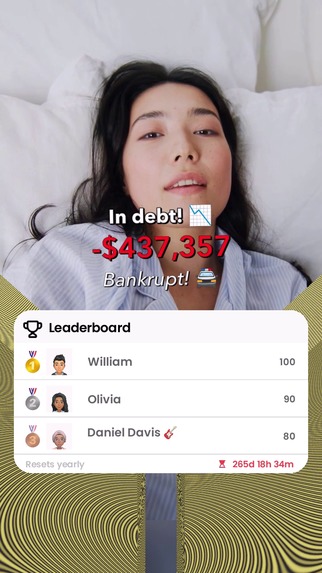
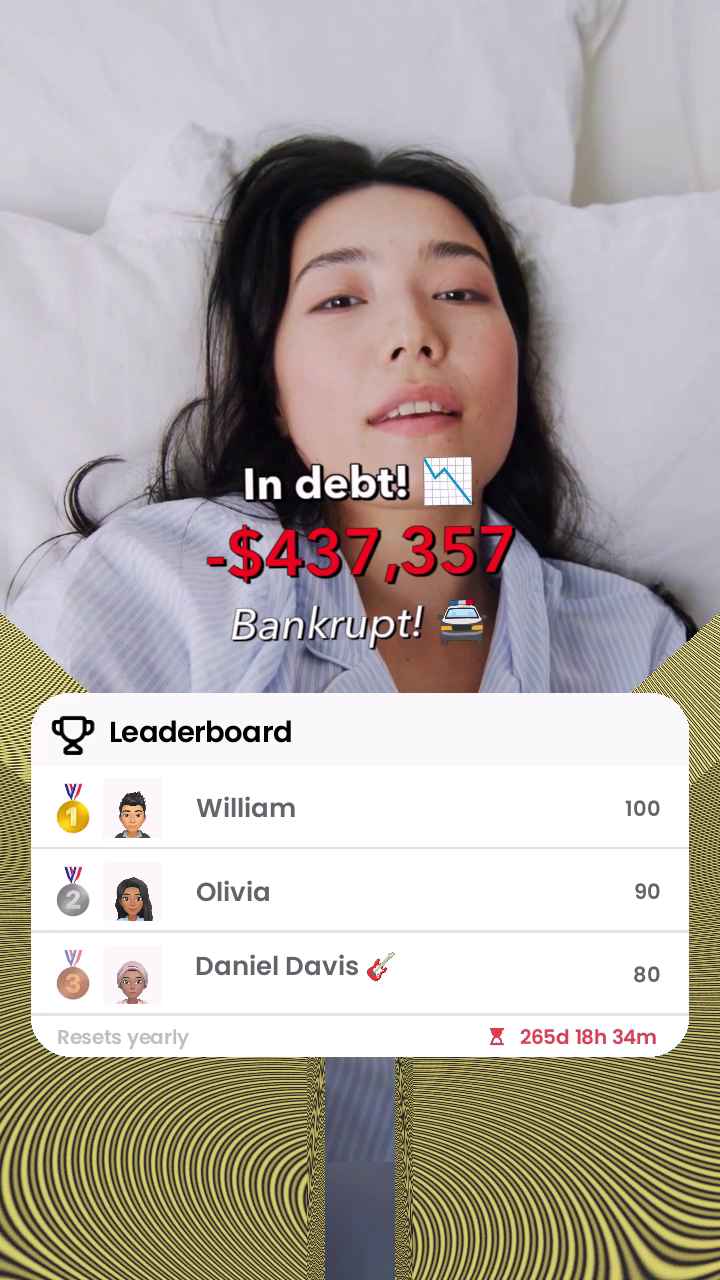
Game End



The Inspiration
The project was inspired by the “easy come, easy go” nature of wealth.
I wanted to create a game that felt high-pressure yet humorous, flipping the script on traditional collector games. Instead of starting from zero and building up, you begin at the top and must fight to prevent your balance from hitting zero.
Building the Experience
I built the game around a physics-driven core where the player controls a Money Ball.
The main objective was to create a tactile sense of loss. When the ball hits an obstacle, it doesn’t just lose value—it physically shrinks and changes mass, making control more difficult as your bank account decreases.
The Technical Logic
To make financial loss feel significant but fair for a $1M starting budget, I implemented a randomized reduction system. Each collision calculates a loss $L$ within a defined range:
$$ L = Random(25{,}000,\ 75{,}000) $$
To keep the physics engaging, I added a mass-to-scale compensation logic. As the ball shrinks, its mass $M$ increases to prevent it from becoming too floaty, ensuring difficulty scales as money is lost:
$$ M_{new} = M_{base} \cdot \left( \frac{1}{Scale_y} \cdot 2 \right) $$
Challenges Faced
The biggest challenge was UI Readability.
Formatting large numbers with commas in real time—while also handling negative values (debt)—required a robust string manipulation function.
Another challenge was balancing the shrink amount so the game remained playable even after multiple hits. I solved this by capping the applied physics force relative to the ball’s current scale.
What I Learned
- Physics Interaction: Linking 3D scale changes directly to rigid-body mass properties.
- Gamified Finance: Using color-coded UI (white for profit, red for debt) to trigger emotional responses.
- UX Cues: Implementing Final Balance messages that adapt to the score, giving players personalized feedback on their performance.
Built With
- api
- javascript
- physics.js
- tweenmanager

Log in or sign up for Devpost to join the conversation.