-
-
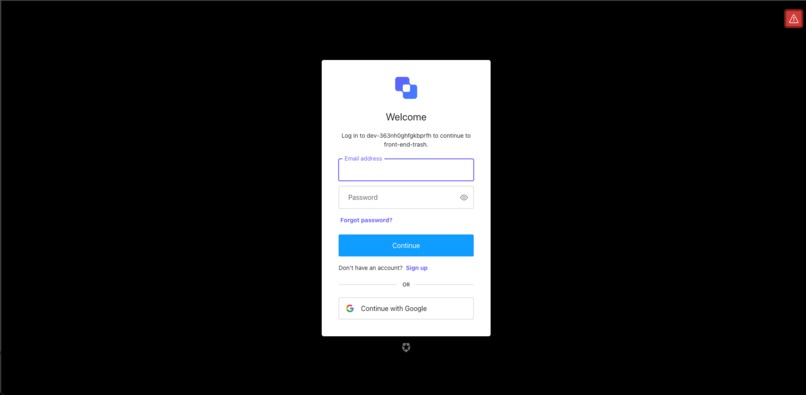
Auth0 implementation
-
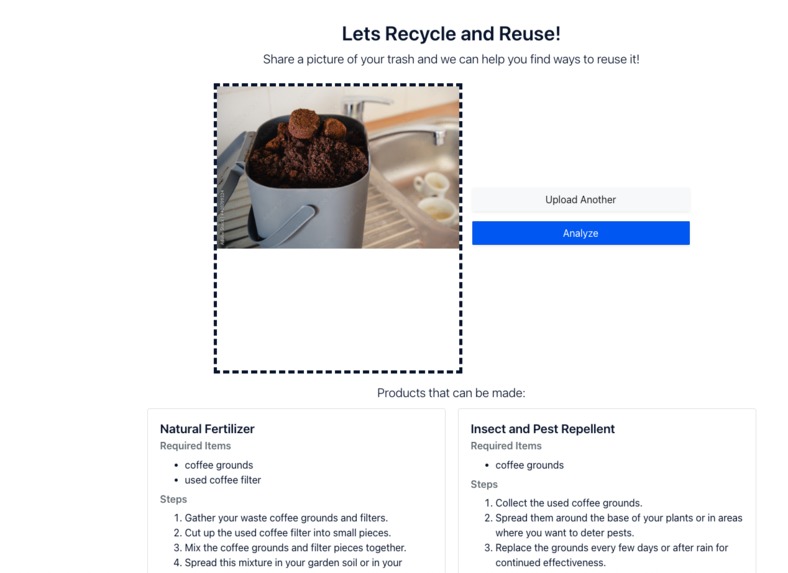
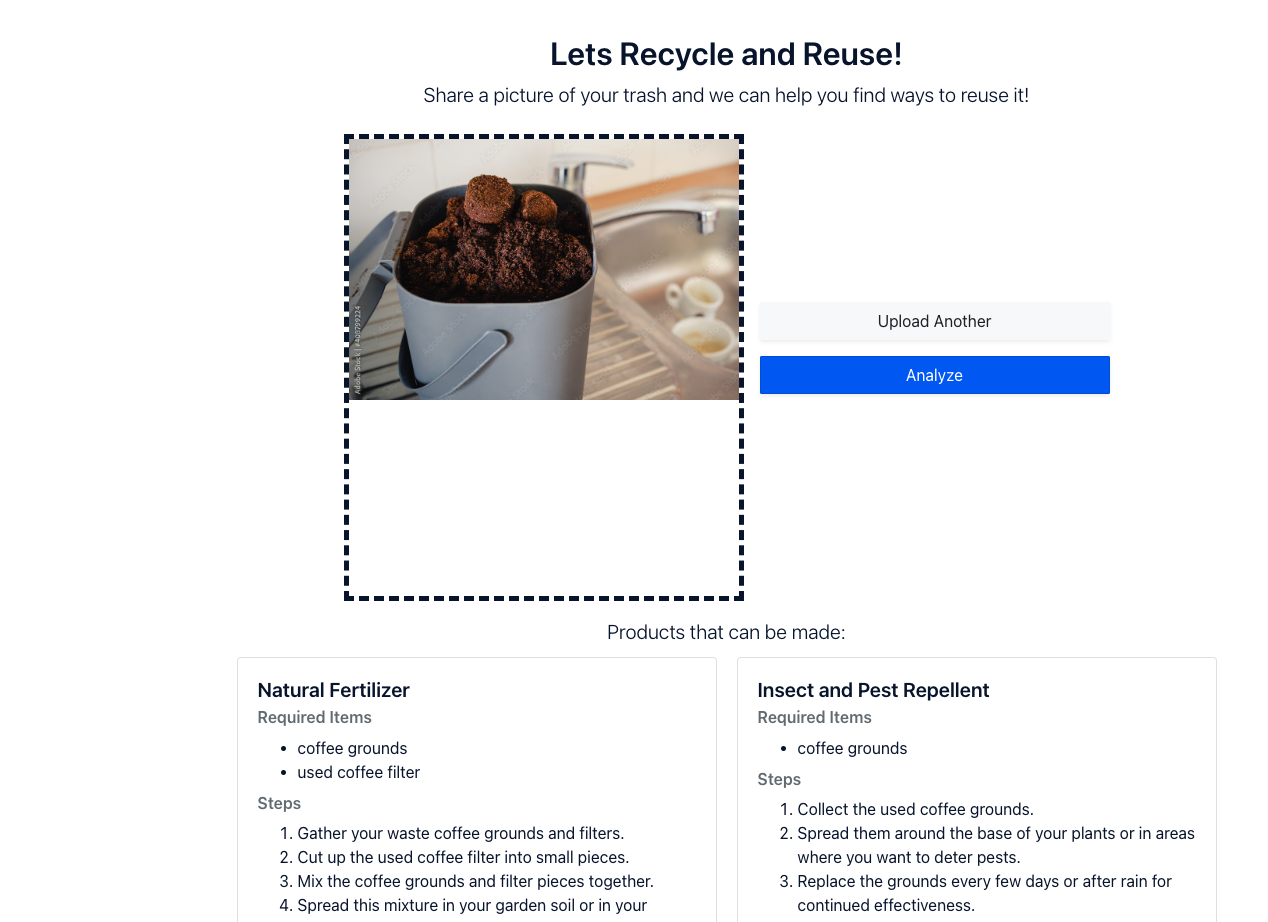
Output from upload
-
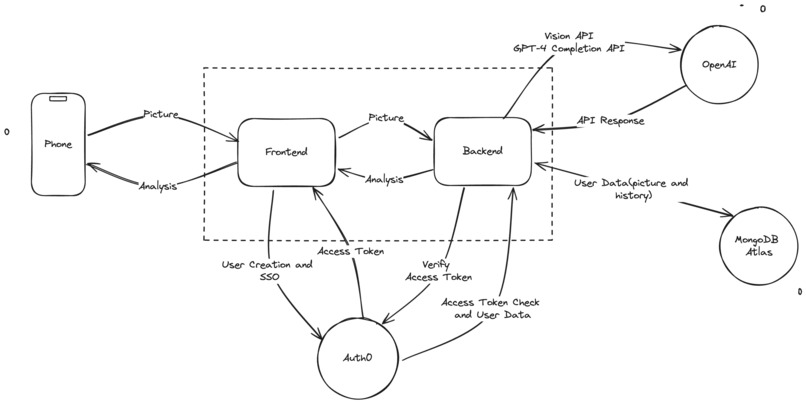
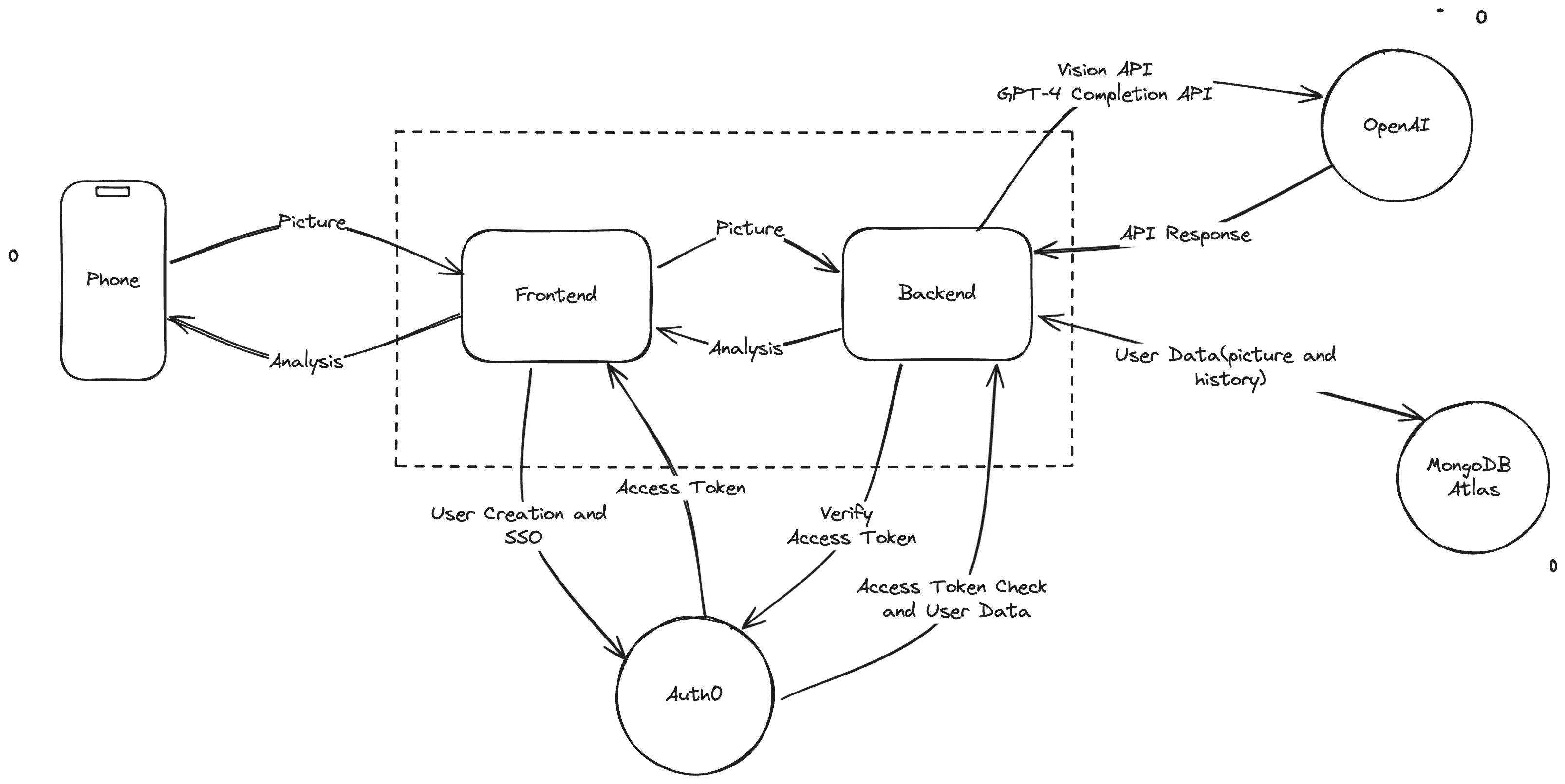
System high level architecture
Problem Statement
Waste management suffers due to the lack of segregation between wet and dry waste. Addressing this issue involves incentivizing waste segregation by users and educating them on upcycling methods.
Innovative startups are already tackling this challenge by repurposing waste materials; for instance, banana tree stems can be transformed into leather, and dried flower waste can be used for dyes. Despite these solutions, widespread awareness of upcycling methods remains limited.
What it does
We are proposing a solution in which the user can send an image to our application from their gallery or their camera. Once uploaded the OpenAI GPT4 vision model will be able to categorize organic and inorganic waste which can be upcycled or recycled. We then use the model to identify potential reuse opportunities using our own reference data and the models generalization which should output products which can be created along with the different steps to do so. It will also generate a list of nearby areas where the user can be paid to recycle this waste as the image contains metadata about the location where the image was taken.
The user will now have a better understanding of different types of products which can be recycled from the waste and they can also gain passive income from it.
Hence our solution plans to tackle the problem of waste segregation by providing a simple and easy to use platform which can help not only raise awareness but also help in reducing several issues such as global warming through education and incentivization.
How we built it
We used React for the front-end and Auth0 for authentication in our application. Our backend is written using python and we use MongoDB to store the image and other user data (location, message history). Then we use the Open AI GPT4 vision API to classify waste and generate ideas to help in upcycling. The application is currently hosted on our local machine and we are in the process of configuring a domain (genupcycle.tech).
Challenges we ran into
- Lack of documentation.
- Proper standards for repurposing waste materials, mainly organic materials.
Accomplishments that we're proud of
- POC with working demo on various images
- Integration with the front end and backend systems
What we learned
- Teamwork, collaboration.
- Using API's
- Full stack development.
What's next for Save the trash
We plan to improve and expand our database to include a list of startups across the world and get an estimate of their waste requirements. Based on this data we plan to work on a plan to develop a global supply chain with requirements for some of the commonly used household items.
When the image contains multiple items with organic waste rather than identifying individual items, the model generalizes it.
Built With
- ai
- auth0
- fastapi
- javascript
- mongodb
- python
- react
- react-native


Log in or sign up for Devpost to join the conversation.