-

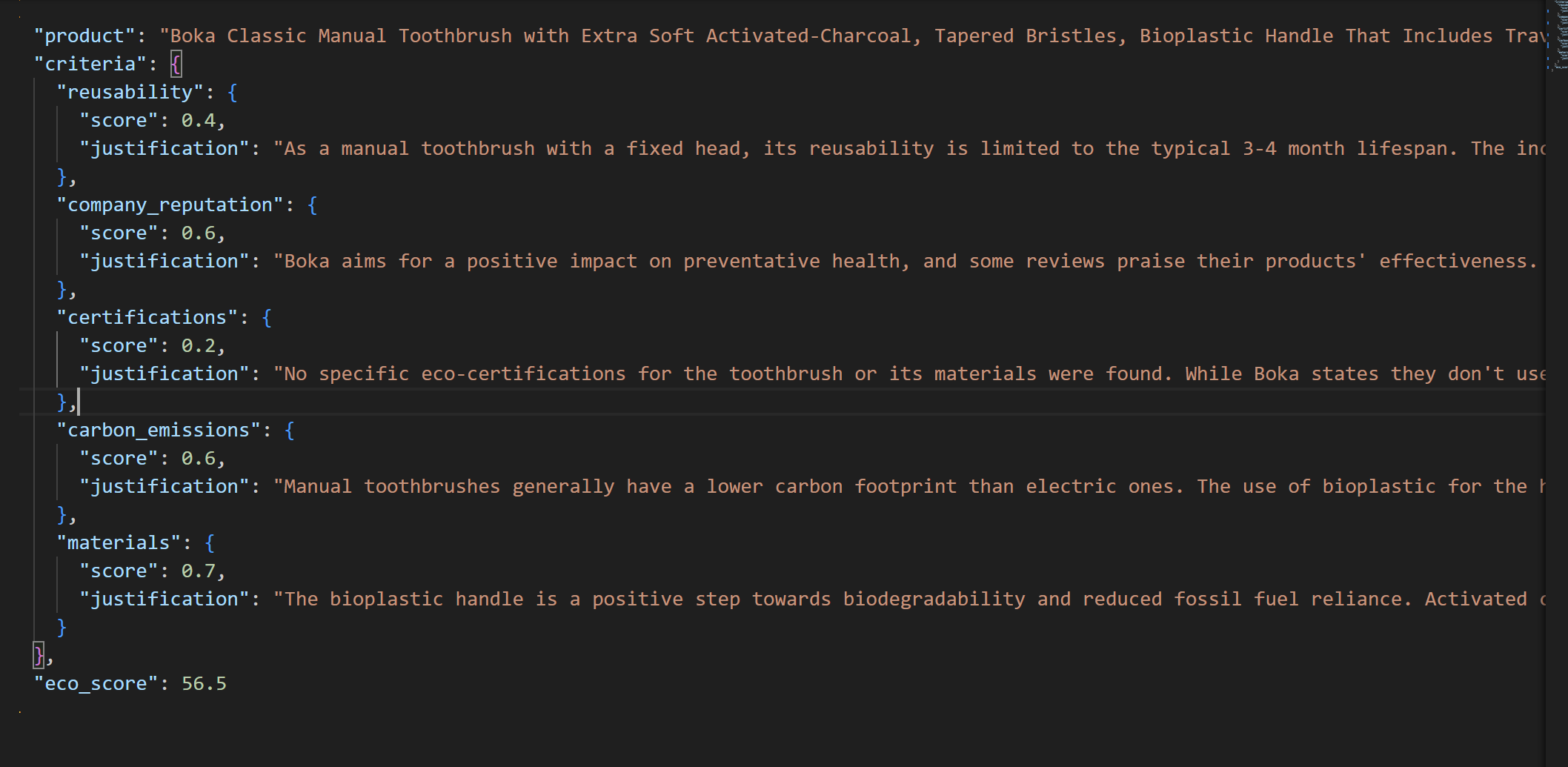
This is an example scores of an item
-
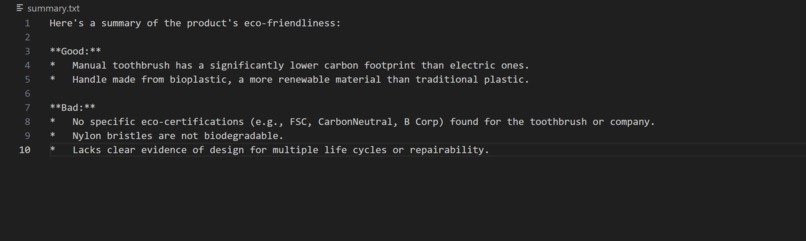
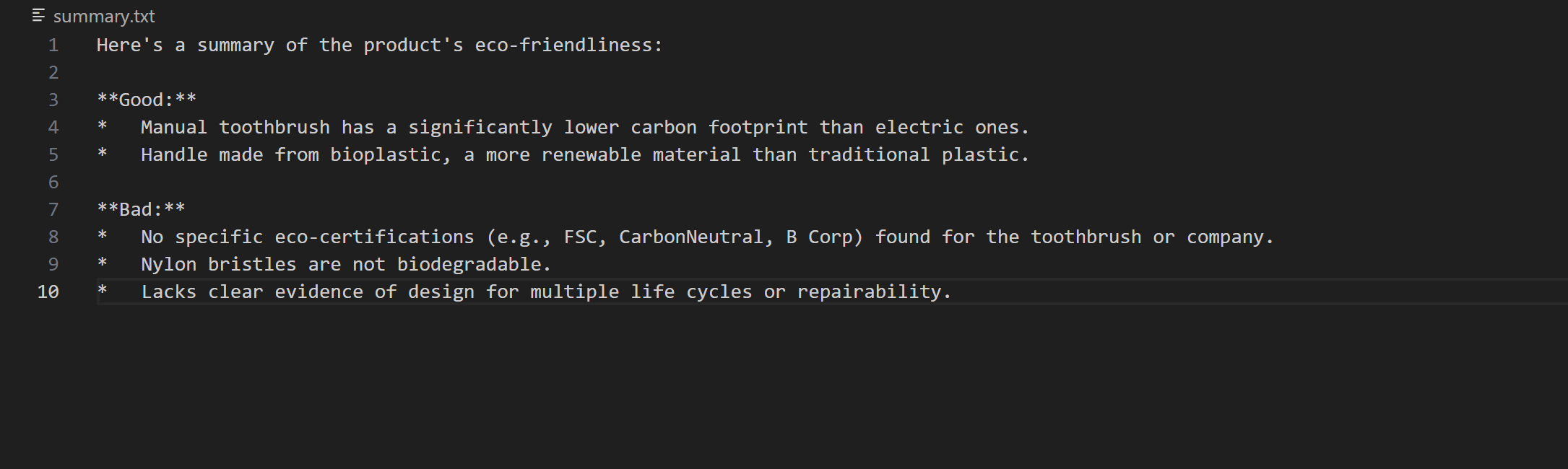
this is the summarization of the whole products, the good, the bad
-
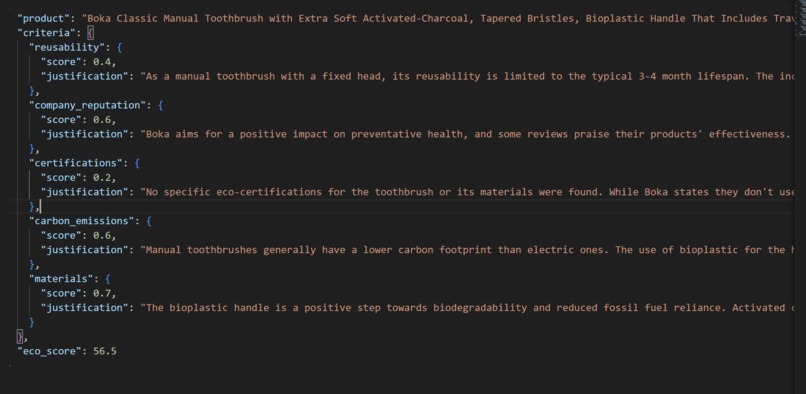
this is the lax reviewer judgements and scores given for each criteria
-
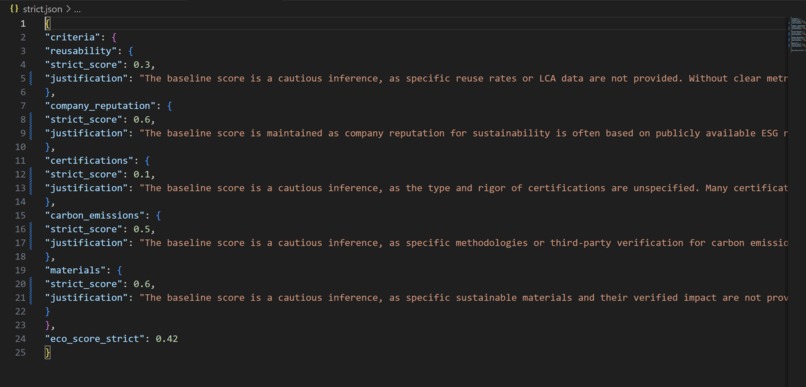
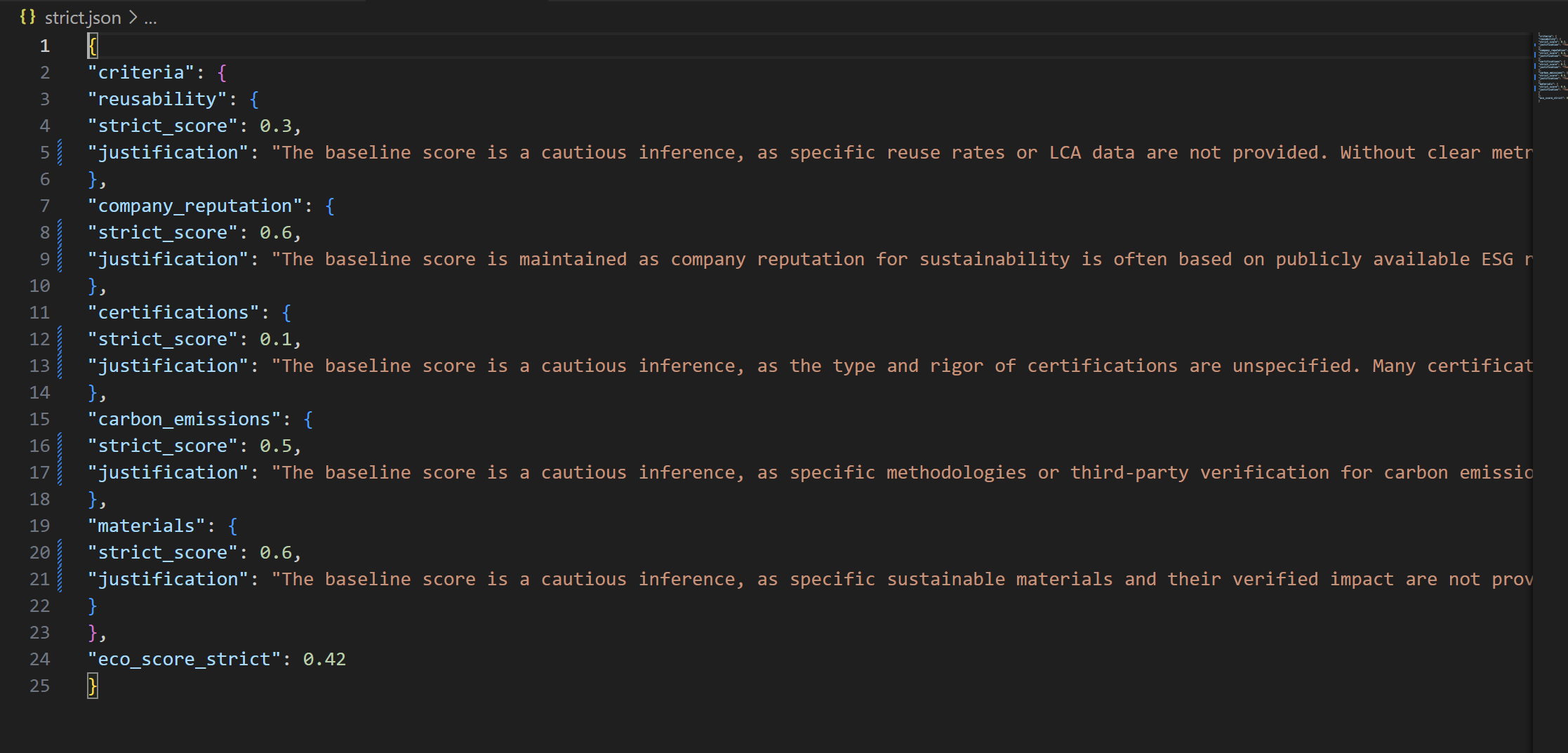
this is the strict reviewer judgements and scores given for each criteria
-
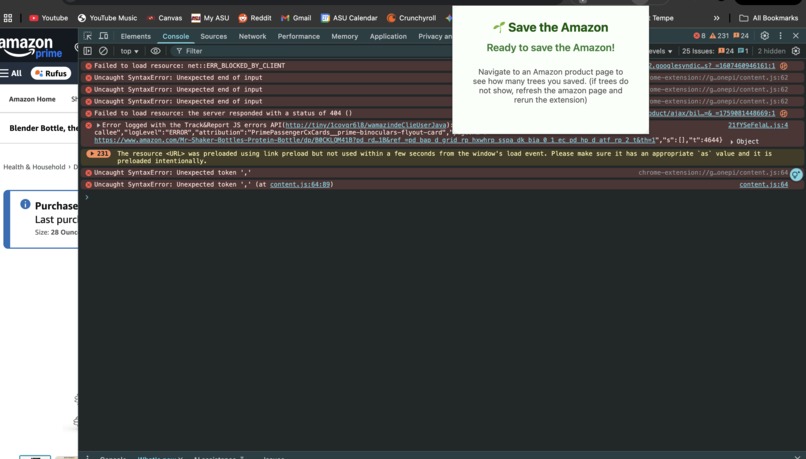
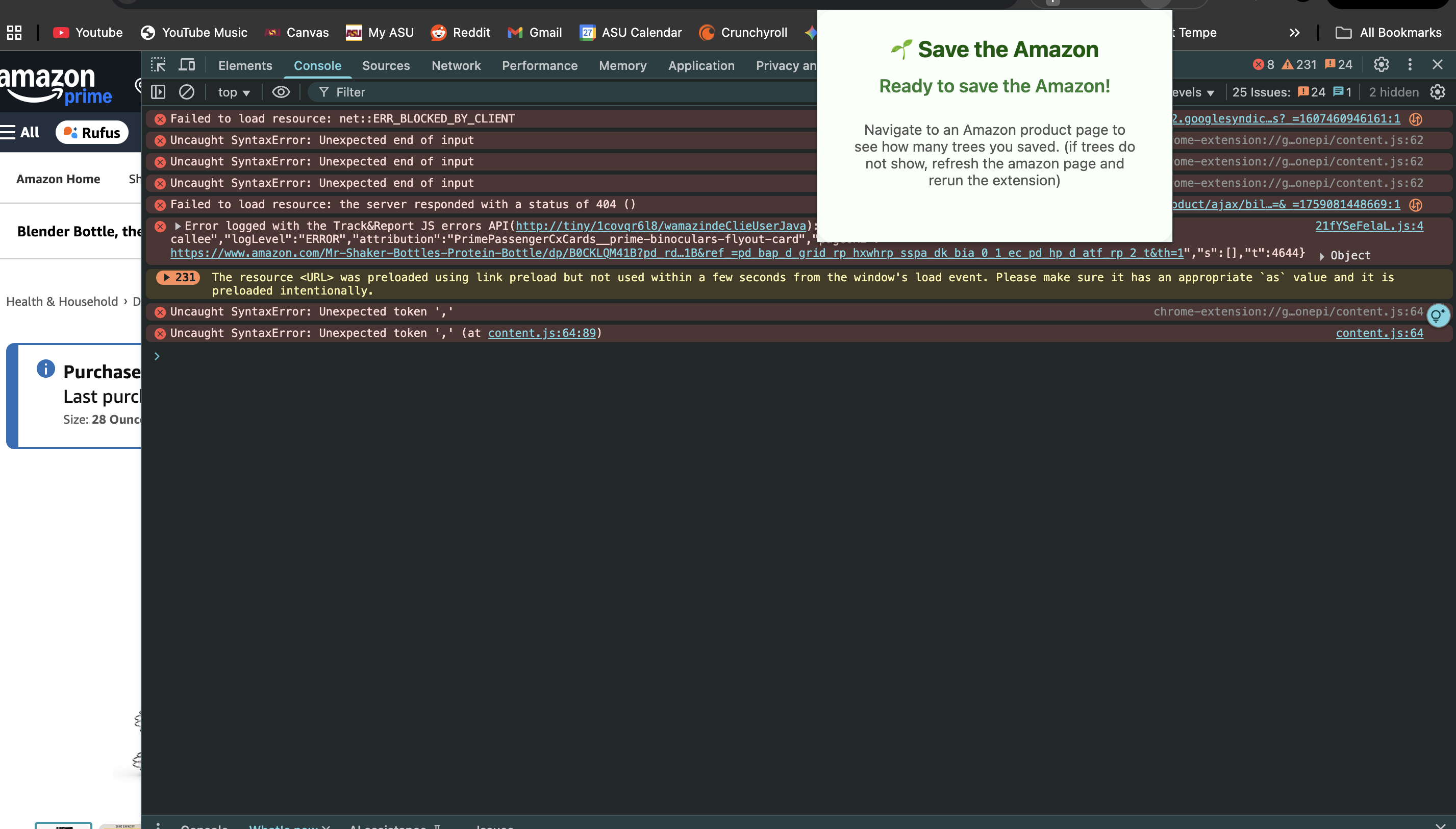
the UI of the Chrome extension when it is not in the Amazon site

Inspiration
In this day and age, where everything can be easily bought over the internet, sustainability often gets left behind in favor of convenience. Shoppers rarely have the time or resources to investigate whether the products they purchase are eco-friendly, and companies don’t always provide transparent information. We wanted to create a tool that bridges this gap — empowering everyday consumers to make sustainable choices without slowing down their shopping experience.
What it does
Save The Amazon is a Chrome extension that helps consumers shop more sustainably on platforms like Amazon. When you click on the extension, it instantly shows the eco-friendliness score of the product you’re viewing, calculated across multiple criteria such as reusability, company reputation, certifications, carbon emissions, and materials. It also shows you the scores of other similar products
How we built it
We started by organizing and defining the criteria that contribute to a product’s eco-friendliness, such as reusability, certifications, company reputation, carbon emissions, and materials. Each criterion was given a weight to create a fair scoring formula. On the front-end, we built a Chrome extension using JavaScript and CSS. The extension extracts the product name, brand, and description directly from the Amazon product page when the user clicks the extension. On the back-end, we built a Python server that receives this data and processes it. The backend leverages the Gemini API to research the product, evaluate it against our criteria, and return a JSON response containing eco-scores, justifications, and an overall summary. This response is then sent back to the extension for display to the user.
Challenges we ran into
We faced several challenges during development: Gemini API setup: Getting the Gemini API integrated into our backend was our first major hurdle. We spent a significant amount of time troubleshooting authentication, configuration, and streaming responses. Frontend bugs: Building the Chrome extension came with its own roadblocks. From parsing product details on Amazon pages to debugging JavaScript and CSS quirks, achieving a smooth user experience required multiple iterations. Inconsistent LLM responses: Large Language Models sometimes return varied outputs. To address this, we designed a two-pass system (a “student” for initial scoring and a “professor” for stricter verification) and implemented weighted scoring to keep results consistent and reliable. AWS deployment: Deploying our backend to AWS Lambda introduced compatibility and dependency issues (especially with third-party libraries). We spent considerable time resolving these and learning how to use Lambda layers efficiently.
Accomplishments that we're proud of
Dual-model evaluation system: We overcame inconsistent LLM outputs by designing a two-layer approach — a “student” model that assigns optimistic eco-scores and a “professor” model that reviews and adjusts them based only on verifiable facts. This made the results far more reliable. Chrome extension integration: We successfully built a frontend extension that seamlessly extracts product information (title, brand, description) from Amazon and passes it to our backend. Backend pipeline: We created a Python backend that processes the input, queries the Gemini API, applies our scoring formula, and returns results in a structured JSON format for the extension to display.
What we learned
We were able to learn a lot about the AWS system, as well as having a much better understanding now of the Gemini API. This journey shows us that we still have lots to learn, as well as the fun and thrilling experience of creating and making something.
What's next for Save The Amazon
What will be next well be even grander. Our products will hopefully shine light on an industry that takes lightly about environmental issues lightly. If we can change the consumer mindset, hopefully we can change the industry as well, pushing for a greener Earth


Log in or sign up for Devpost to join the conversation.