-
-
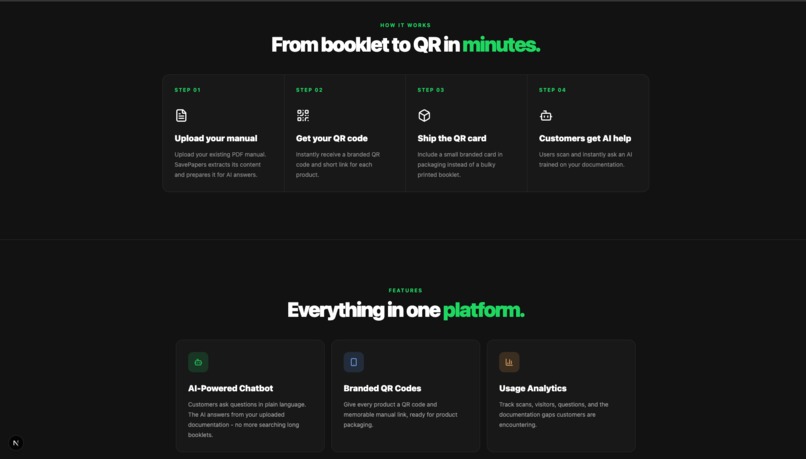
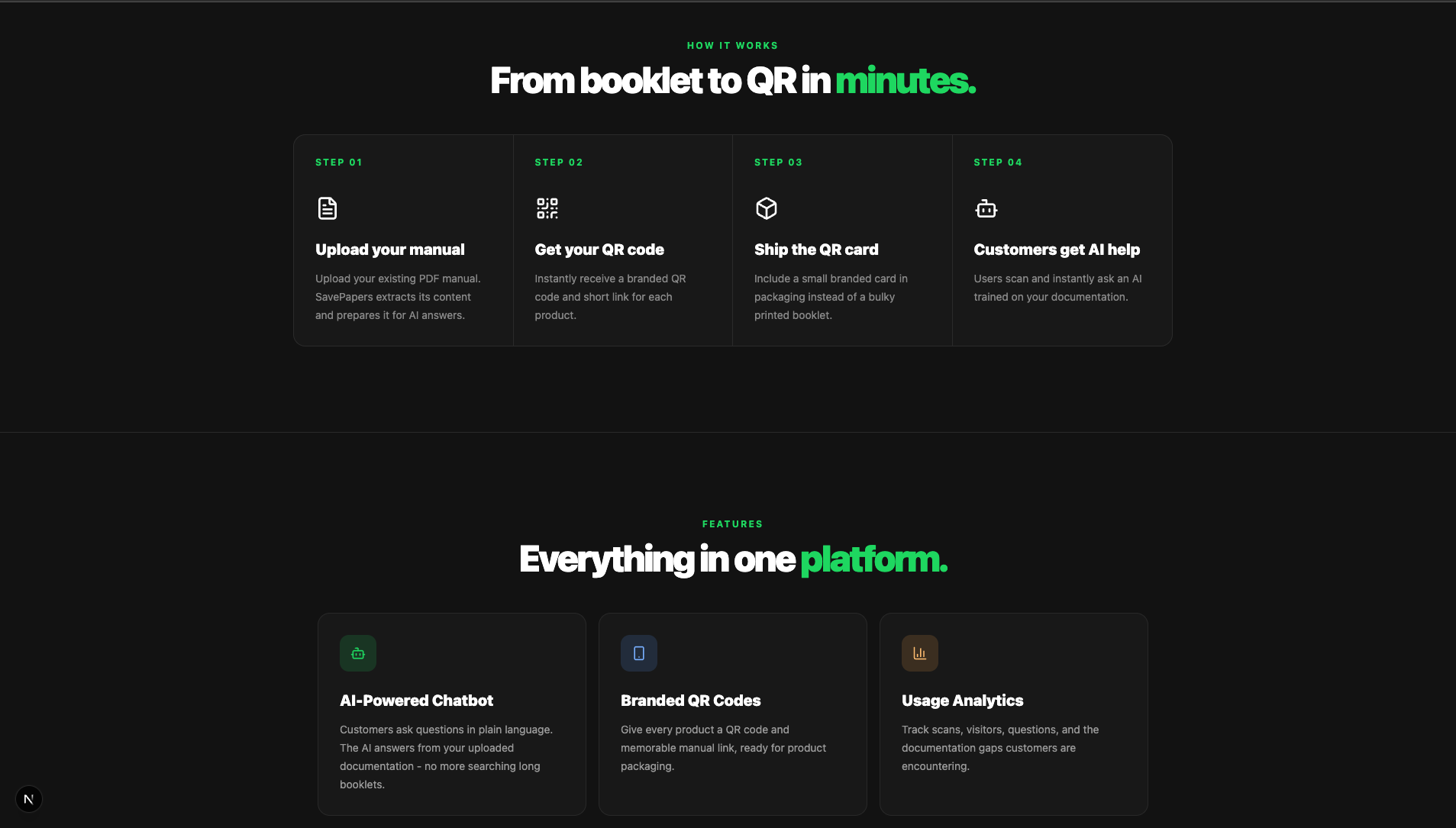
How It works
-
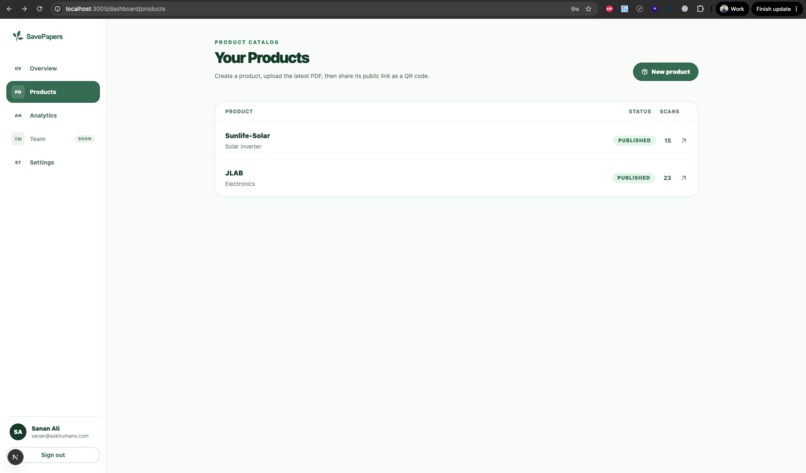
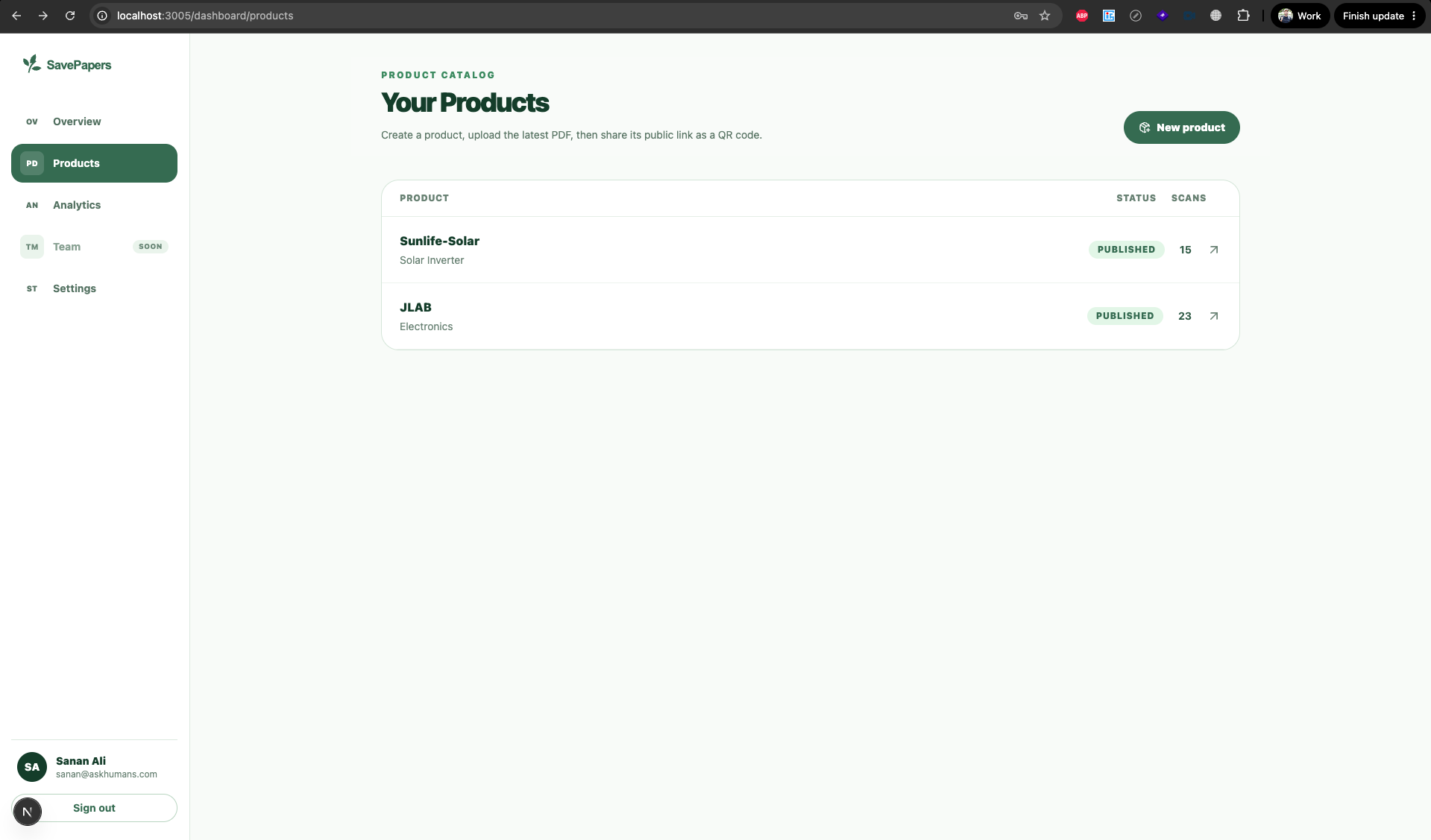
Products Page
-
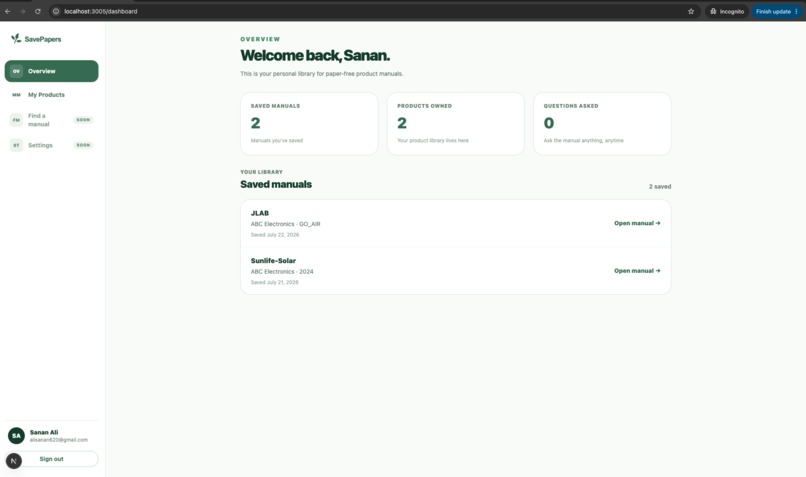
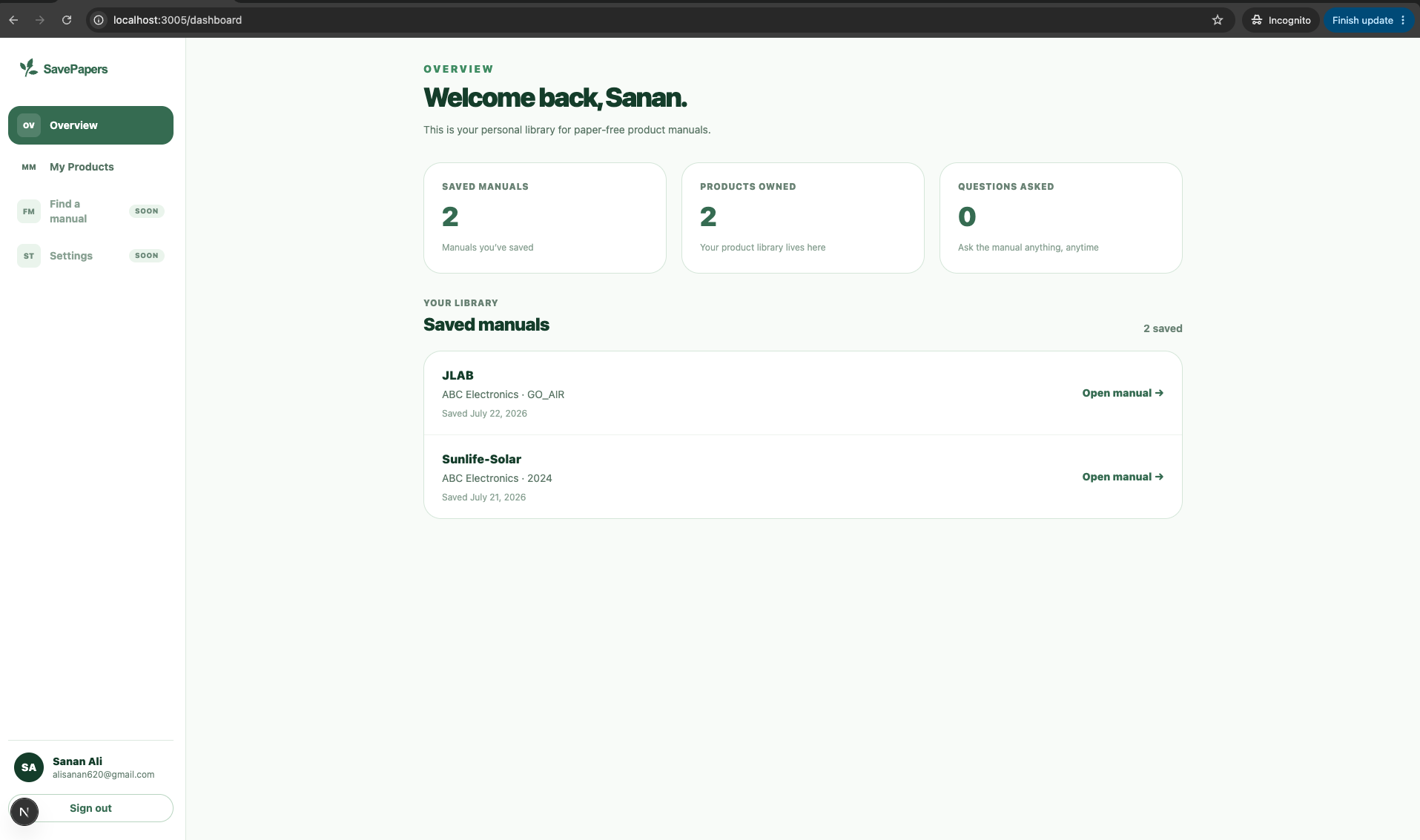
Saved manuals for user in dashboard
-
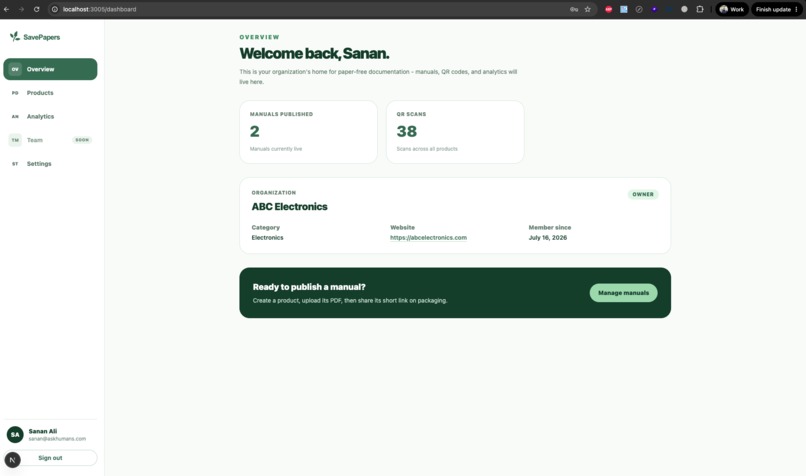
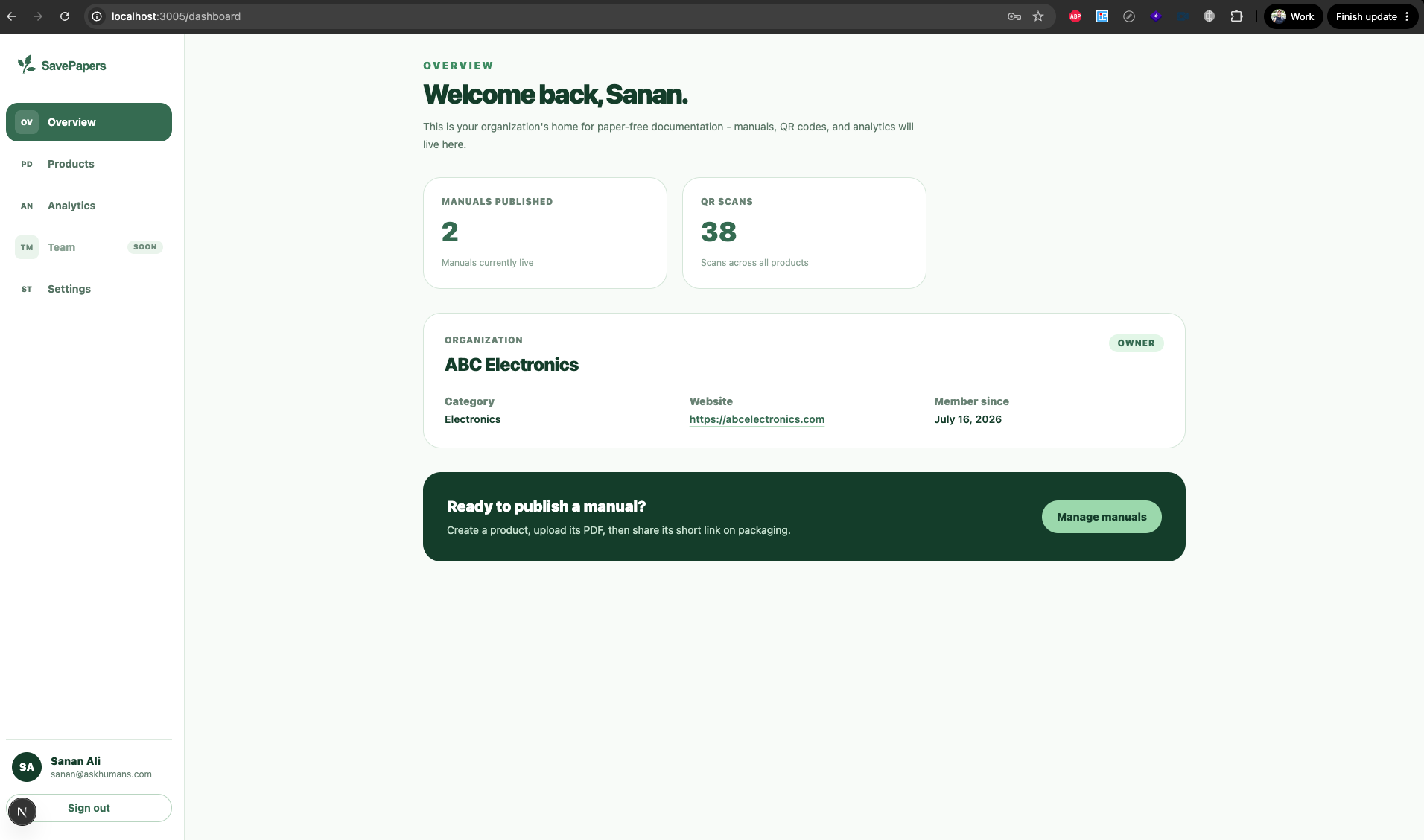
Overview Page in Dashboard
-
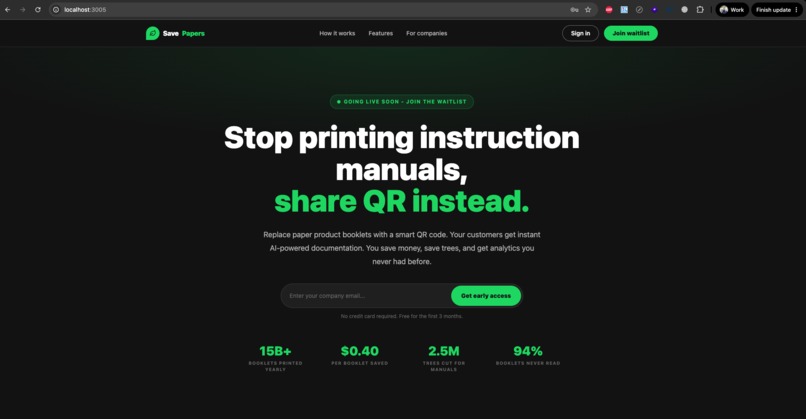
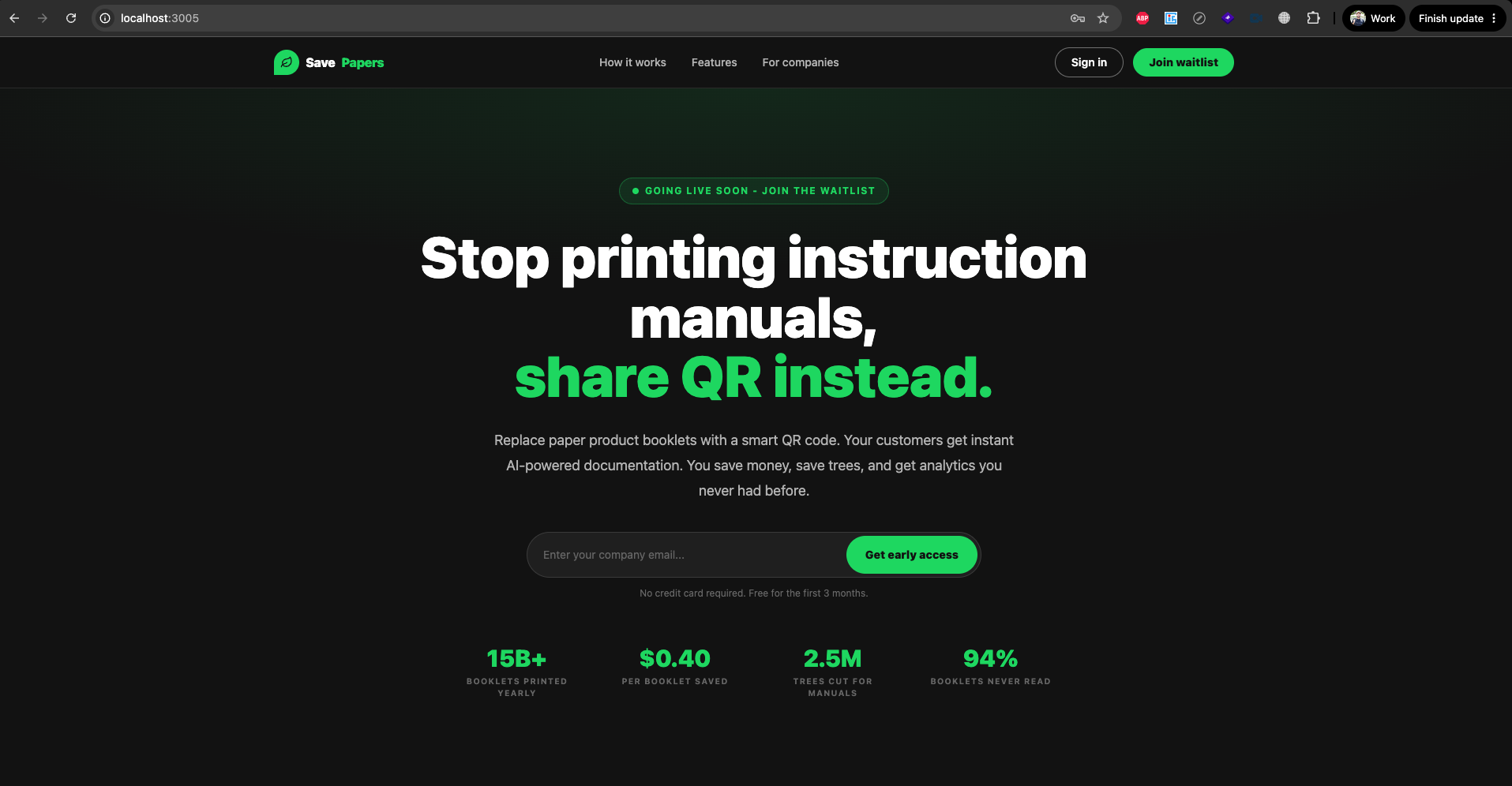
Home Pagae
-
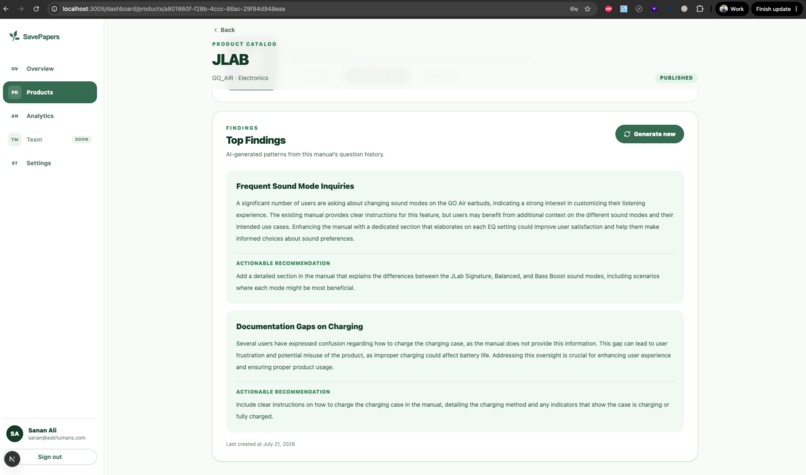
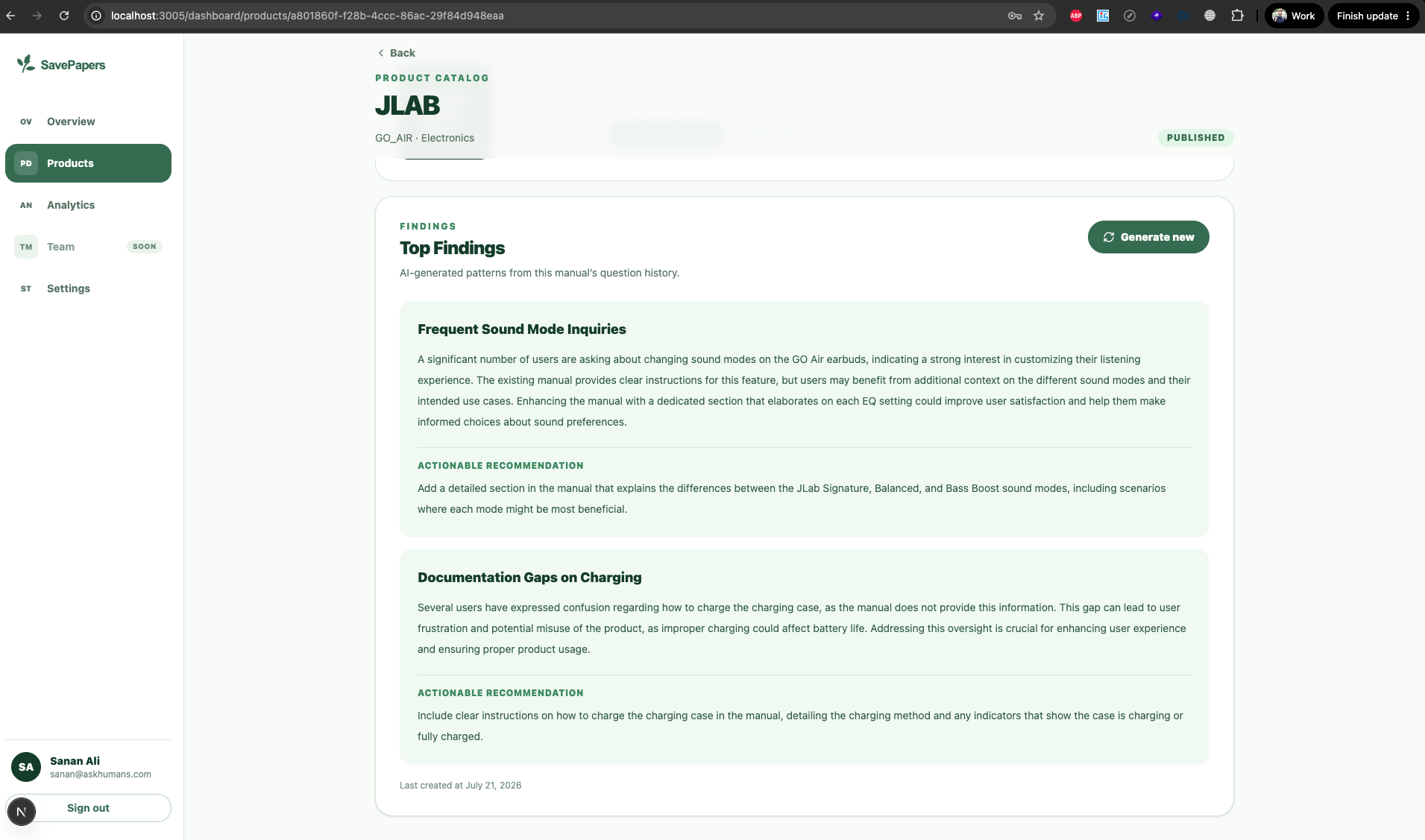
Findings Generated by AI Based on Questions
-
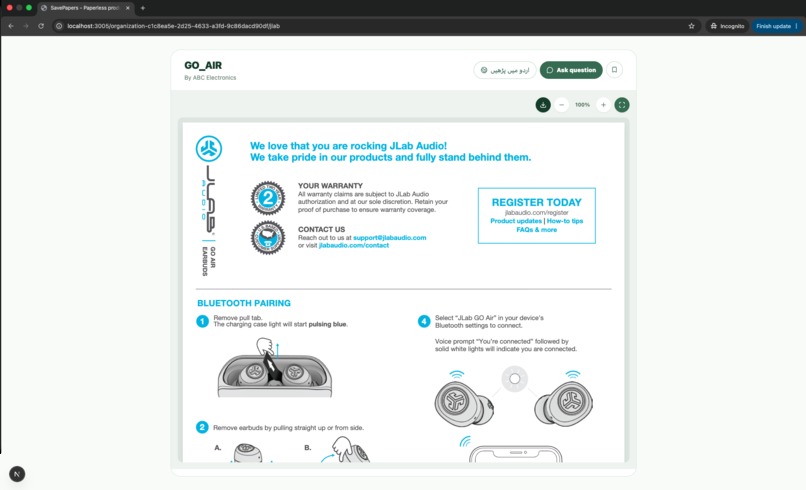
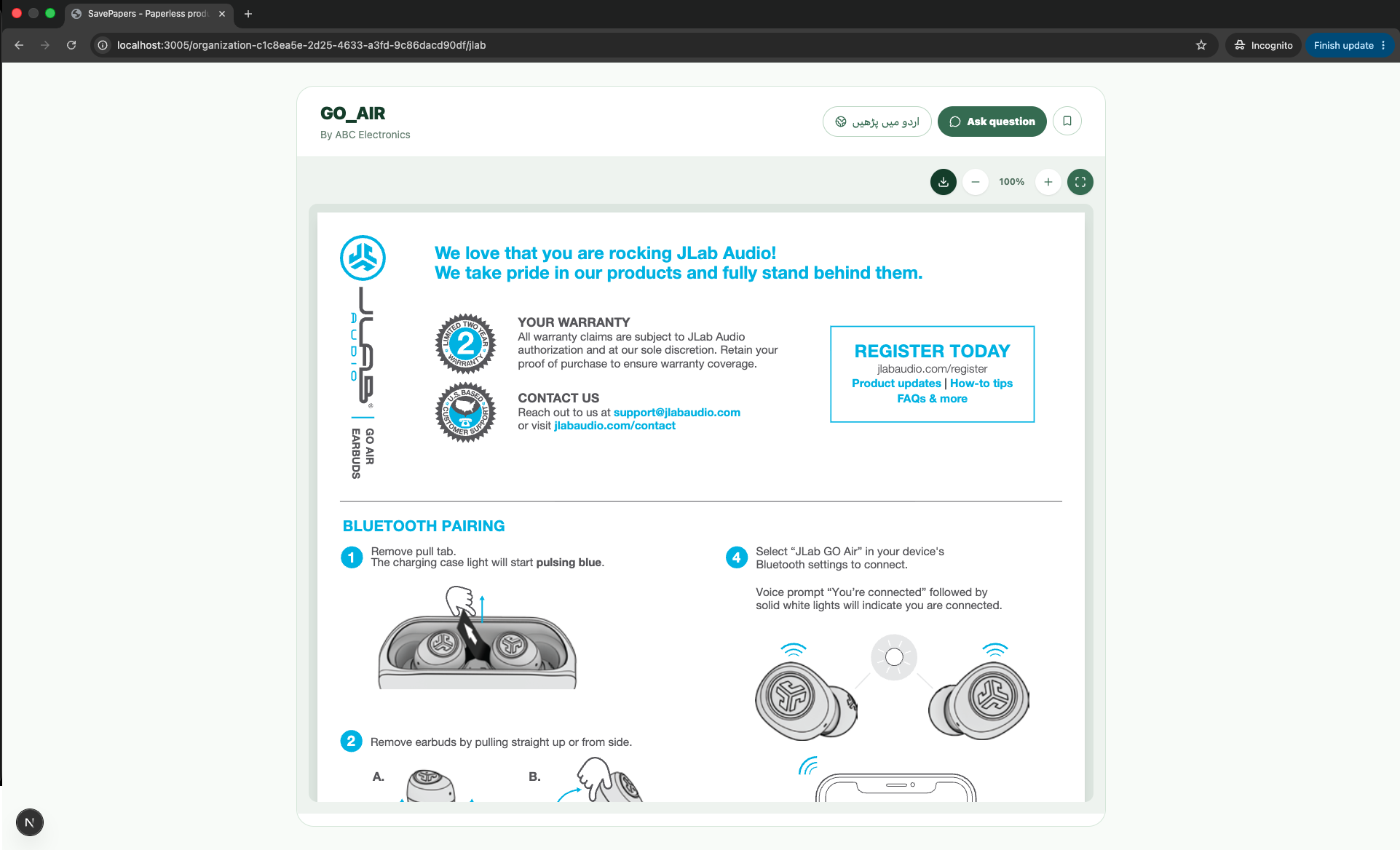
User side page for manual after scanning QR code
-
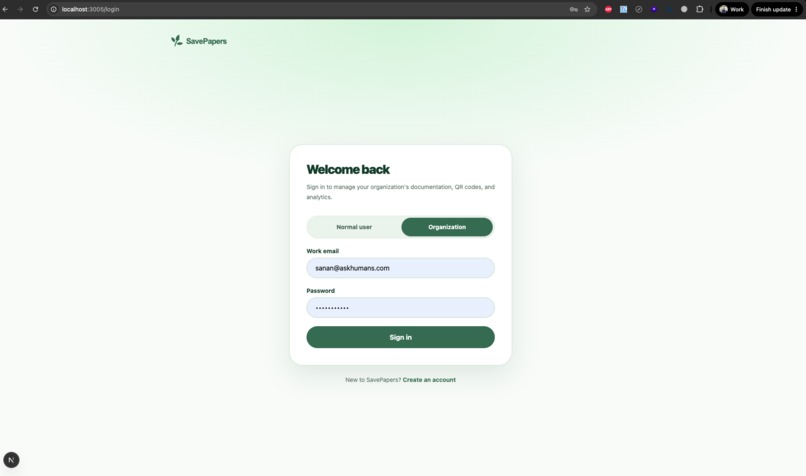
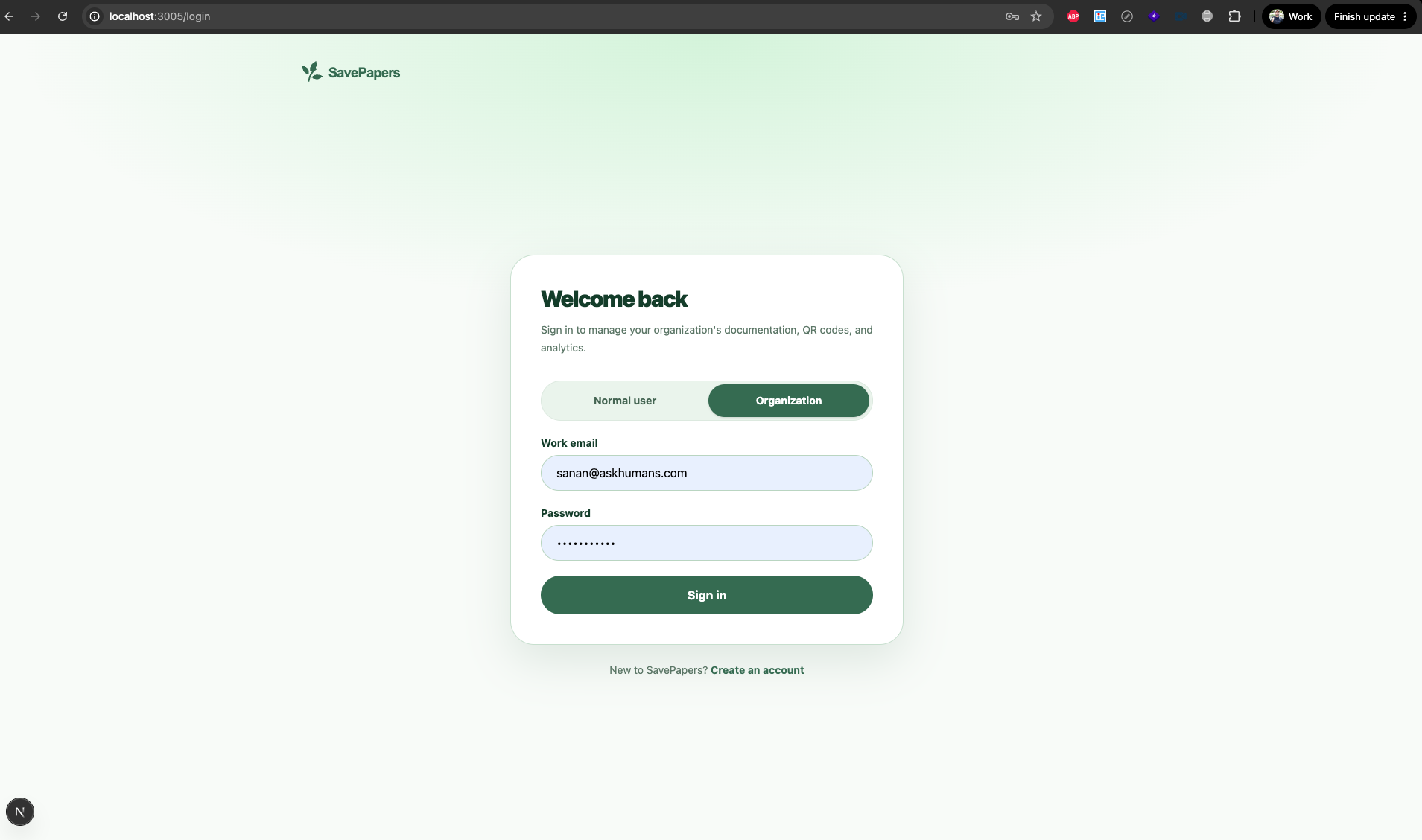
Login as Organization
-
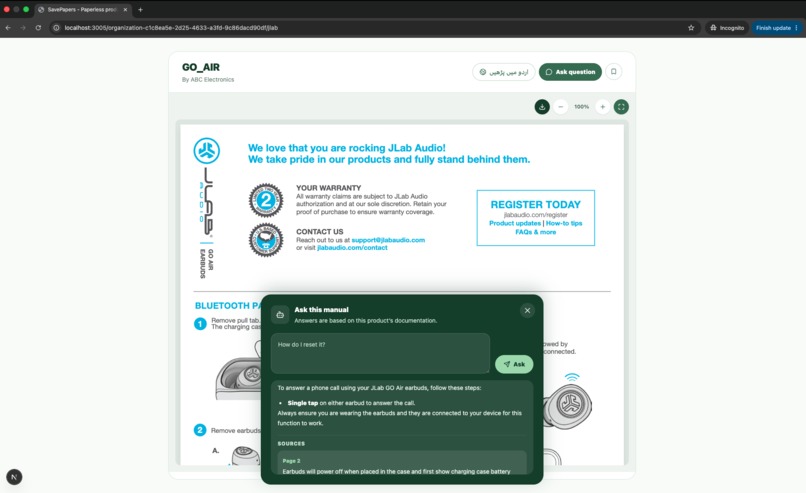
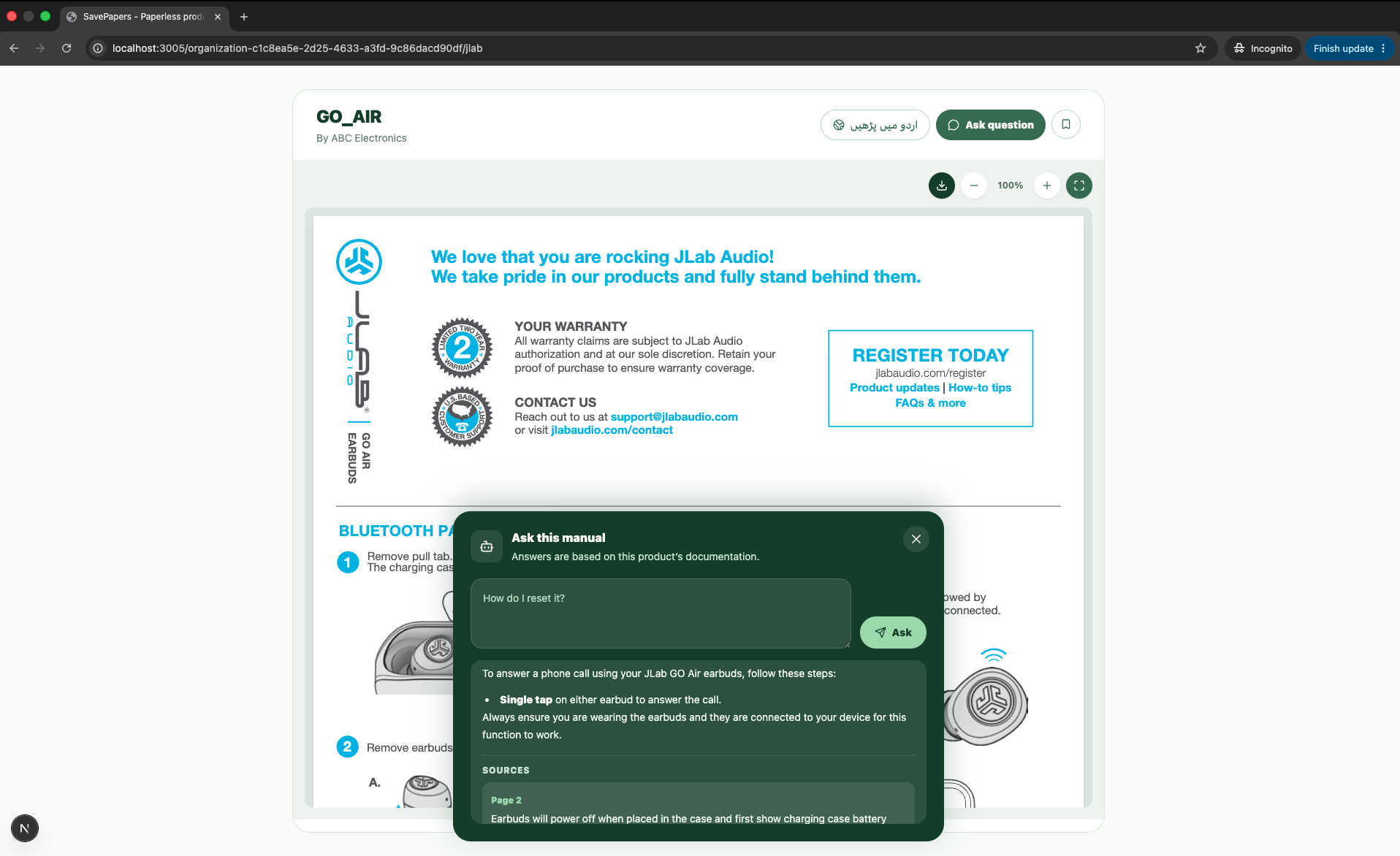
User Asks a Question from User Manual
-
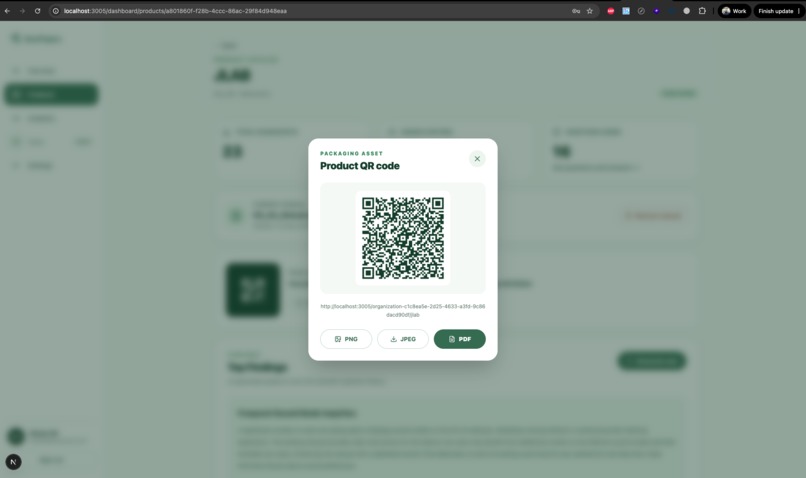
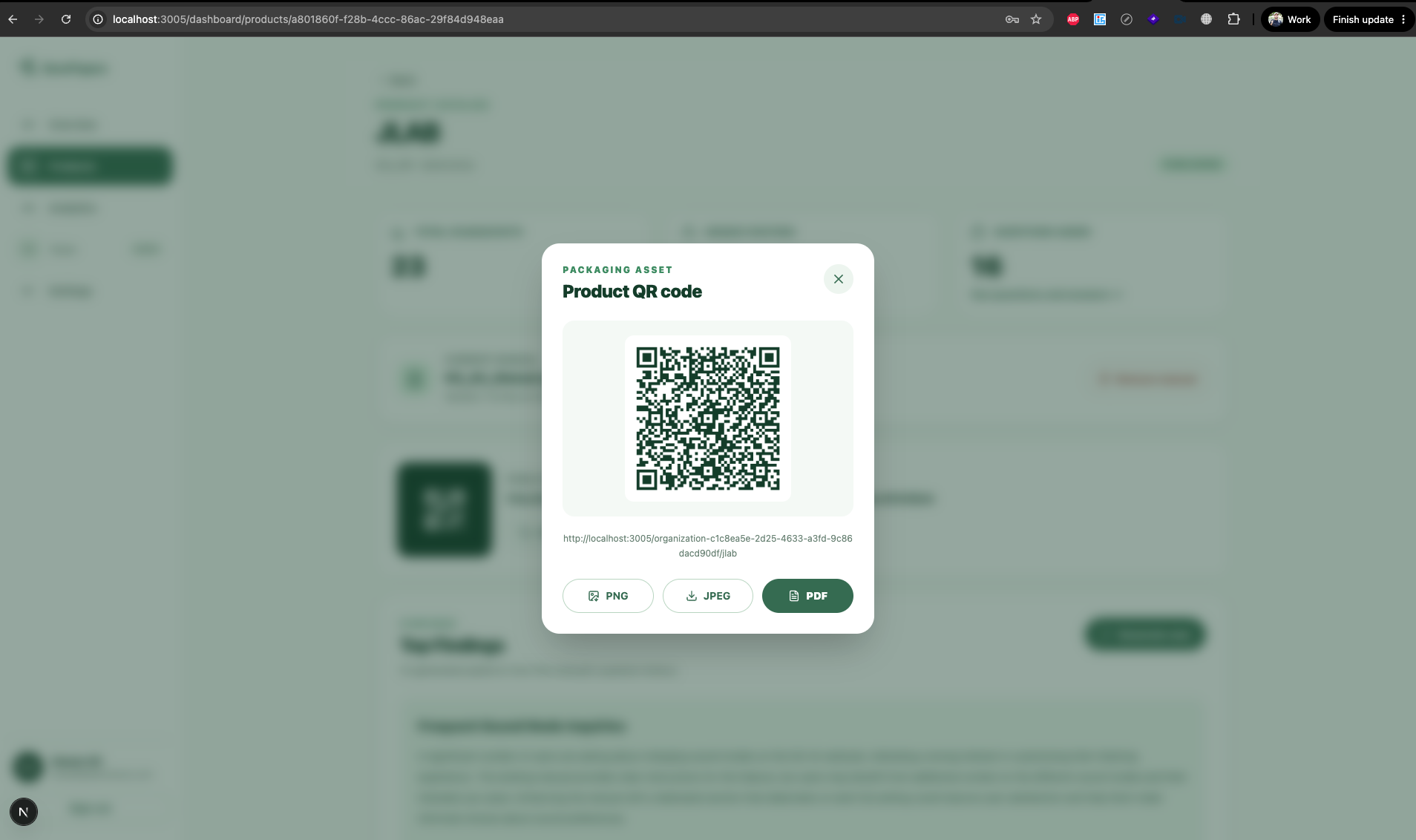
Download QR Code
Inspiration
Every time I buy something, it comes with a printed instruction manual that I usually throw away. When I visited a solar exhibition in Lahore, hundreds of product booklets were being handed out, yet very few people were reading or keeping them.
That experience made the problem feel both practical and environmental. Organizations spend money printing manuals that quickly become outdated or discarded, while customers still struggle to find the information they need. I decided to build SavePapers to help organizations host digital user manuals, reduce printing waste, save trees, and give customers a better way to get support.
What it does
SavePapers replaces printed product manuals with QR-linked digital documentation.
Organizations can create products, upload PDF manuals, and generate a public link and QR code for packaging. Customers scan the code to read the original manual, download it, switch to other languages for reading, save the manual to a personal library, and ask an AI questions based on the product documentation.
The platform also gives organizations useful insight into their documentation through scans, unique visitors, product questions, AI-generated findings, and recommendations for improving unclear or missing manual content.
How I built it
I first drafted a detailed requirements Markdown document covering the MVP features, user flows, backend modules, and frontend experience. I then used Codex with GPT-5.6-Terra to implement the product step by step.
Here is the URL for the requirements.md file Requirements Markdown
The backend uses NestJS, TypeORM, PostgreSQL, pgvector, and OpenAI integrations. It supports product and manual management, PDF processing, OCR fallback, embeddings, retrieval-augmented Q&A, translation, QR links, analytics, saved manuals, and AI-generated product findings.
The frontend uses Next.js, React, TypeScript, Tailwind CSS, React-PDF, React Toastify, and reusable component-based UI. It includes responsive dashboards, manual viewing, custom confirmation modals, QR tools, AI chat, saved-manual libraries, product question history, and analytics pages.
Codex helped translate the written requirements into modular code, debug backend and frontend issues, write migrations, improve the user experience, and verify the application with production builds throughout development.
Challenges I ran into
One major challenge was handling PDFs with different structures. Some PDFs have selectable text, while others are scanned image-only documents. Extracting meaningful content from those files and turning it into reliable vector embeddings required a page-aware extraction flow and an OCR fallback.
Another ongoing challenge is multilingual support while preserving the original manual structure. Translating a manual into another language is useful, but readers should not lose the diagrams, visual hierarchy, and layout that make the original PDF easy to understand. We are continuing to improve this balance between accessible translation and faithful document presentation.
Accomplishments that I am proud of
SavePapers was only an idea before this hackathon started. I am proud that it became a working MVP with organization dashboards, public QR manuals, AI-powered support, analytics, saved manuals, and actionable documentation insights.
I am especially proud that the product addresses two real problems at once: it can reduce printing costs for organizations and reduce unnecessary paper waste. I believe SavePapers can help organizations support customers better while saving trees and making product information easier to access.
What I learned
This project reinforced the importance of time management when turning a broad idea into an MVP. I learned how to break requirements into smaller milestones, prioritize the most valuable user flows, and make iterative decisions quickly.
I also learned how to collaborate effectively with Codex: start with a clear requirements document, build features incrementally, validate each integration, and use AI assistance not just for code generation but also for debugging, product thinking, and improving the user experience.
Most importantly, I learned that an idea can become an actual product when it is translated into concrete requirements and built one feature at a time.
What's next for Save Papers
Next, I plan to expand language support while keeping the original manual structure and visuals accessible to readers who do not understand English. I also plan to add richer multiple-version management for user manuals, so organizations can clearly maintain historical documents and publish updates safely.
Beyond the hackathon, the goal is to deploy SavePapers for real organizations and real product owners. We want to validate the platform with users, improve OCR and document understanding, add more analytics and support workflows, and help more businesses replace printed manuals with useful digital experiences.
Built With
- codex
- css3
- html5
- javascript
- nestjs
- nextjs
- openai
- postgresql
- react
Log in or sign up for Devpost to join the conversation.