-
-
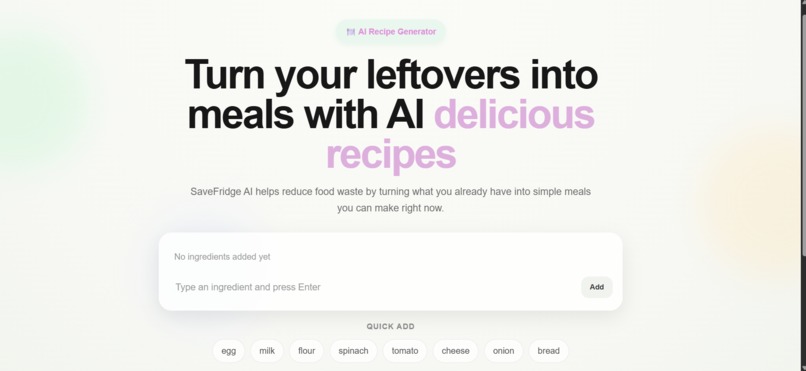
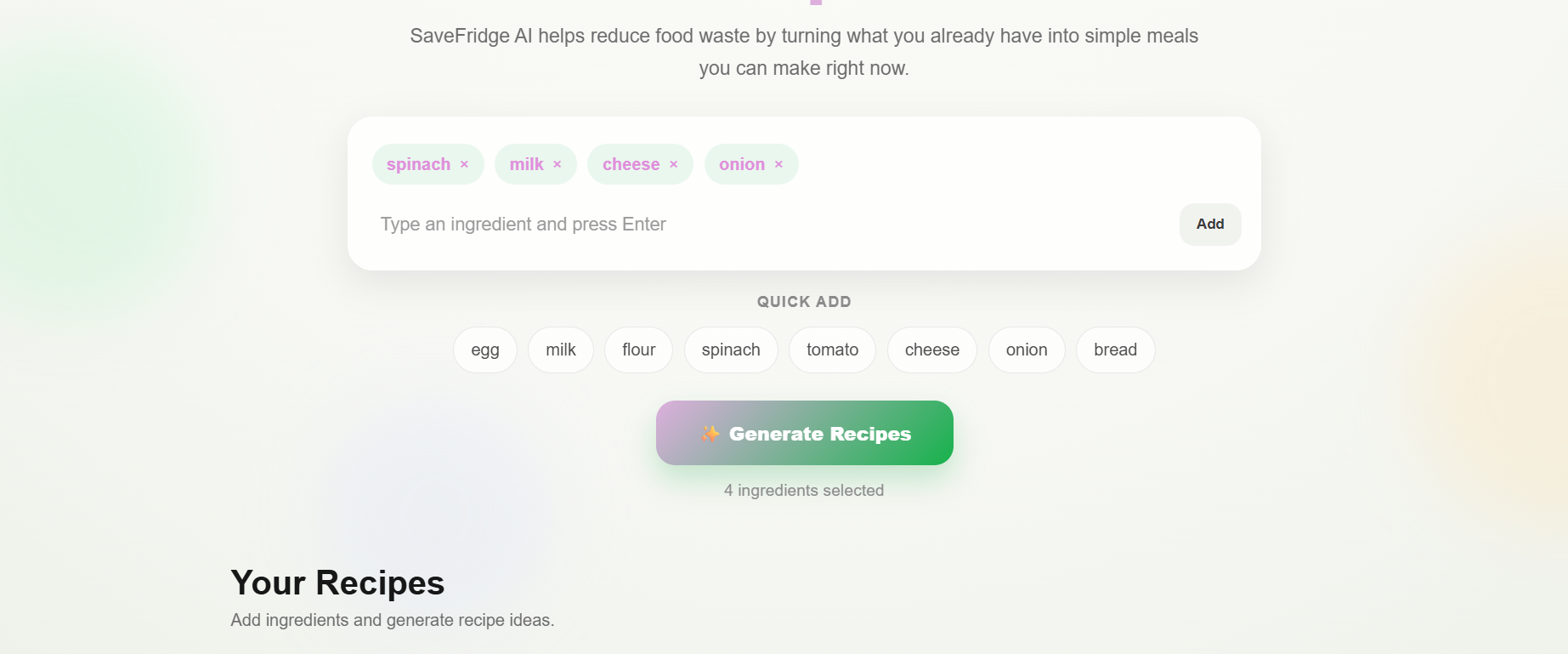
landing page
-
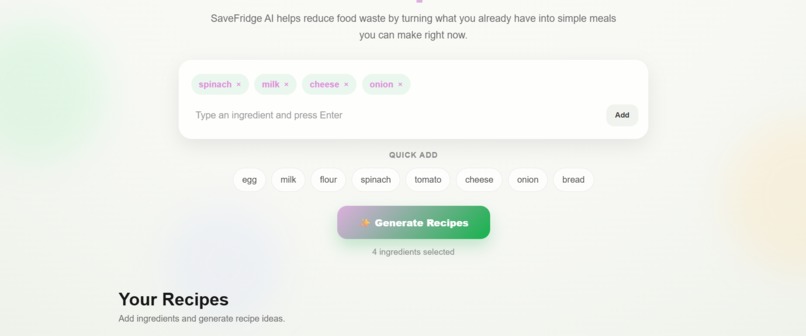
adding ingredients
-
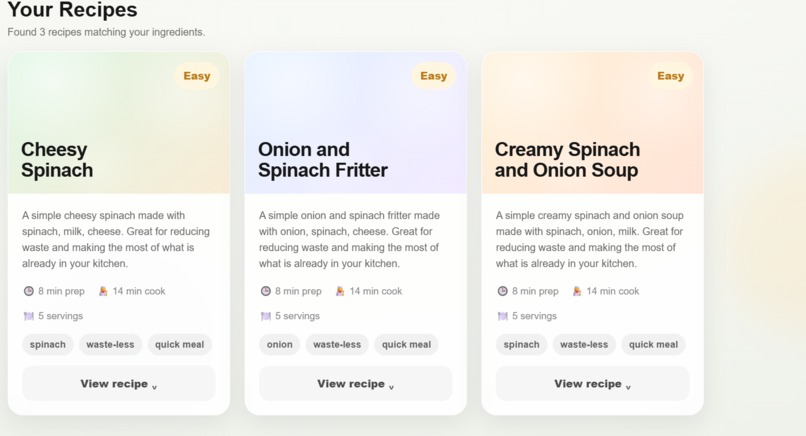
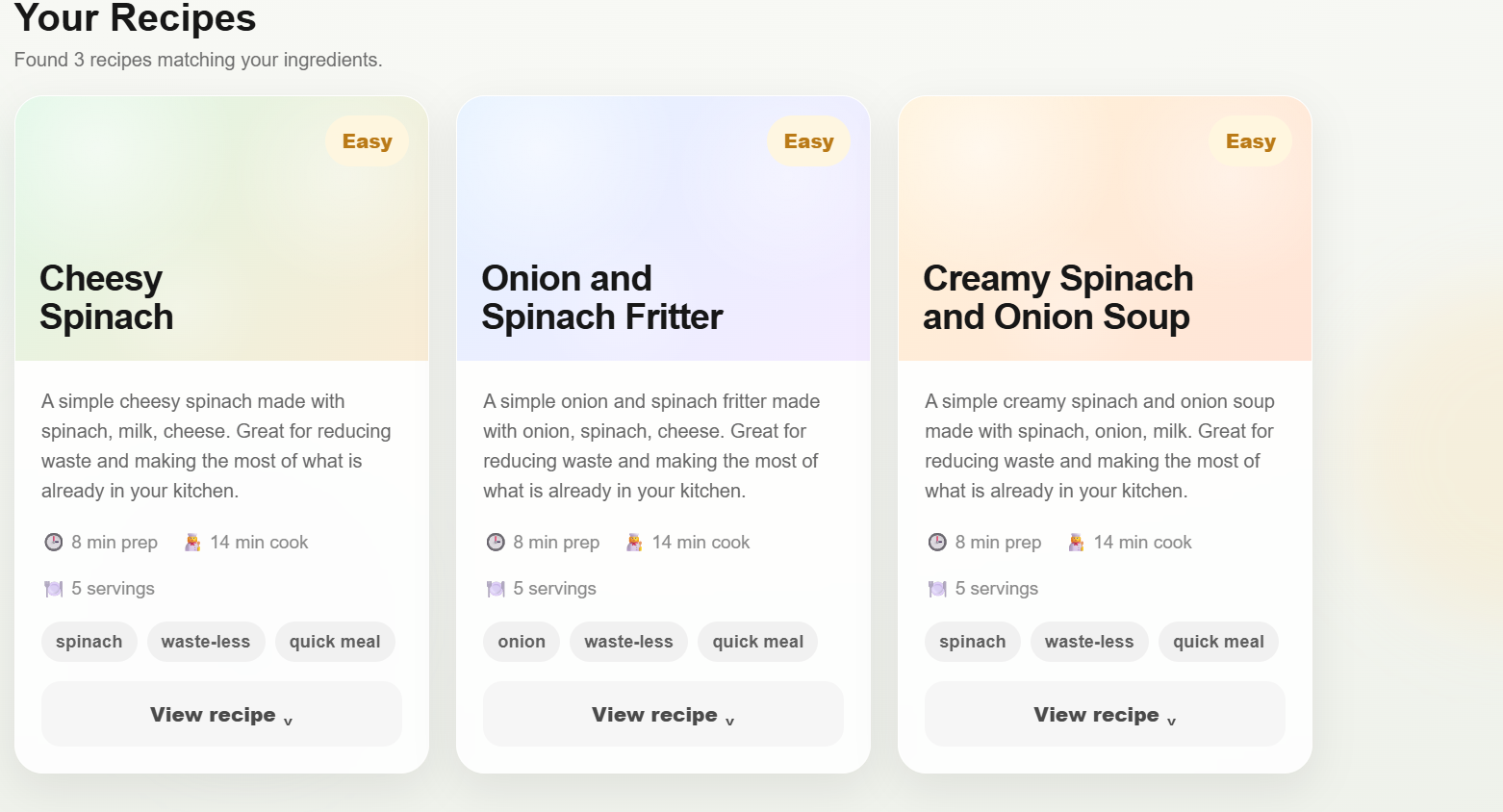
loeaded recipe
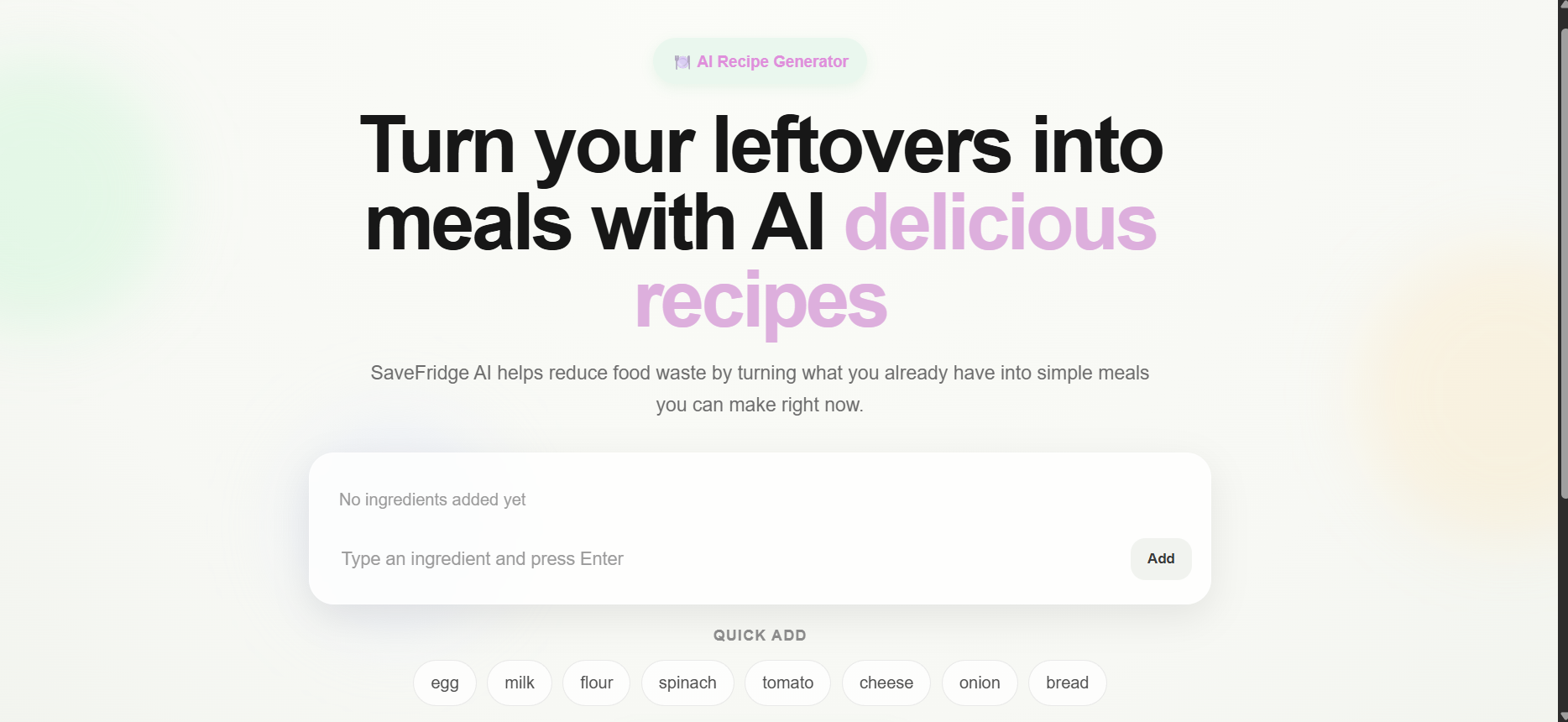
Inspiration
SaveFridge AI was born out of the need to address the common phenomenon of food wastage in homes around the world. There is a common phenomenon where people end up wasting good food simply because they do not know what to cook with the ingredients they have at home. As a student living abroad, I realized that the problem of food wastage was quite common and that people ended up wasting good food simply because they did not have ideas on how to cook with the ingredients they had at home.
What it does
SaveFridge AI came to existence due to the need to solve the common problem of food wastage in many homes around the world. There exists a common phenomenon where people end up wasting good food due to the lack of ideas on what to do with the food they have. Being a student studying abroad, I realized that the problem of food wastage was quite common, and people end up wasting good food due to the lack of ideas on what to do with the food they have.
How I built it
The application was developed using a full-stack approach. For the backend, FastAPI was used in Python. This takes care of API requests. It interacts with the Groq API to access a large language model to generate recipes. For the frontend, HTML, CSS, and JavaScript were used. This was done to ensure simplicity. Dynamic ingredient chips, quick add, loading skeletons, and recipe cards are some of the UI elements. HTTP requests are used to interact with the backend. This creates a seamless flow from user input to AI output.
Challenges we ran into
One of the biggest challenges was making the connection between the front end and the back end, particularly with regard to API communication and the data structure fitting correctly between the AI response and the front end interface. The second biggest challenge was debugging the code for errors such as the absence of function references, CORS errors, and API model deprecation. Thirdly, the process of creating a clean and user-friendly interface with a focus on simplicity within a short space of time was a challenge in and of itself.
Accomplishments that I am proud of
I am proud of completing a fully functional generative AI application in a short period of time. Not only is the application fully functional, but it also comes with a user interface that is quite polished, with animations, loading states, and other interactive elements. I also managed to integrate an external API for AI and handle data flow in real time between frontend and backend. Most importantly, the application is socially relevant, tackling a pressing issue of food wastage.
What I am learned
I am proud to have created a fully functional generative AI app in a short span of time. Not only has this app turned out to be fully functional, but it also comes with a user interface that has turned out to be quite polished, with features like animations, loading states, etc. We have also been successful in integrating the app with an external API for AI, handling data flow in real time. Perhaps the most important factor is that this app has turned out to be quite relevant to society, addressing a problem like food wastage.
What's next for Save Fridge AI
The next steps for improving SaveFridge AI would be to incorporate the functionality to save recipes for later use, as well as improving the user interface by including images for the recipes that are generated, such as AI-generated images or food images. Furthermore, there is room for improvement in personalizing recipes according to dietary needs and the availability of ingredients. Launching the application for public use and improving it for use on mobile devices are also part of the next steps. For the future, SaveFridge AI would like to be a part of our daily lives, encouraging environmentally friendly cooking and reducing food waste.

Log in or sign up for Devpost to join the conversation.