-
-
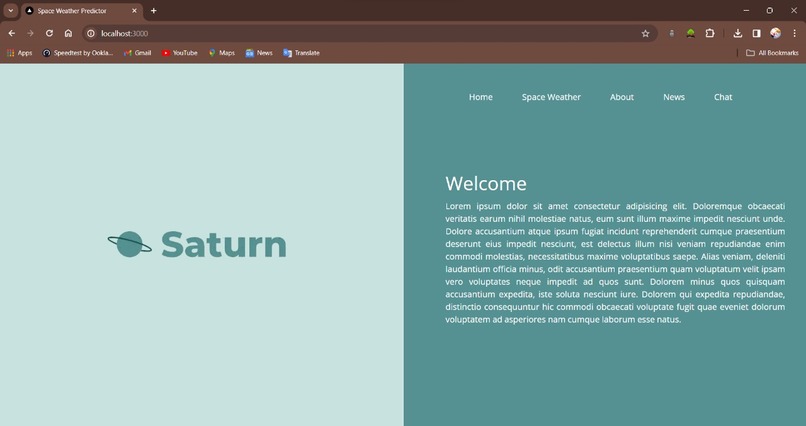
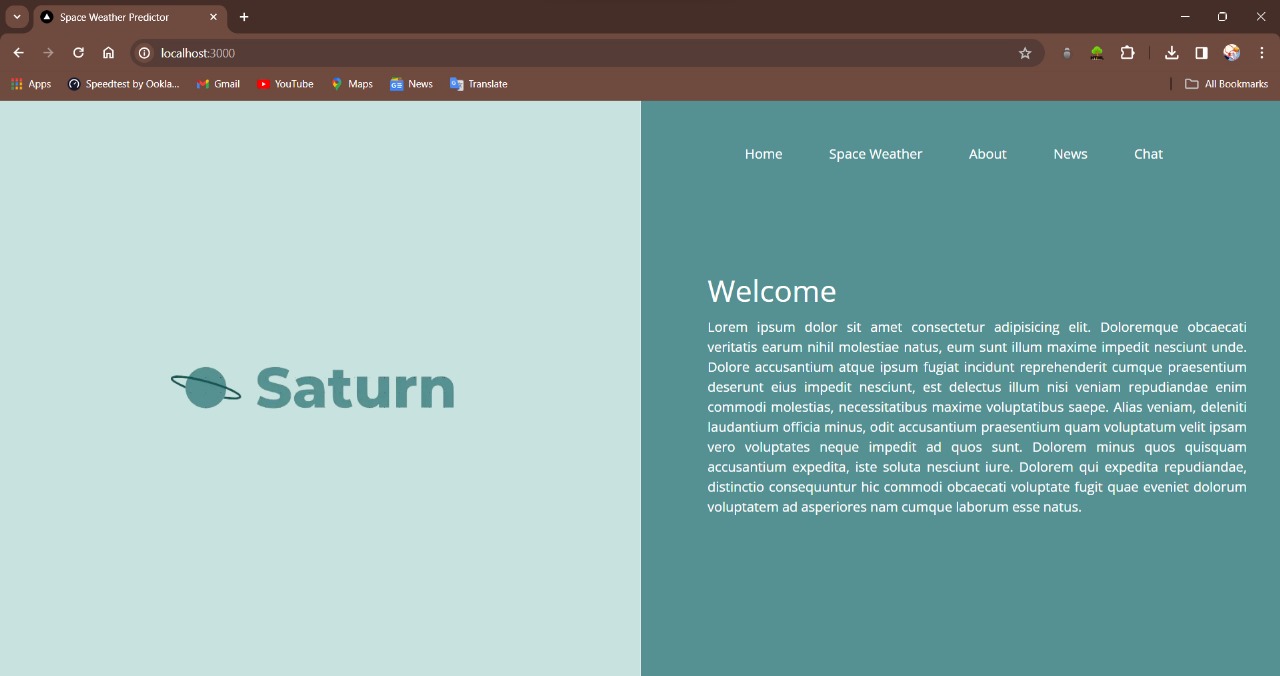
This is our home page
-
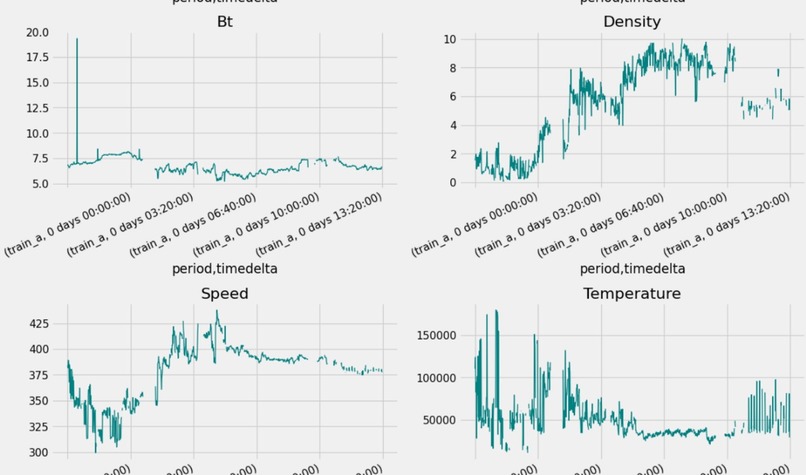
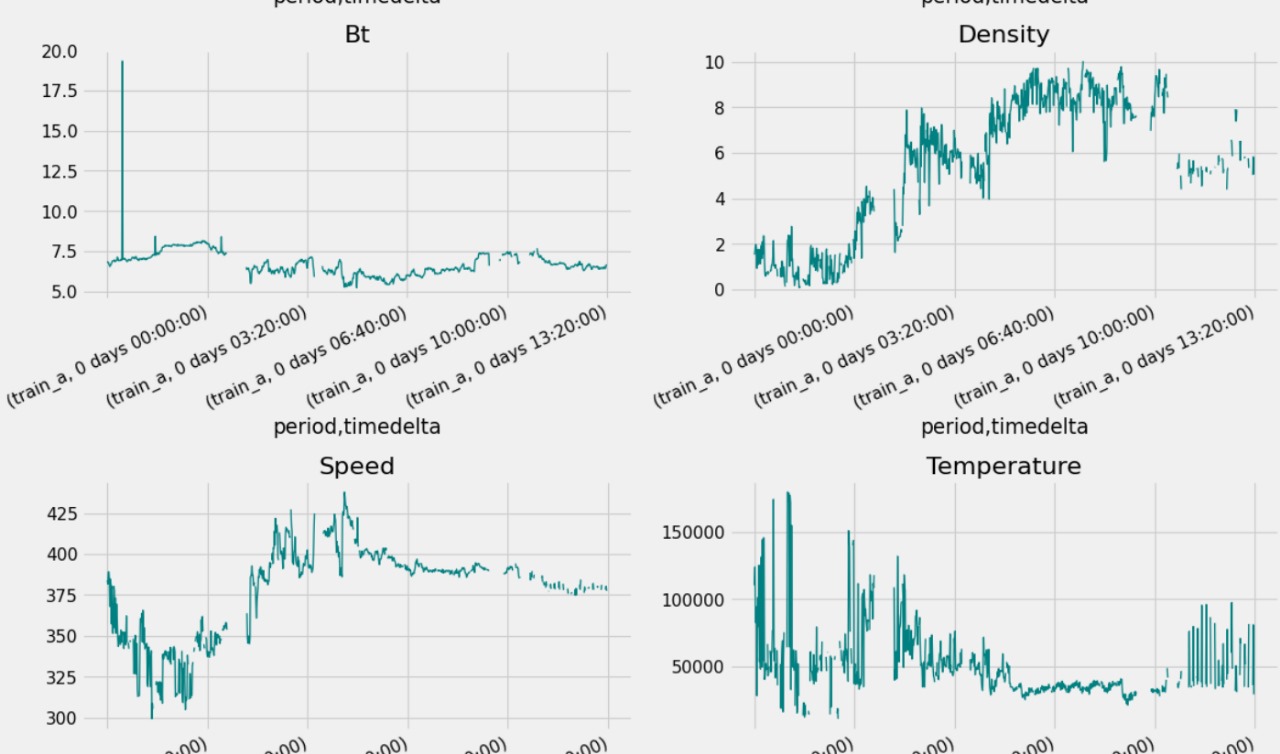
This our space weather prediction page
-
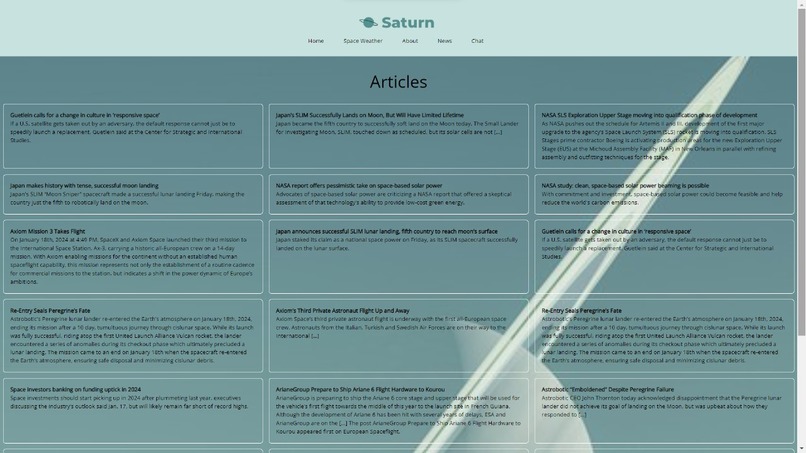
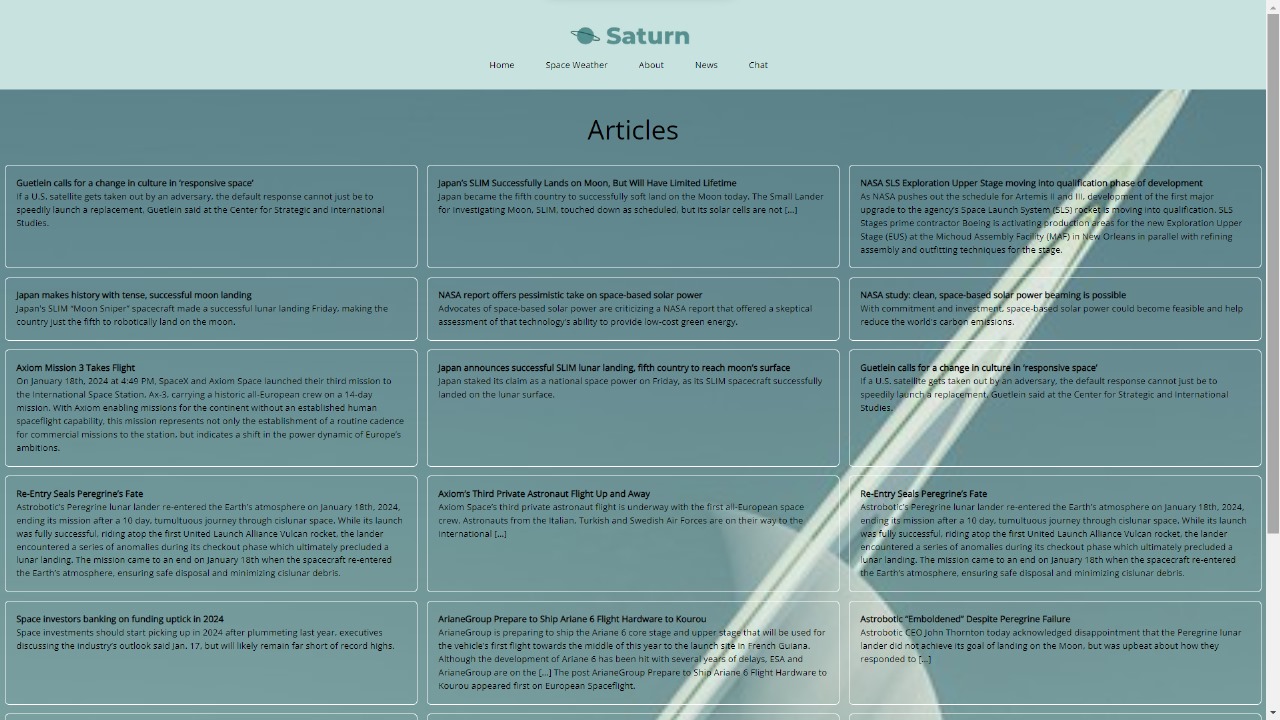
This is our news page to enhance knowledge in cosmology.
-
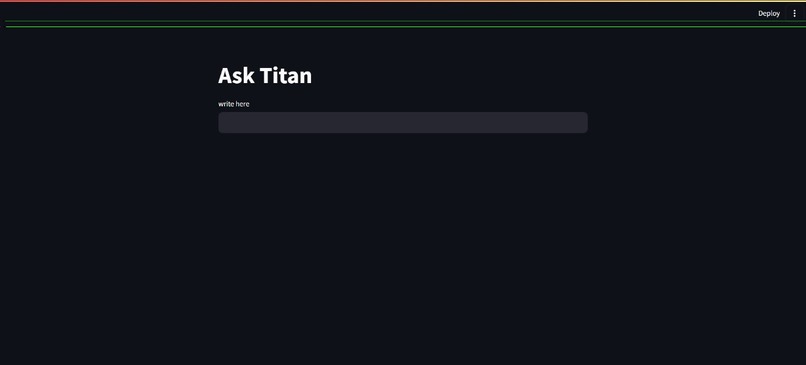
This is our chat bot page enhanced by streamlit.
-
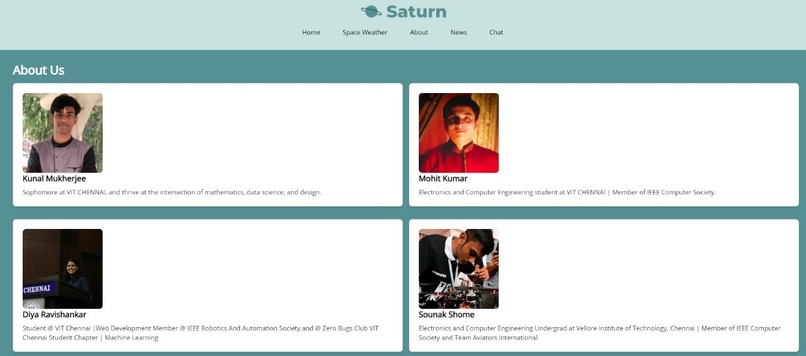
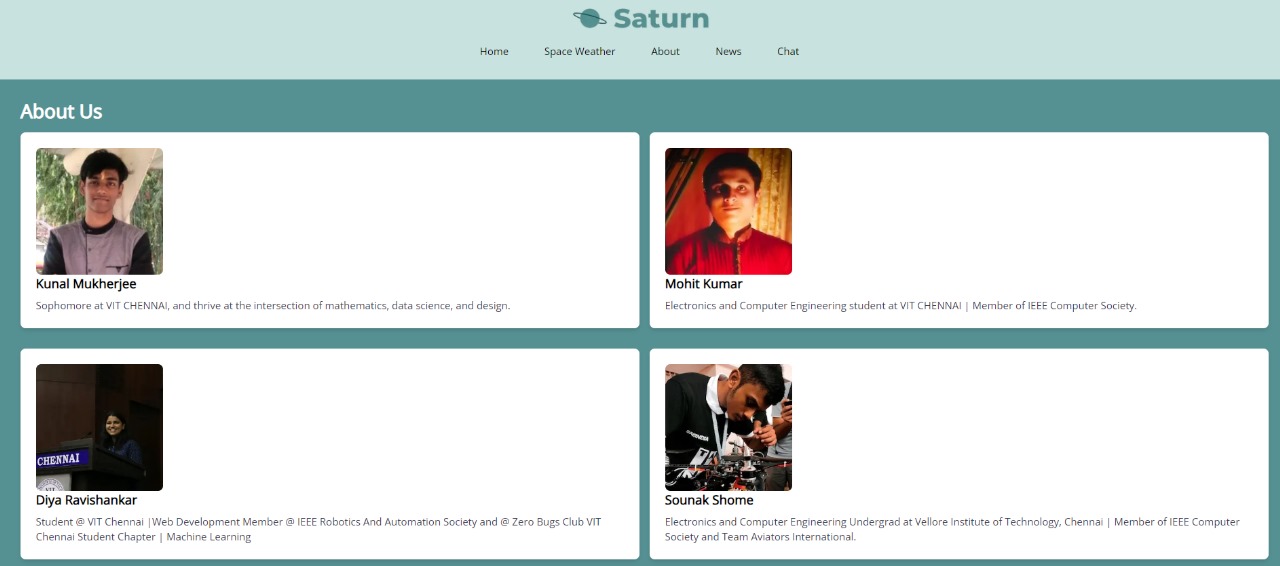
This is our aboutus page which gives information of our team members linked with linkedIn

Inspiration
Under starry Nevada skies, Dr. Evelyn "Suncatcher" Parker hunts storms on flickering screens. Not alien galaxies, but fiery sunspots threatening Earth's vulnerable tech. Years ago, a blackout in Quebec sparked her mission – to stand watch against the sun's tantrums. Helios Observatory, her sun-bleached outpost, is far from gleaming labs. Budget cuts have left them with duct-tape ingenuity and aging equipment. But Evelyn and her team – the code whisperer, the sunspot sleuth, the solar sentinel – are the fireflies of science, illuminating the unknown with passion. Days bleed into nights fueled by cold pizza and adrenaline. Sleep is a forgotten luxury when the world's heartbeat depends on their vigilance. Finally, with a weary triumph, Evelyn's model speaks: the storm misses Earth, by a hair's breadth. Relief washes over them, the tension as tangible as the desert heat. They've dodged a bullet, but the war is far from over. The near miss whispers of their precarious existence, a constant dance with the unknown. Yet, their victory isn't just about data; it's about hope. Hope for a future where humans aren't hostages to storms, but participants in the cosmic ballet. Dawn streaks across the desert as Evelyn stands on the observatory roof, wind whispering through her hair. Below, the world wakes, oblivious to their silent battle. In her hand, a sun-warmed pebble – a reminder of the planet they protect. Evelyn knows their fight is bigger than themselves. It's about safeguarding dreams, weaving a future where humans understand the sun's language, its story. And so, with the sun bathing her face, Dr. Evelyn Parker, the Suncatcher, turns back to her screens, ready for the next celestial dance, the next whisper on the solar wind.
What it does
Defying the cosmic tantrums: Our shield against solar storms
Our sun, the life-giving star of our solar system, sometimes throws invisible cosmic fits called solar storms. These outbursts can wreak havoc on satellites, power grids, and even disrupt our beloved internet. Don't worry, though! A team of space sleuths is on the case to protect Earth from these celestial temper tantrums. How are they doing it? Listening to the sun's whispers: By analyzing solar winds, they decipher secret messages about upcoming storms, like reading a cosmic weather forecast. Unraveling clues from past missions: Like space detectives, they piece together information from previous expeditions to predict future solar activity. Code magic and cosmic simulations: They harness the power of technology to create models that forecast storm trajectories and potential impacts. But this project isn't just about dodging solar bullets. It's about igniting a passion for space exploration and building a resilient future where we embrace the cosmos, not fear it. They're sparking curiosity and wonder through: Engaging space adventures and captivating stories Stunning visuals that bring the universe to life News sections that keep everyone up-to-date on cosmic happenings Remember, even small pebbles can change the course of a river. By understanding the whispers of the cosmos and sharing the wonders of space, we can inspire a generation to protect our planet and build a brighter future among the stars. Join the cosmic voyage! Explore, get curious, and let's dance with the universe in harmony.
Challenges we ran into
Braving the Data Frontier: Challenges and Triumphs
Even space explorers face uncharted territories, and in our quest to shield Earth from solar storms, we confronted two formidable challenges:
- Data scarcity:
Limited availability of solar wind and space weather datasets. Necessity to carefully select and utilize each precious data point. Constraints on model training and testing due to data scarcity.
- Tackling time series complexities:
Handling the unique nature of time-dependent data. Modeling the evolving patterns and relationships within time series. Accounting for temporal dependencies and trends. Despite these hurdles, we persevered:
Model exploration: We experimented with various model architectures to discover the best fit for our limited dataset. Data augmentation techniques: We strategically expanded our dataset to enhance model training and performance. Time series expertise: We delved into specialized methods and algorithms designed for time series analysis and forecasting. These challenges became catalysts for innovation, pushing us to explore new frontiers in data science and model development.
How we built it
Weaving algorithms like a cosmic tapestry:
Our code whisperers, the architects of this digital shield, transformed data into knowledge. Machine learning algorithms were trained and pruned, their branches reaching for hidden connections in the solar storm's fingerprint. Different models, each a unique lens on the solar storm, were crafted. Some danced with statistical probabilities, others painted the storm's trajectory across virtual canvases.
Accomplishments that we're proud of
Models aren't oracles; they need a human touch. Our solar sentinels, the experts in space weather, meticulously verified the model's predictions, weighing evidence and adjusting algorithms with the wisdom of experience. Collaboration was key. We partnered with research institutions and scientists around the world, sharing data, models, and insights, building a global defense network against the sun's fury.
What's next for Saturn
Futurescape: Where cosmic shields meet interstellar curiosity Our project, with its audacious aim to predict and protect against solar storms, holds within its core the seeds of a remarkable future. Let's peek through the telescope of possibility and witness a few potential landscapes:
A shield woven from stars: Imagine Earth cloaked in a dynamic, real-time shield, crafted from the insights gleaned from solar wind whispers and past mission data. This shield, constantly adapting to the sun's ever-changing temper, would protect our vital infrastructure – satellites, power grids, communication networks – from the brunt of solar storms.
Democracy of the cosmos: Data, once the domain of scientists and governments, now flows freely, empowering everyone to be an armchair space explorer. Interactive dashboards, immersive simulations, and citizen science initiatives democratize the study of space weather, fostering widespread understanding and engagement.
AI, our cosmic co-pilot: Imagine intelligent algorithms not just predicting storms but proactively mitigating their impact. Satellites autonomously reposition themselves, power grids reroute energy flows, and communication networks switch to backup channels – all orchestrated by AI in real-time, minimizing disruptions and safeguarding our technological fabric.
Interstellar bridge builders: Our understanding of solar storms leads to a deeper grasp of other stellar systems. By deciphering the language of their solar winds, we might even detect habitable planets or predict stellar flares that could threaten potential alien civilizations.
A symphony of science and wonder: The project becomes a global hub for space weather research, attracting the brightest minds across disciplines. Artists, educators, and storytellers weave the wonders of our project into immersive experiences, igniting a new generation's passion for science and exploration.
These are just glimpses of the futures that lie ahead. Our project, born from a desire to shield Earth, may well become a springboard for humanity's next giant leap – stepping out of our cradle and into the vast symphony of the cosmos, armed with understanding and guided by awe.
Remember, the future is not written in the stars; it's crafted by the dreams and actions of those who dare to look beyond the horizon. In the face of solar storms, let us not just build shields, but build bridges – bridges to a future where humans and the cosmos dance in harmony.
Built With
- clustering
- jupyter
- keras
- machine-learning
- next.js
- openai
- spacenews-api
- streamlit

Log in or sign up for Devpost to join the conversation.