Inspiration
Buying Bitcoin on an exchange is easy, but many people who own it have never held their own keys, backed up a wallet, or sent a payment themselves. Teachers can explain wallets, keys and fees, but at some point students need to try it, and nobody wants their first mistake to cost real money. I wanted a tool a Bitcoin teacher can open in class and use the same day.
What it does
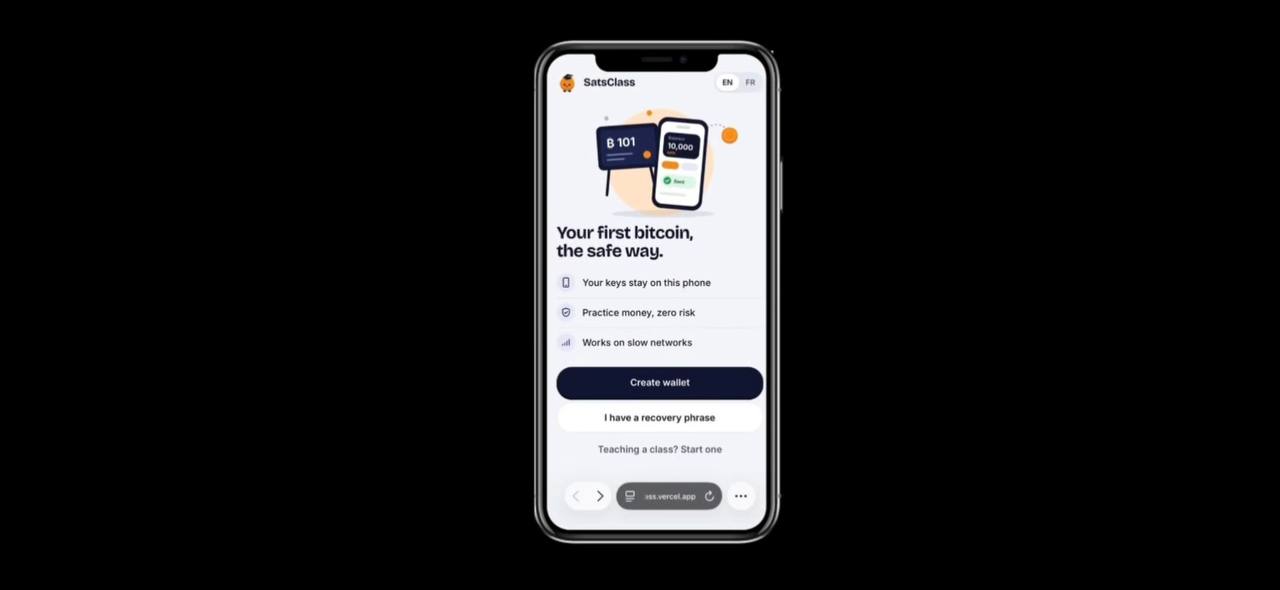
SatsClass is a Bitcoin wallet for the classroom that uses practice sats.
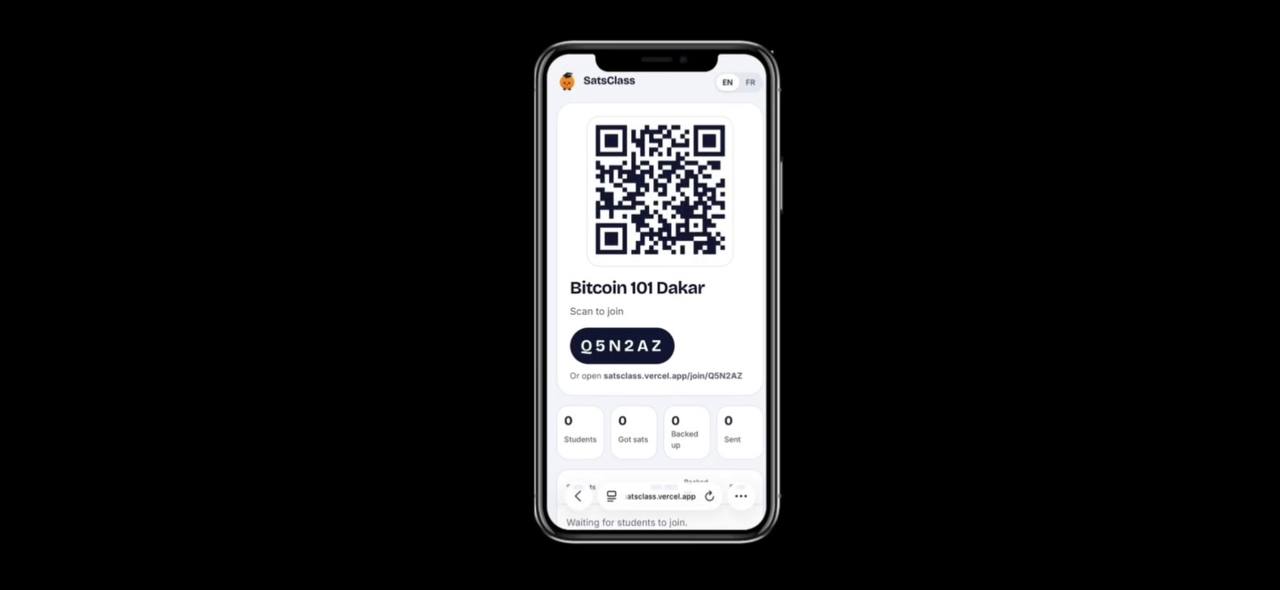
- The teacher creates a class and shows a QR code.
- Each student scans it and gets a wallet on their own phone. The keys are created on the phone and never leave it.
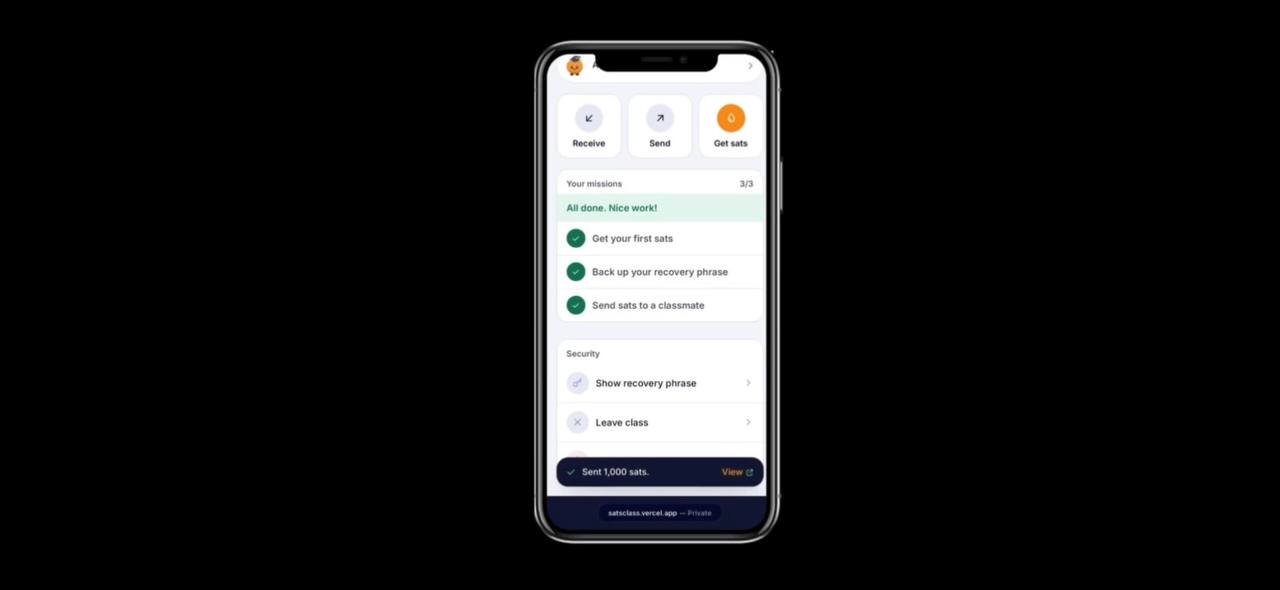
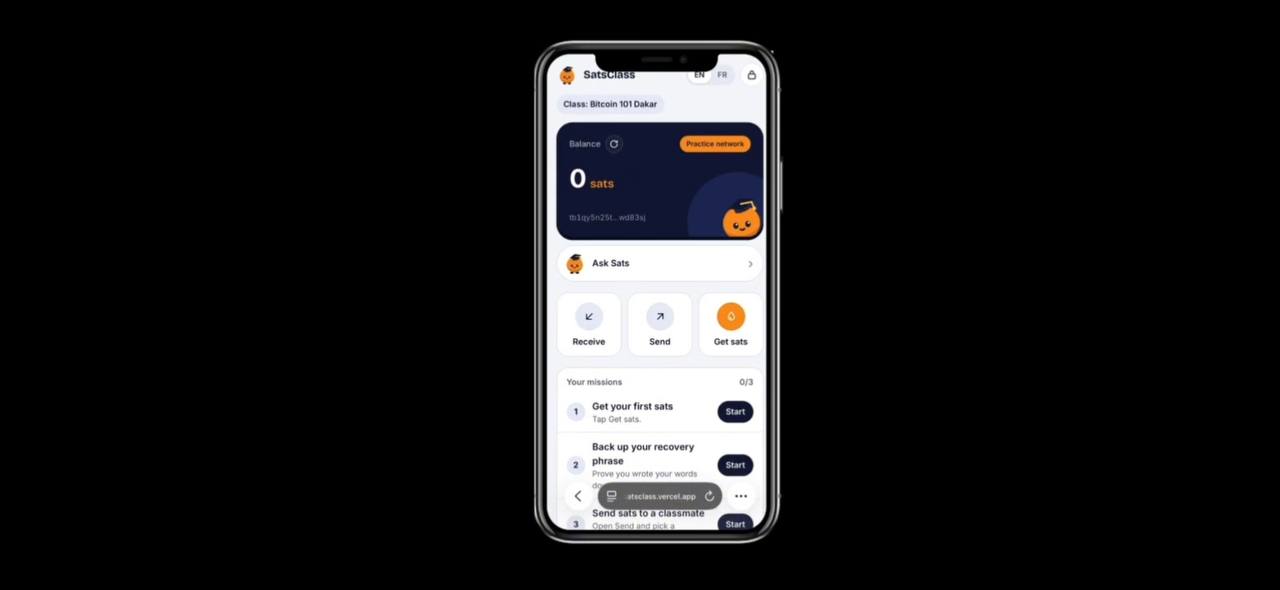
- Three missions: receive practice sats, check the 12-word backup, and send sats to a classmate.
- Live progress: the teacher sees who has finished and who needs help.
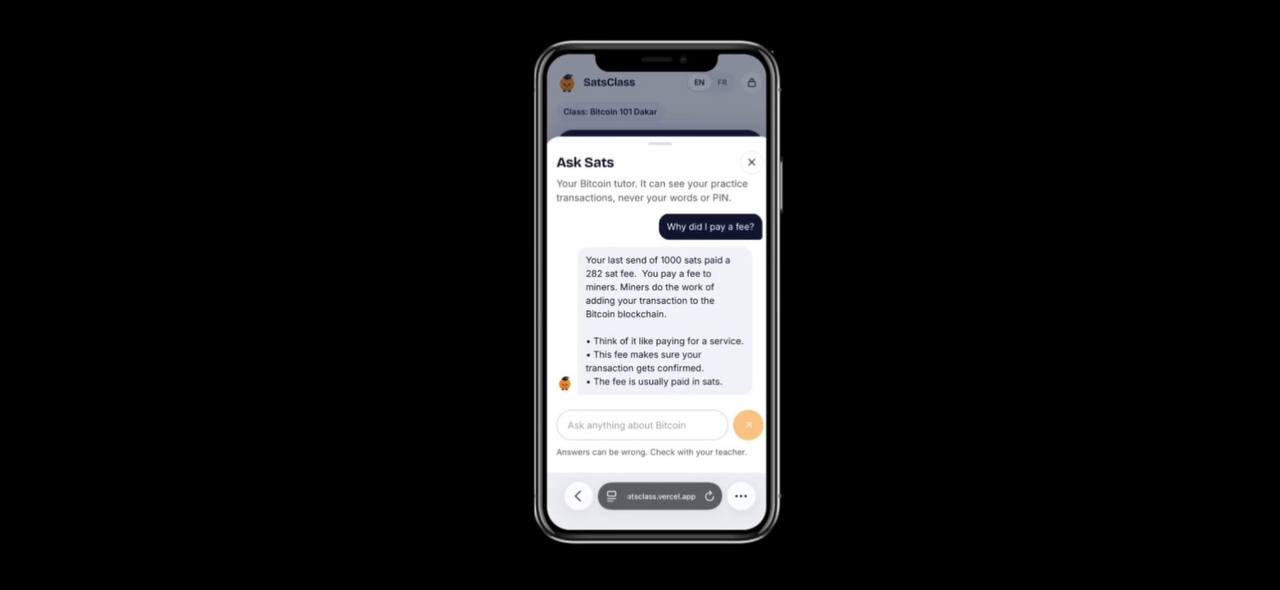
- Sats, the tutor: explains each payment and fee in English or French, using the student's own transaction.
- Lightning: on a self-hosted setup, students pay for a coffee over Lightning and get a receipt in under a second.
Primary user: Bitcoin teachers and meetup organizers running beginner classes. Reach: one teacher running two classes a week with 25 students each means 50 people a week sending their first Bitcoin payment safely.
How I built it
- Next.js + TypeScript, mobile first and light enough for slow networks (444 KB first load).
- bitcoinjs-lib, bip32, bip39: a BIP84 wallet that signs transactions in the browser. The recovery phrase is encrypted with the PIN (AES-GCM, PBKDF2) and stays on the phone.
- Bitcoin signet (Mutinynet) for the live site, and Bitcoin Core regtest in Docker for one-command local setup with seed data.
- LND for Lightning, with least-privilege macaroons (the shop node can only create invoices).
- Upstash Redis for classes, rate limits and faucet locks.
- Vercel AI Gateway for the tutor, with a guard that blocks recovery phrases from being sent.
- GitHub Actions: unit tests plus a full Docker integration test that makes a real Lightning payment.
Security by design
- Keys never leave the student's phone. The server never sees a recovery phrase or PIN.
- Written threat model (STRIDE), security policy, and validated inputs on every API route.
- Rate limits, one faucet claim per student, and a lock so two claims cannot spend the same coins.
- No personal data stored: only a nickname, deleted after 48 hours.
Challenges I ran into
- Keeping the faucet safe from abuse and double spends.
- Proving the send mission without trusting the client: the server decodes the signed transaction and checks that it pays a classmate.
- Getting the tutor to explain the student's real transaction in plain words, not a generic answer.
- Making the app fit small phones without hiding the main buttons behind the browser bar.
Accomplishments I'm proud of
- A full flow that really works: create a class, join, receive, back up, send, and track progress live.
- Tests, CI and a real Lightning payment in the integration test, not just a demo.
- English and French from day one.
What I learned
Teaching self-custody is more about confidence than features. Short missions, practice money and a tutor that explains your own payment make the first step feel safe.
What's next for SatsClass
- Pilot SatsClass with Bitcoin teachers in Senegal.
- Add Wolof, reviewed by native speakers.
- A hosted Lightning node so every class can try Lightning.
- Make the first load even lighter for slow mobile data.
Links
- Live app: https://satsclass.vercel.app
- Code: https://github.com/thesithunyein/satsclass
- Demo video: https://youtu.be/_-4RMNiNE-w
Built With
- ai
- bitcoin
- docker
- github-actions
- lightning
- lnd
- next.js
- react
- redis
- signet
- typescript
- upstash
- vercel
- vitest
