-
-
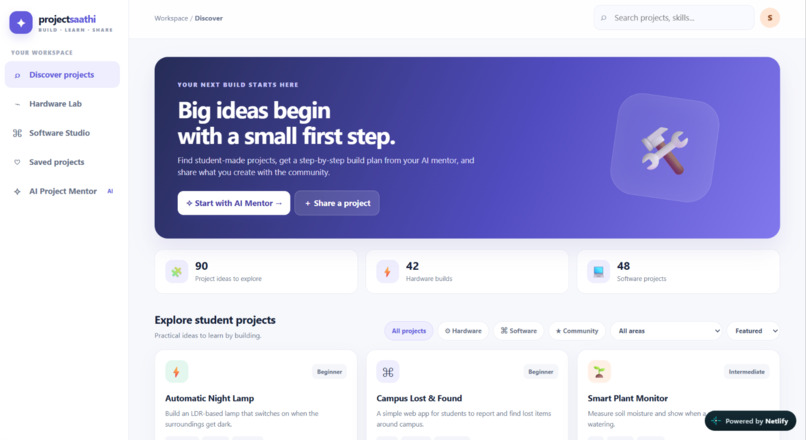
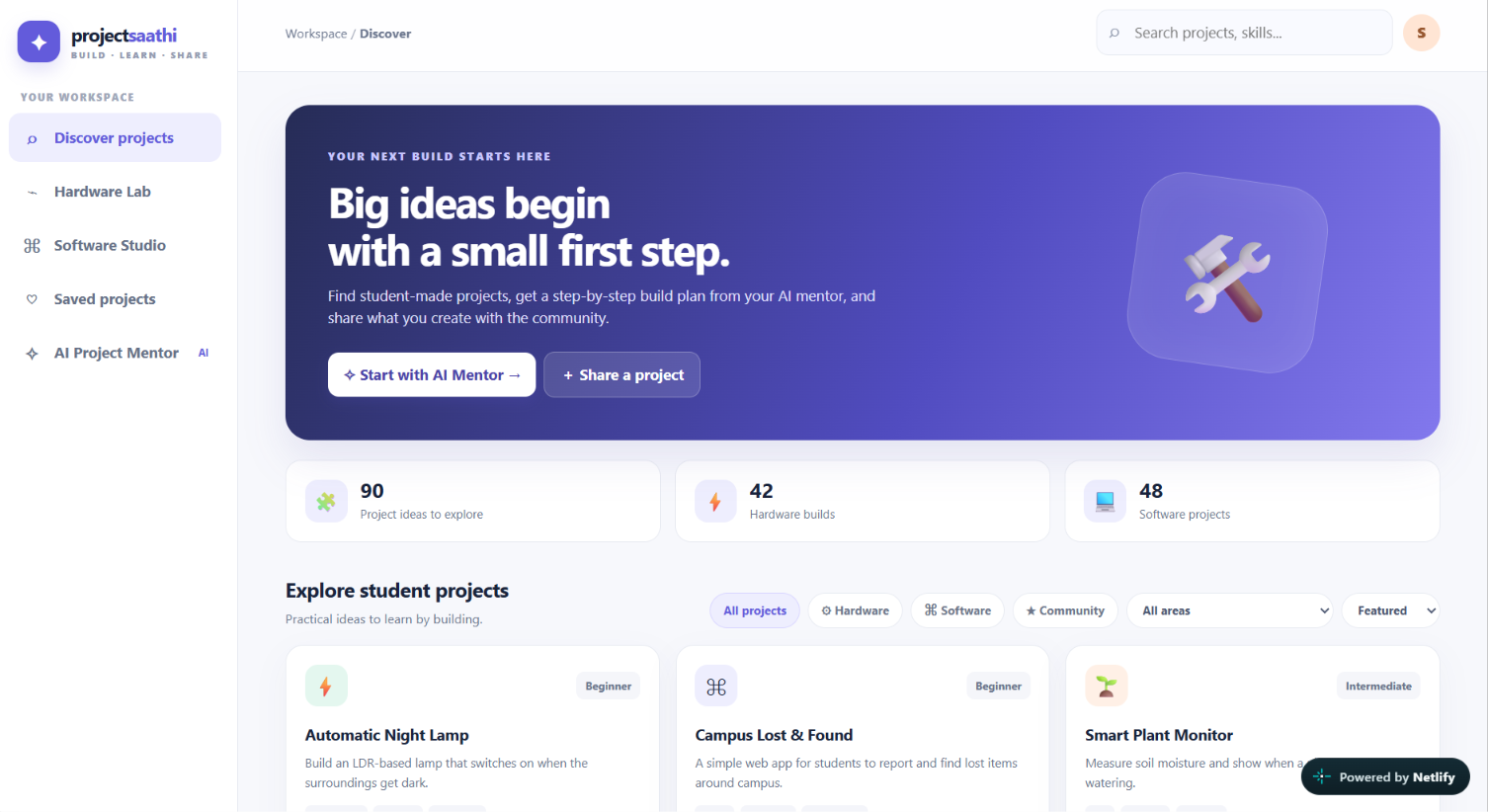
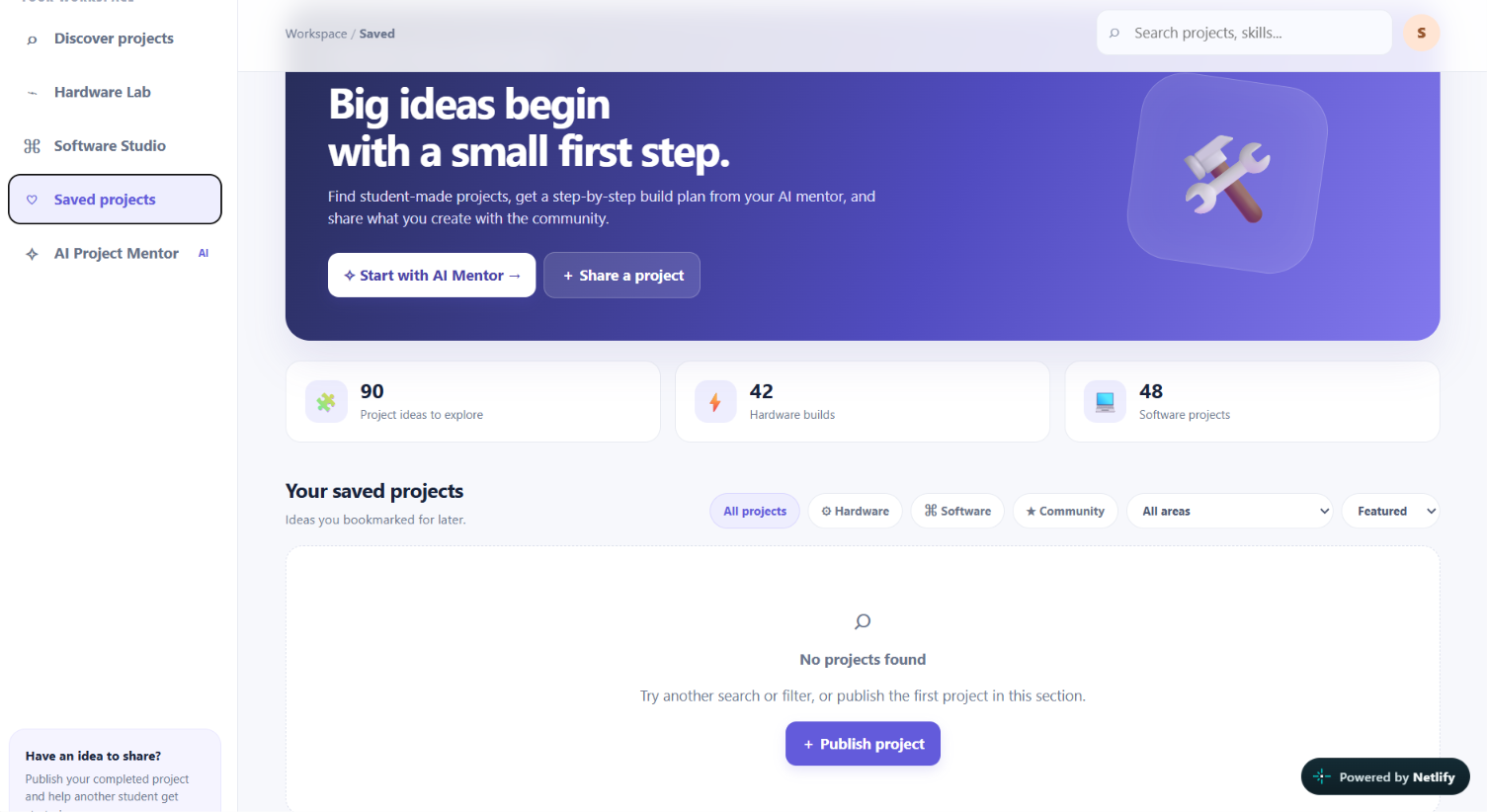
starting interface
-
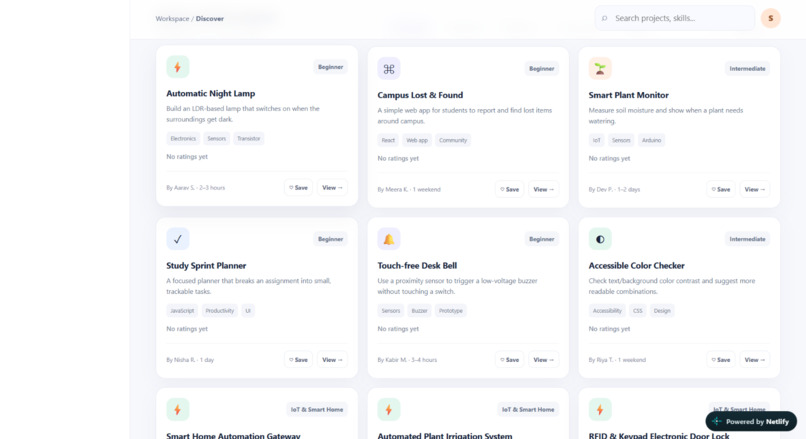
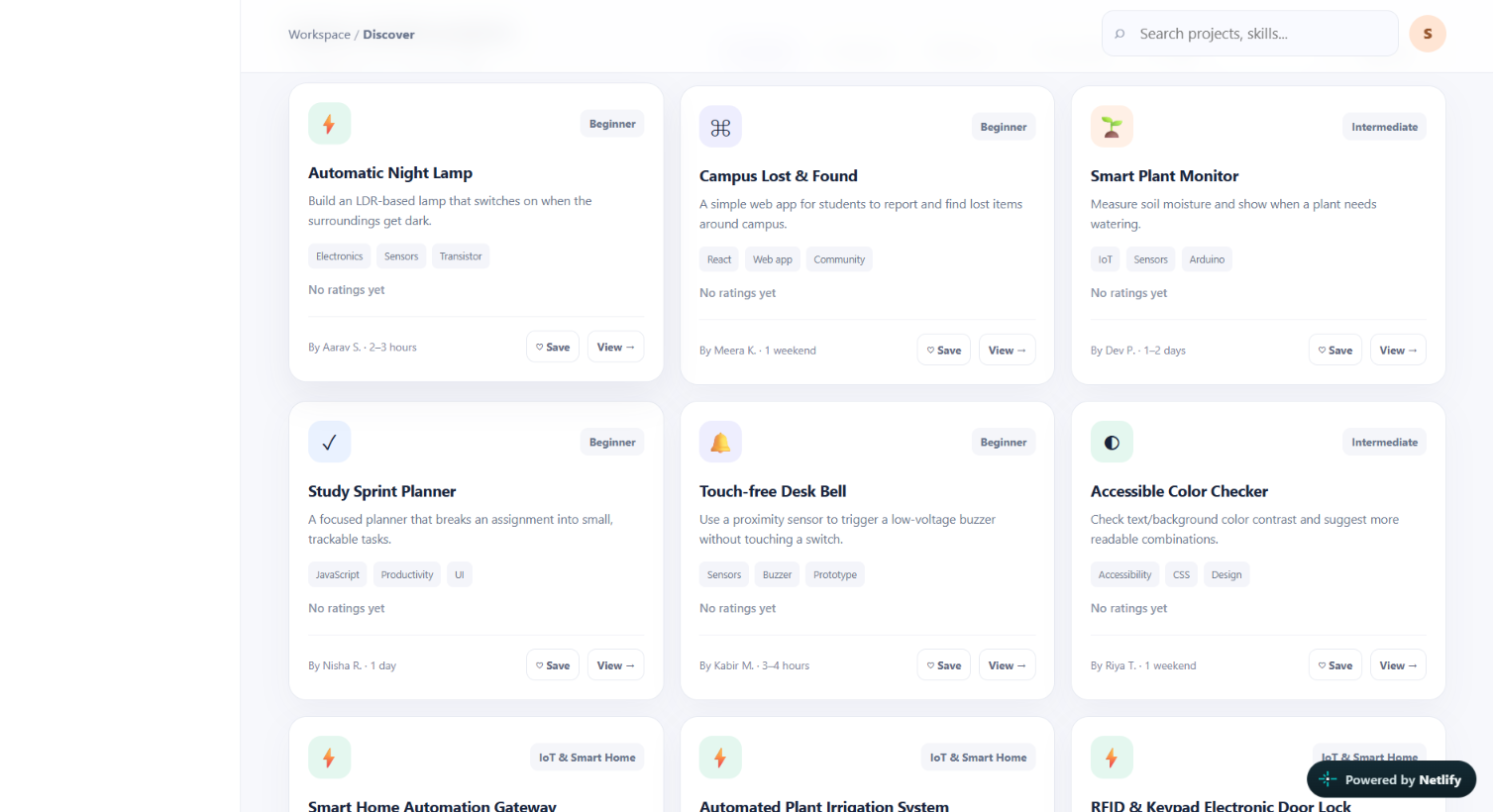
all projects are there
-
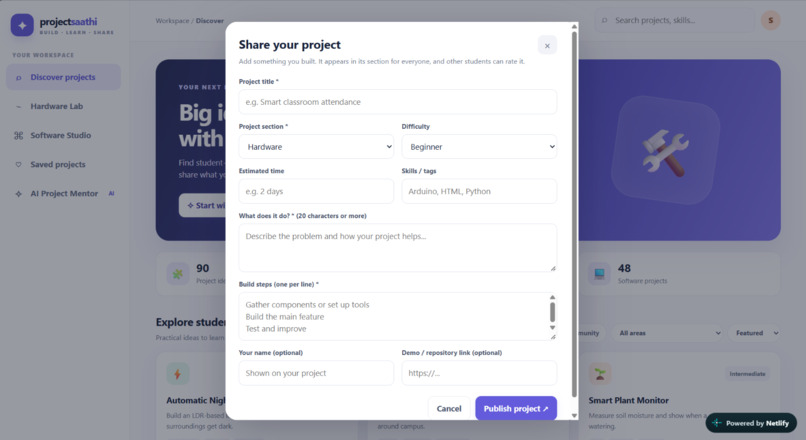
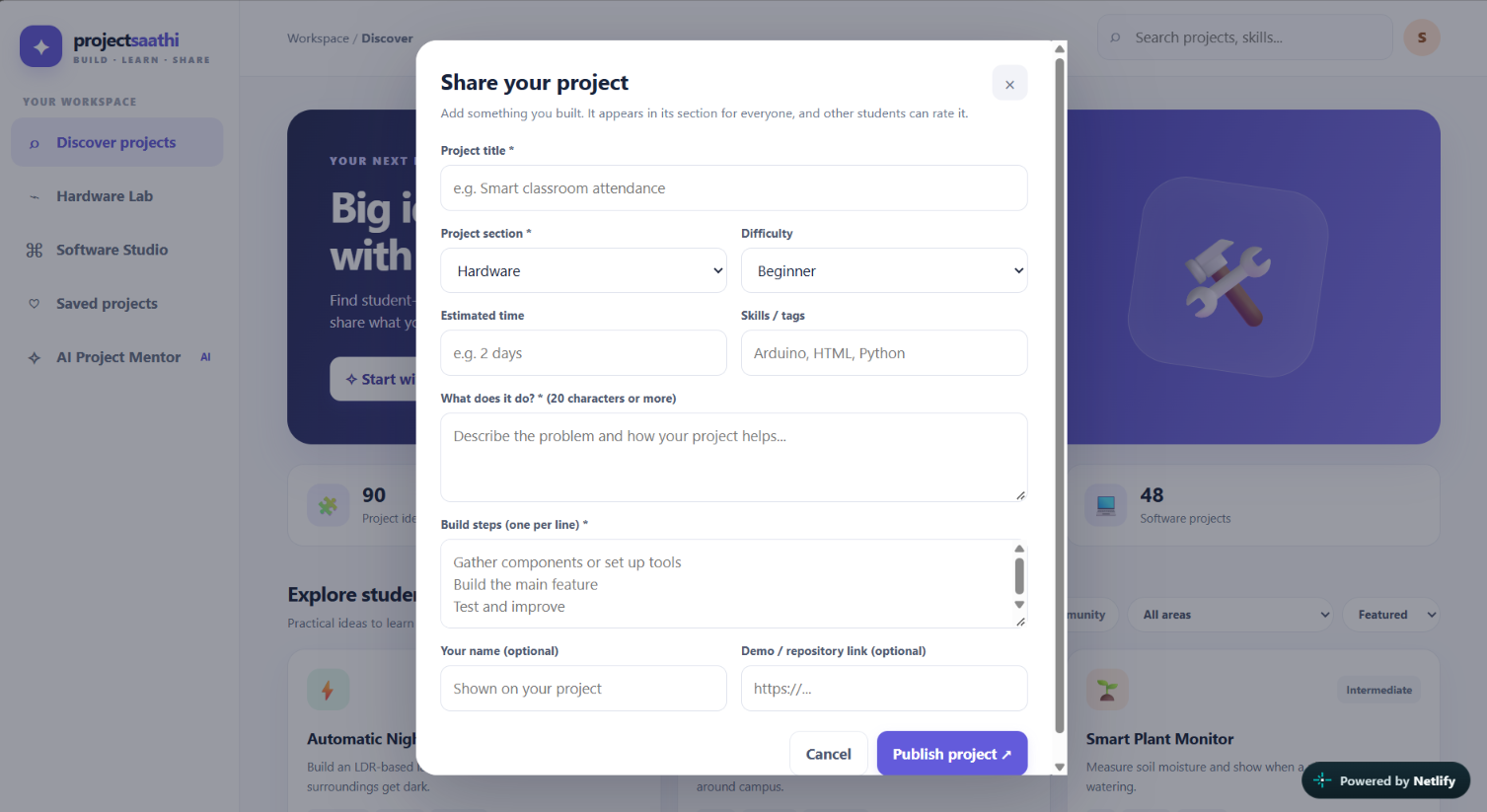
option to add the details of the different project made by different users which is not listed in this
-
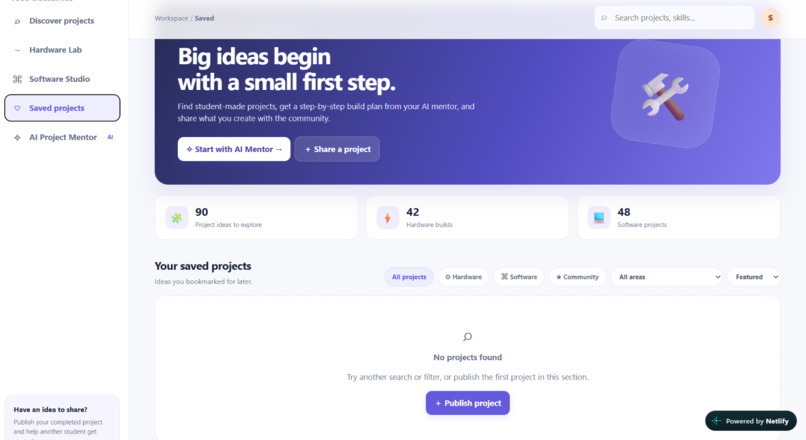
here are the saved projects
-
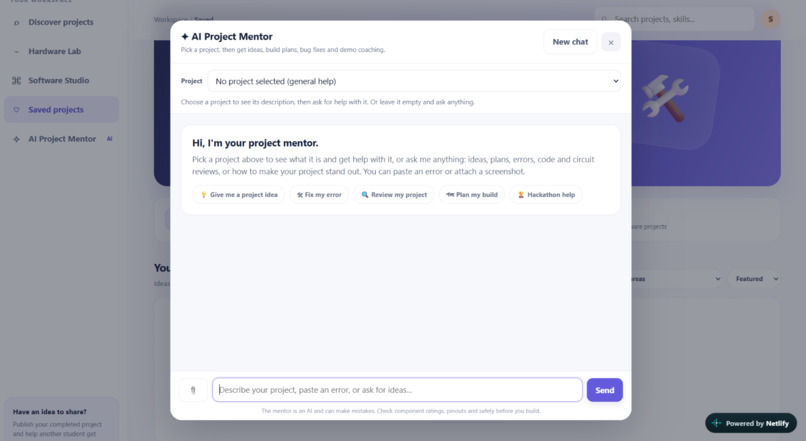
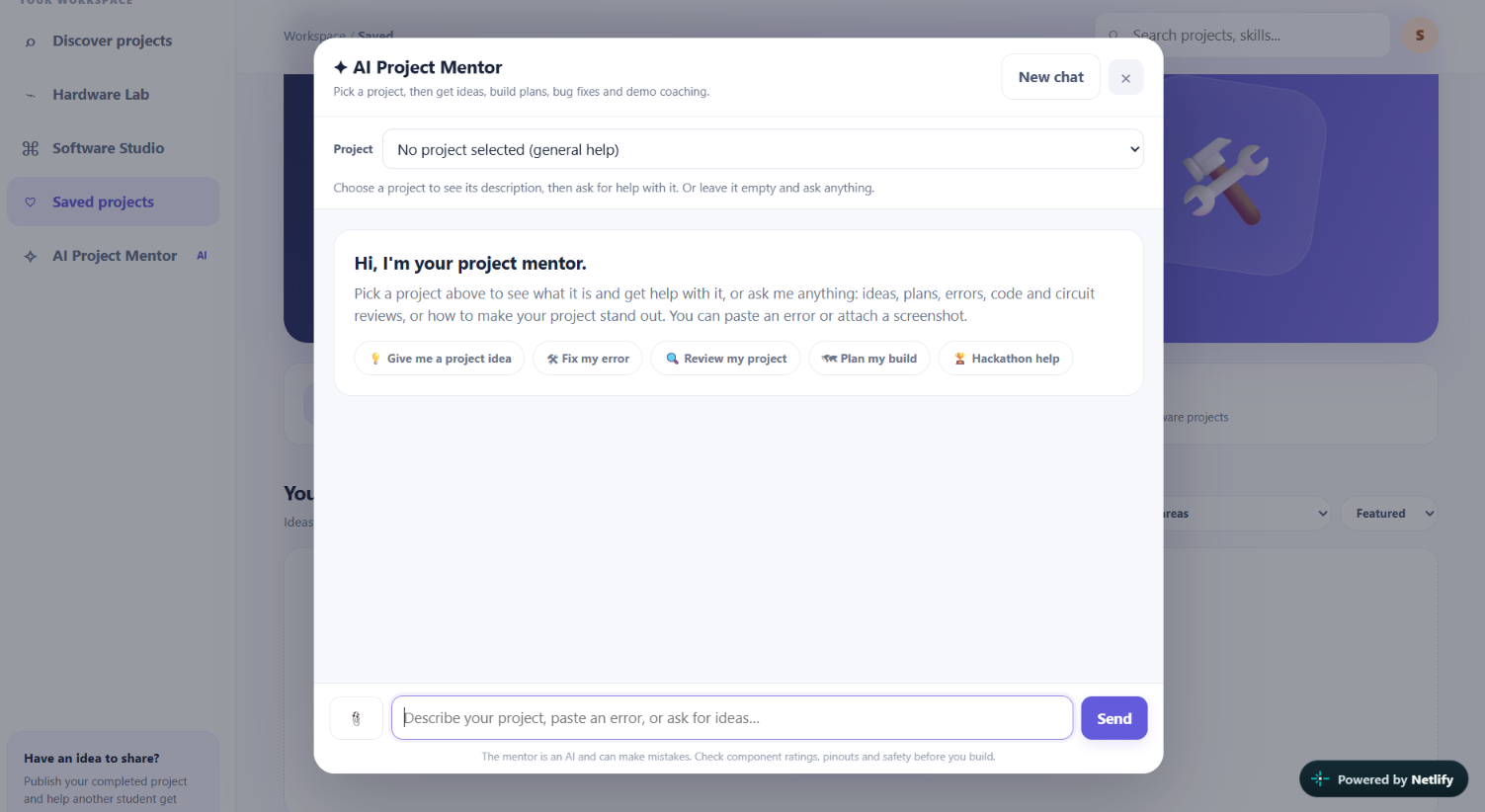
AI for help
Inspiration
Many students want to build a hardware or software project but get stuck at the start: they don't know what to build, which parts or tools to use, or how to fix the error that stops them halfway. Good project ideas are scattered across the internet, and mentors are not always available. We wanted one place where a student can find a project, understand it, get unstuck, and share what they build.
What it does
Sathi AI is a project hub for students with a built-in AI mentor.
- Hardware Lab and Software Studio: a catalog of 84 project ideas (39 hardware, 45 software) with the components or tech stack and a plain-language "how it works" for each. Students can search, filter by area, and sort by top rated or newest.
- AI Project Mentor (powered by Claude): a full chat that remembers the conversation. A student picks any project, reads its description, and asks for an explanation, build plan, parts list, or ideas to make it unique. They can also paste an error or attach a screenshot and get the likely causes and an exact fix.
- Community uploads: students can publish their own unique projects. They appear in the right section for everyone and are marked as new.
- Star ratings: every project can be rated 1 to 5 stars so students get feedback and others can find the best projects.
How we built it
- Frontend: a single-page site in HTML, CSS and vanilla JavaScript, with a streaming chat window and a project picker.
- Backend: a small dependency-free Node.js server that keeps the API key private, rate-limits requests, and streams Claude's replies to the page as they are written.
- AI: the Claude API, with a system prompt that explains the platform, the selected project and the student's goal. It sends the project's details with each question so the answers stay on topic.
- Data: we parsed two project compendium PDFs into a structured catalog. Community projects and ratings are stored in a JSON file on the server, shared between all visitors.
Challenges we ran into
- The source PDFs were incomplete and some entries were cut off at page breaks. We kept only what was really there, flagged the partial entries, and made the mentor say when it is filling gaps from general knowledge.
- Keeping the API key safe meant putting the AI behind our own server instead of calling it from the browser.
- Some catalog projects involve mains electricity, so we taught the mentor to explain the concept and guide a safe low-voltage version instead of live-mains wiring.
- Making ratings fair: one rating per visitor per project, and you can't rate your own project.
What we learned
How to stream AI responses to a web page, how to give an AI the right project context, how to turn messy PDF text into clean data, and how much safety rules matter when an AI gives hardware advice.
What's next for Sathi AI
- User accounts, so ratings can't be repeated by clearing browser data
- A real database and moderation tools for community uploads
- A complete catalog, filling in the missing and cut-off compendium entries
- Image-based wiring checks, saved project workspaces, and a public deployment


Log in or sign up for Devpost to join the conversation.