-
-
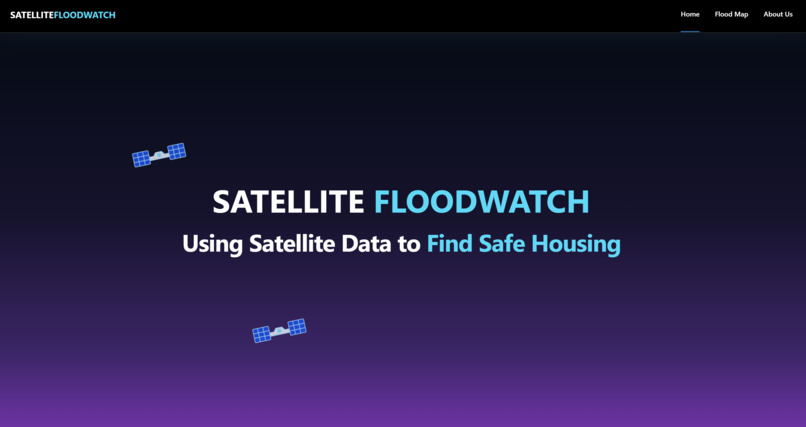
Home Page
-
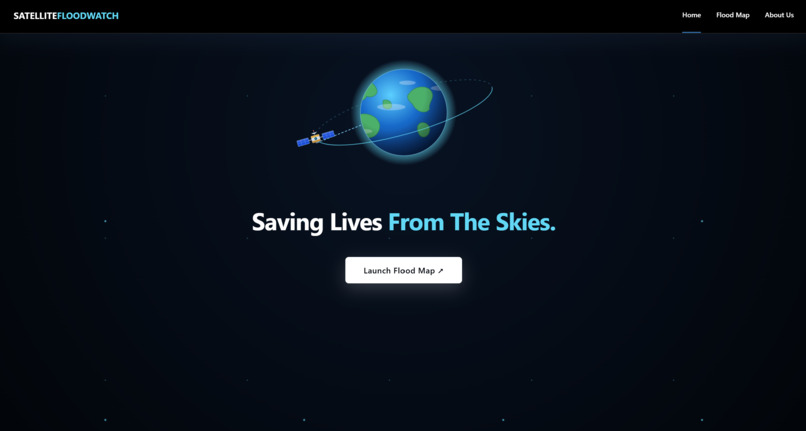
Part of Home Page
-
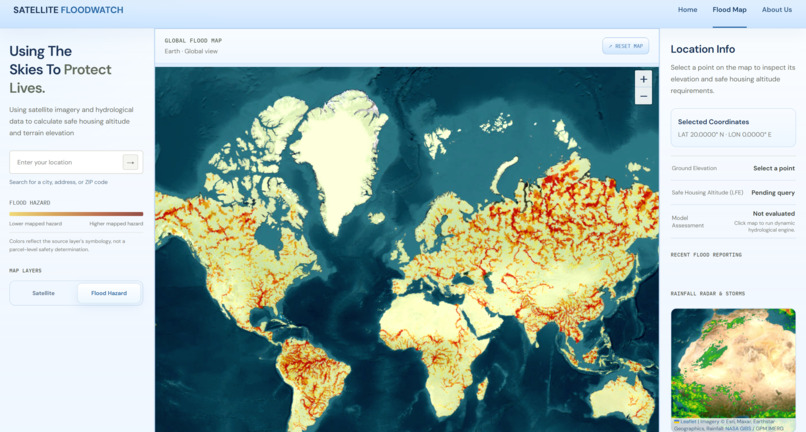
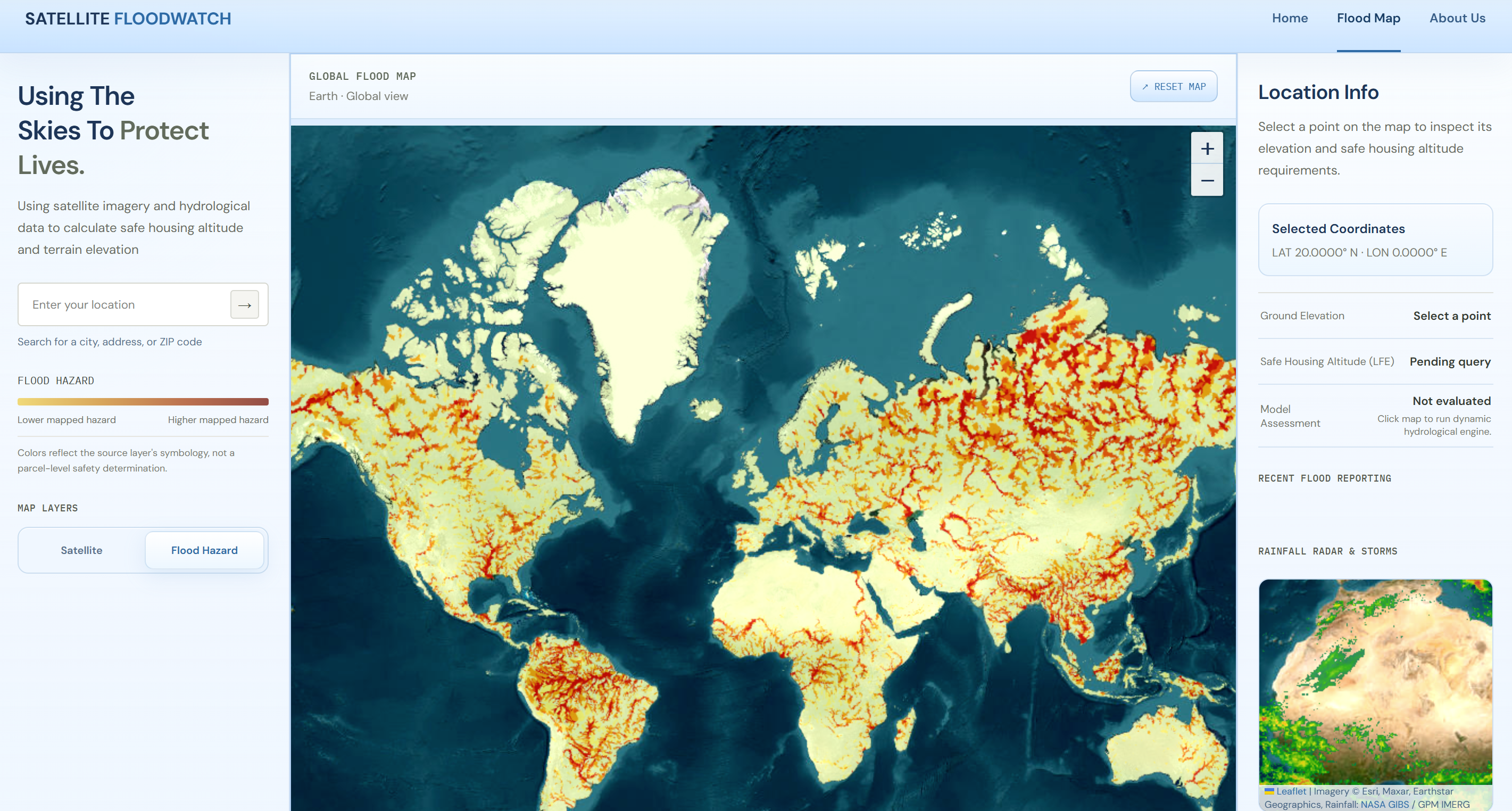
Flood Map
-
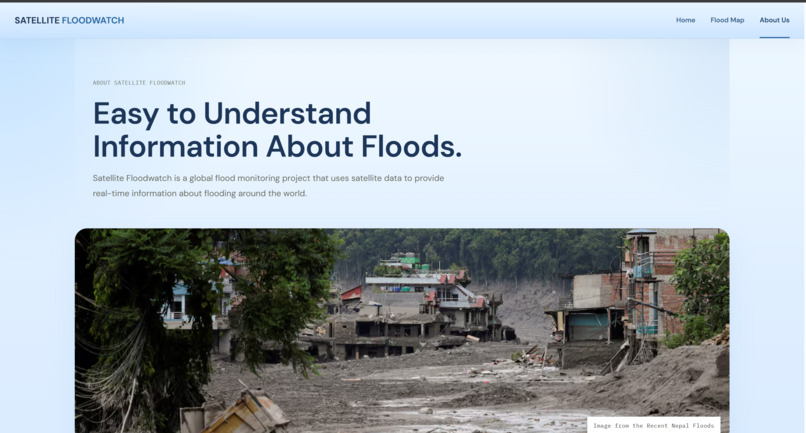
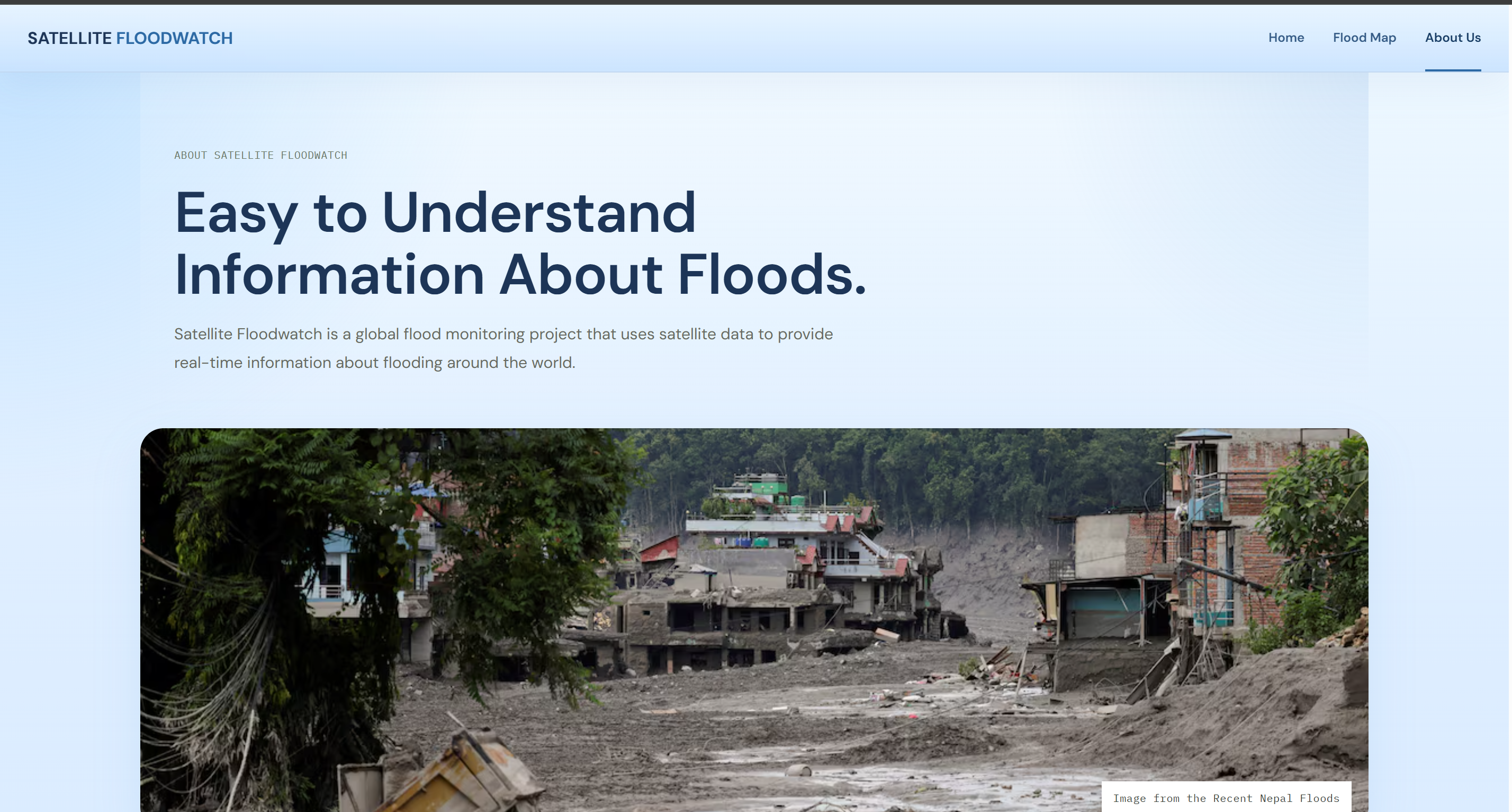
About us Page
Inspiration
Floods take the lives of many civilians annually, accounting for around 47% of disasters. Just recently, Nepal unfortunately faced one of these grave events. A glacier collapse and avalanche resulted in numerous flash floods washing over Northern Nepal, causing more than 1,000 deaths and leaving more than 5,000 people still missing.
What it does
-Measures ground elevation -Measures the safe housing altitude -Determines whether the area is safe from floods or not -Displays a rainfall and storm radar
How we built it
We used Python, Javascript, CSS, and HTML. Python was the backend language. We used Claude and Copilot to create a rough draft of the frontend. We sourced NASA satellite APIs and geographical sites to construct an interactive map that analyzed global precipitation and flood levels in real time. *To calculate the risk of flooding in an area, we implemented a point based system. The data was used **to calculate this system, taking from official flood alerts, mapped 100-year flood zones, rainfall, river **discharge, terrain, and recent flood events. Score of 1 indicating that there is no risk at all, all the way to a score of 15, which indicates high risk flooding. *
Challenges we ran into
The data that was displayed on the website would not be accurate to the data imported The location info would not show any of the calculated data Calculations would sometimes be incorrect or correct for some of the cases Some of the locations would be inaccurate
Accomplishments that we're proud of
We were able to get the flood map to display accurate, live data. The rainfall and storm radar feature was able to work and display a secondary map. Point-system calculations worked.
What we learned
How to effectively pull data from the web and incorporate it into websites How to use APIs for programs How AI can be used to boost and make work more efficient
What's next for Satellite Floodwatch
**Continuous live updates and forecasts on flooding and precipitation globally


Log in or sign up for Devpost to join the conversation.