-
-
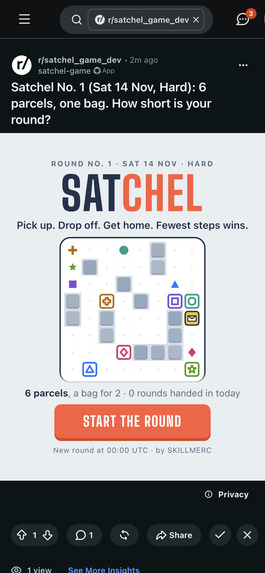
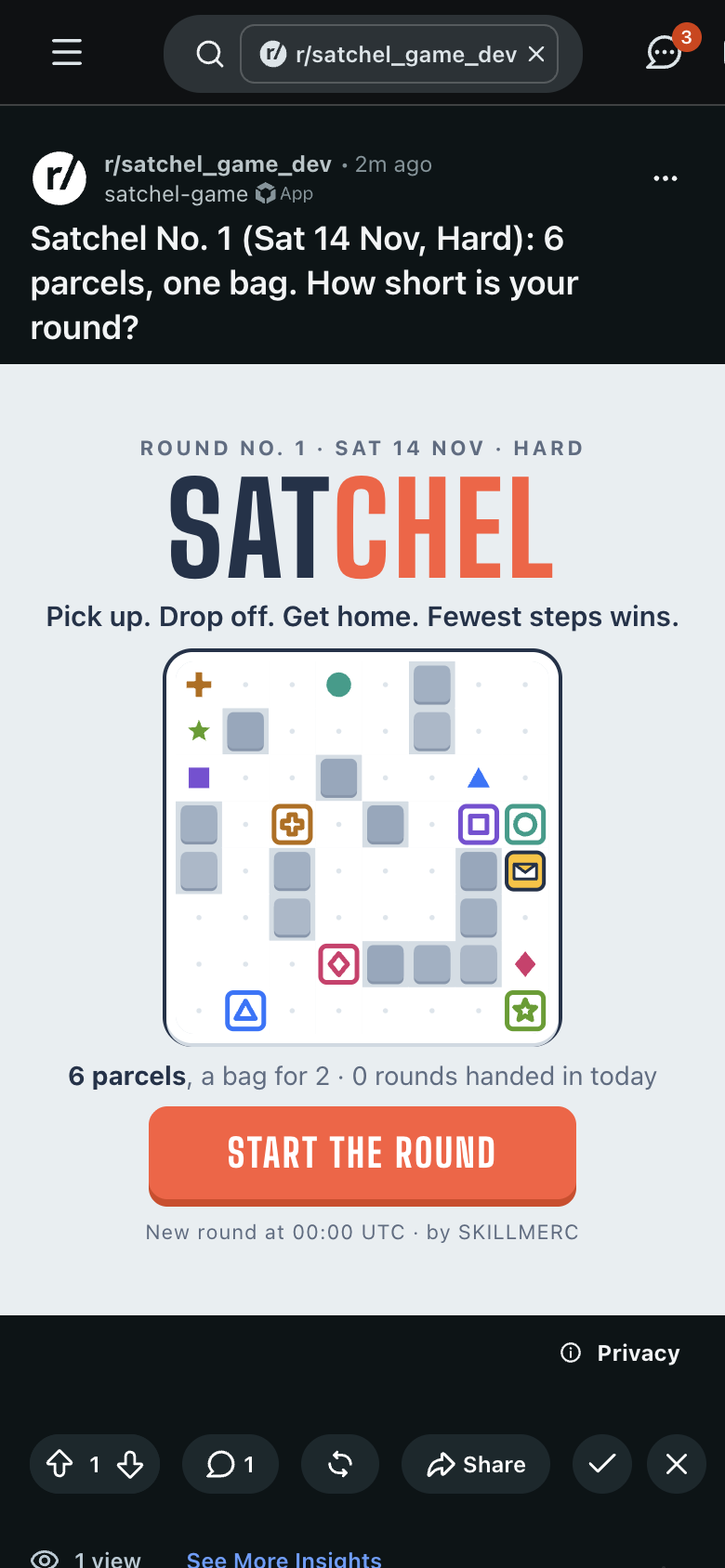
The post in the feed: today's real map, drawn from the post's own data.
-
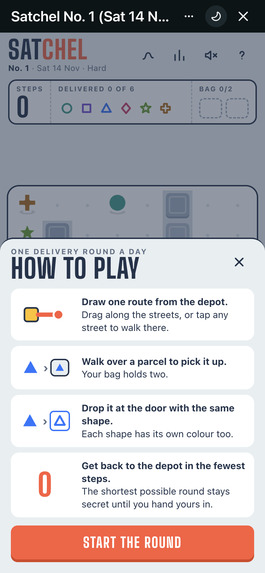
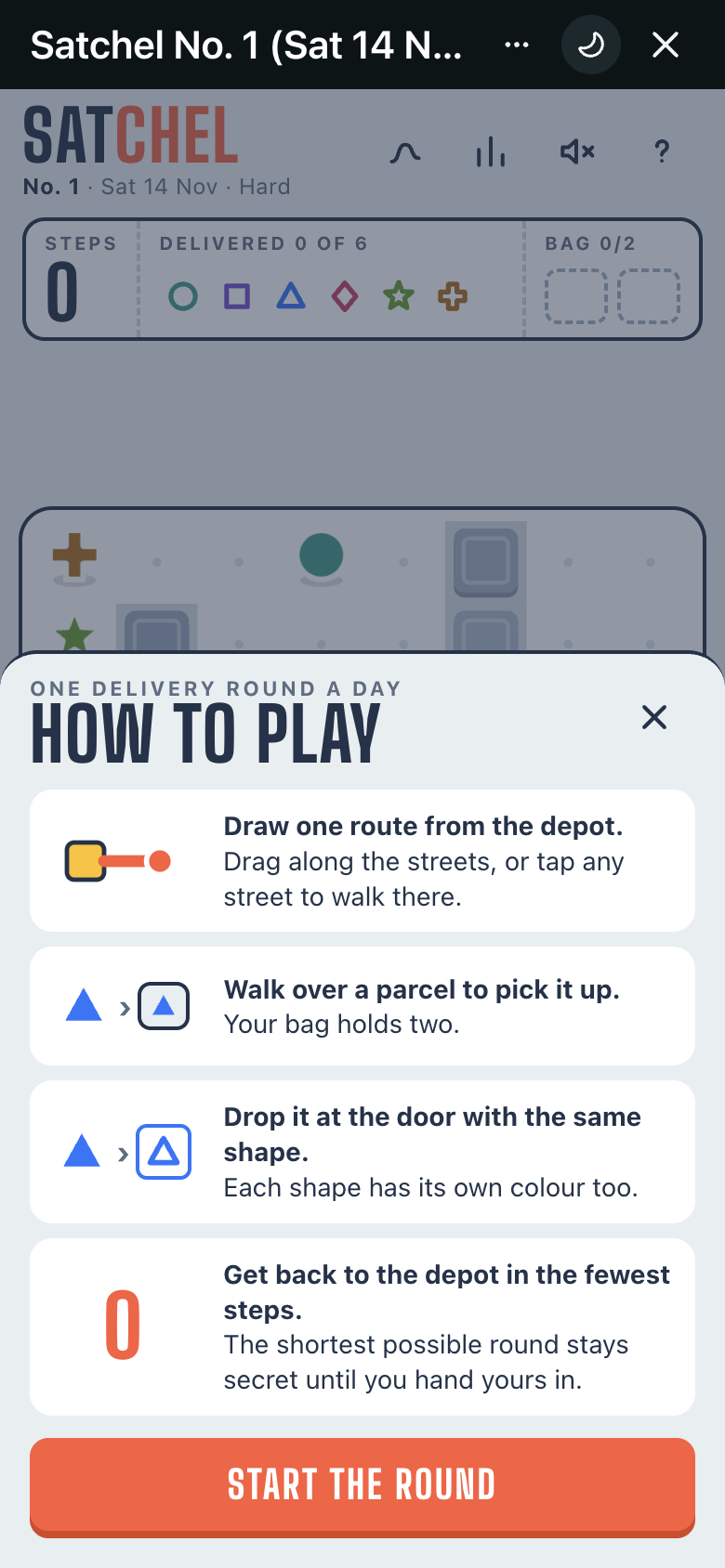
First run: the whole game in four lines.
-
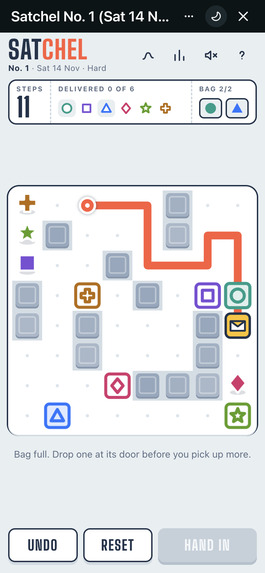
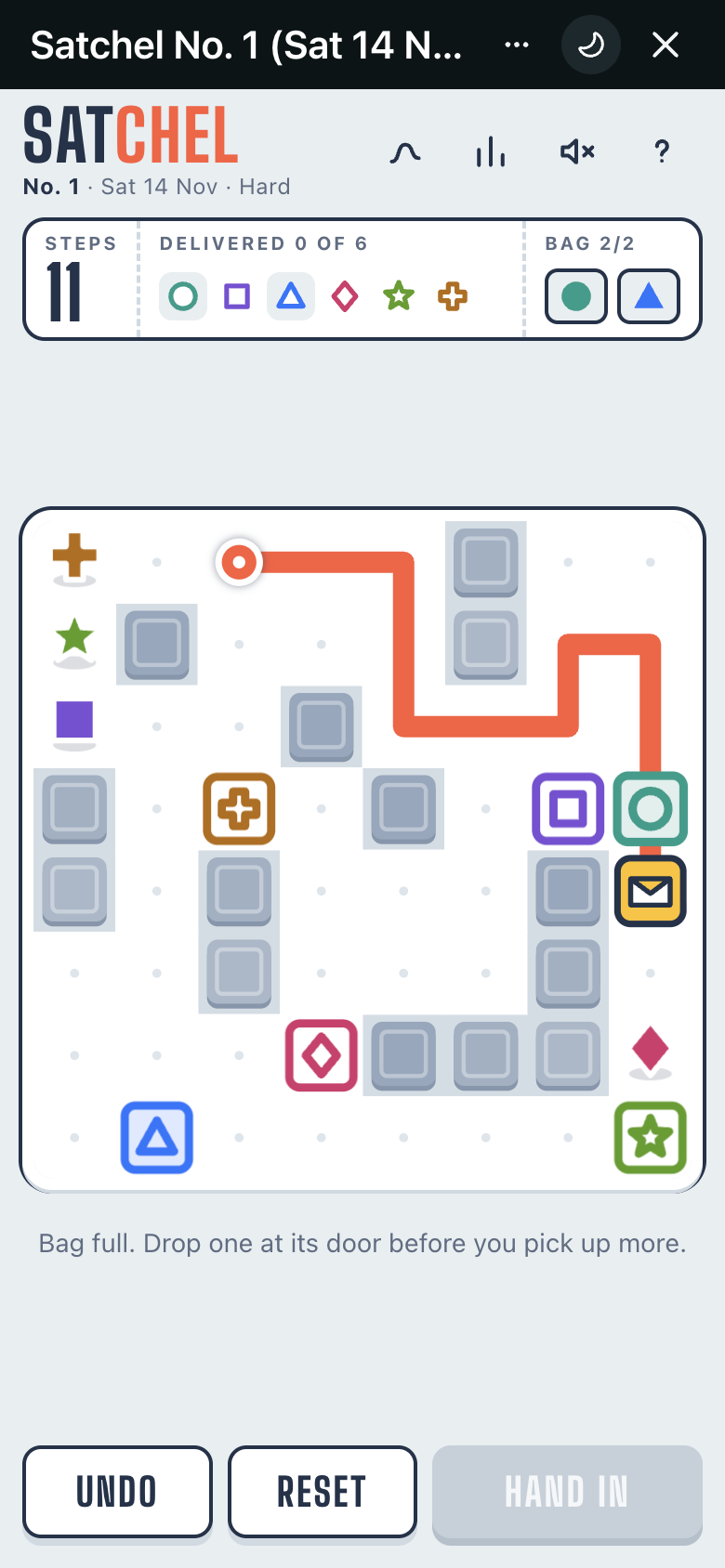
Bag full. Parcels and doors match by shape as well as colour.
-
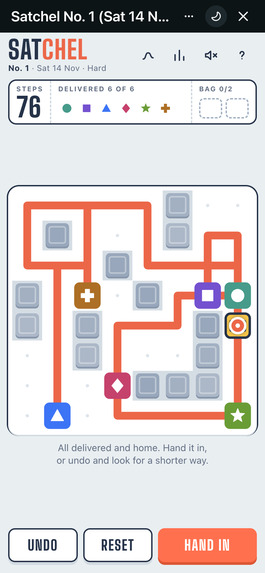
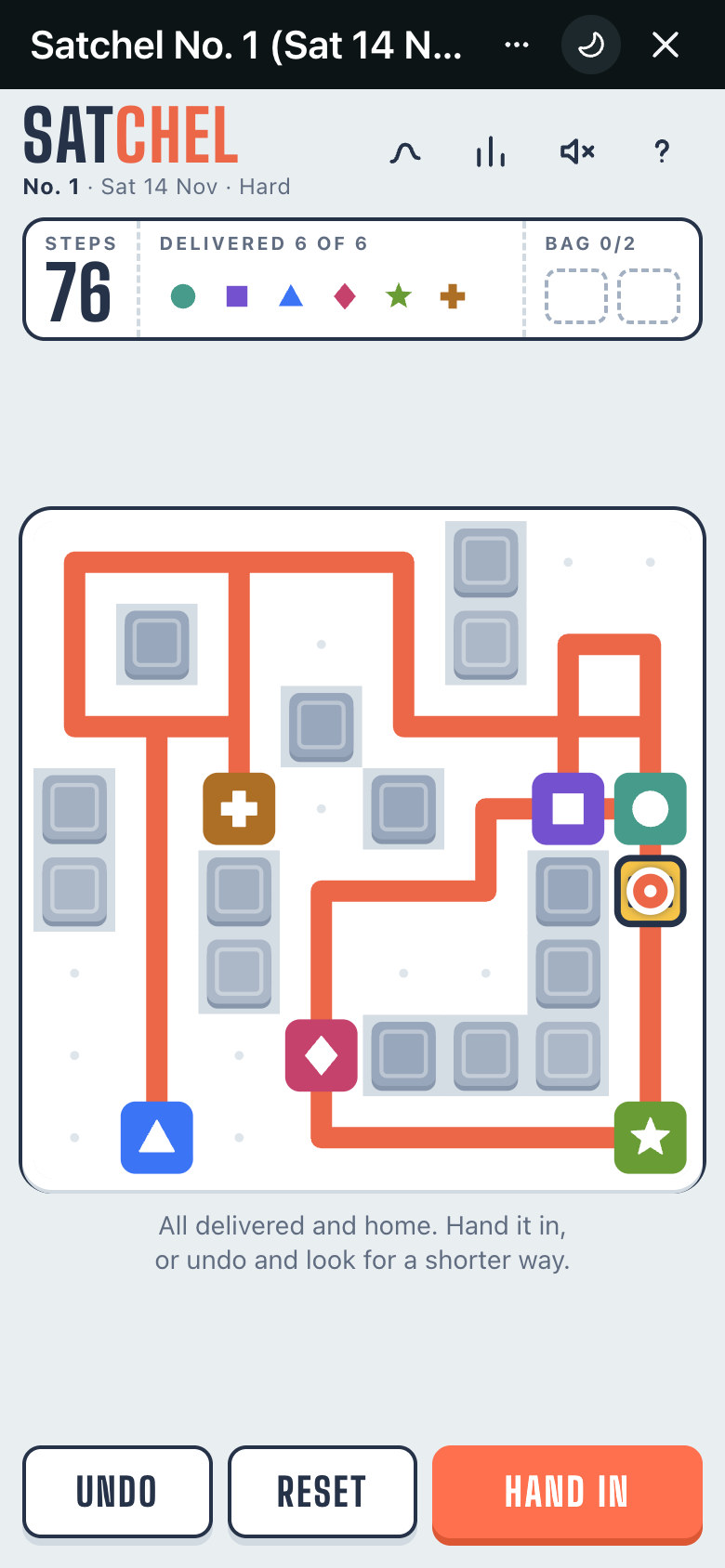
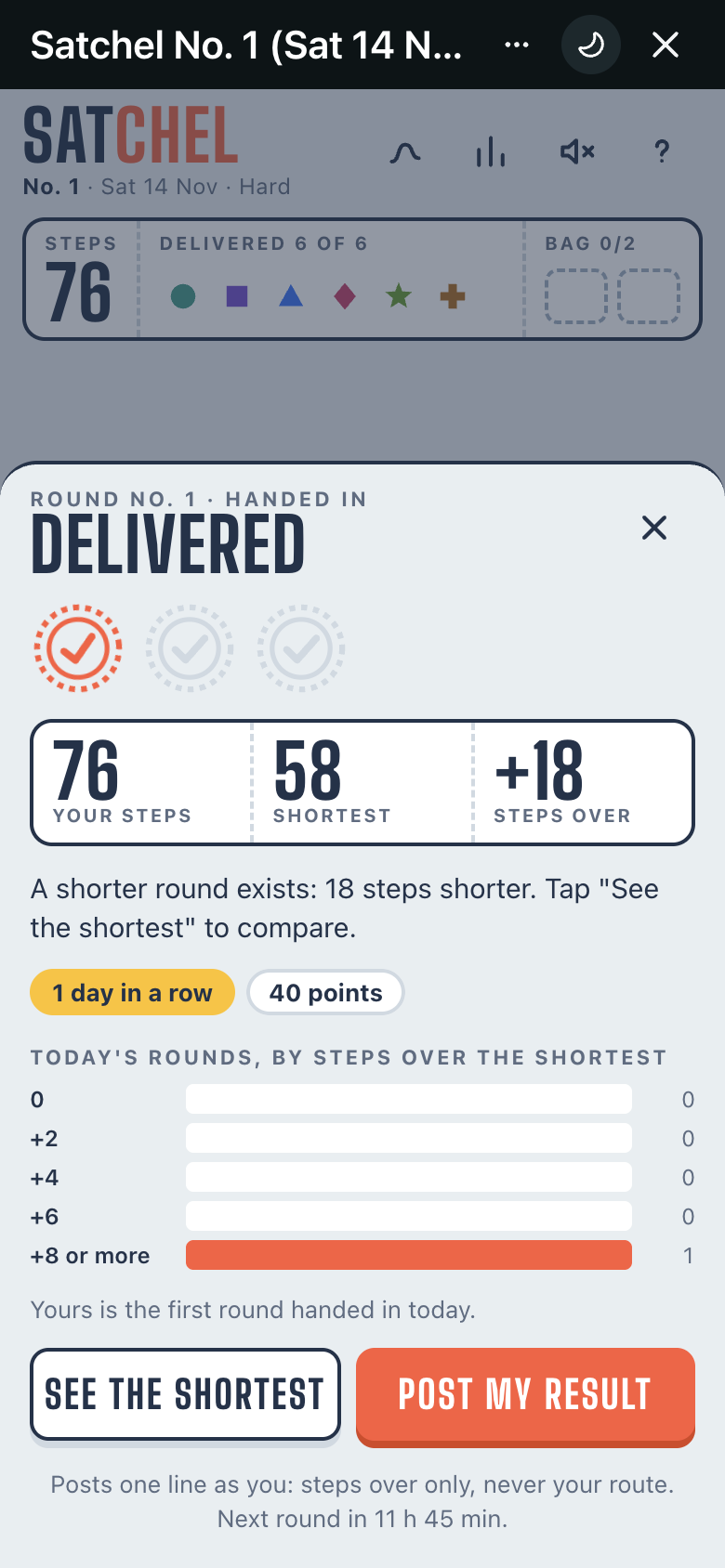
All delivered and home in 76 steps. Hand it in, or look for a shorter way.
-
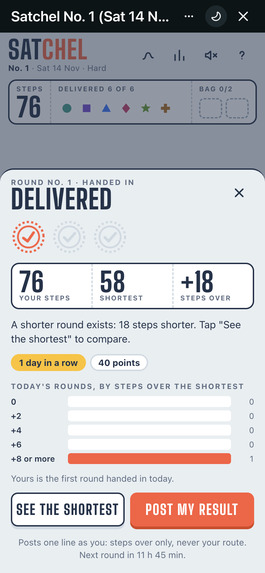
The result: 76 steps against a proven shortest of 58, with the community chart.
-
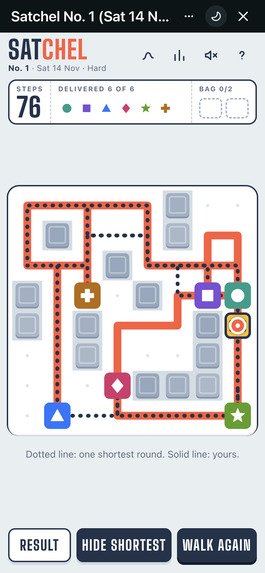
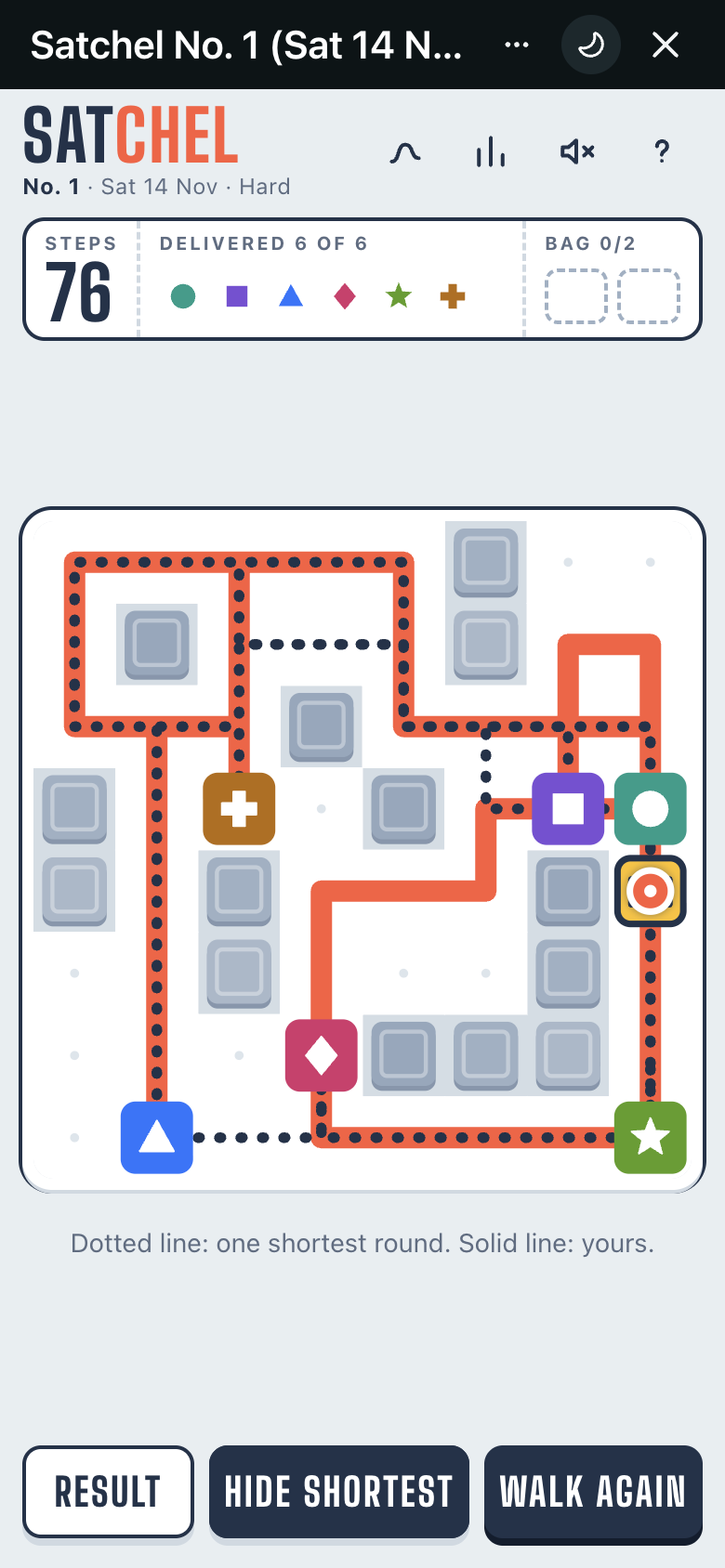
Dotted line: one shortest round. Solid line: yours.
-
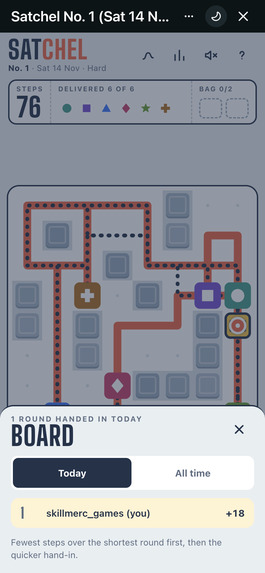
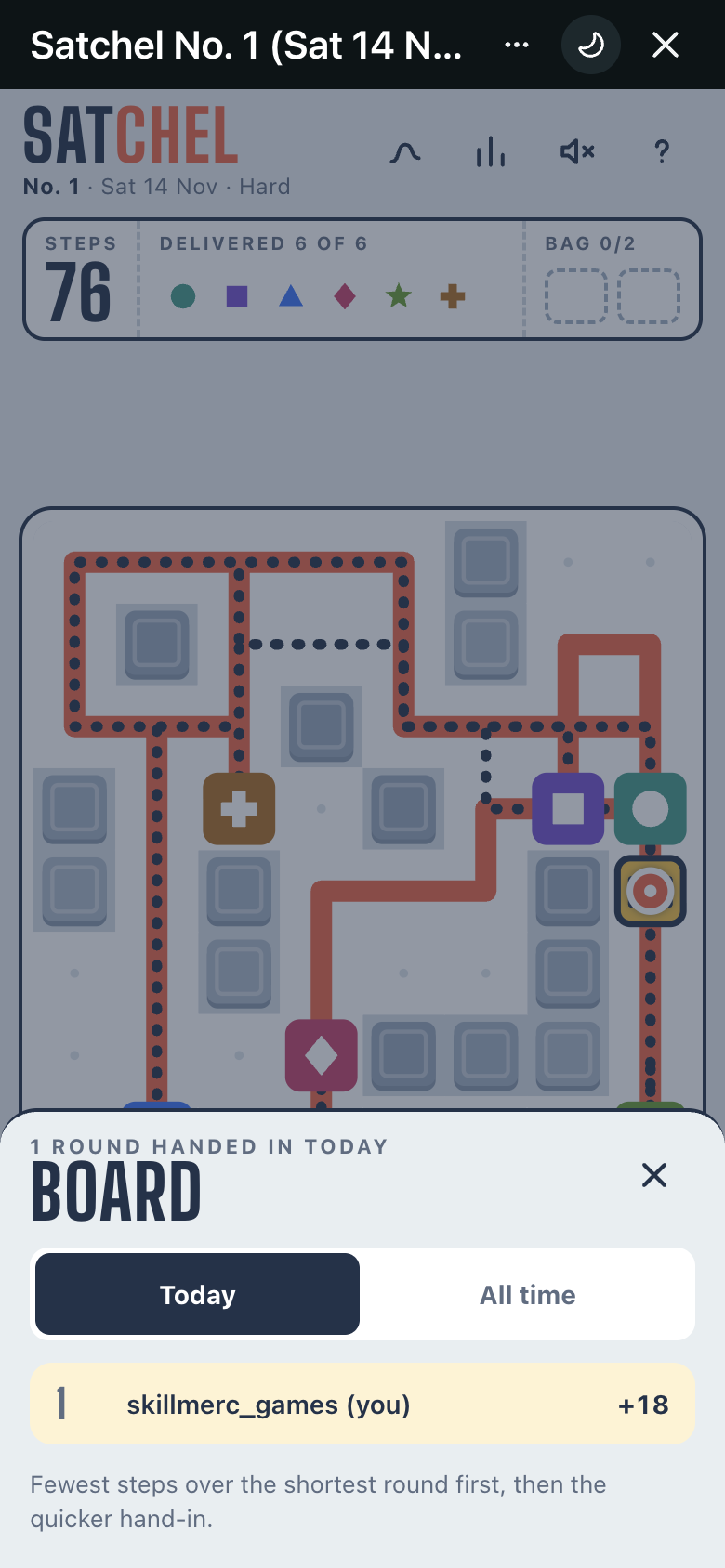
Today's board: fewest steps over the shortest first.
-
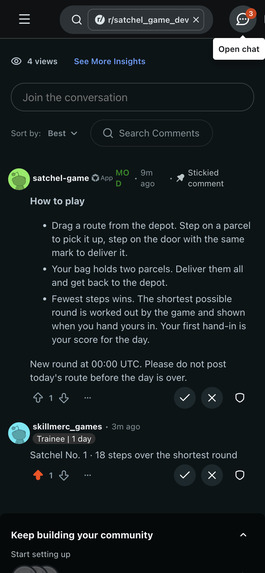
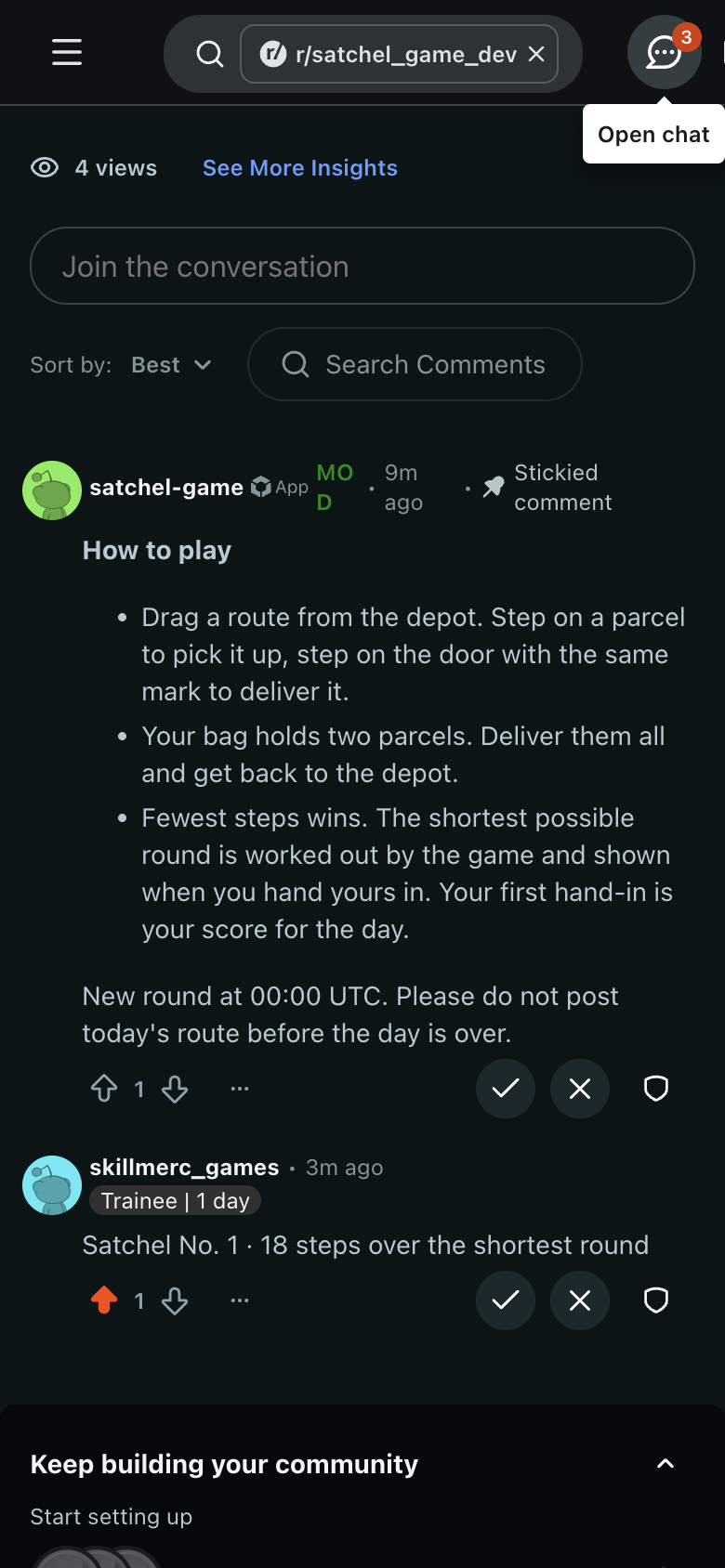
One tap posts a spoiler-safe line as you, with streak flair.
How to try it (for judges)
- Demo post (public community, no join needed): https://www.reddit.com/r/satchel_game_dev/comments/1xwh68r/ (Round No. 2, Sun 15 Nov, the first round posted by the daily scheduler)
- Tap Start the round on the post. The map opens in about a second. Drag from the yellow depot, or tap any street to walk there.
- A new round is posted every day at 00:01 UTC by the app itself. The newest post is always at https://www.reddit.com/r/satchel_game_dev/
- App page: https://developers.reddit.com/apps/satchel-game (uploaded, not published, as the rules ask).
Inspiration
Every courier has the same problem: the bag is too small. We wanted a daily puzzle you can read without a single word of rules, where the question is not "can you finish" but "how short can you make it", and where the game can tell you the true answer afterwards.
What it does
Satchel is one delivery round a day. A small street map, a depot, three to six parcels, and a bag that holds two.
- Draw one route from the depot. Walking over a parcel picks it up. Walking over the door with the same shape drops it off. Get back to the depot.
- Your score is the number of steps over the shortest possible round. That number stays hidden until you hand your round in, then the game shows it and draws one shortest route over yours so you can see where you lost steps.
- Your first hand-in is your score for the day. After that you can walk the map again as practice.
- Monday is a 6x6 map with three parcels. Sunday is 8x8 with six. The bag limit is the whole game: the nearest parcel is often the wrong one to take first.
It is a route-planning game. It is a different genre from our other two entries (Lamplit is a logic grid, Scatterhoard is social hide and seek) and shares no code for rules, art or type with them.
Fair and solvable, by proof
- Before a round is posted, the server runs an exact breadth-first search over every state of the game (where you stand, and whether each parcel is waiting, in the bag or delivered). That is at most 46,656 states, so the search finishes in milliseconds and its answer is the true shortest round, not an estimate.
- A day is only published if that search finds a round, and the stored shortest route is replayed through the same rules code the players use.
- Difficulty is measured, not guessed. For every candidate map the generator computes how many steps a "nearest first" courier loses against the shortest round. Each weekday has a band for that gap, and the generator retries the day's seed until the map is inside it. Over the first 30 rounds the average gap climbs from 0.5 steps on Mondays to 12 on Sundays. Over 365 generated days every map was solvable and inside its band.
- 49 unit tests cover the rules, the solver (cross-checked against a second, differently written search), the generator, tap-to-walk, scoring and the server.
How it feels native to Reddit
- It lives in a post. The feed card draws today's real map from the post's own data, so it paints at once.
- Everyone gets the same map, and the result card shows a chart of how the community did: 0, +2, +4, +6, +8 or more steps over.
- One tap posts your result as a comment in your own name: "Satchel No. 1 · 18 steps over the shortest round". It never contains the route or the step count, so the thread stays spoiler-free.
- Yesterday's shortest route is drawn for everyone the next day, and the pinned comment on the new post says how many players found it. That is the daily reveal the thread can argue about.
- Streak flair: Trainee, Runner, Courier, Postmaster.
- The server replays every handed-in route itself, so a client cannot claim a score. Players never type free text.
How we built it
Devvit Web with a Hono server, Redis for rounds, boards and streaks, and a scheduler job that posts the day's round. The game screen is React with an SVG map; the feed card is plain TypeScript so it paints immediately. The solver and generator only run on the server and are not in the client bundle. Drag, tap-to-walk and arrow keys all go through one pure function that the tests cover. Every parcel and door is marked by shape as well as colour, buttons are at least 44 px, the map has screen-reader labels and a spoken line for pickups and deliveries, motion respects the reduced-motion setting, and sound is off until you turn it on.
Challenges we ran into
- Showing the shortest round without spoiling the day: it is sent to a player only after their own hand-in.
- Tap-to-walk has to obey the rules too: walking over a parcel always picks it up, so the tapped path is replayed step by step.
- A test for the step limit found a real bug: a 401st step was accepted and then the board could not be drawn.
- The live playtest at phone size and on desktop found three layout bugs in the result card and the buttons under the map, fixed in versions 0.0.3 to 0.0.5.
What's next
Tune the weekday bands from real play (share of players who find the shortest round), a past-rounds list, and a weekly board.
Built by SKILLMERC with an AI coding agent.
Built With
- devvit
- hono
- react
- redis
- typescript
