-
-
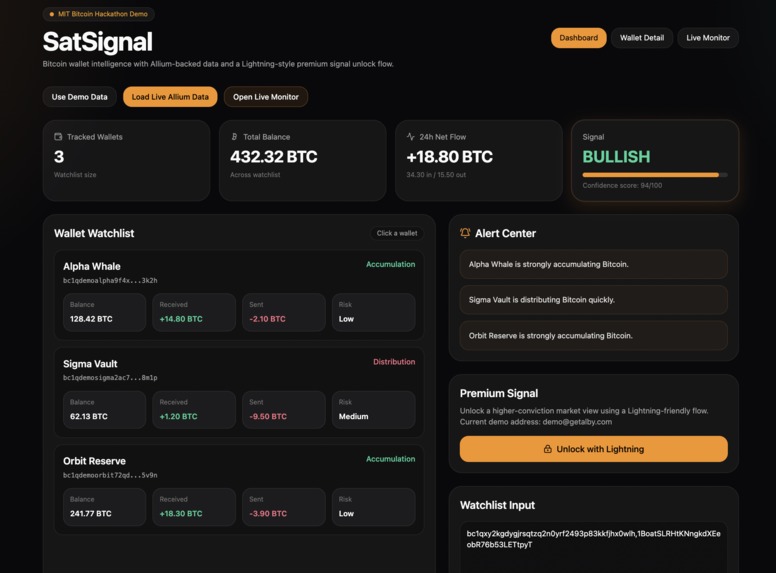
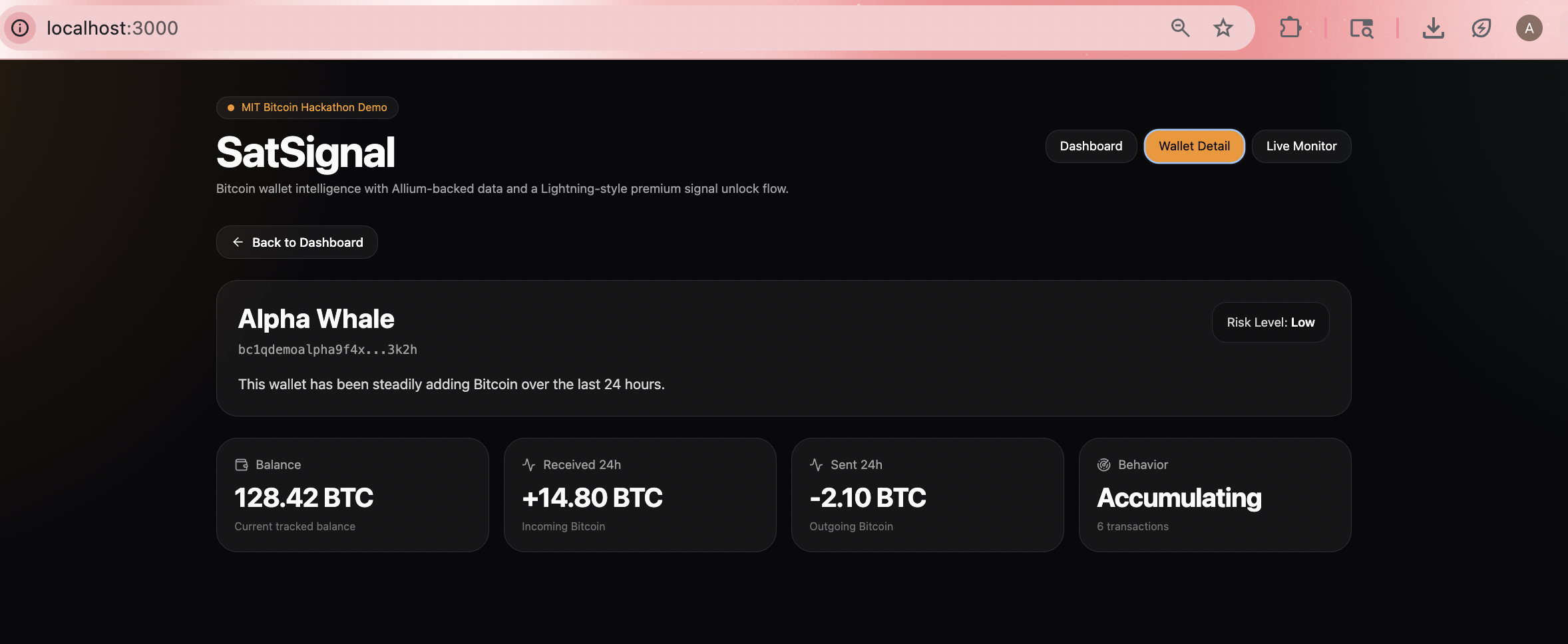
Dashboard of SatSignal
-
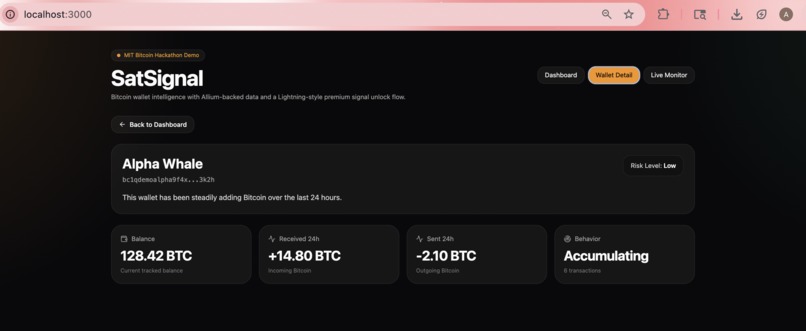
Wallet Transaction Details
-
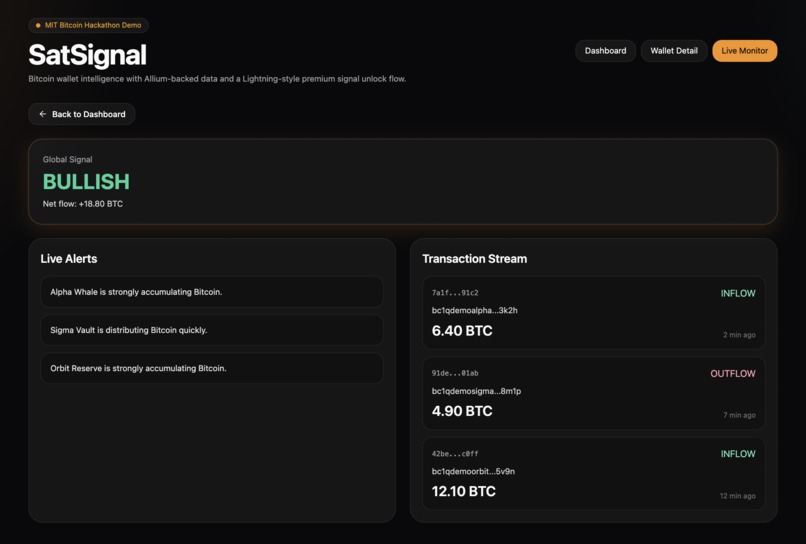
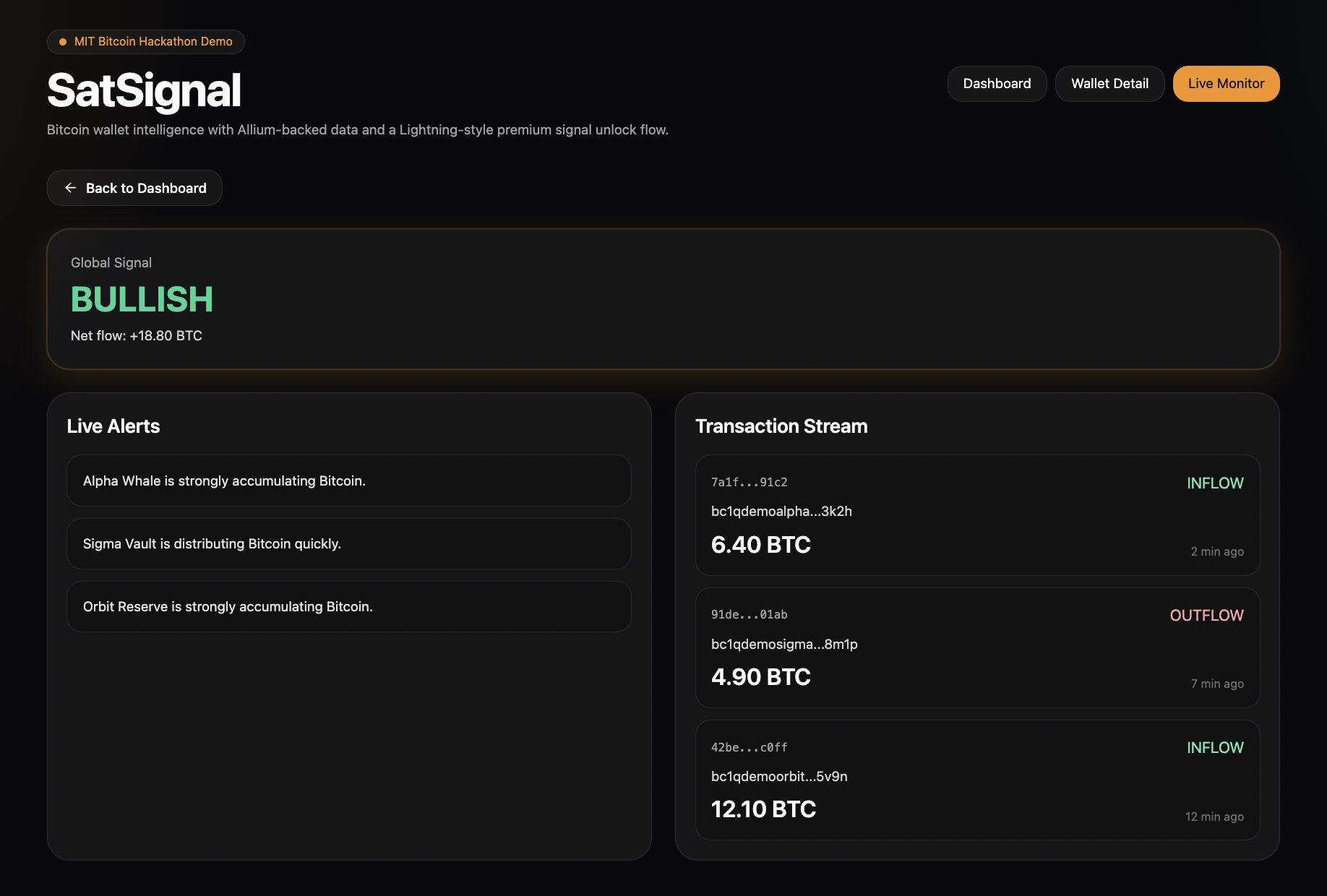
Live Monitor
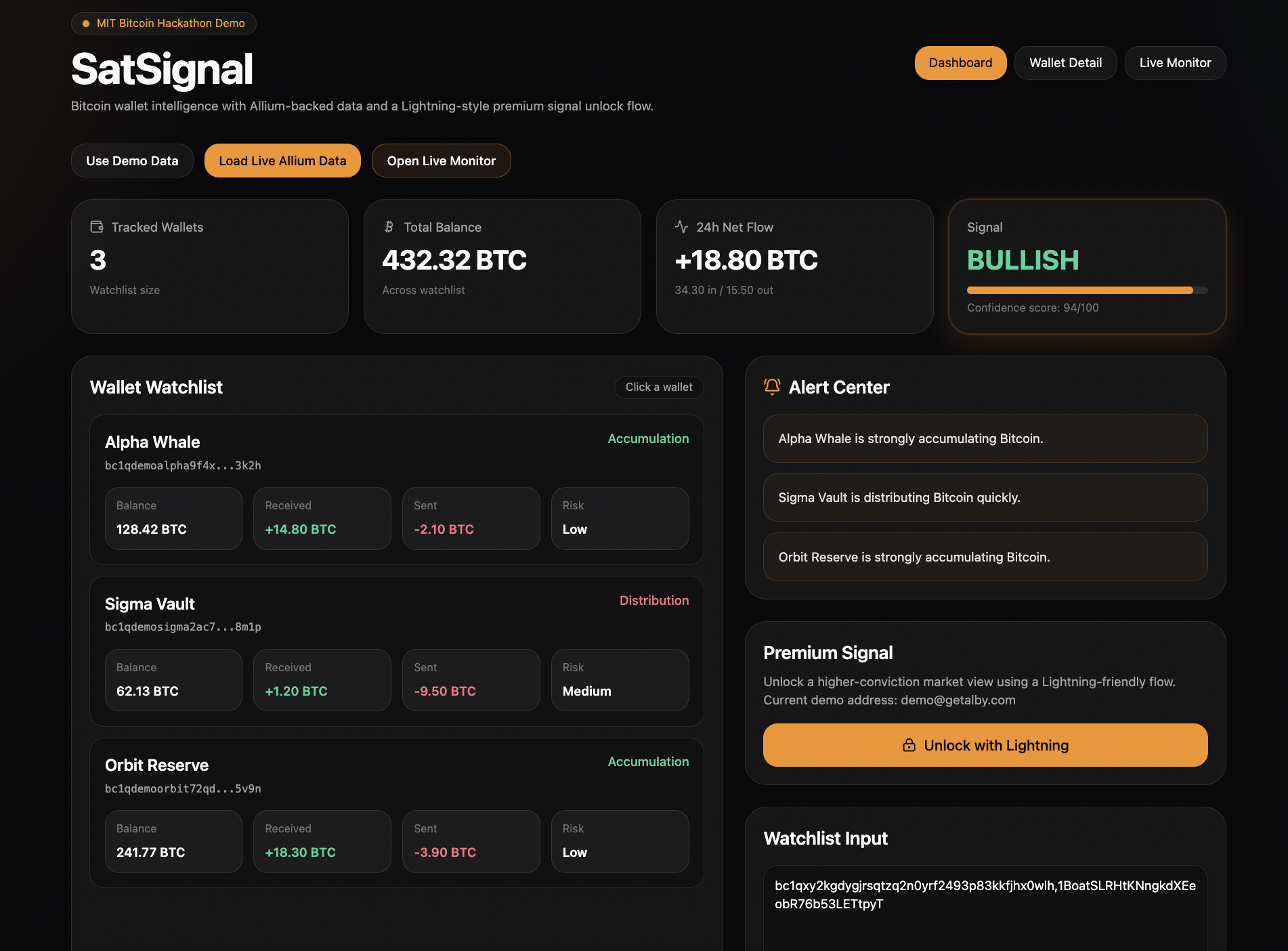
Inspiration
We were interested in understanding how real Bitcoin activity translates into meaningful market signals. While there is a lot of on-chain data available, it is often difficult for beginners (like us) to interpret what is actually happening. During the hackathon, we wanted to build something that simplifies this complexity and makes Bitcoin data more intuitive and actionable.
We were especially inspired by the idea of using Bitcoin not just as a store of value, but as a system for real-time information exchange and incentives, particularly through micro-payments on Lightning.
What it does
SatSignal is a real-time Bitcoin intelligence dashboard that tracks wallet activity and converts raw blockchain data into simple, understandable signals.
It monitors selected Bitcoin addresses and analyzes:
balance changes inflows and outflows accumulation vs distribution behavior
Based on this, it generates a market signal (e.g., bullish or bearish) along with a confidence score.
We also designed a “premium signal” feature, where users can unlock deeper insights through a Lightning-style micro-payment flow.
How we built it
We built SatSignal as a full-stack web application using:
Next.js (App Router) for the frontend and backend API routes Tailwind CSS for a clean, modern UI Allium API to fetch real-time blockchain data Lightning-inspired flow (via Alby) for micro-payment simulation
The frontend dashboard displays wallet data, alerts, and signals in real time. The backend processes wallet data and computes metrics like net flow and signal strength.
We focused on building a smooth and interactive user experience where users can switch between demo and live data seamlessly.
Challenges we ran into
One of the biggest challenges was working with real blockchain data. Understanding how to interpret wallet activity and translate it into meaningful signals required a lot of trial and error.
We also faced issues with:
integrating external APIs (especially handling errors and invalid addresses) managing environment variables and API keys ensuring the frontend updated correctly when switching between demo and live data
Since we were new to Bitcoin development, we had to quickly learn concepts like wallet structures, on-chain transactions, and Lightning workflows during the hackathon itself.
Accomplishments that we're proud of
We’re proud that we were able to go from having very little prior experience with Bitcoin to building a fully functional dashboard within a short time.
Some key highlights:
Successfully integrated real blockchain data using Allium Designed a clean, intuitive UI for complex data Built a working signal generation system Implemented a Lightning-style premium unlock flow
Most importantly, we created something that makes Bitcoin data more accessible and understandable.
What we learned
Through this project, we learned:
how to work with blockchain data APIs how to interpret wallet behavior (accumulation vs distribution) how micro-payments can be used as an incentive mechanism how to quickly build and iterate on a full-stack application
We also learned how to debug issues under time pressure and collaborate effectively as a small team.
What's next for Sat Signal
In the future, we would like to expand SatSignal by:
supporting larger and customizable wallet watchlists adding more advanced analytics and predictive models integrating real Lightning payments instead of simulated flows building alerts and notifications for significant wallet activity exploring use cases with AI agents that can act on these signals automatically
Our goal is to turn SatSignal into a powerful tool for real-time Bitcoin market intelligence.
Built With
- alby
- allium
- css
- react
- typescript


