-
-
-
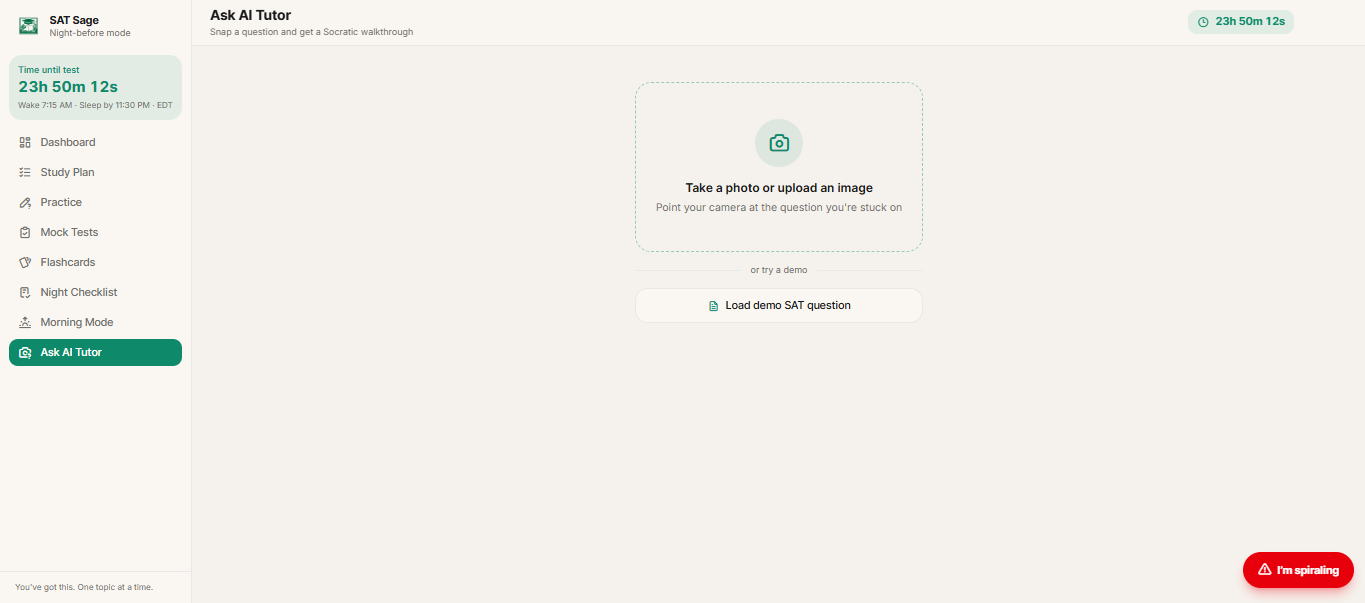
AI Tutor
-
Stressed Out?
-
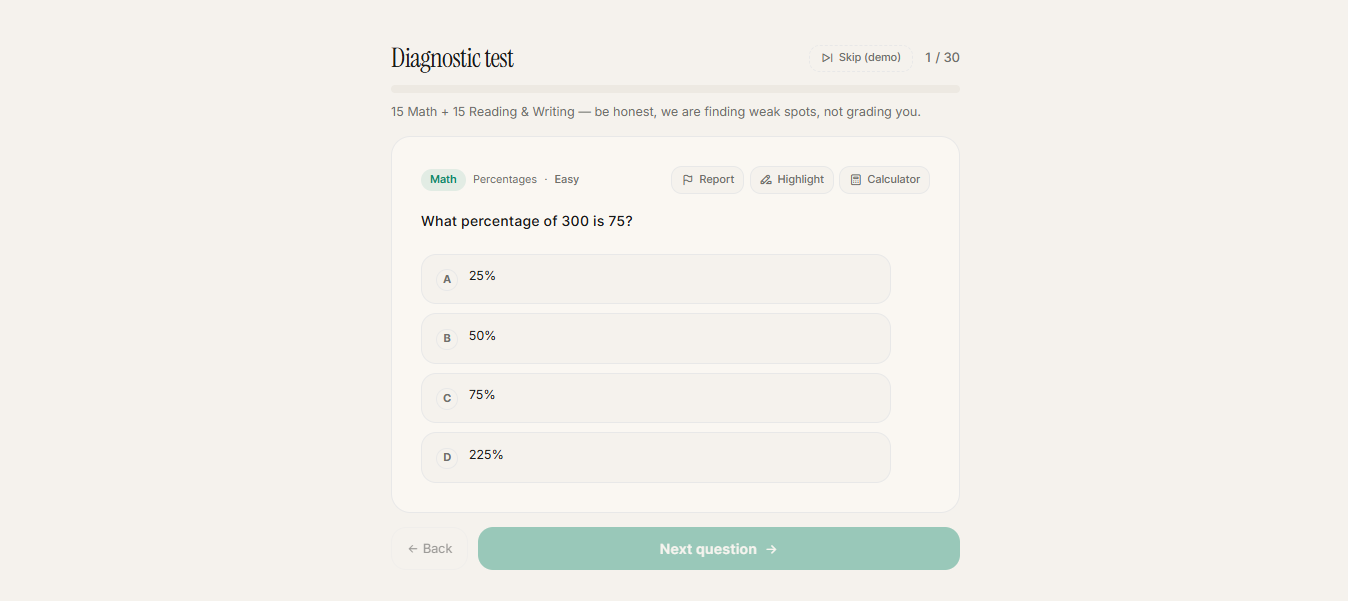
Diagnostic Test
-
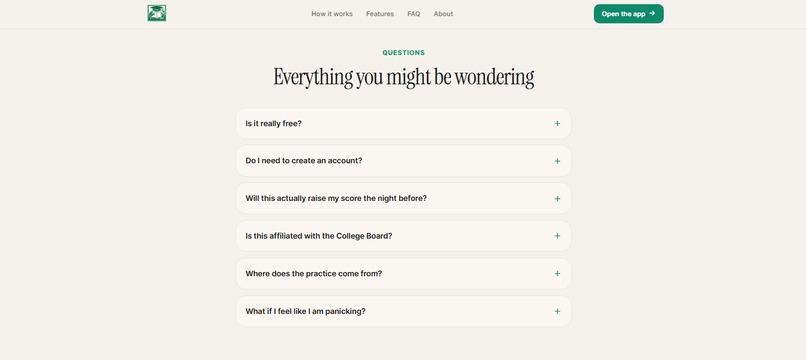
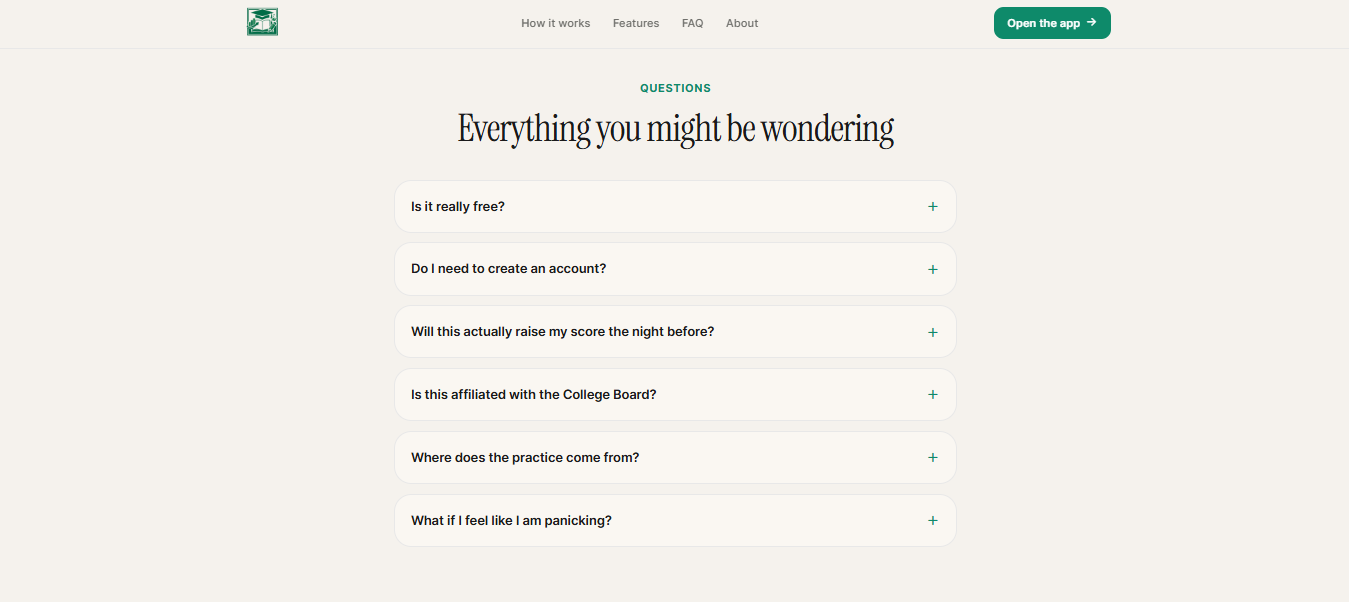
Questions
-
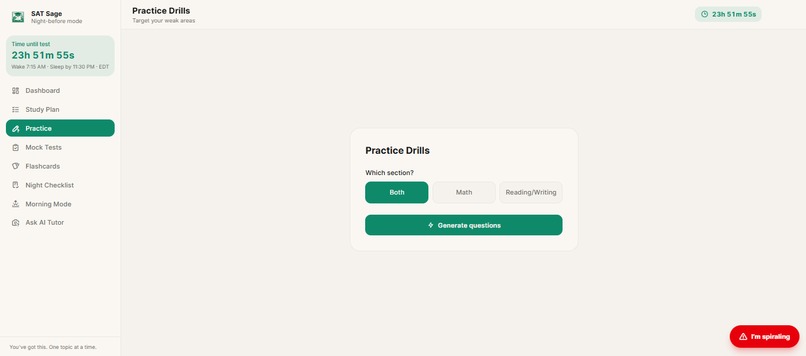
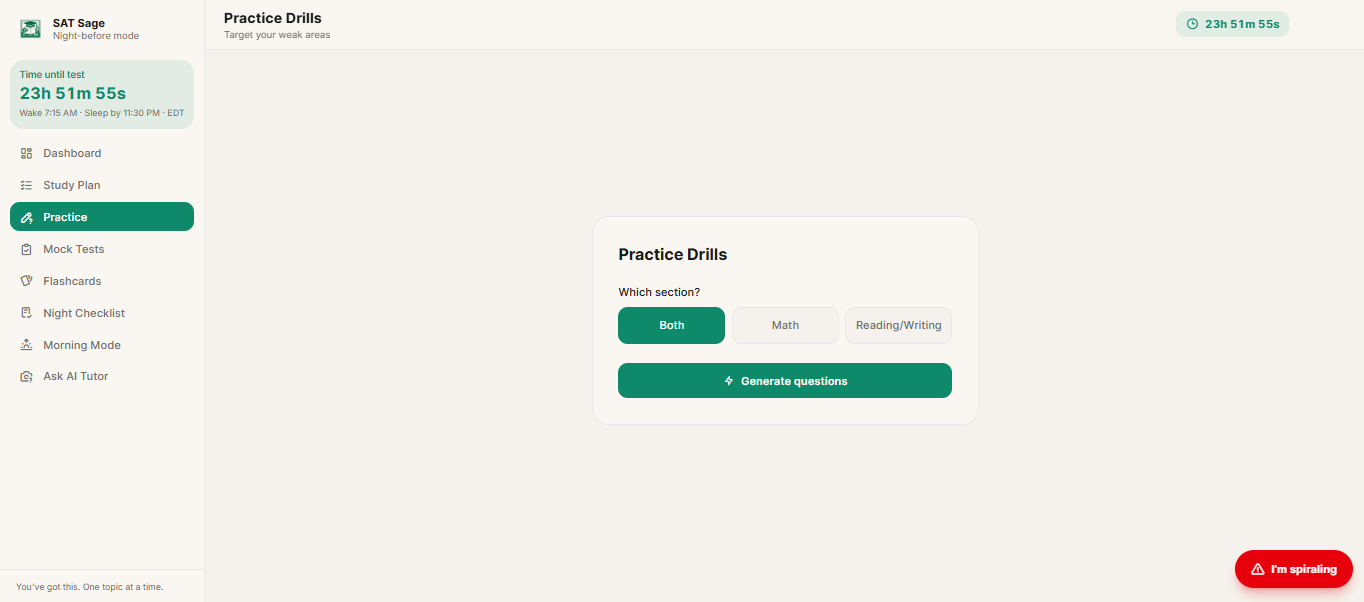
Practice Drill
-
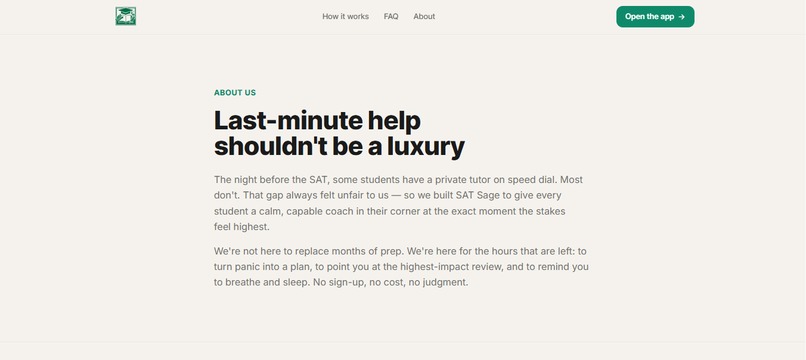
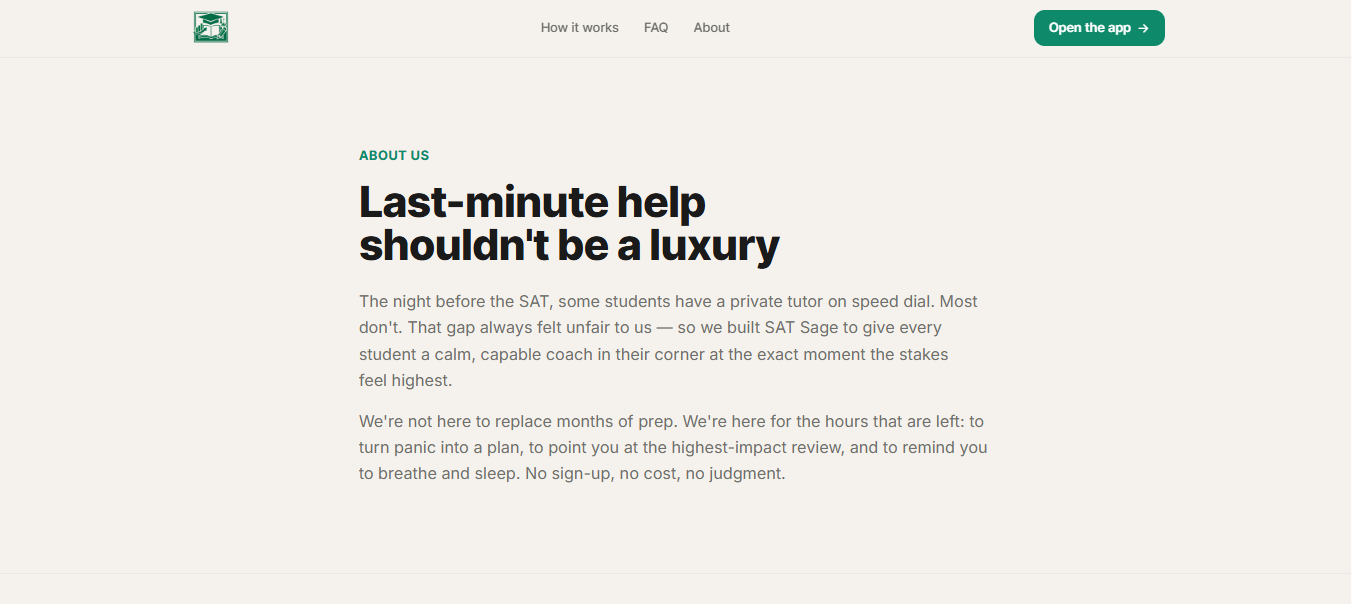
About US
-
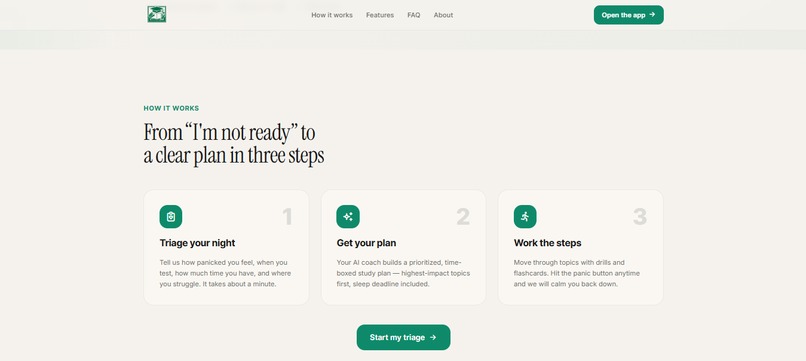
How it Works
-
-
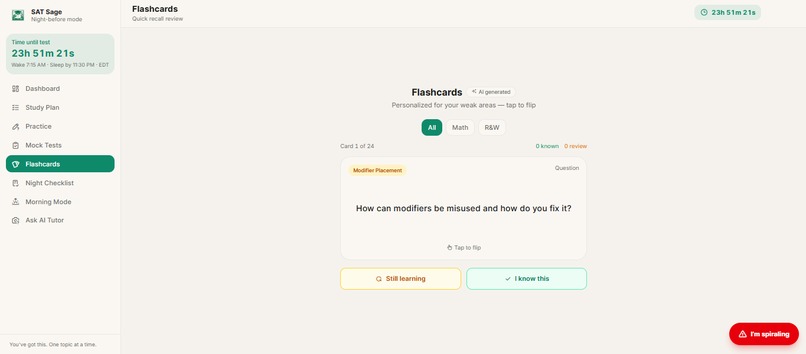
Flashcards
-
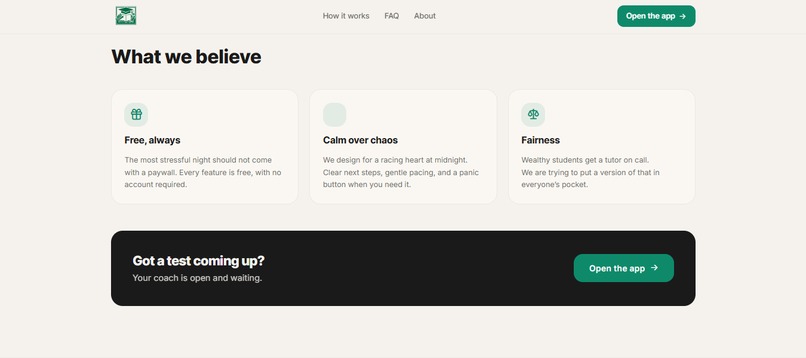
What we believe
-
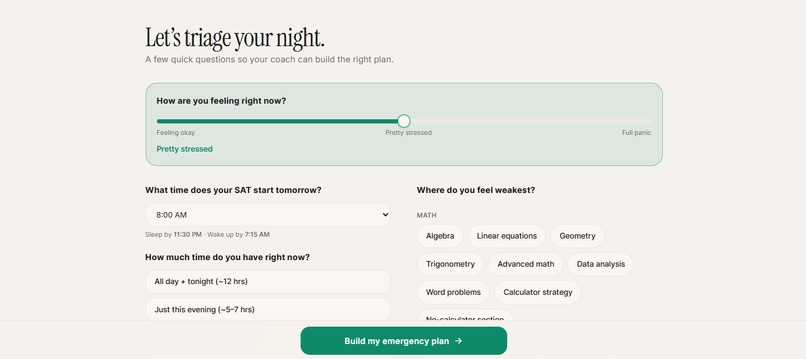
Form 1
-
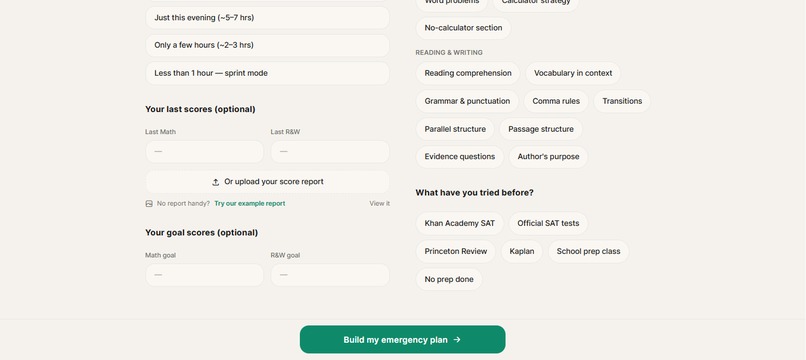
Form 2
-
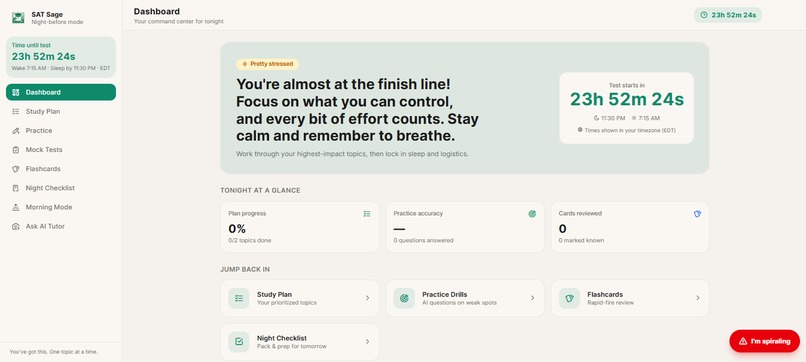
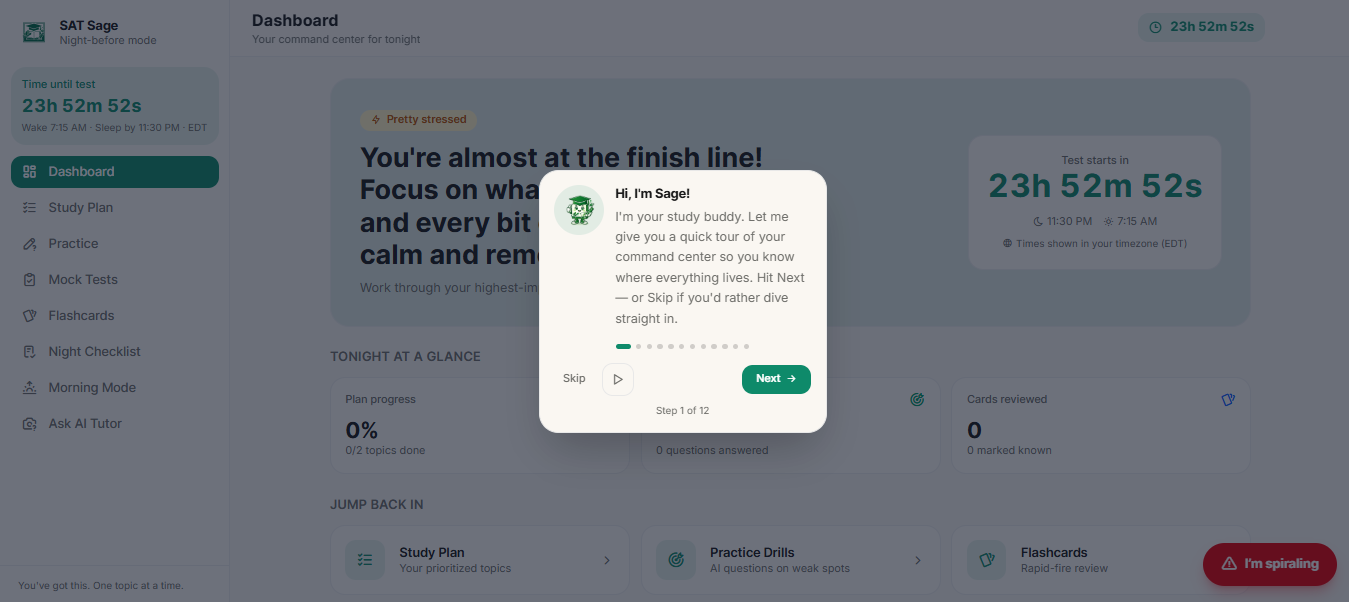
Dashboard
-
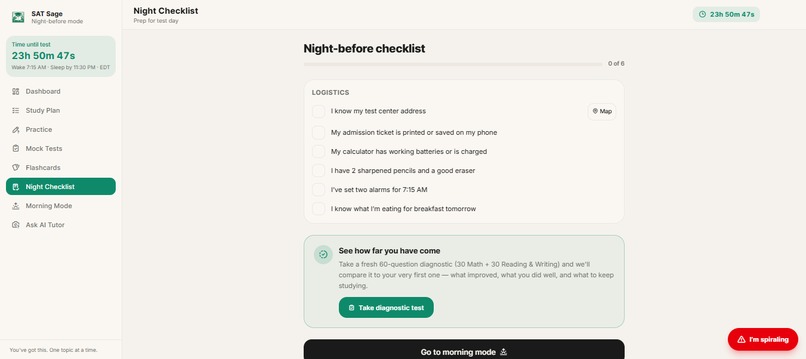
Checklist
-
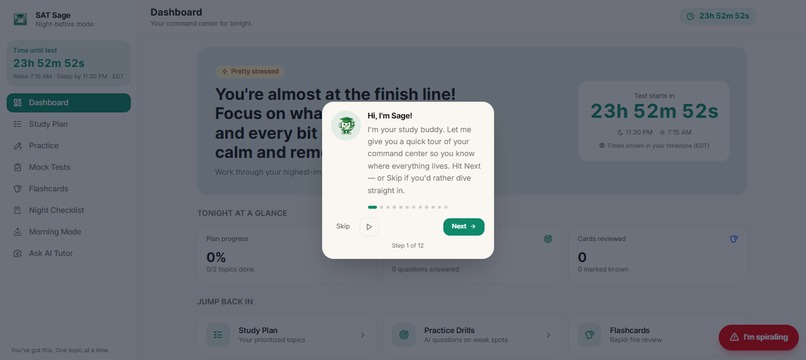
Dashboard Tutorial
-
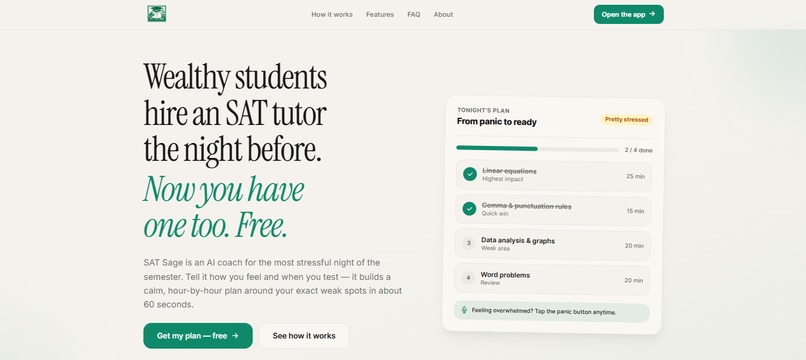
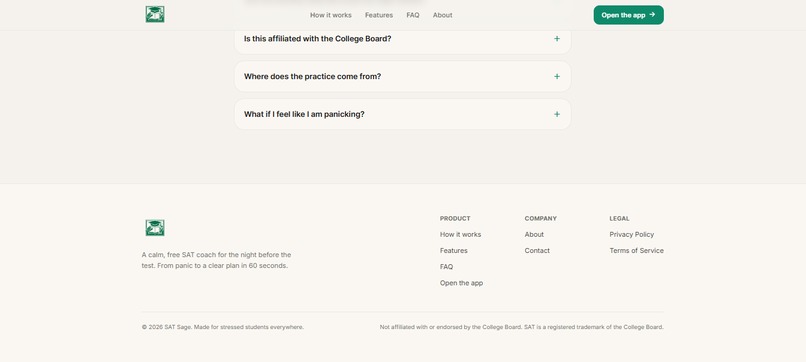
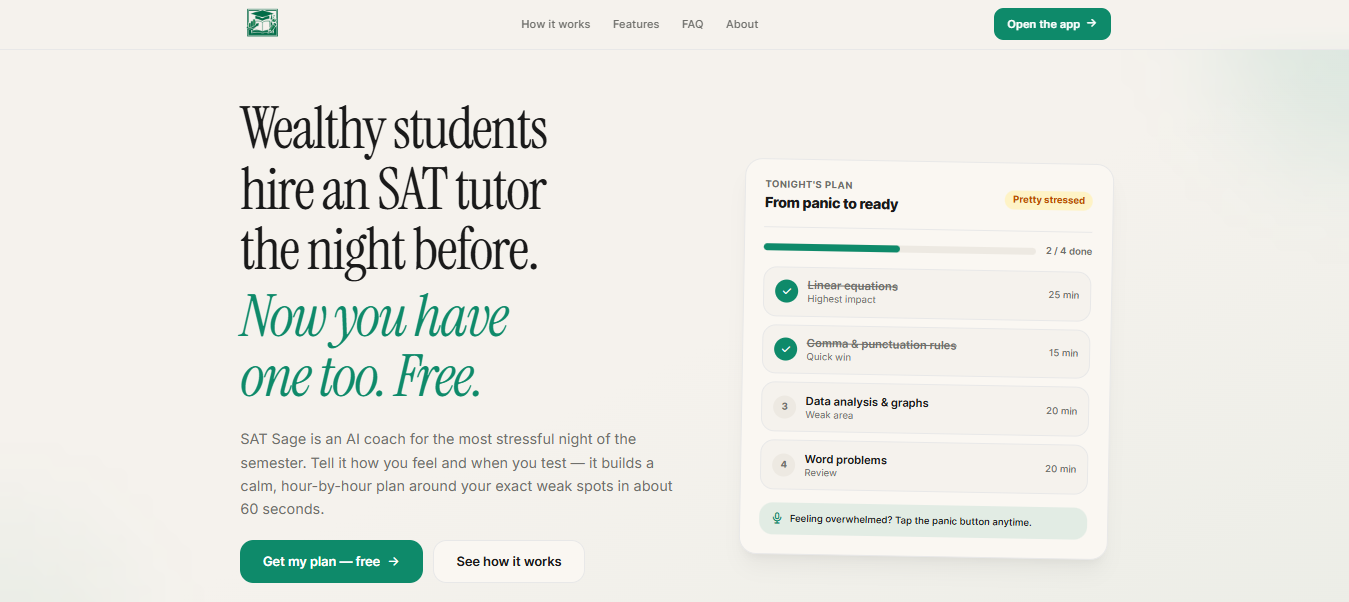
Landing Page
Inspiration
"The 2025 SAT Suite of Assessments Annual Report released today shows that more than 2 million students in the high school class of 2025 took the SAT® at least once." [College Board, late 2025.]
12 PM, the day before the SAT. Desk packed with worksheets and notes.
- "What do I have to revise now?"
- "I have to review more."
- "What if I mess things up?"
Opens the group chat
- "We're so cooked!"
- "Yeah it's over."
- "I don't think I'll do well."
- "Anyone has any leaks?"
- "What should I study now!?"
2 million students, yet most of us still face the same problem: test-day panic. We're always trying to get that last bit of revision as if it's the reason we'll ace the SAT. However, under such stress, students end up trying to review everything, then.......well, they don't remember most of the stuff. 💀
What if there's a way to fix this?
What it does
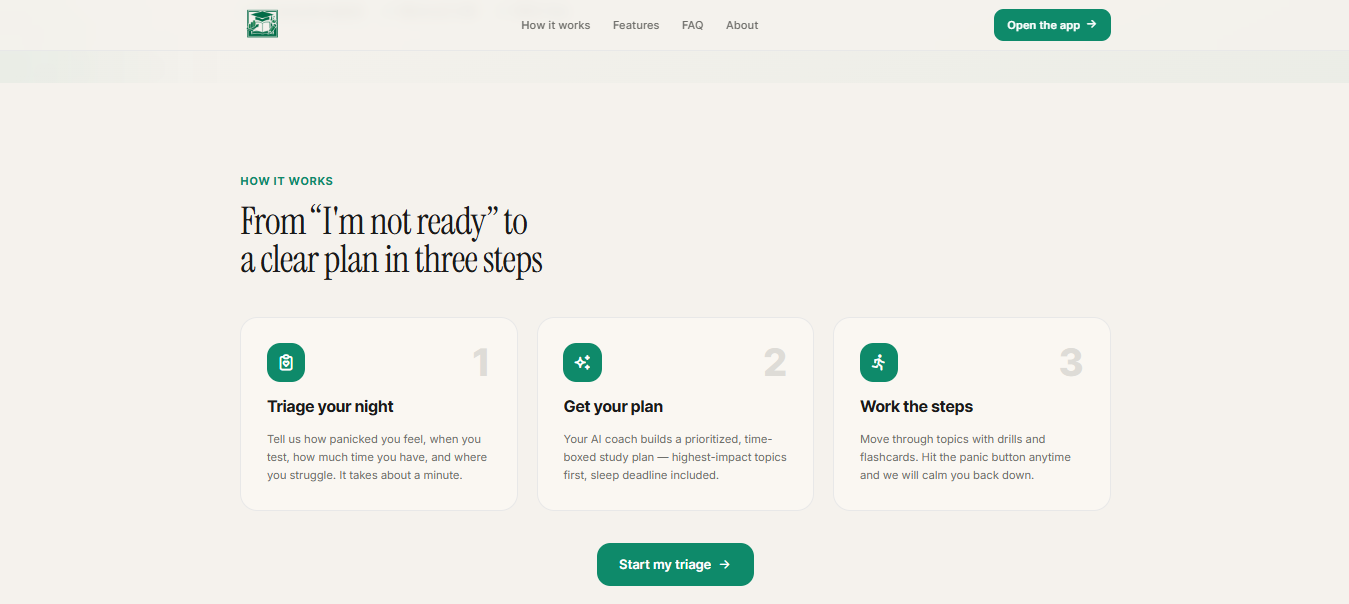
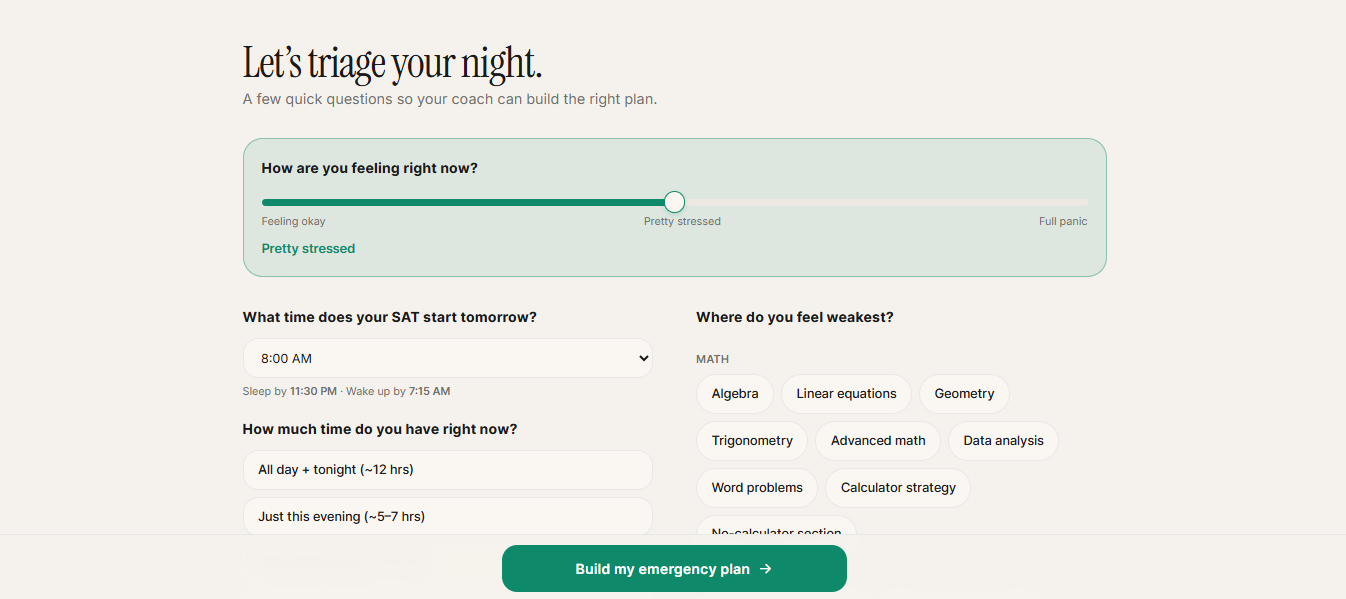
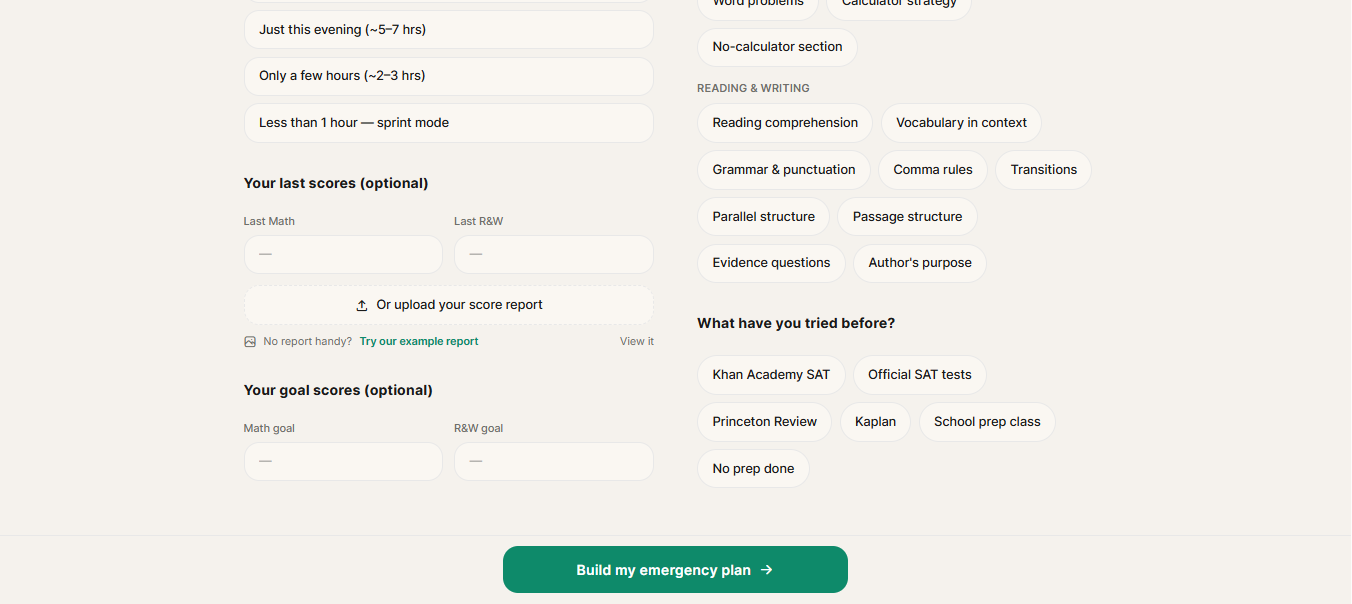
SAT Sage starts by collecting the following data:
- Your stress level
- Start time of your SAT exam tomorrow
- Number of hours you're available to study in
- Your previous scores (or a score report)
- Your target scores
- The topics you struggle in
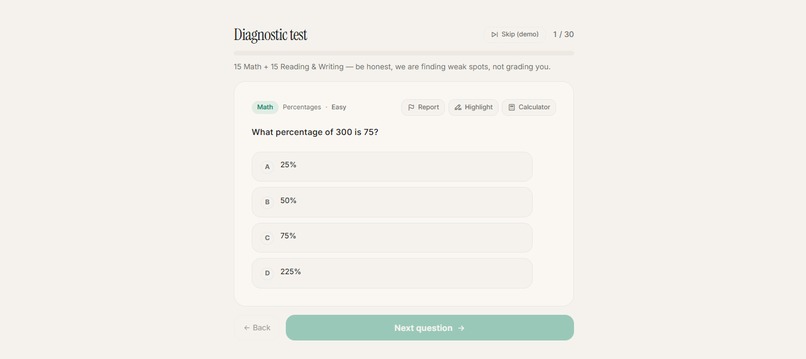
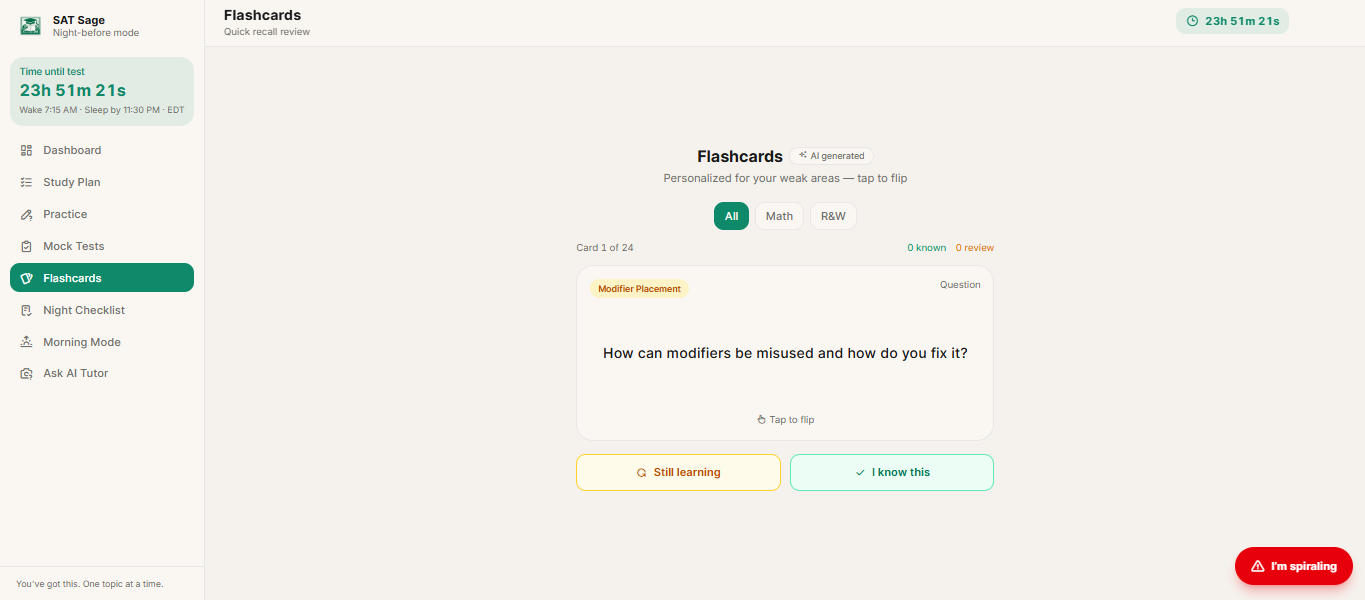
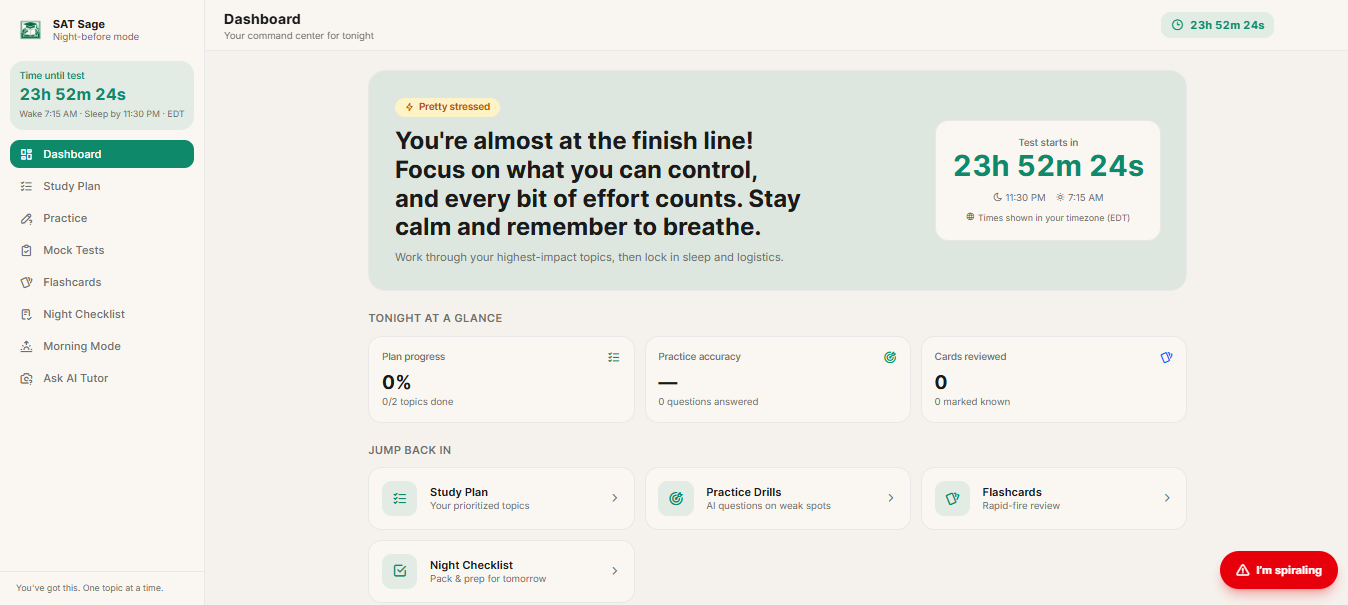
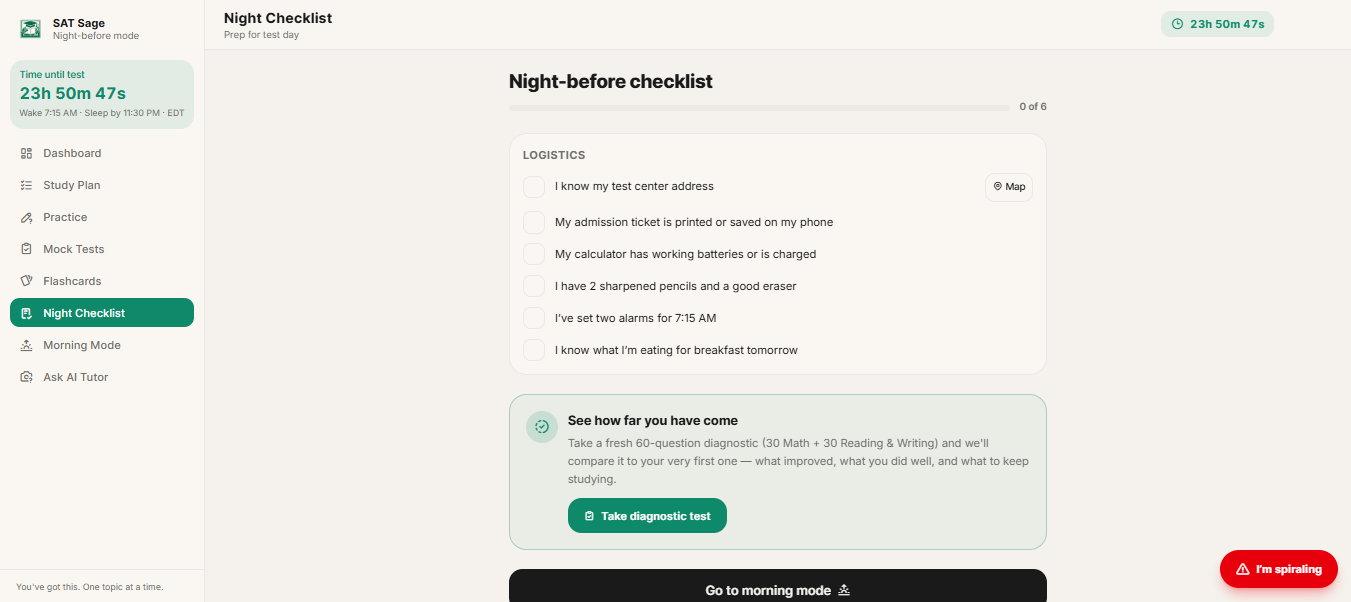
After that, the student solves a short diagnostic test, and gets access to a personalised study plan, complete with explanations, tips, flashcards, practice questions, mock tests, and more!
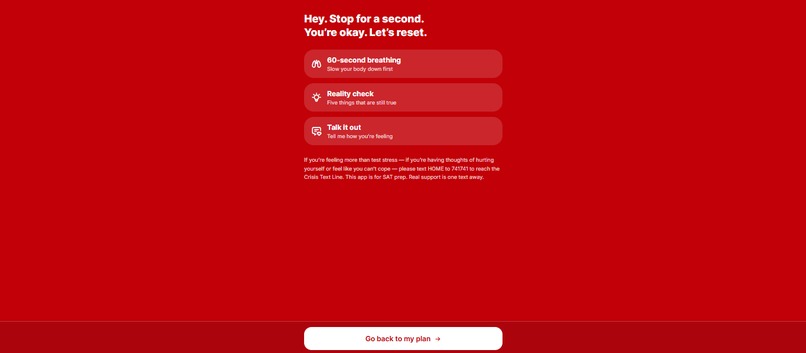
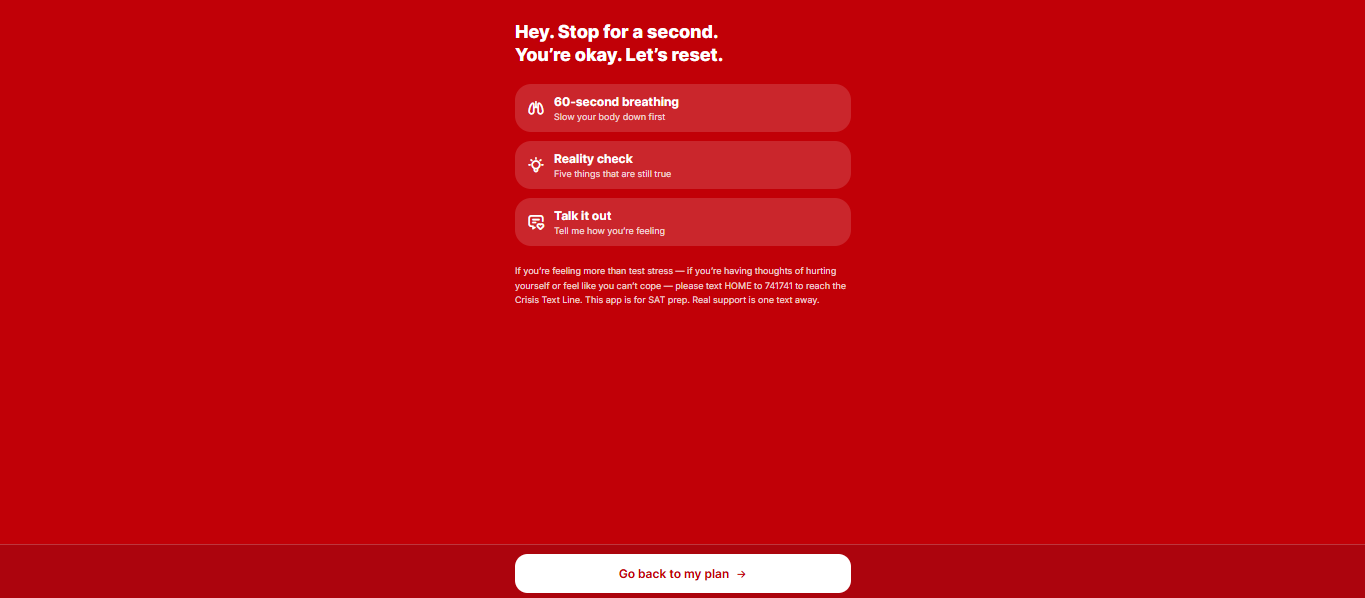
⚠️ Emergency Mode When the student feels like "I'm gonna mess this up 😭😭", there's a "I'm spiraling" button, which guides the student through deep breathing exercises or a chat with an AI support agent to calm down.
How we built it
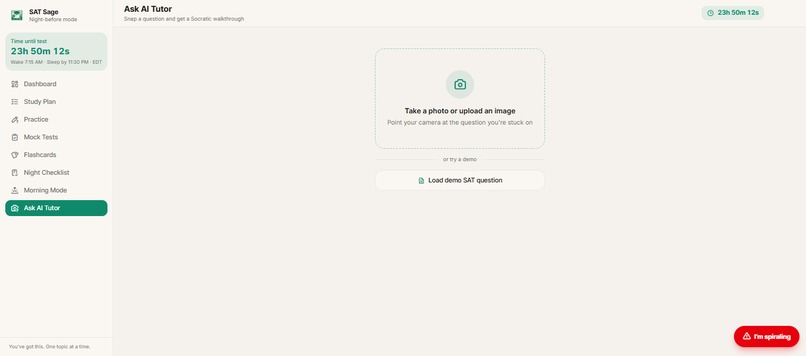
We built the app's frontend using v0. OpenAI powers the core features, analyzing and personalizing study plans, generating flashcards, and the Ask AI feature where students can get help on any question. Claude and Gemini were used for prompting throughout the build process. For the diagnostic and mock tests, we used real College Board SAT questions to keep the practice authentic.
Challenges we ran into
Our biggest challenge was the AI breaking unpredictably; we'd often have to reset it and reconnect the API to get it working again. As the project grew, testing and demoing everything after adding new features got time-consuming. We also ran out of v0 build credits partway through, which pushed us onto GitHub and pull requests, a workflow we hadn't used much before but managed to figure out.
Accomplishments that we're proud of
We're proud of how much ground we covered talking to mentors, which gave us valuable feedback we used to refine the project along the way. We're also proud of pulling together a full demo video that captured the app well, and of getting a multi-feature, multi-AI-model app actually working end to end despite the technical hurdles along the way.
What we learned
We learned how to integrate and manage multiple AI models together, and how important it is to build in fallbacks for when an API call fails or an LLM acts unpredictably. Running out of build credits also taught us to plan our build process more efficiently and pushed us to get comfortable with GitHub and pull requests under real time pressure. Beyond the technical side, talking to mentors taught us how valuable outside feedback is for catching blind spots we couldn't see on our own.
What's next for SAT Sage
We plan to expand into other curricula, such as the ACT, AP exams, IGCSE/A-Level exams, and more, in addition to partnering with schools to make SAT Sage more accessible to students worldwide.
Built With
- claude
- collegeboard
- gemini
- github
- google-maps
- openai-api
- openai-image-generation
- questions
- react
- v0


Log in or sign up for Devpost to join the conversation.