-
-
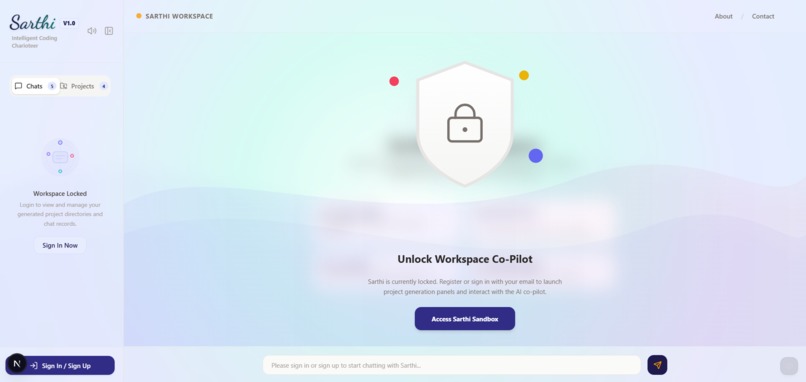
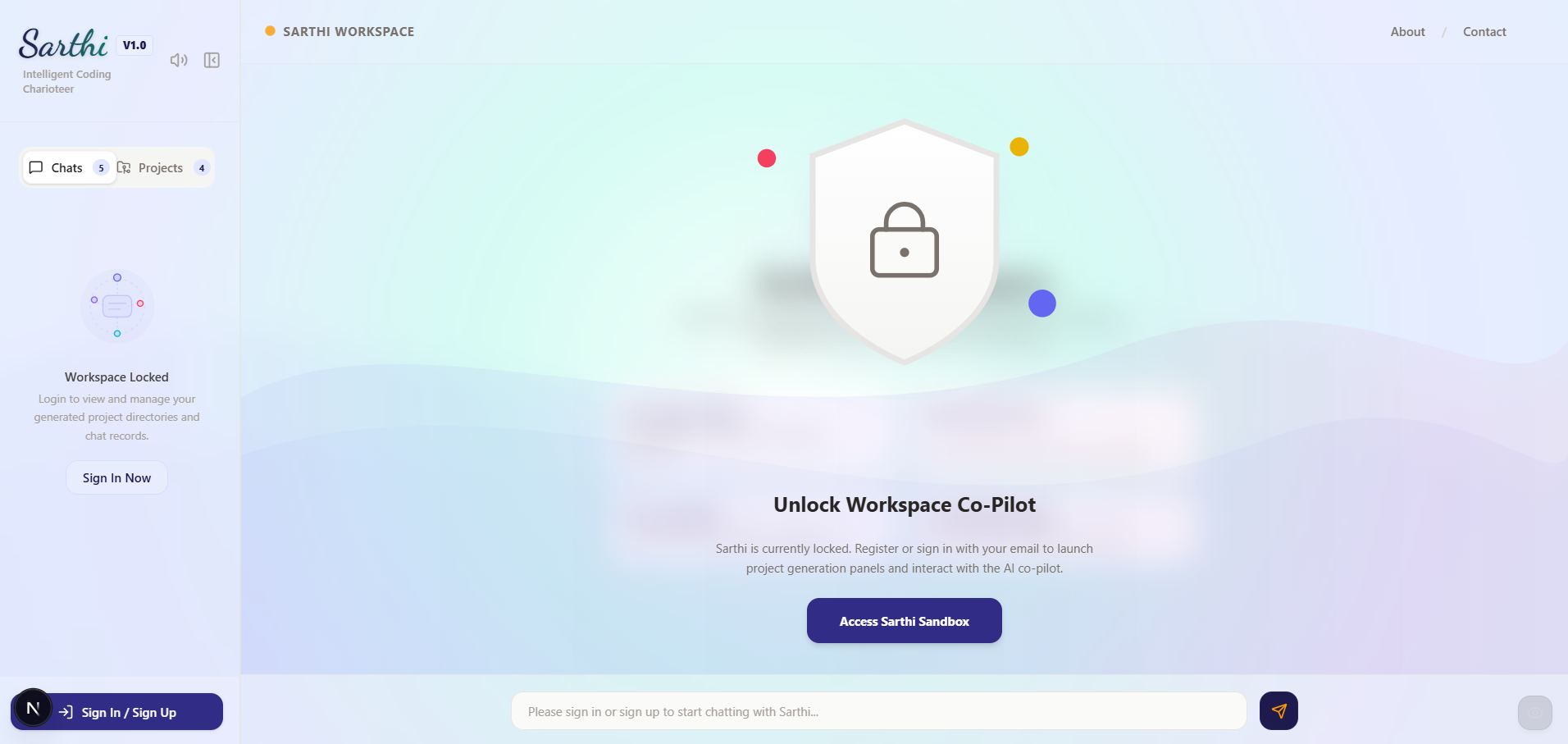
Sarthi workspace lock screen prompting unauthorized users to register or sign in to launch the AI co-pilot.
-
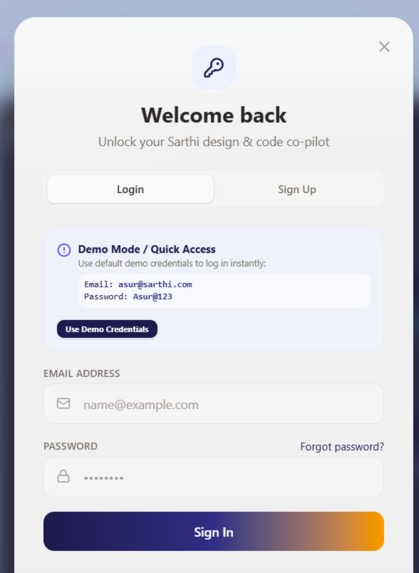
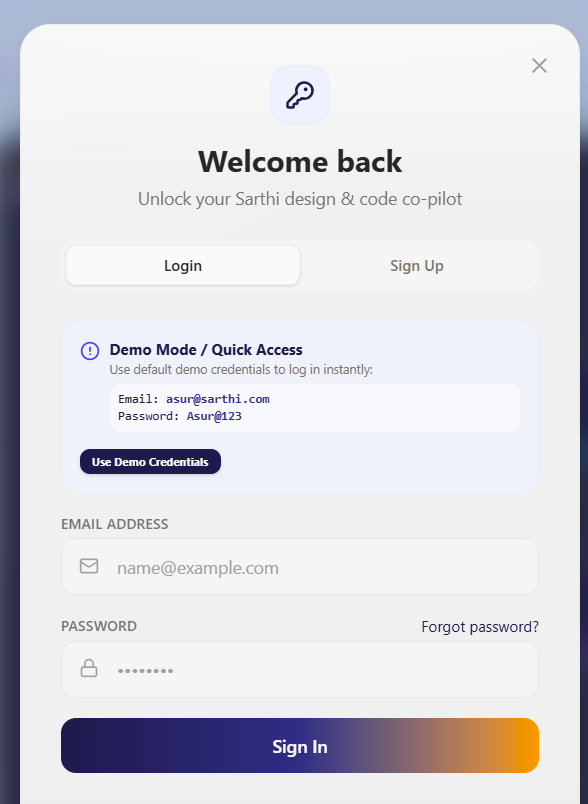
User login modal with a one-click demo credentials filler for quick testing and judging evaluation.
-
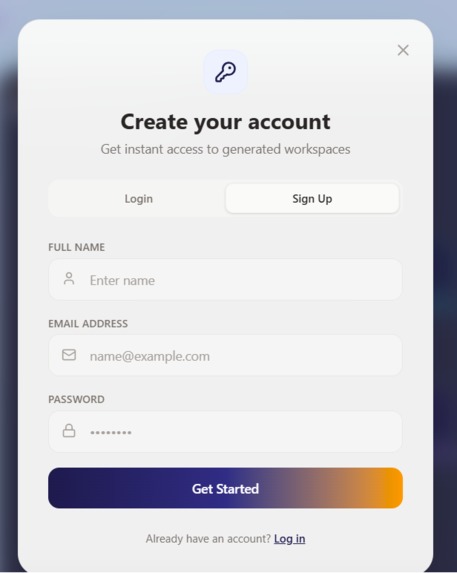
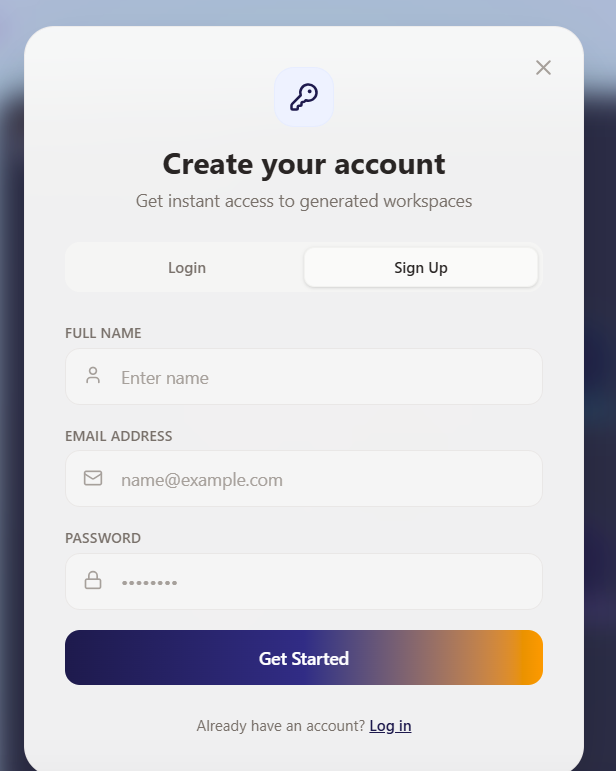
User registration interface allowing developers to sign up and create an account to access workspaces.
-
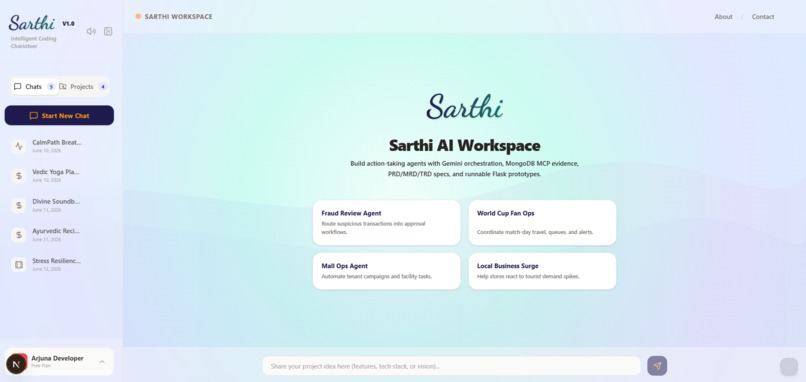
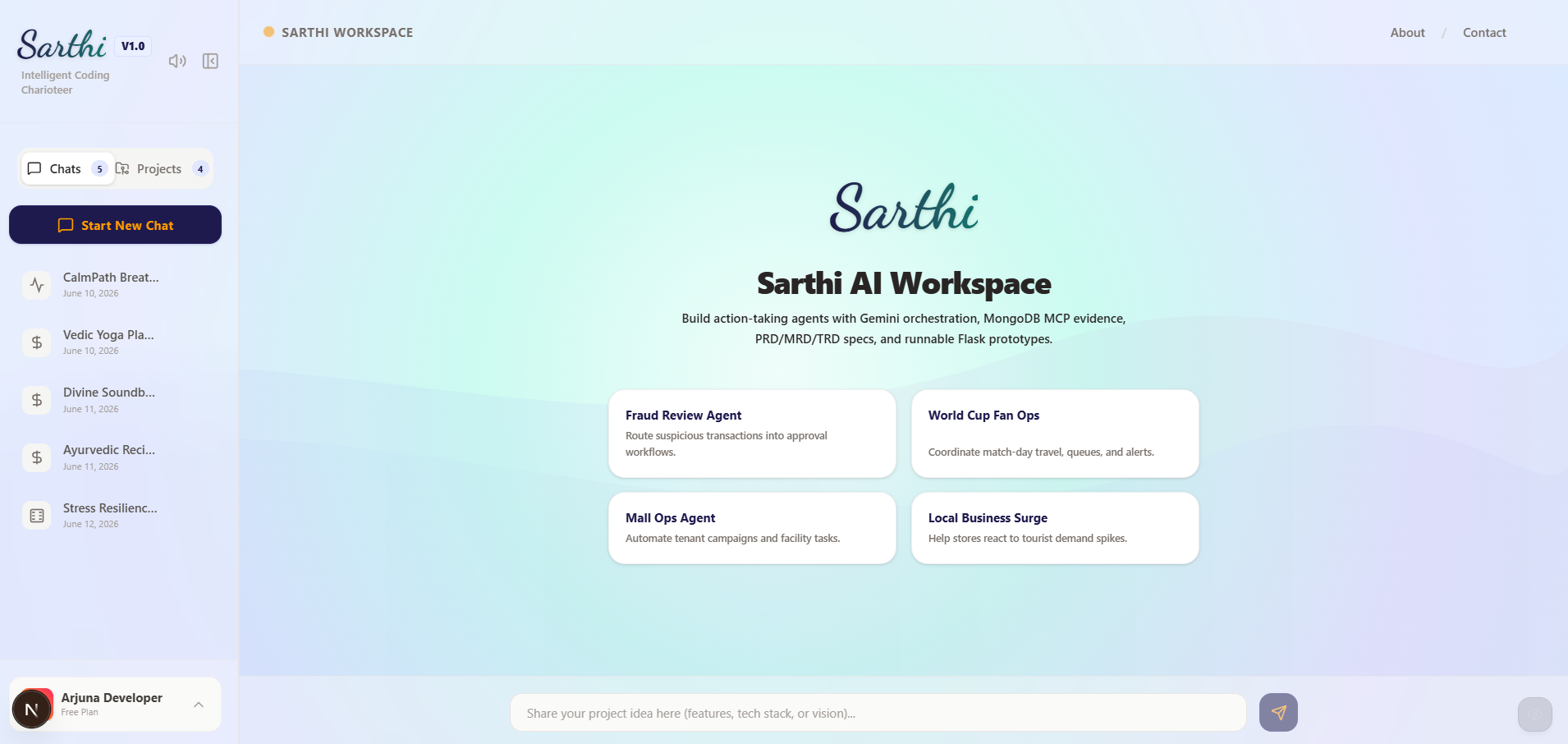
Sarthi dashboard landing page presenting quick-start multi-agent project templates for rapid brainstorming.
-
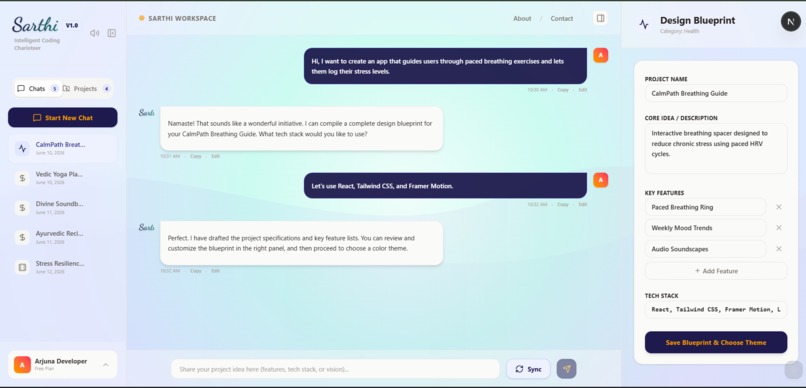
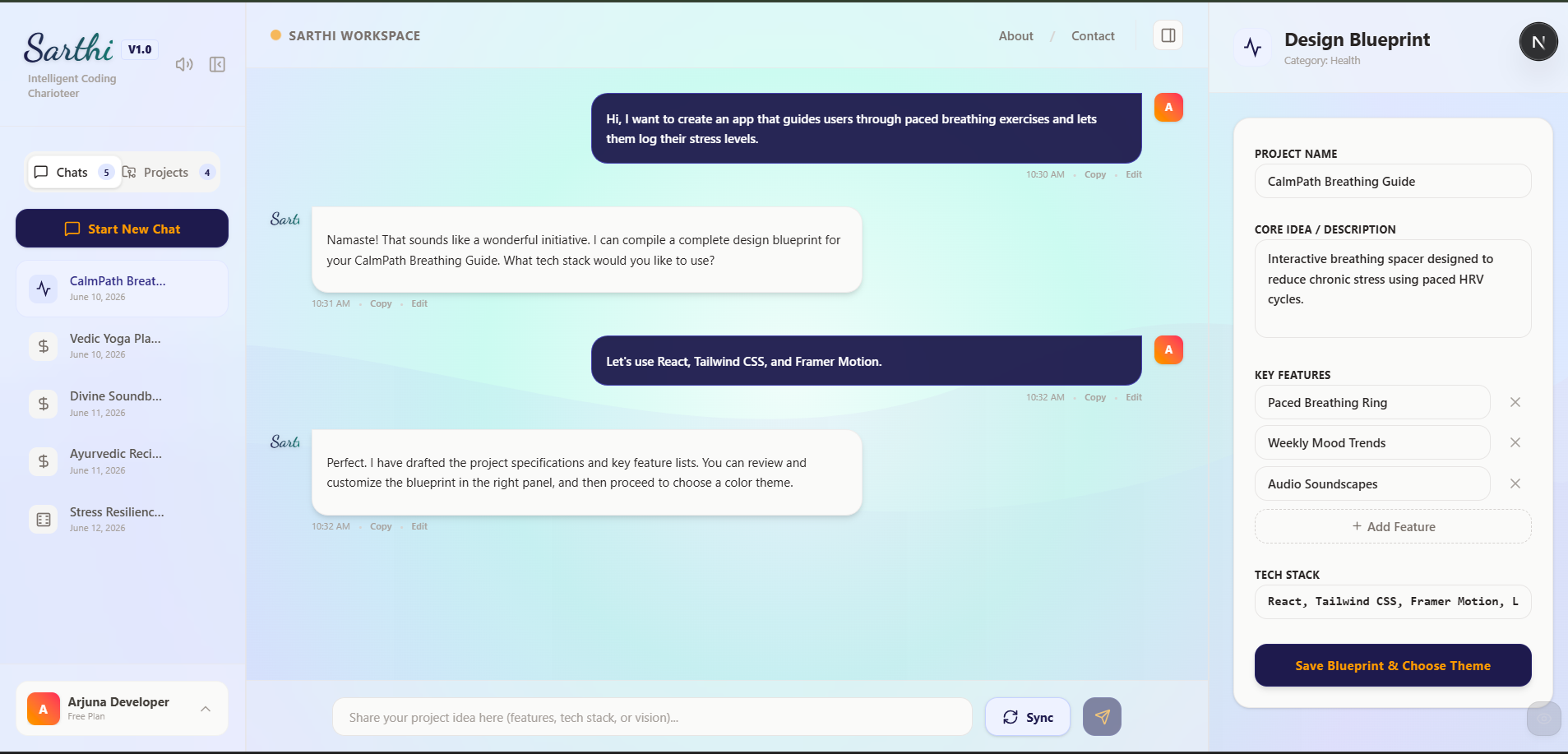
Interactive design blueprint sidebar where developers can review and customize project features and tech stack.
-
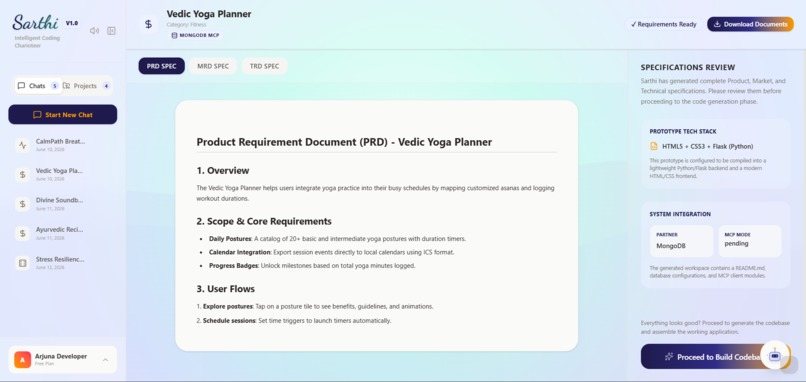
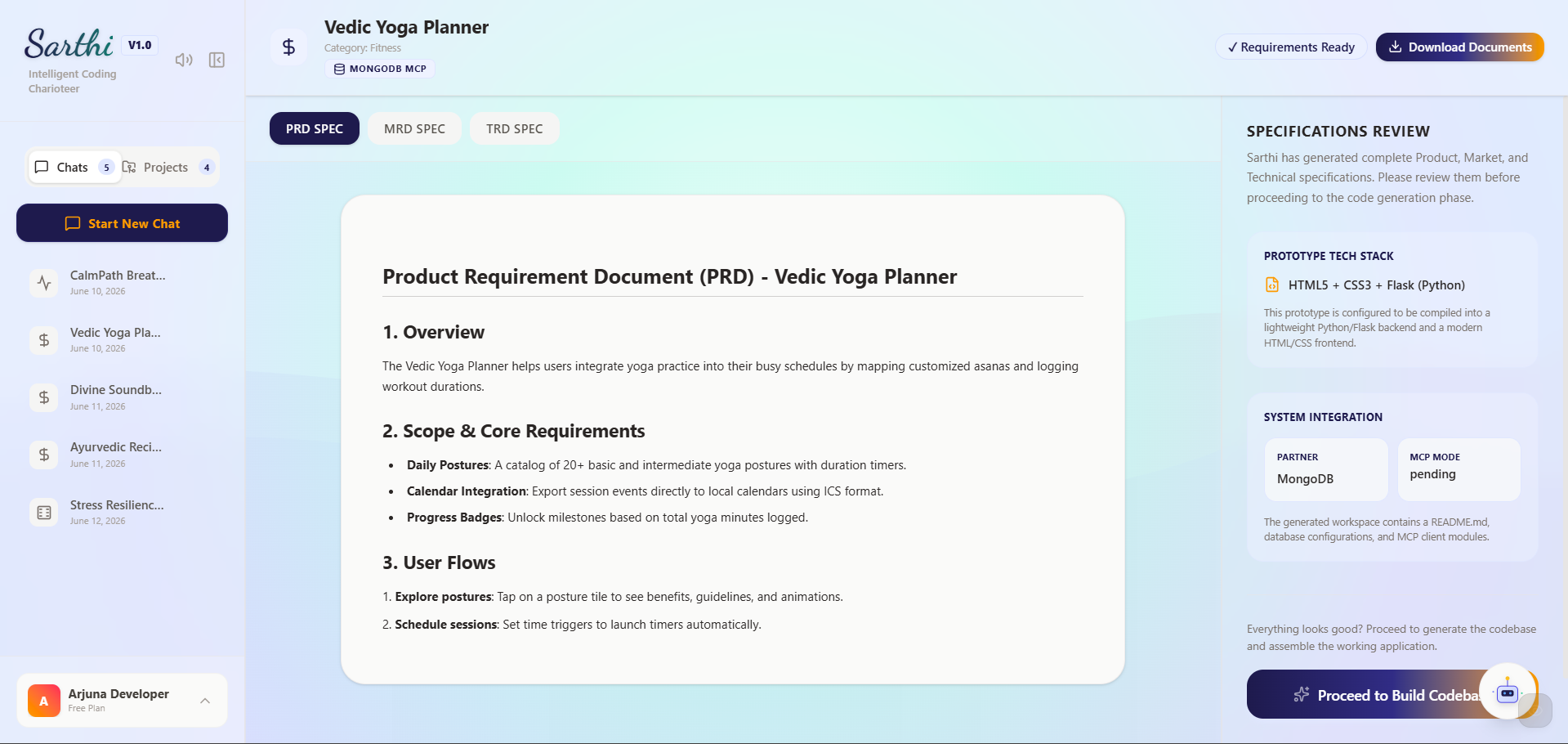
Interactive specifications review panel displaying the generated PRD/MRD/TRD documents and build triggers.
-
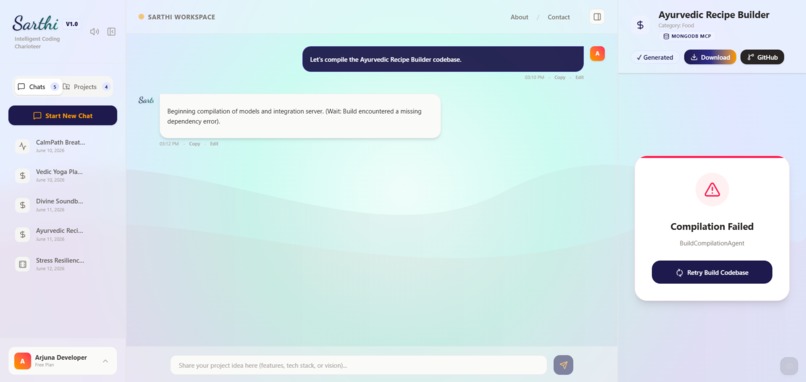
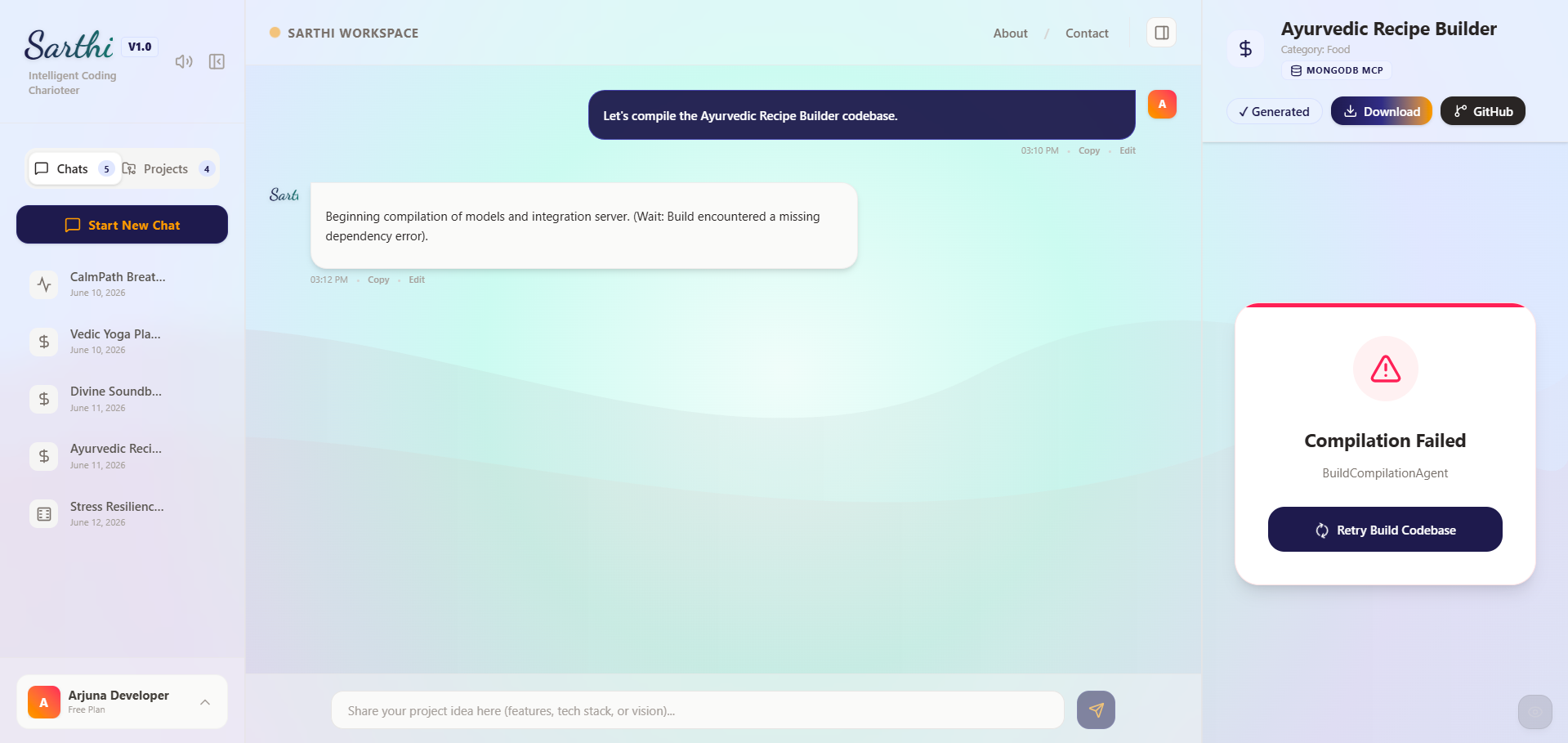
Graceful compilation failure interface with error logs and a retry button for the agent compiler pipeline.
-
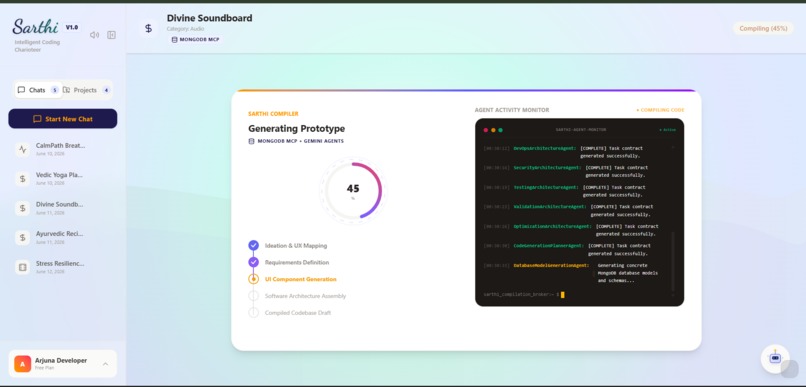
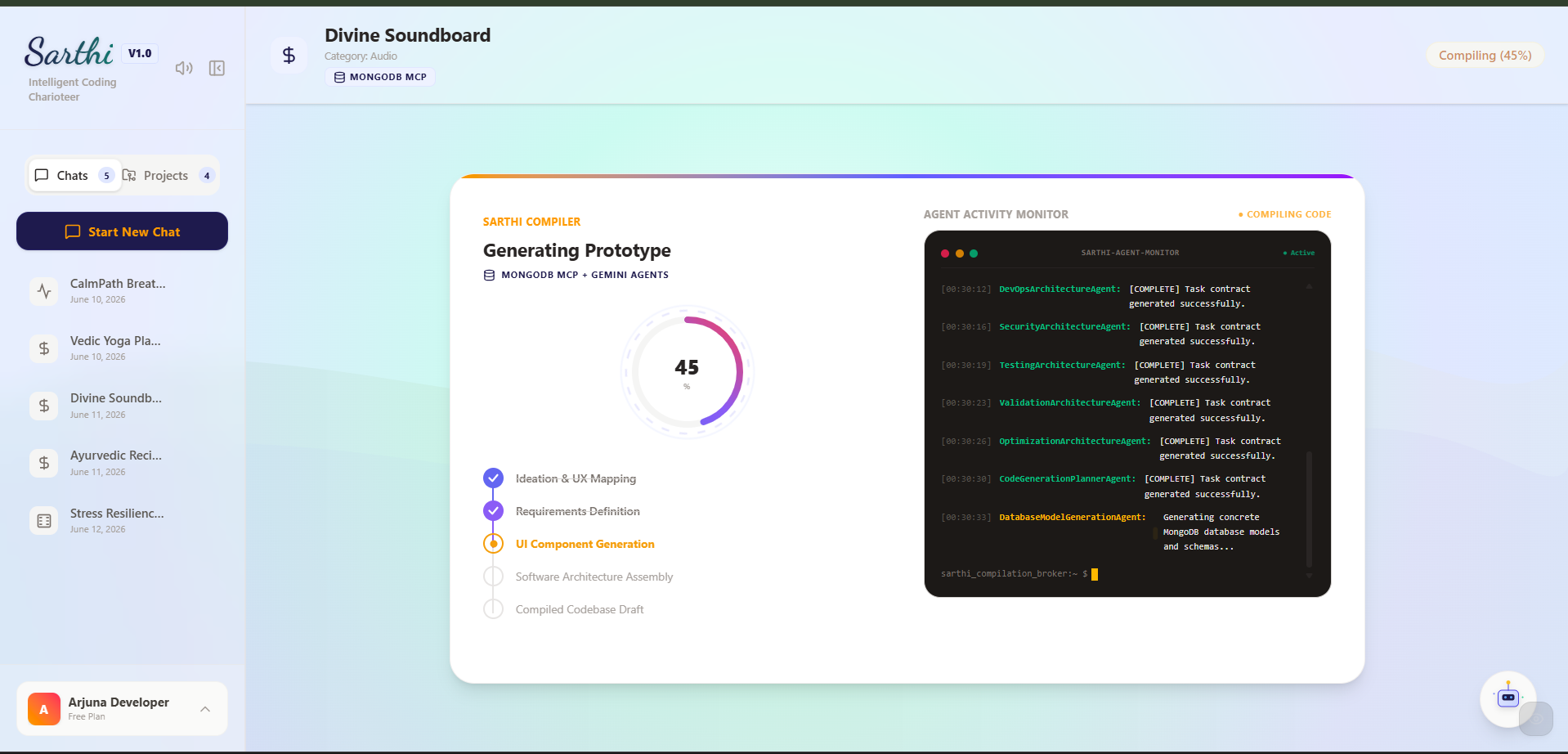
Real-time compilation board showing build progress, active agent phases, and a live console output stream.
-
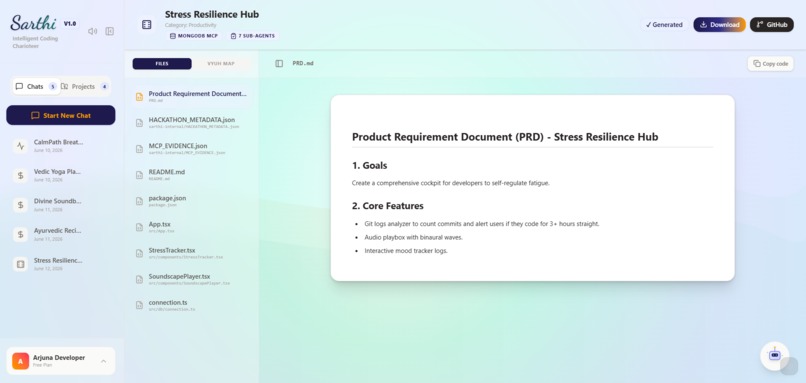
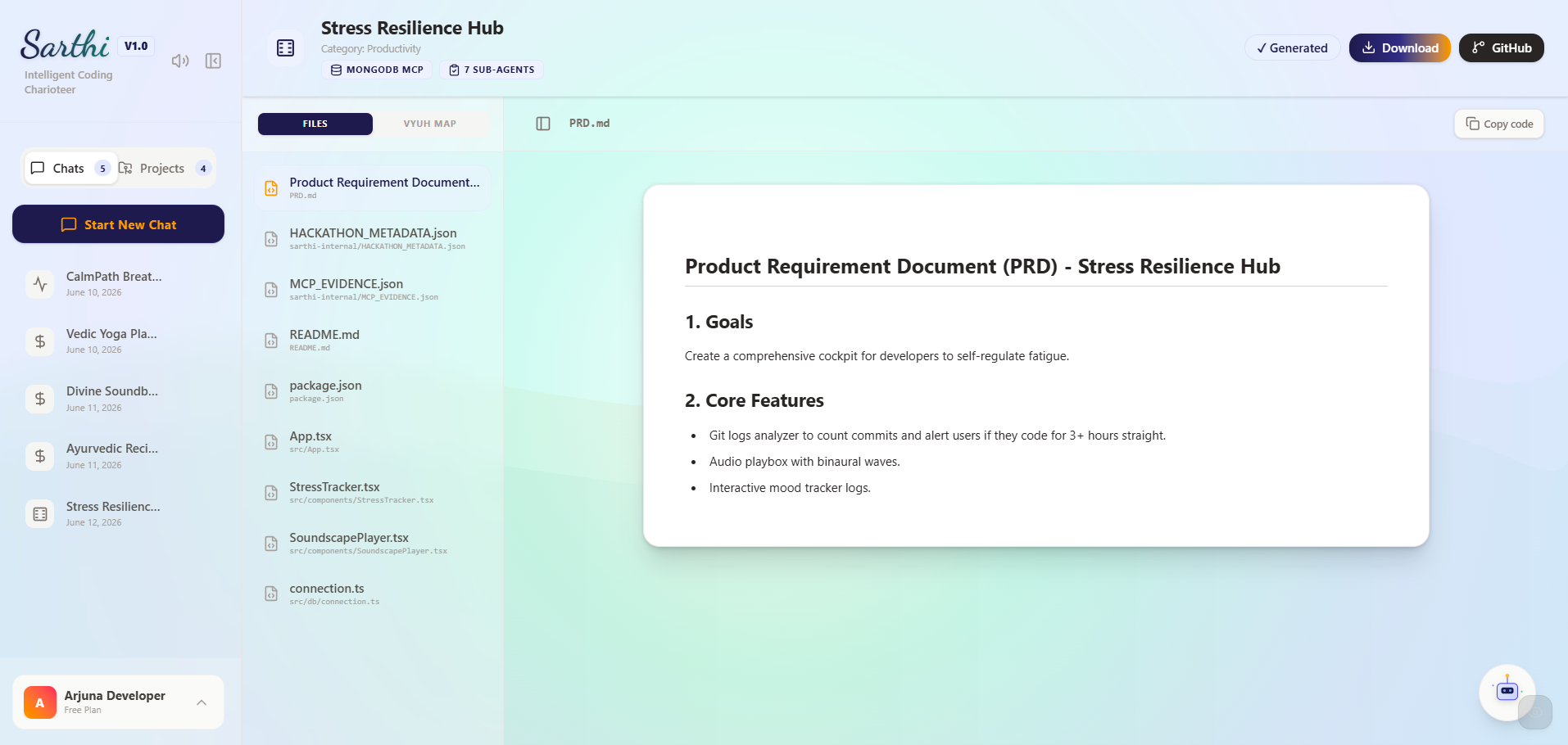
Compiled project workspace showing the generated file tree explorer, Markdown PRD rendering, and export controls.
-
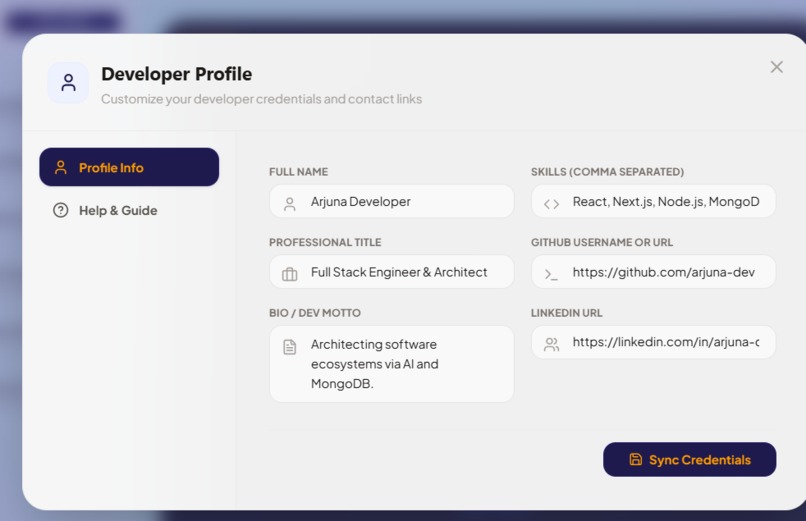
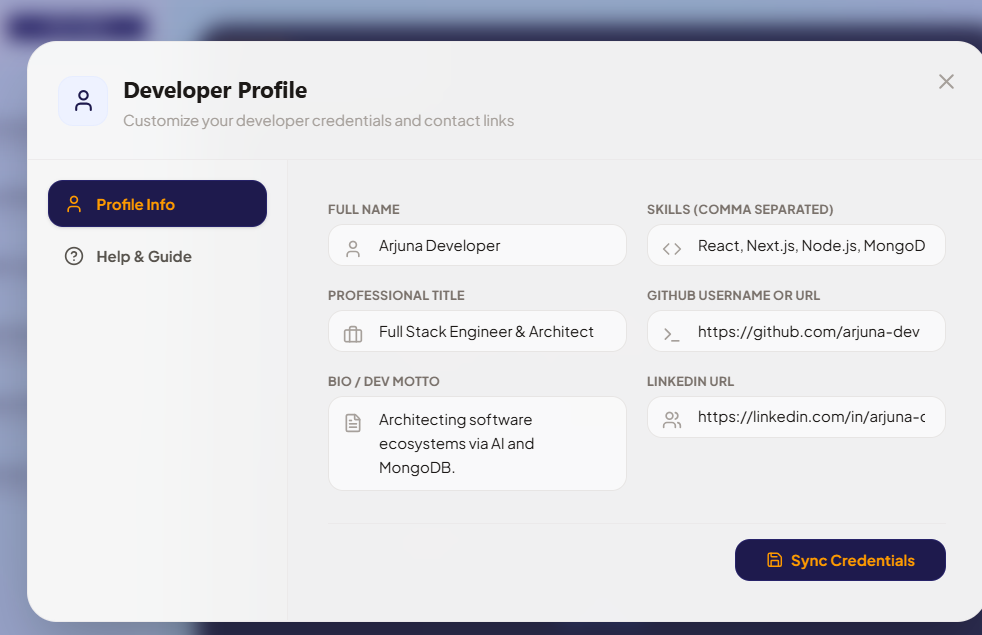
Developer profile configuration modal to sync GitHub profiles, skills, and portfolio credentials.
Inspiration
As a student and aspiring AI engineer, I often found myself frustrated by the gap between having a great product idea and actually turning it into a working application. Existing AI coding assistants could generate snippets of code, but they still required developers to manually connect everything together.
The name Sarthi comes from the Sanskrit word for charioteer, inspired by Krishna guiding Arjuna in the Mahabharata. Just as a charioteer provides direction and support, I wanted to build an AI system that could guide developers from a simple idea to a structured, production-ready software project.
What it does
Sarthi is an AI-powered software engineering workspace that acts like an intelligent co-founder. Users can discuss their product ideas, features, database requirements, and UI preferences in natural language.
Once the requirements are finalized, Sarthi coordinates a network of 28 specialized AI agents that collaborate to:
- Analyze requirements
- Design database schemas
- Create API specifications
- Generate backend and frontend code
- Build project documentation
- Validate architecture decisions
- Detect and repair compilation issues
The final output is a downloadable project package containing a FastAPI backend, Next.js frontend, MongoDB models, authentication setup, Docker configuration, and a detailed Product Requirements Document (PRD).
How we built it
Building Sarthi was a huge learning experience that allowed me to explore modern AI engineering practices.
AI & Agent Orchestration
- Google Agent Development Kit (ADK)
- LangGraph for multi-agent workflows
- Gemini 3.5 Flash for fast interactions
- Gemini 3.1 Pro Preview for deep reasoning, architecture planning, and code generation
Backend
- FastAPI
- Uvicorn
- Motor (Async MongoDB Driver)
- MongoDB Atlas
Frontend
- Next.js 16
- React 19
- Framer Motion
- Custom HSL-based design system
- Web Audio API for workspace feedback sounds
Cloud & Security
- Google Cloud Run
- Vertex AI
- IAM-based authentication
- Application Default Credentials (ADC)
We also integrated MongoDB MCP capabilities to allow agents to understand database structures and work with real-world collection contexts.
Challenges we ran into
Managing Multiple AI Agents
Coordinating 28 agents without creating conflicts, circular dependencies, or context overload was one of the biggest challenges. We solved this by introducing phase-based execution and controlled state transitions between agents.
Secure AI Deployment
As students, we wanted to follow production-grade security practices. Instead of exposing API keys, we migrated to Vertex AI and adopted IAM-based authentication to create a keyless architecture.
Generating Working Code
AI-generated code often contains build errors. To improve reliability, we developed a self-correction loop that analyzes compiler errors and sends them back to specialized repair agents until the project successfully compiles.
Accomplishments that we're proud of
- Successfully building a multi-agent system with 28 collaborating agents.
- Generating structured FastAPI + Next.js projects instead of simple prototypes.
- Creating the interactive Vyuh Map, which visualizes agent workflows and execution states in real time.
- Implementing a secure cloud-native architecture using Vertex AI and IAM.
- Transforming a personal learning project into a platform capable of generating complete software repositories.
What we learned
This project taught us much more than coding.
We learned:
- How multi-agent AI systems communicate and share context.
- The importance of state management in agentic workflows.
- Cloud deployment and security best practices.
- How to combine fast models and reasoning models effectively.
- How difficult—and exciting—it is to move from AI demos to real-world software systems.
Most importantly, we learned that ambitious ideas become achievable when broken into smaller, well-orchestrated steps.
What's next for Sarthi
Our vision is to make Sarthi a true AI engineering partner.
Future plans include:
- One-click deployment to Google Cloud and AWS.
- GitHub integration for automatic repository creation and pull requests.
- Figma integration for importing designs directly into projects.
- Support for additional MCP servers.
- Improved code validation and testing agents.
- Personalized project guidance based on developer skill level.
We believe Sarthi can help students, indie developers, and startups spend less time setting up projects and more time building meaningful products.
Built With
- context
- fastapi
- gemini
- google-agent-development-kit
- google-cloud-run
- model
- mongodb
- next.js
- python
- react
- struggle
- tailwind-css
- typescript
- vertex-ai

Log in or sign up for Devpost to join the conversation.