Inspiration
Every two weeks, one language disappears from the world forever. Thousands of languages today are spoken by aging populations, with few or no young speakers learning them — and once the last fluent speaker is gone, centuries of culture, oral history, and identity go with them. Existing tools don't help close that gap: language-learning bots send disconnected "word of the day" messages with no system, the most common textbooks for low-resource languages haven't been updated in decades, and a private tutor can cost more per month than most students' families can afford. We surveyed speakers of one such endangered language and found a consistent pattern: people want to learn their heritage language (up to 88% in some communities), but actual fluency is often below 50%. There was no single, convenient way to truly immerse yourself in the language.
Why we started here
We chose to pilot Saran with one of the world's largest and most linguistically diverse territories. Despite spanning a vast landmass and being home to over 150 distinct languages, language-learning infrastructure for most of them is decades behind what's available for major world languages — almost no modern apps, outdated materials, and a small pool of available tutors relative to the population. That combination — massive linguistic diversity, a huge potential audience, and almost no existing digital tools — made it the clearest place to prove the model before expanding to endangered languages elsewhere in the world.
What it does
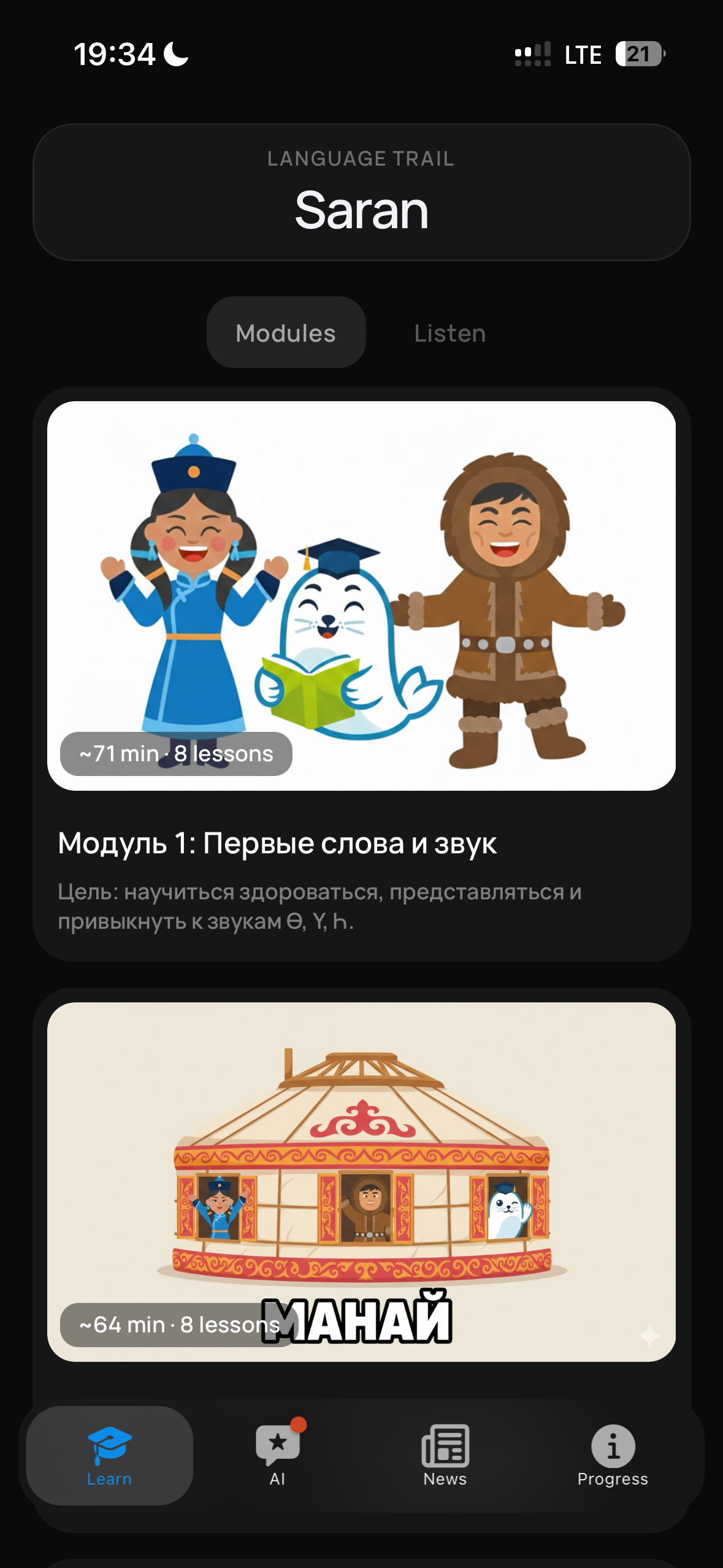
Saran is an ecosystem for preserving endangered languages, starting with Buryat as our pilot language. It combines:
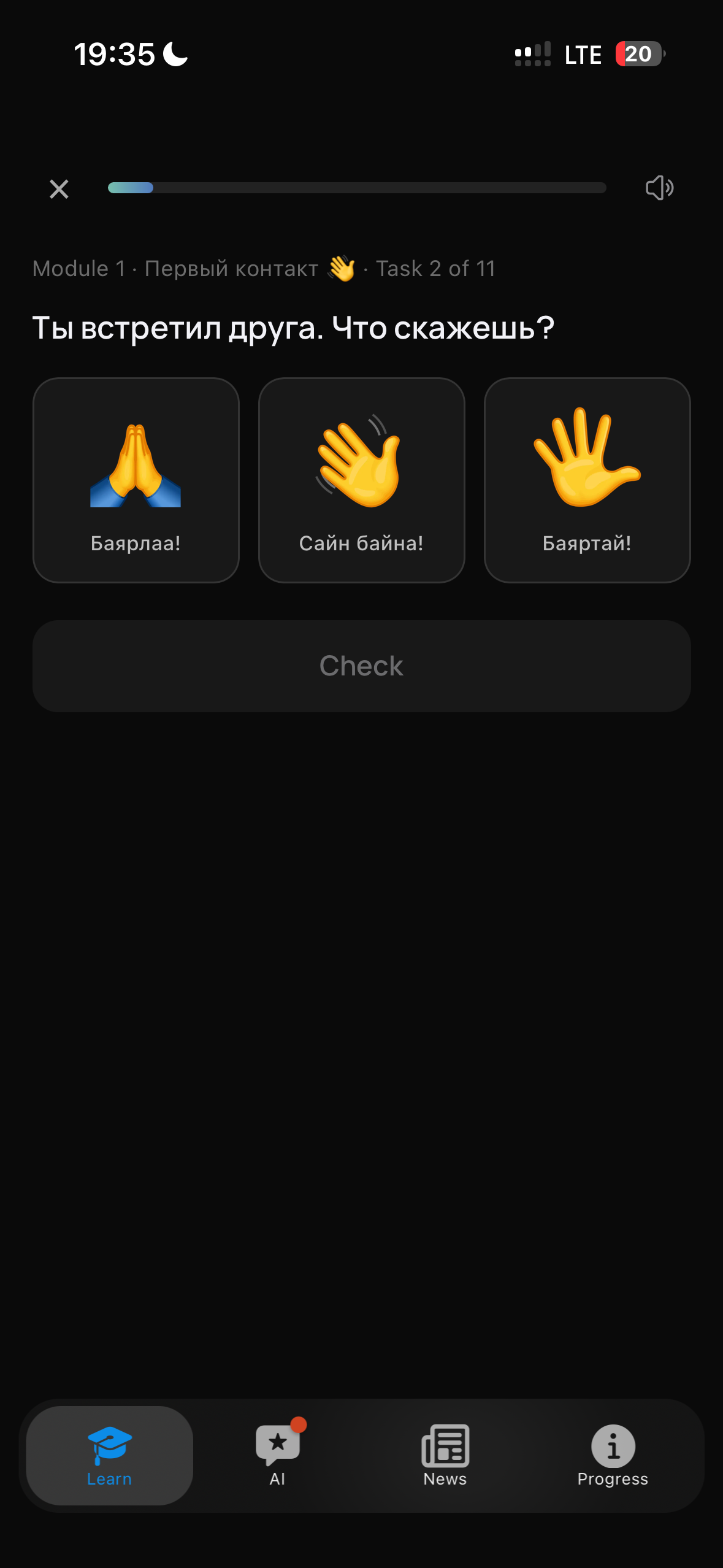
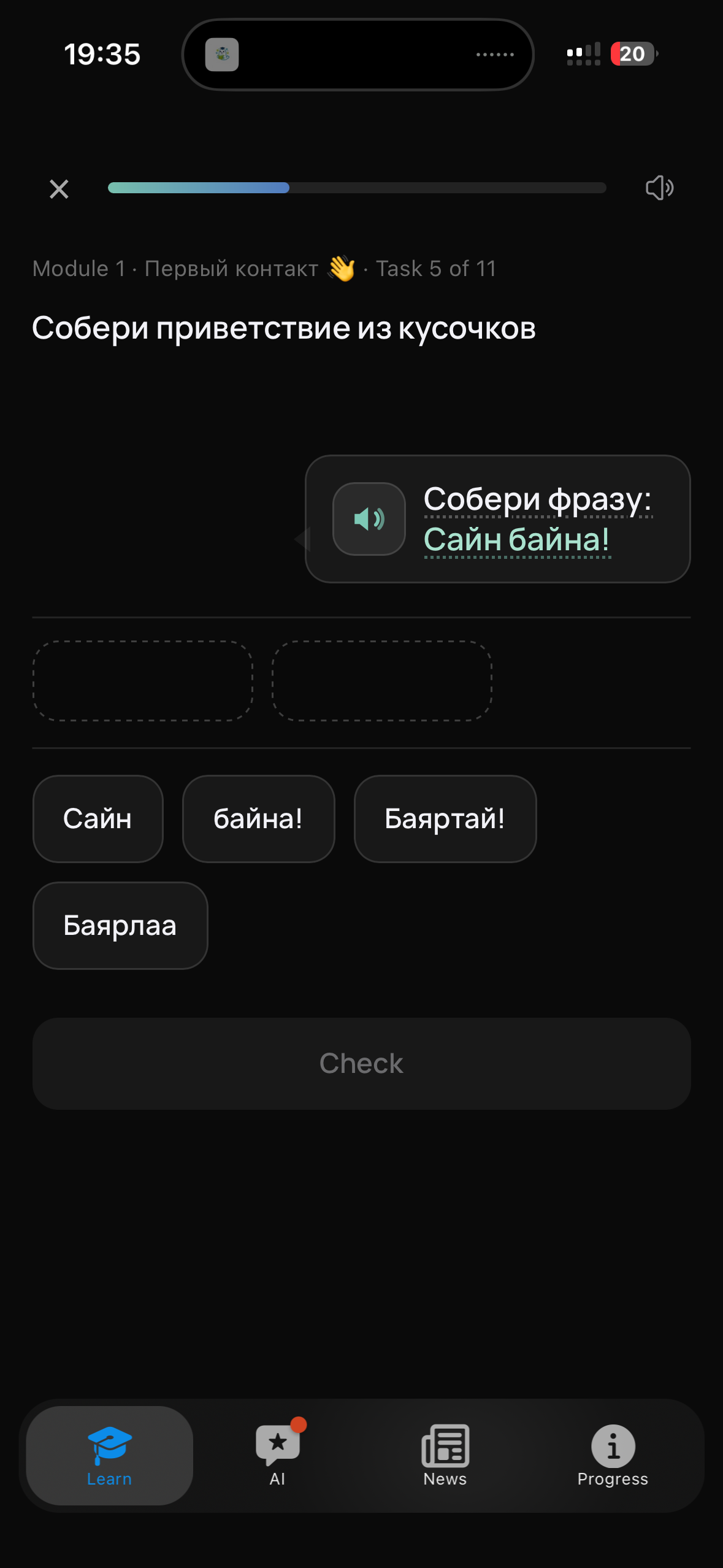
- 700+ structured lessons across 10 blocks, developed with linguists and voiced by native speakers, using a cognitive-association method — instead of showing a word and then its translation, we ask the learner to act first (e.g. tap the emoji that means "hello"), so the word sticks as an association, not a flashcard.
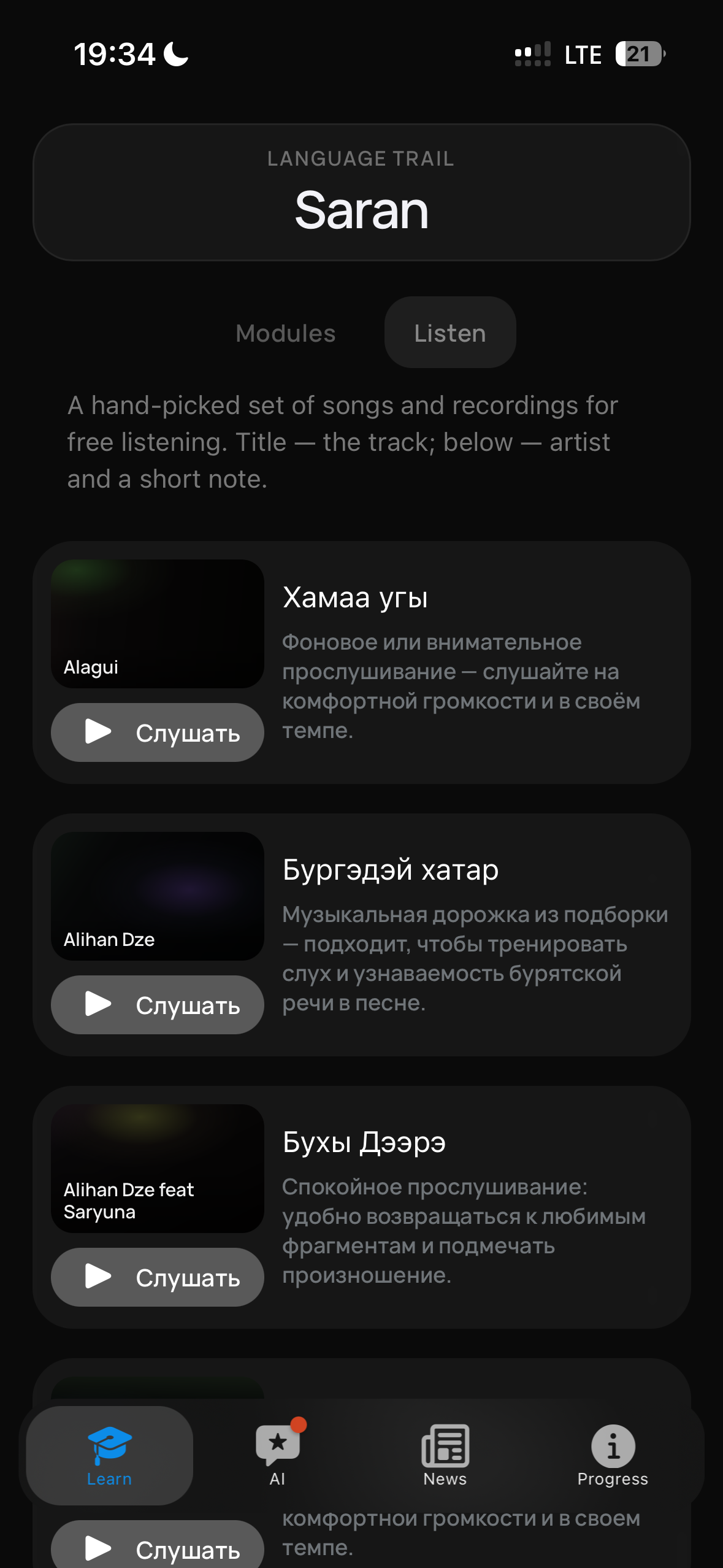
- A music library of ~20 songs with a built-in player, for passive immersion during a commute or before bed.
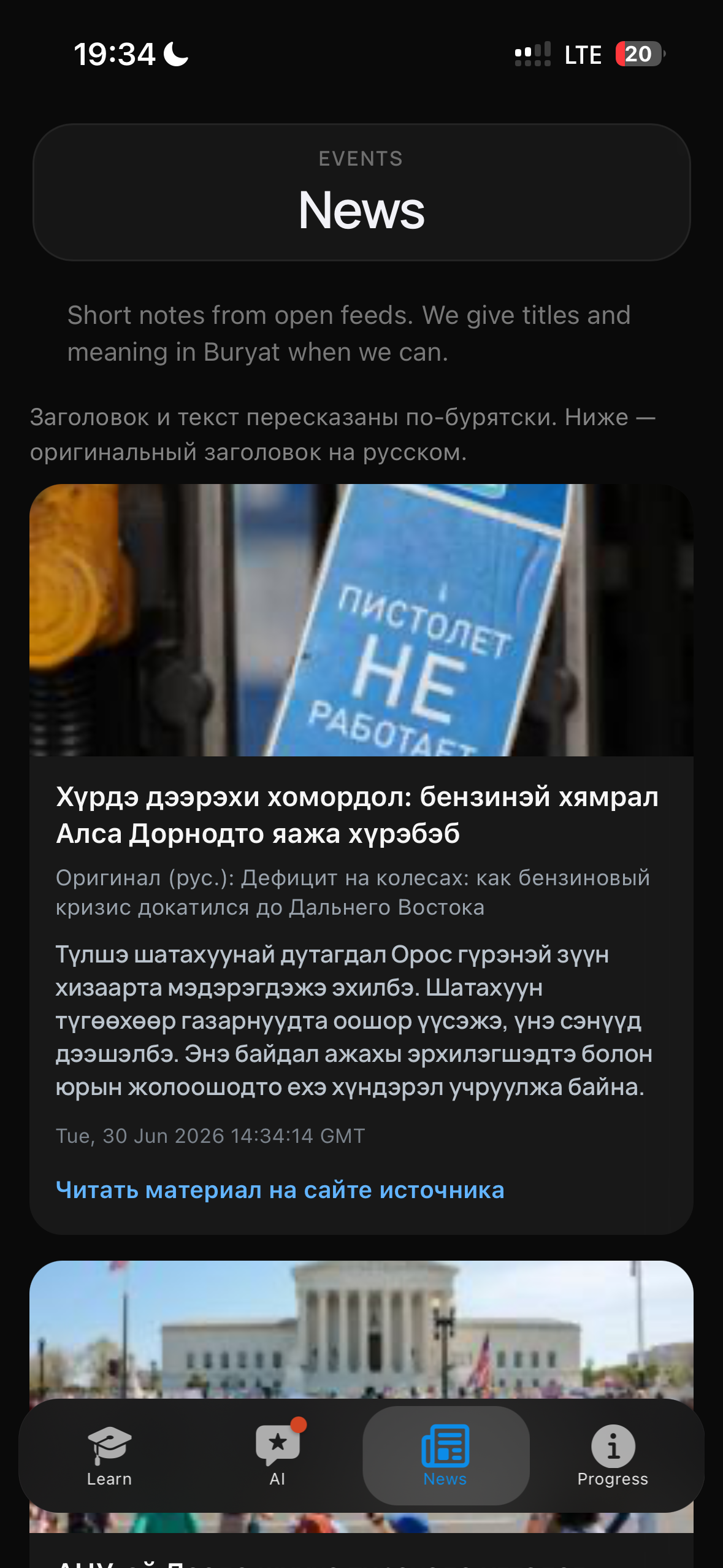
- Real-time translated news, so learners can read about what's happening today in the language they're learning, not just textbook dialogues.
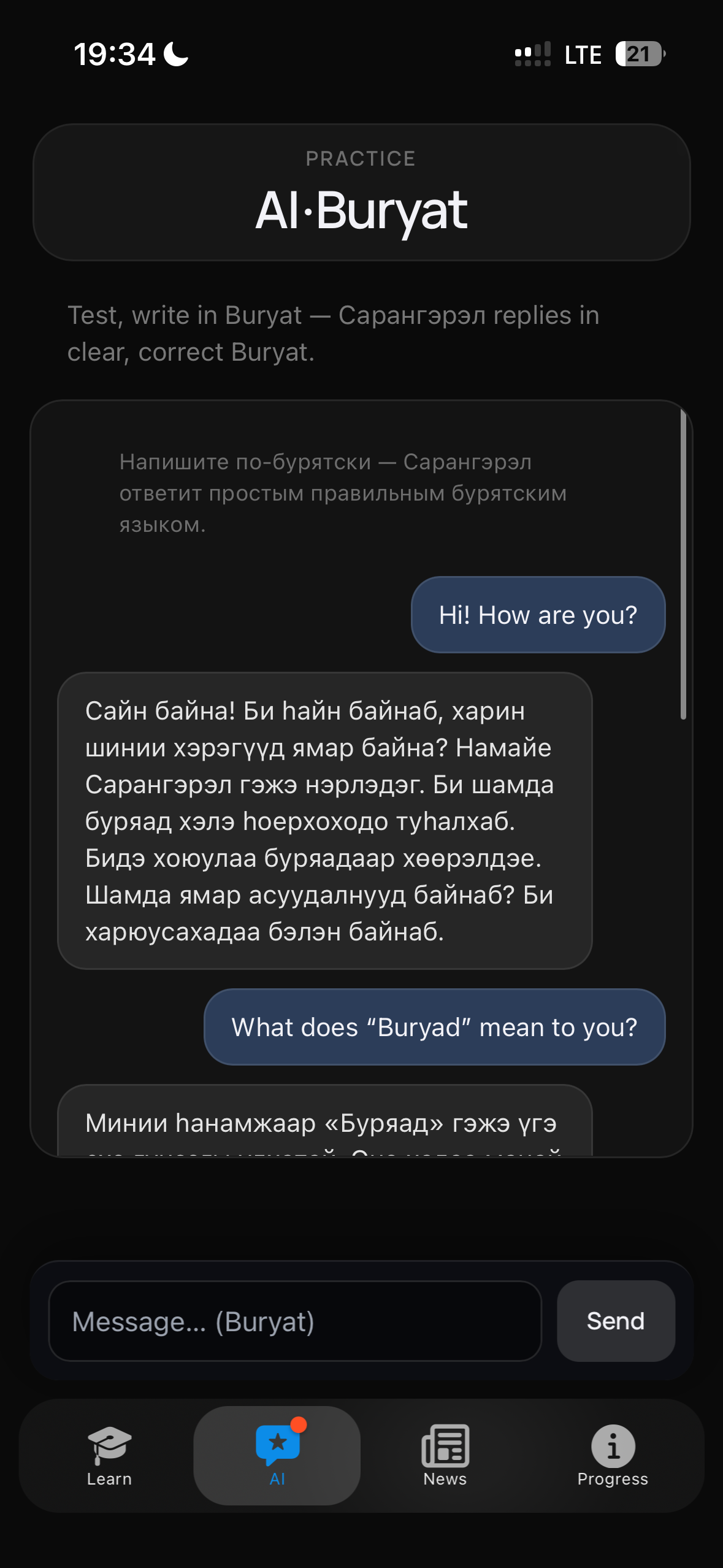
- An AI conversation partner — the most accurate Buryat-speaking AI assistant we've found, available to talk any time a real native speaker isn't.
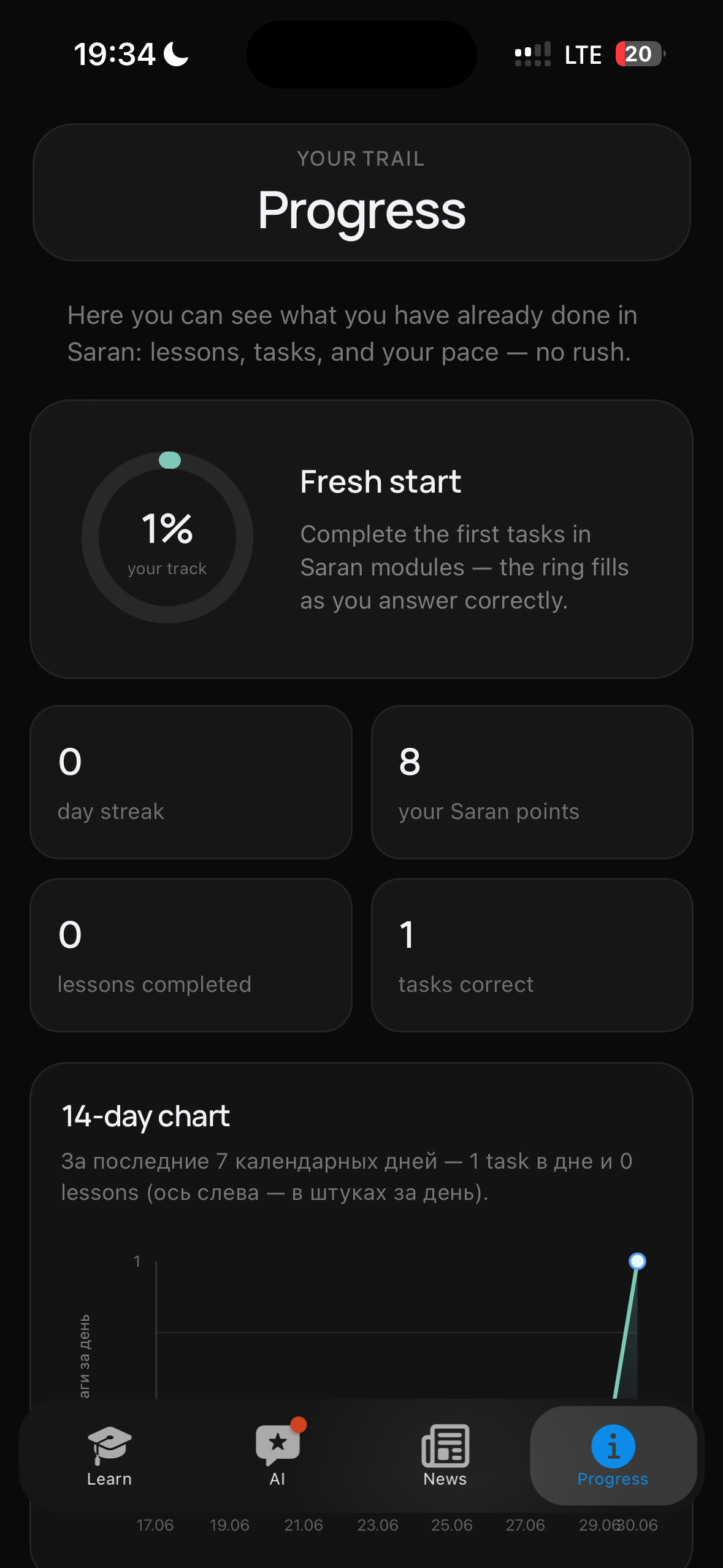
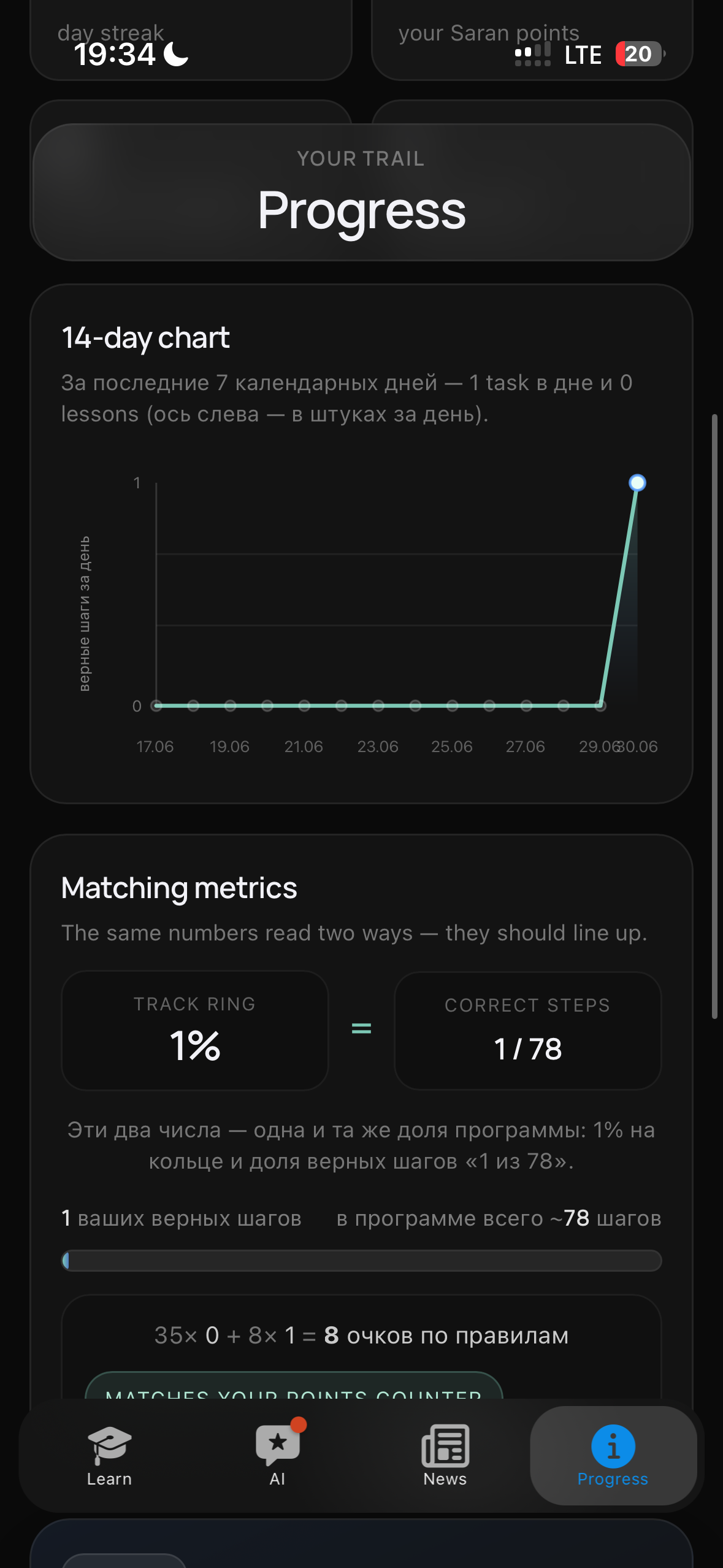
- A progress dashboard tracking completed lessons, streaks, and a learning curve over time.
How we built it
The frontend is built in React, with a FastAPI (Python) backend running on a local server (RTX 4090 + EPYC 7443P) so AI inference has no added latency.
The AI conversation system uses a three-step pipeline: the user's message is first translated by NLLB-200 (Meta's open translation model) into a language the core LLM handles well; Qwen analyzes the message and generates a response; that response is translated back into the target language by NLLB-200, with corrections and word choices personalized to what the learner has already studied. This pipeline is reused for real-time news translation as well.
Challenges we ran into
Low-resource languages have very little training data compared to major world languages, so getting consistently accurate, natural-sounding translations required iterating on the pipeline itself rather than relying on a single model. We also tested multiple lesson designs before finding the cognitive-association method that actually worked — our first iteration (classic word-then-translation flashcards) scored 3.3/5 with 70 test users; after redesigning around action-first association and adding music and real content, satisfaction rose to 3.9/5, and after adding the AI conversation partner, just 8 minutes of daily conversation increased learning effectiveness by up to 75% in testing.
What we learned
The biggest lesson was that gamification alone isn't enough — engagement only translates into actual fluency when paired with live, contextual practice. That's a known problem in language learning generally: structured courses are reliable but have high drop-off, gamified apps are engaging but don't transfer to real speech, and live conversational practice has the best outcomes but is the hardest to access for endangered languages. Saran's architecture is our attempt to combine all three.
What's next for Saran
We're working on expanding beyond Buryat to other endangered languages, growing our lesson and content library, and continuing to refine the AI conversation pipeline for accuracy and naturalness across more languages.

Log in or sign up for Devpost to join the conversation.