-
-
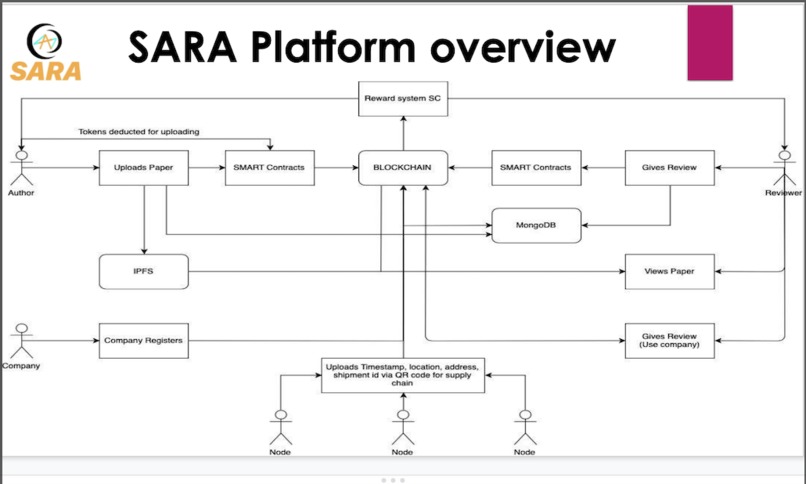
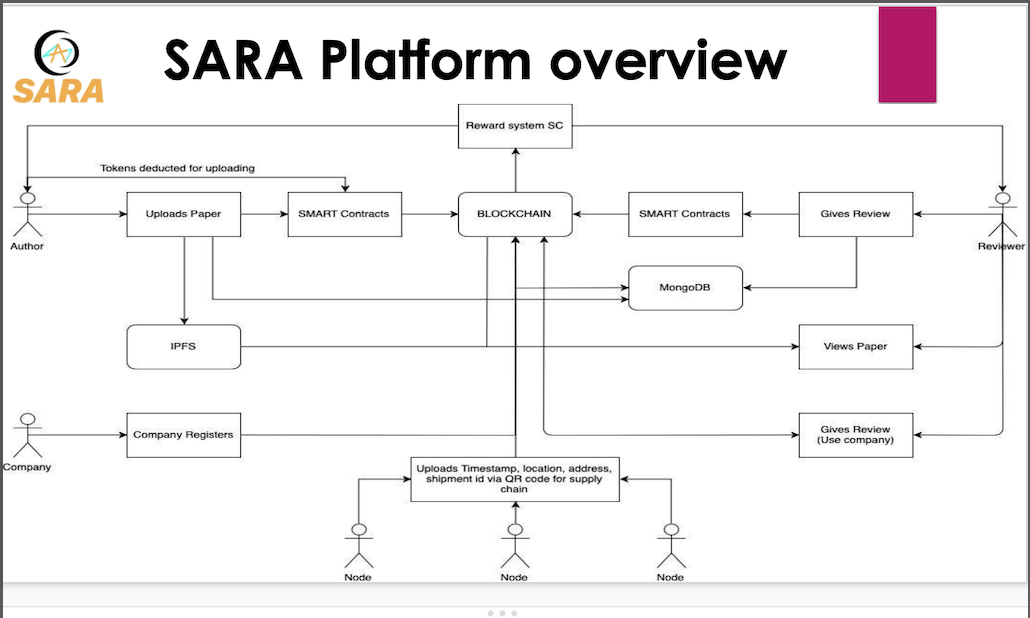
Architecture
-
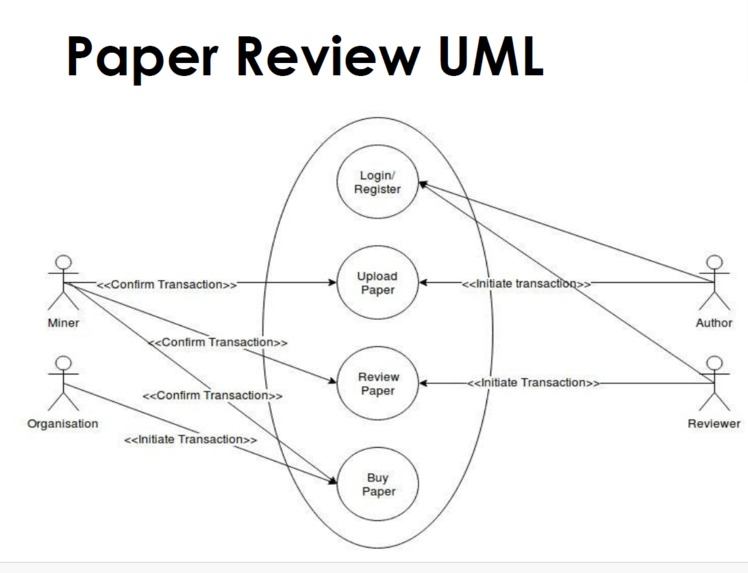
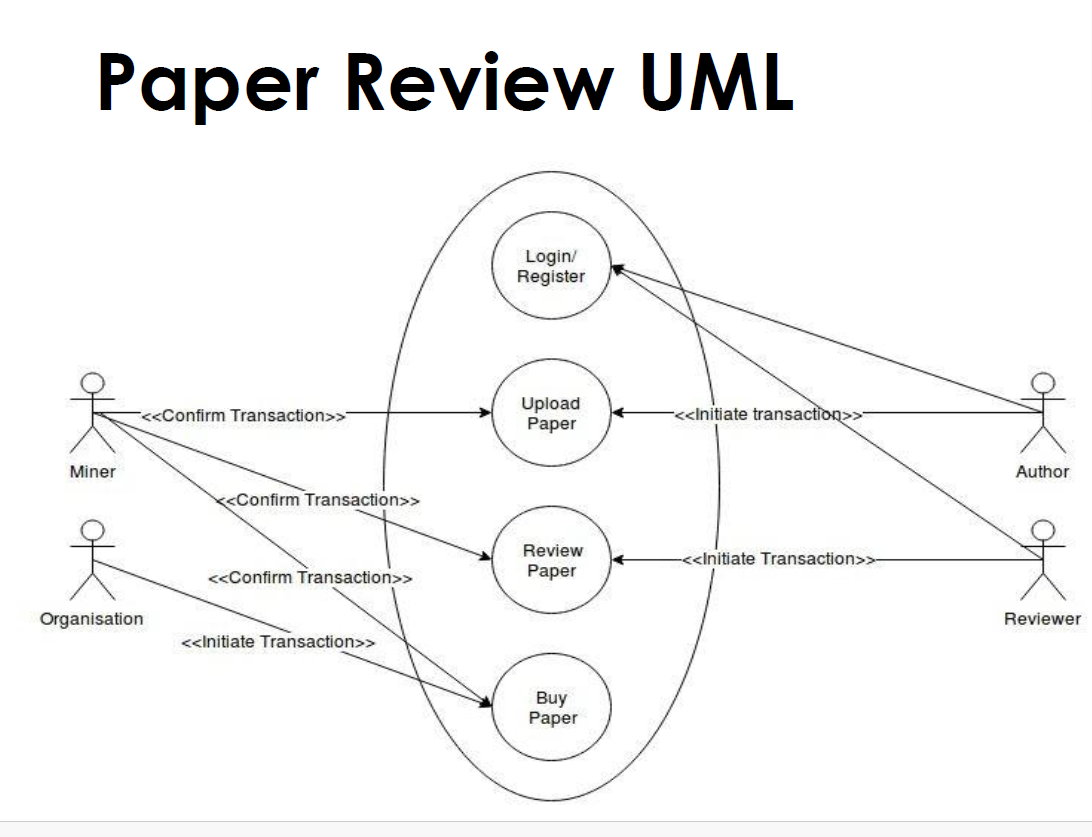
Research PAPER REVIEW UML
-
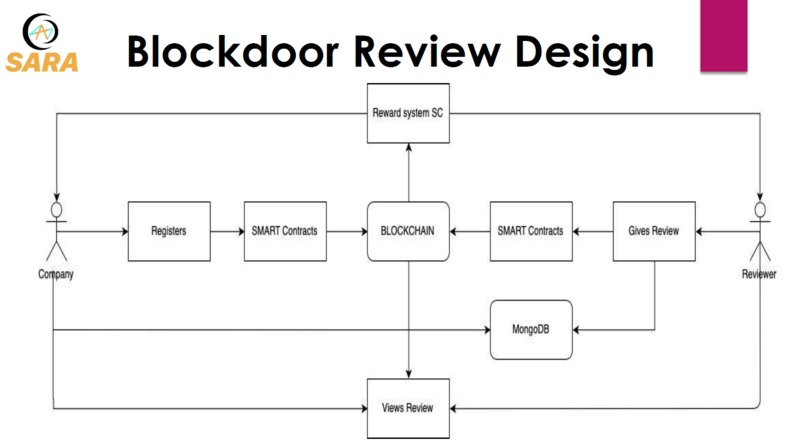
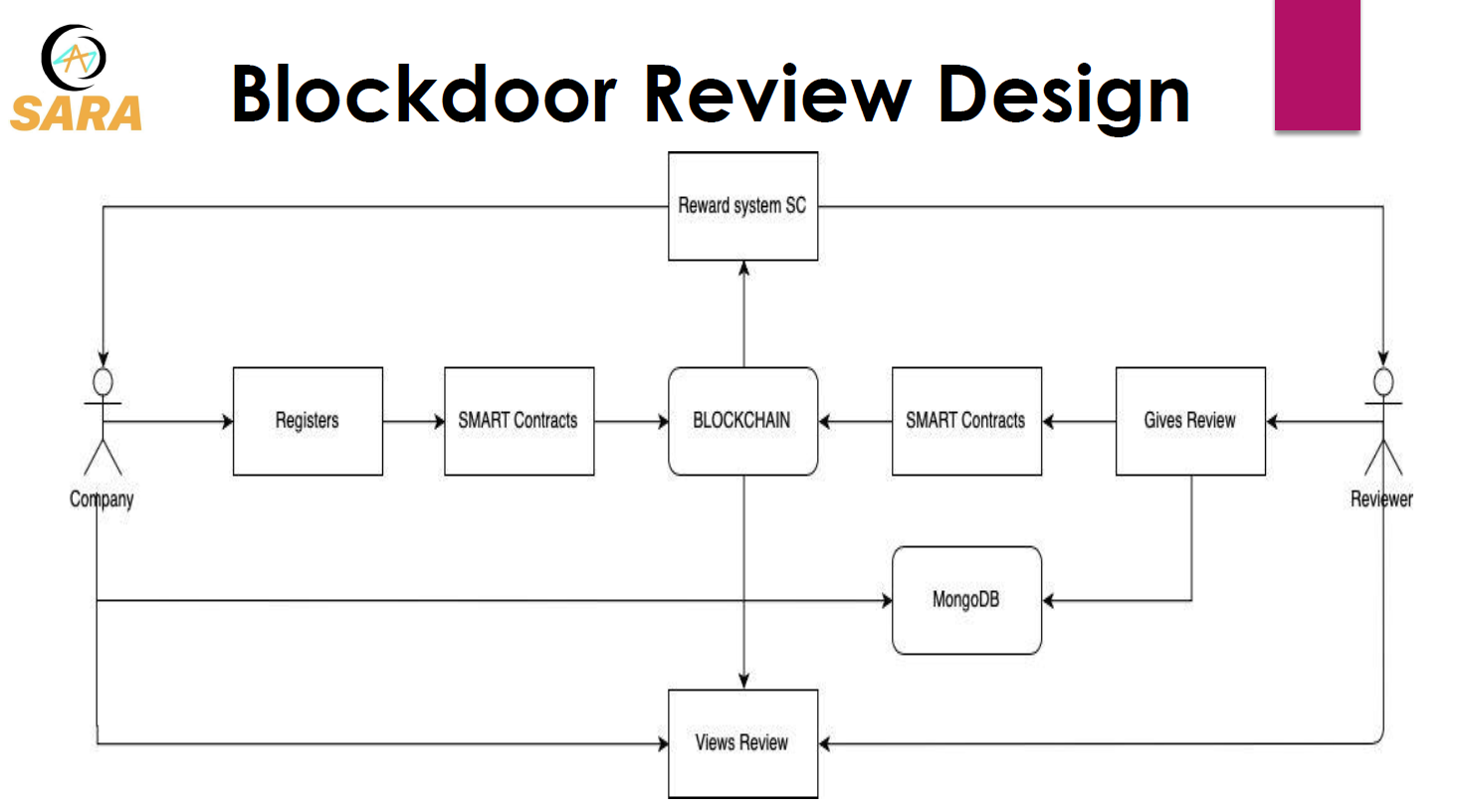
SARA REVIEW DESIGN
-
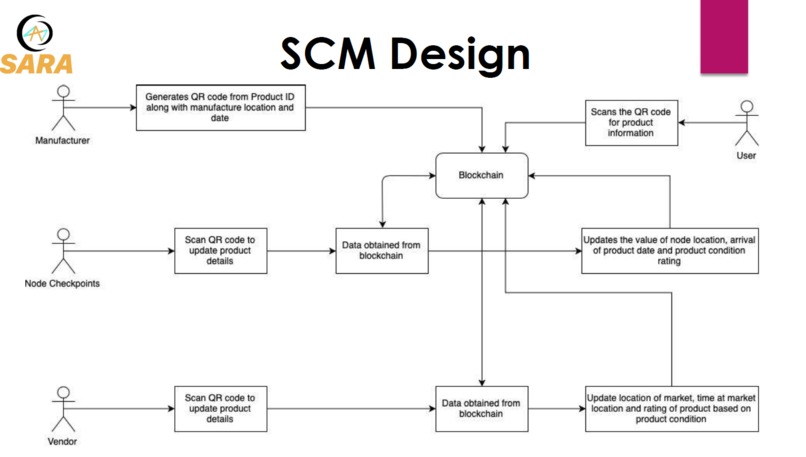
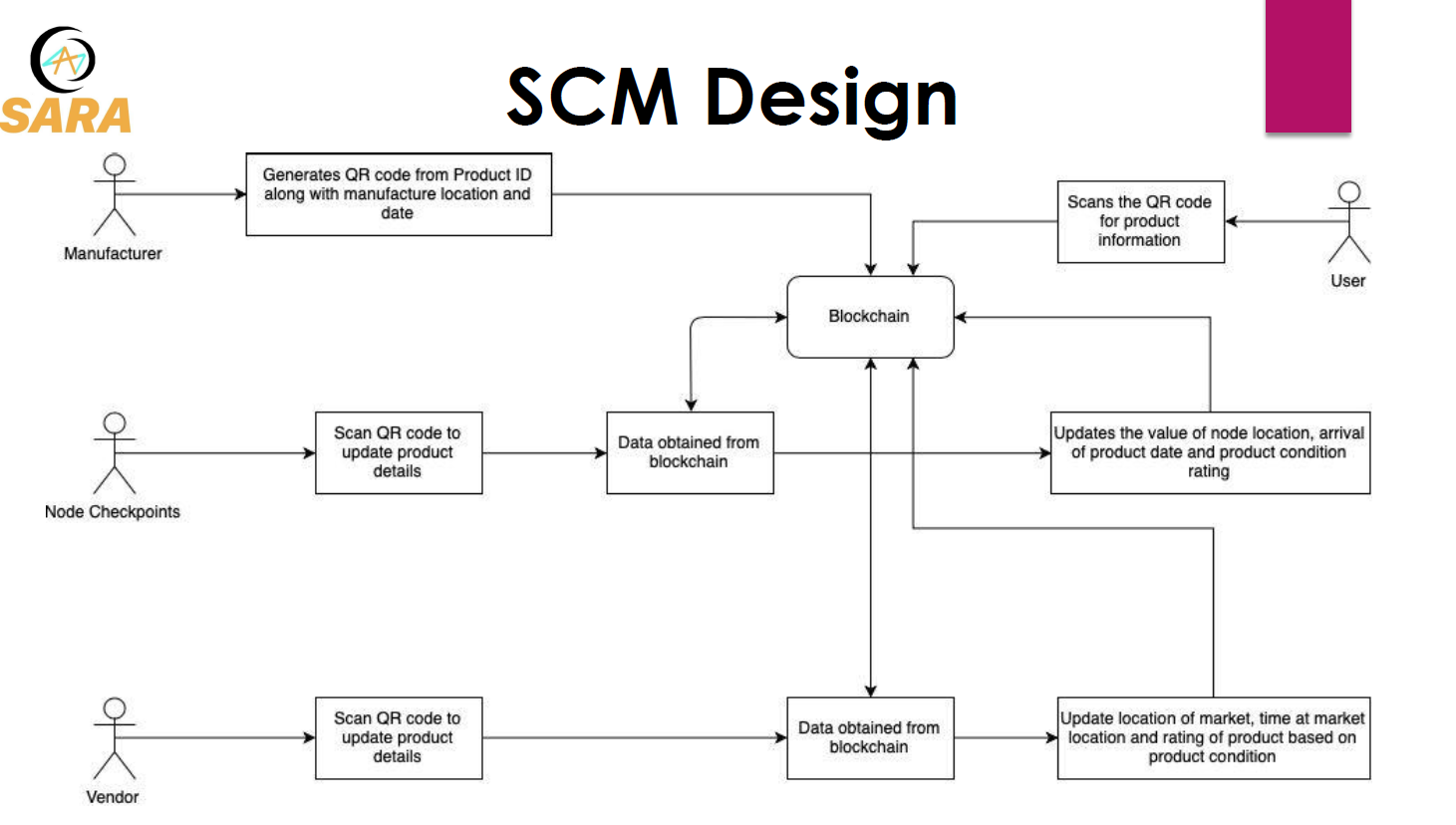
Supply Chain Management Design
Inspiration
The idea is to build a platform, say SARA to provide BaaS (Blockchain as a service) platform. Based on the essentials of Blockchain Technology, We, the team SARA decided to design a platform in the necessitous field such as paper publication, review industry, supply chain management, healthcare and education services on SARA network.
In recent years, many organizations have sprung up which publish journals submitted to the conferences organized by them. Such prestige system is a complex socio-economic system perpetuated by journals and researchers themselves by rewarding publication in prestigious journals and punishing a lack thereof. It is self-reinforcing and is very difficult to remove. Hence there is a need of a new reputation ecosystem which can assure the credibility of the papers published and gain the trust. The system aims at creating Decentralised Autonomous Organisation (DAO) which encourages peer review and creates its own reputation ecosystem to provide an alternative to the current prestige system that dominates academic publishing with detrimental consequences. Information is stored on the Ethereum blockchain to allow version control of documents and provide redundancy and resiliency to the information in the network.
What it does
The review platform of the SARA network implements the Blockchain technology in order to ensure feedback legitimacy and as a backbone for the economic model which ensures that all feedback is genuine and tamper proof.
During the development of the peer review platforms, SARA network noticed the importance of the review or audit activities of the processes or the standards in Traceability system so that we have decided to utilize SIRI platform in Supply Chain Management which mainly focuses on Traceability.
- Lack of Transparency and Trust in Review Process • Solution: SARA ensures a transparent and trustless review process, promoting confidence in the evaluation of research papers.
- Potential Biases in Acceptance Process o Solution: The decentralized architecture of SARA reduces biases, fostering an inclusive and impartial assessment of research contributions.
- Inefficiency and Delay in Review Procedures o Solution: Through smart contract implementation and automation, SARA accelerates the review and acceptance procedures, leading to quicker decision-making and reduced administrative burdens.
- Limited Access to Research Papers o Solution: SARA ensures free and open-source access to research papers on the public blockchain, allowing for perpetual availability and the creation of connected graphs.
- Risk of Premature Leaks and Lack of Confidentiality o Solution: Researchers can upload files in encrypted form using SARA , preventing premature leaks and ensuring the confidentiality of their work.
- Inadequate Record-Keeping o Solution: SARA employs NFT-based record-keeping, assigning a unique NFT to each submission and approval for transparent and immutable documentation.
- Inefficient Payment Processes o Solution: SARA streamlines payment processes for hassle-free verification, enhancing overall efficiency in the academic and research ecosystem.
How we built it
SARA Platform has been designed and developed with a focus on leveraging the Ethereum blockchain, particularly its public decentralized network. The platform incorporates the concept of smart contracts on the Ethereum blockchain to facilitate decentralized settlement and enhance transparency in various aspects of the research paper review process, such as transactions, document submissions, and reviews.
Here is a breakdown of the key components mentioned in your description:
Public Ethereum Decentralized Network:
The choice of the Ethereum blockchain implies that the SARA Platform operates on a decentralized network where the underlying technology ensures security, immutability, and transparency. Ethereum is widely used for deploying smart contracts, which are self-executing contracts with the terms of the agreement directly written into code. Smart Contracts:
Smart contracts on the Ethereum blockchain are programmable and self-executing contracts that automatically enforce the terms and conditions specified within them. In the context of the SARA Platform, smart contracts are likely used to automate various processes, such as managing transactions, handling document submissions, and executing reviews. They contribute to the efficiency and transparency of the system. SAT Token:
The mention of SAT Token suggests that the platform has its native token on the Ethereum blockchain. This token could serve various purposes within the ecosystem, such as providing incentives to reviewers, enabling transactions, or representing ownership rights. It's common for blockchain-based platforms to have their native tokens for specific functionalities. Hybrid Architecture:
The term "hybrid architecture" suggests that the SARA Platform employs a combination of both public Ethereum blockchain and another high-performance system. This hybrid approach could be designed to address scalability issues often associated with public blockchains. The high-performance system might handle specific tasks or transactions that require faster processing times, while the Ethereum blockchain ensures decentralization and security. Bridging Between Chains:
The mention of bridging between the public Ethereum chain and a high-performance system indicates interoperability between these two components. This could involve mechanisms to transfer assets or information seamlessly between the two, maintaining the benefits of decentralization from Ethereum and the speed or scalability from the high-performance system.
Challenges we ran into
Incomplete documentation provided by the customers, the platform needs to integrate features such as retrieving Content Identifiers (CIDs). Solution: Developed and implemented smart contracts to address the missing functionality and retrieve necessary CIDs.
Accomplishments that we're proud of
SARA tokens shall be the native token of the system, with the purpose of tokenizing the review industry as well as the Supply Chain Management. In traditional systems, the contributors of the system do not get any instant reward for reviewing, hence we made this system completely incentivised using cyptocurrencies and smart contracts using self created reward distribution function.
What we learned
During the development of the peer review platforms, SARA network noticed the importance of the review or audit activities of the processes or the standards in Traceability system so that we have decided to utilize SARA platform in Supply Chain Management which mainly focuses on Traceability.
SARA tokens shall be the native token of the system, with the purpose of tokenizing the review industry as well as the Supply Chain Management. In traditional systems, the contributors of the system do not get any instant reward for reviewing, hence we made this system completely incentivised using cyptocurrencies and smart contracts using self created reward distribution function.
1) Blockchain based paper review system. 2) Blockchain based peer review system(Blockdoor) 3) Blockchain based supply management system.
Please find the detailed explanation of above applications' design and implementation with diagrams in the attached whitepaper
Possible issues
User may over populate the system by uploading many documents: The SARA platform denies such behaviour as user can be allowed to upload only limited papers in fixed time frame.
Digital Ownership of documents: Authors can digitally sign the papers using the private key.
Too much information needs to be stored on Blockchain: Complete information is not mandatory to be stored on Blockchain. Part of few data could be stored in database and only critically important information to be stored on Blockchain.
Companies purchasing reviews: This type of behavior is not economically feasible in our system, since the review fee will grow continuously.
Companies rejecting all critical reviews: Since all reviews and the company’s rejection or approval pf them are visible to everyone on the system, companies with high rejection rates will raise suspicion.
Unauthentic user may try to change the information related to product: Our system doesn’t allow such behaviour to as for each change in the information on Blockchain, it get’s the change verified from every other nodes on the SARA network (Consensus Mechanism)
What's next for SARA Research Paper Review System Using Blockchain
"SARA" using blockchain. However, I can provide some general insights and potential directions that researchers and developers might consider for enhancing research paper review systems using blockchain technology:
Decentralization and Transparency:
Implementing a decentralized system using blockchain can enhance transparency and reduce the risk of manipulation in the review process. Each step of the review, including submission, peer review, and decision-making, can be recorded on the blockchain, ensuring an immutable and transparent trail. Smart Contracts for Automation:
Smart contracts can automate various aspects of the review process. For example, once a reviewer completes their assessment, a smart contract could trigger automatic compensation or token rewards. This can streamline the workflow and reduce the administrative burden. Data Integrity and Security:
Use blockchain to ensure the integrity and security of the data involved in the review process. This includes securely storing manuscripts, reviewer feedback, and decision outcomes. Blockchain's cryptographic features can help in preventing data tampering. Tokenized Incentives:
Introduce a token or cryptocurrency-based incentive system for reviewers and authors. This can motivate reviewers to provide high-quality and timely feedback. Authors can be rewarded based on the impact and quality of their research. Immutable Review History:
Create an immutable record of the entire review history for each manuscript. This can include information about previous submissions, reviewer comments, and decisions. Having an unchangeable history can help in evaluating the progress and consistency of the review process. Anonymous Peer Review:
Leverage blockchain to implement a secure and anonymous peer review process. This can be achieved by encrypting reviewer identities on the blockchain while still maintaining the transparency and traceability of the review actions. Integration with Academic Credentials:
Explore integrating blockchain for academic credentials to verify the qualifications and expertise of reviewers. This can enhance the trustworthiness of the review process. Interoperability and Standardization:
Consider adopting industry standards and ensuring interoperability with other systems. This can facilitate collaboration between different research paper review platforms and promote a more unified and efficient ecosystem.

Log in or sign up for Devpost to join the conversation.