Inspiration
The inspiration behind Sara AI Nexus Agency came from the realization that modern workflows are deeply fragmented. Businesses and developers juggle multiple disconnected tools for messaging, voice communication, social media, document handling, inbox management, and desktop automation. We wanted to build a unified, intelligent command center where an autonomous multi-agent ecosystem can bridge these gaps and execute complex workflows seamlessly.
What it does
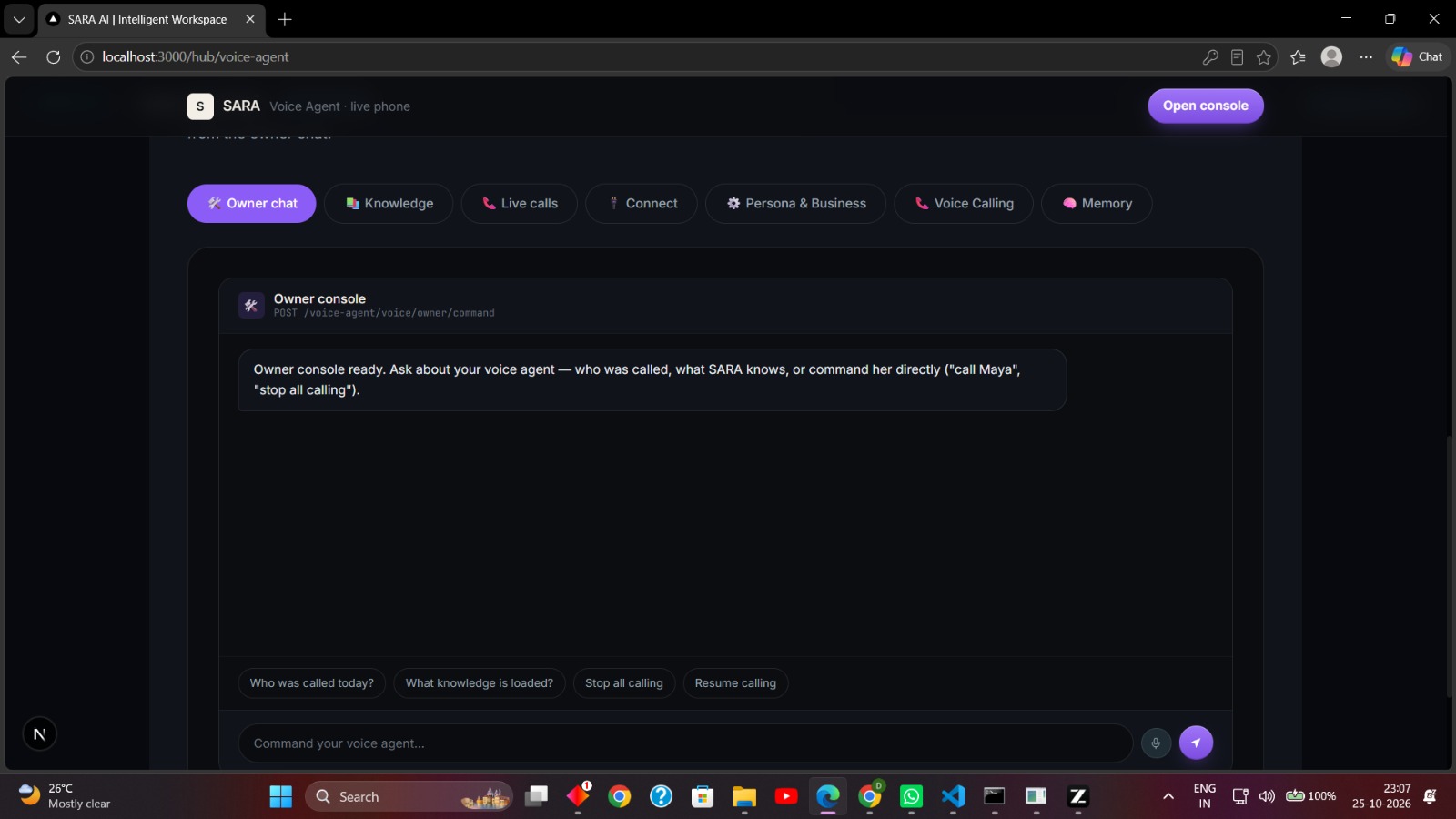
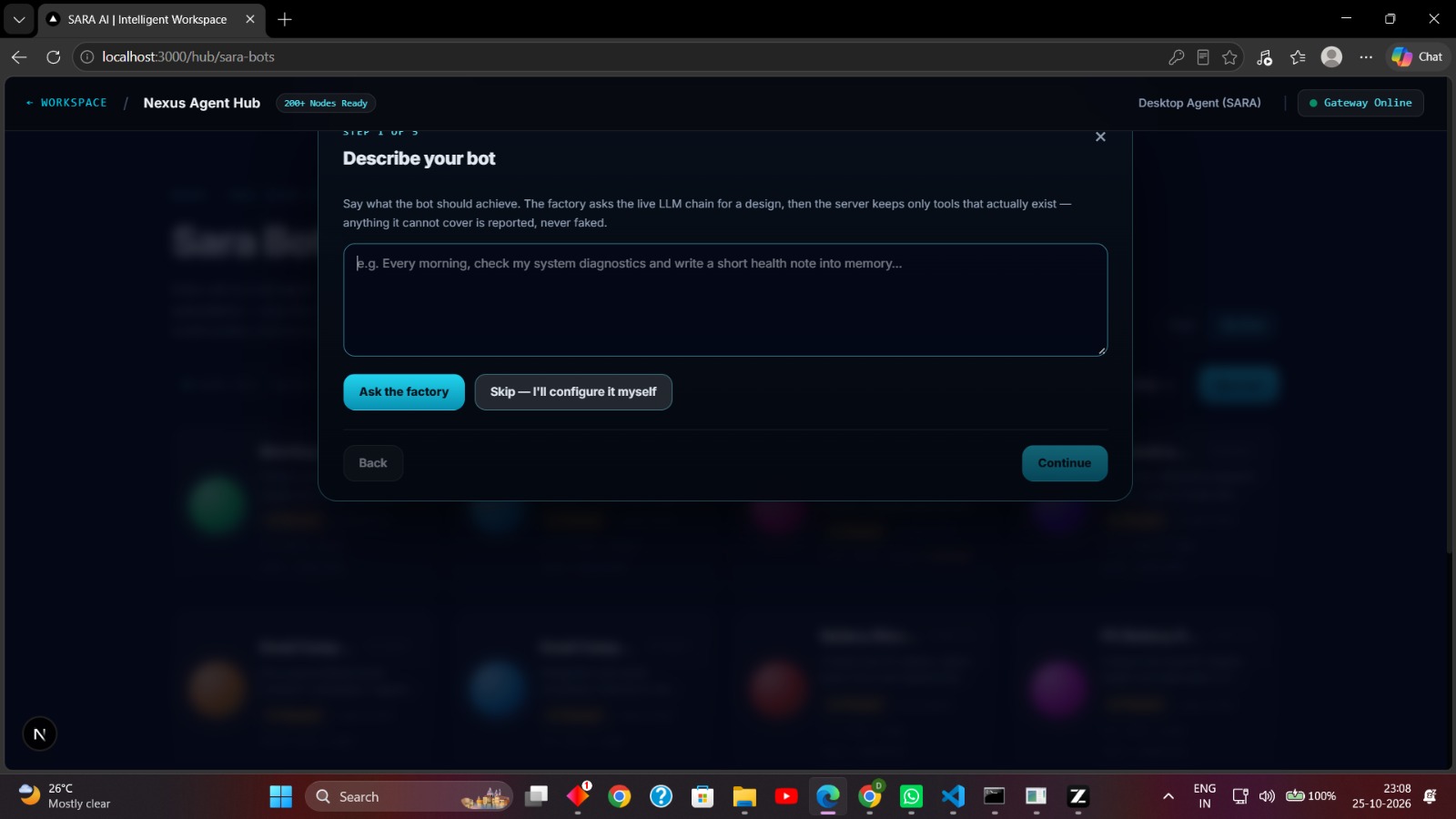
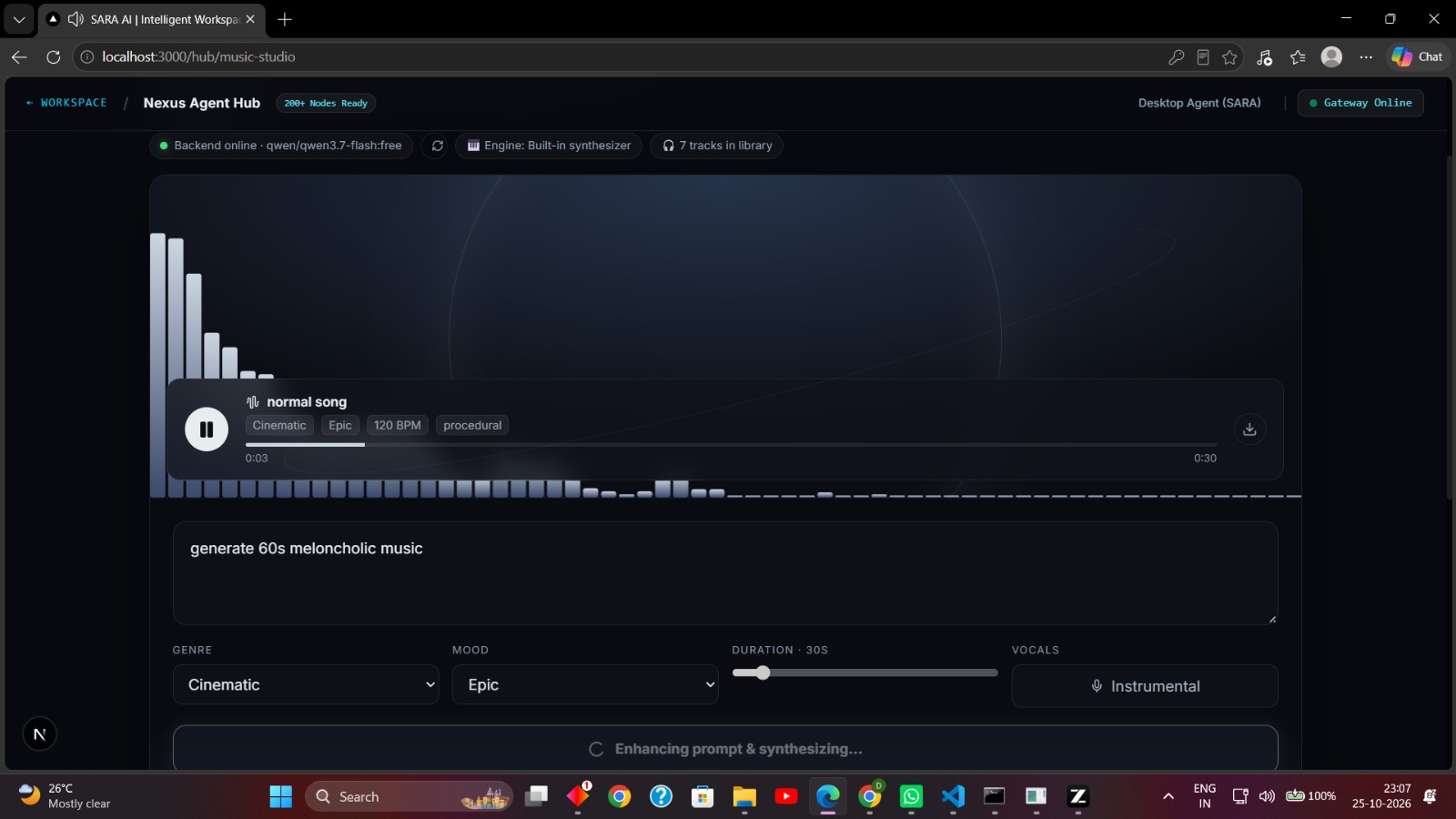
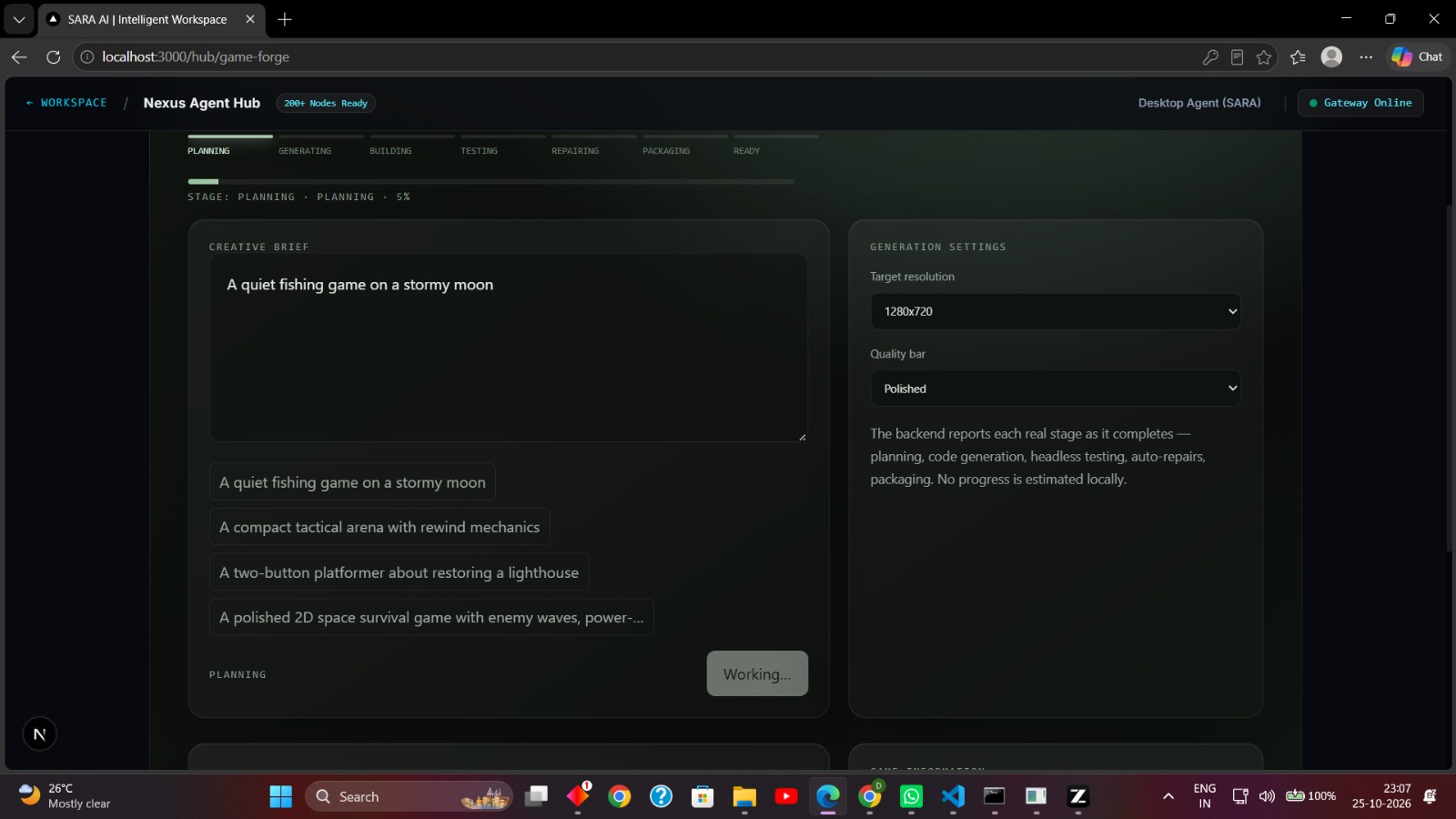
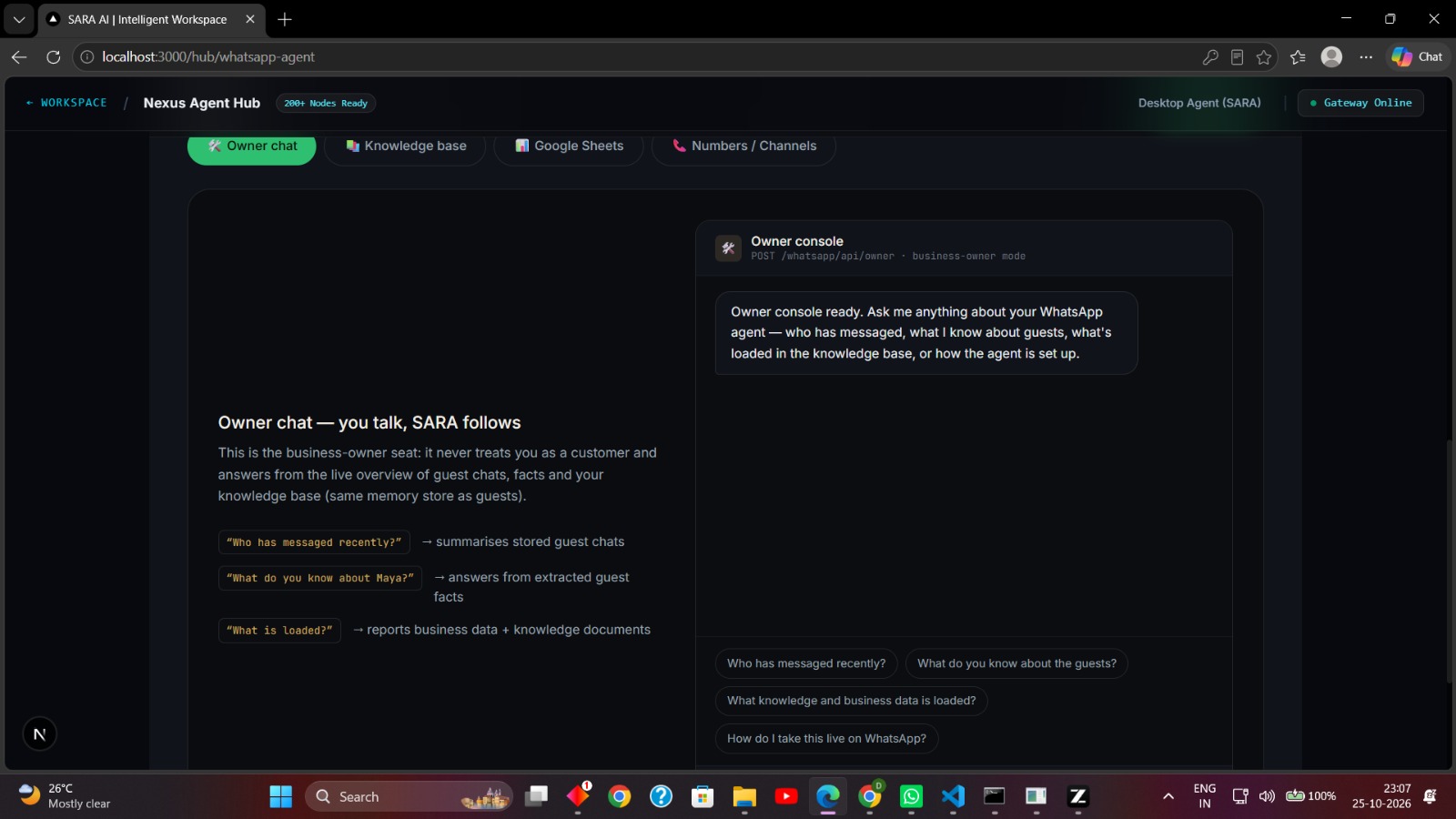
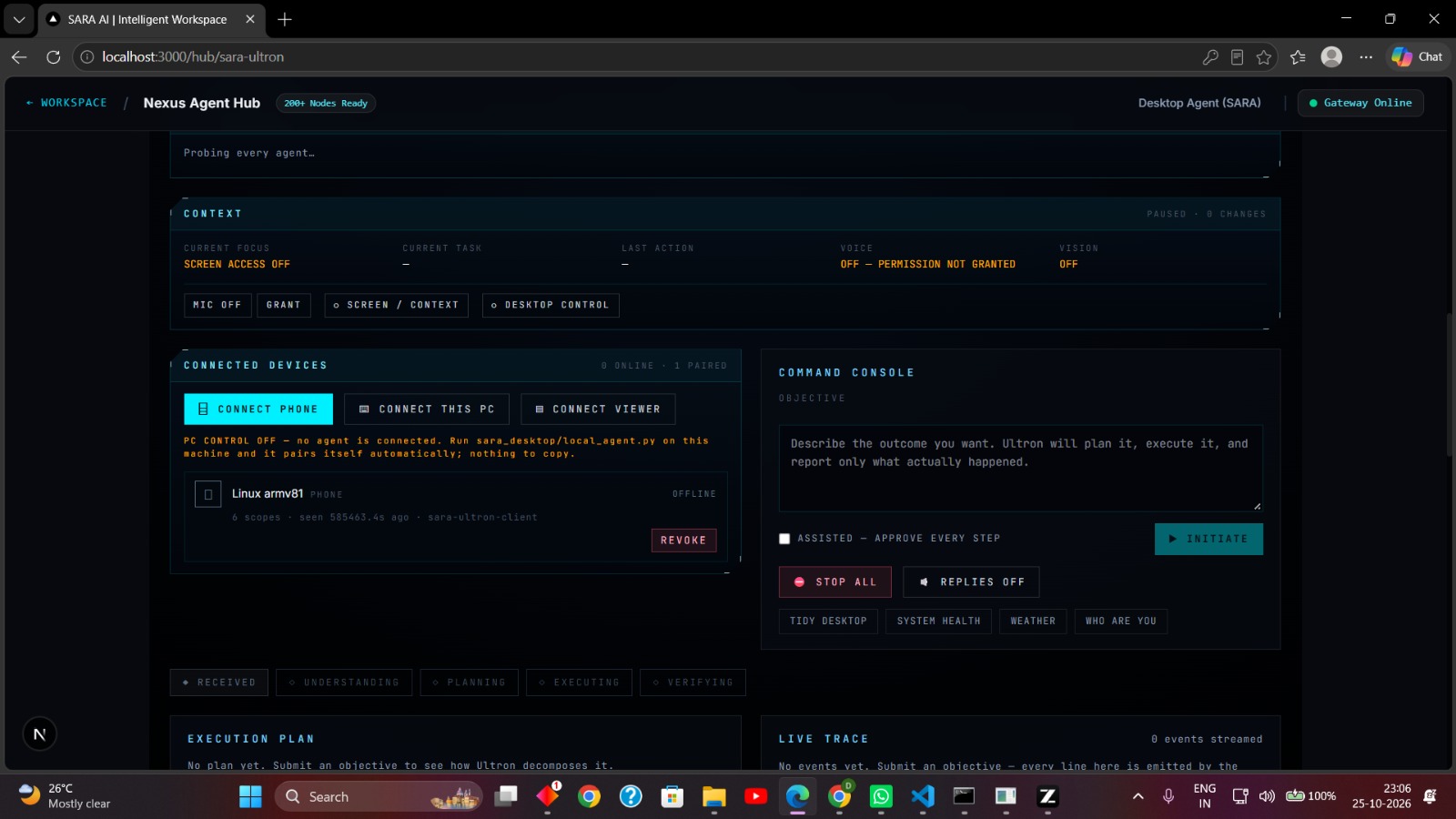
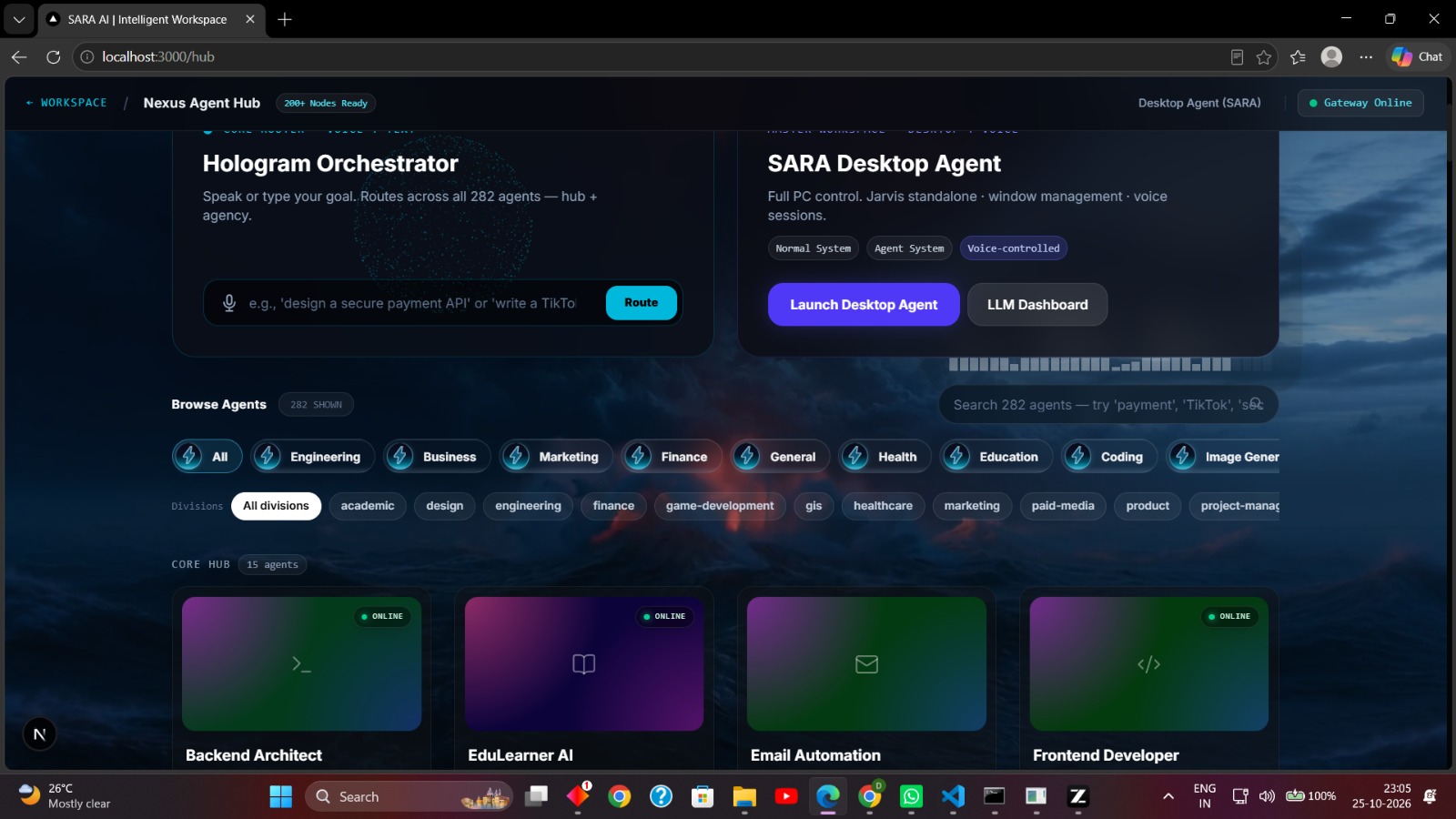
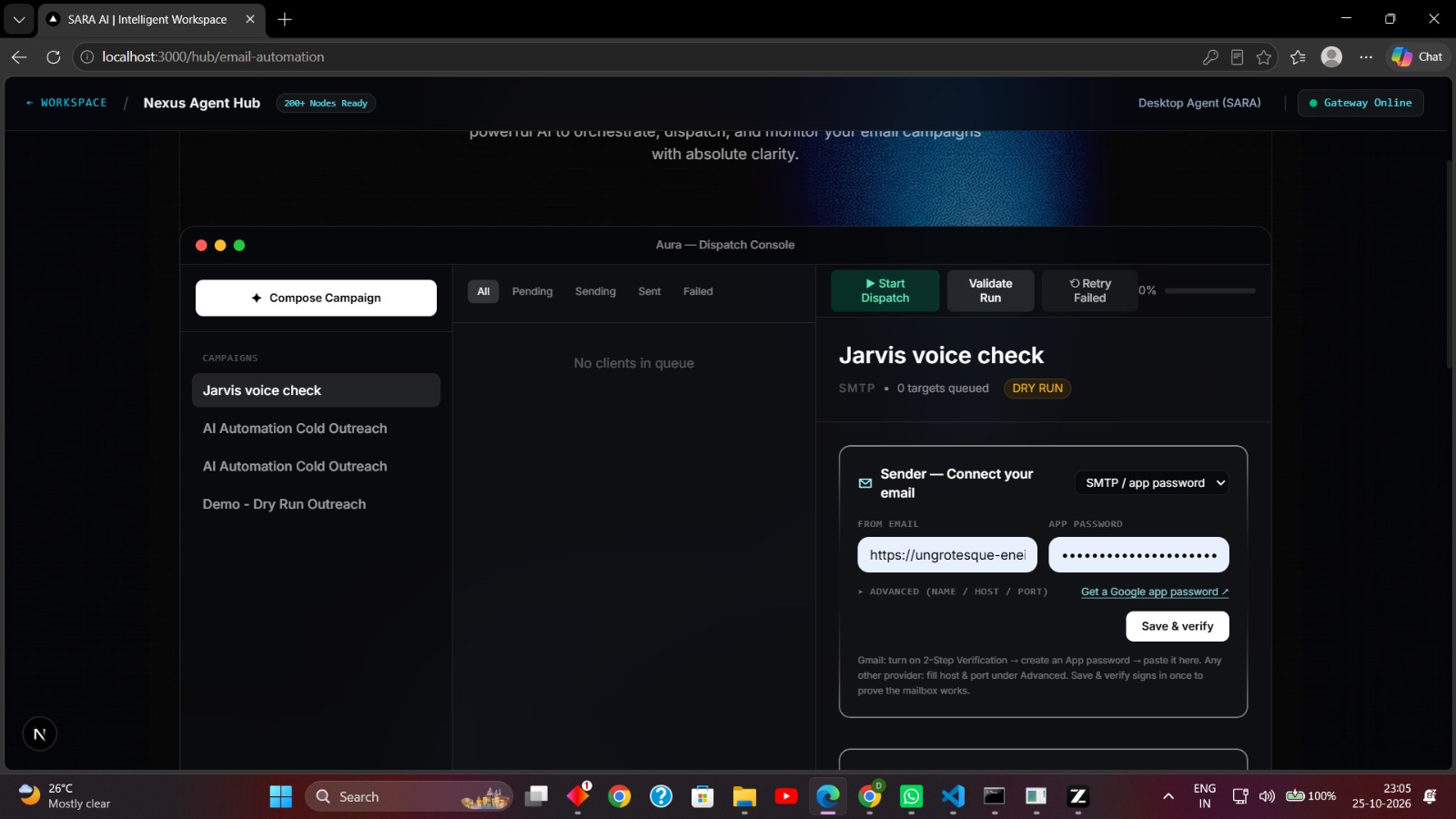
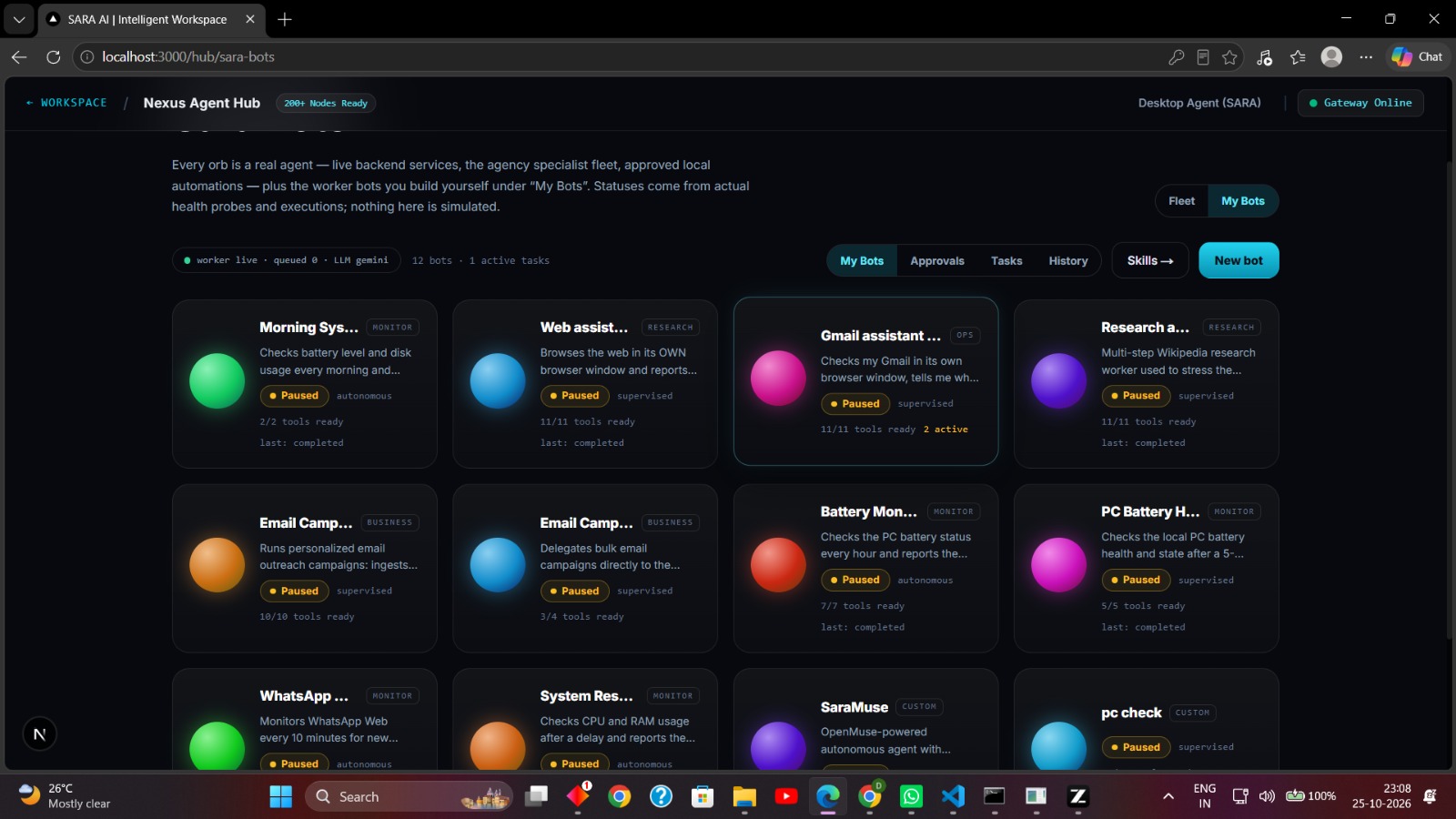
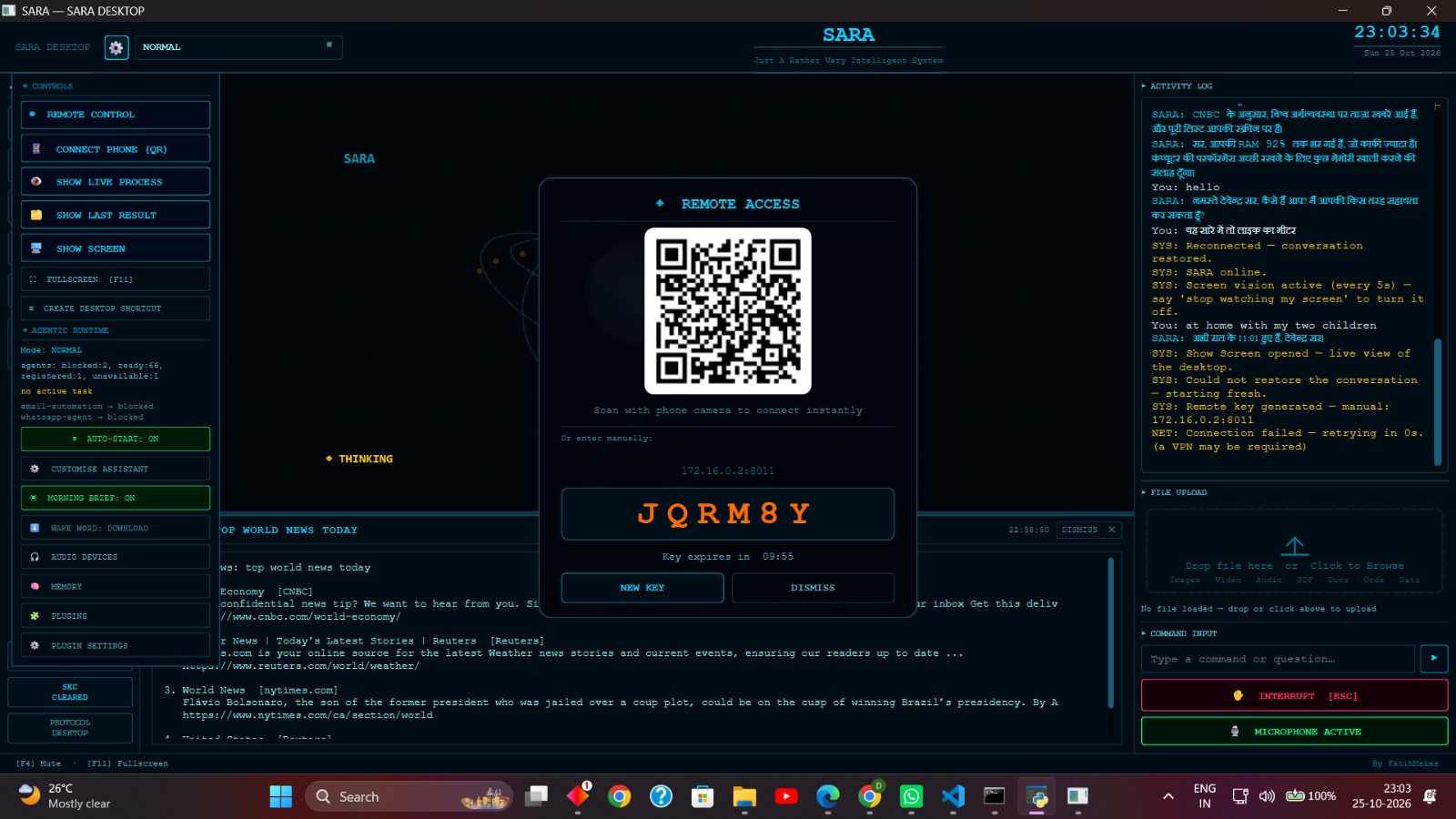
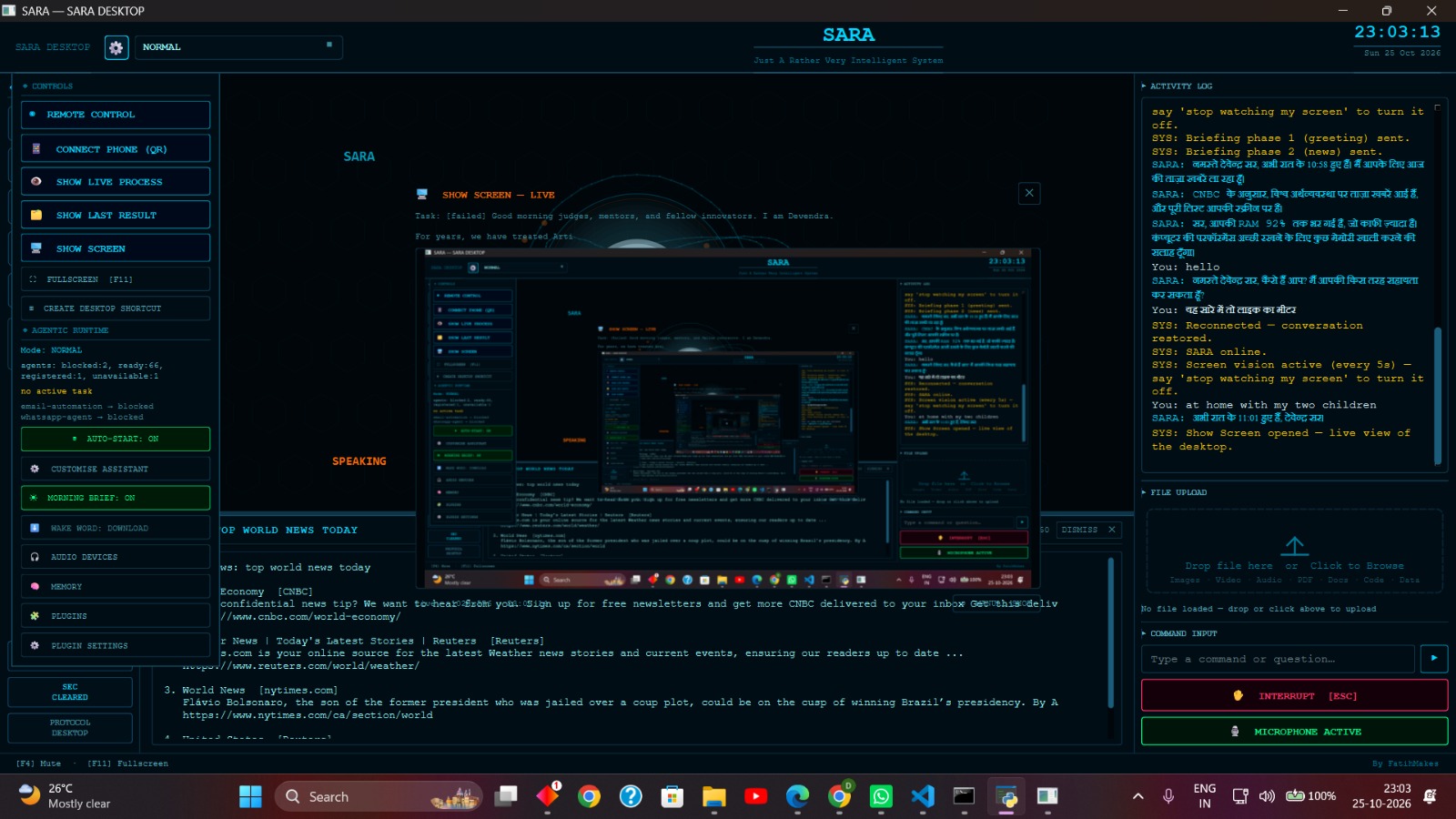
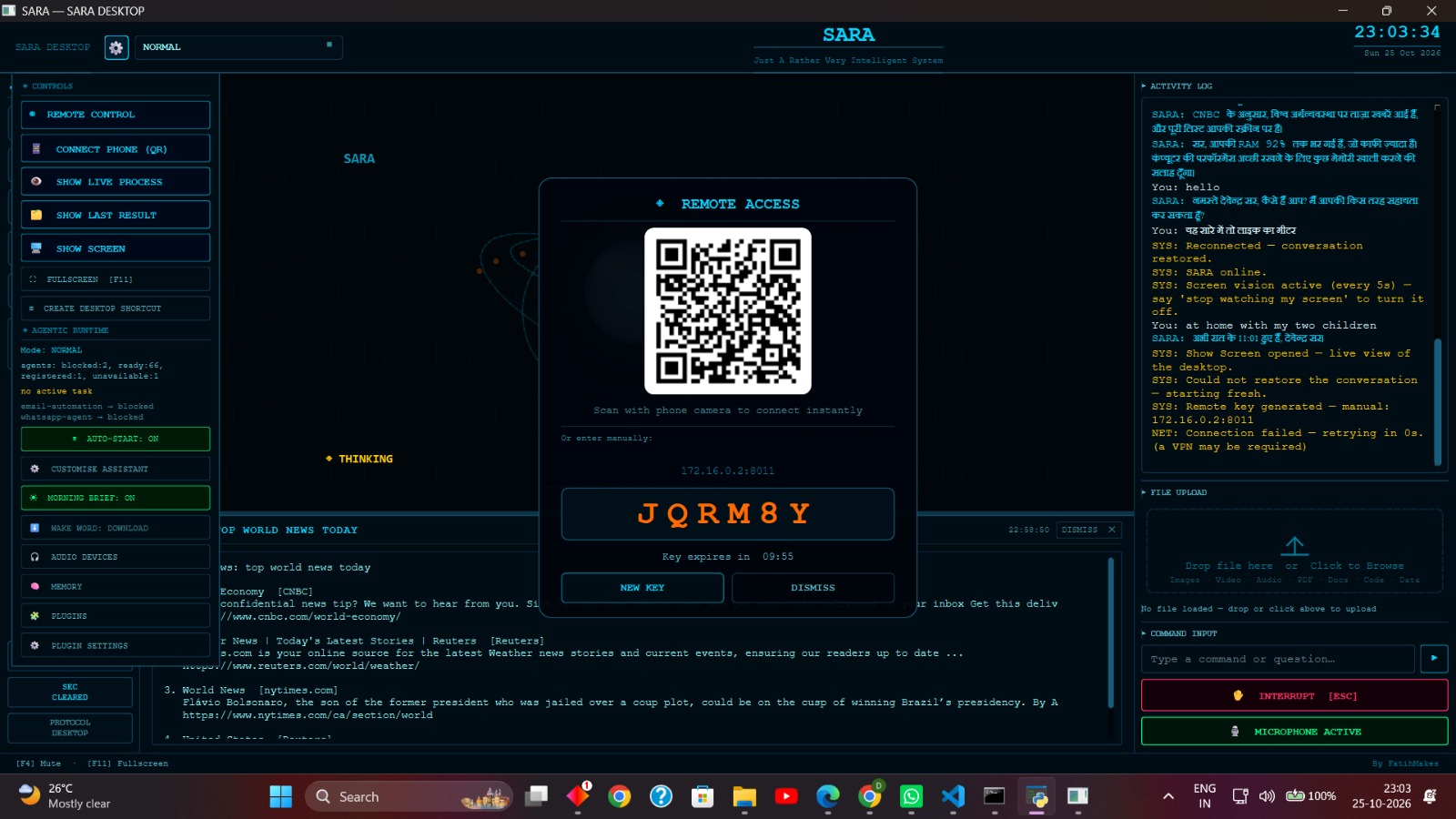
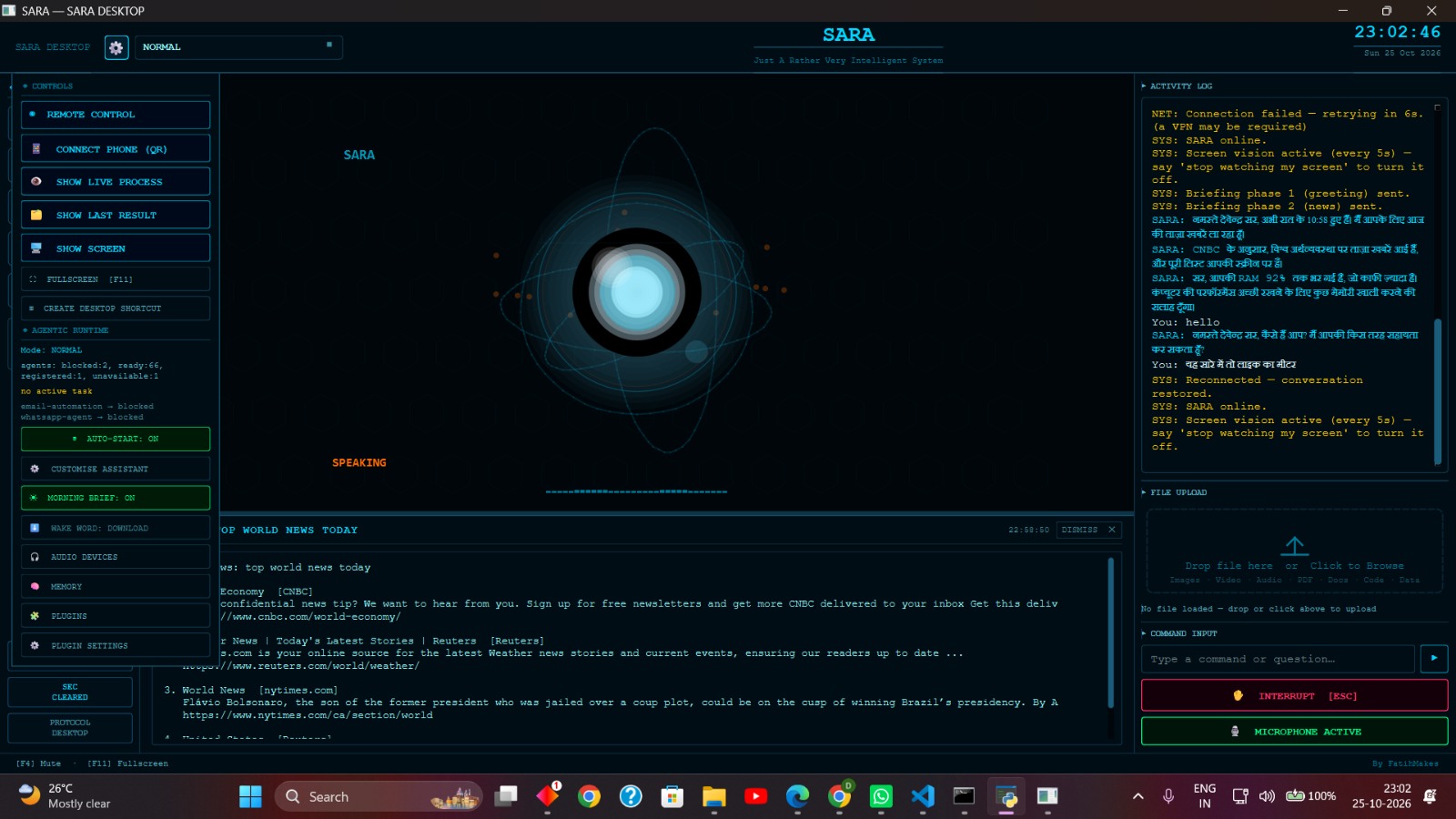
Sara AI Nexus Agency is an autonomous multi-agent AI ecosystem that unifies social media, voice, messaging, documents, Gmail, financial analysis, and desktop automation. It takes complex business intent and translates it directly into coordinated, multi-agent AI actions through a single intelligent command center. It features a unified FastAPI backend, a dynamic multi-language voice campaign agent with a state machine and failover routing, and a standalone PyQt6 desktop assistant (sara_desktop) that handles direct model interactions.
How we built it
Backend: Built using a unified FastAPI server architecture (backend/app) powered by Python, Uvicorn, SQLAlchemy, Pydantic, and HTTPX, orchestrating multiple specialized agents under individual API prefixes.
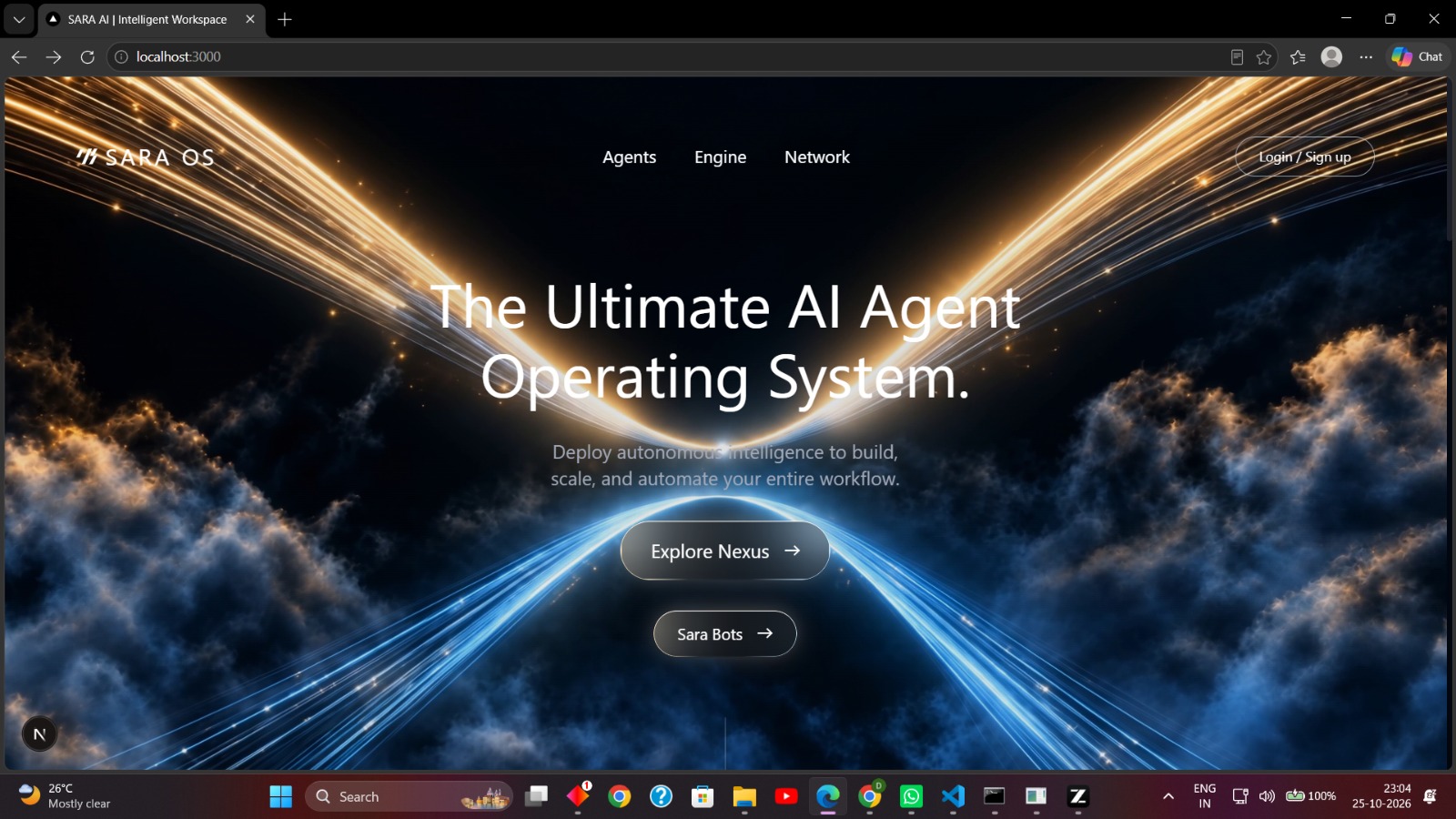
Frontend: Developed using a modern web interface (frontend) designed for seamless navigation across agent hubs, voice campaign management screens, and control panels.
Infrastructure & Services:Leveraged Docker Compose to spin up supporting services including PostgreSQL with pgvector, Redis, n8n for workflow automation, and ngrok/Cloudflared for secure tunneling.
Voice & Desktop Integration: Integrated Twilio for telephony, Sarvam STT/TTS/translation stacks for multilingual voice capabilities, alongside a standalone PyQt6 Windows desktop assistant (sara_desktop) connecting directly to LLM gateways.
Challenges we ran into
Port and Process Management: Managing local development across multiple services (FastAPI backend, frontend dev server, desktop app dashboard, and Docker containers) led to initial port collisions (such as the desktop dashboard colliding with the backend server port), which we solved by reassigning distinct ports and creating custom automation scripts like start_all.bat.
Multi-Agent Coordination: Unifying diverse services—from real-time voice call state machines and multi-language support to local desktop utilities—required a robust, tenant-scoped routing and configuration structure.
Environment Configuration: Managing distinct configuration surfaces between the main platform backend (backend/.env) and the desktop assistant (api_keys.json) required clear templating to keep secrets secure while ensuring smooth local execution.
Accomplishments that were proud of
- Successfully unifying a massive array of capabilities—social media, voice calls, documents, email, and desktop automation—into a cohesive, single-command platform.
- Implementing a dynamic, highly configurable Election Campaign Voice Agent that supports multi-language detection, stateful call flows, and live profile updates without requiring source code edits.
- Creating a flexible dual-architecture approach that supports both a centralized cloud-connected web hub and a standalone, privacy-focused desktop assistant.
What we learned
- The critical importance of modular service routing and strict tenant scoping when handling multi-agent execution and automated outreach (like call opt-outs).
- How effective environment decoupling (using clear
.env.exampleand config templates) streamlines local multi-service orchestration across Python and Node.js environments. - The power of combining web-based command hubs with dedicated desktop executables to give users flexible control over their autonomous workflows.
What's next for Sara AI
- Expanding the multi-agent ecosystem with deeper cross-platform integrations and advanced autonomous task execution loops.
- Refining the lead generation, outbound marketing, and real-time voice campaign pipelines for broader deployment scalability.
- Enhancing the self-hosted desktop capabilities to offer even tighter offline-first privacy controls alongside cloud synchronization.
Built With
- cli
- cloudflaretunnels
- fastapi
- javascript
- next.js
- ngrok
- node.js
- openai
- openrouter
- postgresql
- pyqt6
- python
- pythonvenv
- react
- redis
- render
- sarvam
- sqlite
- typescript
- vercel
- webhooks
- windows-10

Log in or sign up for Devpost to join the conversation.