Why Should I Care?
Most AI study tools feel like cheating sheets: you get the answer, you move on, and you forget it by next week. We wanted something different, a tutor that actually knows you, grows with you, and helps teachers keep up too. Sapling treats every concept you learn as part of a growing knowledge tree, so study sessions aren’t just Q&A; they’re an investment in your mastery.
What Does It Do?
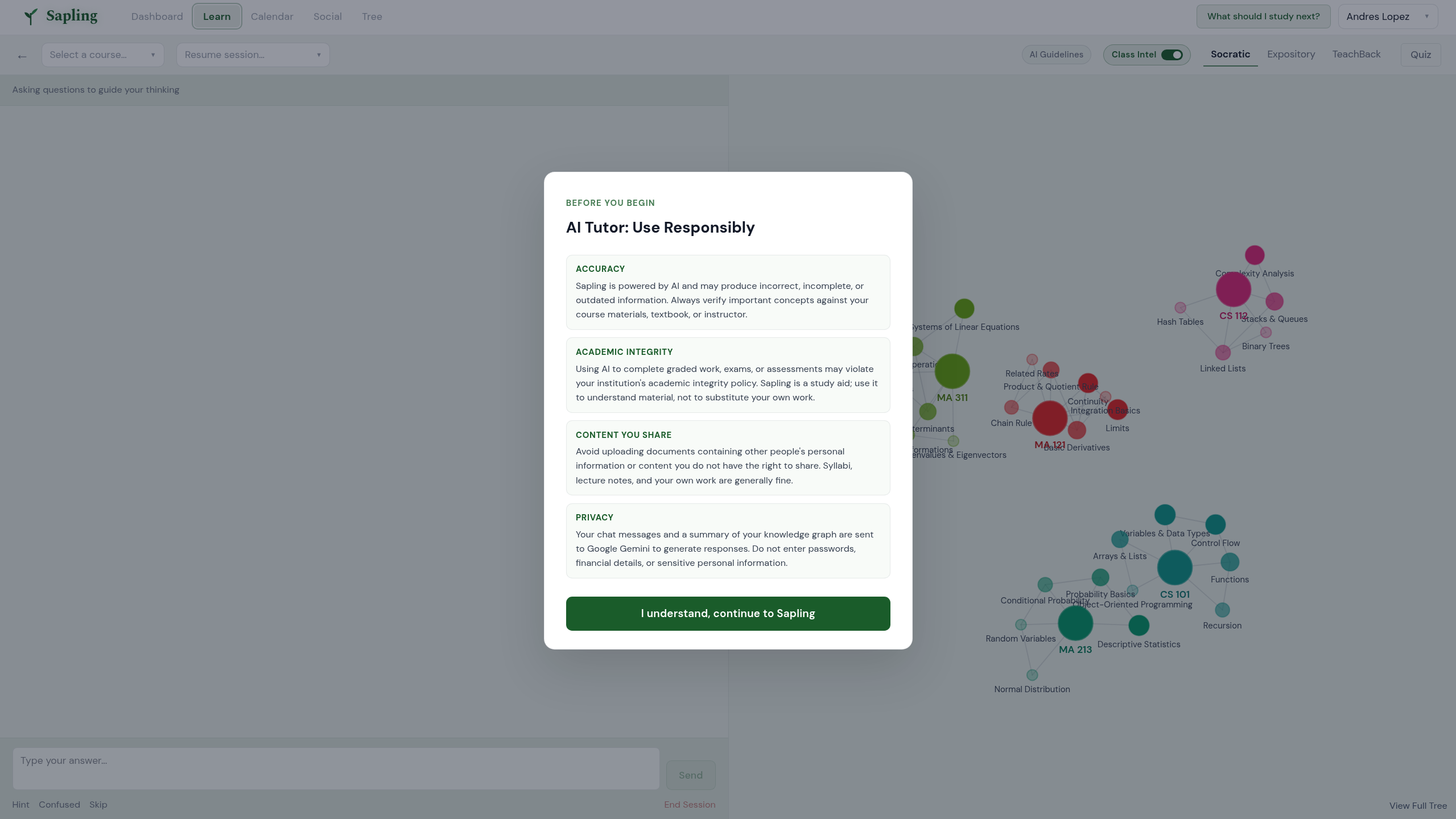
Conversational tutoring: Choose Socratic (it asks questions), Expository (it explains), or Teachback (you teach it).
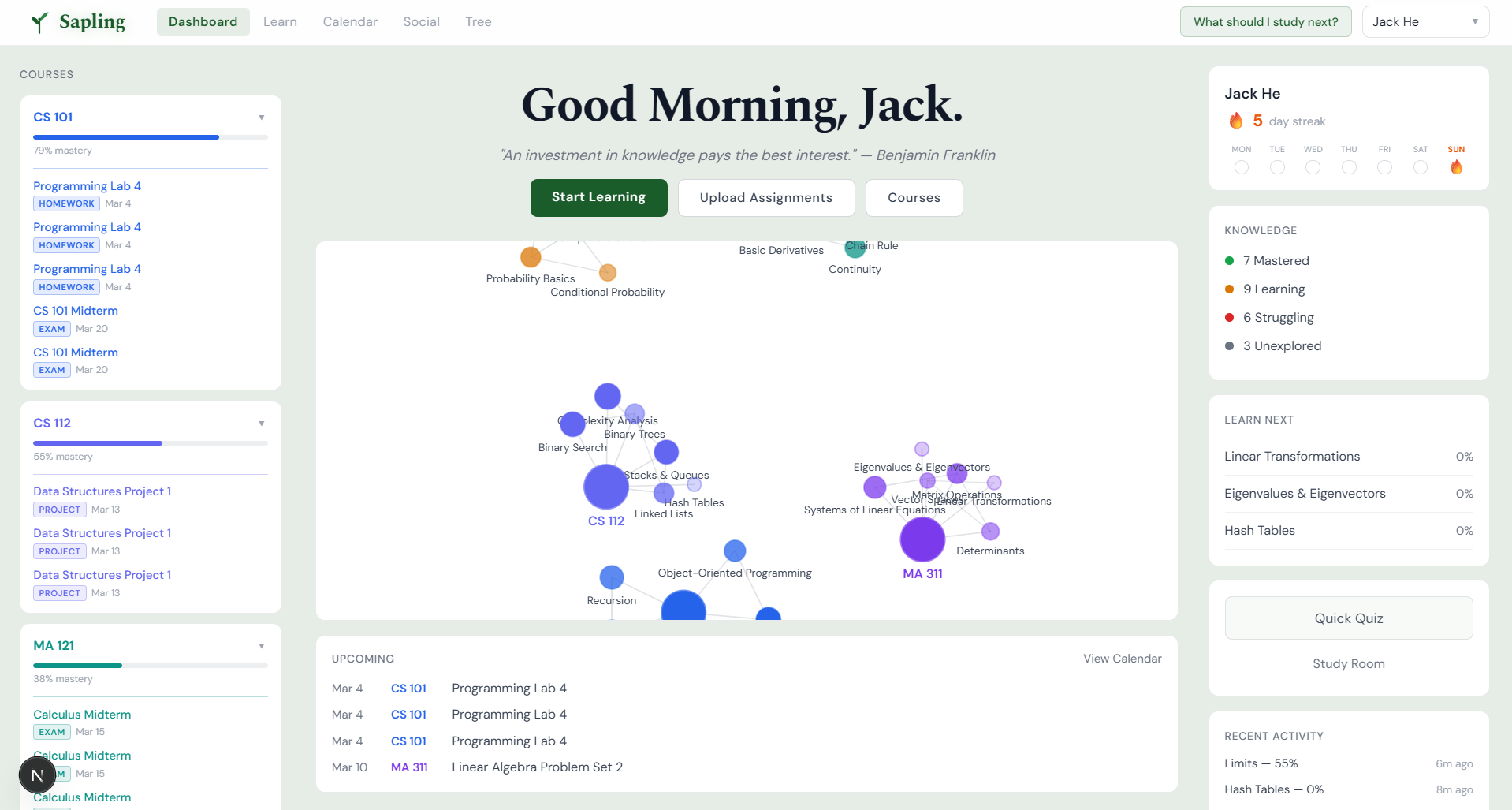
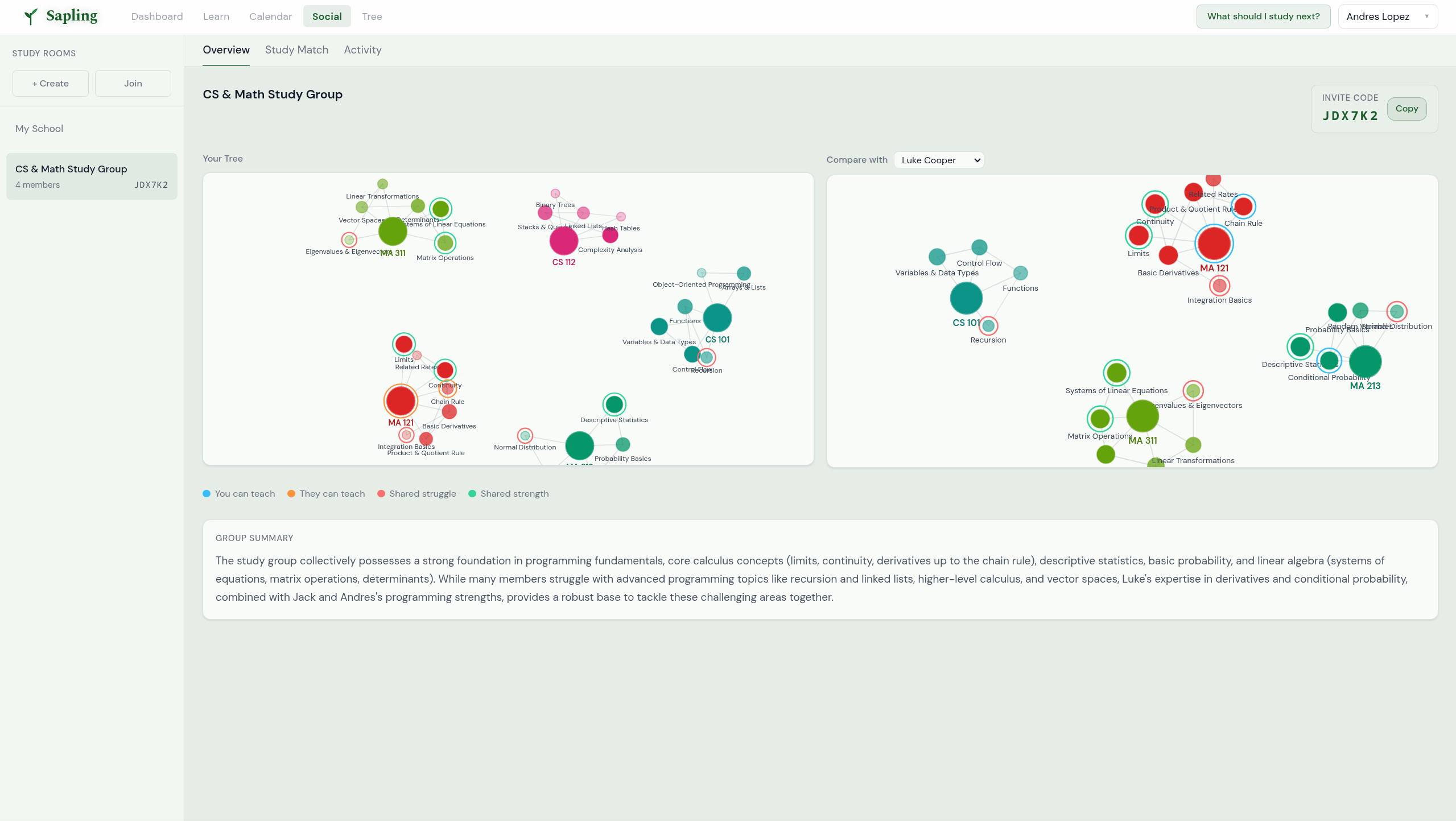
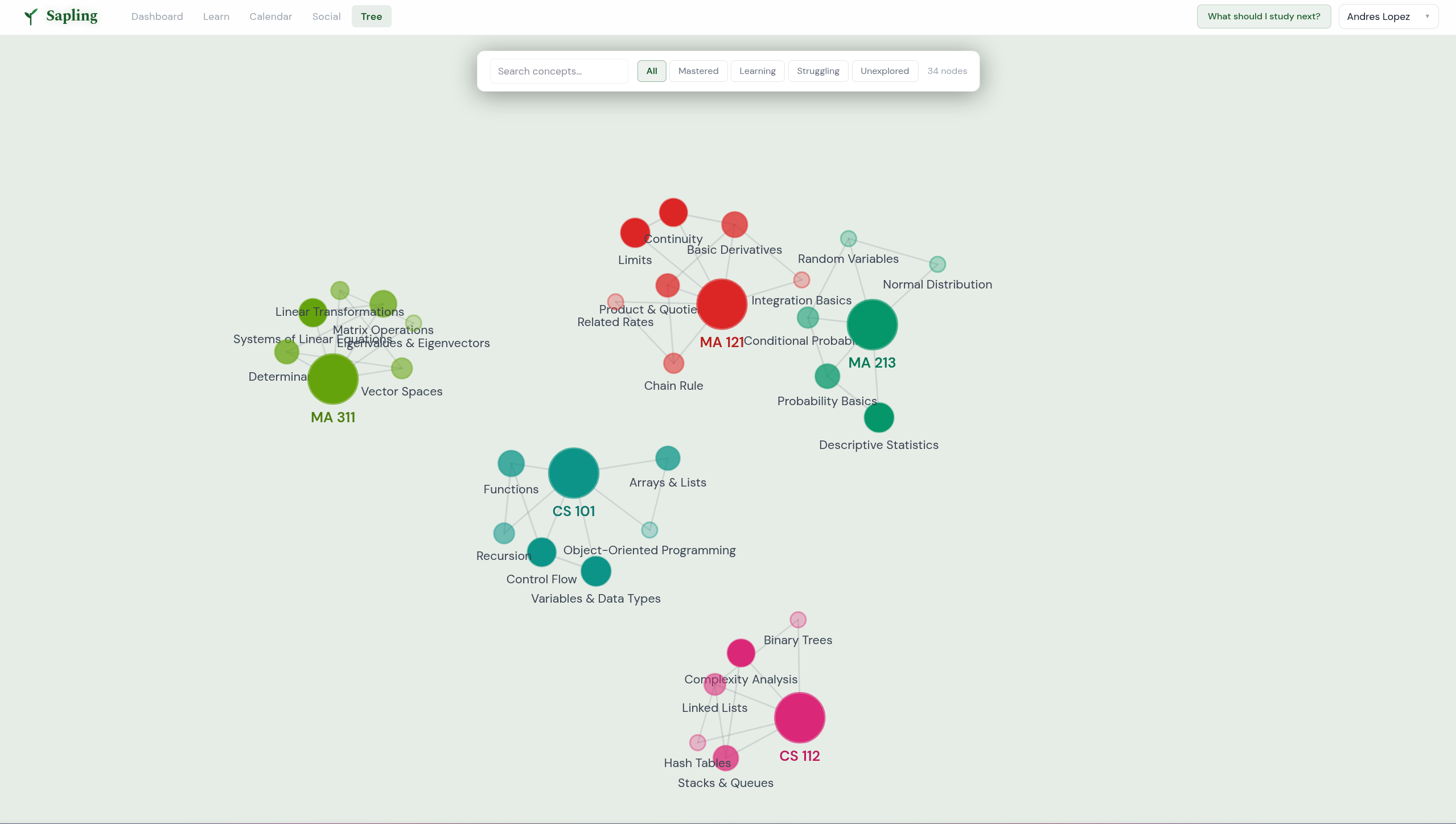
Live knowledge graph: Every topic you study becomes a node with a mastery score and links to related ideas, updated in real time.
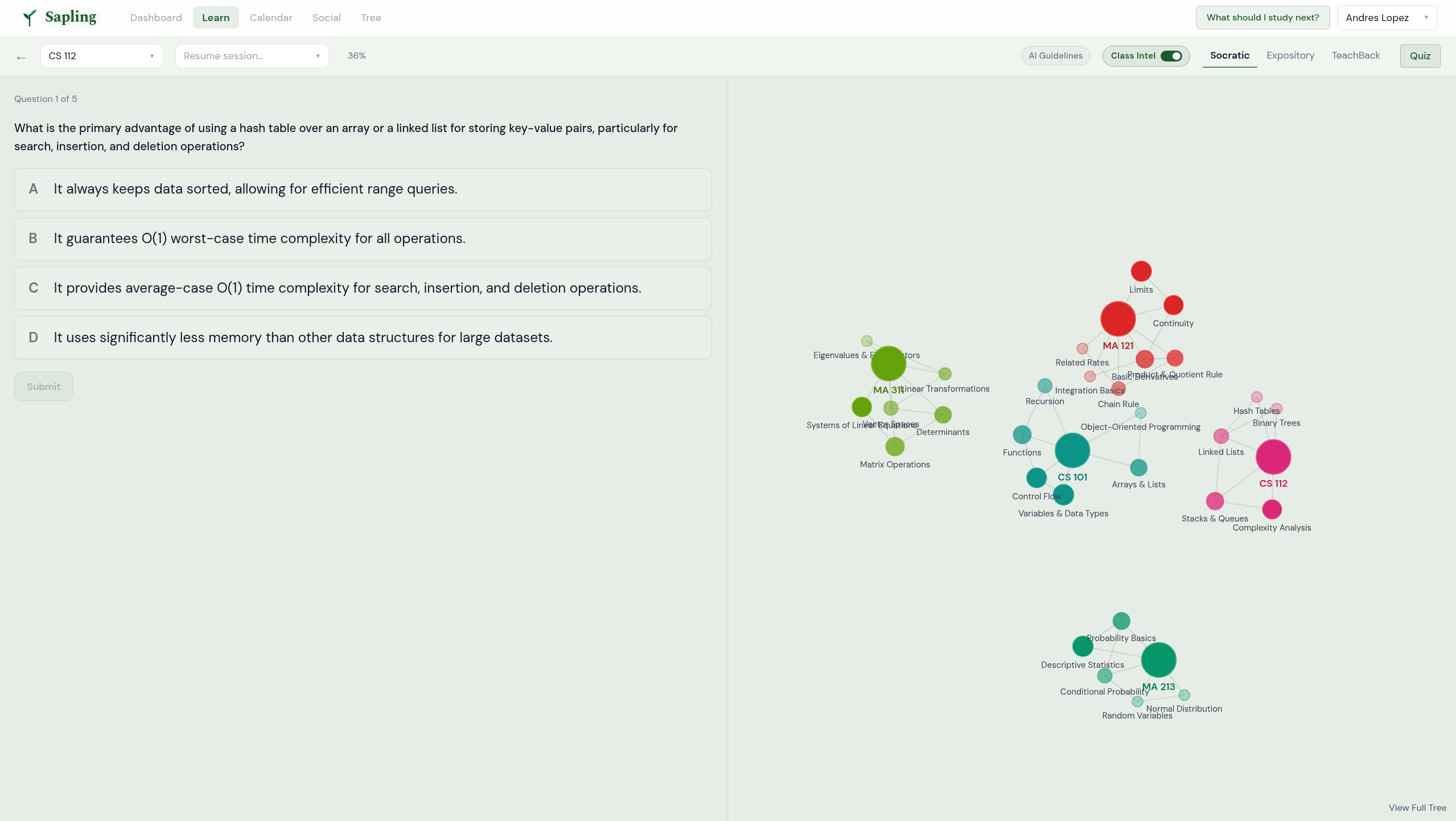
Adaptive quizzes: Generated from your personal graph and past answers to target weak spots.
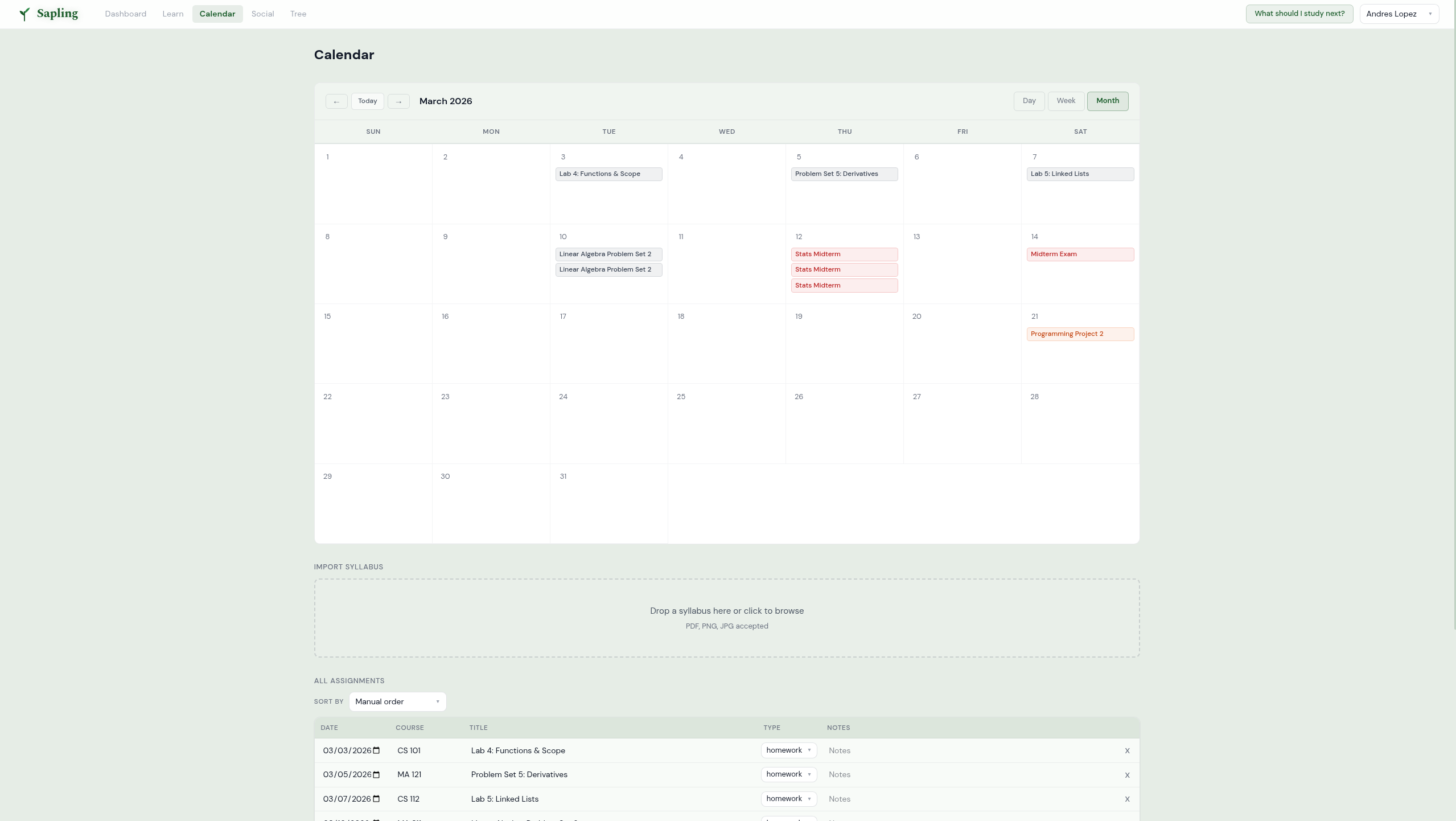
Course‑aligned planning: Upload your syllabus to pull assignments, set study blocks, and sync them to your calendar.
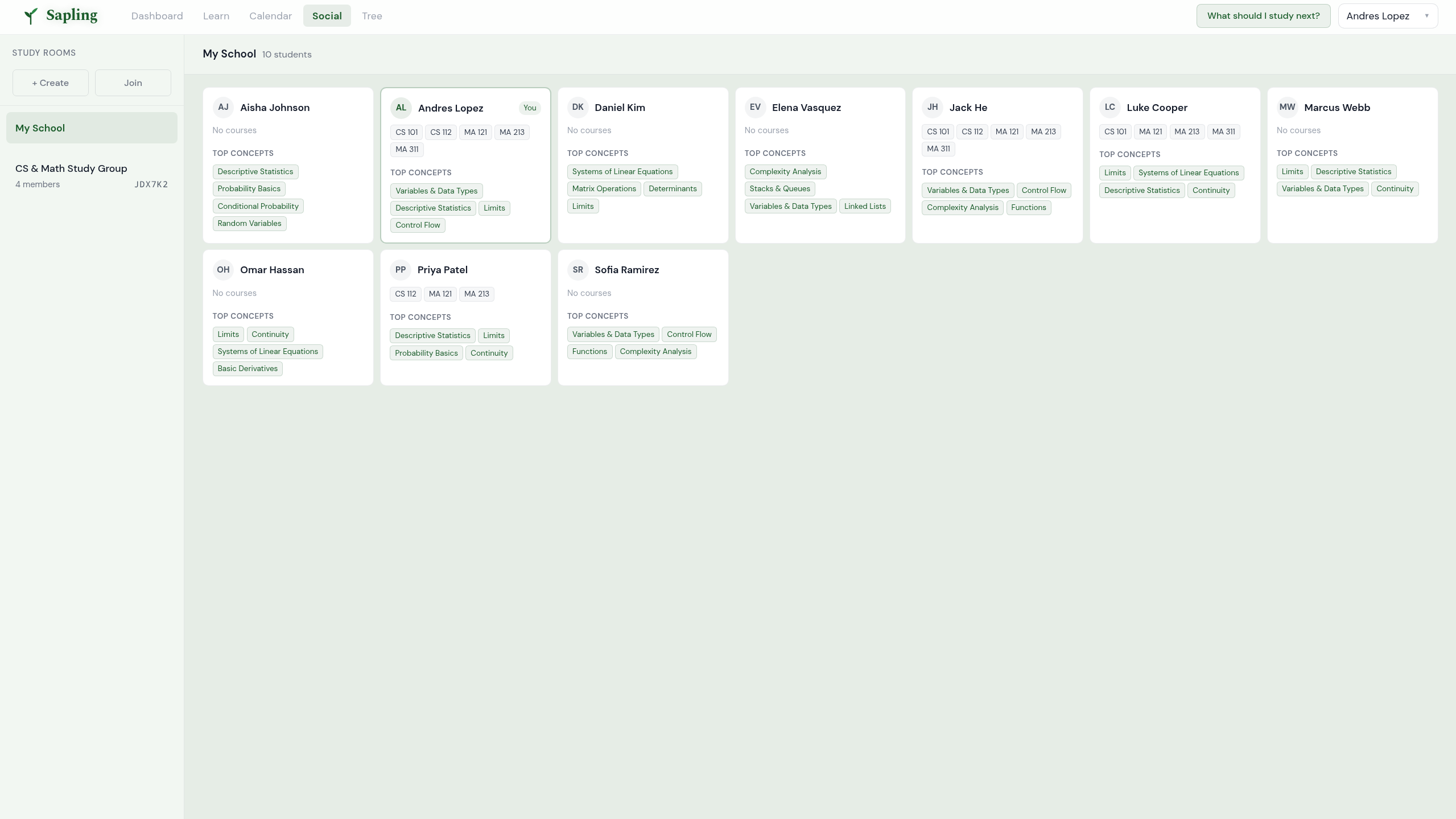
Study rooms: Join classmates to compare progress and let the AI surface group strengths and gaps.
How we built it
We wired together a FastAPI backend and a Next.js frontend. A Supabase Postgres database holds user profiles, graphs, assignments and study rooms. The Gemini API provides tutoring responses and quiz generation; we crafted prompts for each mode and used the knowledge graph to prime the LLM. The frontend uses Cytoscape.js to render live concept maps, while the calendar and study sections are built with React components.
Challenges
Designing prompts that guide the model to teach, not just answer, took many iterations.
Keeping the knowledge graph in sync with every tutoring exchange required careful database design.
Parsing messy syllabi into structured assignments was unexpectedly hard,PDFs don’t go down without a fight.
Balancing privacy (local storage) with collaboration (study rooms and teacher dashboards) wasn’t trivial.
Accomplishments
We built a complete prototype that fuses an AI tutor, a live knowledge graph, course planning, and social study rooms. It runs locally (no telemetry) and syncs with Google Calendar. In just a hackathon’s timeframe, we got a system that updates mastery scores, generates truly personalized quizzes, and lets teachers and classmates see where help is needed.
What We Learned
Structure beats chat history: capturing concepts and mastery in a graph made the AI’s help far more coherent.
Teachback works: forcing students to explain concepts led to better retention and surfaced misconceptions.
Context is king: the more specific the course and past knowledge, the smarter the model behaves.
Even small touches matter: a clean UI, readable concept maps, and simple scheduling go a long way.
What’s Next?
Plug into popular LMSs (Canvas, Blackboard) for automatic assignment and grade sync.
Experiment with Bayesian mastery models for more nuanced progress tracking.
Build richer teacher dashboards to suggest interventions at the class level.
Continue improving accessibility and offline capabilities, potentially running on‑device LLMs for full privacy.
Built With
- d3.js
- eslint
- fastapi
- gemini
- googlecalendarapi
- next.js
- pillow
- pypdf
- pytesseract
- react
- supabase
- tailwind
- typescript
- uvicorn


Log in or sign up for Devpost to join the conversation.