-
-
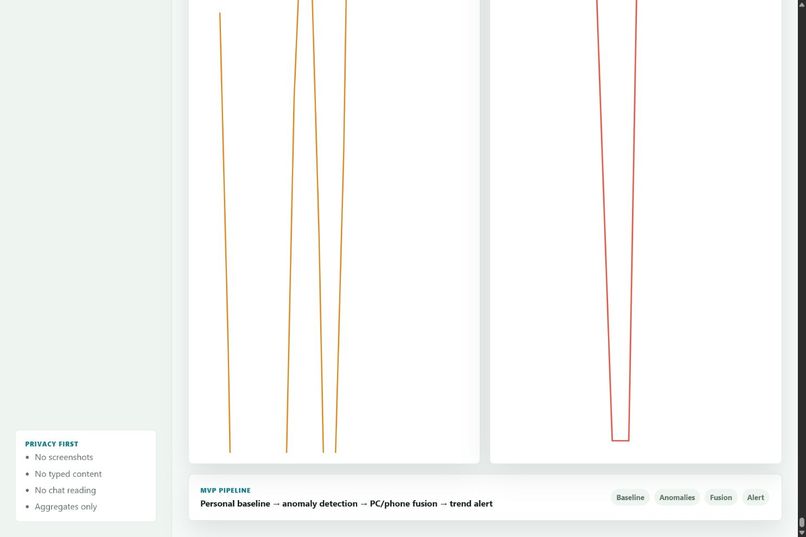
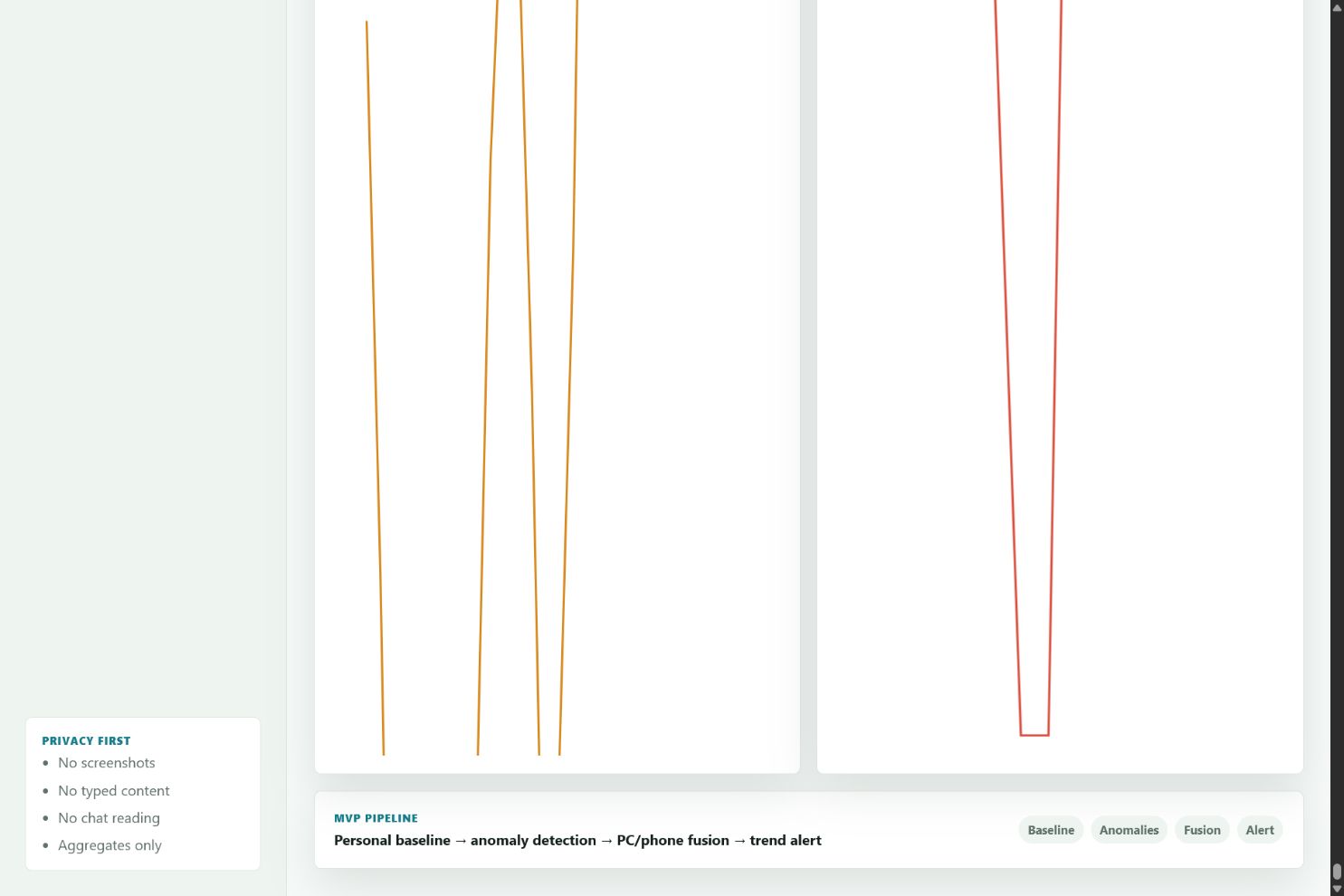
Santulan's privacy-first pipeline: baseline, anomalies, fusion, and alert.
-
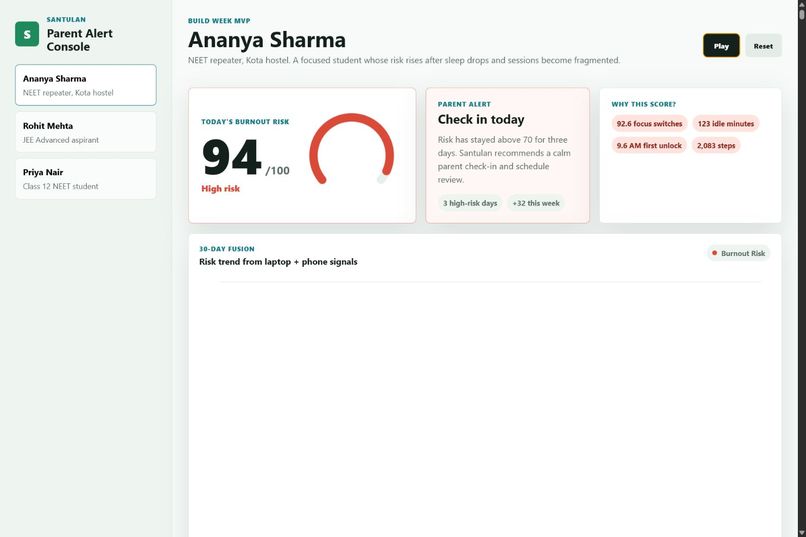
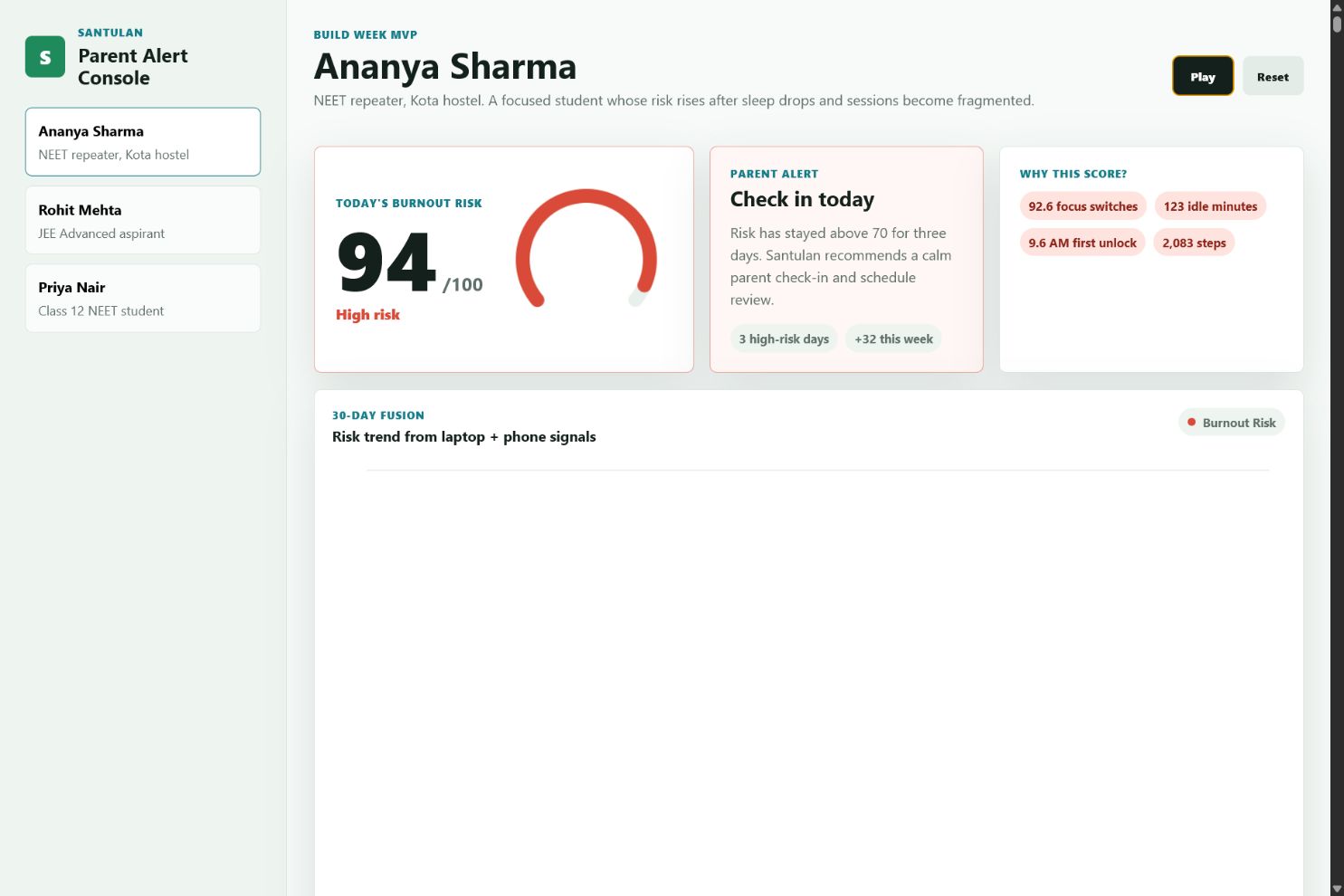
High burnout risk state after three consecutive days above threshold.
-
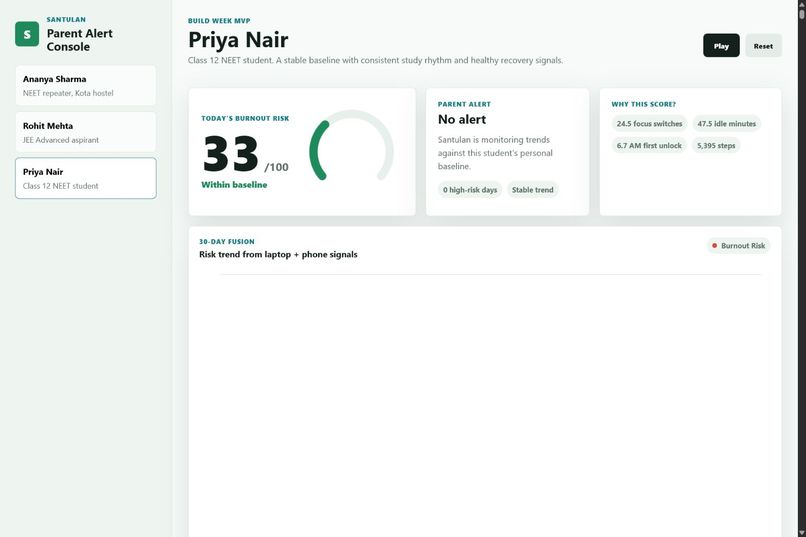
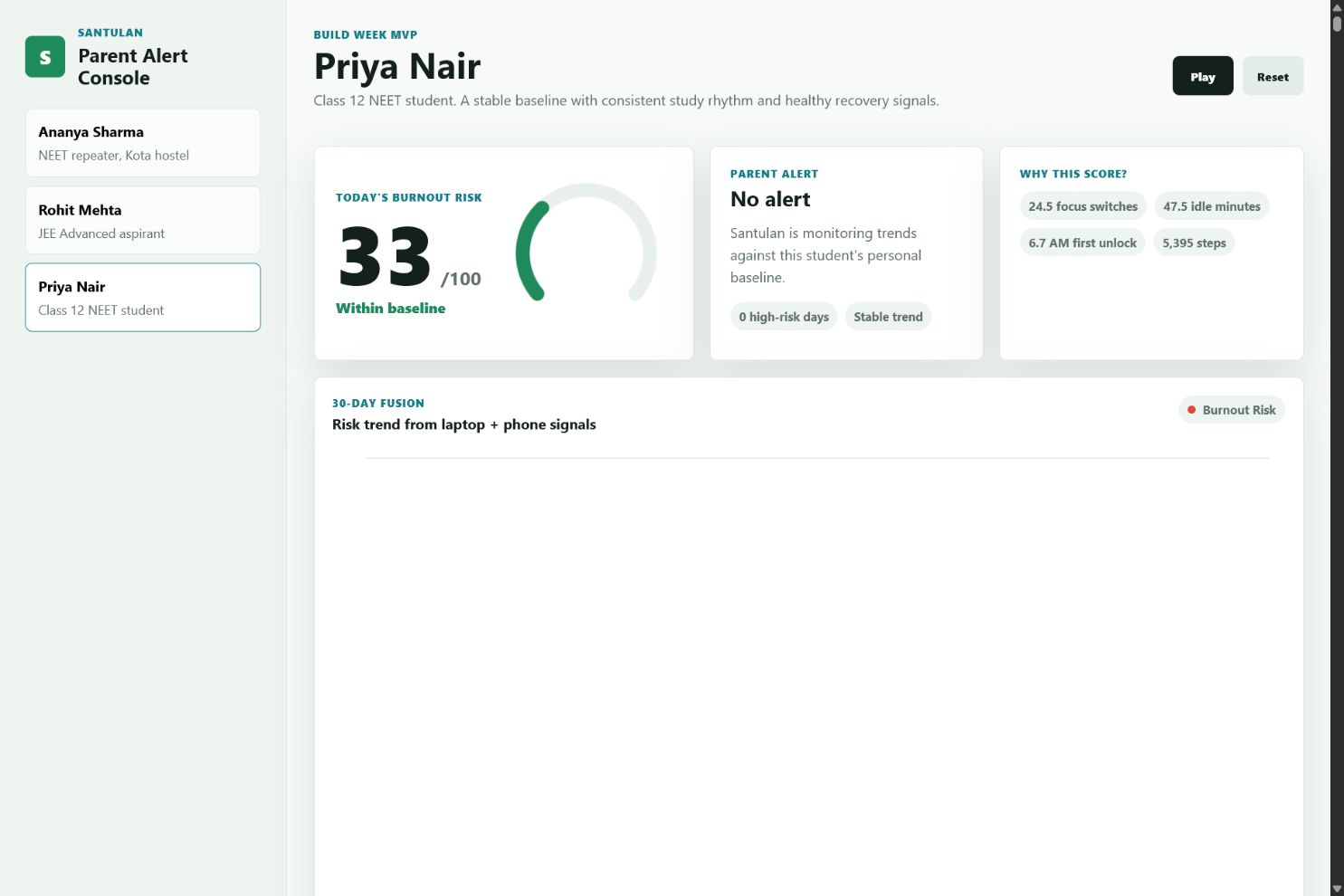
Stable student baseline showing low burnout risk and no parent alert.
-
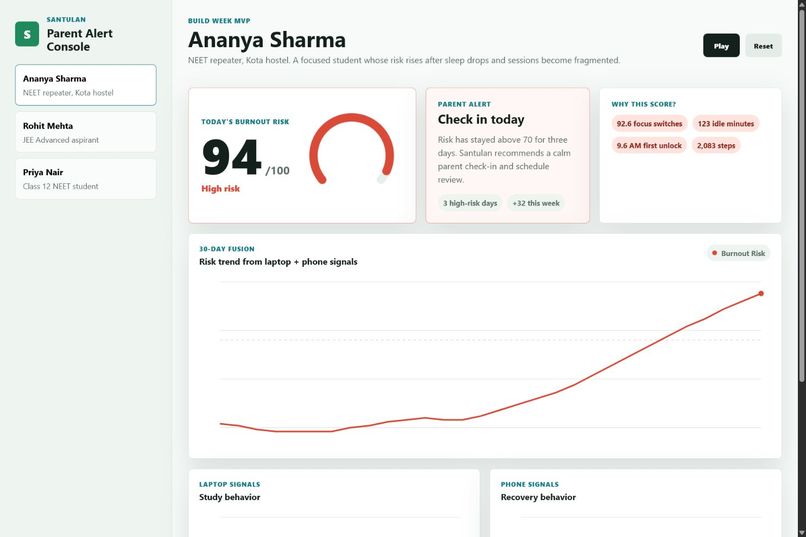
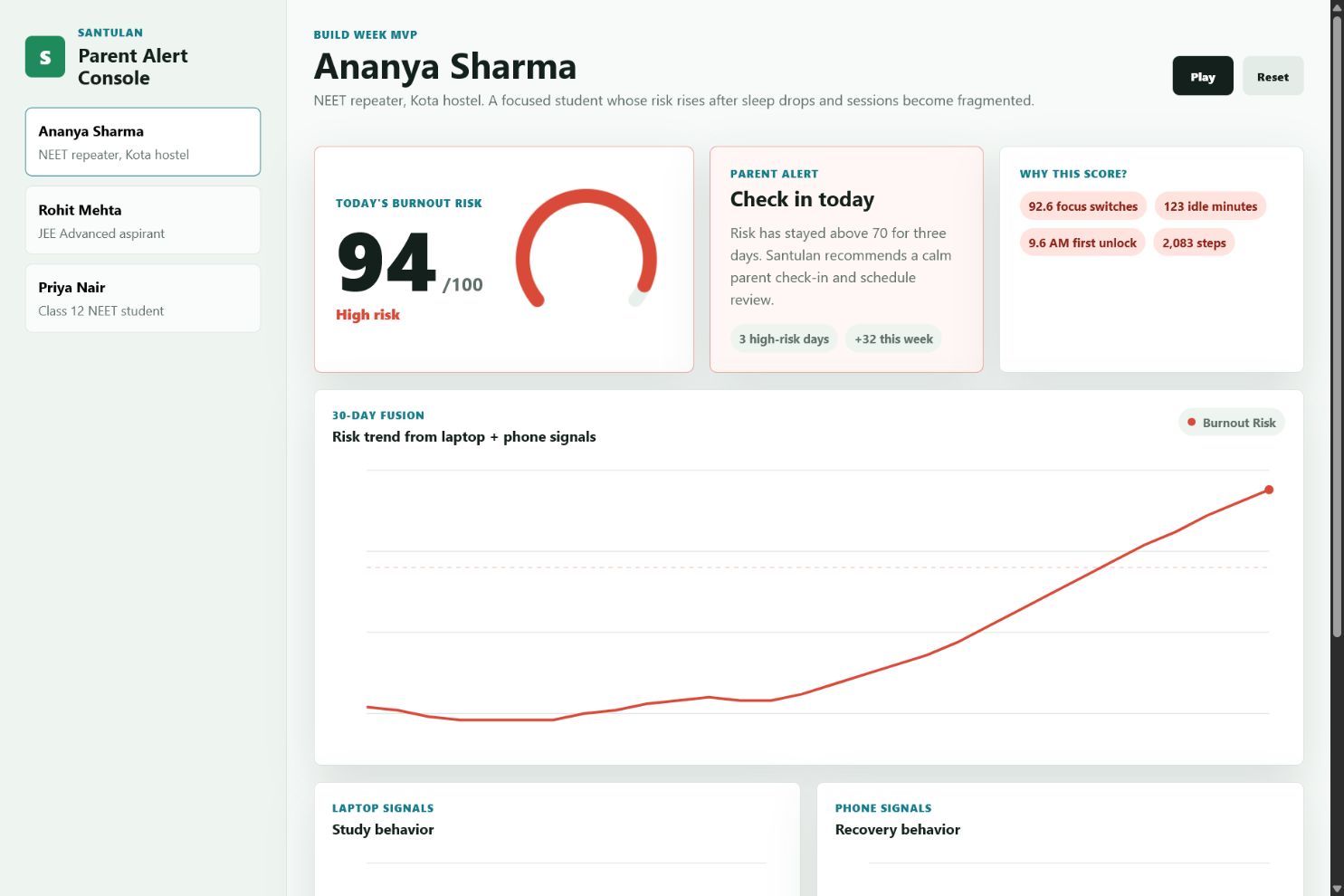
30-day dashboard showing rising risk from laptop and phone behavior signals.
Inspiration
Santulan was inspired by the pressure faced by JEE and NEET students in India, where burnout often builds silently for weeks before anyone notices. Many students spend long hours on laptops watching lectures, solving tests, reading PDFs, and switching between study tools, while their recovery patterns show up later through sleep, phone usage, and movement. We wanted to build a silent safety net that helps parents notice risk early without asking students to constantly self-report how they feel.
What it does
Santulan is a privacy-first burnout detection system for exam-prep students. It combines passive laptop study signals with Android recovery signals to generate a daily Burnout Risk Score from 0 to 100.
The MVP tracks signals such as study versus distraction time, idle time, focus switching, first phone unlock time, and phone activity categories. These are compared against each student's personal baseline, then fused into a trend-based risk score. If the score stays high, parents can see an alert and weekly trend dashboard.
How we built it
We built Santulan as a cross-device system with three main parts:
- A Windows agent that captures aggregate study behavior without recording screenshots, keystroke content, or private messages.
- An Android app that collects recovery signals such as first unlock time and usage patterns with consent.
- A backend and ML pipeline that processes metrics, builds personal baselines, detects anomalies, and produces a burnout risk score.
For the MVP, we used simulated student personas along with real-device testing to validate the end-to-end flow. The model uses baseline comparison, anomaly detection, weighted fusion of PC and phone signals, and trend logic for alerts.
Challenges we ran into
The hardest part was balancing usefulness with privacy. Burnout detection can become invasive very quickly, so we designed Santulan around aggregates only: no typed content, no screenshots, no chat reading, and no hidden monitoring.
Another challenge was scope. A full mental health product could include counselor dashboards, personalized nudges, on-device ML, and pilots, but for Build Week we focused on a demoable MVP: passive signal collection, risk scoring, parent dashboard, and alert flow.
What we learned
We learned that the most powerful signals are often small behavior changes: fragmented study sessions, more idle time, late first unlocks, lower activity, or a rising distraction ratio. Individually, these signals can be noisy. Together, compared against a student's own baseline, they can tell a meaningful story.
We also learned that building for students requires trust first. The product has to explain what is collected, why it matters, and how a student can opt out or delete data.
Accomplishments that we're proud of
We are proud that Santulan turns a sensitive mental health problem into a practical, privacy-first technical system. Instead of asking students to fill forms or open a wellness app when they are already exhausted, Santulan works quietly in the background using aggregate behavior signals.
We built an end-to-end MVP path: simulated student personas, baseline generation, anomaly detection, PC-phone signal fusion, a daily burnout risk score, and a parent-facing alert concept. We are especially proud of keeping the system focused on early detection rather than diagnosis, and on transparency rather than hidden surveillance.
Most importantly, we shaped Santulan around the real lives of Indian exam-prep students: long laptop study hours, high-pressure routines, family involvement, and the need for support before a crisis happens.
What's next
Next, we want to improve model reliability with more real-world testing, add better consent and transparency flows, and explore privacy-preserving on-device inference. Longer term, Santulan could support coaching institutes, counselors, and families with early, compassionate burnout awareness before stress turns into crisis.
Built With
- anomaly
- burnout
- codex
- data
- detection
- education
- gpt-5
- health
- learning
- machine
- mental
- openai
- pandas
- privacy
- python
- react
- scikit-learn
- student
- typescript
- visualization
- wellness

Log in or sign up for Devpost to join the conversation.