-
-
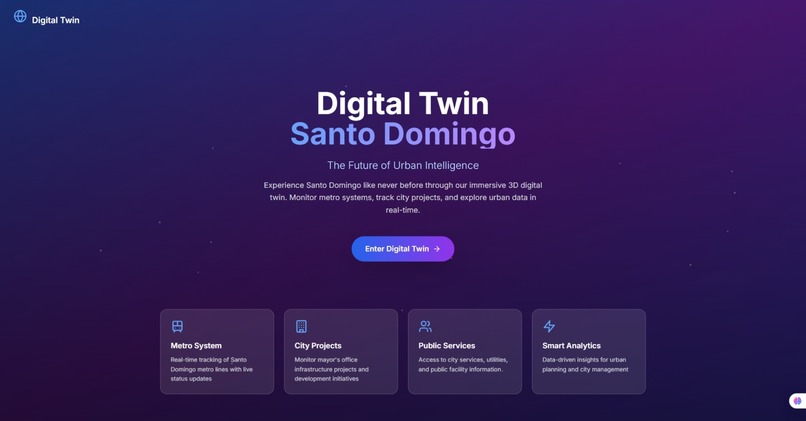
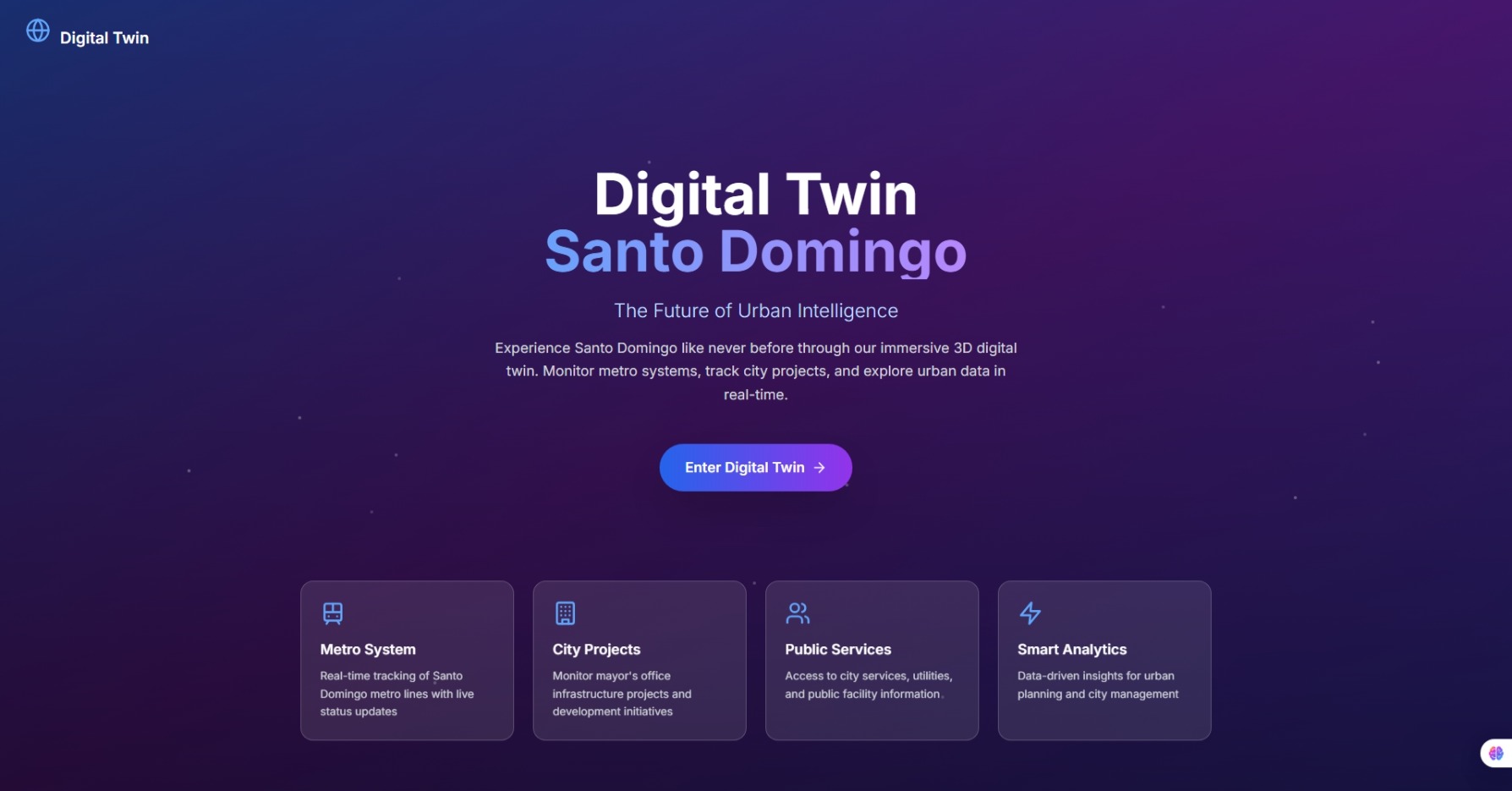
Landing Page
-
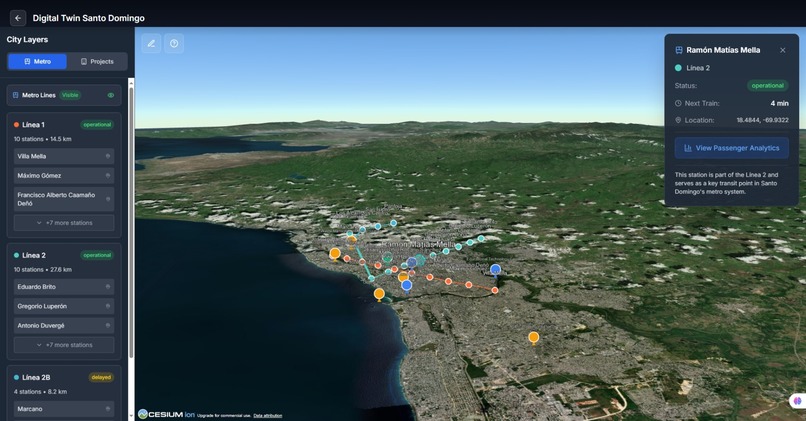
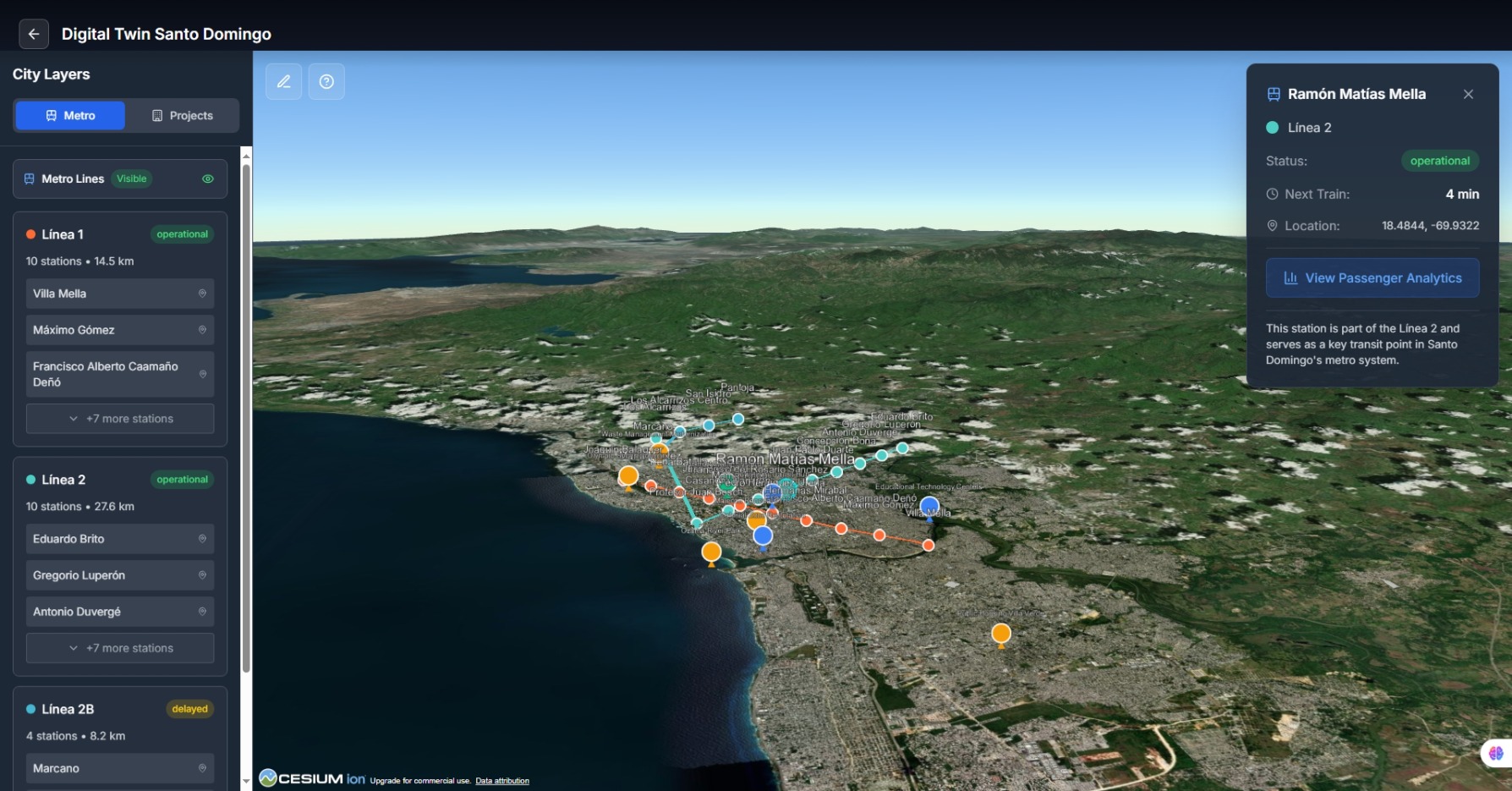
Map Interaction
-
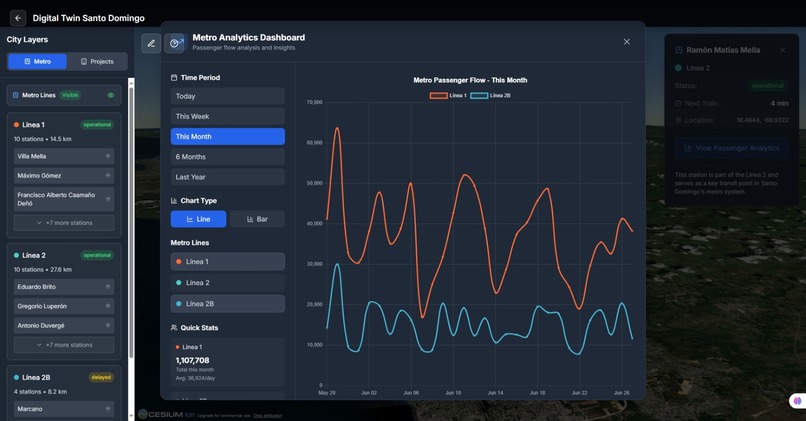
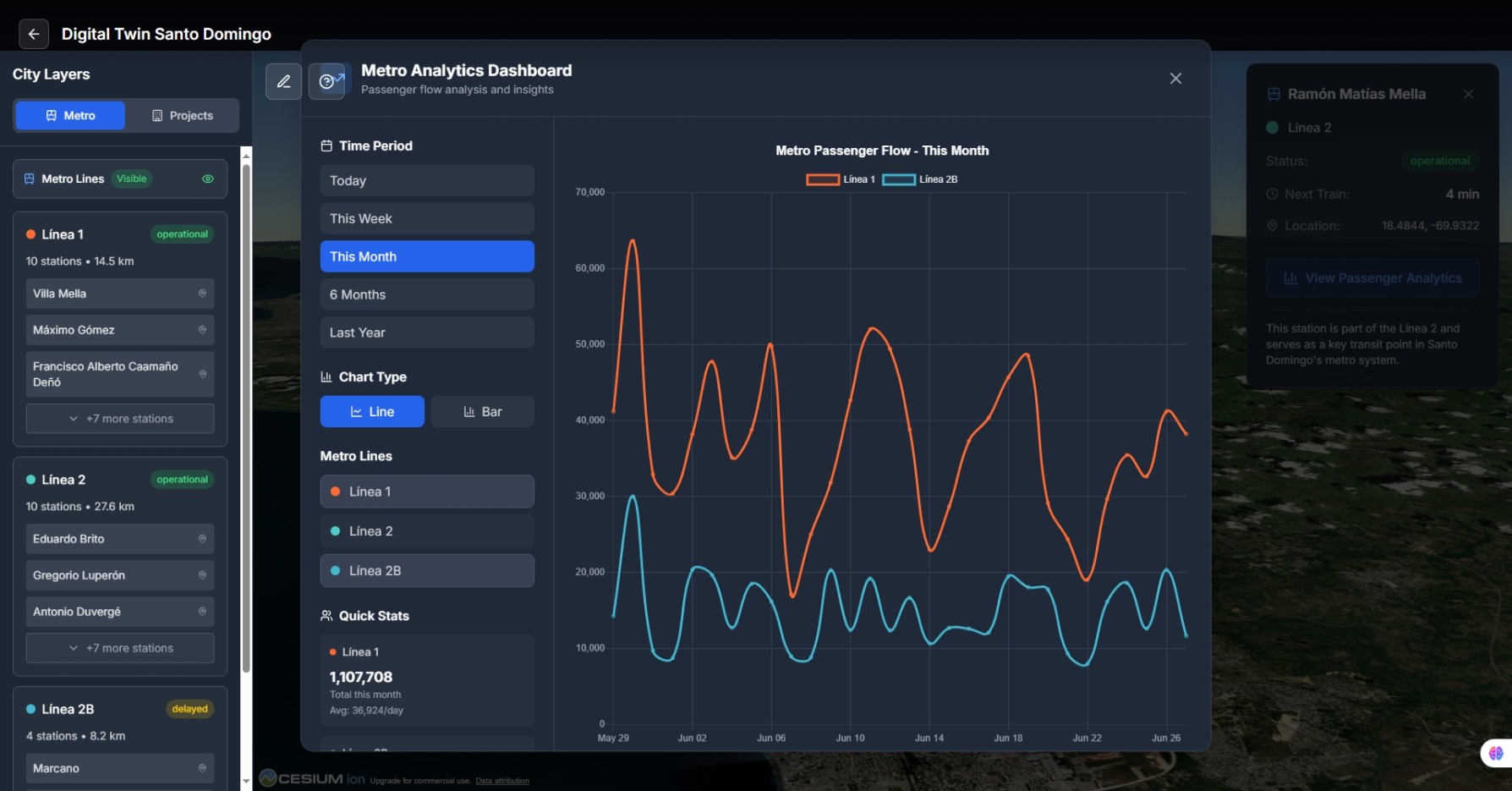
Statistics Page
Inspiration
Our inspiration stemmed from the growing global trend of smart cities and the transformative potential of digital twin technology. We aimed to create a dynamic, interactive platform that could serve as a comprehensive digital replica of Santo Domingo, empowering urban planners, government officials, and citizens with real-time insights and a futuristic visualization of their city. The goal was to bridge the gap between physical infrastructure and digital data, fostering more informed decision-making and enhancing urban living.
What it does
The Santo Domingo Digital Twin application provides a comprehensive, interactive 3D visualization of the city. It allows users to:
- Explore a 3D Model of Santo Domingo: Navigate a photorealistic digital replica of the city, including terrain and buildings.
- Monitor Metro System Status: View real-time (mockup) operational status, delays, and key statistics for the city's metro lines.
- Track City Projects: Access information on major urban development projects, including their progress, status (e.g., In Progress, Planning, Completed), and descriptions.
- Manage Map Layers: Toggle the visibility of various map elements such as buildings, terrain, streets, and metro lines to customize their view.
- Experience Modern UI/UX: Interact with a beautifully designed and animated interface, featuring smooth transitions and responsive controls.
How we built it
We built the Santo Domingo Digital Twin application using a modern web development stack to ensure responsiveness, performance, and a rich user experience:
- Frontend: Developed with React 19 and TypeScript for a robust and scalable component-based architecture.
- 3D Visualization: Integrated Cesium.js as the core 3D globe and geospatial visualization engine, allowing for the rendering of high-fidelity terrain, buildings, and custom data overlays.
- Animations: Leveraged GSAP (GreenSock Animation Platform) for creating smooth, performant, and visually appealing animations across the application, from the landing page entrance to UI element interactions.
- Styling: Utilized Tailwind CSS for a utility-first CSS framework, enabling rapid and consistent styling while maintaining a highly customizable design.
- Build Tool: Employed Vite for its incredibly fast development server and optimized build processes, significantly improving developer productivity.
- State Management: Used React's built-in state management for simplicity and efficiency.
- Mockup Data: For demonstration purposes, we implemented mockup data for metro line statuses and city projects, simulating real-world data feeds.
Challenges we ran into
Developing a digital twin application presented several challenges:
- Cesium.js Integration with React: Integrating a complex 3D library like Cesium.js, which often manipulates the DOM directly, with React's virtual DOM reconciliation required careful handling to prevent conflicts and ensure smooth rendering. We addressed this by encapsulating Cesium.js logic within dedicated React components and managing its lifecycle effectively.
- Performance Optimization: Rendering a large 3D city model and managing various data layers demanded significant computational resources. Optimizing performance involved efficient data loading, selective rendering, and careful use of Cesium.js features to maintain a fluid user experience.
- Data Acquisition and Representation: While we used mockup data for this project, the challenge of acquiring, processing, and accurately representing real-world geospatial data (e.g., precise building models, real-time traffic, and public transport data) is substantial. This project highlighted the need for robust data pipelines and partnerships with city data providers.
- UI/UX Complexity: Designing an intuitive and aesthetically pleasing user interface for a data-rich 3D environment was complex. Balancing visual appeal with functional clarity, especially for interactive panels and layer controls, required iterative design and refinement.
- GSAP and Tailwind CSS Integration: Ensuring seamless interaction between GSAP animations and Tailwind CSS utility classes, particularly for responsive designs and dynamic content, required a deep understanding of both libraries.
Accomplishments that we're proud of
We are particularly proud of several key accomplishments in this project:
- Seamless 3D Visualization: Successfully integrated Cesium.js into a React/TypeScript environment, delivering a smooth and interactive 3D representation of Santo Domingo.
- Dynamic User Experience: Created a highly engaging and modern user interface with sophisticated GSAP animations, making the application visually appealing and intuitive to use.
- Functional Use Cases: Implemented practical use cases such as real-time metro status and city project tracking, demonstrating the immediate value and potential of a digital twin.
- Robust Technical Foundation: Built the application on a solid and scalable technical stack (React, TypeScript, Vite, Tailwind CSS), ensuring maintainability and future expandability.
- Responsive Design: Achieved full responsiveness, making the application accessible and functional across various devices, from desktops to mobile phones.
What we learned
Throughout this project, we gained valuable insights into:
- Complex Library Integration: The intricacies of integrating powerful, opinionated libraries like Cesium.js into modern JavaScript frameworks, emphasizing the importance of understanding their respective lifecycles and rendering mechanisms.
- Performance in 3D Environments: The critical role of performance optimization in 3D web applications, including strategies for efficient asset loading, rendering, and managing large datasets.
- UI/UX for Geospatial Data: Best practices for designing user interfaces that effectively present complex geospatial and real-time data in an intuitive and visually appealing manner.
- Animation Best Practices: Advanced techniques for using GSAP to create complex, synchronized, and performant animations that enhance user engagement without compromising application speed.
- Scalable Frontend Architecture: The benefits of using TypeScript for type safety and React for component-based development in building maintainable and scalable frontend applications.
- The Power of Digital Twins: A deeper appreciation for the potential of digital twin technology in urban planning, smart city initiatives, and fostering data-driven decision-making.
What's next for Santo Domingo Digital Twin
The Santo Domingo Digital Twin project, while functional and feature-rich, serves as a robust foundation for future enhancements. Here are some key areas for its continued development:
- Real-time Data Integration: Connect to actual city APIs for live metro data, traffic conditions, environmental sensors, and utility consumption to provide truly real-time insights.
- Advanced Data Layers: Incorporate additional geospatial data layers such as public transportation routes, utility networks (water, electricity, gas), zoning information, and demographic data.
- Predictive Analytics: Implement AI/ML models to forecast urban trends, predict traffic congestion, analyze energy consumption patterns, and simulate the impact of urban development projects.
- Citizen Engagement Features: Develop interactive tools for citizens to report issues, provide feedback on urban planning initiatives, and access public services directly through the digital twin.
- Enhanced 3D Modeling: Integrate more detailed 3D models of key landmarks, historical sites, and new developments, potentially using photogrammetry or BIM (Building Information Modeling) data.
- Scenario Planning and Simulation: Enable urban planners to simulate various scenarios, such as the impact of new infrastructure, climate change effects, or disaster response, within the digital twin environment.
- IoT Sensor Integration: Connect with a network of IoT sensors deployed across the city to gather granular data on air quality, noise levels, waste management, and more.
- User Authentication and Roles: Implement a secure authentication system with different user roles (e.g., public viewer, urban planner, city official) to control access to sensitive data and functionalities.
- Mobile Application Development: Extend the digital twin functionality to native mobile applications for on-the-go access and augmented reality (AR) experiences.
- Community Collaboration Tools: Foster collaboration among stakeholders by providing tools for shared annotations, discussions, and project management within the digital twin platform.
- Performance at Scale: Further optimize the application for handling massive datasets and a large number of concurrent users, ensuring a smooth experience as the city model grows in complexity and detail.
Built With
- cesium
- gasp
- javascript
- react

Log in or sign up for Devpost to join the conversation.