-
-

Sansad Wordle Logo (Designed with ChatGPT)
-
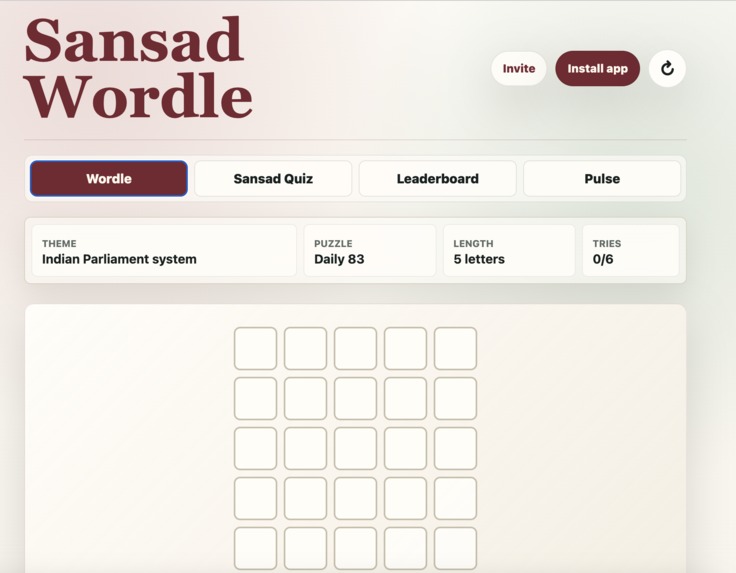
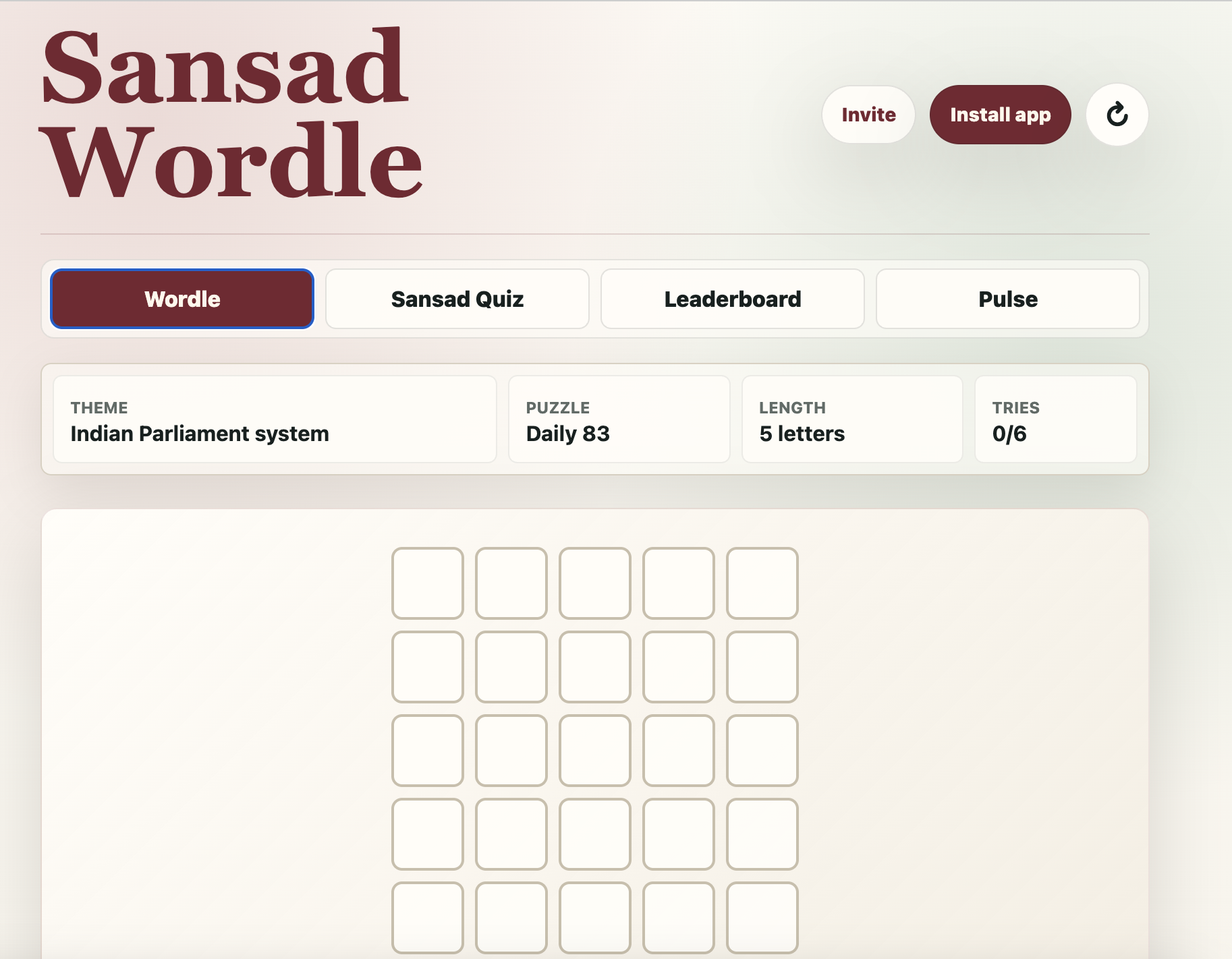
Home Interface
-
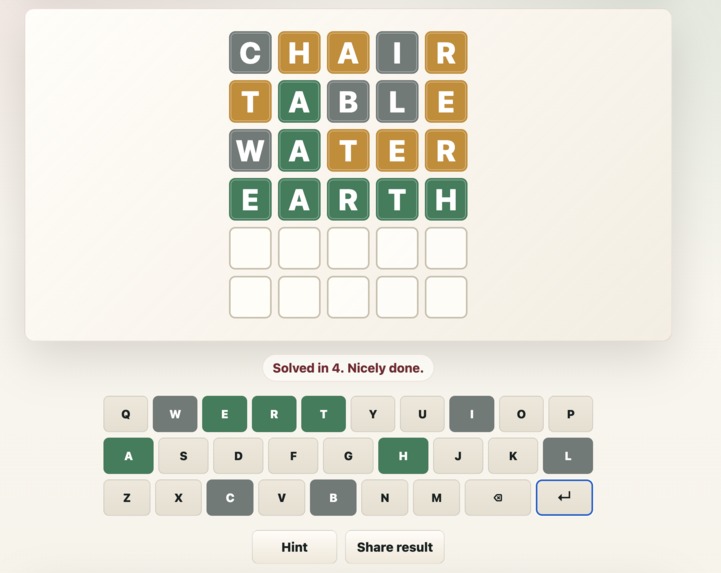
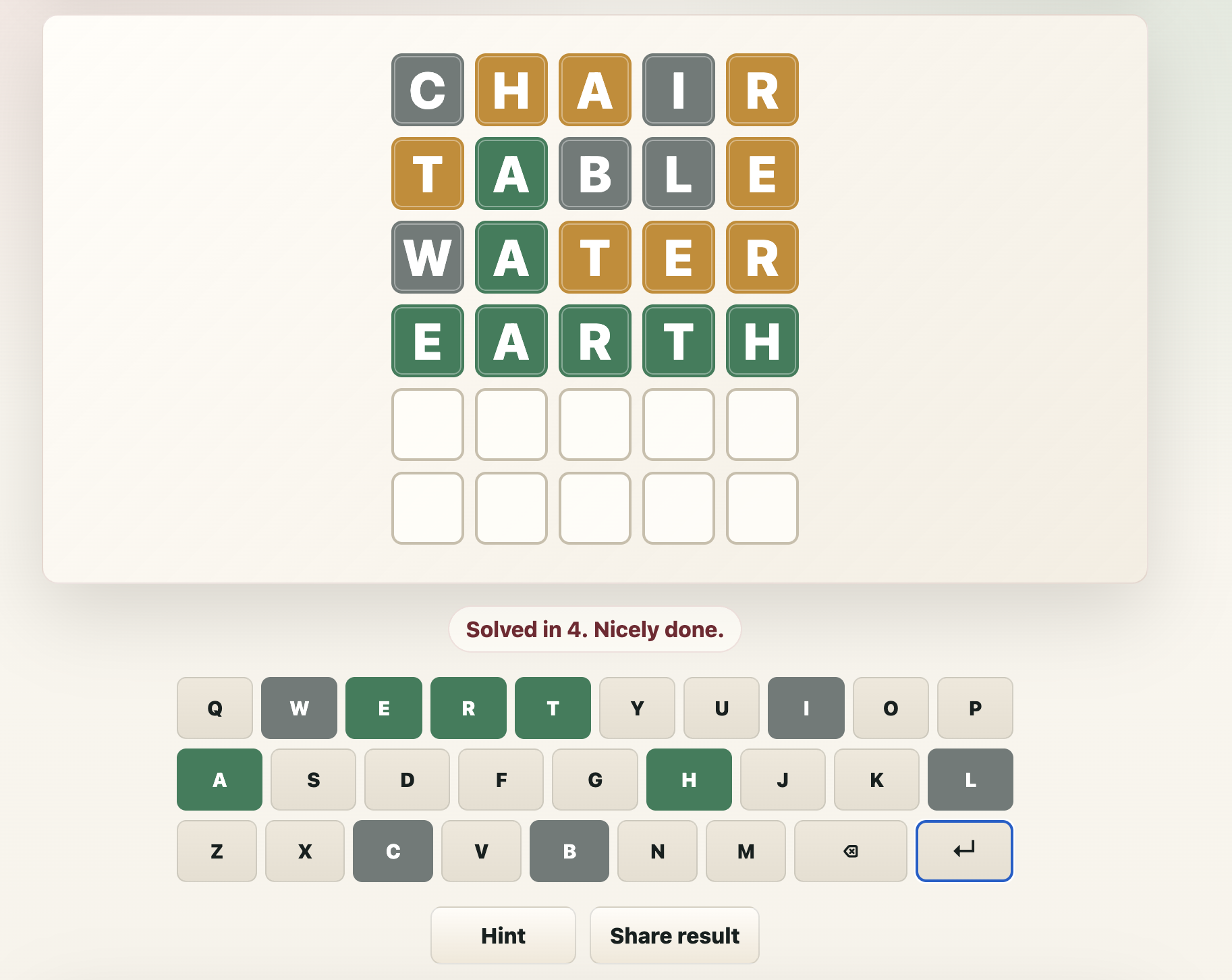
Sansad Wordle
-
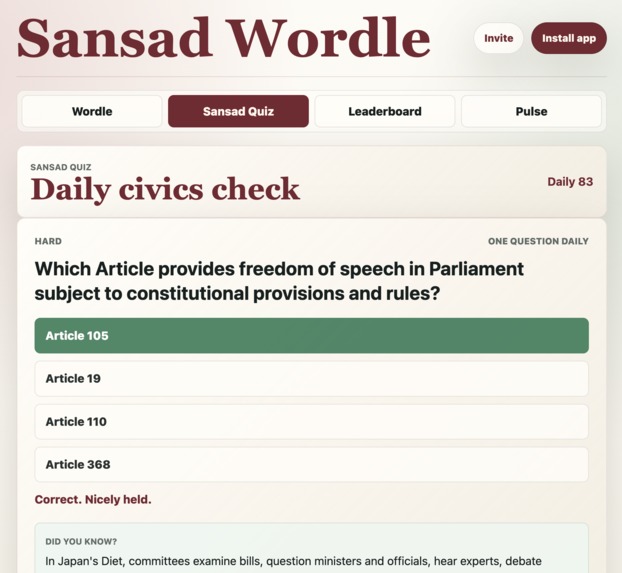
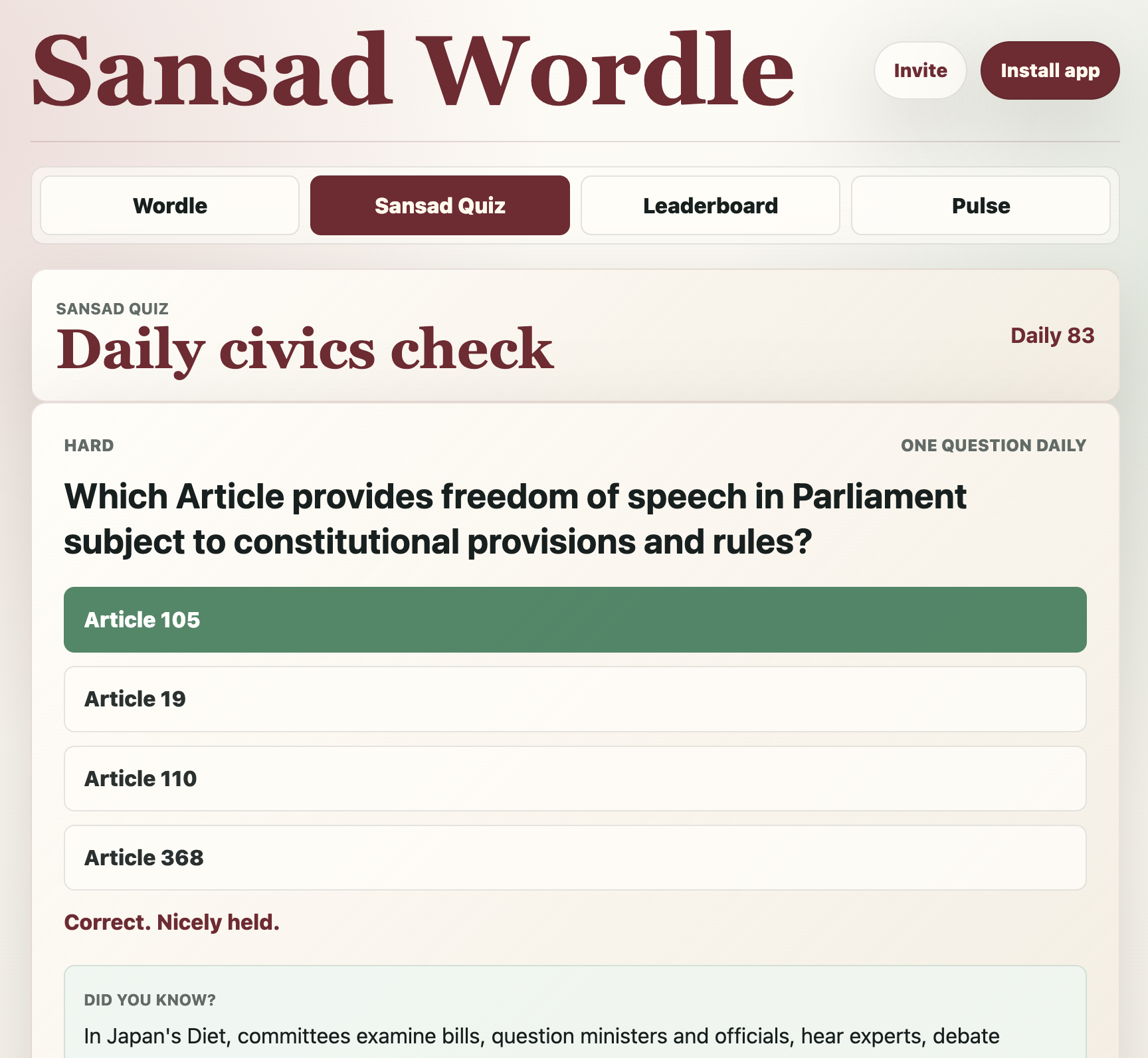
Sansad Quiz
-
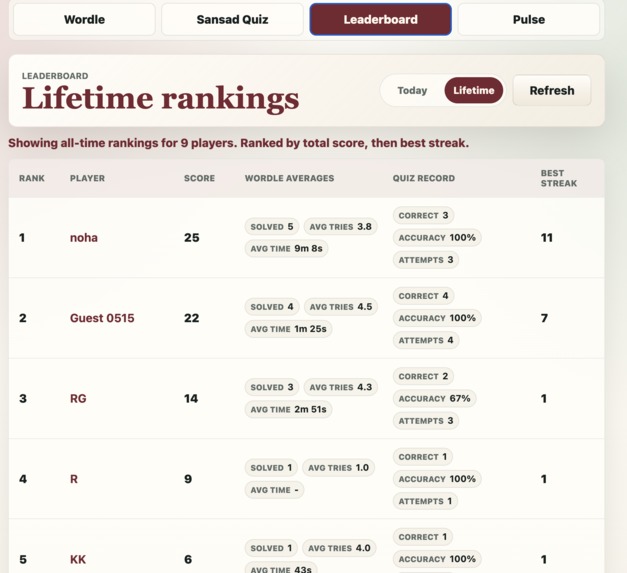
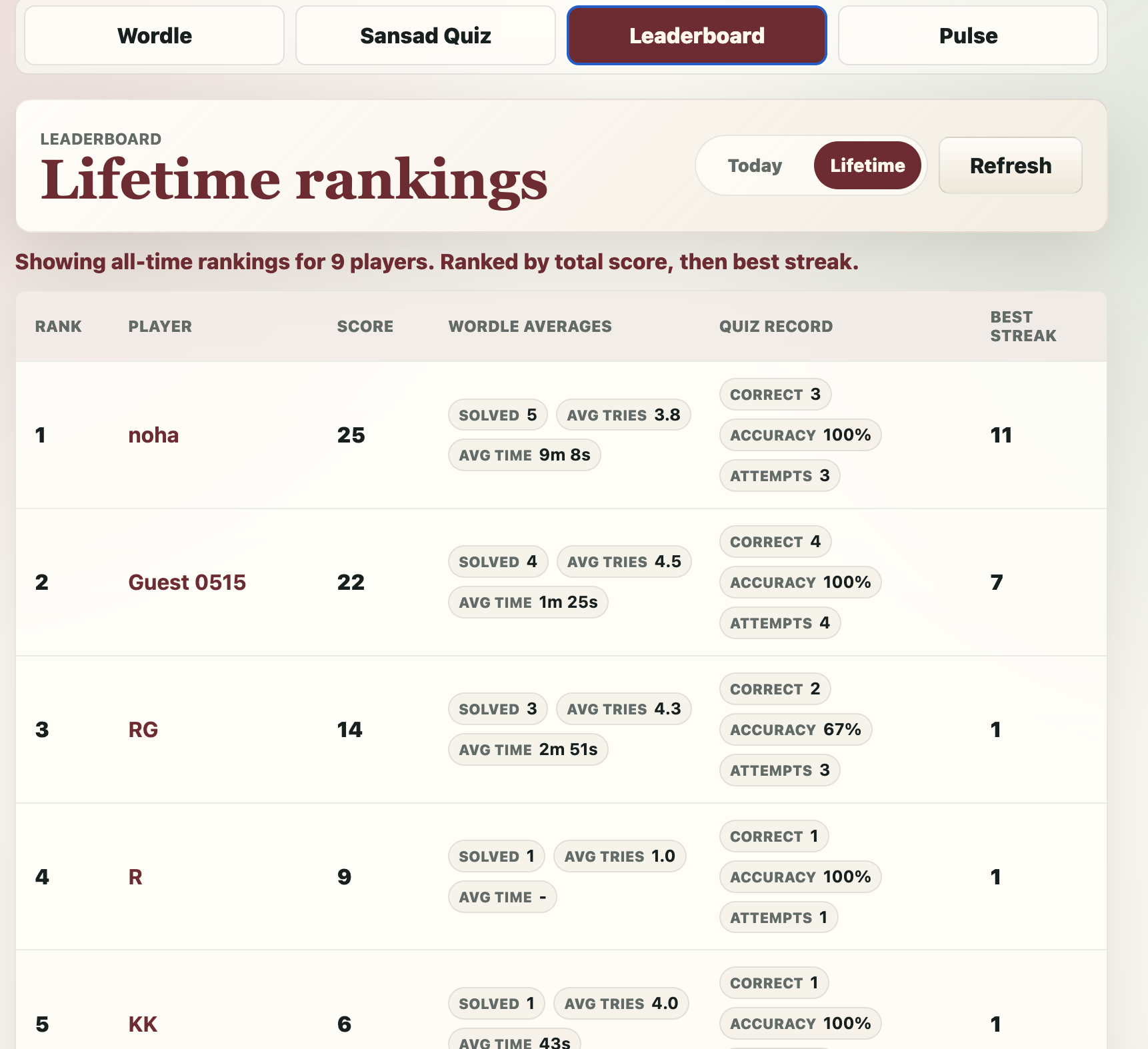
Leaderboard
-
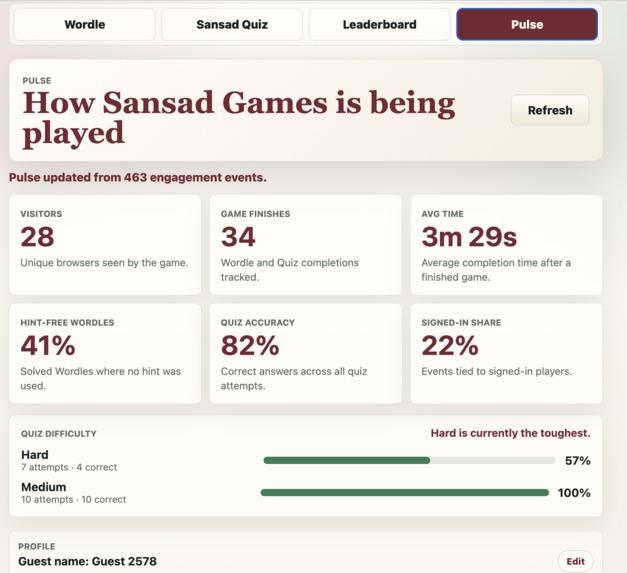
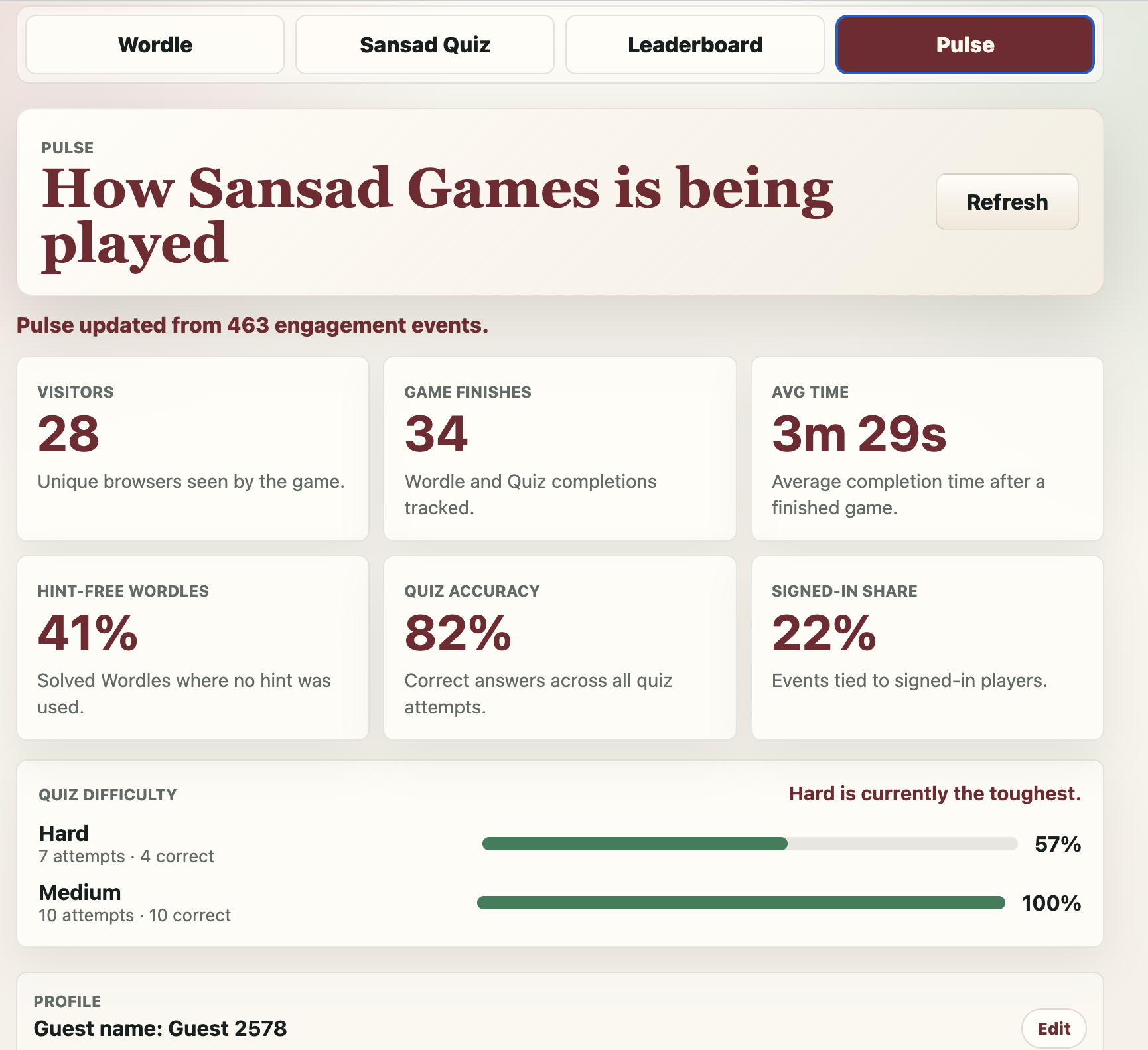
Analytics Page

Sansad Wordle was inspired by a simple question: can civic education feel more like play?
As someone who works at the intersection of law, policy, technology, and public interest, and who previously worked as a Legislative Assistant, I have seen how Parliament and governance can feel distant, technical, or intimidating to many people. At the same time, these institutions shape everyday life. I wanted to build something that could make people curious about parliamentary terms, democratic processes, and public institutions in a format that felt lightweight, familiar, and fun.
That idea became Sansad Wordle, a Parliament-themed word game where users guess words connected to Indian democracy and governance. The goal was to make civic learning interactive, playful, and shareable, rather than making it feel like homework.
What made this project especially meaningful for me was that I am not a traditional developer. I am a lawyer and policy professional. Using Codex, I was able to move from idea to prototype much faster than I expected. Codex helped me brainstorm the product concept, think through the user flow, design the interface, and work with a repository of Parliament-related words. It was not just writing code for me; it was helping me think like a builder.
Over time, the project also evolved beyond a simple word game. I eventually added features such as user sign-in, a leaderboard, and analytics, which helped make the experience more interactive and gave me a better understanding of how people were engaging with the game. Each new feature pushed me to learn a little more about product design, user behaviour, data, and the technical infrastructure behind even a seemingly simple web app.
The biggest learning was that AI-assisted coding can expand who gets to build. You no longer need to come from a conventional technical background to prototype an idea, test it with users, and make something useful. For public-interest projects especially, this is powerful: people who deeply understand a problem can now begin building solutions themselves.
The main challenge was translating a civic education idea into a product that felt simple and fun rather than instructional. I had to think about word difficulty, replay value, user experience, and how to make the game engaging for people who may not already be Parliament or policy nerds. I also had to learn several technical concepts on the go — from working with repositories and deployment workflows to understanding APIs, API keys, CDNs, and other infrastructure decisions that were unfamiliar to me when I began. The process taught me that AI-assisted building still requires judgment, iteration, testing, and problem-solving, but it lowers the barrier to getting started.
The project also led me to start a LinkedIn series called "Bob – The Builder", where I share my experience as a non-tech professional learning to build with AI. The idea behind the series is to inspire other non-techies — especially people from law, policy, governance, research, and public-interest backgrounds — to stop seeing technology as something only engineers can create, and start seeing it as something they can shape too.
Sansad Wordle ultimately became more than a game for me. It was a proof of concept for a new kind of civic-tech building: fast, playful, accessible, and powered by AI collaboration.
Built With
- codex
- netlify
- supabase


Log in or sign up for Devpost to join the conversation.