Inspiration
SanjeevAI was born from my desire to use AI not just for convenience, but for compassion. I was deeply moved by the struggles of Thalassemia patients, especially the emotional and physical burden of requiring regular blood transfusions, finding compatible donors, and managing long-term medical care.
The mission of Blood Warriors to eliminate Thalassemia in India by 2035 deeply resonated with me. As a second-year engineering student with limited experience, I saw this hackathon as an opportunity to apply my skills, learn something new, and build something with real-world impact.
What it does
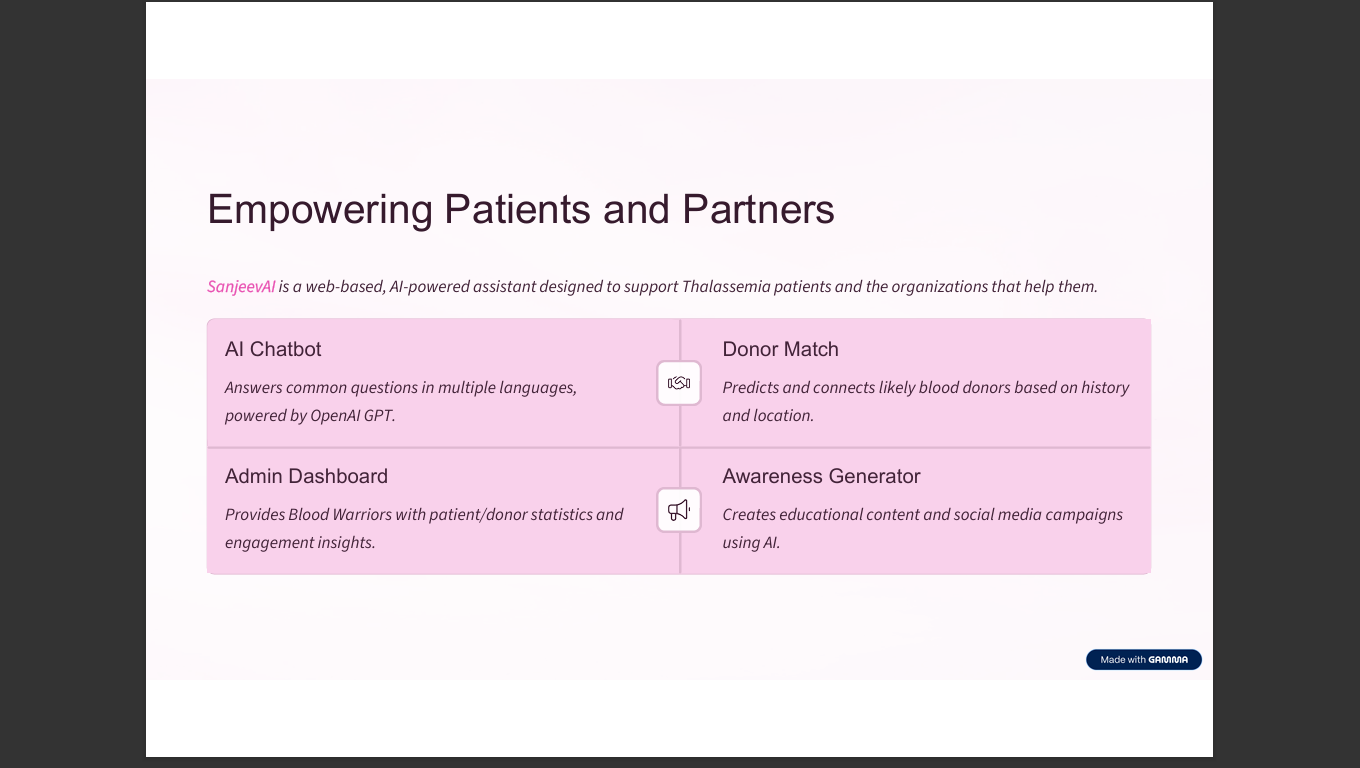
SanjeevAI is a web-based AI-powered assistant designed to support Thalassemia patients and the organizations that help them. It features:
- AI Chatbot (powered by OpenAI GPT) that answers common questions related to Thalassemia in multiple languages
- Donor Match System that predicts and connects likely blood donors based on history and location
- Admin Dashboard for Blood Warriors to view patient/donor stats and engagement
- Awareness Generator that creates educational content and social media campaigns using AI
How I plan to build it
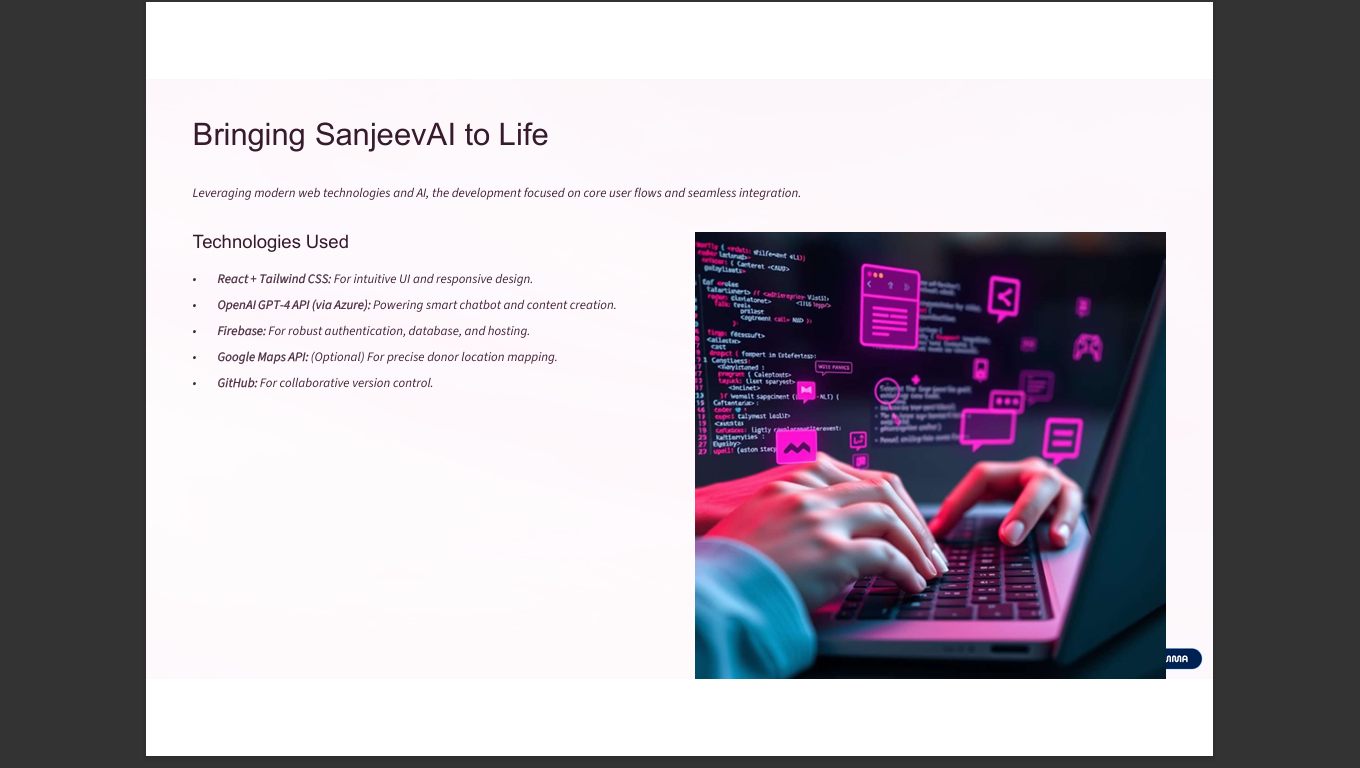
I used the following tools and technologies to bring SanjeevAI to life: [The actual prototype and coding will be done during the hackathon sprint]
- React + Tailwind CSS for frontend development and UI
- OpenAI GPT-4 API via Azure for chatbot and content generation
- Firebase for authentication, database, and hosting
- Google Maps API (optional) for mapping donor locations
- GitHub for version control
I began by planning the core user flows — how a patient would use the system and how Blood Warriors could benefit from it. From there, I built each component one by one and focused on integrating the chatbot and donation features using API services.
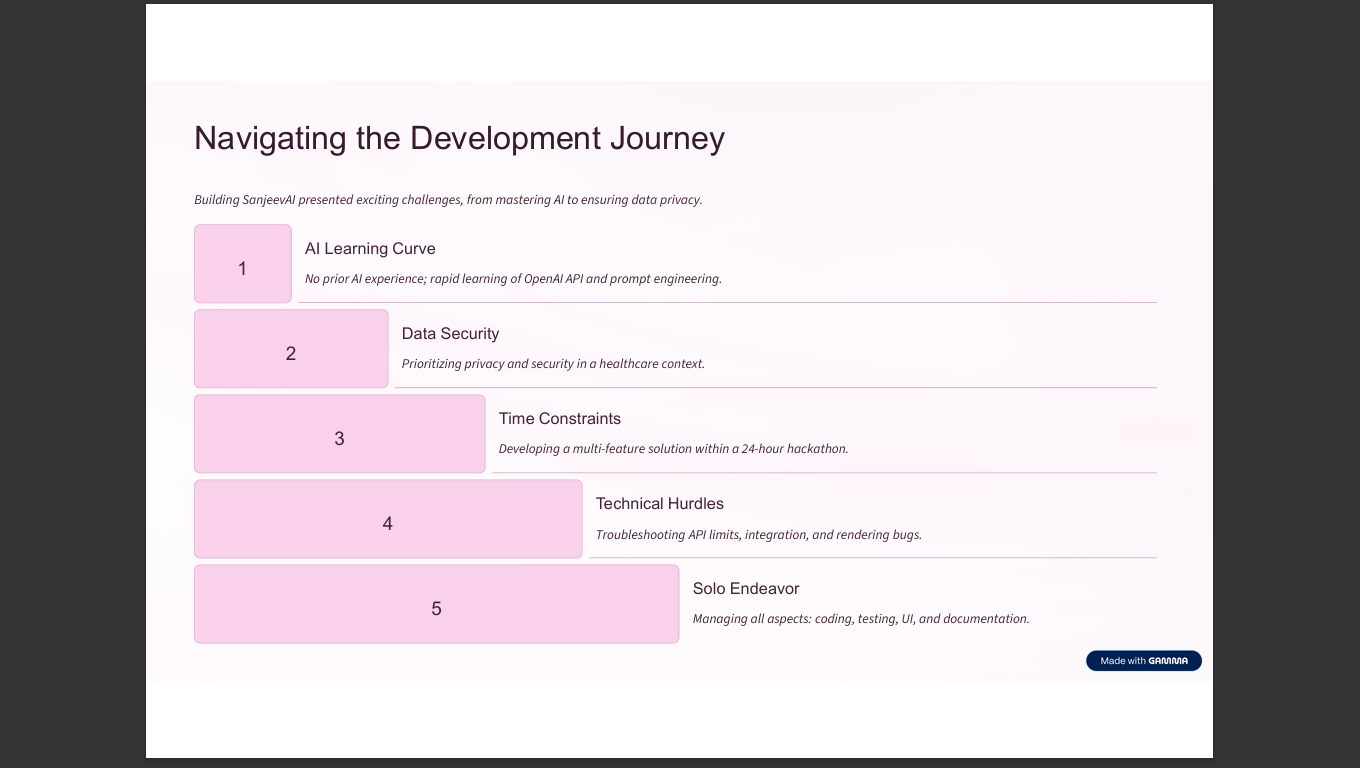
Challenges I anticipate
- I had no prior experience building AI applications, so learning OpenAI’s API and prompt engineering in real-time was challenging but exciting
- Ensuring data privacy and security was a critical design consideration, especially in healthcare
- Time management was tough — building a multi-feature solution within 24 hours required discipline and focus
- I had to quickly troubleshoot API rate limits, integration issues, and component rendering bugs
- Building the project solo meant I had to handle everything — coding, testing, UI, and documentation
Accomplishments that I would be proud of
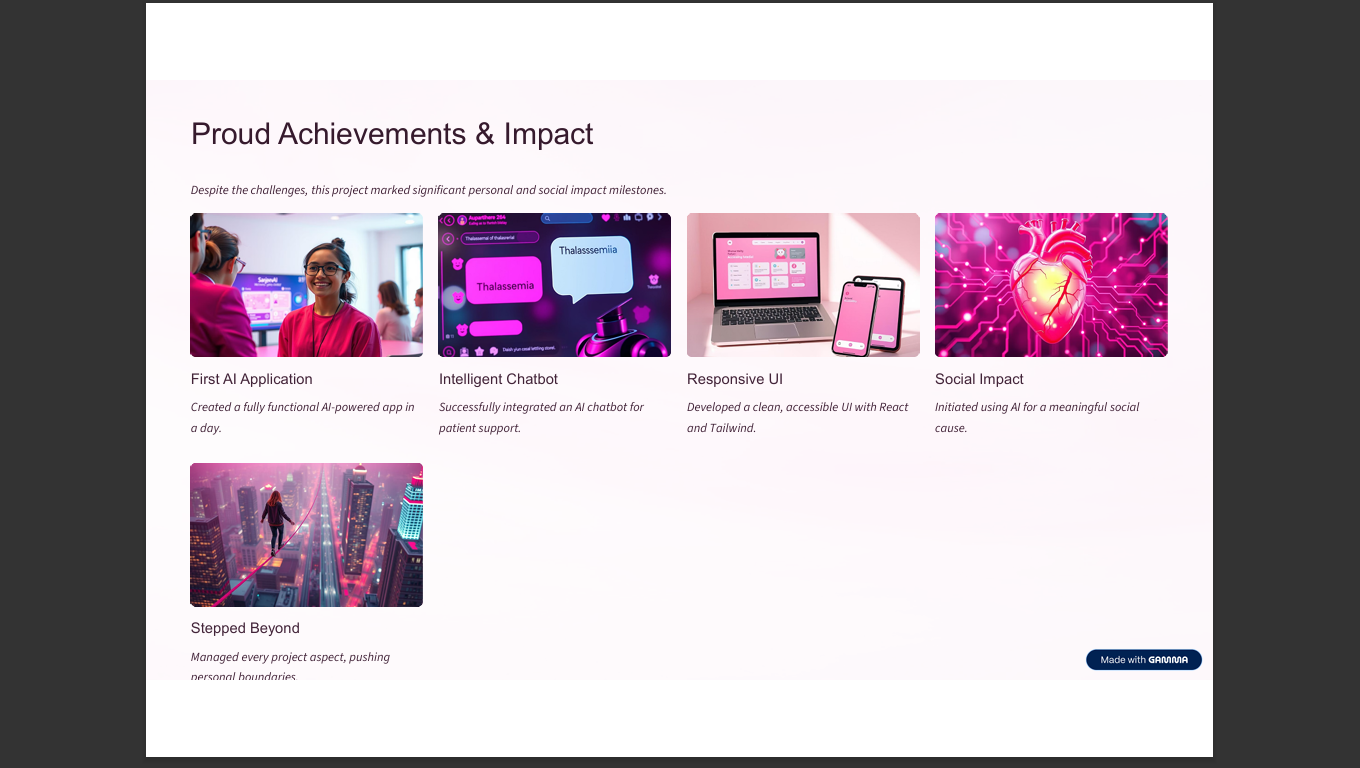
- I created my first complete AI-powered application within a day
- Successfully integrated an intelligent chatbot to help educate and support patients
- Built a clean, responsive, and accessible UI using React and Tailwind
- Took the initiative to use AI for meaningful social impact
- Stepped far outside my comfort zone and managed every aspect of the project myself
What I learned
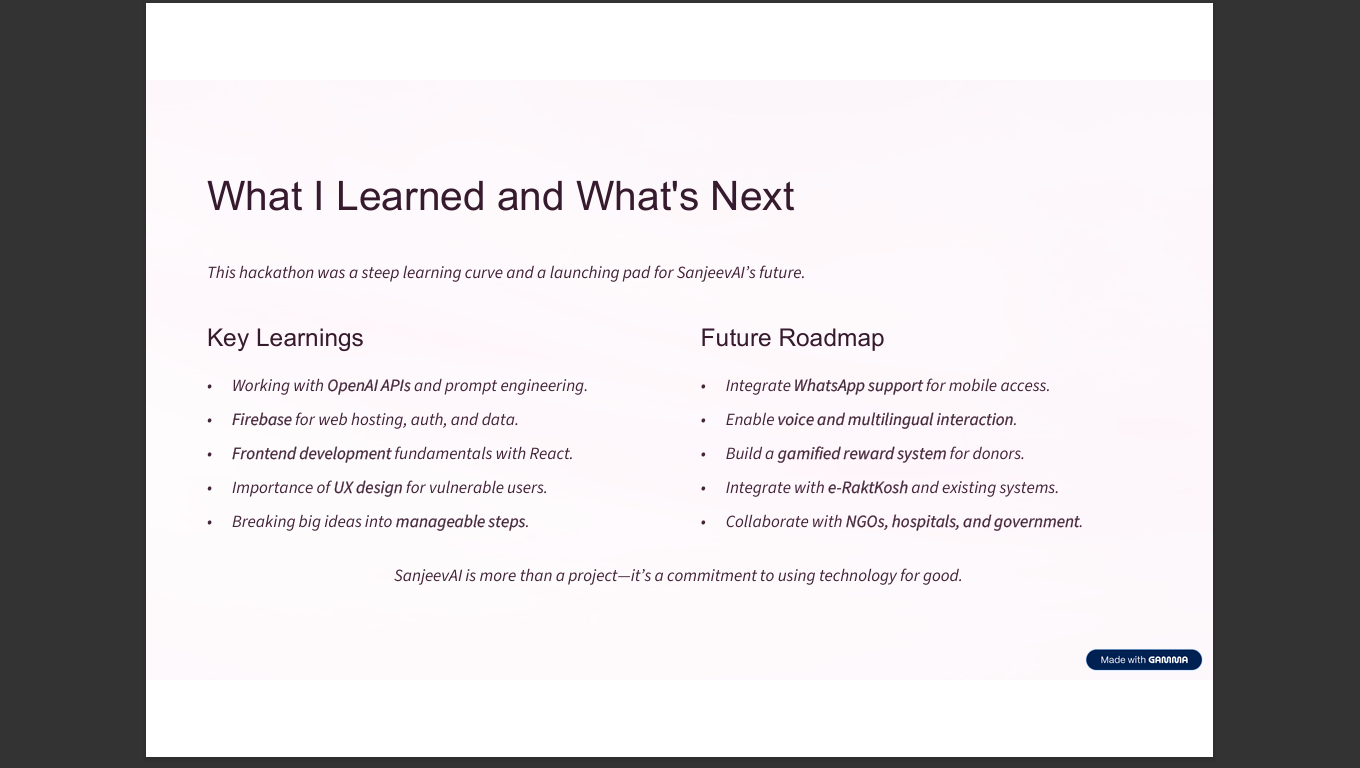
- How to work with OpenAI APIs and design prompts for different use cases
- How to use Firebase for web hosting, authentication, and storing data
- Fundamentals of frontend development using React
- The importance of user experience design, especially for people in vulnerable situations
- How to break a big idea into small, manageable steps and build under pressure
What's next for SanjeevAI
I believe SanjeevAI has the potential to grow into a nationwide platform. Here’s what I plan to do next:
- Add WhatsApp support so users can access the service easily via mobile
- Enable voice-based and multilingual interaction to help rural users
- Build a gamified reward system for recurring blood donors
- Integrate with e-RaktKosh and Blood Warriors’ existing systems
- Collaborate with NGOs, hospitals, and government health departments for wider adoption
SanjeevAI is more than a project — it’s my commitment to use technology for good and ensure no Thalassemia patient feels left behind.
— Team SanjeevAI
Built With
- firebase
- github
- google-maps
- javascript
- microsoftazure
- node.js+npm
- openai
- react.js
- real-time-database
- tailwindcss
- vscode

Log in or sign up for Devpost to join the conversation.