Inspiration
Sandtopia grew from a simple idea: bring the joy of playing at the beach into your own room.
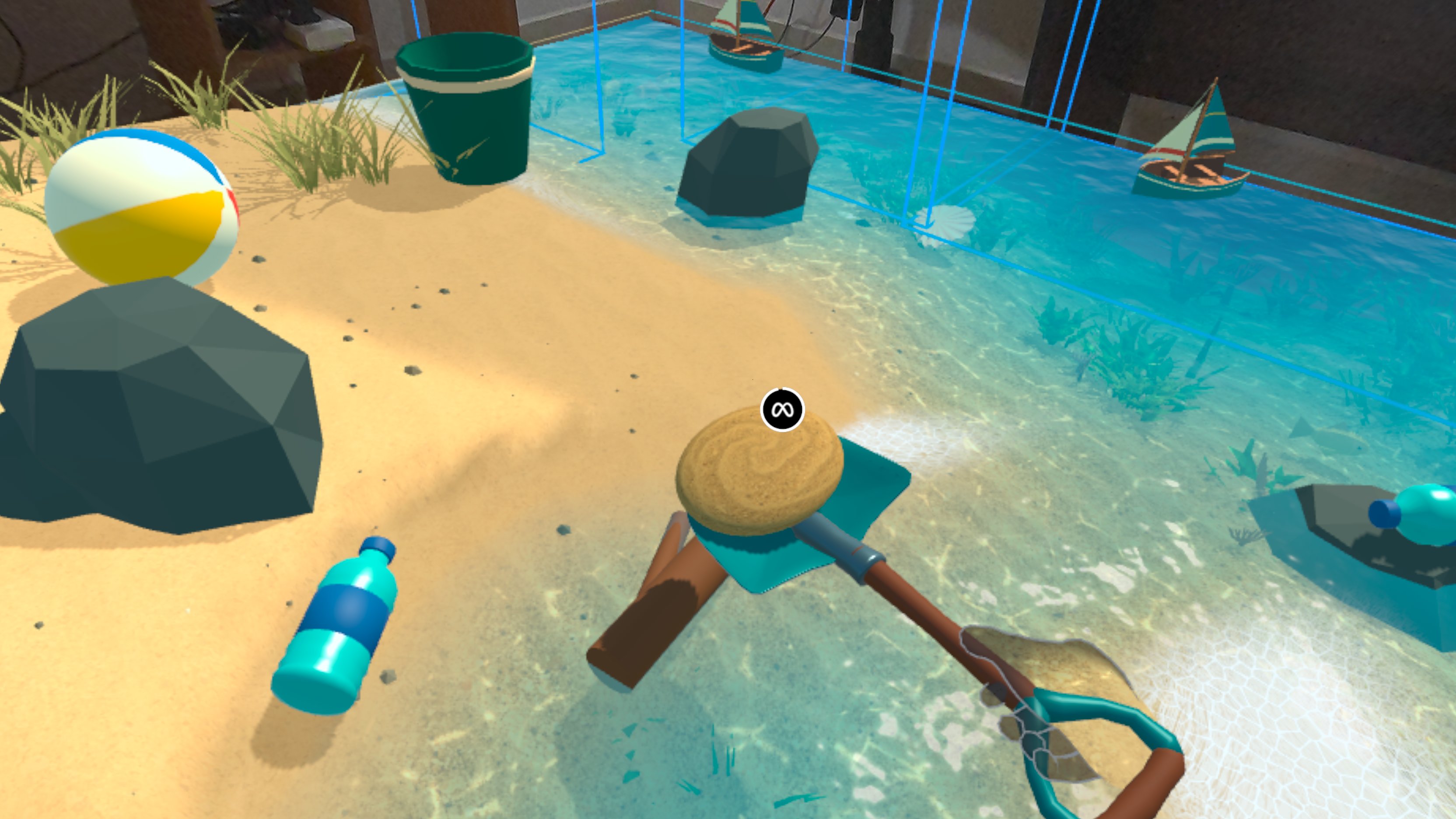
Building sandcastles, digging channels, and watching waves reshape the shoreline create a natural loop of curiosity and experimentation. I wanted to capture that experience in mixed reality, where players could reach for a shovel, tip a bucket, and interact with a miniature beach in their own space.
What it does
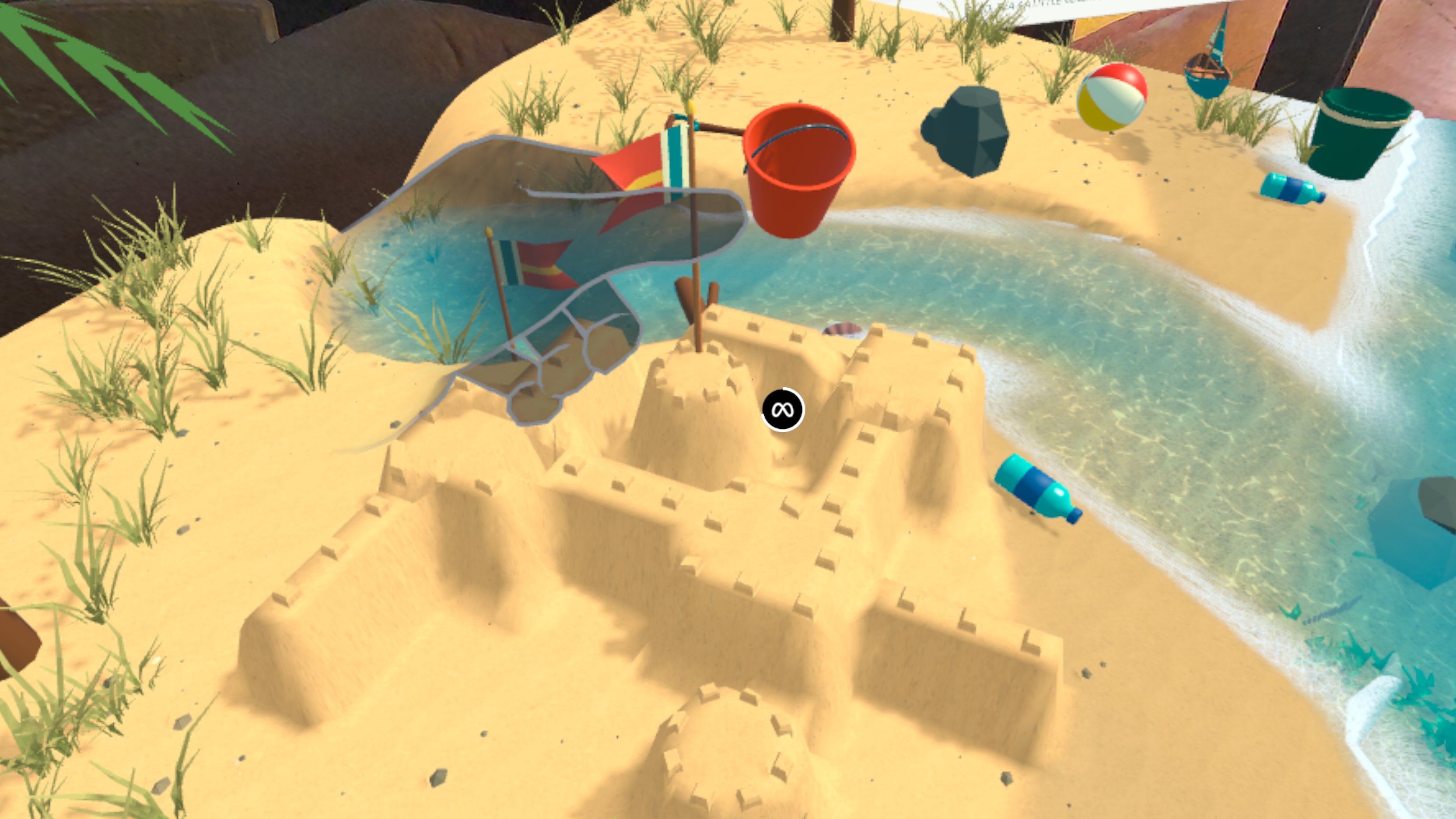
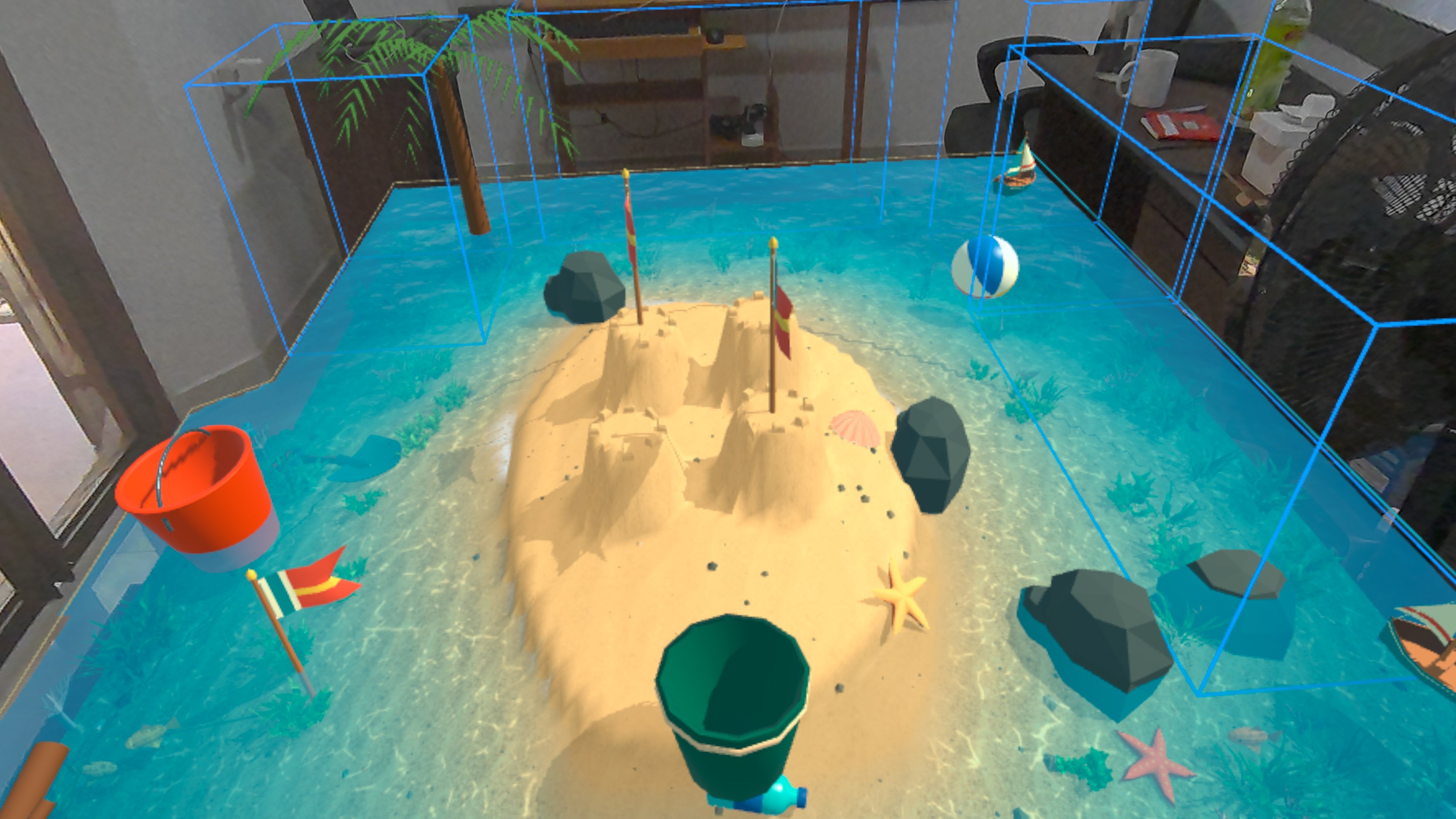
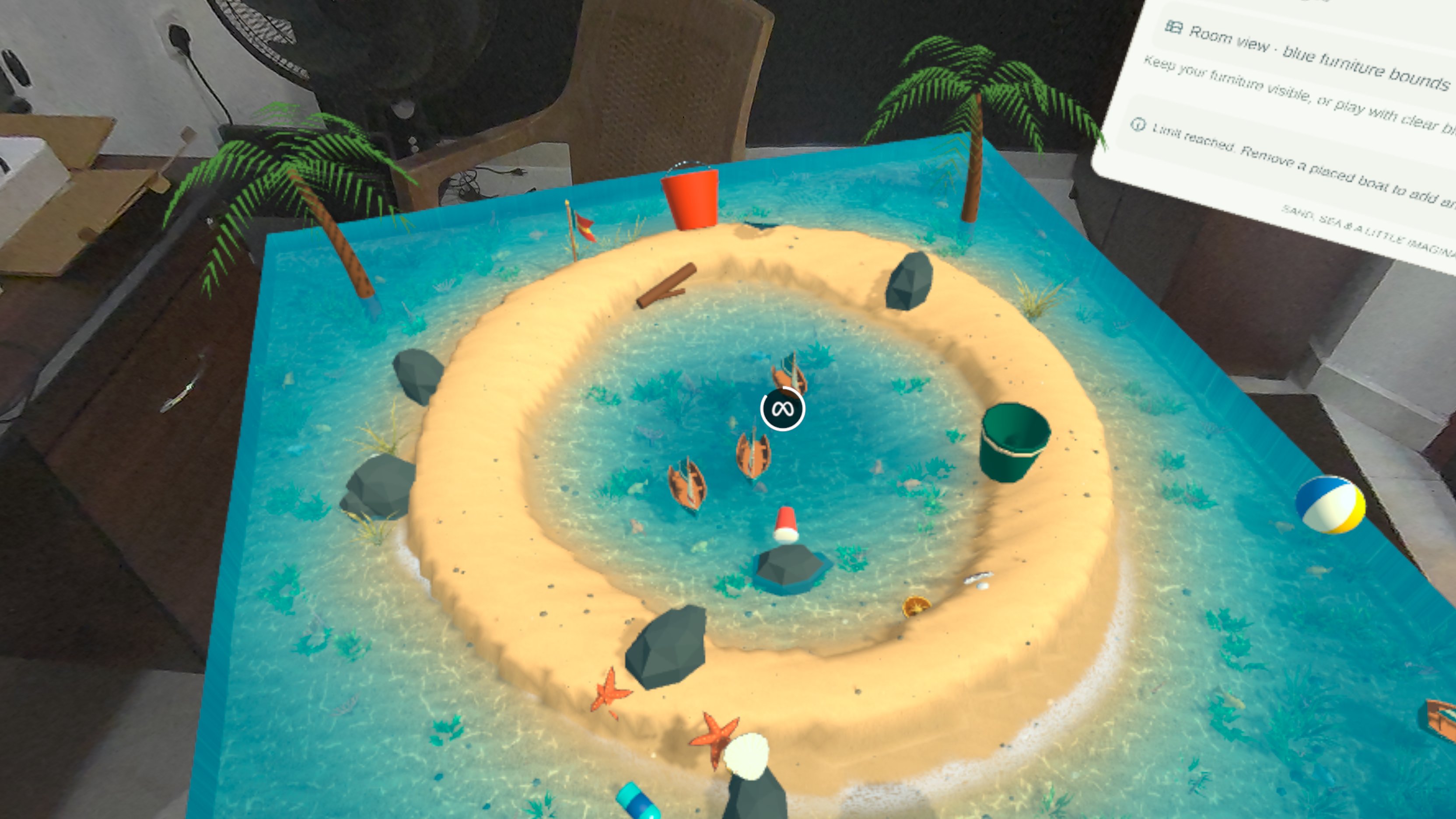
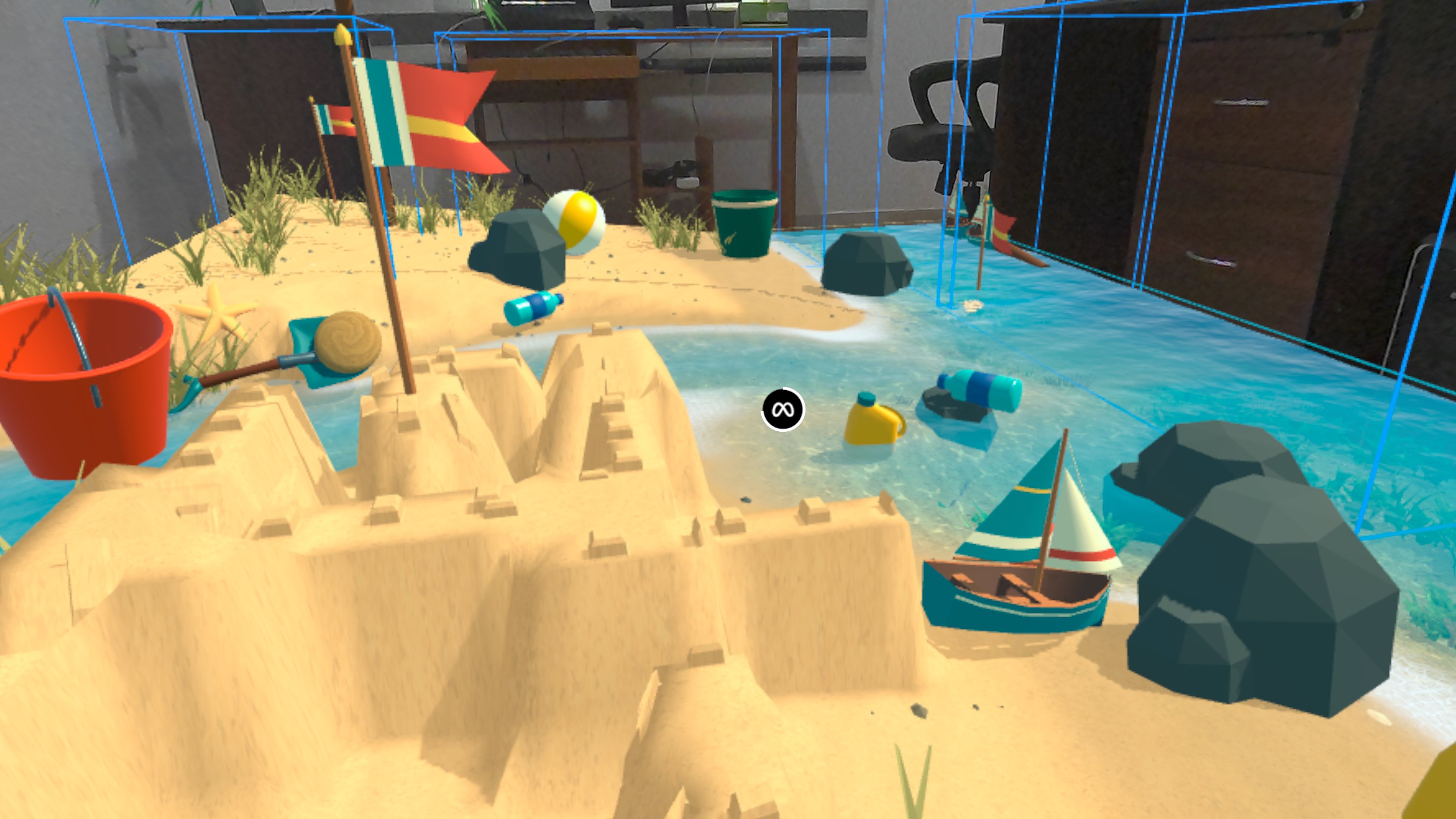
Sandtopia turns a tabletop or room floor into an interactive sand-and-water playground.
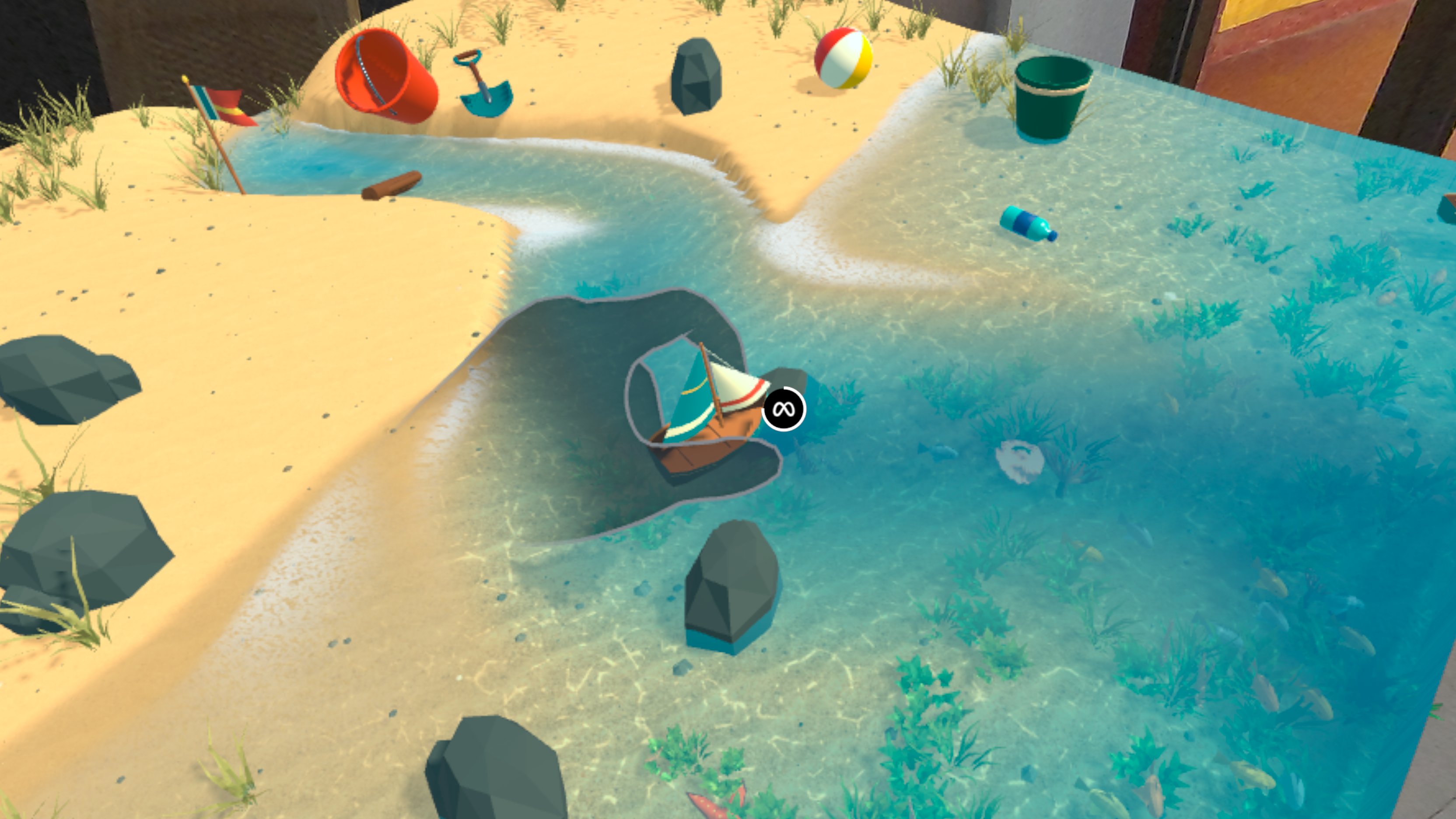
Players can dig, sculpt terrain, mold sandcastle towers, and carve channels for water to flow through. Waves gradually erode exposed sand, wet structures collapse, and floating objects respond to the water.
Shovels, buckets, boats, shells, and underwater plants bring the beach to life. The interaction between these elements encourages experimentation: build a moat, redirect a wave, or see how long a castle survives.
How I built it
I built Sandtopia in Unity, using C#, GPU compute shaders, and the Universal Render Pipeline.
The simulation combines shallow-water flow, sand relaxation, sediment transport, and erosion. Sand and water influence each other, allowing the terrain to change as players dig, pour, build, and experiment.
For the Meta Quest version, I integrated OpenXR, Meta XR and Interaction SDKs, and MR Utility Kit. These provide the foundation for hand and controller interactions, passthrough, and room-aware placement.
I developed physical tool interactions for scooping, pouring, stirring, and molding sand, alongside buoyancy and collision behavior for movable objects. Automated tests and repeatable gameplay checks helped verify simulation behavior, tool interactions, saving, and placement recovery.
Challenges I faced
One of the biggest challenges was balancing simulation detail with the performance constraints of a standalone headset. Water, deformable sand, rendering, and tracked interactions all compete for a limited frame budget.
Another challenge was making tools behave predictably. A bucket needs to respond correctly when filled, inverted, released, or passed between hands. A shovel needs to interact with changing terrain while remaining responsive.
Mixed reality also introduced placement and scale challenges. The same beach needed to work on a tabletop and across a room floor, with consistent tool behavior and appropriate handling of scanned furniture.
Throughout development, I also needed to preserve the existing desktop version while introducing a separate Quest configuration.
What I learned
I learned that convincing interactions depend on consistent responses. Small details—where a shovel contacts the sand, when a bucket releases its contents, or how water reaches a castle wall—strongly affect how natural the experience feels.
I also gained practical experience with GPU simulation, spatial computing, tracked input, and performance profiling. Testing reinforced an important lesson: passing Editor checks is only part of the process. Real headset testing is essential for understanding comfort, tracking, scale, and responsiveness.
What’s next
Sandtopia is now available on the Meta Horizon Store. I’m looking forward to learning from players and using their feedback to guide improvements to interactions, performance, and creative play.


