-
-
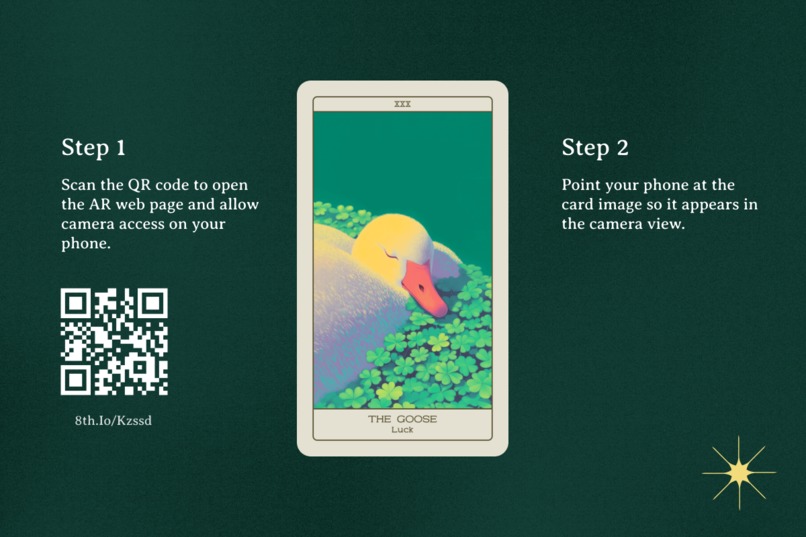
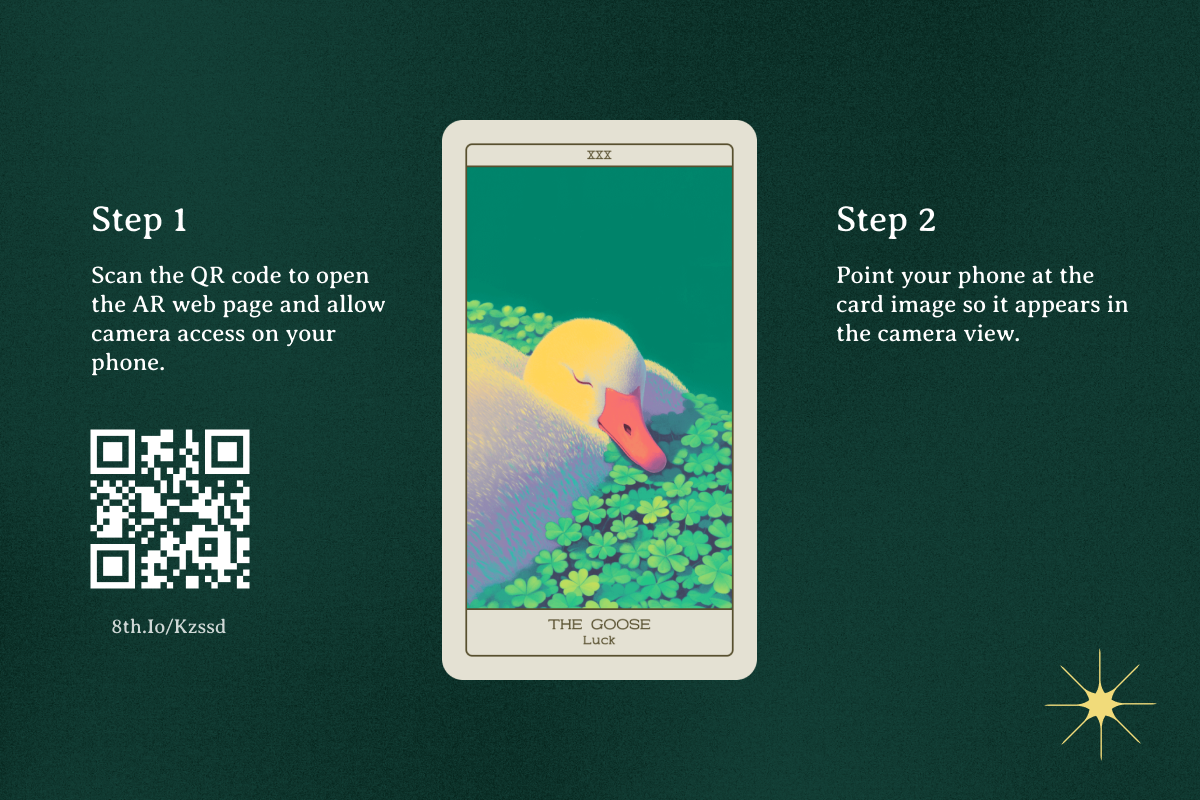
How to Use the AR Cards
-
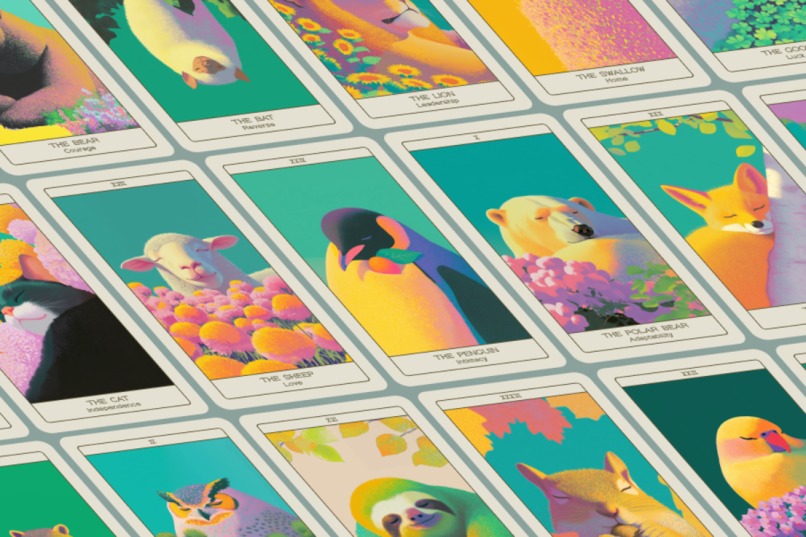
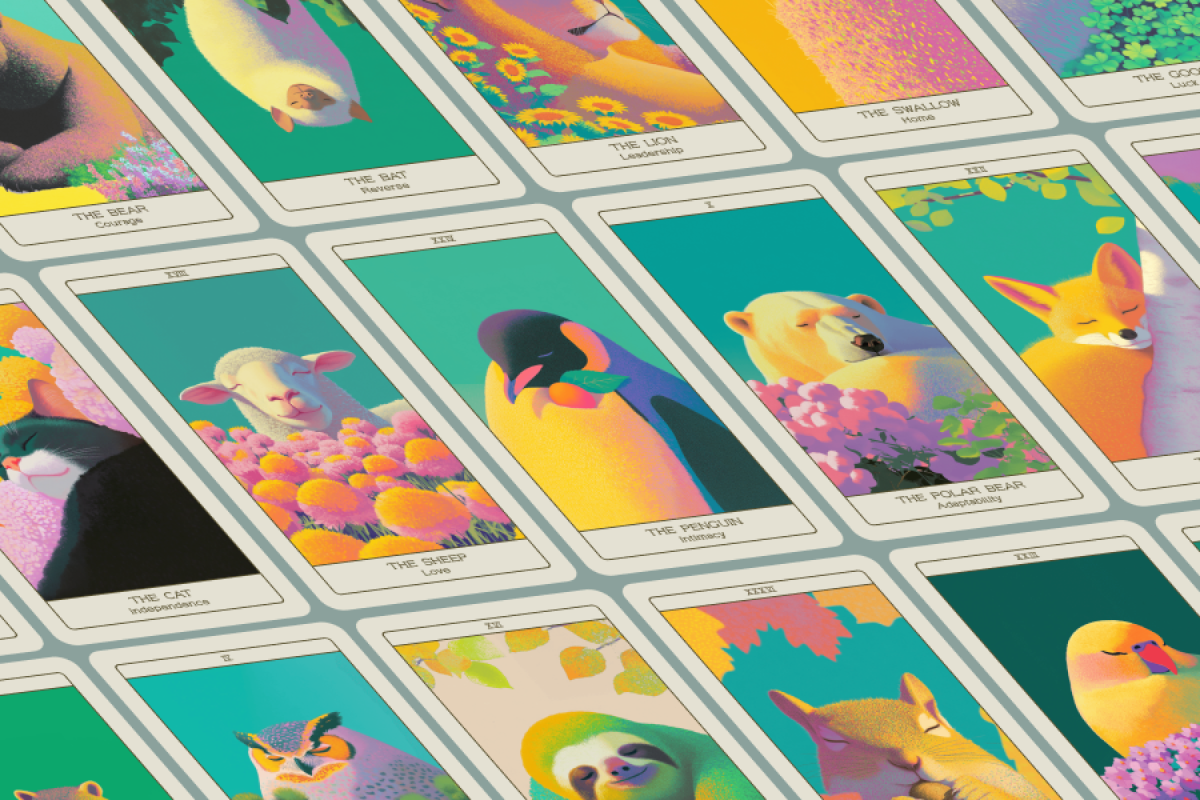
50 Cards
Inspiration
Sanctuary of the Heart | Animal Oracle Cards began with a simple question: if a card deck weren’t used to predict good or bad outcomes, but instead as a space where people could temporarily put down what they’re carrying and sort through their state of mind, what would that look like? I imagined that space as a quiet forest, inhabited by animals that each represent an inner strength—courage, patience, boundaries, transformation, awareness. Many people only draw cards when they feel lost or emotionally overwhelmed. I wanted this deck to help them slow down, see what they’re actually going through, and feel, “I’m not facing this alone.”
What it does
Sanctuary of the Heart is an emotional awareness system that combines physical cards, AR, and AI. It includes: a 50-card animal oracle deck, each card tied to a single keyword; a WebAR layer that lets users scan a card with their phone to see the corresponding animal and meaning; and a conversational AI guide that responds to the user’s question context with tailored interpretations and a short “Forest Diary” summary. Users can do a daily single-card draw, or use multi-card spreads to explore a specific issue. The system doesn’t decide answers for you; it helps you name emotions, notice patterns, and gradually build an inner sanctuary you can return to.
How we built it
The project was built across three layers. The first layer is the card system: we chose 50 animals and their corresponding keywords, wrote the card meanings, and used image generation tools to explore forest scenes and animal poses, then manually curated and standardized everything into a coherent visual language. The second layer is AR: using WebAR services and image recognition, we created an image target for each card, wired it to a TypeScript front end, and, upon recognition, load the matching animal visual and meaning UI. We also added a random “lucky object” so each draw gains an extra layer of symbolic meaning. The third layer is AI: we designed custom prompt structures and reading flows so the system can, based on different spreads and questions, generate clear interpretations and diary-style summaries under 200 words, delivered through a LINE Bot interface for everyday users.
Challenges we ran into
Most of the challenges were about integration, rather than any single technology. Visually, we had to balance between AI-generated images and a unified style, so that each card didn’t feel like it came from a different project. On the interaction side, we needed AR scanning to be stable and responsive without slowing the experience, while keeping the UI clean and readable. For AI, the challenge was maintaining a consistent tone that doesn’t overpower the user’s own voice, yet can still adjust depth based on the question. Finally, on the product logic level, we had to draw a clear line between “tool” and “fortune-telling,” so users wouldn’t treat this as just another deck for checking their luck and miss that it’s really designed for everyday emotions and inner rhythm.
Accomplishments that we're proud of
The system can now take users all the way from physical cards, through AR experience, to AI-guided interpretation, in one coherent flow. Users don’t need to understand the tech; they just pick a card, scan it, and a conversation with their inner animal begins. From early tests and the feedback on our trial pack, many people described the experience as “feeling seen” and “being better able to put my current state into words,” rather than only caring whether it was “accurate.” For us, getting AI, AR, and cards to converge into a calm, supportive experience—rather than a tech demo—is already a major accomplishment.
What we learned
This project made it very clear to us that AI and AR are ultimately just mediums; what really matters is how people use them to relate to themselves. AI works well as a collaborator for content and narrative, but the card structure, interpretive logic, and tone boundaries all need to be framed by humans first. AR is great at “bringing physical objects to life,” but avoiding distraction and keeping the experience smooth is an ongoing UX challenge. We also learned that clearly stating the system’s intention—that it’s about companionship and awareness, not deciding your fate—helps users feel safer and more willing to engage.
What's next for Sanctuary of the Heart | Animal Oracle Cards
From here, Sanctuary of the Heart will grow in two directions on top of the existing system. One is deepening the content: creating more visual and written pieces for different animals and keywords, so each card can be extended into its own small story or short film. The other is expanding the experience format: richer multi-card “journey” modes, longer-term Forest Diary overviews, and potentially physical exhibitions or interactive installations where people can literally “walk into the forest” as a space. The long-term goal is for it to become a sustainable inner toolkit, not just something people play with once during the novelty phase.
Built With
- 8thwall
- adobe
- ar
- gpt4.0
- hyper3d
- line
- midjourney
- replit


Log in or sign up for Devpost to join the conversation.