-
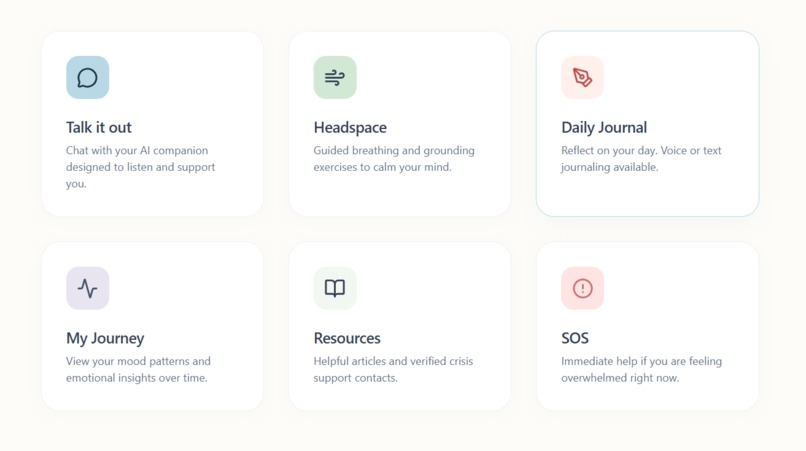
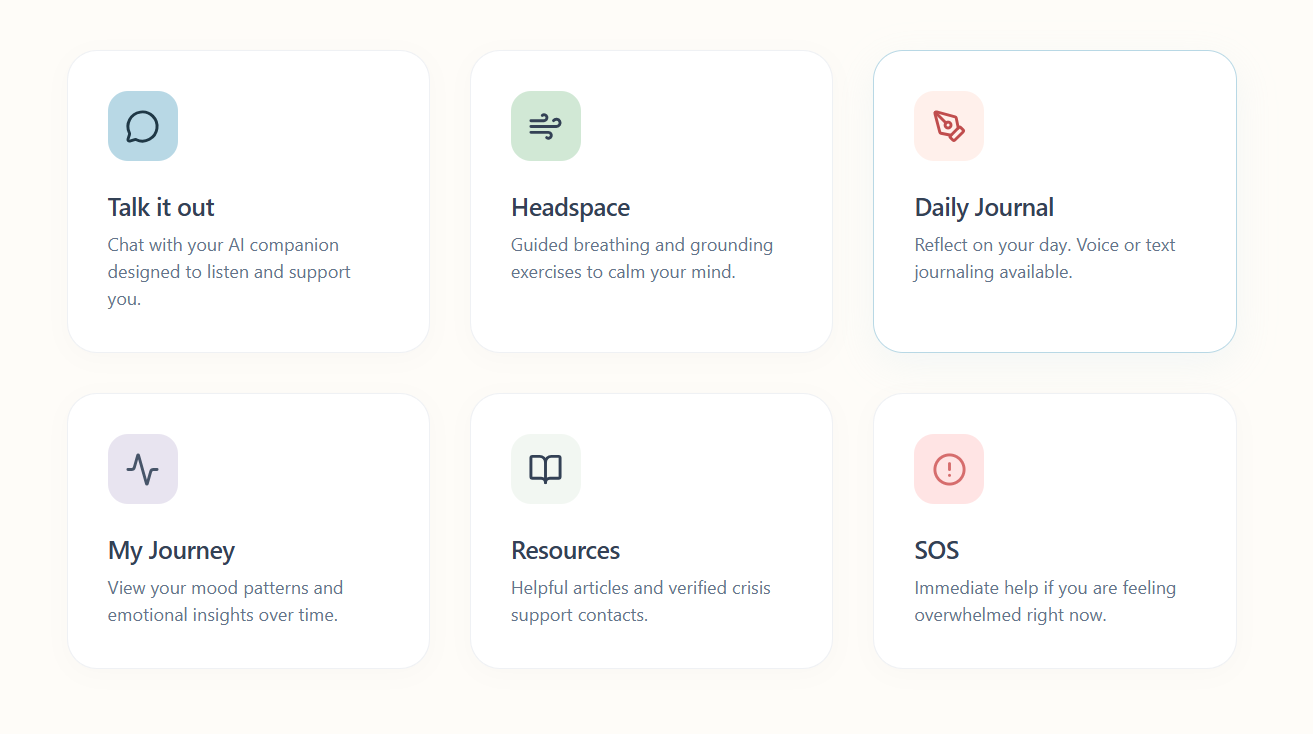
Core working features
-
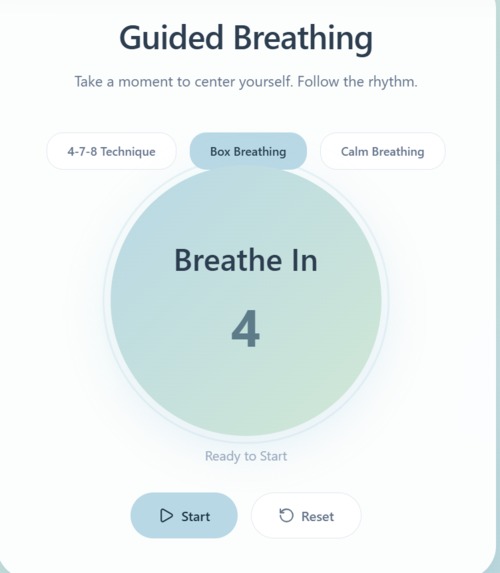
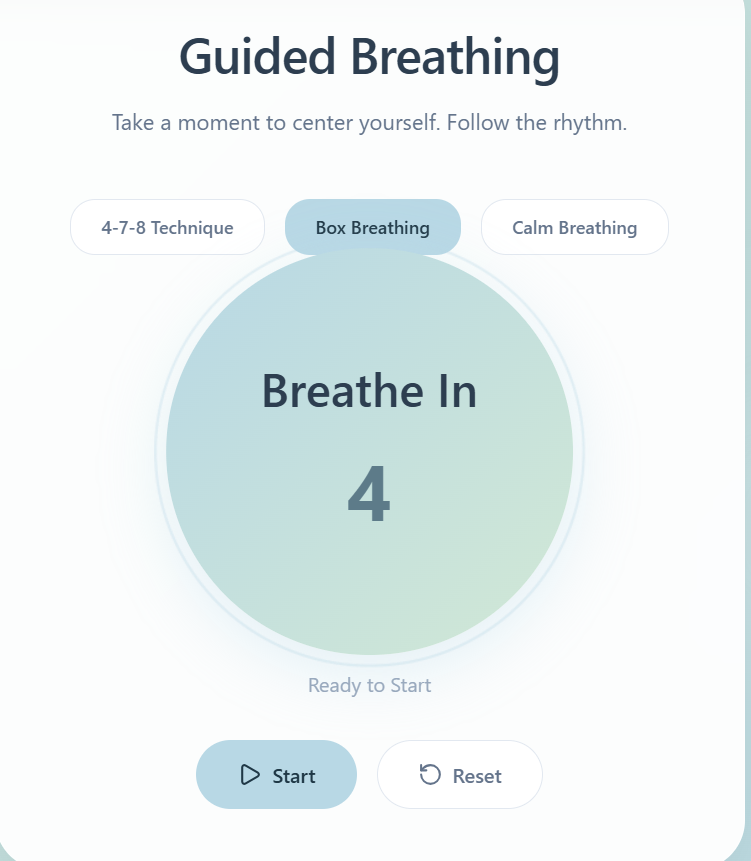
Guided Breathing for calming down user's anxiety
-
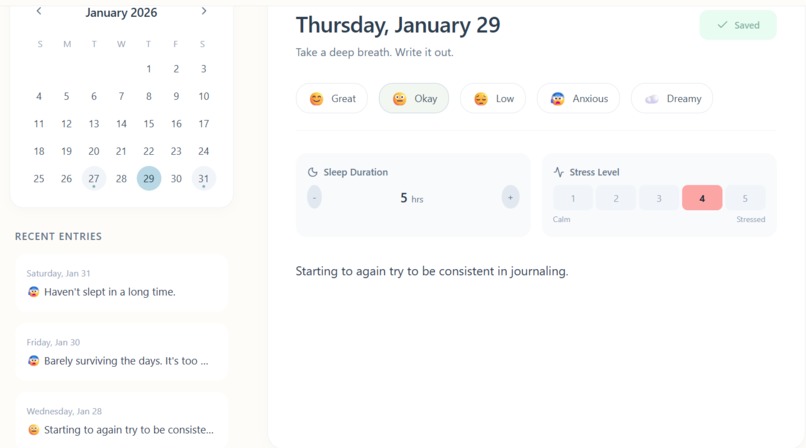
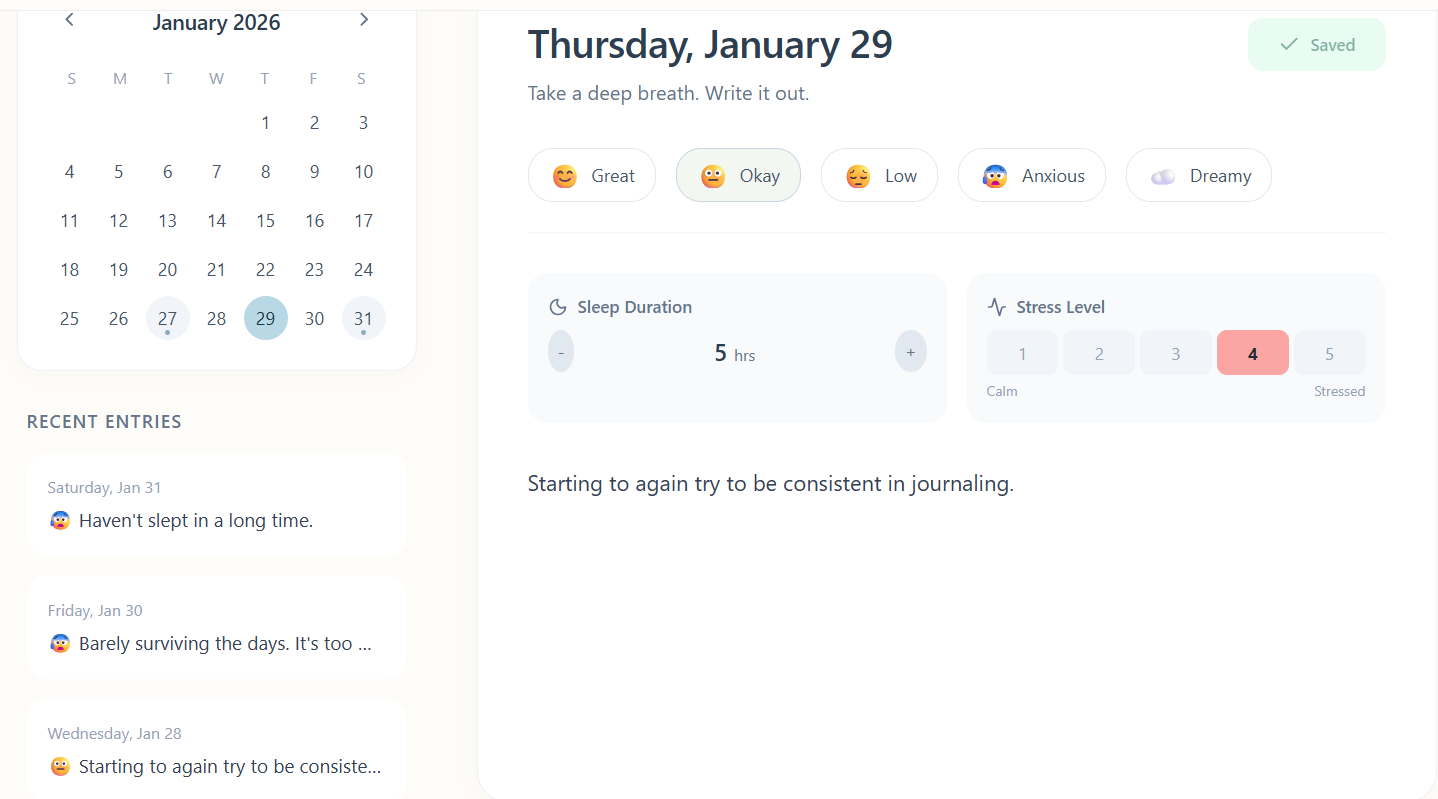
Daily Journaling Page
-
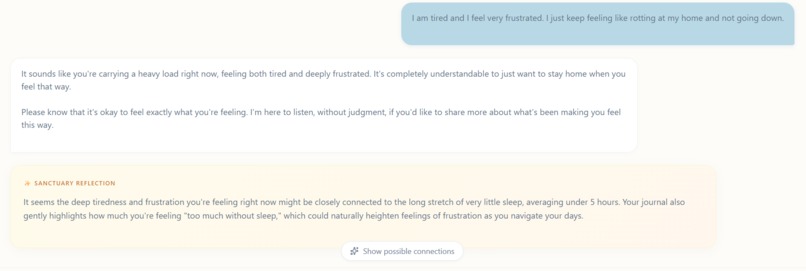
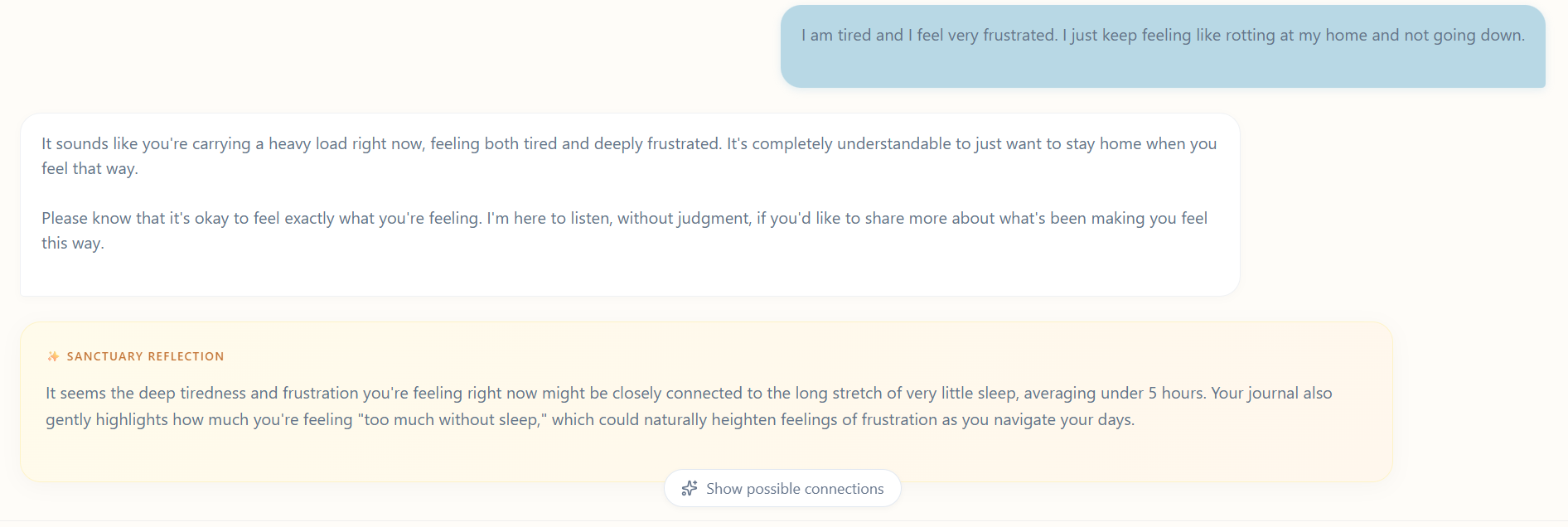
Chatbot with AI orchestrator that identifies user sleep patterns and journaling details, on it's basis suggests probable cause.
Inspiration
Mental health support is often inaccessible, overwhelming, or too clinical Many people want to talk but don’t know how to start Younger users naturally communicate through voice, slang, and short messages Desire to build something calm, private, and supportive in the moment Focus on reducing stigma and friction around seeking help
What it does
Provides empathetic mental health support through text and voice Uses Google Gemini for emotionally intelligent conversation Offers optional Gen-Z friendly tone to feel more relatable Supports journaling, sleep tracking, stress logging, and guided breathing Connects patterns across user inputs to offer gentle, user-requested reflections Shifts into a crisis-safe mode when high distress is detected Never diagnoses or replaces professional care
How we built it
Frontend-only application with all data stored in session storage Google Gemini used as the core reasoning and conversation engine Gemini 2.5 Flash Native Audio Dialog for speech-to-speech interaction Prompt-based orchestration to connect journaling, sleep, and stress context Safety-first system prompts to control tone and crisis behavior No backend or database to ensure privacy by default
Challenges we ran into
Balancing emotional warmth with safety and responsibility Designing meaningful insights without persistent memory or backend Handling modern slang naturally in voice responses Avoiding clinical language while still being helpful Managing API limits and performance under rapid iteration Ensuring crisis responses stayed calm and non-alarming
Accomplishments that we're proud of
Built a fully functional mental health support system within a hackathon Implemented voice-first AI using Gemini Native Audio Dialog Designed a privacy-first architecture with zero data persistence Created a crisis-aware UX that prioritizes grounding and human support Successfully integrated multiple wellness features into a cohesive experience Maintained ethical boundaries throughout the design
What we learned
How to use Google Gemini as a reasoning layer, not just a chatbot The importance of privacy-first design in sensitive applications How prompt design can control tone, safety, and voice behavior The impact of calm UI/UX on emotional comfort How small wording changes can significantly affect user trust
What's next for Sanctuary
Optional opt-in long-term memory with full user control Deeper pattern visualization for sleep, stress, and mood trends Localization and multilingual voice support Improved accessibility features Integration with verified external support resources Further safety testing and evaluation with real user feedback
Built With
- css
- framer-motion
- gemini-2.5-flash
- gemini-2.5-flash-native-audio-dialog
- google-generative-ai-sdk
- javascript
- react
- typescript
- web-speech-api

Log in or sign up for Devpost to join the conversation.