-
-
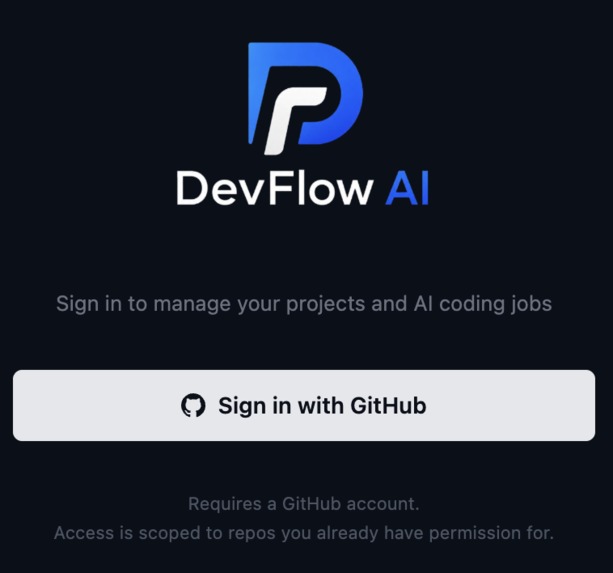
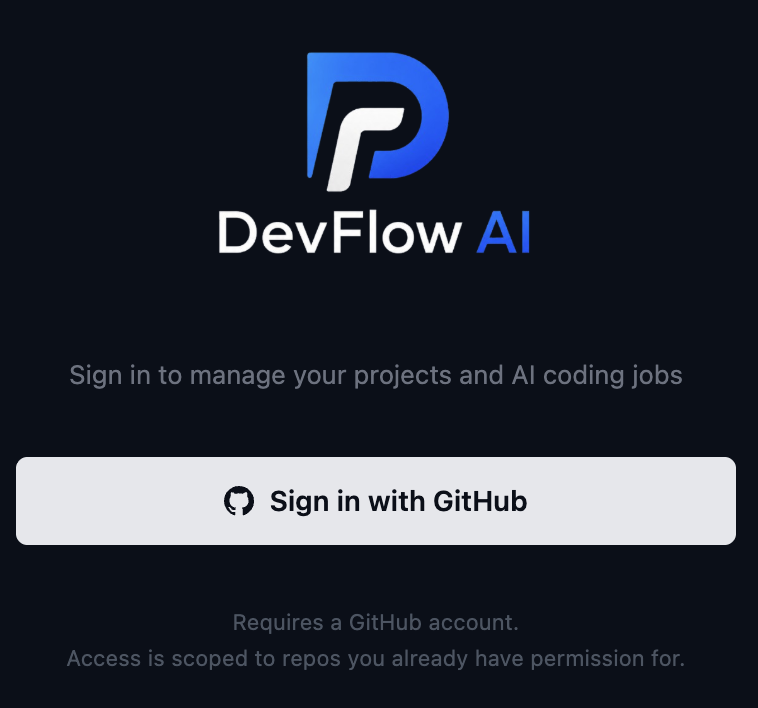
Login via github
-
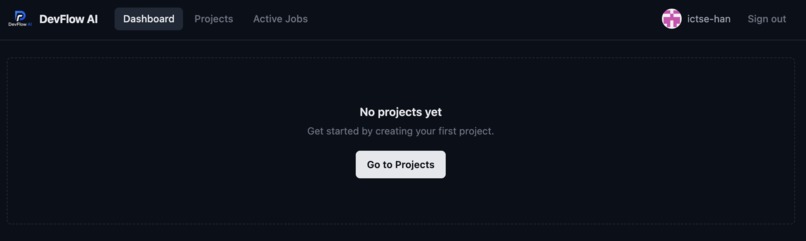
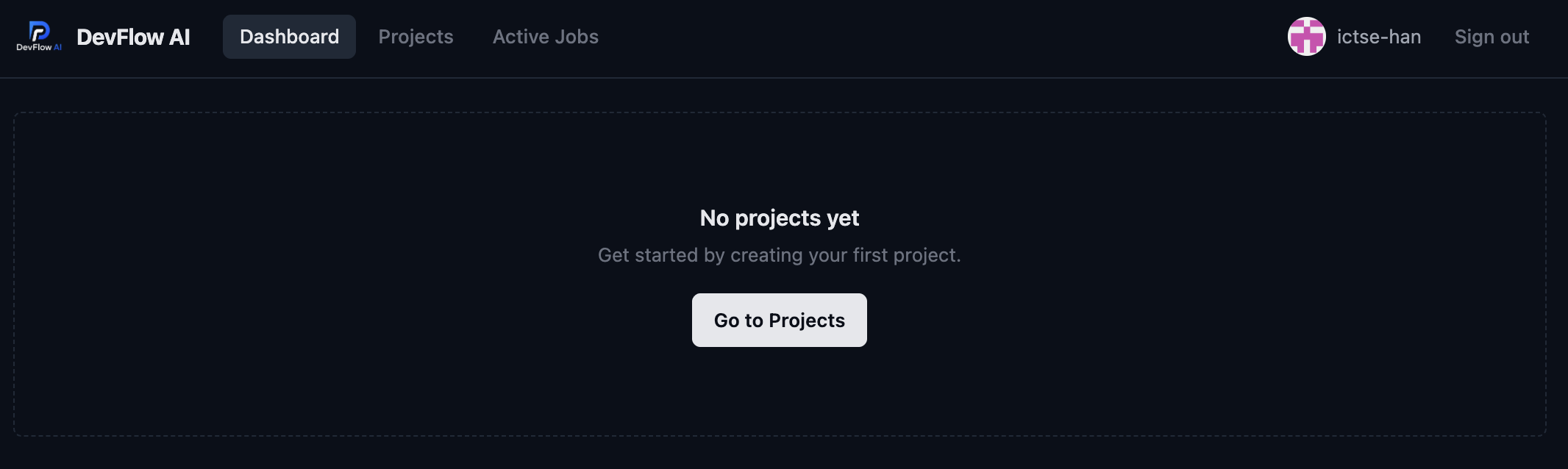
User Dashboard
-
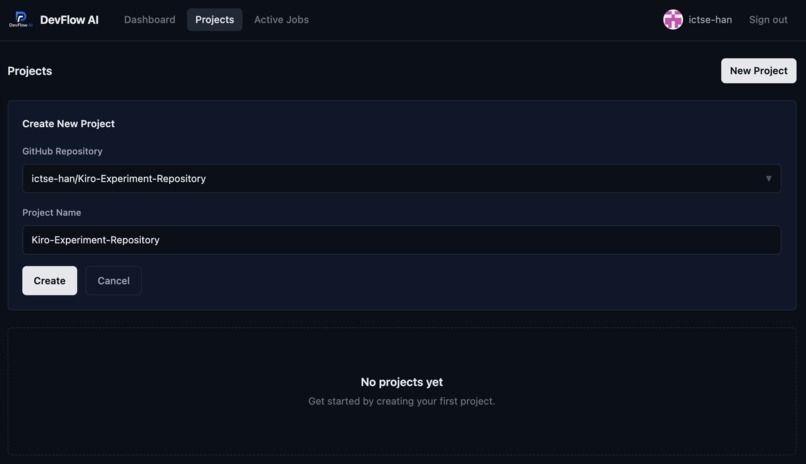
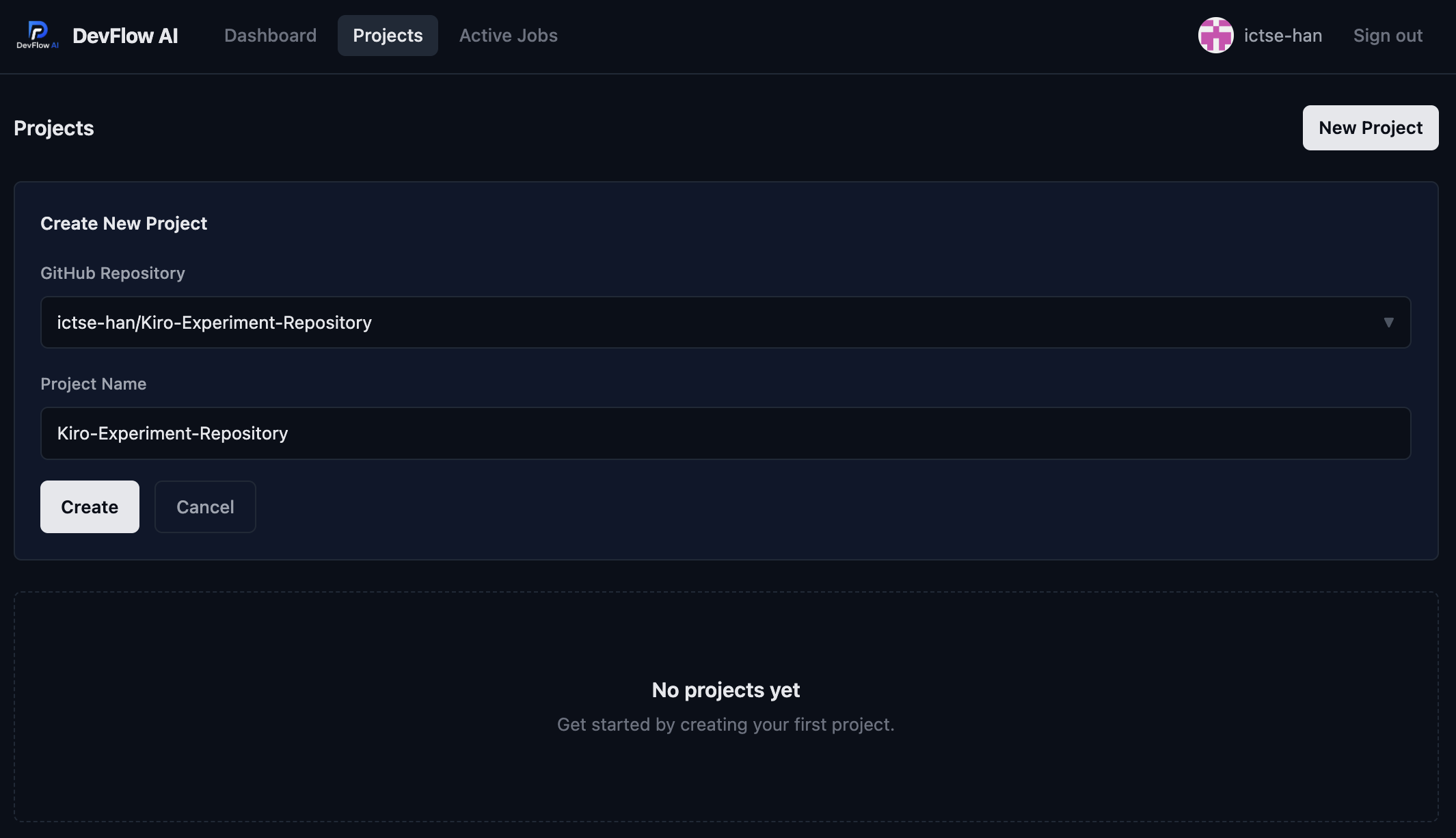
Creating a new project
-
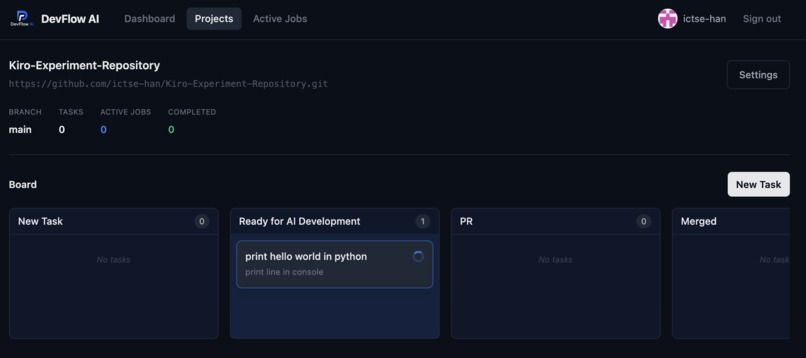
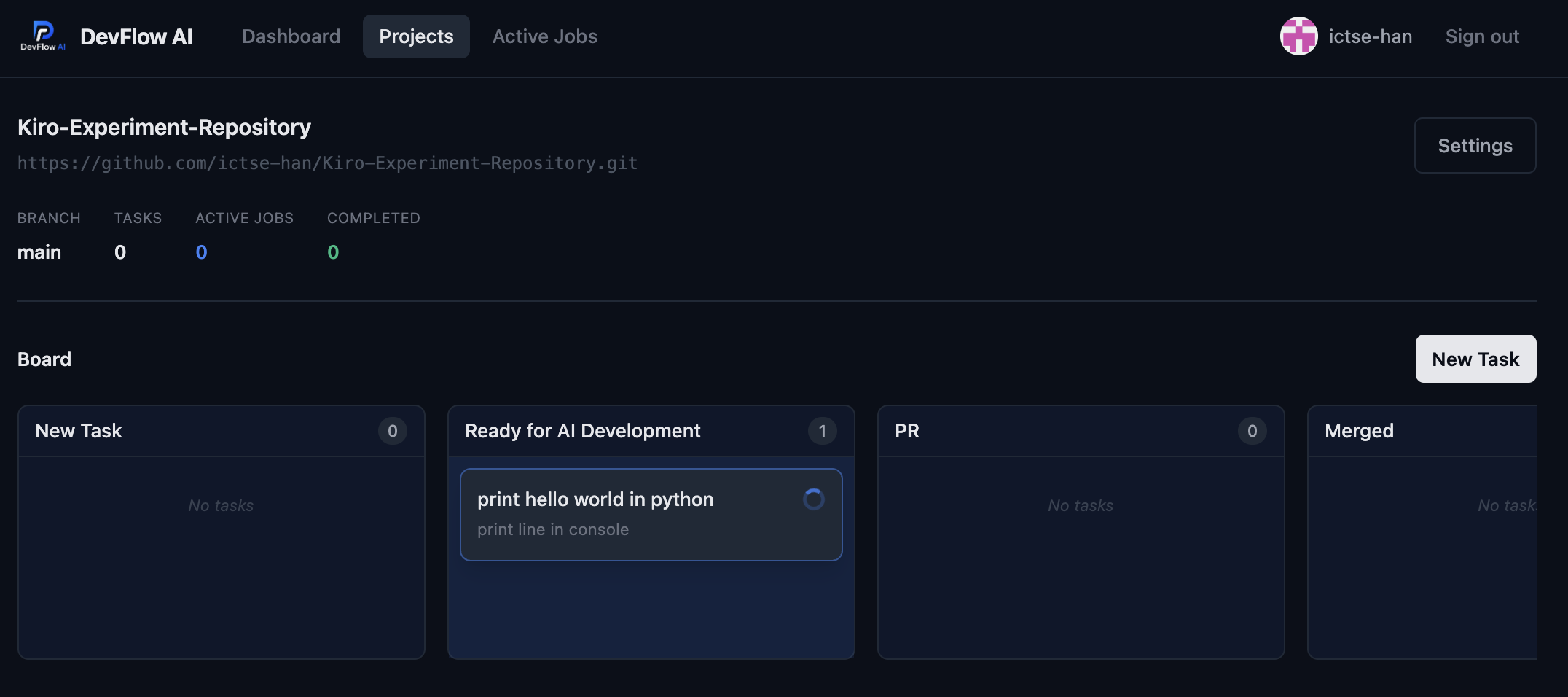
AI-Powered Kanban Board that automatically generates implementation prompts, creates feature branches, writes code, and opens pull requests.
-
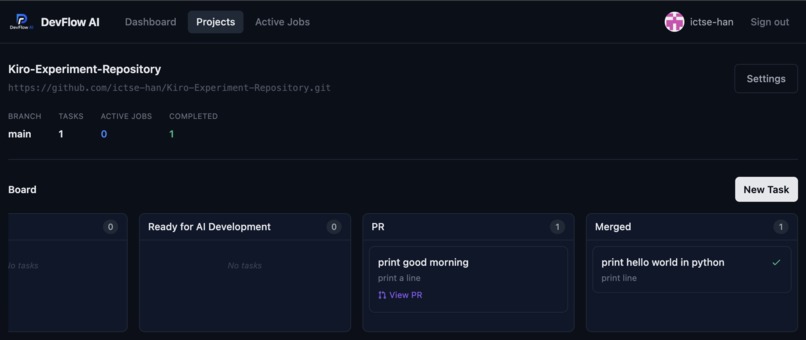
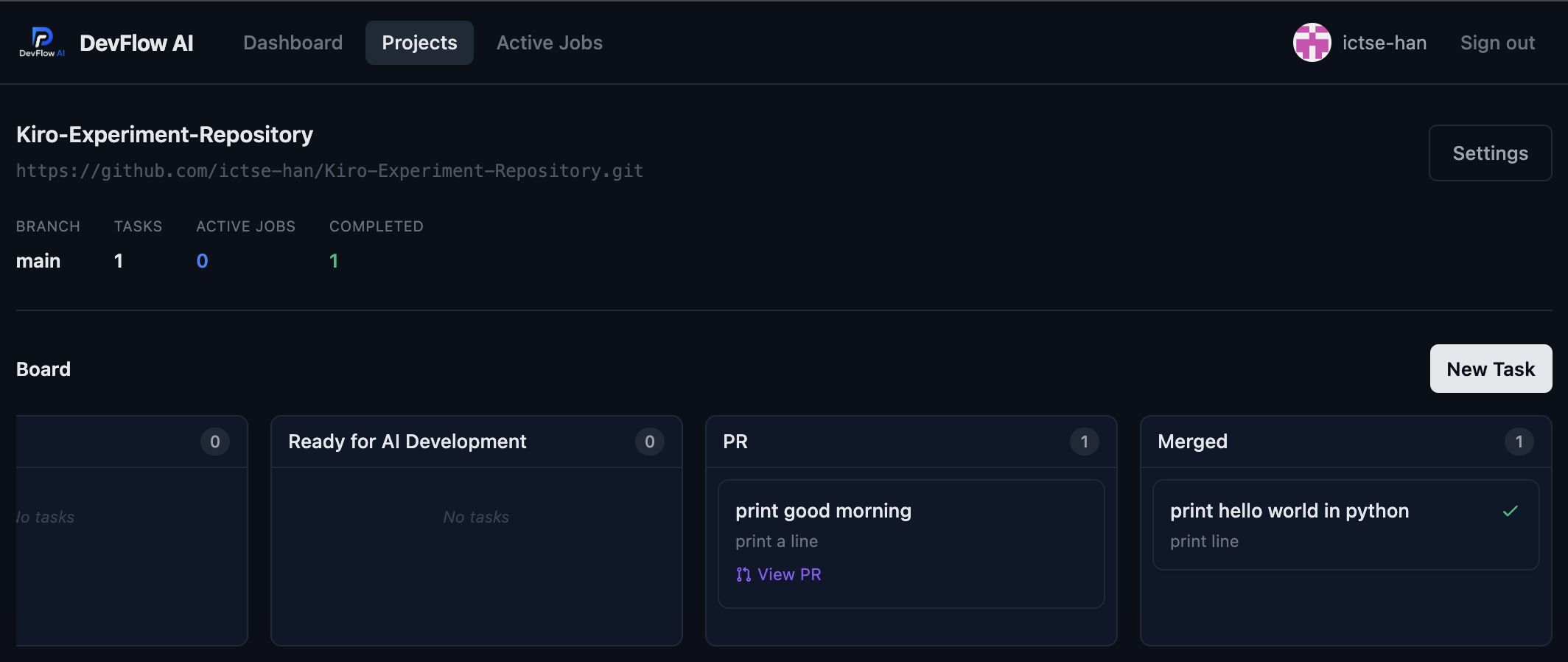
The AI agent generates code and automatically opens a GitHub pull request for developer review before any changes are merged.
-
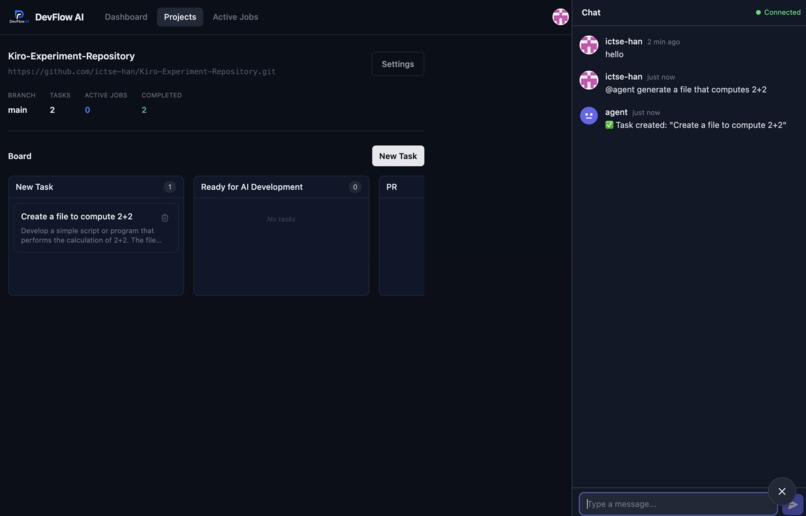
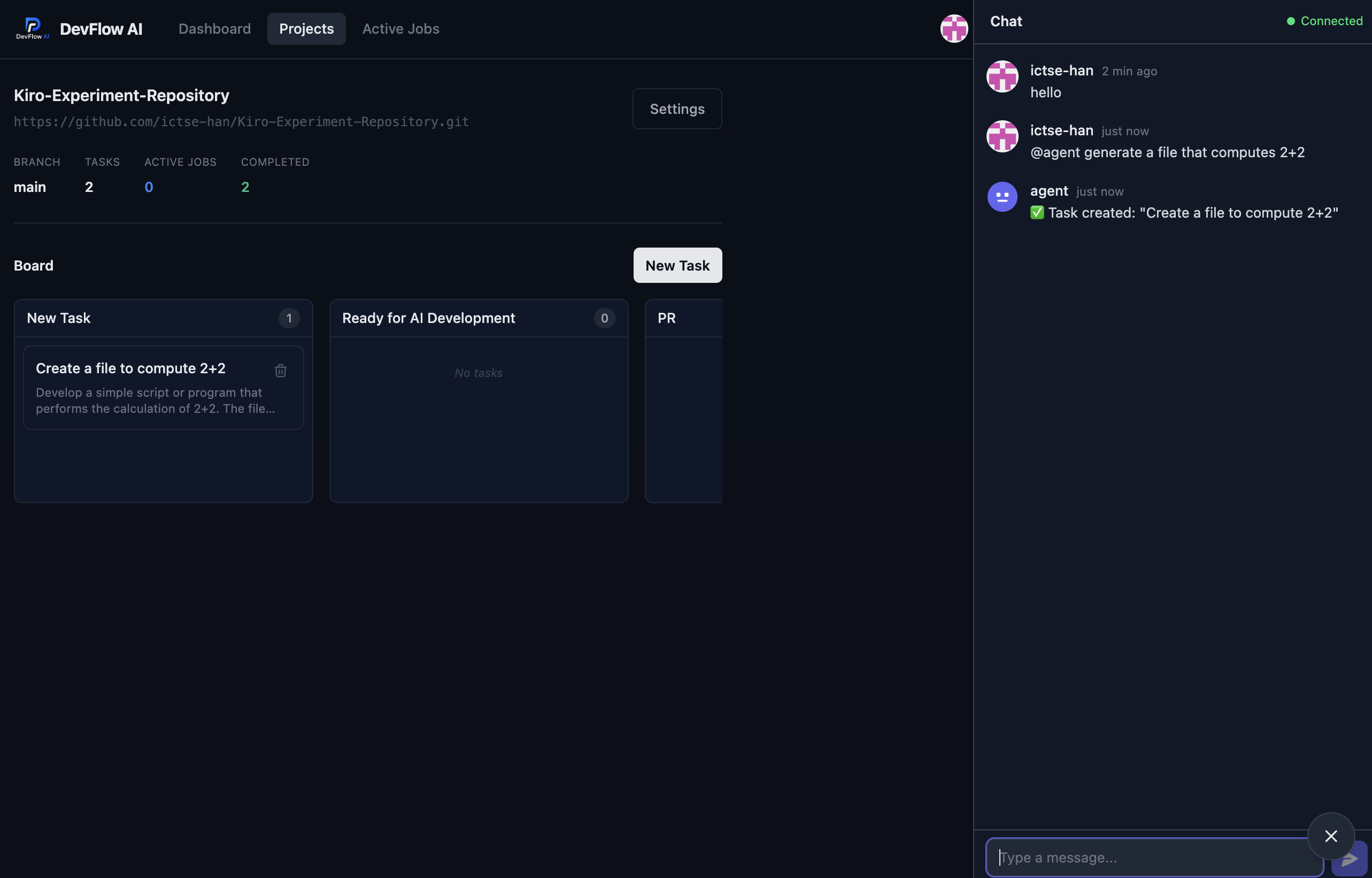
AI chat assistant that monitors project discussions and automatically creates development tasks from user requests
-
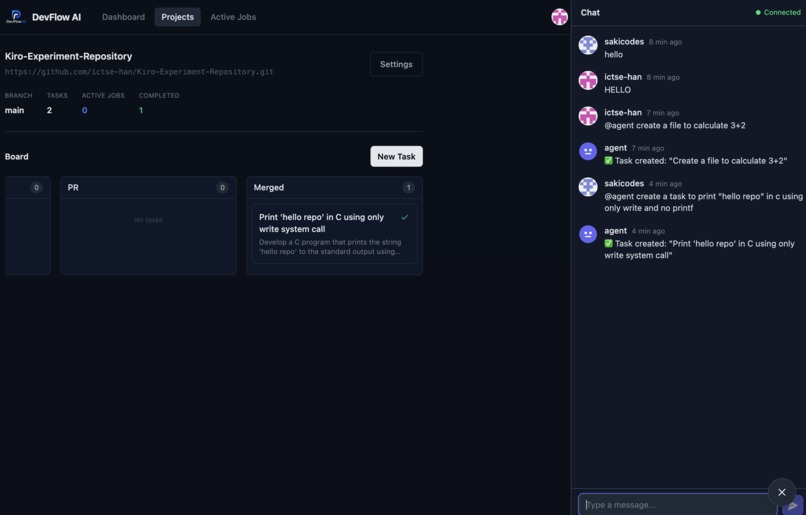
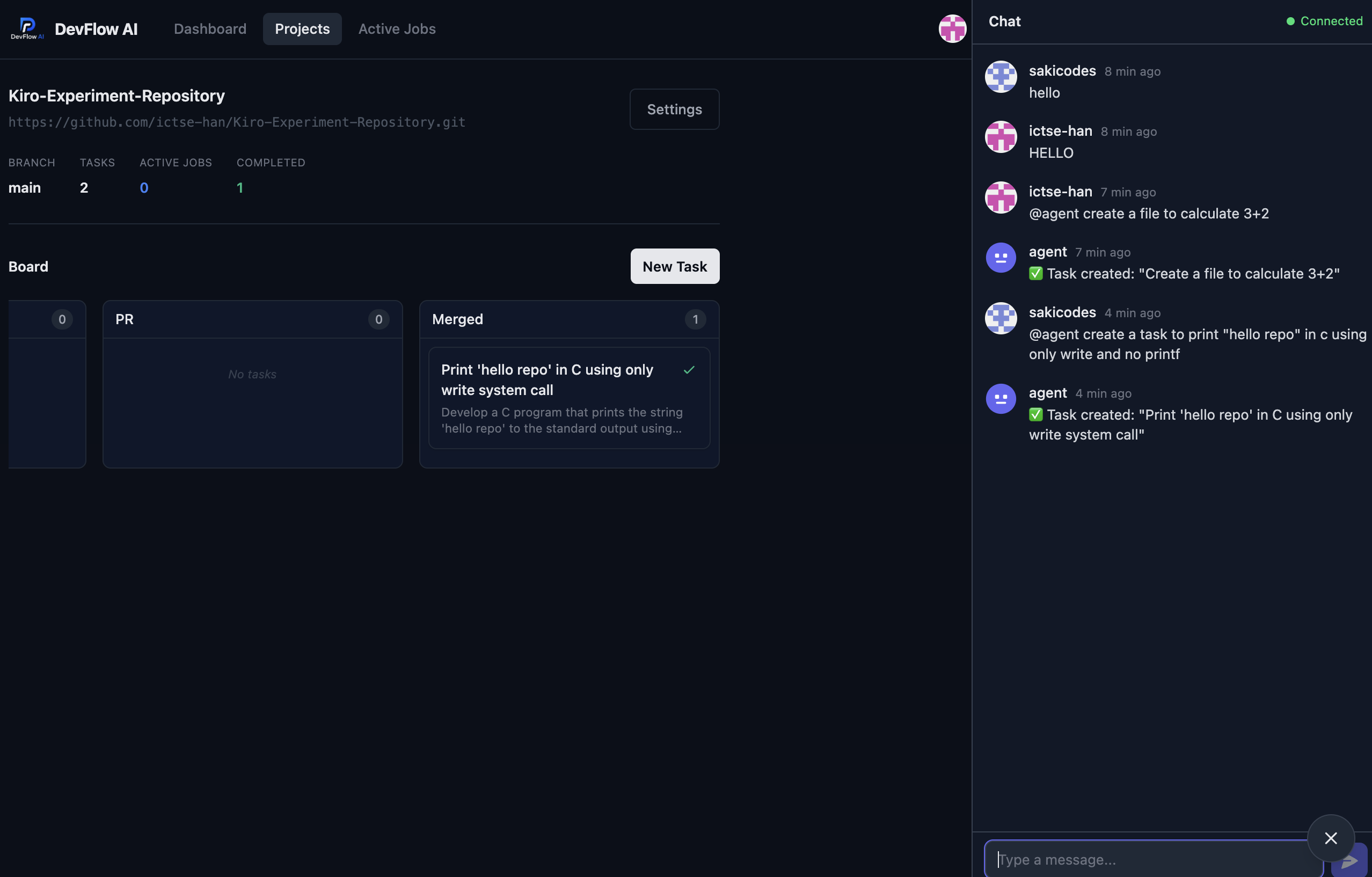
Real-time project chat that enables seamless collaboration between teammates and an AI development agent.
Inspiration
Singapore has one of the world's most connected public transport networks, and many developers spend 30 to 90 minutes each day commuting on the MRT or bus. While this time is ideal for checking project updates, responding to teammates, or reviewing progress, today's development tools still assume that meaningful work happens on a laptop.
We asked ourselves, what if the entire software development workflow could be completed from a mobile device?
This question inspired DevFlow AI, a mobile first collaborative development platform that enables developers to create tasks, generate code with AI, review pull requests, and manage projects directly from their phones. Instead of wasting commute time, developers can actively contribute to their projects wherever they are.
What it does
DevFlow AI combines project management, team collaboration, and AI assisted development into a single platform.
Developers can connect a GitHub repository, manage work using an AI powered Kanban board, and collaborate through a built in real time project chat.
Creating a task is simple. Users can either create one manually or mention @agent in the project chat. The AI agent, powered by AWS Bedrock, analyzes the conversation and automatically creates a structured development task.
When a task is moved into the Ready for AI Development column, the platform automatically generates the implementation using an AI coding agent, creates a feature branch, commits and pushes the generated code, opens a GitHub pull request, and updates the Kanban board as the task progresses.
Once the pull request is merged, GitHub webhooks automatically synchronize the board by moving the task into the Merged column, keeping the project status accurate without requiring manual updates.
The platform was designed with a mobile first philosophy. Every feature, including the Kanban board, project chat, and task management interface, is fully responsive, allowing developers to manage software projects comfortably from their phones.
How we built it
The frontend was built using React, TypeScript, Vite, and Tailwind CSS, with native drag and drop functionality for the Kanban board. Real time collaboration is powered by WebSockets, enabling instant messaging and live task updates.
Our backend uses FastAPI, SQLAlchemy, and PostgreSQL to manage authentication, projects, tasks, and GitHub integration. GitHub OAuth securely connects repositories, while GitHub webhooks automatically synchronize merged pull requests back into DevFlow AI.
The AI coding pipeline runs as a dedicated worker service. When a task enters the development stage, the worker clones the repository into an isolated environment before invoking our custom AI coding agent through AWS Bedrock. The agent analyzes the repository, generates code, executes the project's test suite, commits the changes, pushes a feature branch, and creates a GitHub pull request.
The entire application is containerized using Docker Compose and deployed on Amazon EC2.
Challenges we ran into
One of our biggest challenges was integrating AI powered code generation.
Our initial implementation relied on Codex CLI, expecting it to communicate with Claude through AWS Bedrock. After extensive debugging, we discovered this was an architectural limitation rather than an implementation bug. Codex CLI only supports OpenAI compatible protocols, while Claude on Bedrock is exposed through Anthropic's Messages API.
Rather than abandoning the feature, we rebuilt the entire coding pipeline and implemented our own Bedrock native AI coding agent from scratch.
We also encountered AWS account quota restrictions that initially prevented access to Bedrock models. While resolving the issue through AWS Service Quotas and support requests, we continued developing and testing the remaining platform components.
Finally, collaborating under hackathon time constraints highlighted the importance of version control discipline. An accidental repository revert temporarily rolled back another teammate's work, requiring careful conflict resolution before development could continue.
Accomplishments that we're proud of
We are most proud of successfully building a fully functional Bedrock native AI coding agent after our original approach proved technically impossible.
Beyond the AI agent itself, we delivered a complete end to end development workflow. A task can be created, transformed into AI generated code, submitted as a GitHub pull request, and automatically synchronized back into the Kanban board after it has been merged.
We are also proud of designing DevFlow AI as a truly mobile first platform, making software collaboration practical even while commuting.
What we learned
This project taught us that using the same AI model through different platforms does not guarantee identical capabilities. Understanding API architectures and integration paths early can save significant development time.
We also gained valuable experience building reliable AI workflows, integrating GitHub automation, and collaborating effectively under tight hackathon deadlines.
What's next for DevFlow AI
Our next goal is to eliminate the remaining dependency on GitHub for pull request reviews. We plan to integrate an in app code review interface that allows developers to inspect AI generated changes, make small edits, approve them, and merge pull requests without leaving DevFlow AI.
We also want to make task creation even more intelligent. Instead of requiring users to explicitly mention @agent, the AI will continuously monitor project discussions and proactively suggest creating development tasks whenever it detects new feature requests or bug reports.
Our long term vision is for DevFlow AI to become an AI powered teammate that understands project conversations, automates repetitive development tasks, and enables developers to contribute from anywhere, especially from the device they always have with them, their phone.
How We Used Kiro
Kiro was our primary development environment throughout the project. We leveraged its spec-driven development workflow to plan, build, and validate every major feature, allowing us to move quickly while maintaining a structured development process.
Using Kiro's Requirements → Design → Tasks workflow, we created specifications for key features including the AI coding pipeline, project chat, GitHub integration, task automation, and the responsive user interface. These specifications helped us clearly define requirements, generate implementation plans, and organize development into manageable tasks.
Kiro also accelerated implementation by generating boilerplate code, API endpoints, frontend components, database models, and automated tests. Throughout development, it assisted with debugging, refactoring, and iterating on our AWS Bedrock integration, enabling us to focus on solving higher-level architectural challenges.
One of Kiro's most valuable features was its ability to maintain context across the entire codebase. This ensured generated code remained consistent with our existing architecture while reducing repetitive development work.
By combining Kiro's AI-assisted development workflow with our own engineering decisions and testing, we successfully built a full-stack platform featuring GitHub OAuth, real-time WebSocket collaboration, AI-powered task automation, AWS Bedrock integration, and an end-to-end GitHub development pipeline within the hackathon timeframe.
Built With
- amazon-bedrock
- aws-ec2
- boto3
- claude-(anthropic)
- docker
- docker-compose
- fastapi
- github-oauth
- github-rest-api
- github-webhooks
- postgresql
- python
- react
- sqlalchemy
- tailwind-css
- typescript
- vite
- websockets


Log in or sign up for Devpost to join the conversation.