-
-
-
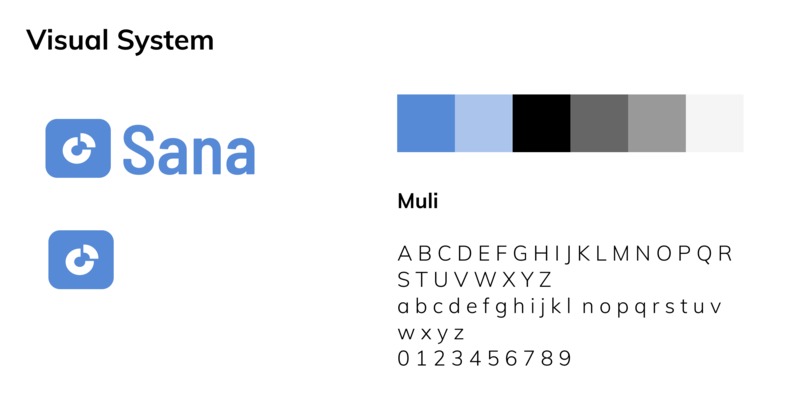
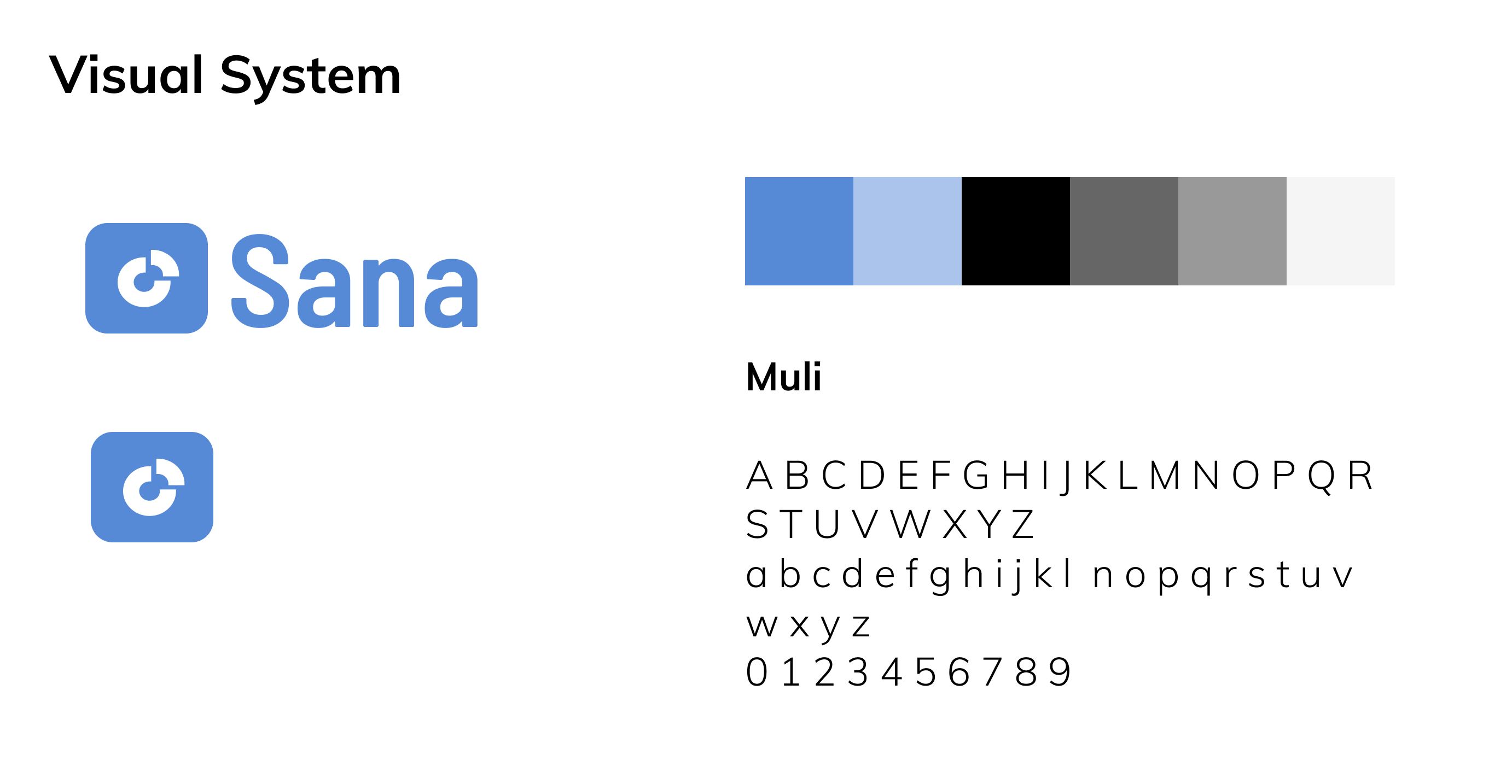
Visual system for the application
-
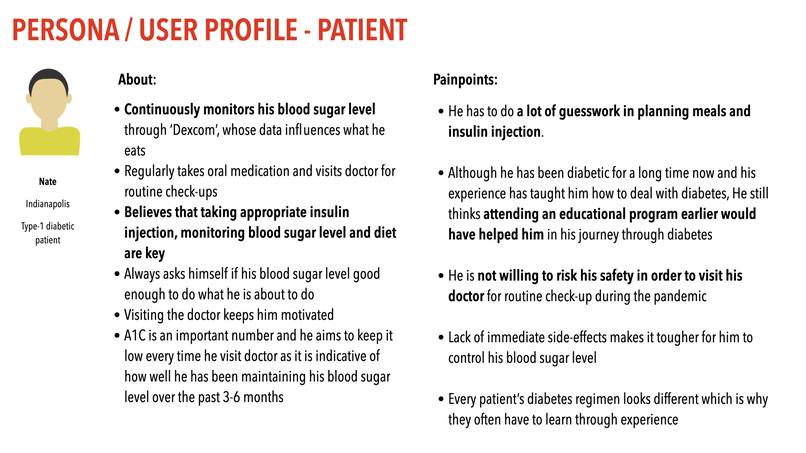
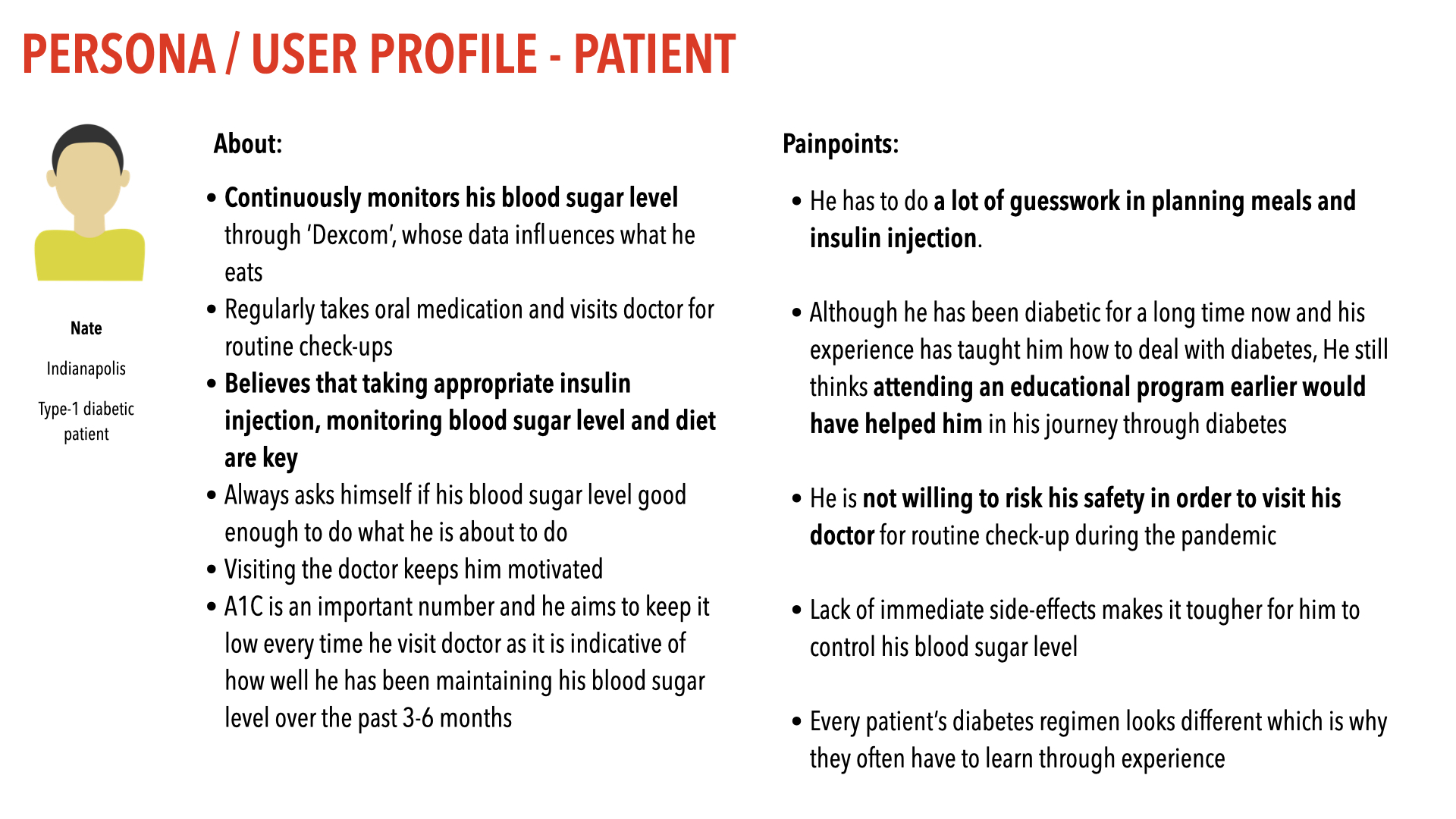
Patient persona
-
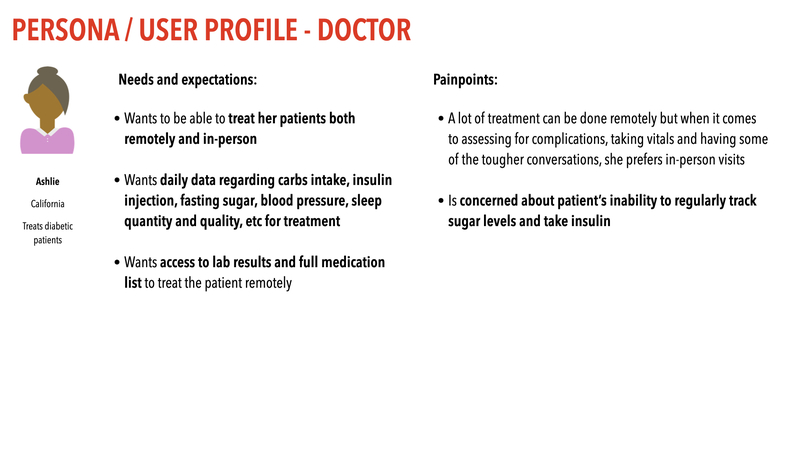
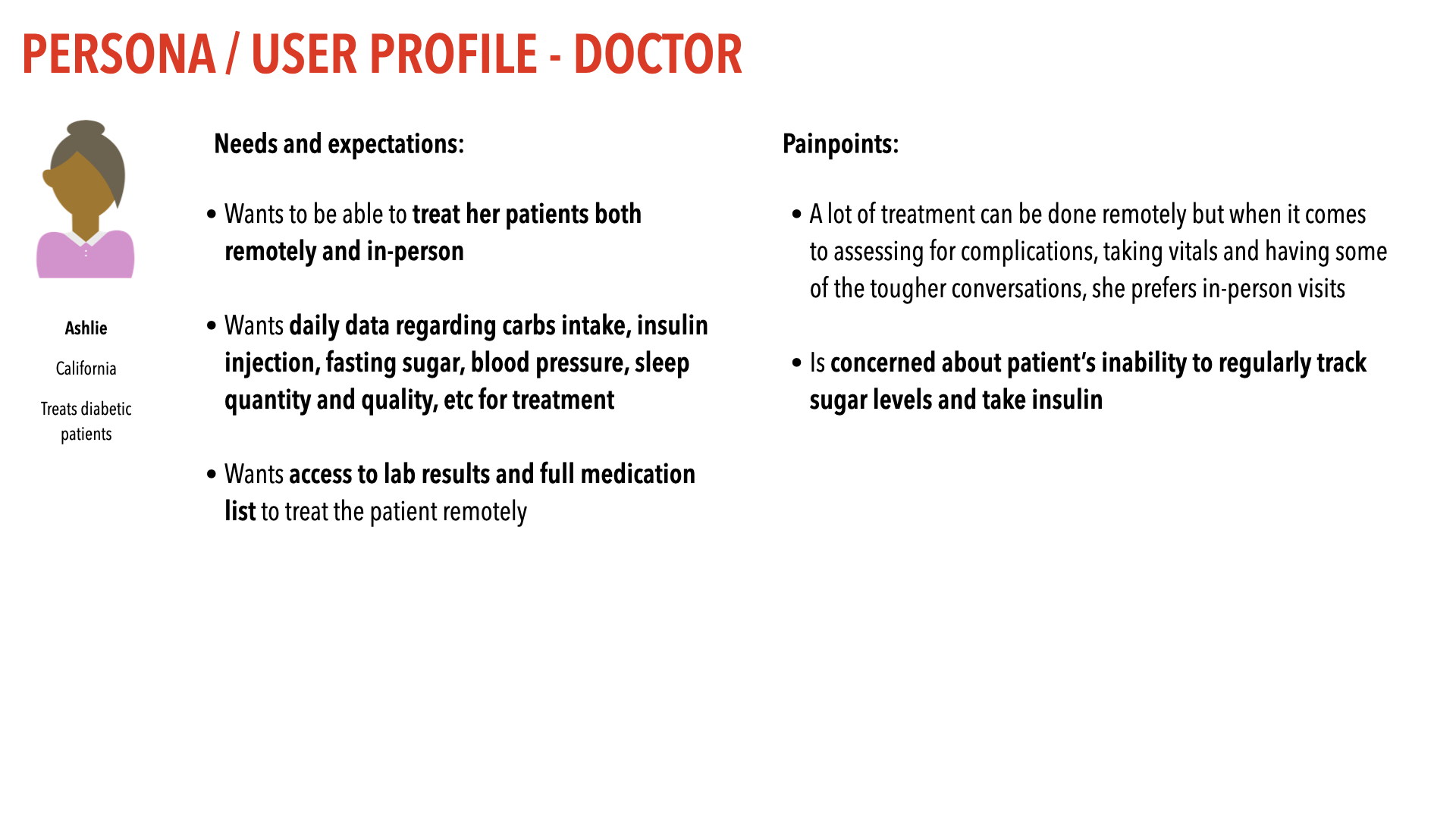
Doctor persona
-
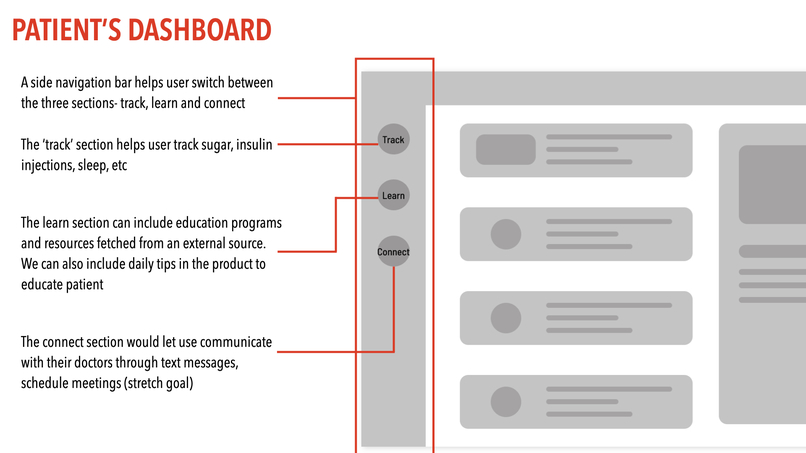
Patient Dashboard Lo-Fi
-
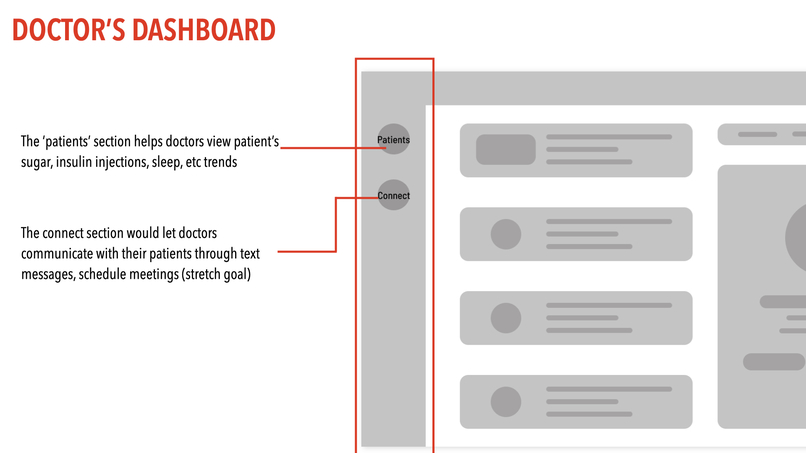
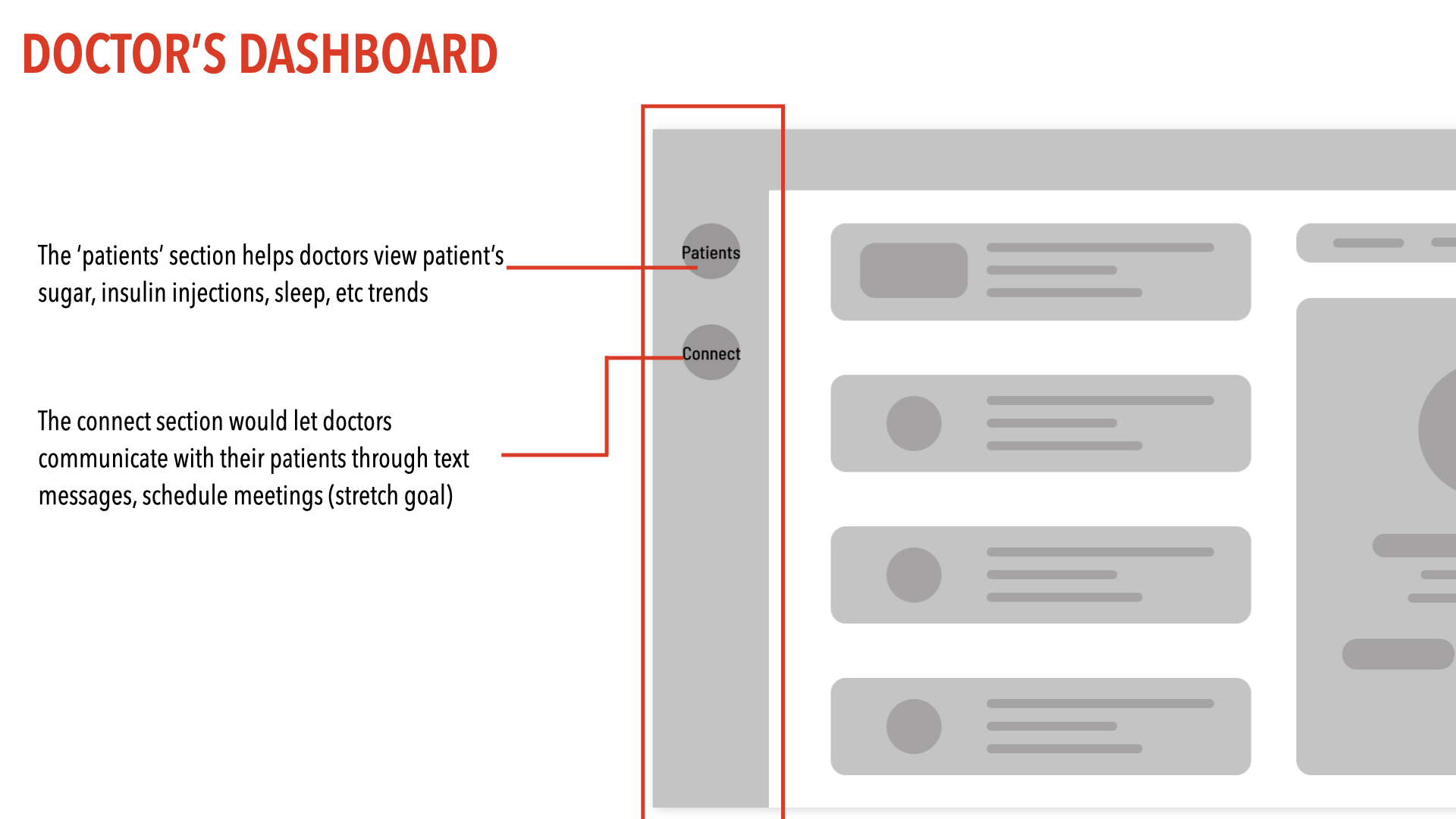
Doctor Dashboard Lo-Fi
-
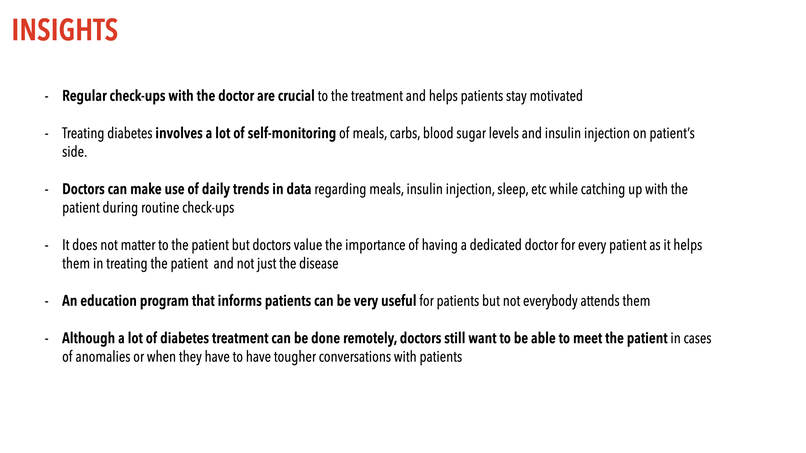
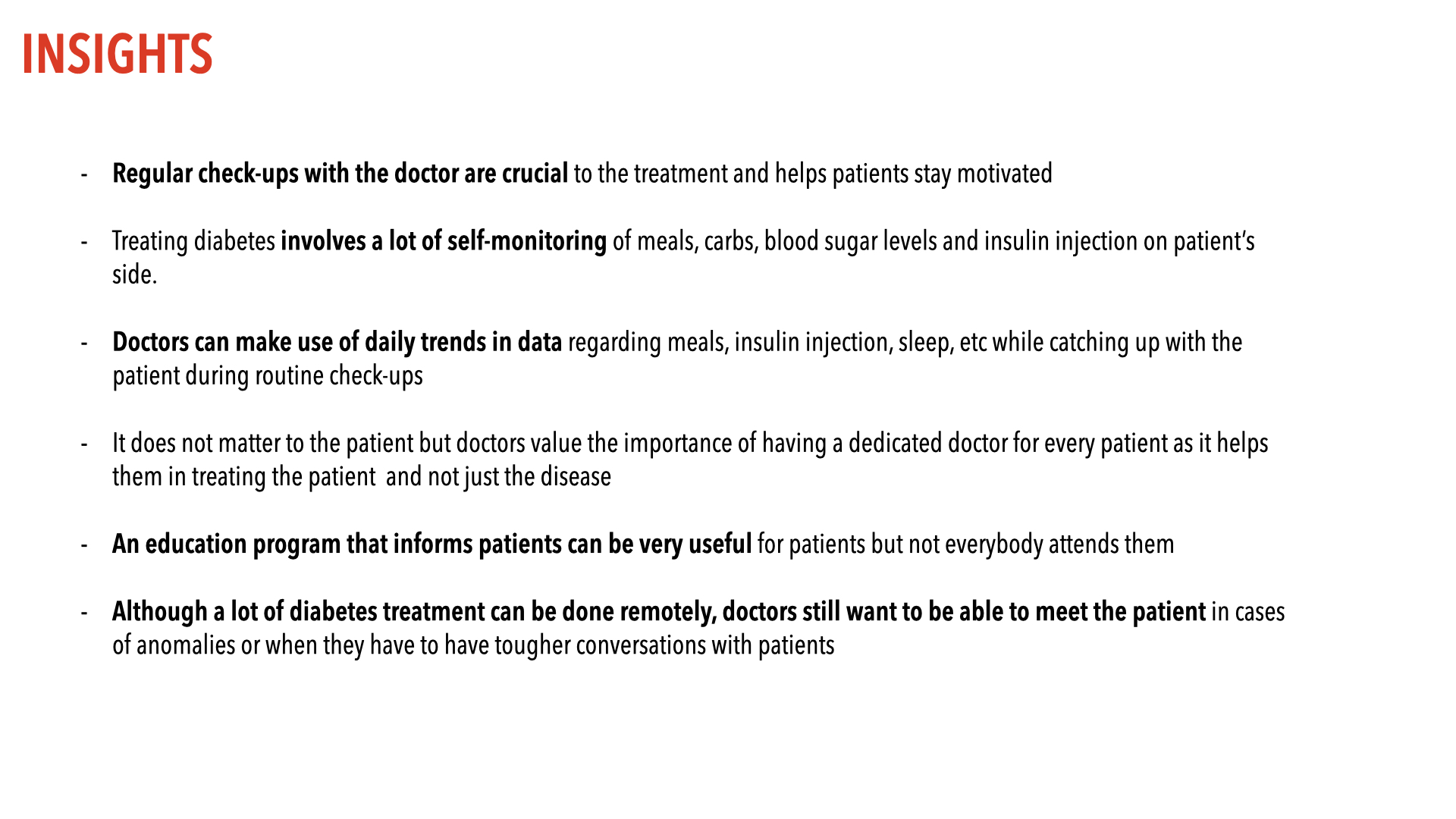
Insights obtained from interviews
-
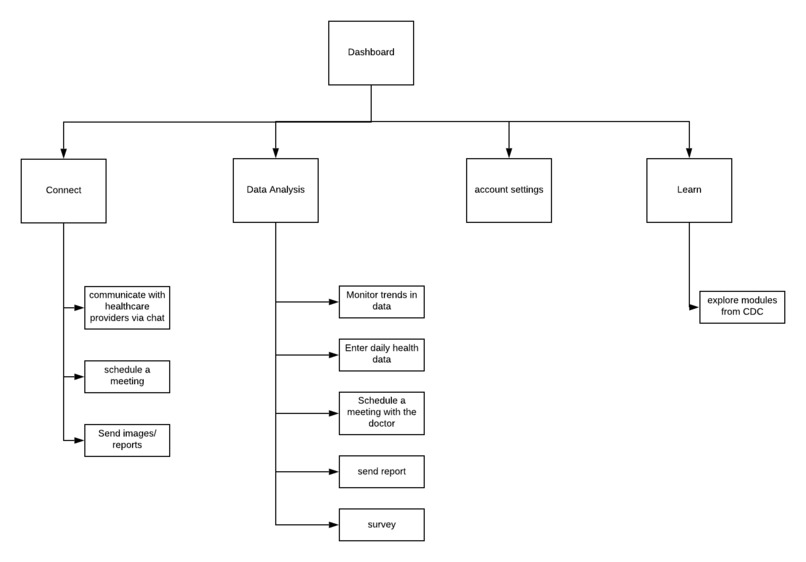
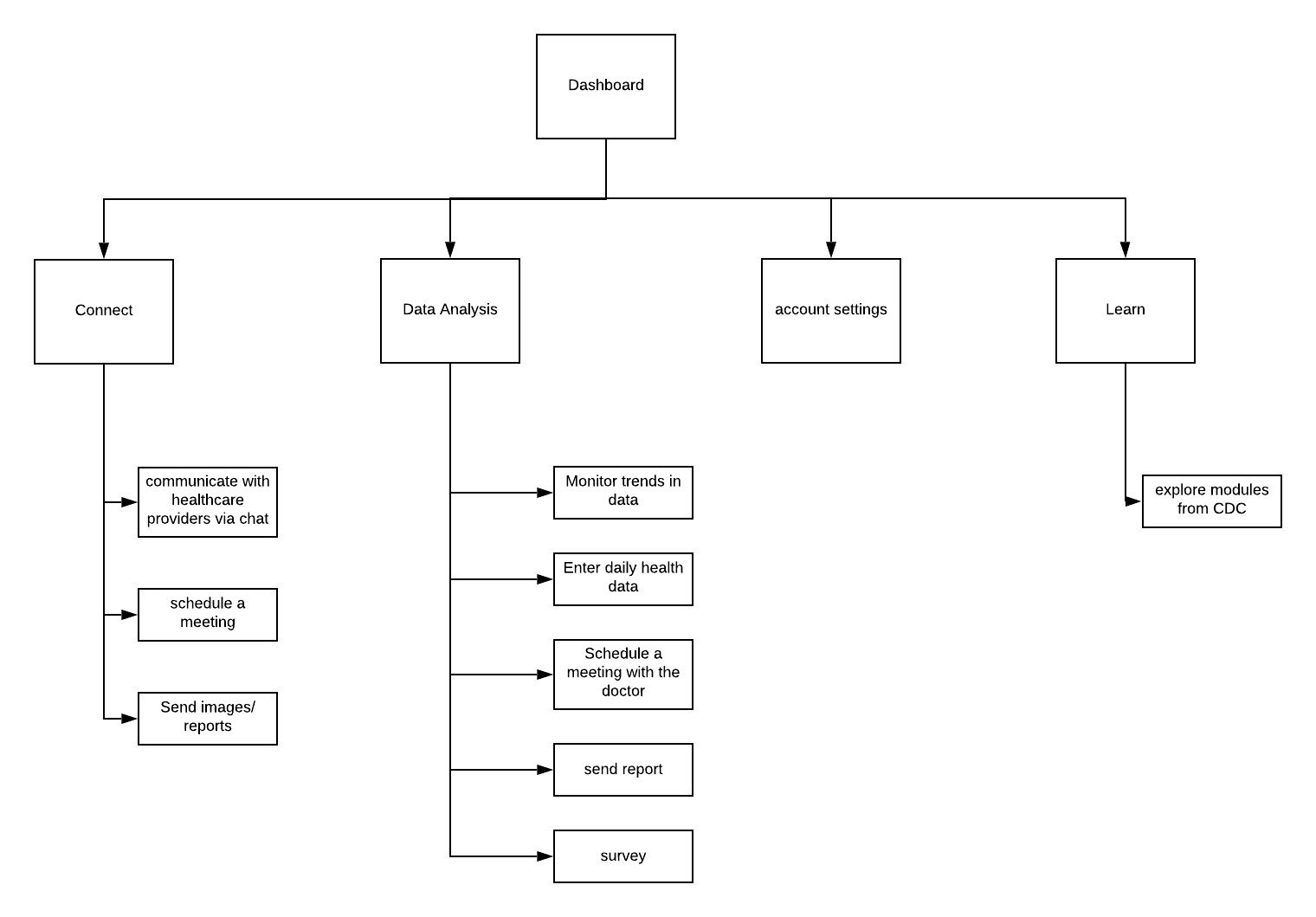
Information Architecture - Patient
-
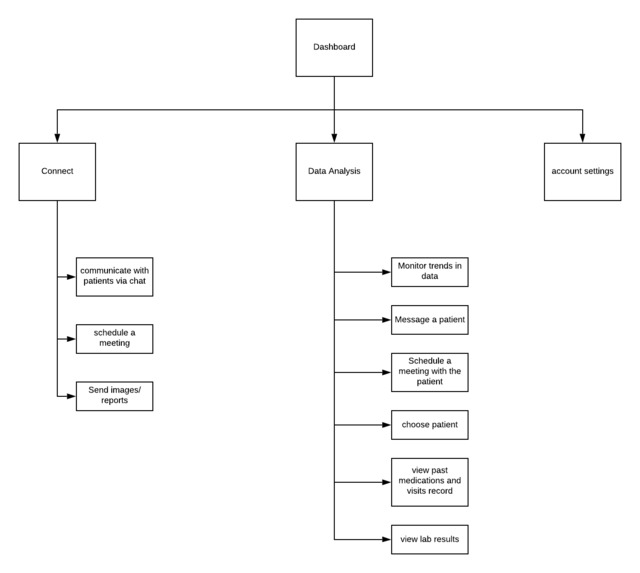
Information Architecture - Doctor


Overview
The novel coronavirus has presented itself as a serious health hazard and a financial burden for many people across the United States. One such group of people have been individuals diagnosed with type 1 and 2 diabetes, who are now encountering difficulties in communicating with medical professionals for consultations and prescriptions. With CDC identifying diabetics as a at risk group for COVID-19, it is vital to empower such patients with the necessary tools to facilitate a safe environment for them to share their health status with a doctor. Our team decided to address this problem with “Sana” - a web platform that facilitates communication and monitoring between the doctor and the patients.
Sana is an online platform where medical professionals and patients with diabetes are able to facilitate safe communication during the ongoing pandemic. The patient is able to input their information into a form that addresses diabetes-specific concerns. The said information is then relayed to a medical professional who monitors their current status and the disease progress. Sana serves as a tool through which medical professionals are able to observe the status of their patients and to provide recommendations without the risk of in-person appointments.
Seeing especially prominent in Indiana, our team believes that this product would benefit greatly for many people currently suffering in our community. Sana is targeted to be a product that is sold directly to hospitals with diabetes treatment initiatives. For more information, please read the information provided below.
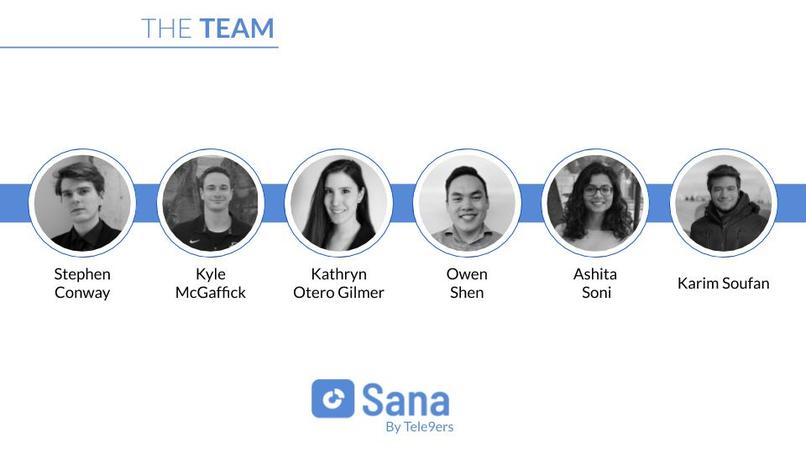
Team Members
Ashita Soni (UI/UX Designer, Second year Masters in Human Computer Interaction Design, Indiana University Bloomington) Ashita conducted user research by interviewing doctors and diabetic patients. She created personas based on the research, logo, wireframes, mock-ups and the final clickable prototype for the product. She worked closely with Stephen and Kathryn to streamline communication and progress between Pro Squad and Go Squad. She worked with Owen to finalise the primary workflow for the product.
Karim Soufan (Pro Squad Member, Computer Science major @ University of Evansville) Karim was responsible for setting up the hosting for the web application on Firebase, assisted with the database, and created cloud functions for the purposes of our application.
Kathryn Gilmer (Go Squad Member, Rising Senior in Economic Consulting @ Indiana University, Bloomington) Kathryn conducted market research to create the Consumer Persona and the Business Model Canvas. She also aided in creating the pitch deck, adding visually appealing components. Kathryn worked closely with Ashita and Stephen to inform the Pro Squad of the Go Squad progress.
Kyle (Go Squad Team Member, Junior in Pre-Med @ Purdue University) Kyle assisted Kathryn and Stephen in researching medical problems and solutions. He also assisted in the creation of patient profiles and general business models for Go Squad teammates.
Owen Shen (Software Developer, Junior in Computer Science @ Purdue University) Owen was responsible for developing the front-end of the web app for Sana. He created the signup/login pages and the primary workflow for the patient on the web app. Owen also worked together with Ashita to procure the product demo and the primary workflows of Sana.
Stephen Conway (Product Manager, Junior in Informatics and Management @ Indiana University, Bloomington) Stephen was responsible for conducting appropriate research for the KPIs used to identify the current status of the patient, performing market analysis, establishing initial drafts of the presentation, and facilitating communication between the Go and Pro squads.
How did you decide on this customer segment, problem, and solution?
Our research began with identifying what target groups have been most impacted by COVID-19. In our research, we have found out that according to a report by American Diabetes Association (ADA), around 12.9% of the Indiana population has diabetes. Seeing that this is a wide spread disease, our next point of interest was to see if there is a correlation between diabetes and the increase in likelihood of infection by the novel Coronavirus. We have discovered that there according to the CDC, patients with type 2 diabetes are placed in the risk group for being more prone to being infected to COVID-19.
Identifying the connection between the increased risk of infection and diabetes, our group set out to see what problems the group is facing. Through research and conducting in-person interviews we have found out that currently many medical facilities do not have the time for appointments for diabetics due to the risk associated with in-person meetings and the target market being considered a risk group. The lack of communication between doctors and their patients leads to worse health and financial outcomes for diabetics as medical professionals are not able to address appropriate concerns the patients are facing in time due to risks created by the novel Coronavirus infection.
To solve this problem, our team decided to create a web application that would be able to log the current status of the patient through the use of a data entry tab. The tab consists of key performance indicators that are directly related to the current status of the patient. A medical professional through the use of our application is able to monitor the ongoing condition of the patient and provide consultation depending on the information presented to them. The patients would also be able to access educational programs which will help them in their journey with the disease.
How did your team build and iterate on the solution?
Our team decided to divide the project into three components: design, frontend, and backend. This was done in order to address the time constraints that the team was working under, and allow for the project to be done more asynchronously.
For the design portion of the project, our team decided to work with Figma to create a wireframe prototype that would showcase the user workflow and showcase the UX portion of the project. This allowed our team to plan out how the final project would look like, and the overall workflow of the web platform.
For frontend and backend, our team decided to utilize React and React Bootstrap as our development team had prior experience working with it, and provided the toolset necessary to create simple but cohesive visual components for our platform. For the backend portion of the project, we decided to use Google Firebase and Node.js, as they allowed us to run and test the application on a server.
The questions that the form used were assembled from in-person interviews with individuals with diabetes. This presented us with the information to set indicators that allowed us to track the progression of the disease in patients.
Key Metrics
Market Size
- $34m. Opportunity
- Estimated by taking 33,000 diabetics currently present in Indiana, and multiplying it by $50, the cost of a monthly subscription
Interviews conducted
- Interviewed Type-1 diabetic patient, Doctor to understand user segment
Technical Architecture
Github repository - https://github.com/shenowen/telehealth09-app
For more information refer to the .zip file, and follow the links below
Key Tools, Libraries, and Frameworks
Communication
- Slack, Google Meet, Zoom- These tools were used to communicate and work remotely
Information Architecture
- Lucidchart - The application Lucidchart was used to create Information Architecture and workflow
Workflow Prototype
- Figma - Our team decided to use Figma as it is an online tool that allows us to create prototypes easily and collaborate.
- Adobe Illustrator- The application was used to create logo
Web Application
- React - We chose React.js as the JavaScript library to build the front-end of the web app. Given that React is one of the premier libraries/technologies to build user interfaces, combined with our team member’s previous experience with it, we figured we should use React for Sana’s web app.
- Firebase - We chose to use Firebase as our back-end of the web app. Since Firebase is a back-end-as-a-service product that streamlines the development process on the back-end side, and we were under a rather short time-frame, we went with Firebase for simplicity and ease of development.
If you had another 5 weeks to work on this, what would you do next?
- Our team would pursue larger sample group of patients with type one/two diabetes to create a more robust list of questions that specifically addresses their concerns
- Our team would focus on conducting tests of the application using real-world data, and seeing if the product would yield the desired increase in health outcomes for the patients
- Our team would focus on reaching out to various small hospitals as a part of our go-to market strategy.
- Sana would also attempt to incorporate some kind of data visualization, in order to better interpret the information presented to medical professionals, and allow to build some basic predictive models
- Our team would focus on streamlining the user experience through user testing and seeing if any of the questions could be narrowed down to address more specific concerns
- Our team would implement a feature that would allow patients with diabetes to remotely order medicine online recommended by their doctors without the need to leave their house


Log in or sign up for Devpost to join the conversation.