
Inspiration
According to multiple urban civic studies, a large percentage of community-driven initiatives fail not due to lack of intent, but due to poor visibility and coordination. Blood donation drives, NGO activities, relief camps, and volunteer programs are scattered across WhatsApp groups, posters, social media posts, and word of mouth.
This fragmentation leads to:
- Low participation despite high willingness to help
- Duplicate or overlapping events
- Missed opportunities for impact
- Lack of trust and transparency in community initiatives
We identified the need for a single, trusted, community-first platform that centralizes social impact events, improves discoverability, and strengthens civic engagement.
That need led to Samvaya.
What it does
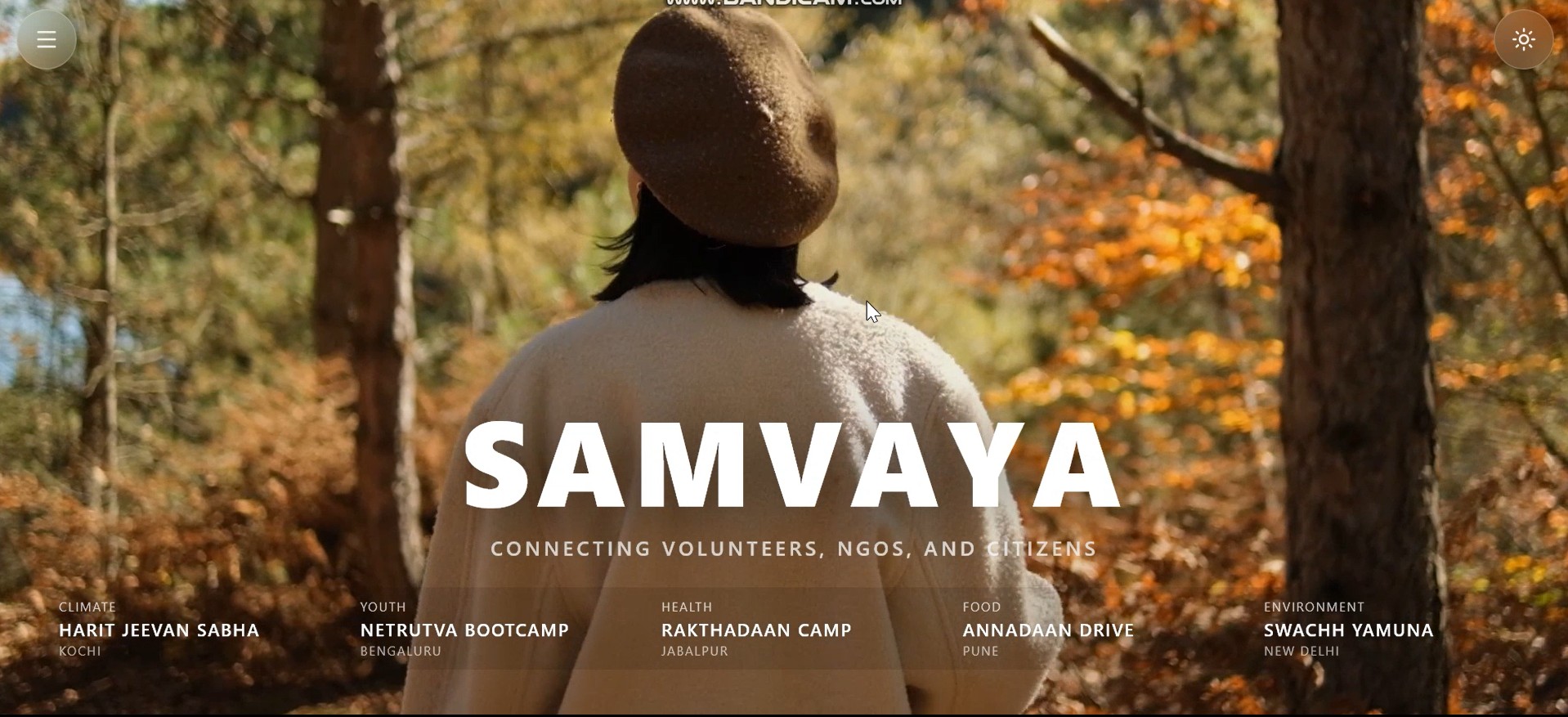
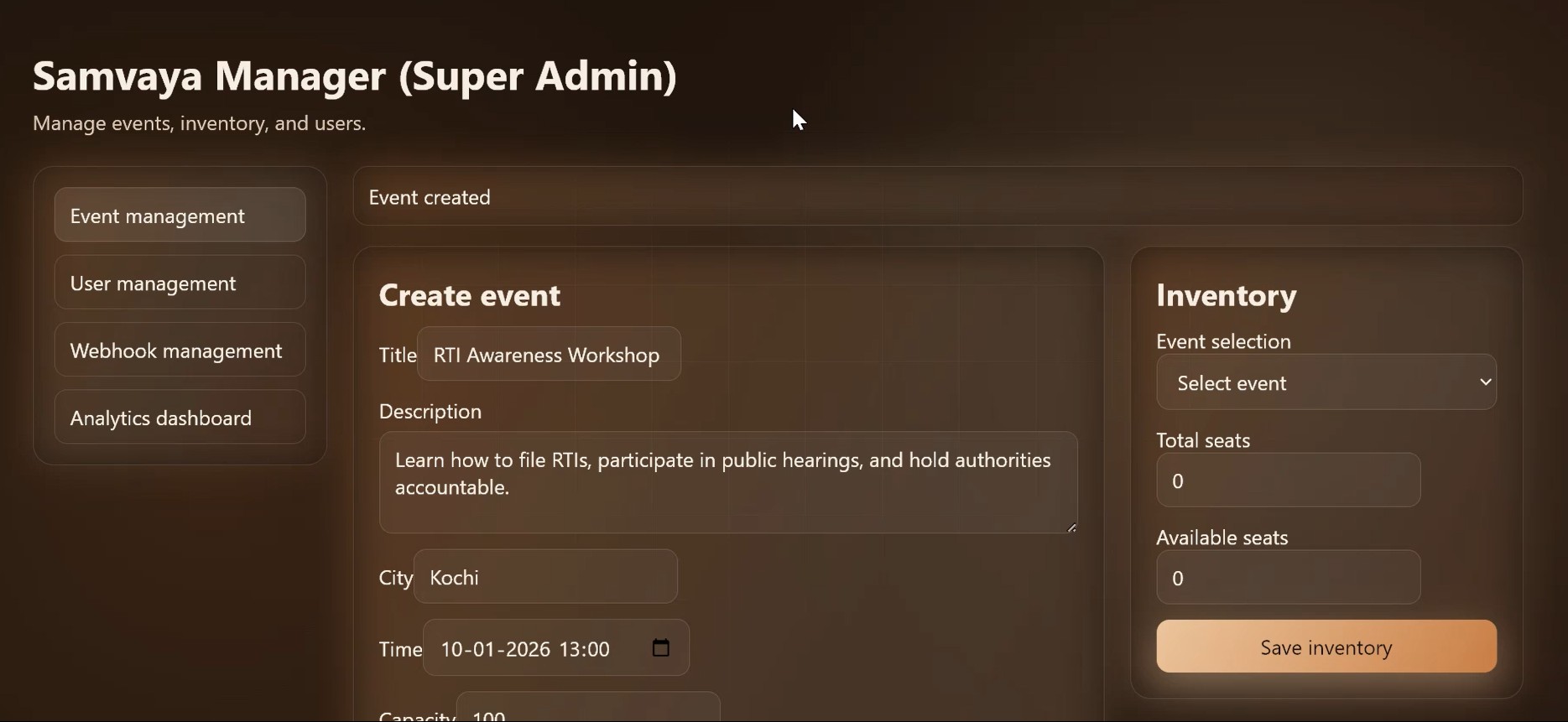
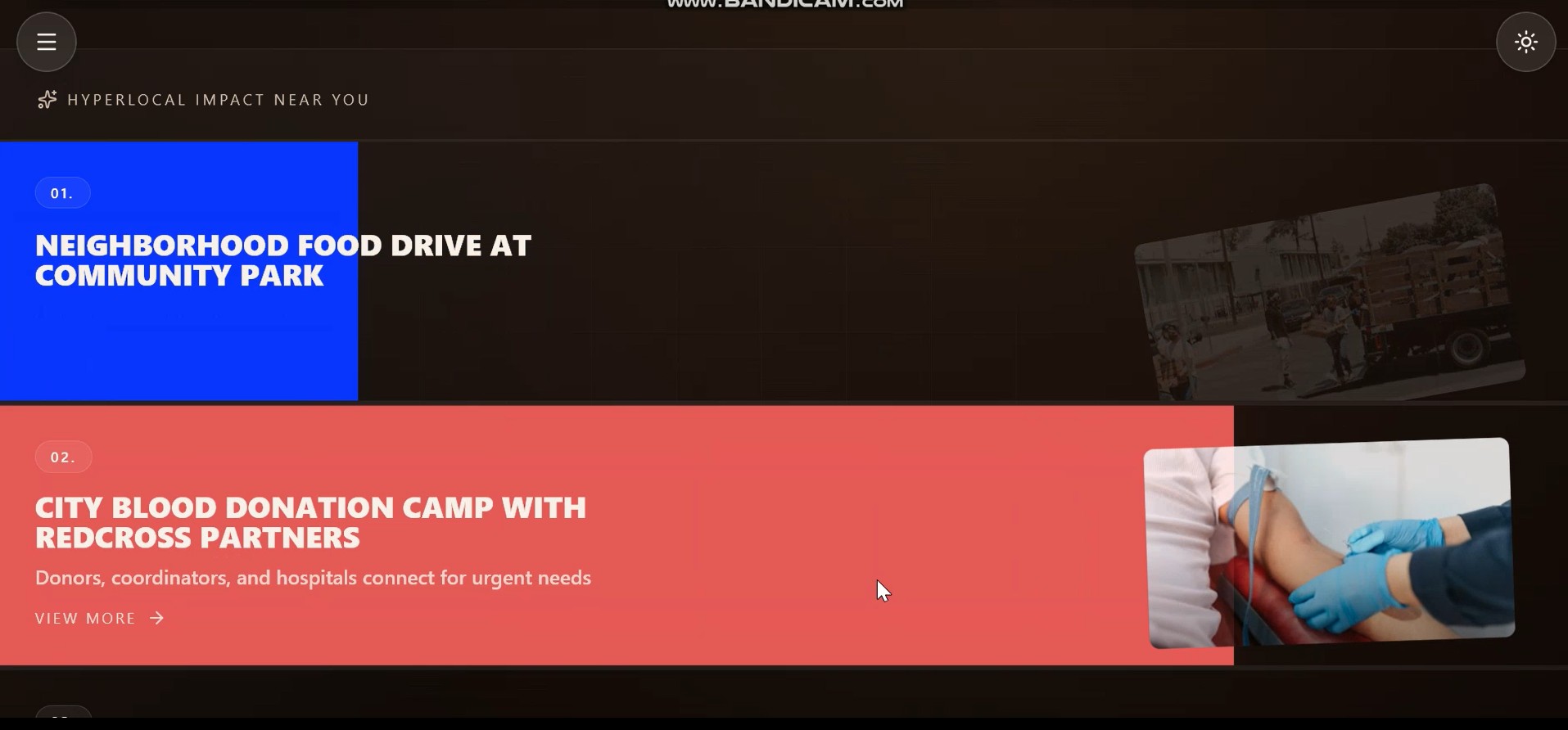
Samvaya is a centralized, real-time platform that connects people with community and non-profit events in their locality.
It enables:
- Easy discovery of events by cause, location, and date
- Free registration with real-time participation tracking
- Direct communication between organizers and participants via real-time chat
- Instant notifications to reduce drop-offs and miscommunication
- Transparent insights into engagement and community impact
By unifying discovery, communication, and trust, Samvaya helps communities mobilize faster and more effectively around social causes.
How we built it
- Built a responsive frontend using Next.js, TypeScript, and Tailwind CSS
- Designed a Spring Boot–based microservices architecture for scalability
- Implemented Spring Cloud Gateway with JWT authentication and rate limiting
- Used PostgreSQL for reliable persistent storage
- Integrated Redis for caching and session management
- Leveraged Apache Kafka for asynchronous, event-driven workflows
- Implemented Elasticsearch for fast and scalable event search
- Enabled real-time chat and notifications using WebSockets
- Containerized the system using Docker and Docker Compose for deployment readiness
Challenges we ran into
- Designing a scalable microservices system within limited hackathon time
- Managing inter-service communication and ensuring fault isolation
- Implementing reliable real-time features without sacrificing performance
- Balancing production-grade architecture with a usable and intuitive MVP
These challenges forced us to make real-world trade-offs between complexity, scalability, and user experience.
Accomplishments that we're proud of
- Built and integrated multiple microservices end-to-end
- Successfully implemented real-time chat, notifications, and search
- Designed a production-style, event-driven system architecture
- Created a platform focused entirely on community coordination and social impact
- Laid a scalable foundation that can support city-wide or national adoption
What we learned
- Practical implementation of microservices and distributed systems
- Real-world use of caching, rate limiting, and asynchronous processing
- How architectural decisions directly affect user experience
- The importance of pairing strong system design with clean, accessible UX
What's next for Samvaya
- Horizontal scaling, load testing, and resilience improvements
- Real-time analytics and stream processing for measuring social impact
- Multi-language support to improve accessibility and inclusion
- Organizer verification and trust mechanisms
- Integration with donation platforms and NGO ecosystems
Built With
- apache-kafka
- docker
- docker-compose
- elasticsearch
- event-driven-architecture
- java
- jwt-authentication
- microservices-architecture
- next.js
- nginx
- postgresql
- react
- redis
- rest-apis
- spring-actuator
- spring-boot
- spring-cloud-gateway
- spring-data-jpa
- spring-websocket
- tailwind-css
- typescript
- websockets

Log in or sign up for Devpost to join the conversation.